

Why Etiquette Forms the Foundation of Business in the Arab World
When people talk about doing business in the Middle East, they usually think of two things first: learning Arabic and understanding contracts. And yes, both matter! However, what often makes the biggest difference is knowing the Arabic business etiquette, which many might overlook. It’s the kind of thing that can quietly push a relationship forward, or slowly make it fall apart.
The business culture in the Arab world is a bit different from other regions. It starts with understanding and connecting with people before going over the paperwork. It’s all about how you greet someone, how you speak, and how you carry yourself in a meeting.
That’s why understanding business culture is so helpful. It gives you confidence, helps you avoid awkward moments, and makes conversations feel natural instead of forced. And over time, that’s what turns simple meetings into real, lasting connections.
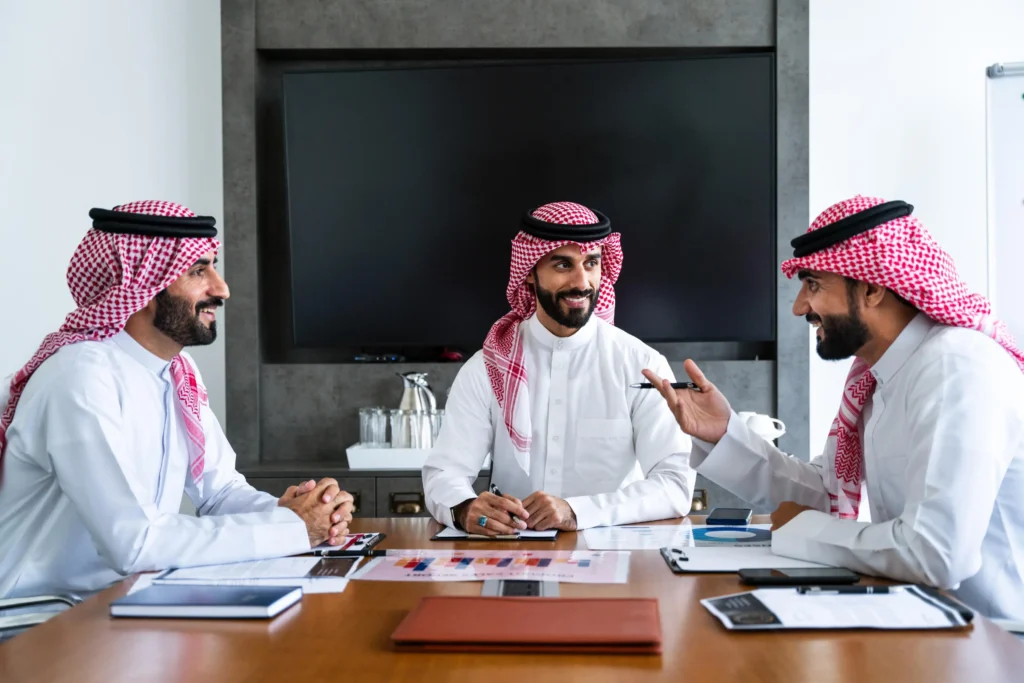
How Language and Culture Shape Middle Eastern Business Etiquette
When you’re talking to people in the Arab world, you’ll quickly notice that communication feels warm and polite, with a strong focus on relationships. Conversations usually take time. There’s often a friendly chat first before any business discussion. If you’re used to jumping straight into meetings, this might feel a bit slow at first, but that’s completely normal.
It’s also worth remembering that each region has its own way of doing things. Saudi Arabia, the GCC, the Levant, and North Africa all have slightly different styles. Even so, certain values, such as respect, modesty, and hospitality, stay the same everywhere.
Once you get used to the pace and understand the flow, conversations start to feel easier, more natural, and honestly, quite enjoyable!
Core Principles of Arabic Business Etiquette
Arabic Greetings: The First Step to Respect and Trust
Let’s talk about greetings, because they say a lot about respect and attention in Arab culture. When you meet someone, you can exchange greetings with a firm but gentle handshake. However, there’s no need to squeeze too hard. Always use your right hand, and if someone senior is present, greet them first. Taking a moment to notice how someone likes to be addressed makes a big difference. It’s a small detail, but it really shows respect.
You’ll hear these greetings often, so it’s helpful to know them:
Peace be upon you
as-salāmu ʿalaykum
السلام عليكم
Welcome
ahlan wa sahlan
أَهْلًا وَسَهْلًا
I am pleased to meet you
suʿidtu biliqāʾik
سُعِدْتُ بِلِقَائِك
Nice to meet you
tasharrafnā
تشرفنا
While greeting, be mindful of your posture and avoid sitting so that your soles are visible. It might seem like a tiny detail, but it is very important. Paying attention to things like this helps others feel comfortable and sets a good tone right from the start.
Hospitality as a Pillar of Middle Eastern Business Culture
After greetings, hospitality is the next big thing in the business culture in the Arab world. When someone offers you coffee or tea, don’t hesitate to accept it with a smile. Think of it as a small way of saying, “You’re welcome here.” Even in formal meetings, these little gestures go a long way toward helping people feel relaxed and start building trust. Just a quick tip: if you say no too quickly, it can come across as a bit cold; it’s better to accept politely.
Moreover, a few polite phrases can really help you in positively responding to these moments, such as:
Thank you very much
shukran jazīlan
شُكْرًا جَزِيلًا
Thank you (Bless your hands)
salimat yadāk
سلمت يداك
And here’s the thing: using these small phrases shows respect, makes people feel comfortable around you, and really helps leave a positive impression. Even tiny efforts like this get noticed and appreciated.
The Role of Respect in Arabian Business Communication
Respect shows in many quiet ways. For example, listening carefully, speaking calmly, and choosing polite words all make a big difference. Also, keep in mind that age and seniority are important, so it’s a good idea to let senior people take the lead in conversations while keeping your body language open and professional.
Here are some phrases that come in handy in business settings:
Please
min faḍlik
مِن فَضلِك
If you allow
law samaḥt
لَو سَمَحت
Excuse me
ʿudhran
عذُرًا
If God wills
in shāʾa llāh
إِن شاءَ الله
Using these small phrases shows respect, makes people feel comfortable, and helps you leave a positive impression. Even little efforts like this get noticed and appreciated.
Business Etiquette in Saudi Arabia
Saudi Arabian Greeting Norms & First Impressions
In Saudi Arabia, people notice manners very quickly. That’s where you have to focus on staying calm, greeting others politely, and offering a warm smile whenever you get the chance. However, you don’t need to do anything extra; simple kindness is enough.
When it comes to handshakes, men usually shake hands with other men. However, when exchanging greetings with a woman, it’s best to pause and see what she’s comfortable with. If you’re unsure, a polite verbal greeting is always a safe and respectful option.
Saudi Business Meetings & Communication Style
Business meetings usually begin with a friendly conversation. It’s common to ask about someone’s day or their work before getting into business matters, which helps people feel comfortable and builds trust.
Moreover, business dealings move slowly in the Arabic business culture, especially when the stakes are high. You have to show patience and slowly build trust, which develops over time through repeated, respectful interactions.
Business Attire Standards in Saudi Arabian Workplaces
Saudi workplaces place a strong emphasis on modesty, with men usually wearing formal suits or traditional clothing. On the other hand, women are expected to wear clothes that cover their arms and legs. Dressing modestly shows respect and helps you appear professional.
Practical Communication Etiquette for Arabic Business Settings
Punctuality and Time Norms Across the Arab World
In many Arab countries, you can expect meetings on Sundays as the weekend falls on Friday and Saturday. However, whenever the meeting is scheduled, it’s important to arrive on time or join if it’s online. Being punctual shows seriousness. But more importantly, it shows how much you respect the other person’s time.
Exchanging Business Cards in Middle Eastern Business Etiquette
Business cards should be given and received with the right hand. Taking a moment to look at the card before putting it away may seem small, but it shows appreciation and respect.
Gift-Giving Etiquette in Arabic Business Culture
Giving gifts is optional, and if you choose to give one, it should be simple and appropriate. Avoid alcohol or items that are not Halal. It’s usually better to exchange gifts after business discussions rather than before.
Email, Messaging, and Meeting Etiquette
Professional Email Structure in Arabic Business
Emails should sound polite and calm. You can start with a respectful Arabic greeting and keep the tone friendly. Some helpful Arabic phrases for emails can include:
Peace be upon you (Opening greeting)
As-salamu alaykum
السّلامُ عَلَيكُم
With regards
Ma’a al-tahiyyaat
مَعَ التَّحيَّات
Thank you for your time
Shukran li-waqtikum
شُكرًا لِوَقتِكُم
Wishing you a pleasant day
Atamanna lakum yawman sa’eedan
أَتَمنّى لَكُم يَومًا سَعِيدًا
Conducting Successful Business Meetings
During meetings, a little small talk goes a long way. Talking about work, travel, or general interests is a safe way to help people feel comfortable before diving into business.
During discussions, speak calmly, wait for your turn, and acknowledge what others are saying. These small gestures might seem simple, but they really show maturity and respect, which helps make the meeting feel smoother for everyone.
Common Mistakes to Avoid in Arabic Business Etiquette
Learning Arabic etiquette can feel overwhelming at first, and you might make small mistakes. However, even minor missteps can leave a negative impression, especially in a business context. For instance,
- Showing the soles of your feet
- Using your left hand to give or receive items
- Speaking too loudly or too directly
- Dressing without modesty
- Repeatedly refusing hospitality
Keeping an eye on these little details helps you make a positive impression and keeps interactions respectful and comfortable.
How AlifBee Helps You Master Arabic Business Culture
Learning Arabic for business becomes much easier when language and culture are taught together.
AlifBee helps learners understand real greetings, polite expressions, and everyday communication habits used in professional settings. This makes business interactions smoother and more comfortable.
Final Word
In the Middle East, strong business relationships are built on respect, good manners, and cultural understanding. When you understand Arabic business etiquette, communication feels more natural, and trust develops more easily.
If you want to speak with confidence and avoid common cultural mistakes, learning the language along with the culture is the right way to start.
Download AlifBee today and enjoy a 14-day free trial to start building better Arabic business communication skills and open your doors to countless opportunities.