Learn 15 Ways to Say No Problem in Arabic

|
Reading Time: 7 minutes
Home / Everyday Arabic / Learn 15 Ways to Say No Problem in Arabic
Listen to: Learn 15 Ways to Say No Problem in Arabic
Listening Bee

How to Say No Problem in Arabic

The phrase No Problem in Arabic is used in the same way it is used in English and almost in the same context. It is a polite expression to use when replying to someone who says “Thank you” or shows gratitude for a favour done for you. The answer “la mushkila” or “No problem” is similar to “You’re welcome.”

Another way this expression is used in Arabic is similar to the phrase “No worries”. This is when someone apologizes to you or says sorry. You reply with la mushkila: “No problem.”

In this article, you will learn the common MSA expression la mushkila with its pronunciation and other common expressions that give the same meaning, both in MSA and in the main Arabic dialects.

Your Arabic Takeaway

No problem in Arabic 2

No Problem in MSA

1

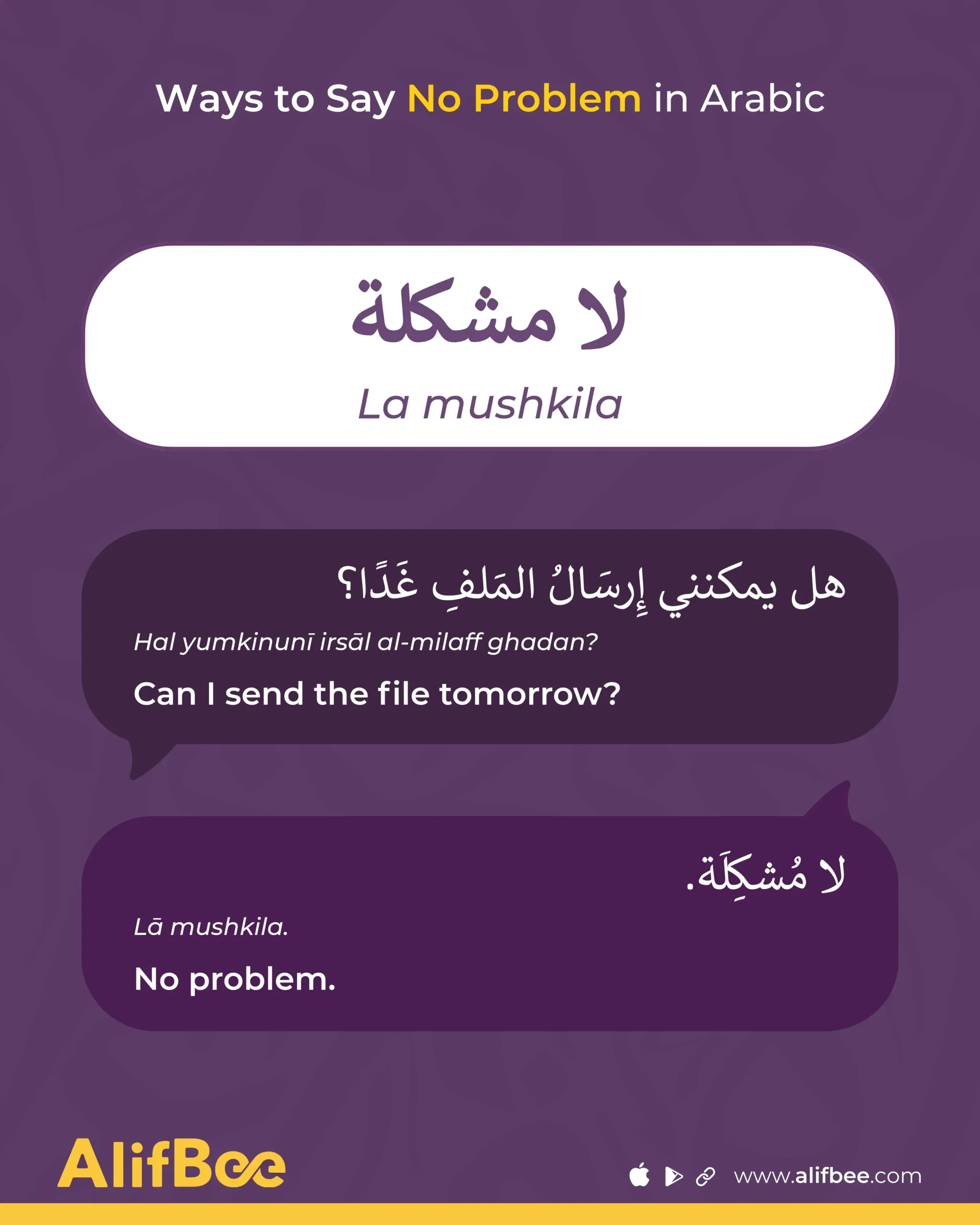
La mushkila (لا مشكلة): "No problem."

This is the standard, straightforward equivalent of the expression, and it is formal and easily understood in all Arabic dialects and regions, in both speech and writing. 

Can I send the file tomorrow?

Hal yumkinunī irsāl al-milaff ghadan?

هل يمكنني إِرسَالُ المَلفِ غَدًا؟

No problem.

Lā mushkila.

لا مُشكِلَة

2

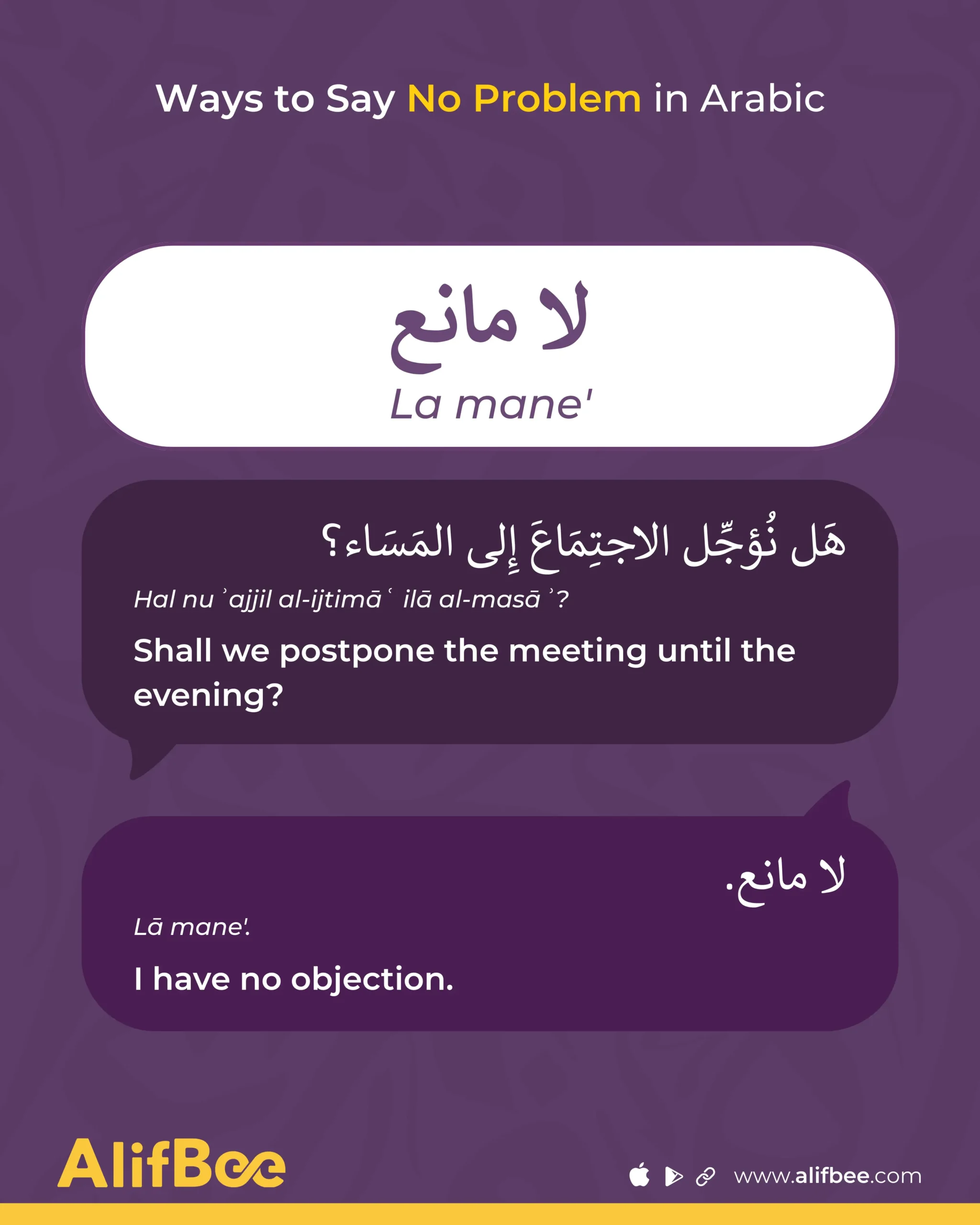
La mane' (لا مانع): "No objection/No problem."

This is another similar expression with a slightly different context. The word mane’ means “objection,” and the whole phrase means “I have no objection or problem” with this idea. It is usually used as a response to an idea or suggestion, or to someone asking for permission, to say you are okay with it or have no problem with it. 

For example, if someone asks to arrange a meeting with you in the evening, you reply with La mane’, which means you don’t have a problem with it.

Shall we postpone the meeting until the evening?

Hal nuʾajjil al-ijtimāʿ ilā al-masāʾ?

هَل نُؤجِّل الاجتِمَاعَ إِلى المَسَاء؟

I have no objection.

Lā māniʿ

لا مَانِع

3

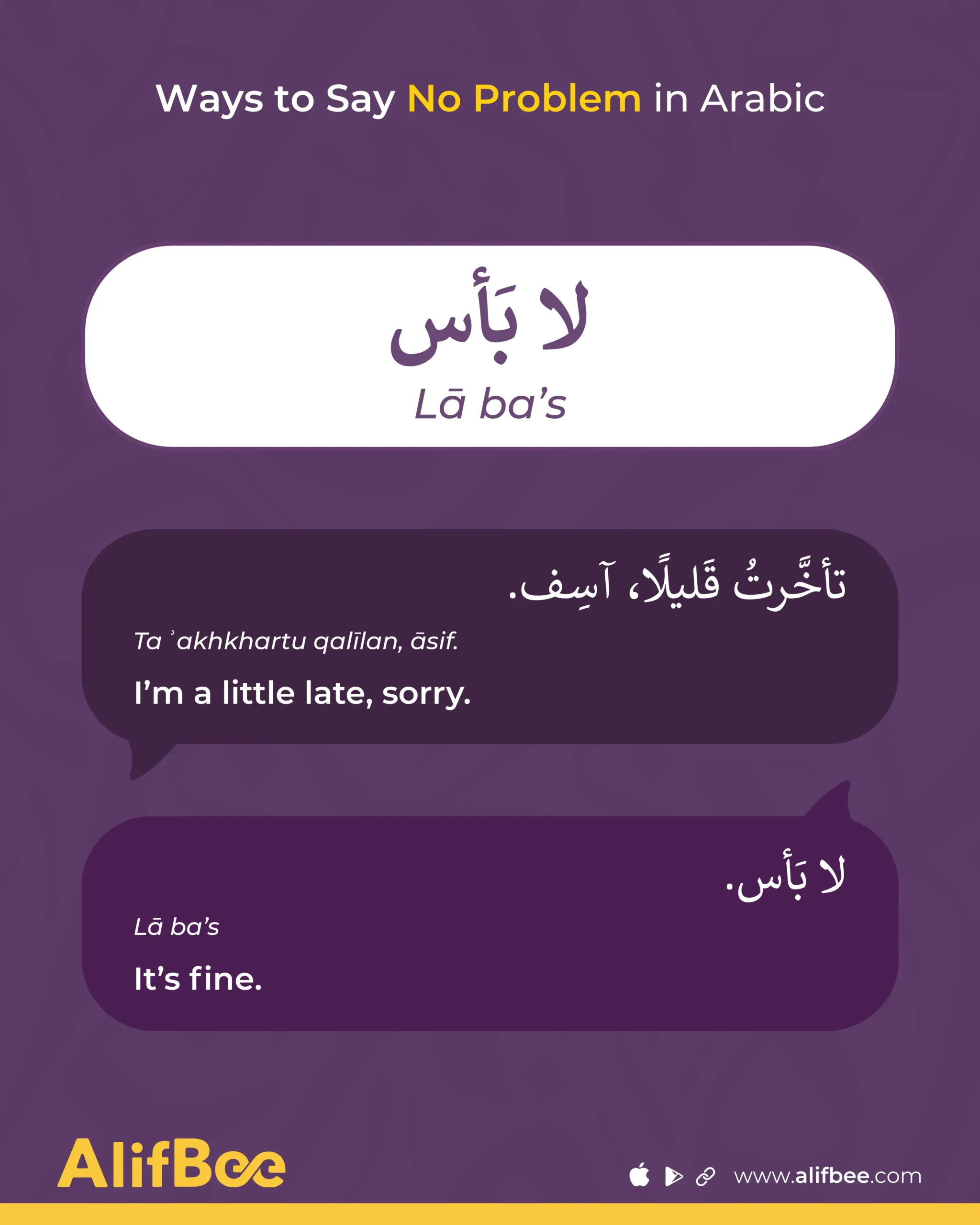
Lā ba’s (لا بأس): “It’s fine.” / “No harm.”

This Arabic phrase is formal and mostly used in writing or in classical MSA. Ba’s means “harm”, and the whole expression means “It’s okay”. It is also used as a response to a suggestion or an apology. 

Check the following example:

I’m a little late, sorry.

Taʾakhkhartu qalīlan, āsif.

تأخَّرتُ قَليلًا، آسِف.

It’s fine.

Lā ba’s.

لا بَأس

4

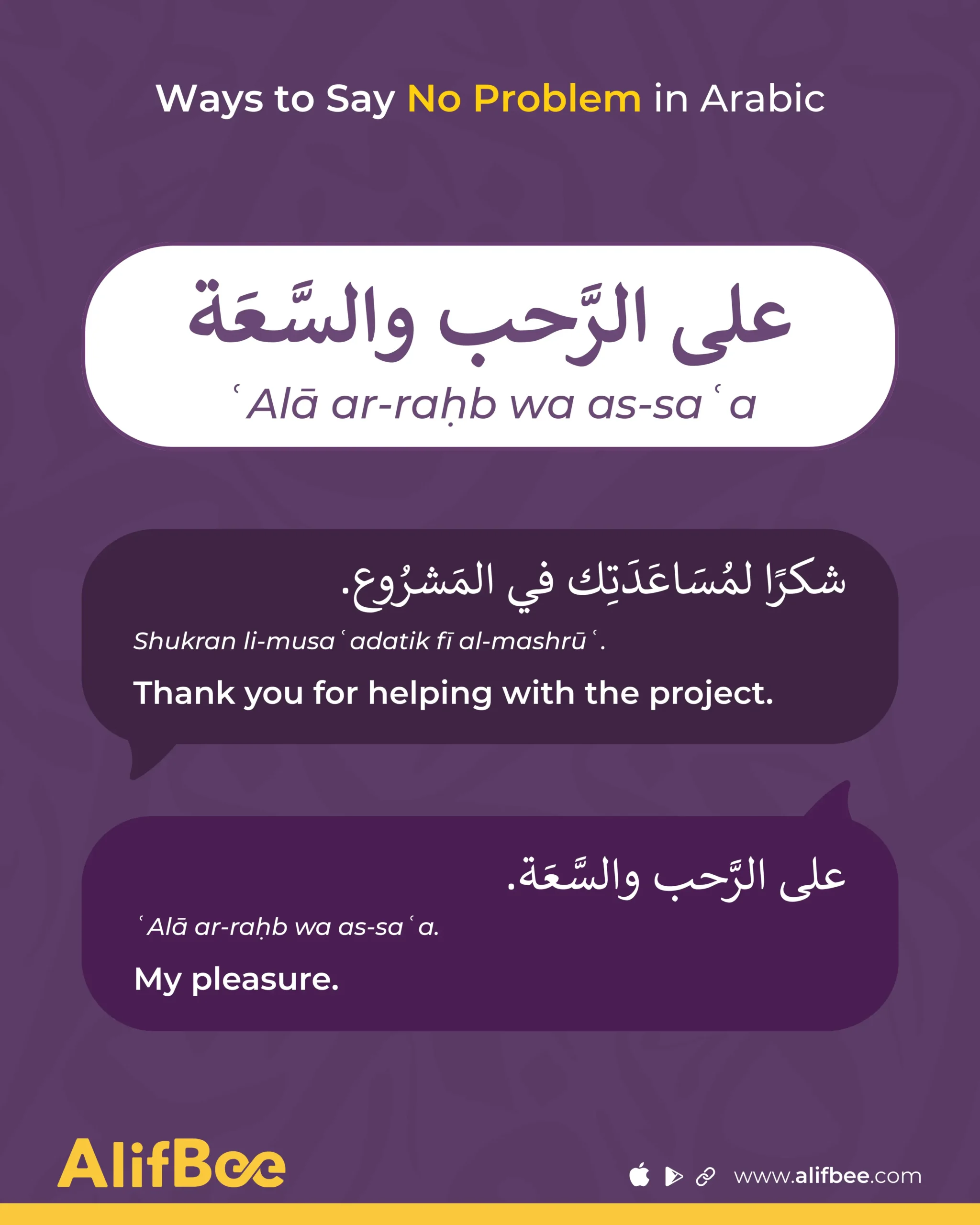
ʿAlā ar-raḥb wa as-saʿa (على الرحب والسعة): “My pleasure.”

This is a polite expression used to welcome someone with openness (ar-raḥb) and generosity (as-saʿa). It is usually used in formal settings or in writing.

This phrase carries a warmer tone than la mushkila and shows that you were genuinely happy to help, rather than simply neutral about it.

For example:

Thank you for helping with the project.

Shukran li-musaʿadatik fī al-mashrūʿ.

شكرًا لمُسَاعَدَتِك في المَشرُوع

My pleasure.

ʿAlā ar-raḥb wa as-saʿa.

على الرَّحب والسَّعَة

No Problem in Levantine Arabic

5

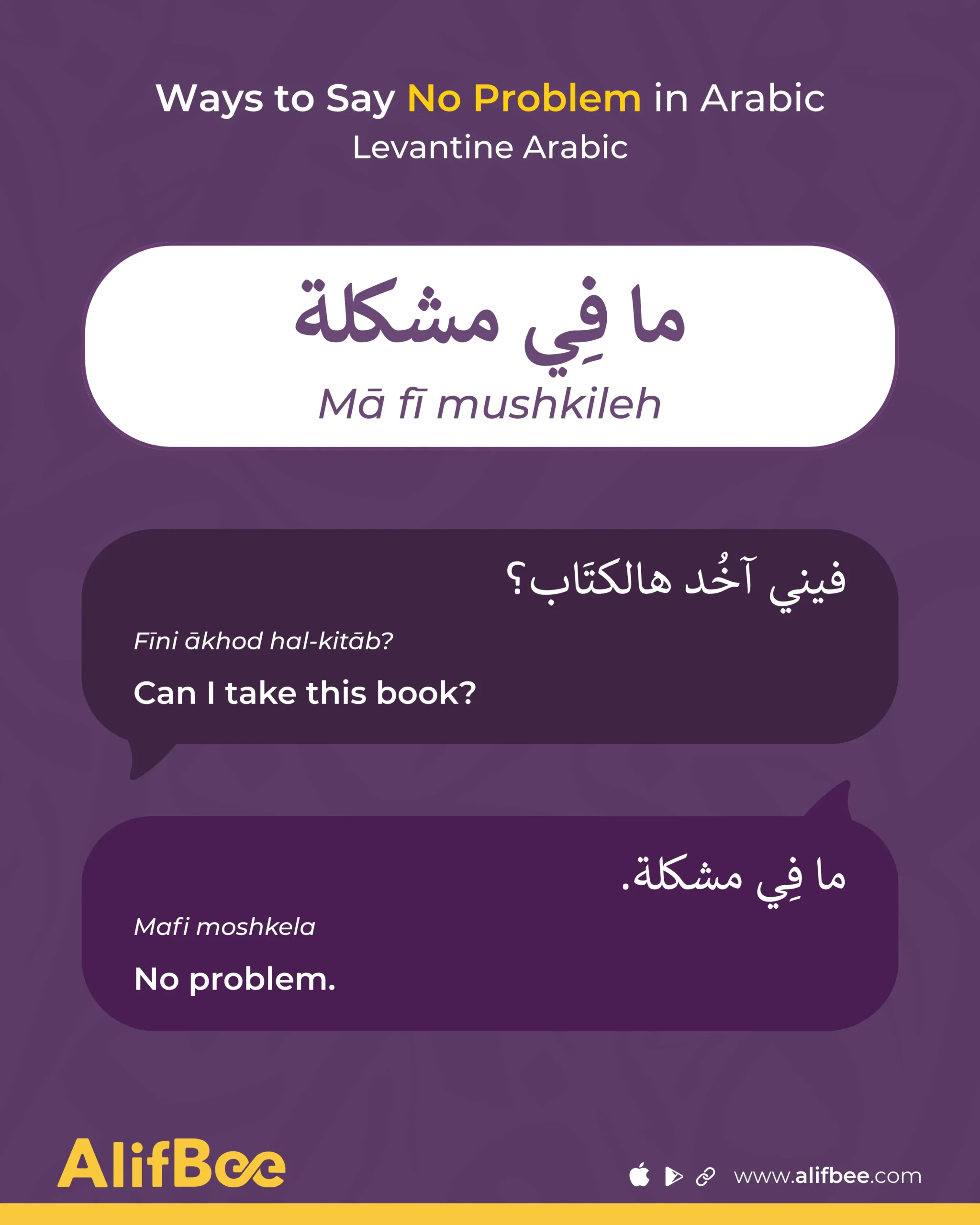
Mafi moshkela (ما في مشكلة): "There is no problem."

This is one of the most common ways to say “no problem” in the Levantine dialect (Syria, Lebanon, Jordan, Palestine). It is informal, natural, and widely used in daily conversations.

It is used when responding to a request, an apology, or a thank-you.

For example:

Can I take this book?

Fīni ākhod hal-kitāb?

فيني آخُد هالكتَاب؟

No problem.

Mā fī mushkileh.

ما فِي مشكلة

6

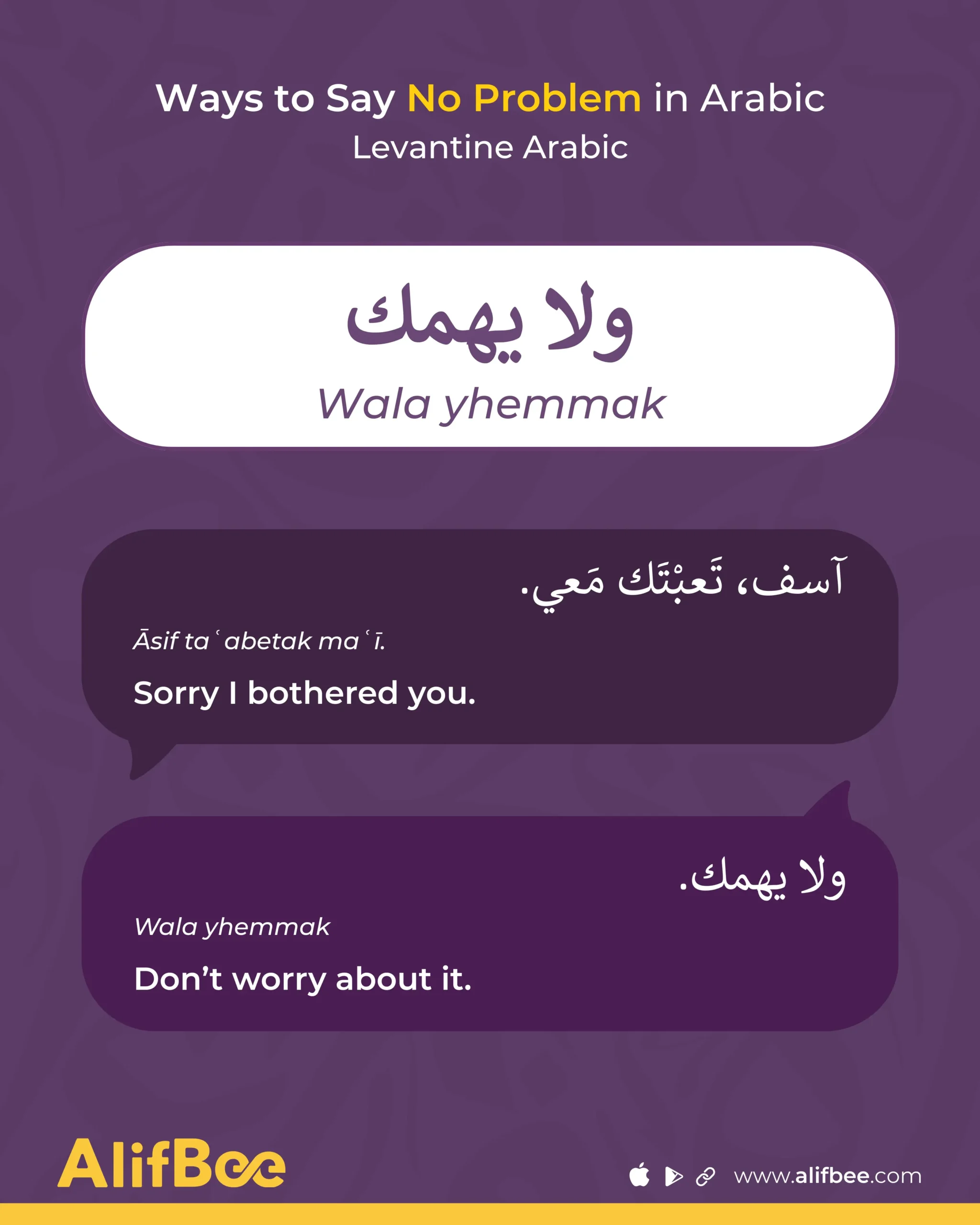
Wala yhemmak (ولا يهمك): “Don’t worry about it.”

This expression means “Don’t worry about it” or “It’s no problem.” It is very common in casual speech and carries a friendly, reassuring tone.

It is usually said after someone apologizes or thanks you, to show that everything is fine and there is no need for concern.

For example:

Sorry I bothered you.

Āsif taʿabetak maʿī.

آسف، تَعبْتَك مَعي

Don’t worry about it.

Wala yhemmak.

ولا يِهمَّك.

7

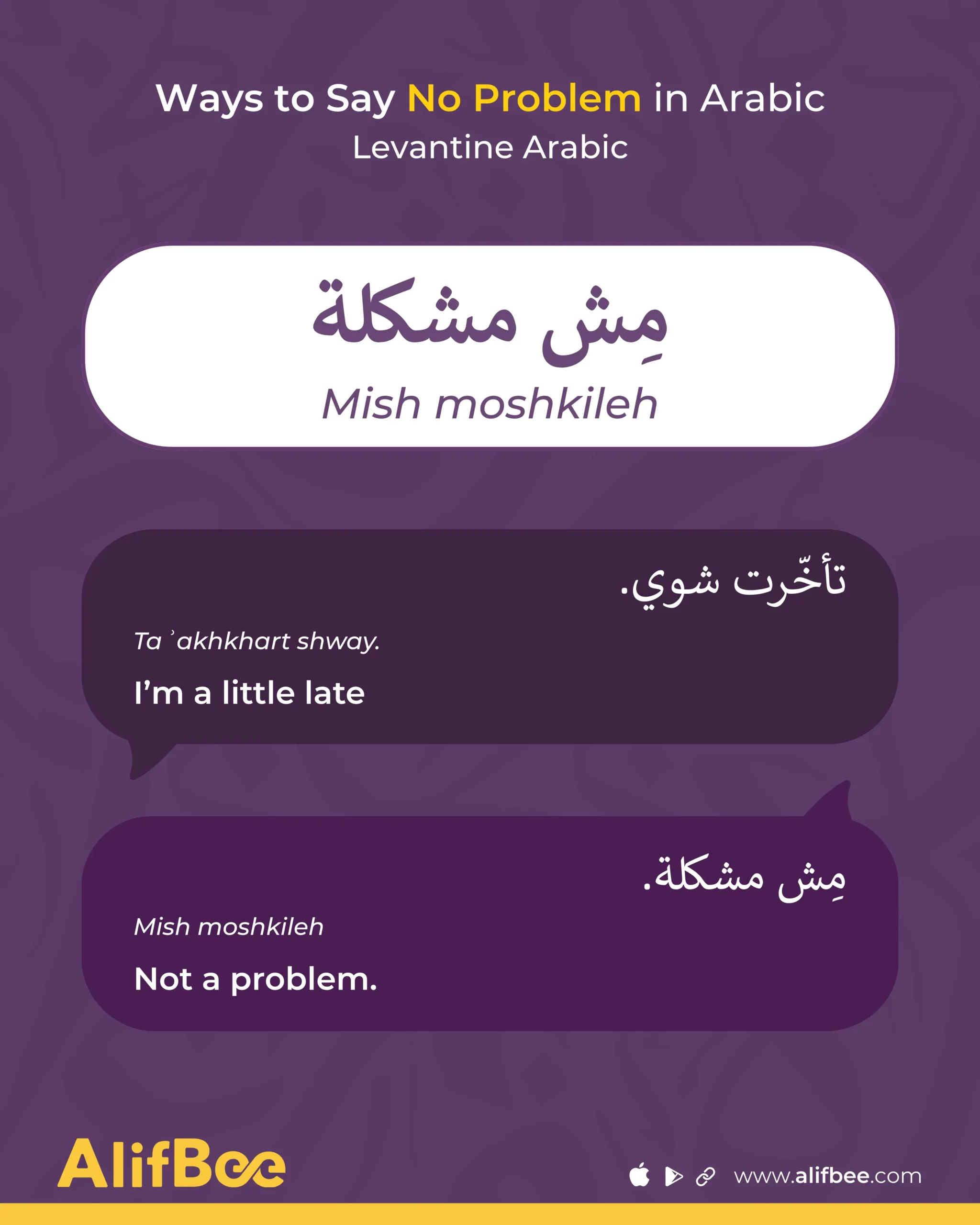
Mish moshkileh (مش مشكلة): "Not a problem."

This is another very common spoken phrase. It is slightly more informal than ما في مشكلة and is frequently used among friends or in relaxed situations.

It can be used in response to apologies or minor inconveniences.

For example:

I’m a little late

Taʾakhkhart shway.

تأخّرت شوي

Not a problem.

Mish mushkileh.

مِش مشكلة

8

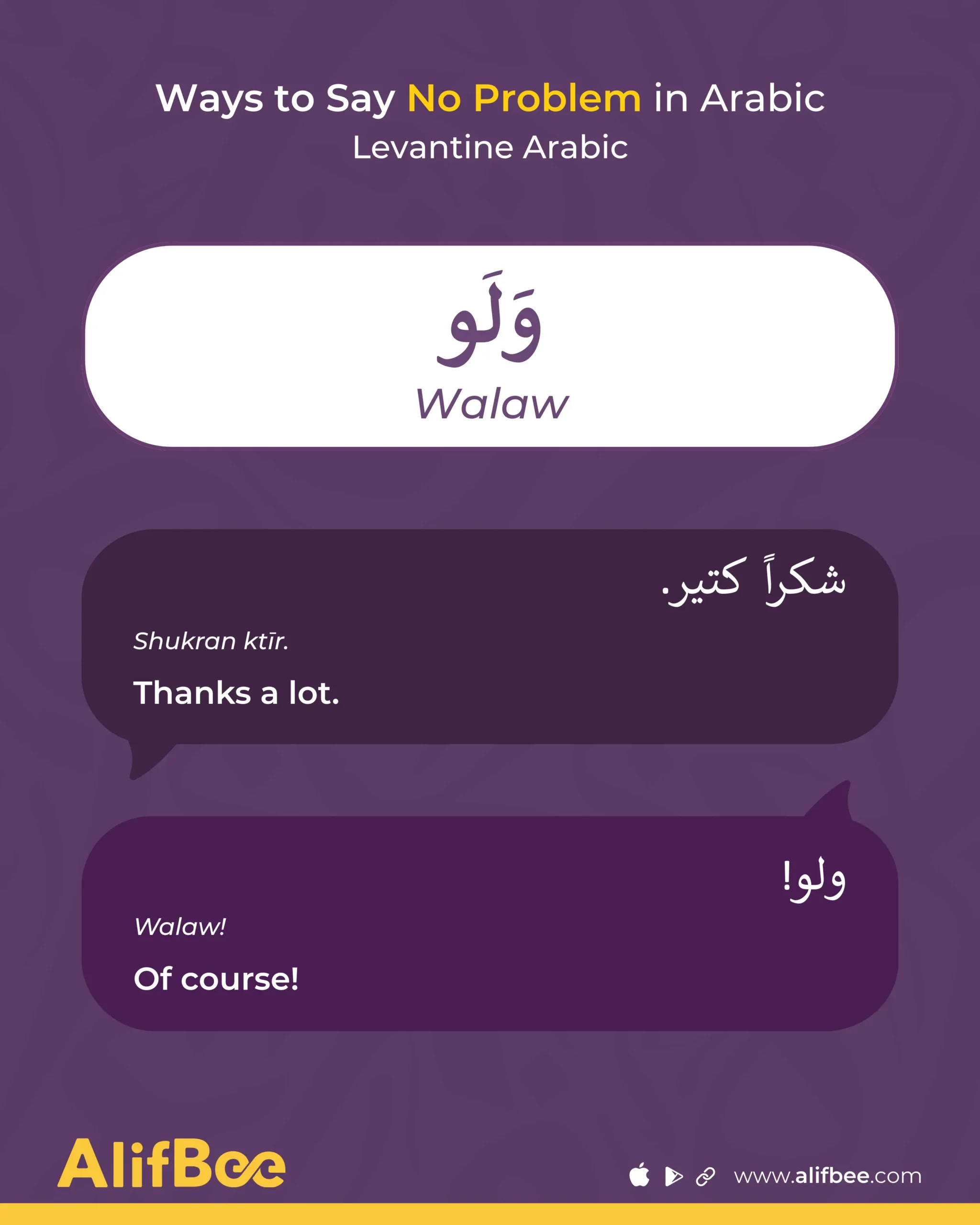
Walaw (وَلَو): "Of course/No problem."

This short, expressive response is often used after someone says “thank you.” It carries the meaning of “Of course” or “No problem at all.”

It is informal and very common in everyday speech.

For example:

Thanks a lot.

Shukran ktīr.

شكراً كتير

Of course!

Walaw!

ولو!

No Problem in Egyptian Arabic

9

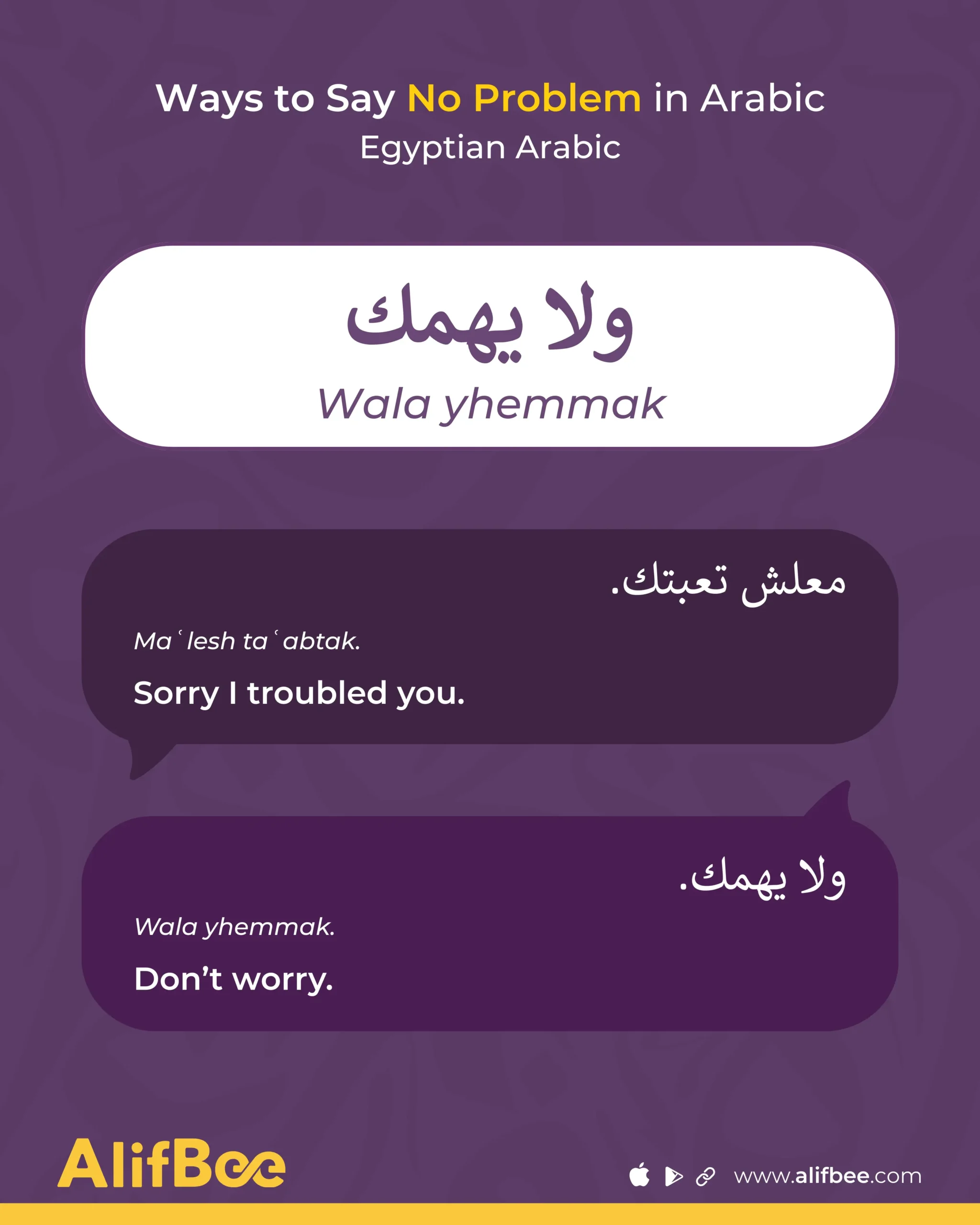
Wala yhemmak (ولا يهمك): “Don’t worry.”

This phrase is extremely common in Egyptian Arabic and functions exactly as it does in the Levantine dialect. It is warm and reassuring.

It can be used after apologies or when someone feels they have inconvenienced you.

For example:

Sorry I troubled you

Maʿlesh taʿabtak.

معلش تعبتك

Don’t worry

Wala yhemmak.

ولا يهمك

10

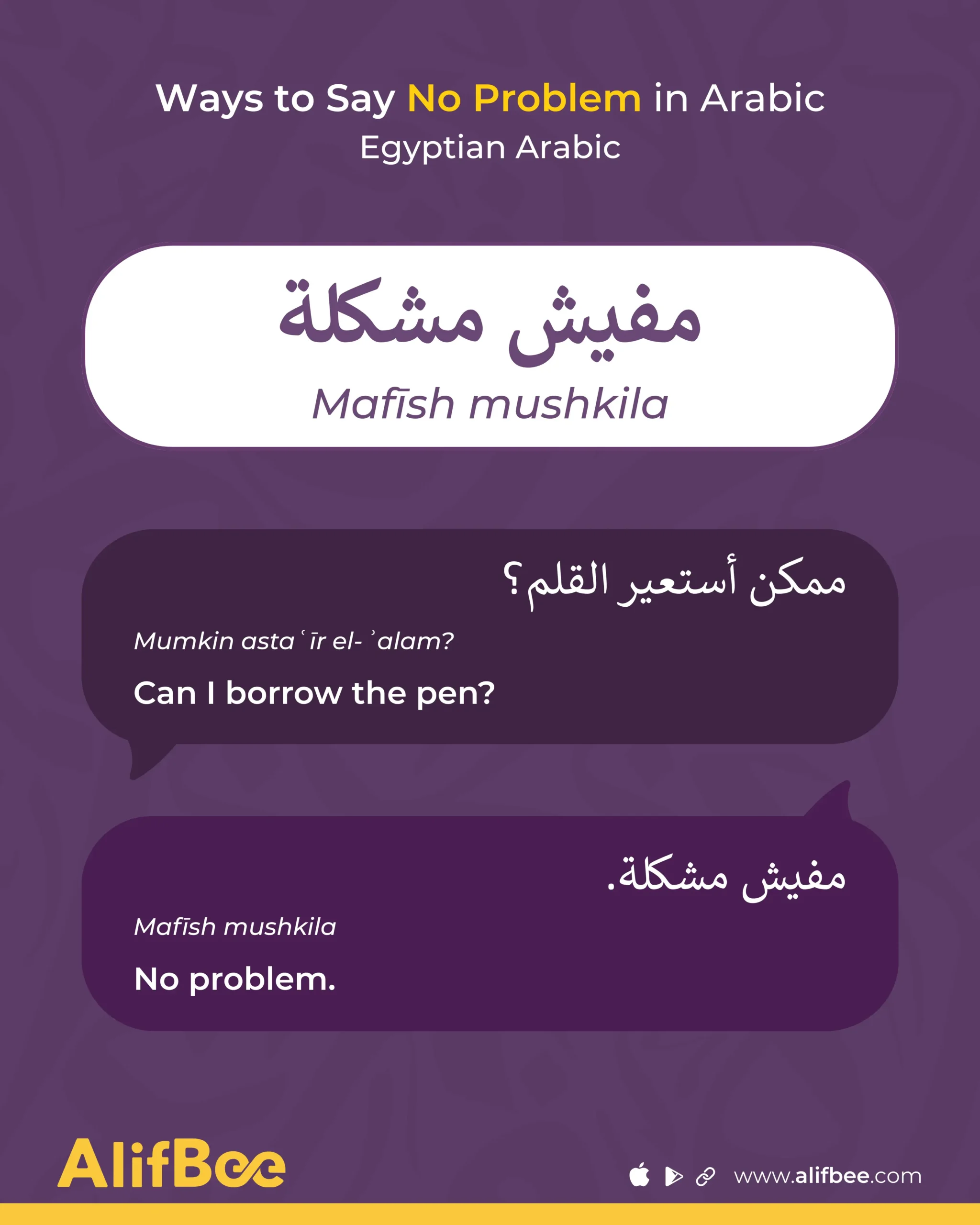
Mafīsh mushkila (مفيش مشكلة): “No problem.”

This is the Egyptian equivalent of “there is no problem.” It sounds very natural in everyday speech and is suitable for most casual situations.

It can be used in response to requests, suggestions, or apologies.

For example:

Can I borrow the pen?

Mumkin astaʿīr el-ʾalam?

ممكن أستعير القلم؟

No problem.

Mafīsh mushkila.

مفيش مشكلة

No Problem in Gulf Arabic

11

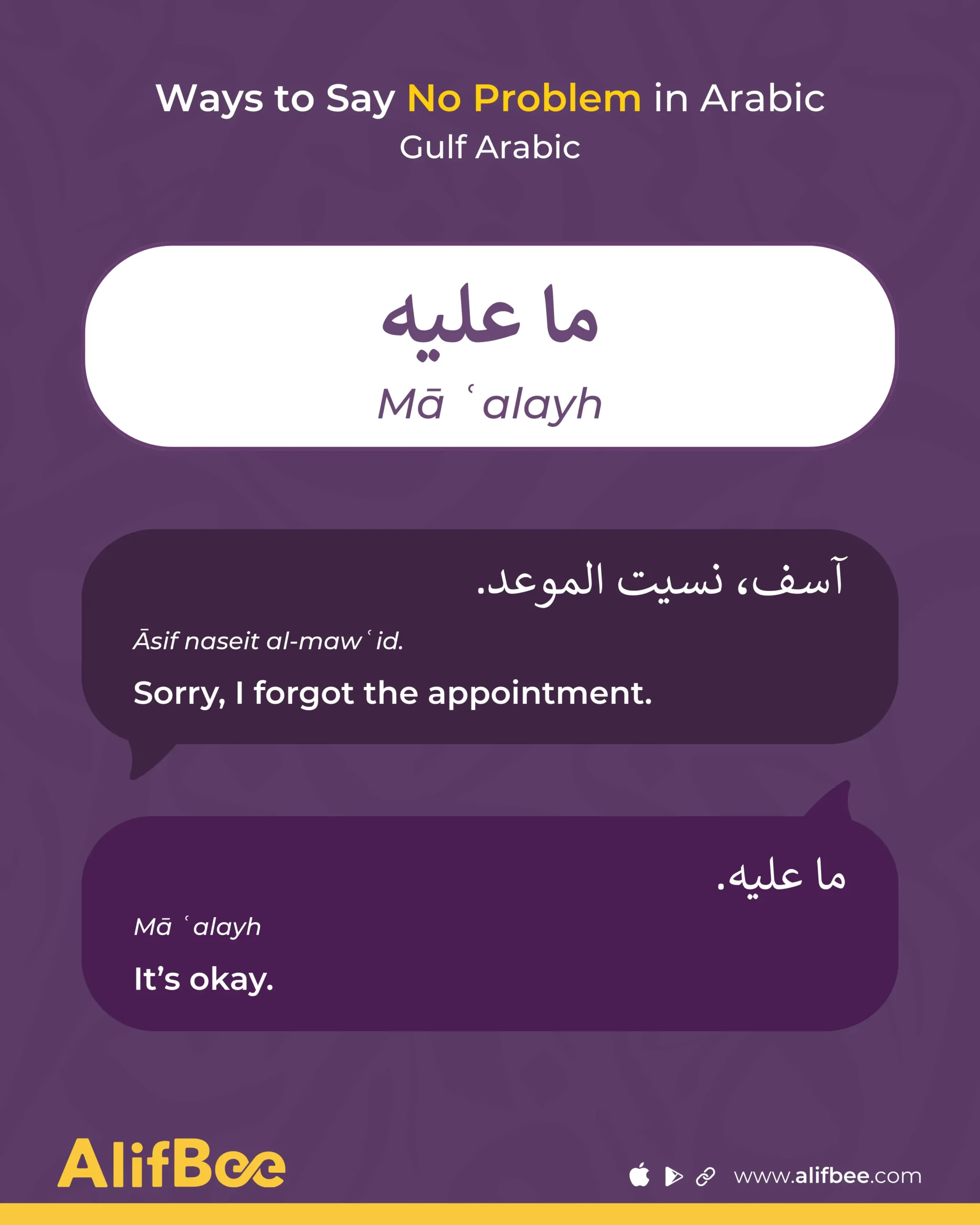
Mā ʿalayh (ما عليه): “It’s okay.” / “No worries.”

This is a very common Gulf expression (Saudi Arabia, UAE, Kuwait, Qatar, Bahrain). It literally means “Nothing is upon it,” but the intended meaning is “It’s okay” or “No worries.”

It is usually said after an apology or when someone feels they have caused inconvenience. The tone is calm and reassuring.

For example:

Sorry, I forgot the appointment.

Āsif naseit al-mawʿid.

آسف، نسيت الموعد.

It’s okay

Mā ʿalayh.

ما عليه

12

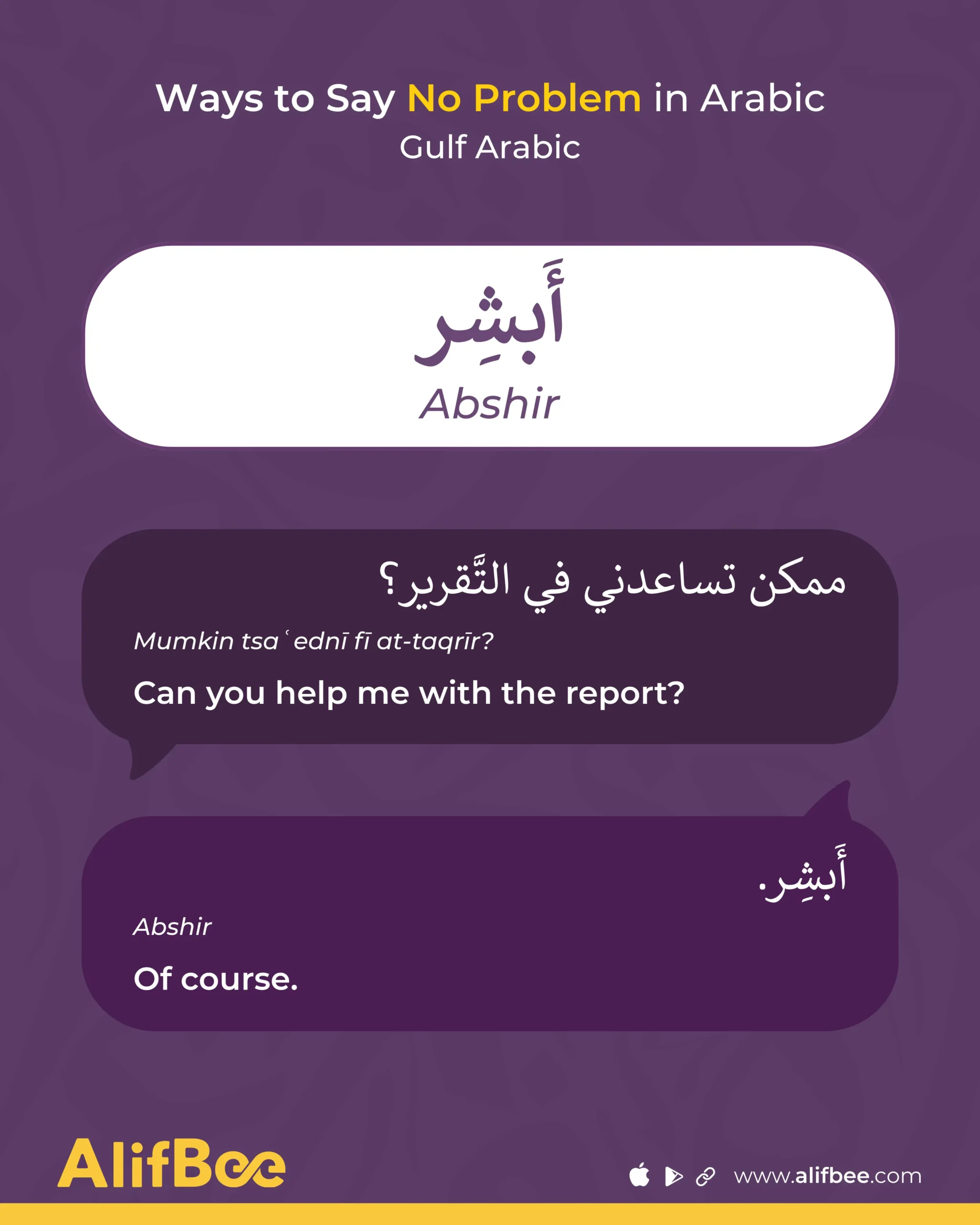
Abshir (أبشر): “Sure.” / “Consider it done.”

This is a distinct Gulf expression that goes beyond simply saying “no problem.” It conveys readiness and willingness to help. It literally means “bringing good news,” but in conversation, it is understood as “Of course” or “I’ll take care of it.”

It is often used in response to requests rather than to apologies.

For example:

Can you help me with the report?

Mumkin tsaʿednī fī at-taqrīr?

ممكن تساعدني في التَّقرير؟

Of course.

Abshir

أَبشِر

13

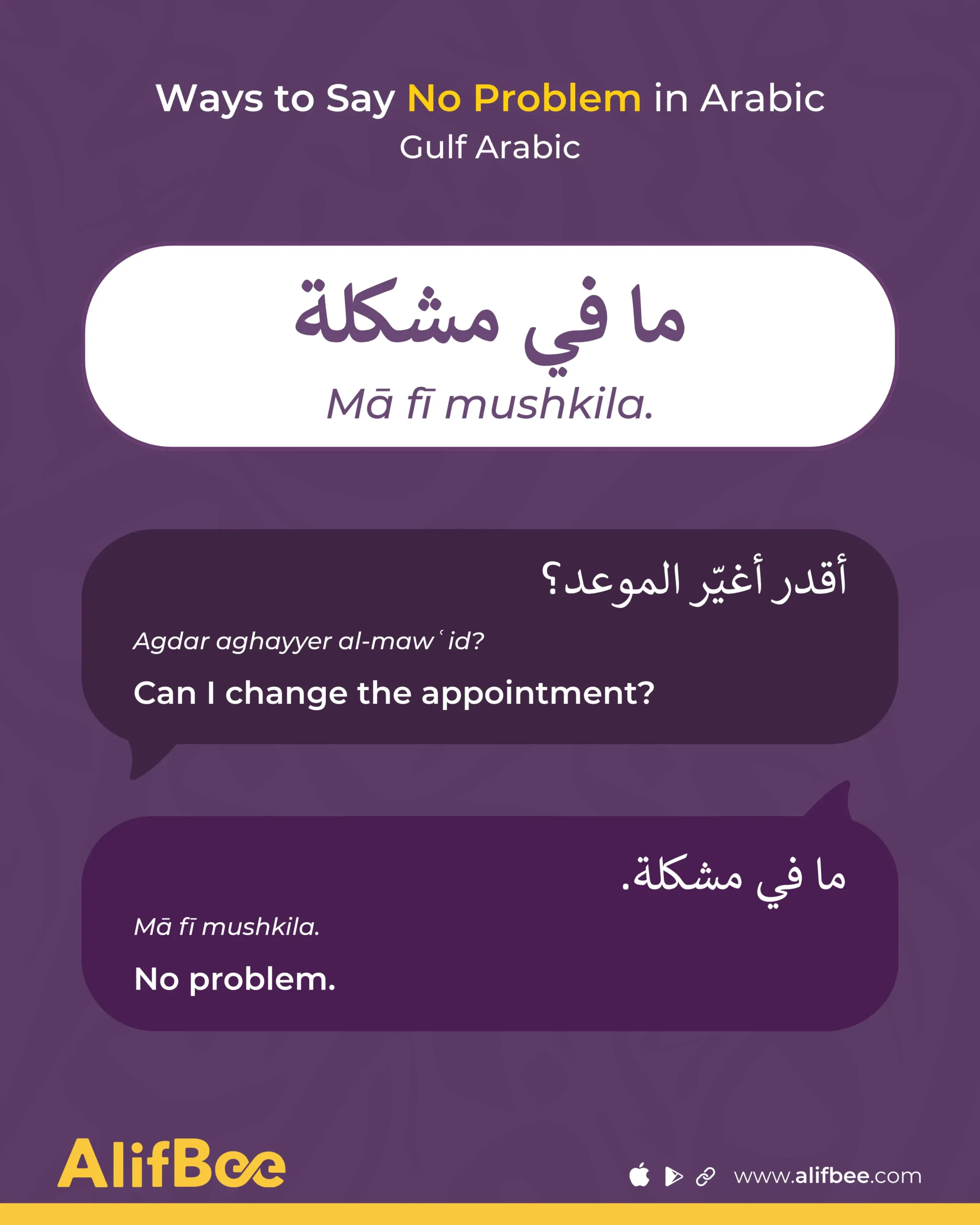
Mā fī mushkila (ما في مشكلة): “There is no problem.”

This phrase is also used in Gulf Arabic, similar to Levantine usage. It is neutral, widely understood, and appropriate in most everyday situations.

For example:

Can I change the appointment?

Agdar aghayyer al-mawʿid?

أقدر أغيّر الموعد؟

No problem.

Mā fī mushkila.

ما في مشكلة

No Problem in Moroccan Darija

14

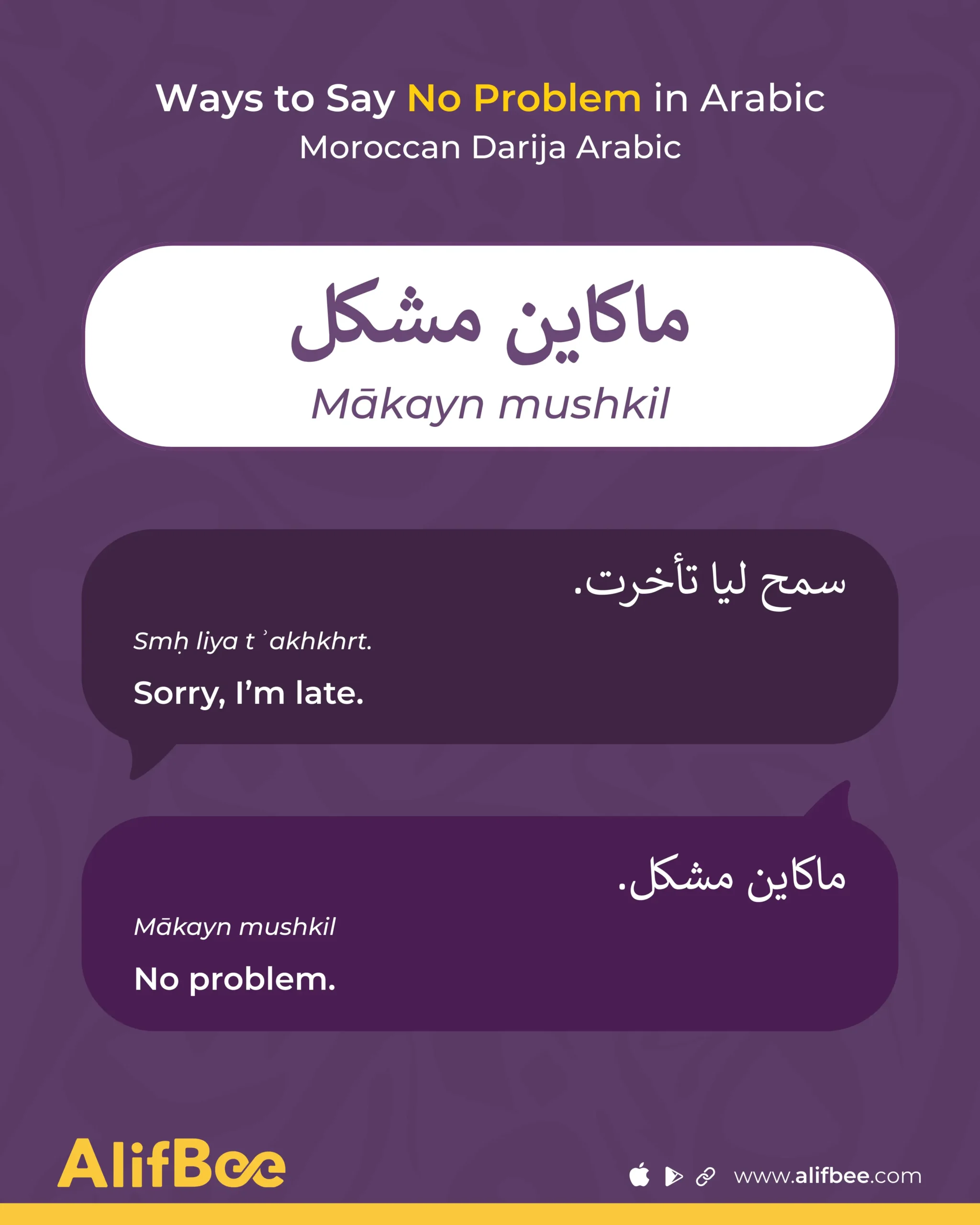
Mākayn mushkil (ماكاين مشكل): “There is no problem.”

This is the most common way to say “no problem” in Moroccan Darija. It literally means “There isn’t a problem.” It is used in both casual and semi-formal contexts.

For example:

Sorry, I’m late.

Smḥ liya tʾakhkhrt.

سمح ليا تأخرت

No problem.

Mākayn mushkil.

ماكاين مشكل

15

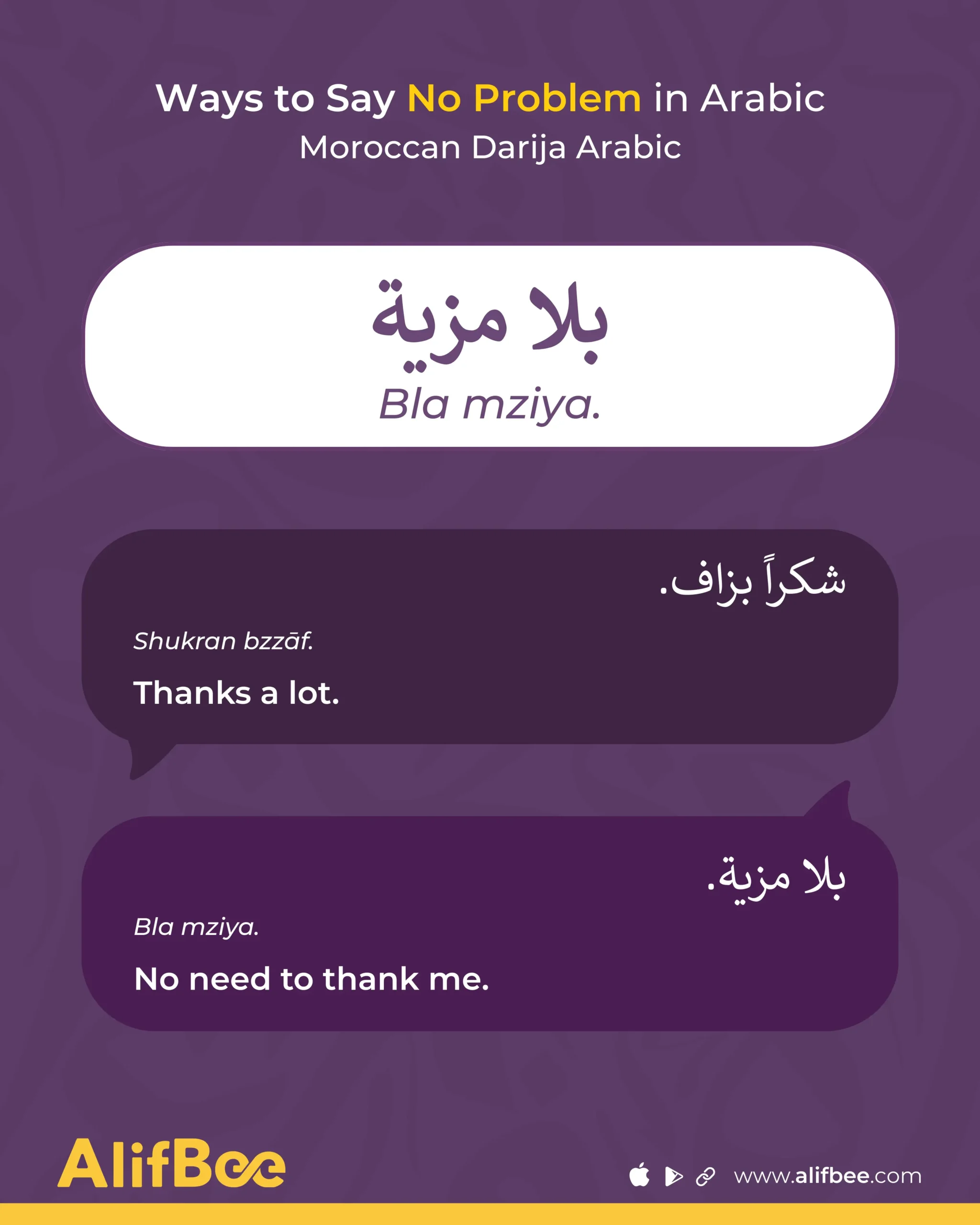
Bla mziya (بلا مزية): “No need to thank me.”

This expression is commonly used after someone says thank you. It implies that you did nothing extraordinary and that no special appreciation is required.

It is friendly and natural in everyday Moroccan speech.

For example:

Thanks a lot

Shukran bzzāf.

شكراً بزاف

No need to thank me

Bla mziya.

بلا مزية

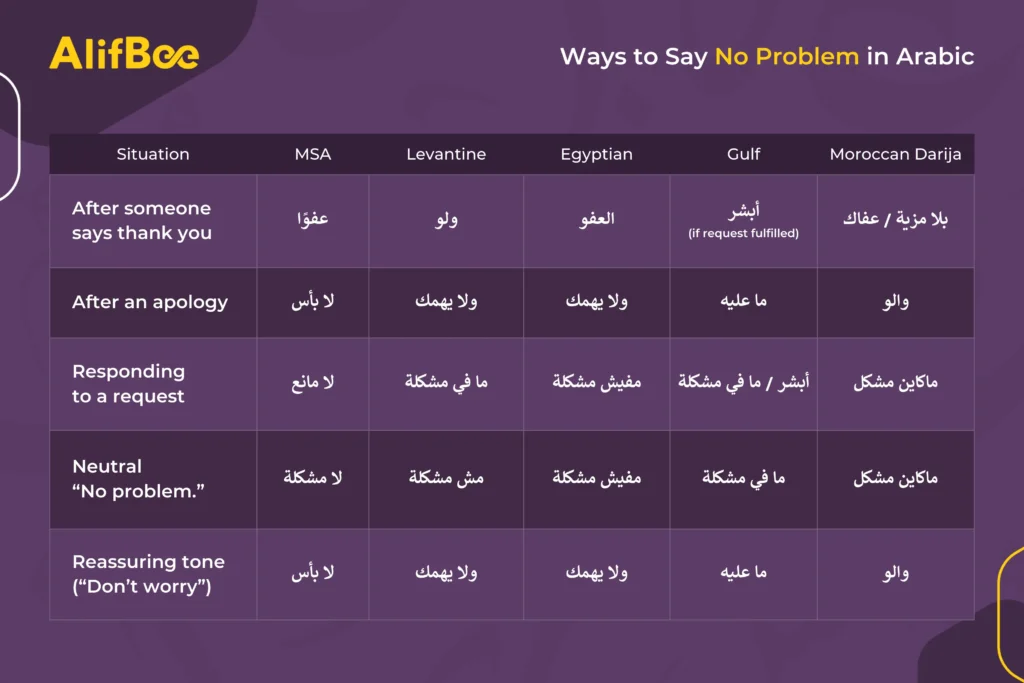
Ways to Say No Problem in Arabic Chart

Situation

MSA

Levantine

Egyptian

Gulf

Moroccan Darija

After someone says thank you

عفوًا

ولو

العفو

أبشر (if request fulfilled)

بلا مزية / عفاك

After an apology

لا بأس

ولا يهمك

ولا يهمك

ما عليه

والو

Responding to a request

لا مانع

ما في مشكلة

مفيش مشكلة

أبشر / ما في مشكلة

ماكاين مشكل

Neutral “No problem.”

لا مشكلة

مش مشكلة

مفيش مشكلة

ما في مشكلة

ماكاين مشكل

Reassuring tone (“Don’t worry”)

لا بأس

ولا يهمك

ولا يهمك

ما عليه

والو

Review 15 Ways to Say No Problem in Arabic
Complete the Conversation in Arabic

Conversations don’t stop at “no problem.” To sound natural, you should also know:

Final Word

Arabic gives you more than one way to say something as simple as “no problem,” and each option carries its own tone, regional usage, and level of formality. Once you understand when to use the right Arabic phrase, your conversations will sound more natural and confident.

If you want to master everyday Arabic expressions like these, explore the lessons inside the AlifBee app and start building real conversational skills step by step.

Author

  • Dania Ghraoui

    Dania is a teacher, translator, and content writer with a passion for making Arabic accessible and enjoyable for learners around the world. As the Blog Manager at AlifBee, she writes educational blogs that blend language tips, cultural insights, and practical learning strategies to support every Arabic learner’s journey.

Picture of Dania Ghraoui
Dania Ghraoui
Dania is a teacher, translator, and content writer with a passion for making Arabic accessible and enjoyable for learners around the world. As the Blog Manager at AlifBee, she writes educational blogs that blend language tips, cultural insights, and practical learning strategies to support every Arabic learner’s journey.
If you found this article helpful, please share it with your friends to spread the knowledge!
Facebook
LinkedIn
Telegram
X
Start your Arabic Learning Path with AlifBee!
syrian Logo
AlifBee App

Achieve incredible results with our platform Learn Arabic Online with AlifBee

AlifBee-Virtual School
AlifBee Virtual School

Join AlifBee Virtual School and master Arabic at your pace — from guided coaching to interactive self-learning.

AlifBee-Private Arabic Lessons
Private Arabic Lessons

Learn Arabic faster with live, one-on-one sessions tailored to your level and goals.

AlifBee-Books
AlifBee Workbooks Series

Explore AlifBee’s complete range of Arabic learning books for all ages!

Related Posts