Learn the Arabic Alphabet: The Arabic Letter Haa (ه)
Master the Arabic letter Haa (ه)! Explore its form, pronunciation, and variations. Learn how to write and pronounce the haa arabic letter with examples.
Throughout our Arabic letters journey, you may have noticed that some Arabic letters feel familiar right away, while others need a little more practice and patience. Hopefully, our letter for today will be quite easy to learn. It is heard in common English words like hair, hello, and inhale.
Did you guess the sound?
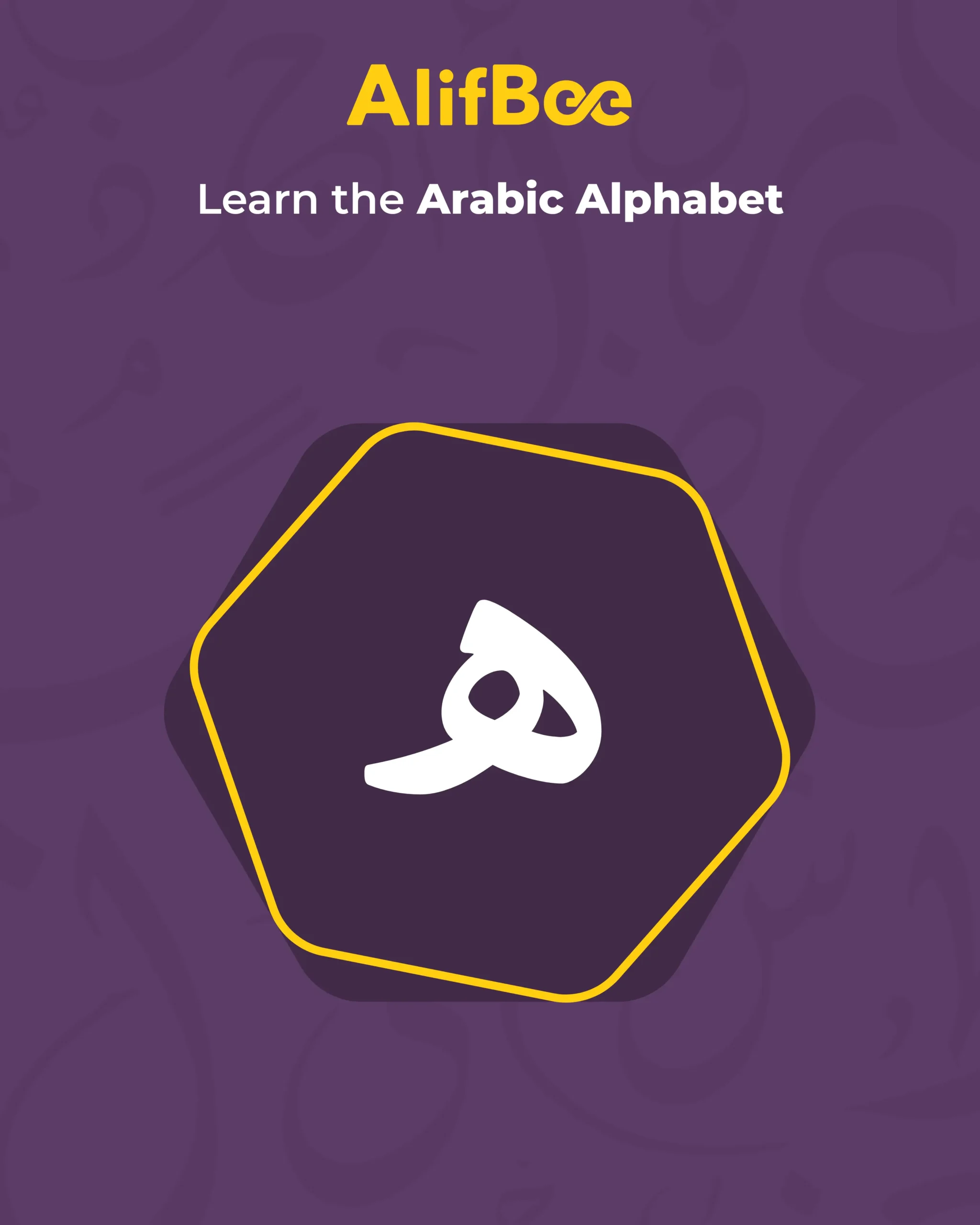
Today’s letter is Haa (ه), the 26th letter in the Arabic Alphabet. It’s a unique letter in many ways, especially because of the beautiful shapes it takes depending on its position in words.
We will also discuss its pronunciation and how it differs from another distinctive letter: The Arabic Letter ح Ha’. We learned all about Ha’ at the beginning of our journey, as the letter Ha’ ح is the sixth letter in the Arabic Alphabet.
But first, let’s start with the basics of pronouncing our letter for today.
The letter Haa in Arabic is pronounced by pushing air out of the throat gently without effort. It’s a soft light ‘h’ sound, similar to the ‘h’ in so many English words like hello and hat.
But unlike in English, where the letter H is usually found at the start of a word and less frequently in the middle, the Arabic letter Haa can appear in different positions in Arabic words, which makes it one of the features that make Arabic distinctive.
As for Ha’ ح, it’s a much deeper and stronger letter, produced by pushing air forcefully from the middle of the throat, with no voice. It is a breathy sound that has no exact English equivalent.
Confusing these two letters in Arabic changes the meaning of the words.
These are the basic shapes of the letter Haa, based on its location in a word.
Isolated
Initial
Medial
Final
ه
هـ
ـهـ
ـه - ه
The isolated form (ه) does not connect to any other letter and comes at the end of the word.
Draw a small closed loop, similar to a tiny circle (ه).
Examples of isolated Haa are included in the ‘the letter Haa in the final position’ section.
The initial form of Haa (هـ) is used at the beginning of a word. It connects to the next letter.
First, draw a small closed loop. Then draw a larger loop around it. Finally, draw a line to the left so the next letter can connect (هـ).
Hoopoe
hudhud
هُدْهد
I saw a hoopoe in the garden.
raʾaytu hudhudan fī al-ḥadīqah
رَأَيْتُ هُدْهُدًا فِي الْحَدِيقَة
Crescent
hilāl
هِلال
The crescent appeared in the sky.
ẓahara al-hilālu fī as-samāʾ
ظَهَرَ الْهِلالُ فِي السَّمَاء
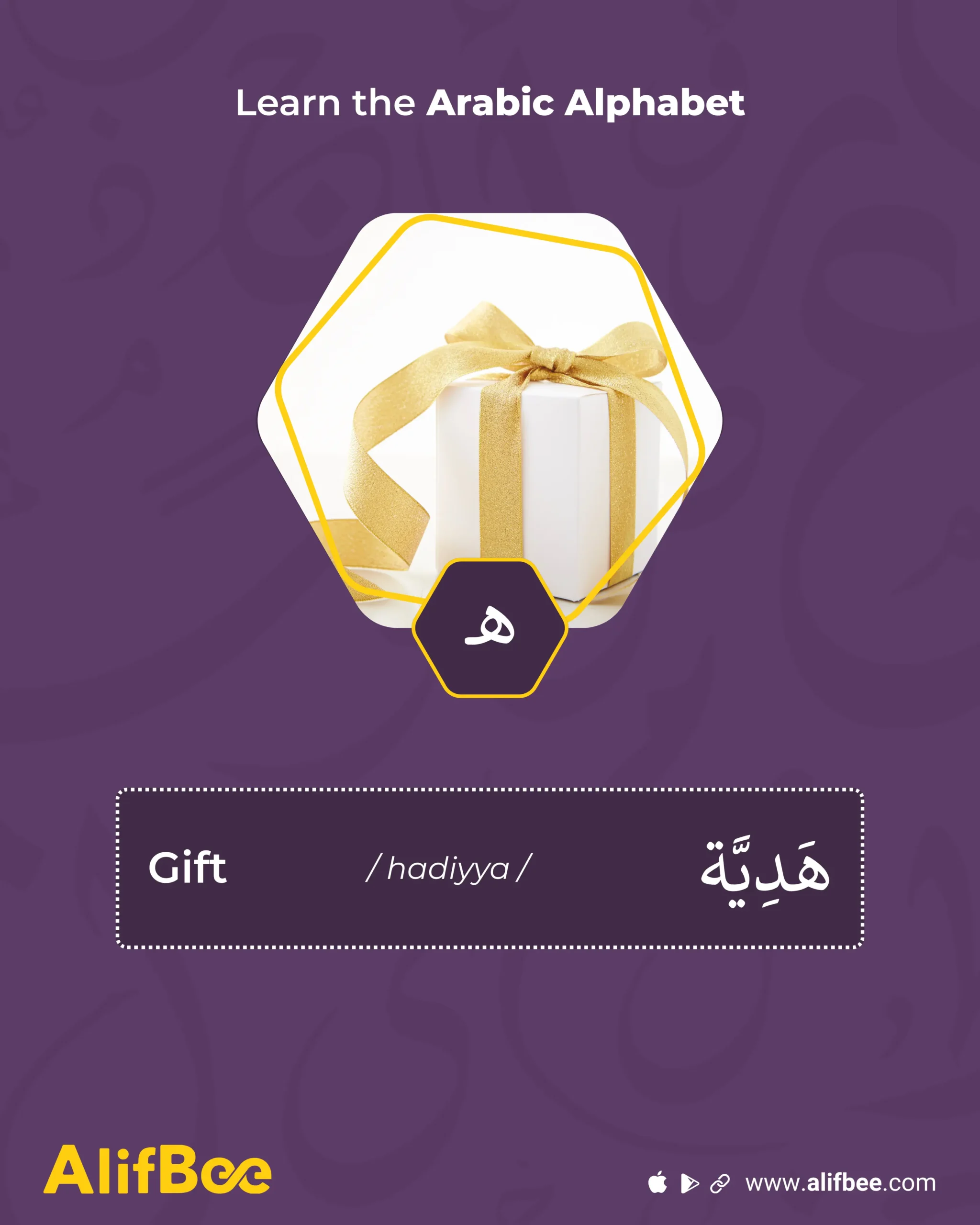
Gift
hadiyya
هَدِيَّة
My mother gave me a beautiful gift.
aʿṭatnī ummī hadiyyatan jamīlah
أَعْطَتْنِي أُمِّي هَدِيَّةً جَمِيلَة
Cat
hirrah
هرَّة
The cat is small.
al-hirratu ṣaghīra
الهِرَّةُ صَغِيرَةٌ
Phone
hātif
هَاتِف
I put my phone on the table.
Waḍaʿtu hātifī ʿalā aṭ-ṭāwilah
وَضَعْتُ هَاتِفِي عَلَى الطَّاوِلَة
When the letter Haa comes in the middle of a word, it has a distinctive shape that you can easily recognize in Arabic words. It begins with a connecting line from the right, followed by two loops: one upward and the other downward. Then it ends with a connecting line to the left, which connects to letters on both sides.
Note: The letter Haa can also appear in the middle of a word, but it retains the shape similar to the initial one when preceded by letters like ز, ر, د, ذ, etc.
Let’s check the following examples:
Plain (n)/ easy (adj)
sahl
سَهل
We spent the trip in the large plain.
aḍmaynā ar-riḥlata fī as-sahli al-kabīr
أَمْضَيْنَا الرِّحْلَةَ فِي السَّهْلِ الكَبِير
The exam was easy.
kāna al-imtiḥānu sahlan
كَانَ الِامْتِحَانُ سَهْلًا
Flower
zahra
زهرة
The child picked a flower for his mother.
qaṭafa aṭ-ṭiflu zahratan li-ummih
قَطَفَ الطِّفْلُ زَهْرَةً لِأُمِّه
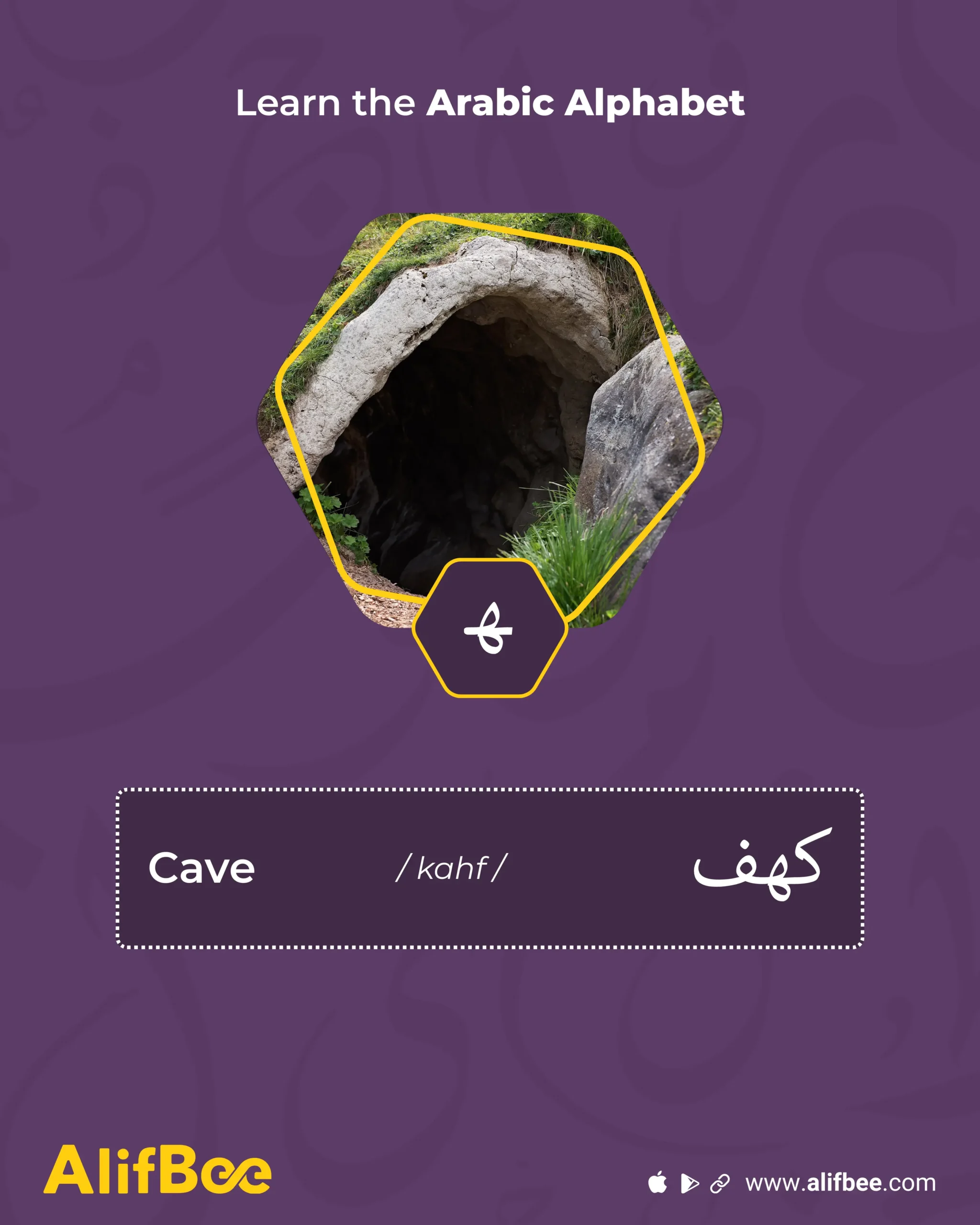
Cave
kahf
كهف
There’s a cave near the village.
Yūjadū kahfun bil-qurbi mina al-qaryah
يُوجَدُ كَهْفٌ بِالقُرْبِ مِنَ القَرْيَة
Engineer
muhandis
مهندس
My brother is an engineer in a big company.
akhī muhandisun fī sharikatin kabīra
أَخِي مُهَنْدِسٌ فِي شَرِكَةٍ كَبِيرَةٍ
Month
shahr
شَّهْر
I traveled to Turkey last month.
safartu ilā Turkiyā ash-shahra al-māḍī
سافَرْتُ إِلَى تُركيا الشَّهْرَ الماضِي
When the letter Haa appears at the end of a word, it can have two shapes. The first is the isolated form, which is a small closed loop on the writing line. The second begins with a connecting line from the right. Then, move the line slightly upward and form a closed loop (ـه).
Ready for some examples?
Face
wajh
وَجه
The child’s face was sad after losing the match.
Kāna wajhu aṭ-ṭifli ḥazīnan baʿda khasārat al-mubārāh
كَانَ وَجْهُ الطِّفْلِ حَزِينًا بَعْدَ خَسَارَةِ المُبَارَاة
Water
miyāh
مياه
I drink a lot of water in the summer.
ashrabu al-kathīra mina al-miyāhi fī aṣ-ṣayf
أشْرَبُ الكَثِيرَ مِنَ المِيَاهِ فِي الصَّيْف
Alarm
munabbih
مُنَبّه
I woke up to the sound of the alarm.
Istayqaẓtu ʿalā ṣawti al-munabbih
اسْتَيْقَظْتُ عَلَى صَوْتِ المُنَبِّه
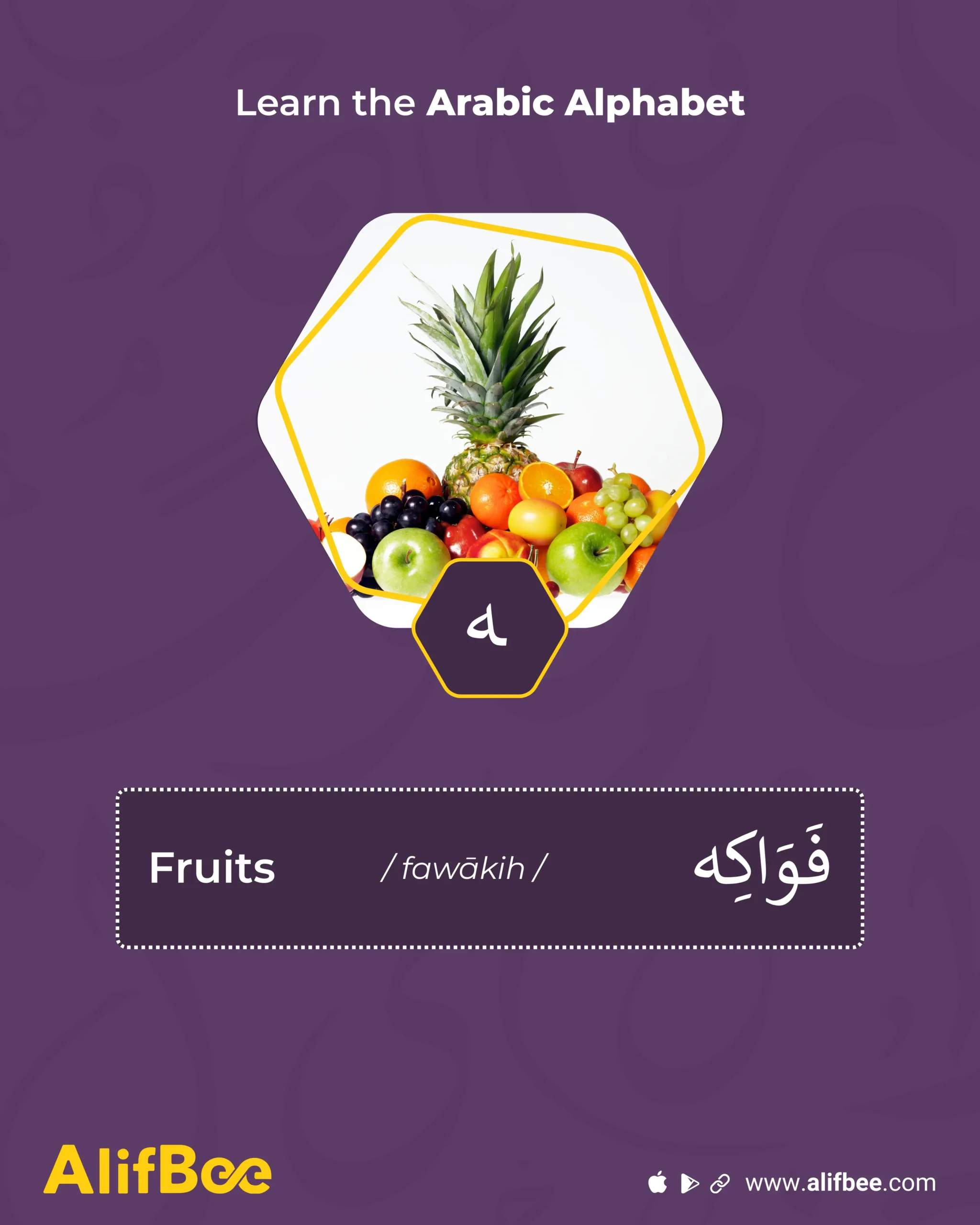
fruits
fawākih
فَوَاكِه
I put the fruits in the fridge.
Waḍaʿtu al-fawākihā fī ath-thallājah
وَضَعْتُ الفَوَاكِهَ فِي الثَّلَّاجَة
Direction
ittijāh
اتِّجَاه
I went in the right direction.
Dhahabtu fī al-ittijāhi aṣ-ṣaḥīḥ
ذَهَبْتُ فِي الاتِّجَاهِ الصَّحِيح
Haa (هـ) is always pronounced as a clear ‘h’ sound. It can be used as a root letter or a possessive suffix (e.g., كتابه kitābuh – “his book”), and its shape remains consistent.
Taa Marbuta (ة) appears at the end of feminine nouns or adjectives and sounds like ‘t’ when followed by a vowel. For example, in the word صديقة (ṣadīqah – “female friend”), when paused on with a sukoon (صديقةْ) it sounds like ‘h’, but in connected speech with a vowel (صديقةٌ / ṣadīqatun), the Taa Marbuta sounds like ‘t’.
Here are some similar words that you can practice pausing on and adding vowels to notice the difference:
girl
fatāh
فَتَاة
car
sayyārah
سَيَّارَة
garden
ḥadīqah
حَدِيقَة
beautiful [fem.]
jamīlah
جَمِيلَة
female teacher
muʿallimah
مُعَلِّمَة
Now that you’ve learned how to recognize, write, and pronounce the letter Haa (ه), you can continue practicing it with the AlifBee App. Learning Arabic letters takes time and consistency, and the app can support you with structured lessons and interactive exercises that help you review the alphabet, build vocabulary, and strengthen your reading and writing skills step by step.
You can start right away with a free 14-day trial on the AlifBee App.
Author
Diala is an experienced language educator and writer passionate about making Arabic learning simple and engaging. At AlifBee, she crafts educational content that connects English and Arabic learners through clarity and creativity.

Achieve incredible results with our platform Learn Arabic Online with AlifBee

Join AlifBee Virtual School and master Arabic at your pace — from guided coaching to interactive self-learning.

Learn Arabic faster with live, one-on-one sessions tailored to your level and goals.

Explore AlifBee’s complete range of Arabic learning books for all ages!
Master the Arabic letter Haa (ه)! Explore its form, pronunciation, and variations. Learn how to write and pronounce the haa arabic letter with examples.

Learn Arabic prepositions with a clear list, meanings, and examples. Understand how Arabic prepositions work and avoid common learner mistakes.

Learn essential Arabic phrases for Salah with clear meanings and pronunciation. Strengthen your prayer by understanding what you recite.

Discover a clear list of popular Arabic food names, including famous dishes from the Middle East, their origins, and cultural meaning.