Basic Vocabulary to Talk about Weather and Seasons in Arabic
Learn words to talk about weather and seasons in Arabic. Learn Arabic for “spring,” “winter,” “rain,” and more. Full Arabic Lesson with Pronunciation.
Before we plunge into the list, one big warning: “Arabic slang” is not rigid. There is no single “Arabic slang.” Instead, we have dialects—Levantine (Lebanon, Syria, Jordan, Palestine), Egyptian, gulf countries (Saudi, UAE, Kuwait, etc.), Iraqi, Maghrebi (Morocco, Algeria, Tunisia), and more. Some slang is pan-Arabic (used across dialects), but a lot is regionally specific.
Pan-Arabic slang words (e.g. yallā, khalas, akīd) tend to cross dialect boundaries and become understood broadly in most Arab countries.
Region-specific ones (e.g. shāku māku in Iraq, ʻanjad in Levant) might puzzle speakers outside those regions.
The same slang word means different shades of meaning or tone depending on the dialect.
So when you say “Arabic slang words,” always note the dialect’s origin. Use this word selectively, according to which speakers you are engaging.
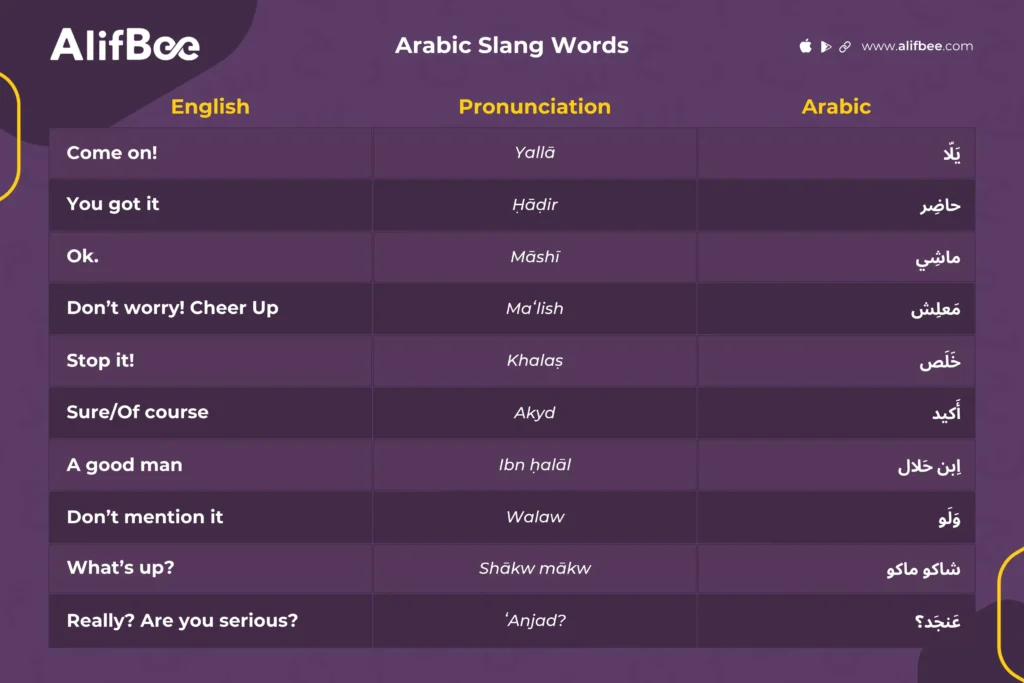
Below is a list of Arabic slang words (and Arabic slang phrases) that mix pan-Arab and regional flavor. I picked 10 so you can absorb deeply rather than skim a hundred.
This might be your favorite word if you’ve ever watched Arabic shows. It’s a universal way to say “let’s go,” used as slang at the end of a sentence or to denote action. Derived from “ya” (vocative) and “ilā” (to), it literally means “oh, to it!” Over time, it became a fun, energetic push that young Arabs use everywhere.
Example: “Yallā nrouḥ?” — “Come on, shall we go?”
Check the following examples in the Levantine dialect.
English
Transliteration
Arabic
Come on, shall we go?
Yallā nrouḥ?
يَلّا نروح؟
Come on, get up quickly.
Yallā qūm bisur‘a
يَلّا قوم بسرعة
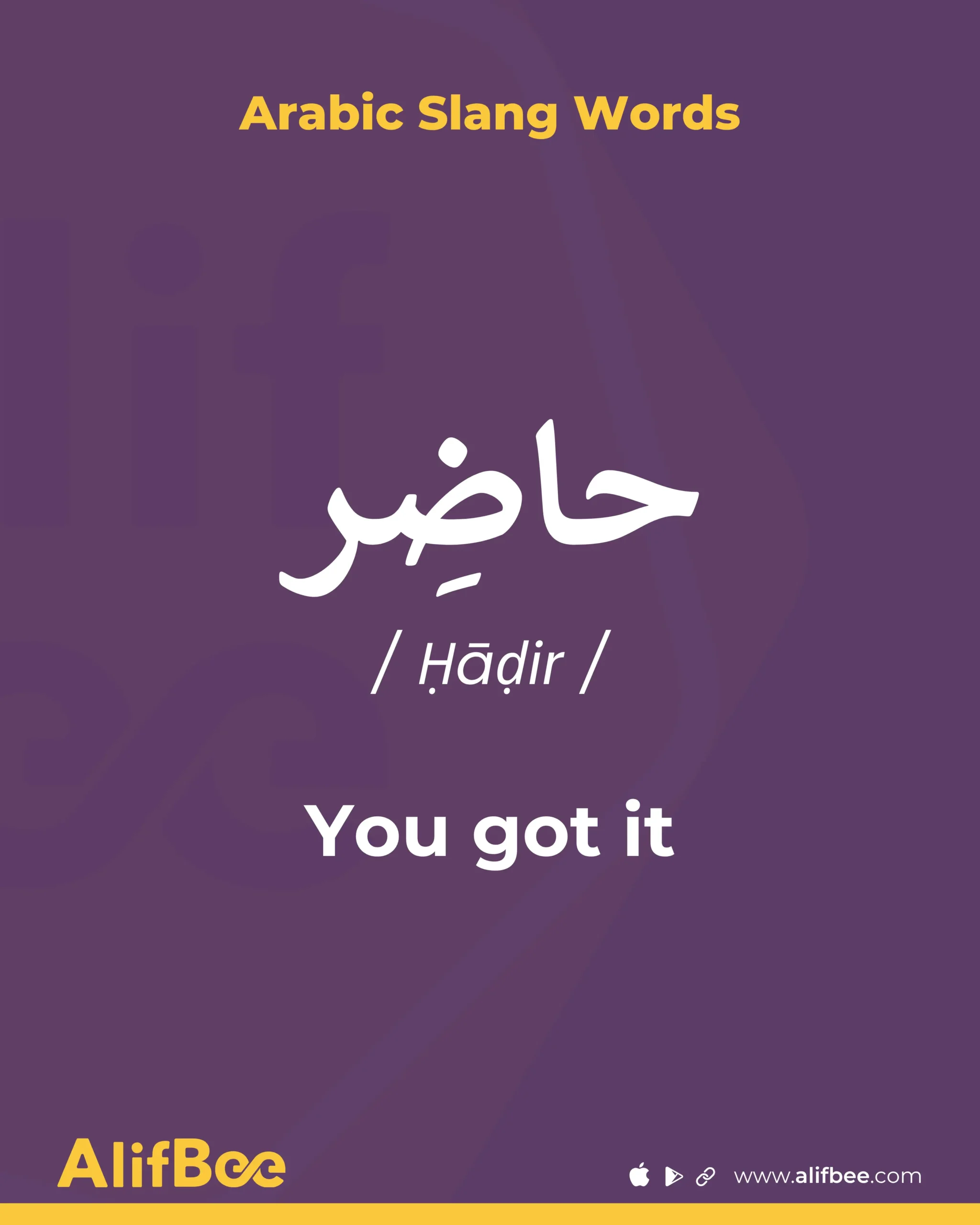
This word originally comes from the classical Arabic root ḥ-ḍ-r, meaning “to be present.” It is both polite and prompt. When someone says ḥāḍir, they’re showing respect and readiness. It’s used everywhere from family conversations to customer service interactions. Notice the following examples. The first one is said by an employee to a senior worker showing respect. The second one is said informally by a child to a parent asking for a chore done.
Check the following examples in MSA and Levantine dialect, respectively.
English
Transliteration
Arabic
Can you send me the report?
Hal yumkinuka an tursil lī al-taqrīr?
هل يمكنك أن ترسل لي التقرير؟
You got it.
Ḥāḍir
حاضِر
Can you bring with you yogurt?
Fīk tjyb maʻak laban?
فيك تجيب مَعَك لَبن؟
I’m on it.
Ḥāḍir
حاضِر
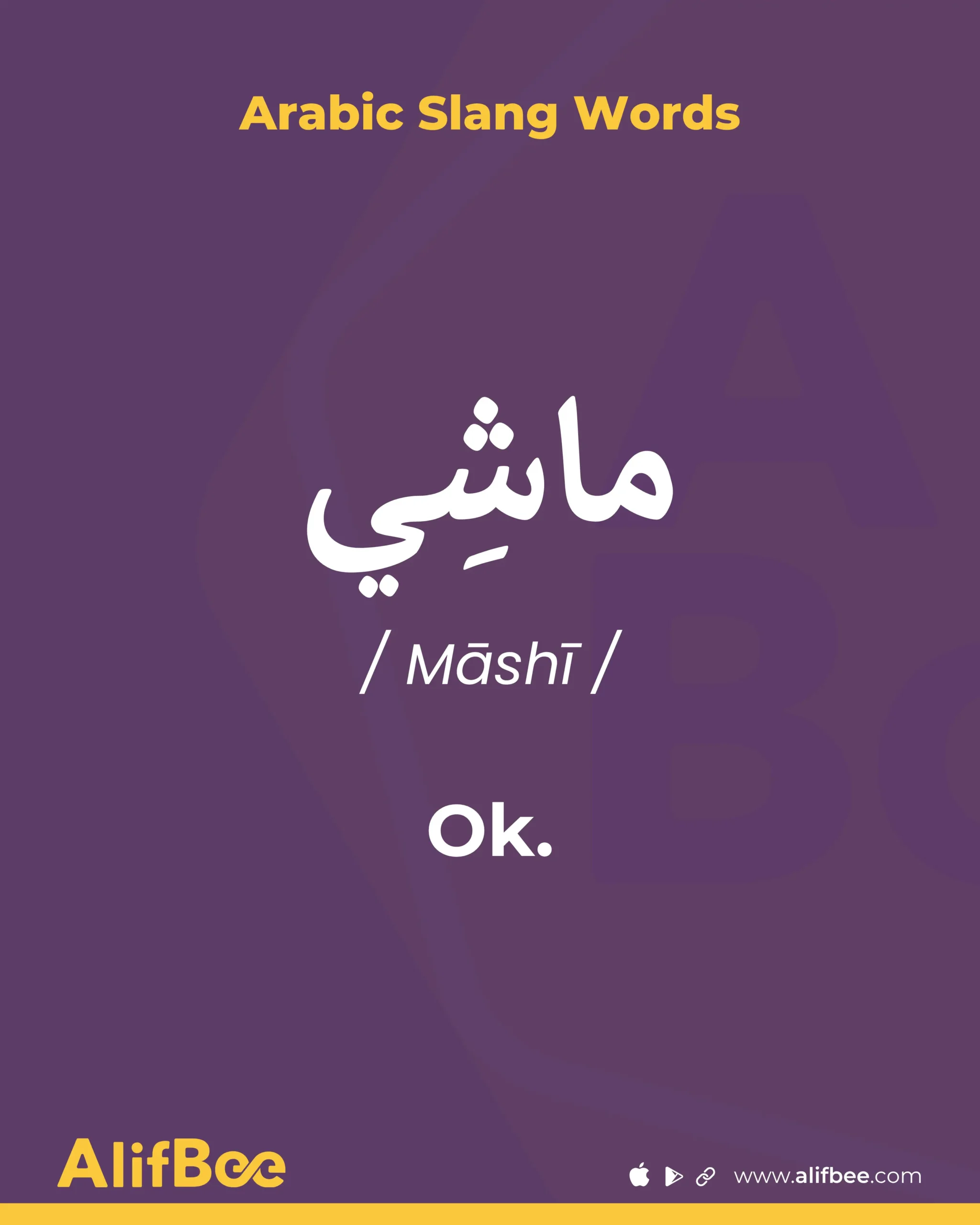
Derived from māsha (“to walk”), māshī literally means “going,” but in daily life it conveys easy acceptance—“okay” or “that’s fine.” It’s the ultimate go-with-the-flow response and one of the friendliest Arabic slang words you can use casually.
Check the following examples in the Levantine dialect.
English
Transliteration
Arabic
How about meeting at seven?
Shū raʼyk nltqy al-sāʻah 7?
شو رأيك نلتقي الساعة 7؟
Okay
māshī
ماشِي
Want to start now?
bddak nbdā hlaʼ?
بدك نبدا هلأ ؟
Fine
māshī
ماشِي
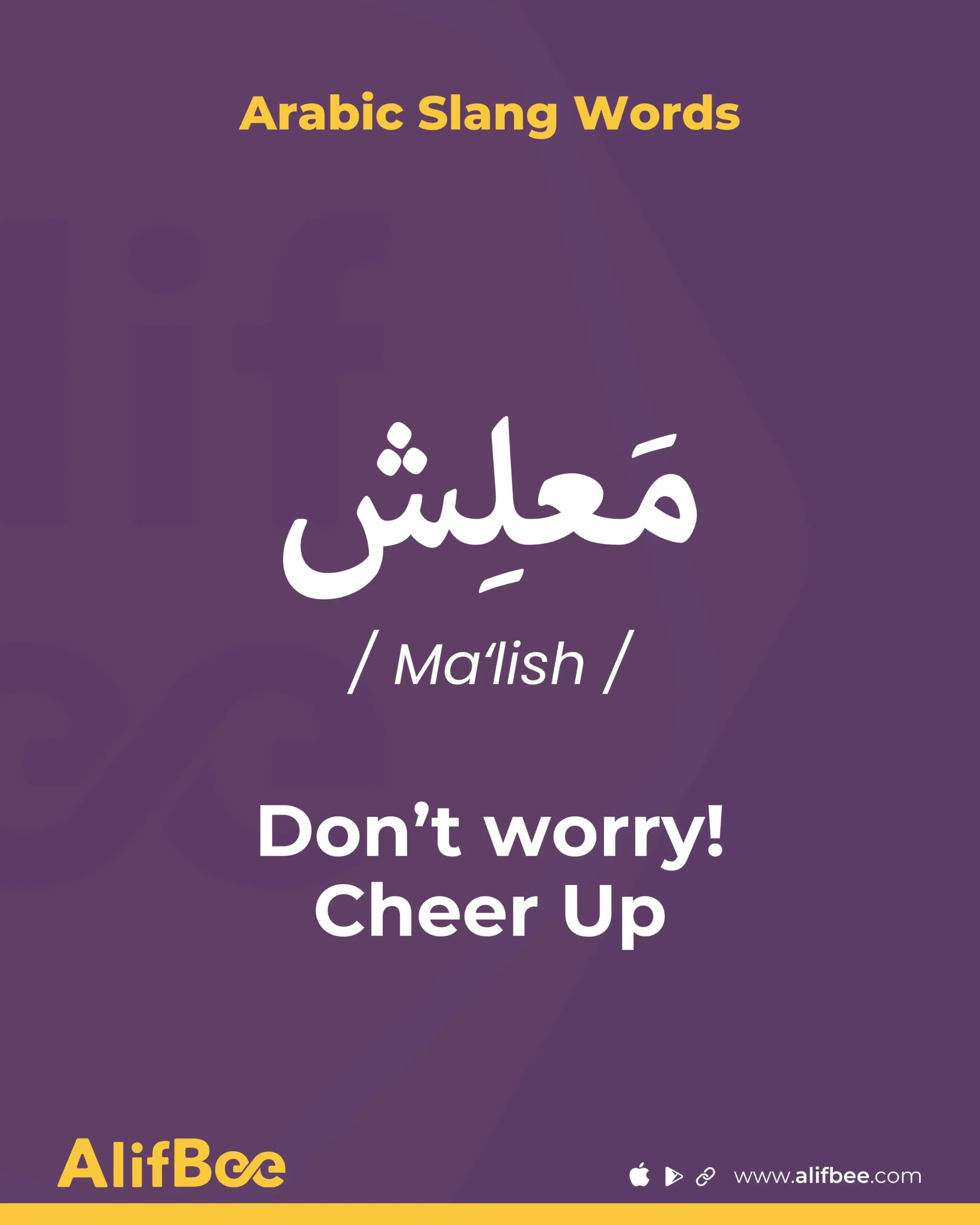
This comforting word probably comes from ma ‘alay shay’ (“no blame / no harm”). It’s pure empathy in sound form. People use it to comfort, forgive, or calm, often paired with a soft tone and smile.
Check the following examples in the Levantine dialect.
English
Transliteration
Arabic
Don’t worry, don’t take it too seriously.
Maʻlish, lā takhudh al-umur bijiddie
معليش، لا تاخذ الأمور بجدية
Sorry, I forgot my keys
Āsif, niseet mafātīḥī
آسف، نسيت مفاتيحي
It’s okay.
Maʻlish
معليش
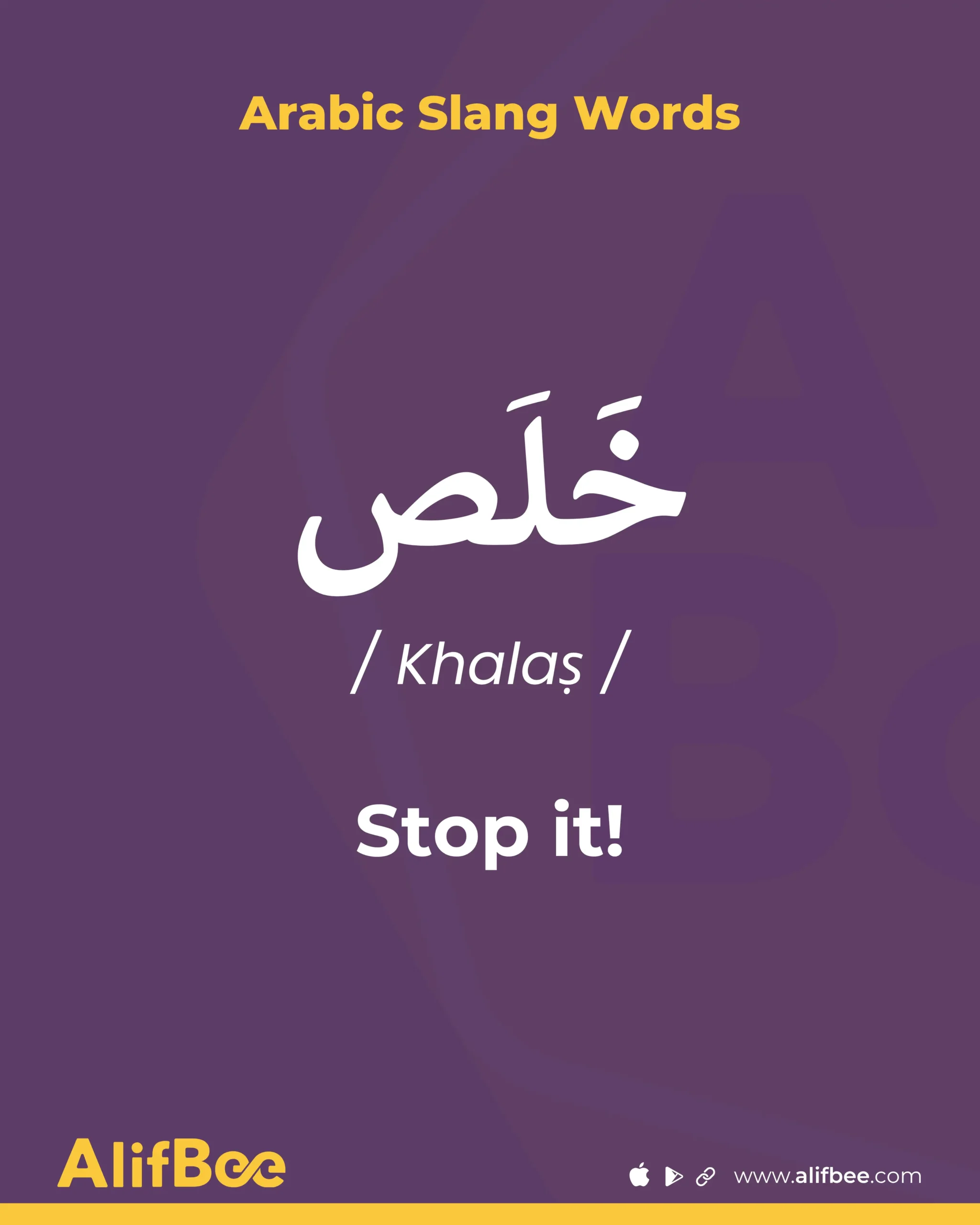
Literally meaning “finished,” khalaṣ has become a quick, all-purpose signal for “enough,” “done,” or “stop.” Depending on tone, it can express calm resolution or sharp impatience. It’s one of the few Arabic slang phrases that truly depends on delivery. In the Egyptian dialect, the second syllable is longer: Khalaaṣ.
Check the following examples in the Egyptian dialect.
English
Transliteration
Arabic
Enough, let’s not argue more.
Khalaaṣ, balāsh niqāsh aktar
خَلَاص بلاش نقاش أكتر
That’s it, I’m leaving.
Khalaaṣ, anā māshī
خَلَاص، أنا ماشي
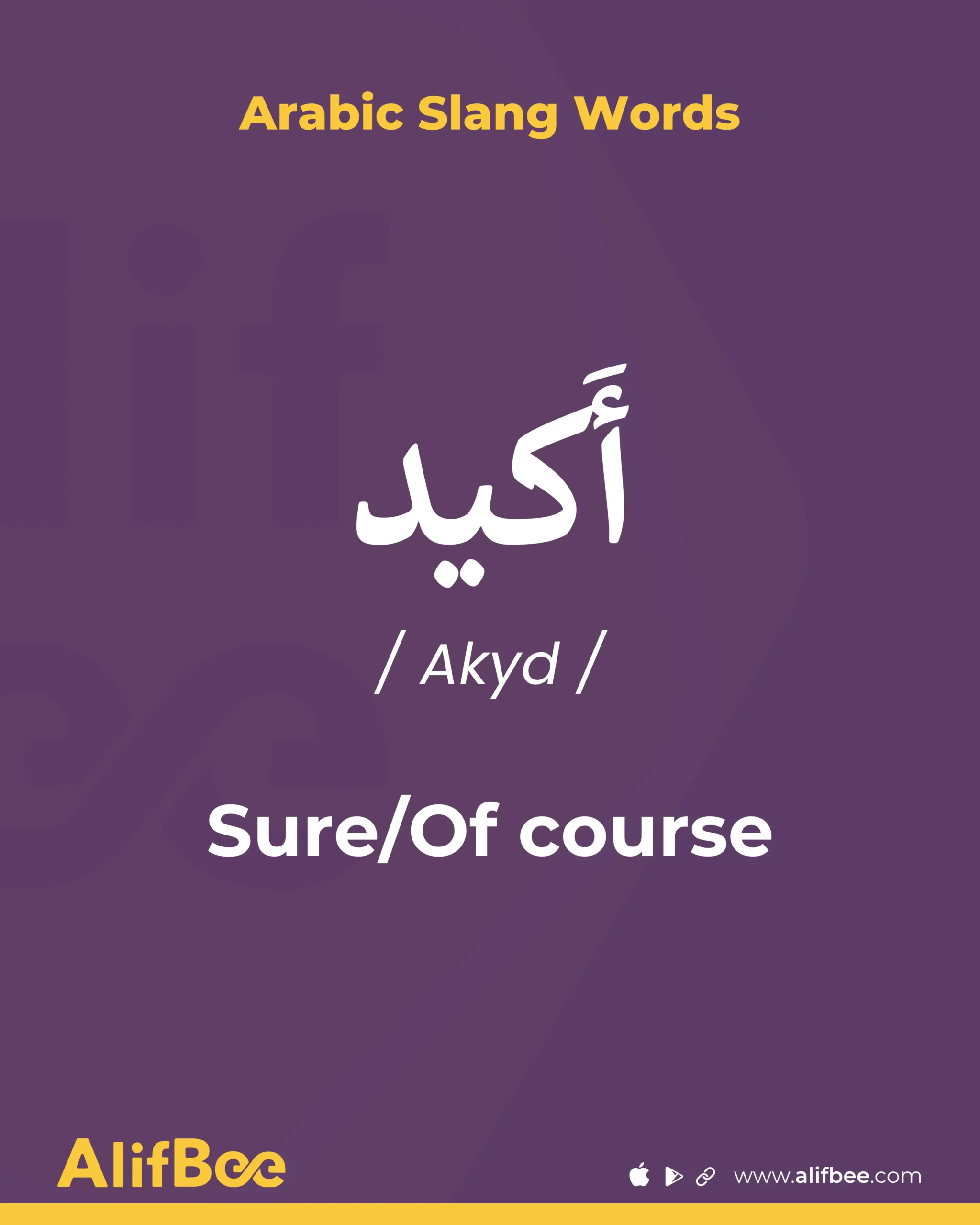
Akīd is the confident cousin of “yes.” It is derived from ʾakada (to affirm), which conveys certainty and positivity. You can use it to confirm plans or agree with enthusiasm; it’s a quick way to sound natural and sure of yourself.
Check the following examples in the Egyptian dialect.
English
Transliteration
Arabic
Will you come to the party today?
gāy ʻālḥafl el-nahārdah?
جاي عالحفل النهاردة؟
Sure!
akīd
أَكيد
Of course you understand what I mean.
Akīd inta fāhim qaṣdi
أَكيد إنت فاهم قصدي
Literally “son of what is lawful,” ibn ḥalāl describes someone upright and honorable or a person of integrity. This expression is rooted in Islamic and cultural values, and it’s the highest compliment to call someone ibn ḥalāl in everyday speech as a nod to good character.
Check the following examples in the Levantine dialect.
English
Transliteration
Arabic
That guy is a good man.
Flān ibn ḥalāl
فلان ابن حلال
You’re a decent man, brother.
Enta ibn ḥalāl yā akhī
إنت ابن حلال يا أخي
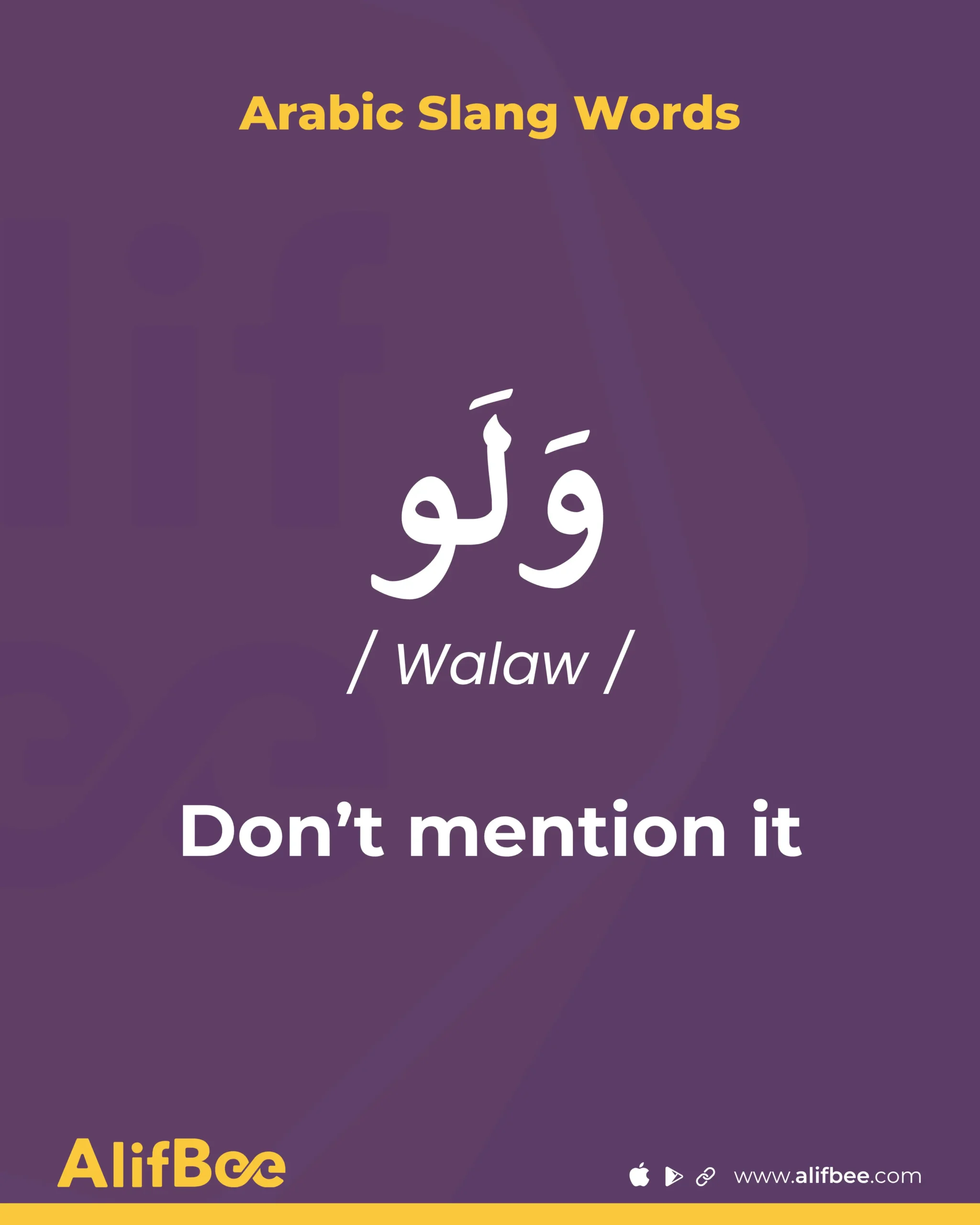
Used mainly in the Levant, walaw is one of the most heartwarming Arabic slang phrases. Literally, it means “and if,” but it evolved into a humble way to downplay gratitude or an apology, something like “it’s nothing, you’re welcome.”
Check the following examples in the Levantine dialect.
English
Transliteration
Arabic
Thanks a lot
Shukran ktīr
شكرًا كتير
Don’t mention it.
Walaw
وَلَو
Sorry for the trouble
Āsif ‘alā al-iz‘āj
آسف على الإزعاج
No problem.
Walaw
وَلَو
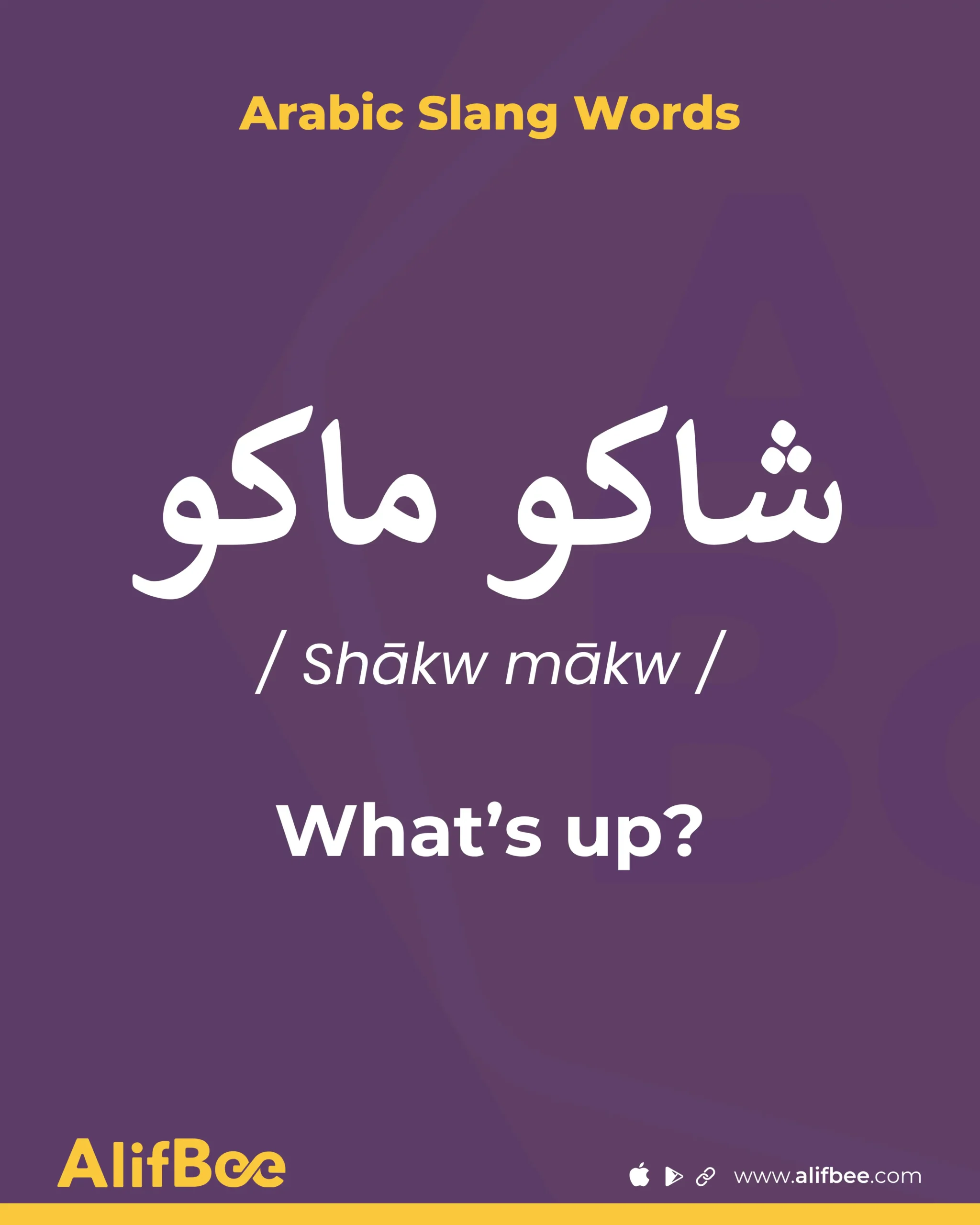
This is an Iraqi greeting that literally means “what’s there and what’s not there?” It’s pretty casual and curious. Using it instantly makes you sound like a local in Baghdad, or at least someone who knows Iraqi vibes.
Check the following examples in the Iraqi dialect.
English
Transliteration
Arabic
Hey, what’s up?
Halā shāku māku?
هلا شاكو ماكو؟
Anything new? What’s going on?
Māku jadīd? Shāku māku?
ماكو جديد؟ شاكو ماكو؟
Common in Lebanese and Syrian Arabic, ‘anjad means “for real?” It’s the perfect mix of surprise and disbelief. It can be used just like English “Really?!” or “No way!”
Check the following examples in the Levantine dialect.
English
Transliteration
Arabic
Did I tell you he bought it?
Qultelak enno eshtarāhā?
قلتلك إنه اشتراها؟
Really?
‘Anjad?
عَنجَد؟
Seriously? I don’t believe it!
‘Anjad? Mā Bṣadde’!
عَنجَد؟ ما بصدّق!
Learning Arabic slang words and Arabic slang phrases when learning Arabic is an essential part for sounding natural, connecting with native speakers, and unlocking the emotional texture of everyday speech.
My advice: pick two or three you like most (maybe yallā, maʻlish, akīd), practice them in context, listen for them when others speak, and slowly let more slip into your speech.
Slang can be messy, flexible, or risky, but that’s what makes it alive. Use it, misstep, correct yourself — that’s how you graduate from textbook speaker to someone with a real voice in Arabic.
Want to understand and use Arabic phrases like these with confidence? Begin your 14-day free learning journey with AlifBee.

Achieve incredible results with our platform Learn Arabic Online with AlifBee

Join AlifBee Virtual School and master Arabic at your pace — from guided coaching to interactive self-learning.

Learn Arabic faster with live, one-on-one sessions tailored to your level and goals.

Explore AlifBee’s complete range of Arabic learning books for all ages!
Learn words to talk about weather and seasons in Arabic. Learn Arabic for “spring,” “winter,” “rain,” and more. Full Arabic Lesson with Pronunciation.

Master the Arabic letter kaaf ك! Learn to write ك in all its forms, understand its pronunciation, and distinguish it from the letter qaf in the Arabic language.

Learn the most authentic ways to say Good Morning in Arabic. Basic morning greetings including modern, classical, formal, and dialect phrases, with pronunciation and cultural context.

Say Congratulations in Arabic! Learn common phrases to congratulate someone on a wedding, graduation, or any special occasion. Find the perfect Arabic phrase.