How to Give Condolences in Arabic

|
Reading Time: 7 minutes
Home / Everyday Arabic / How to Give Condolences in Arabic
Listen to: How to Give Condolences in Arabic
Listening Bee

While sharing in someone’s joy is important, being there during times of sorrow and loss is even more vital. Arab and Islamic cultures have their own unique ways of offering comfort. In Islam, supporting those close to us in times of sorrow is a profound act of faith. We show up to share their pain and offer reminders of patience and faith.

In this article, we will explore common condolences in Arabic, how to respond to them, and what Muslims say when someone dies, comparing these expressions with those used in English.

The Most Common Arabic Condolence Phrase

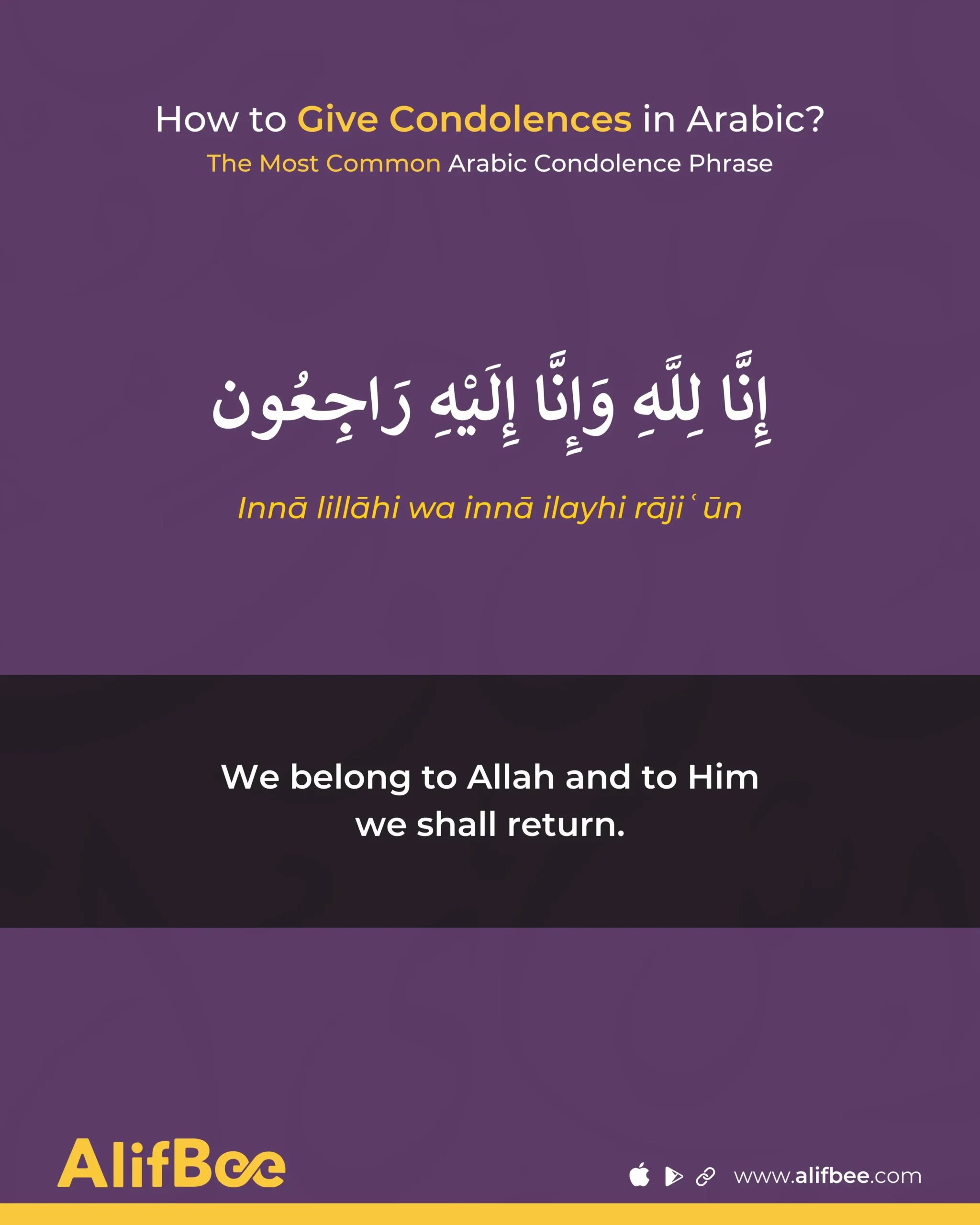
No matter which Arab country you are in, this is one of the most common phrases used during times of condolence. Muslims say it when someone dies or when they experience loss or hardship.

The meaning of this phrase is that we belong to God, that everything is in His hands, and that we will all return to Him. It brings comfort and peace to the heart during difficult times, reminding us that while our pain is real, this life is only temporary.

This practice comes directly from the Qur’an, which describes those who remain patient in times of hardship:
“Who, when faced with a disaster, say, ‘Surely to Allah we belong and to Him we will ˹all˺ return.’” (Al-Baqarah 2:156)

Saying this phrase is also an act of faith and carries a reward for those who remain patient and strong, as the Prophet Muhammad (peace be upon him) taught.

We belong to Allah and to Him we shall return

Innā lillāhi wa innā ilayhi rājiʿūn

إِنَّا لِلَّهِ وَإِنَّا إِلَيْهِ رَاجِعُون

Common Condolence Phrases in Arabic

1

عظَّم الله أَجرَكم

This expression is an Islamic condolences dua (prayer) said to the loved ones and family of the deceased. It is a prayer asking Allah to increase their reward for the patience they show and for the pain they experience after losing someone dear to them.

It reflects the Islamic belief that suffering, whether physical or emotional, carries a reward from God when a person remains patient and accepts hardship with faith.

May Allah increase your reward.

ʿAẓẓama Allāhu ajrakum

عظَّم الله أَجرَكُم

2

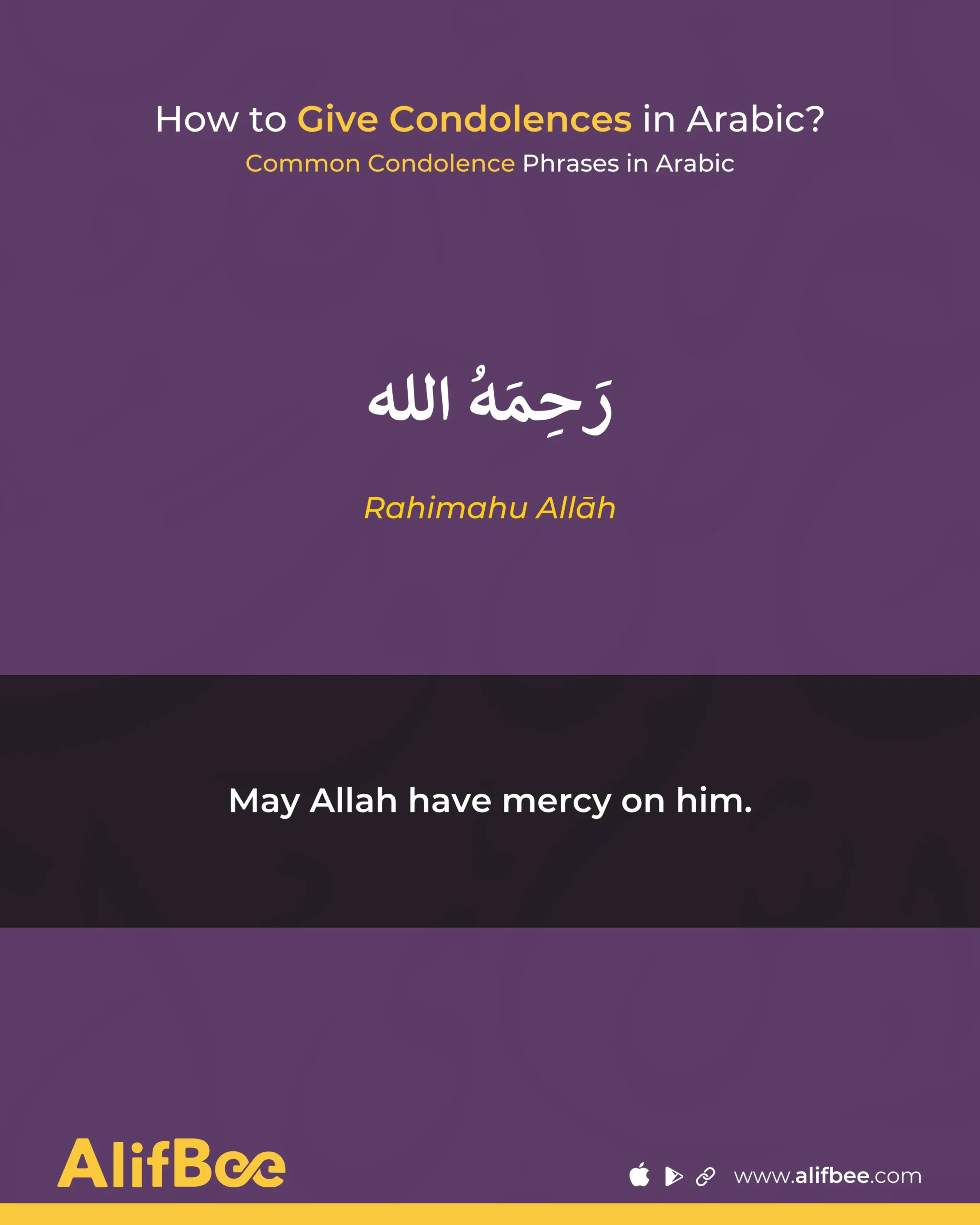
رَحِمَهُ الله

This is said about the deceased and is often used when speaking to their loved ones or when remembering the person who has passed away, especially during condolence gatherings. It is a prayer asking God to have mercy on the deceased and forgive them.

May Allah have mercy on him.

Rahimahu Allāh

رَحِمَهُ الله

3

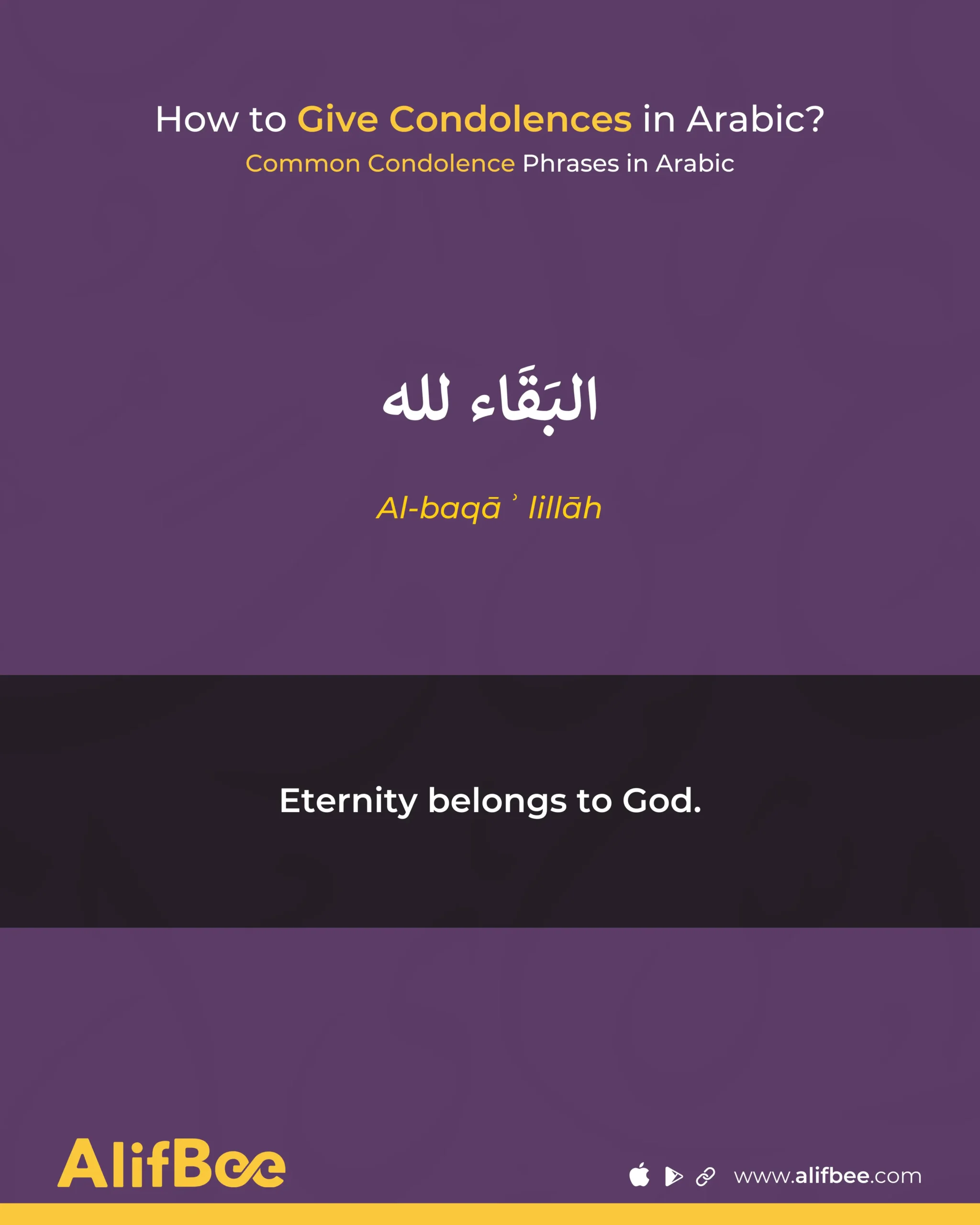
البقاء لله

This condolence in Arabic comes from the Islamic belief that everything in this world is temporary and that only the Creator is eternal. It reminds the family of the deceased that no matter how deeply we love and become attached to the people in our lives, nothing remains forever except God. It also reminds us that death is a reality for all human beings, no matter who they are.

Eternity belongs to God.

Al-baqāʾ lillāh

البَقَاء لله

4

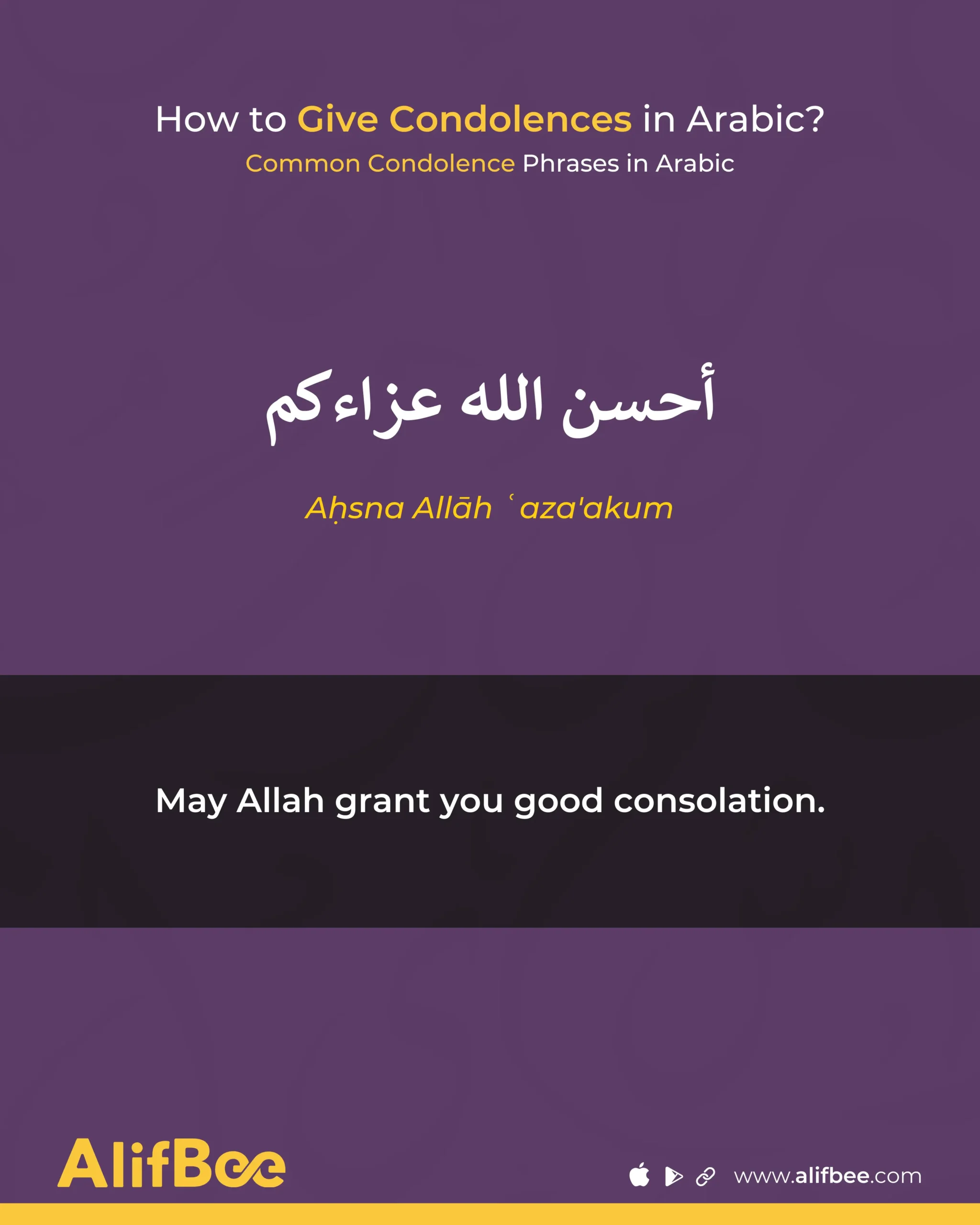
أحسن الله عزاءكم

This expression is used to comfort the hearts of the loved ones of the deceased. It is meant to ease their pain and make the loss a little lighter. It is a direct prayer asking God to grant them patience during such a difficult time and is commonly  used as a respectful and formal way to offer condolences in Arabic.

May Allah grant you good consolation.

Aḥsna Allāh ʿaza'akum

أَحسَنَ الله عَزَاءَكُم

How to Respond to Condolences in Arabic

1

شكر الله سعيكم

This is a simple way to express thanks and appreciation. It is a prayer asking Allah to accept and reward the efforts of those who offered condolences, attended the funeral, helped during such a difficult time, and stood by the family and supported them in their grief.

May Allah reward your efforts.

Shakara Allāhu saʿyakum

شَكَرَ الله سَعيَكُم

2

جزاكم الله خيرًا

This is an Islamic expression of gratitude. It is said by the loved ones of the deceased during times of condolence or mourning to those who come to offer their sympathy. It is a prayer asking Allah to grant them goodness in this life and the next for their efforts, following the teaching of the Prophet Muhammad (peace be upon him), who encouraged Muslims to use this expression when thanking others for their kindness.

May Allah reward you with goodness.

Jazākum Allāhu khayran

جَزَاكُم الله خَيرًا

3

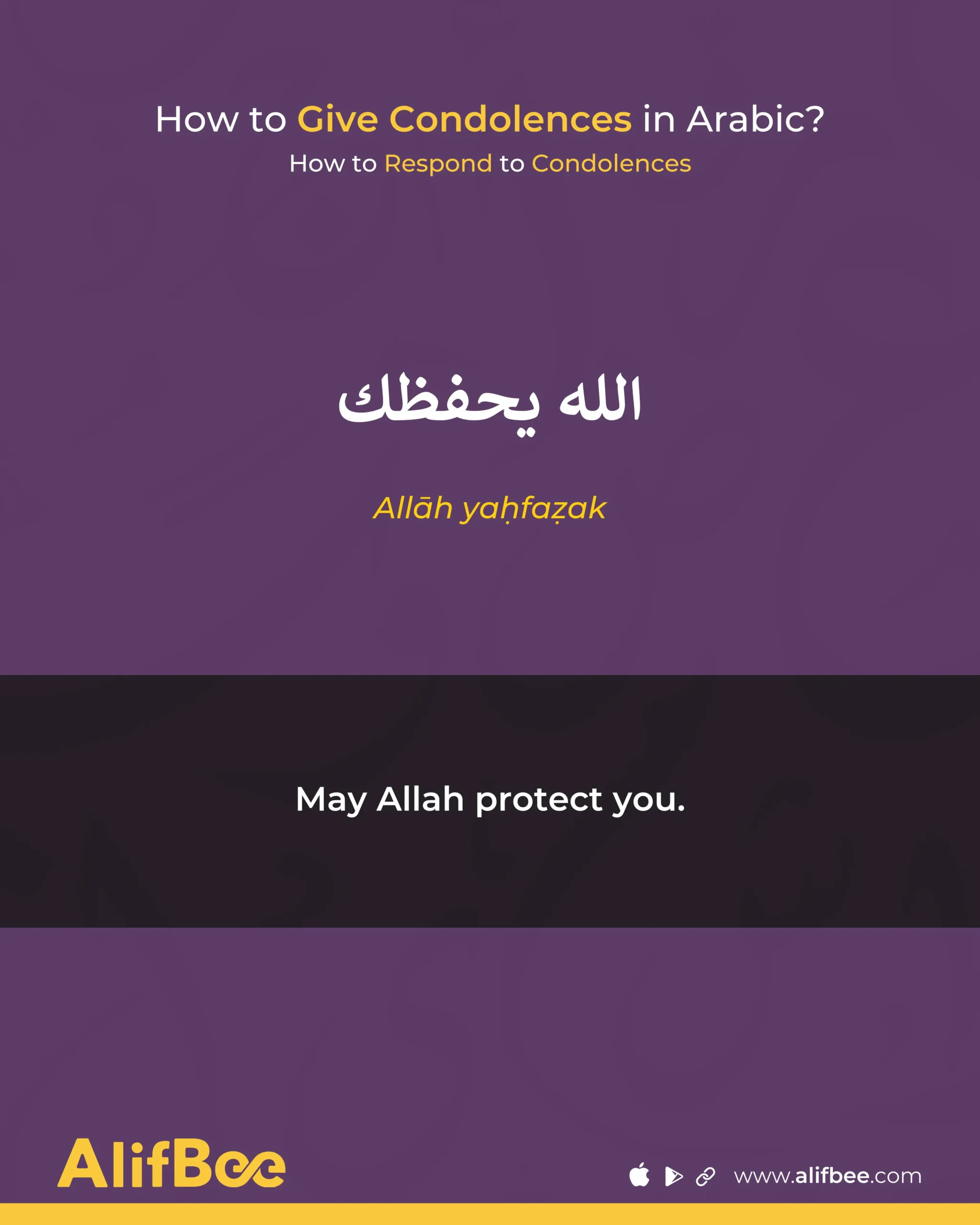
الله يحفظك

Praying that Allah protects those who offered condolences and keeps them safe from harm is also an Islamic way of expressing gratitude. It is a way of wishing them safety and well-being in return for their support and the kindness they showed during a difficult time.

May Allah protect you!

Allāh yaḥfaẓak

الله يحفَظَك

How to Say My Condolences in Arabic

Many learners ask how to say “my condolences in Arabic.” Unfortunately, there is no single common expression in Arabic that exactly matches the English phrase “my condolences.” Instead, there are several expressions that convey a similar meaning, though they are not identical.

1

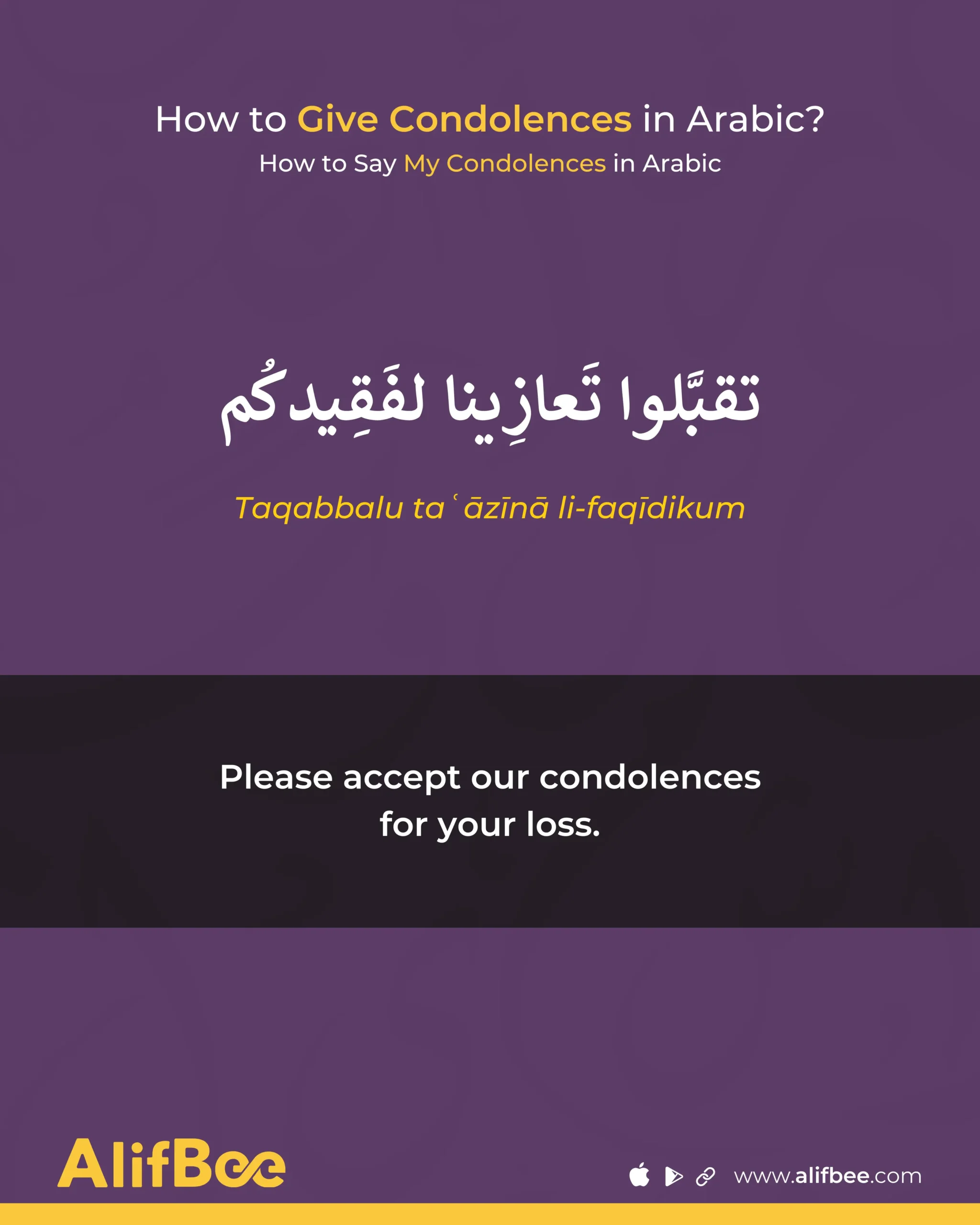
تعازينا

This is a straightforward and simple way to offer condolences. It is often used in writing, such as in condolence messages or cards, but it can also be said in person to the bereaved.

Our condolences

Taʿāzīnā

تَعَازِينَا

Please accept our condolences for your loss

Taqabbalu taʿāzīnā li-faqīdikum

تقبَّلوا تَعازِينا لفَقِيدكُم

2

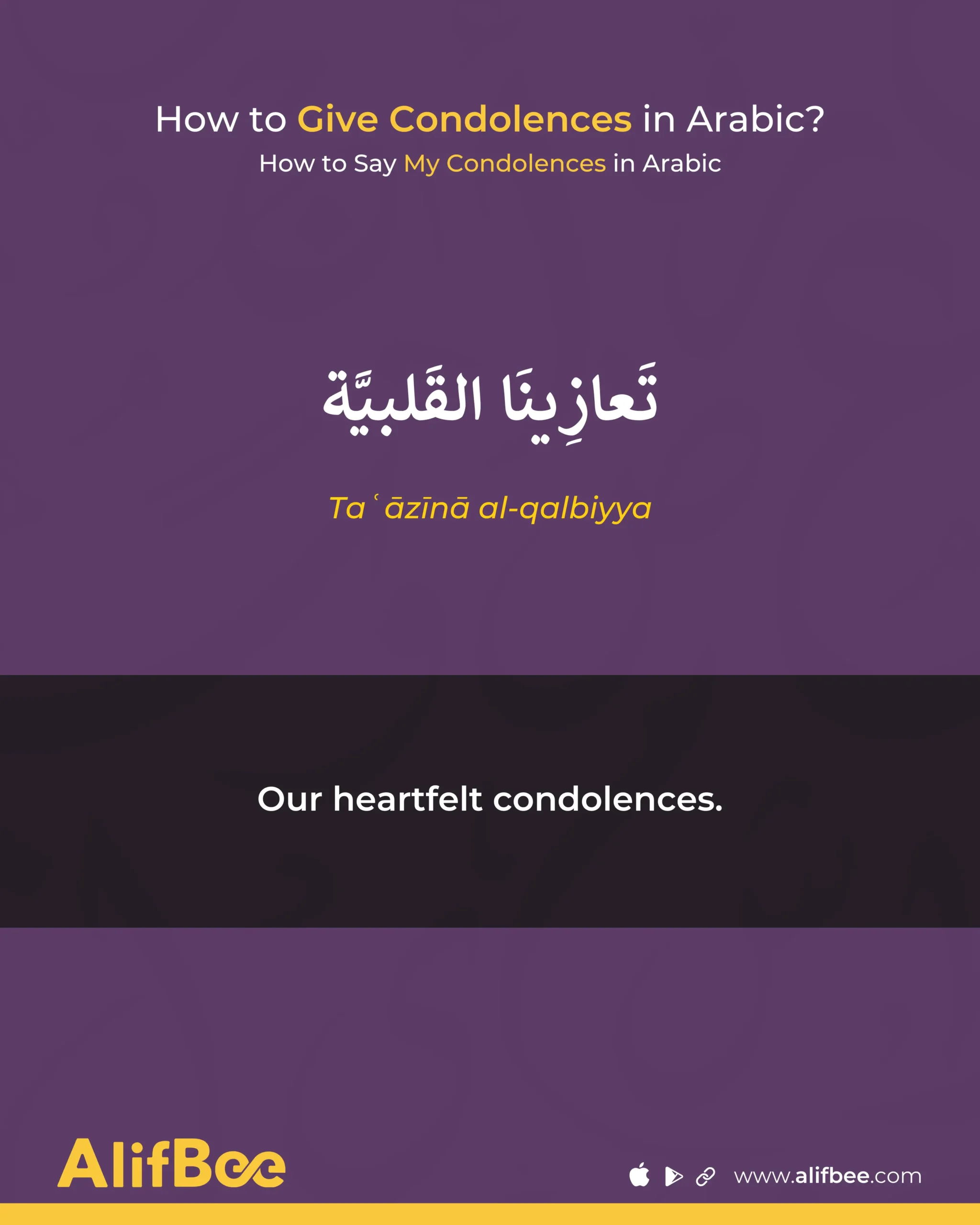
تعازينا القلبية

This expression carries a slightly stronger emotional tone. It is similar to the previous one, but stronger because it includes the word qalbiyya, which means “from the heart.” By adding this word, the expression conveys heartfelt sympathy and compassion for the bereaved. It is often used in formal condolences in Arabic.

Our heartfelt condolences

Taʿāzīnā al-qalbiyya

تَعازِينَا القَلبيَّة

Our heartfelt condolences to the family of the deceased

Taʿāzīnā al-qalbiyya li-ʿāʾilat al-faqīd

تَعازِينَا القَلبيَّة لعَائلة الفَقِيد

All of the expressions mentioned above can be used to offer condolences. However, the most commonly used condolences in Arabic are phrases with a religious background, such as عظم الله أجركم (ʿAẓẓama Allāhu ajrakum). In Arab culture, people often prefer these sayings because they reflect deeper care and emotional support in difficult moments.

For this reason, it is often more helpful to look at what people say when someone dies in Islam and what Muslims commonly say in times of loss.

Review How to Give Condolences in Arabic
Cultural Etiquette of Giving Condolences in Arabic

  •   In Arab and Muslim cultures, condolences usually take place within the first three days after the death of the deceased, to avoid prolonging the grief of the bereaved.
  •   Avoid long conversations with the family of the deceased. A few sincere words or a short Islamic condolences dua are usually enough to offer comfort.
  •   Modest clothing is important when attending a condolence gathering. Wearing dark colors and avoiding bright colors shows respect for the atmosphere of grief.
  •   Sit calmly and respectfully, and join others in reading the Qur’an or making dua for the deceased.
  •   If you are unable to visit in person, offering condolences by phone or sending a message is also acceptable and can still show your support.

Dua for the Deceased in Arabic

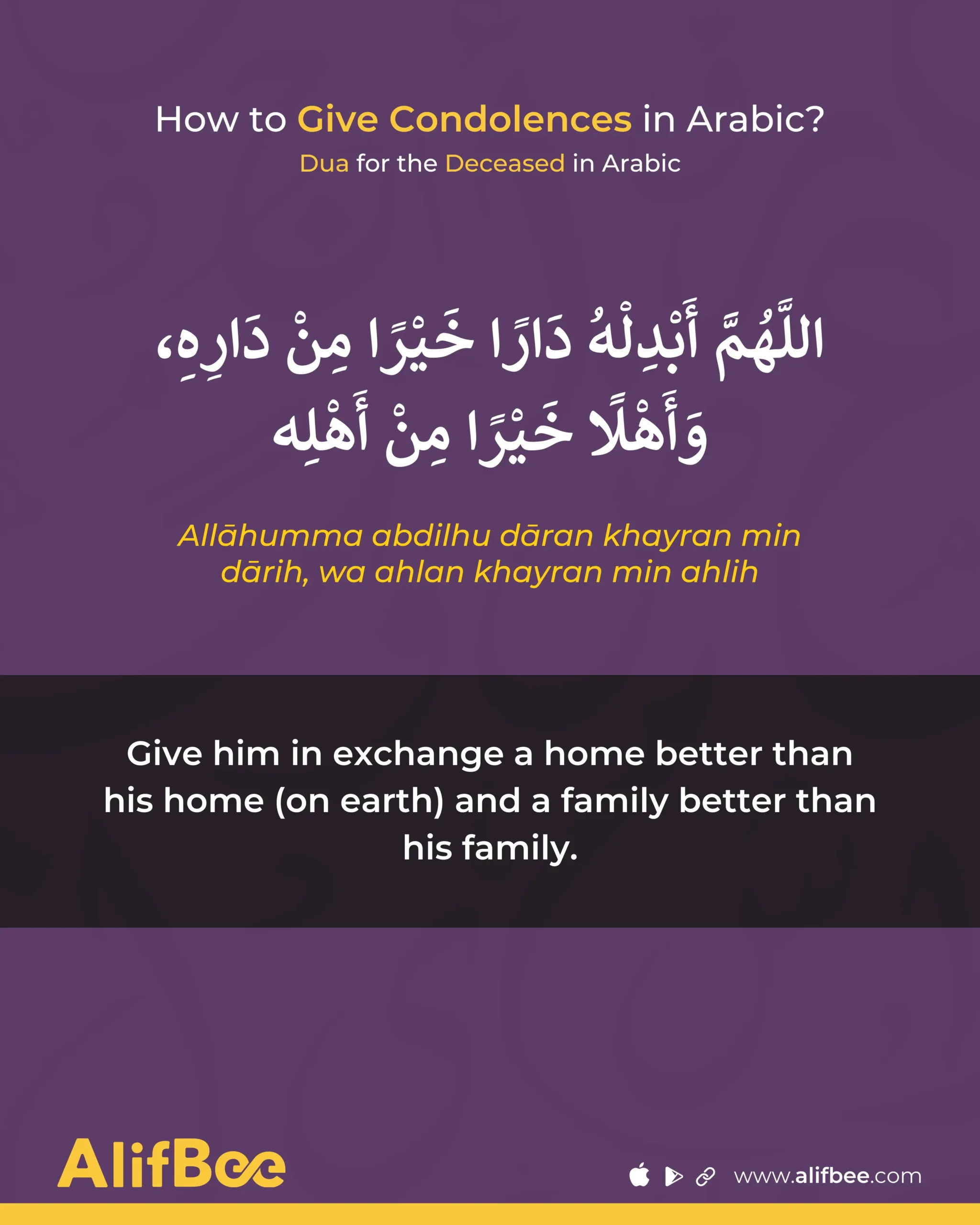
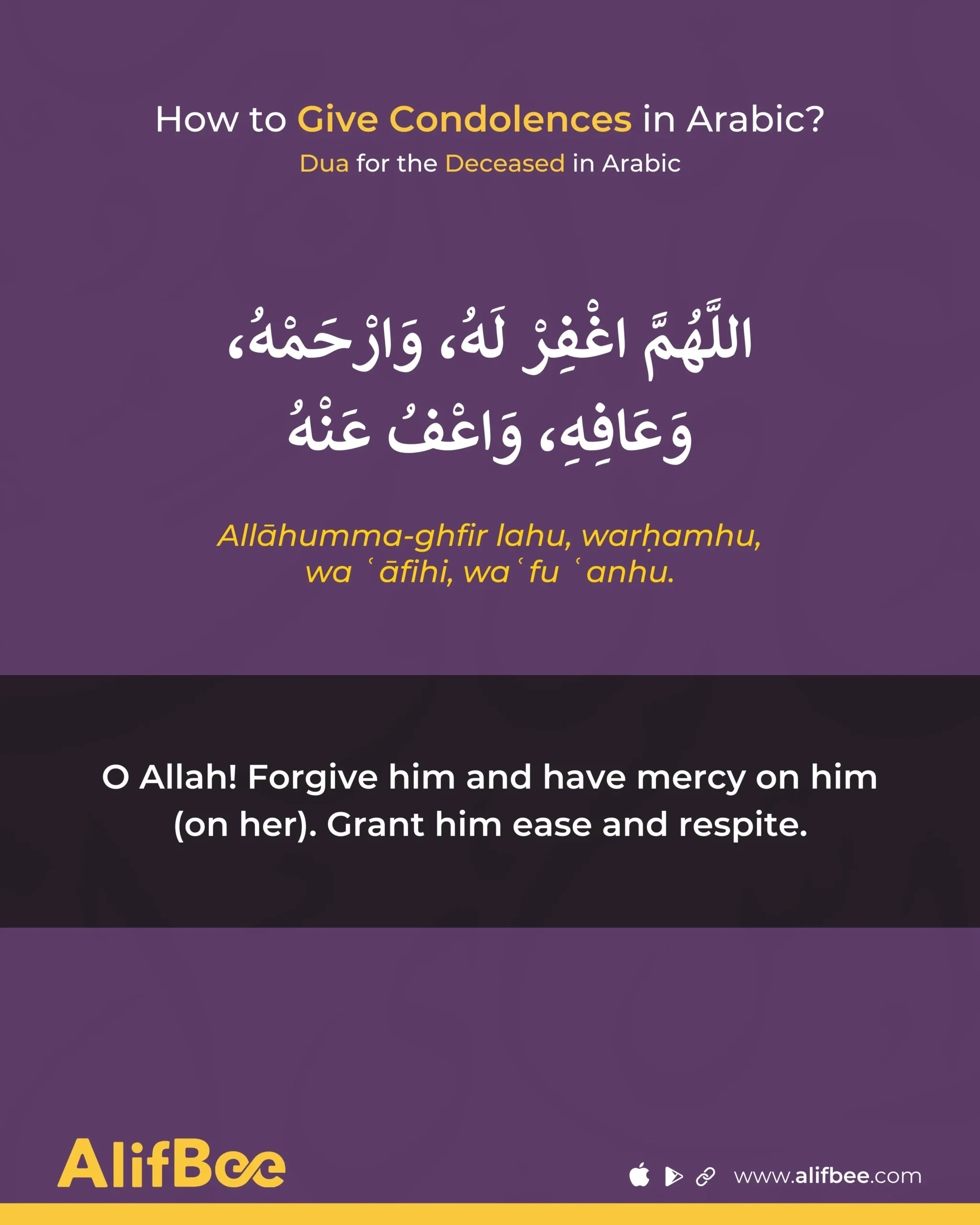
In Islam, one of the most meaningful ways to offer condolences is by making Dua (prayer) for the deceased. Muslims believe that these prayers reach the deceased and benefit them, helping to seek peace and forgiveness for them in the next life. So an important question is: What dua is said for the deceased? Here are a few common examples.

O Allah! Forgive him and have mercy on him (on her). Grant him ease and respite

Allāhumma-ghfir lahu, warḥamhu, wa ʿāfihi, waʿfu ʿanhu.

اللَّهُمَّ اغْفِرْ لَهُ، وَارْحَمْهُ، وَعَافِهِ، وَاعْفُ عَنْهُ

Give him in exchange a home better than his home (on earth) and a family better than his family.

Allāhumma abdilhu dāran khayran min dārih, wa ahlan khayran min ahlih

اللَّهُمَّ أَبْدِلْهُ دَارًا خَيْرًا مِنْ دَارِهِ، وَأَهْلًا خَيْرًا مِنْ أَهْلِه

Final Word

Condolence phrases in Arabic carry deep emotional and spiritual meaning. Losing someone we love is a painful experience, but these expressions can help ease the pain during such difficult times.

To learn more expressions used in Arab culture for different occasions, download the AlifBee App and enjoy 14 days of free access to explore and practice Arabic easily.

Read also: 
8 Sorrowful Arabic Phrases to Express Deep Sadness


Author

  • Asil Kazoun

    Asil Kazoun holds a Bachelor’s degree in Language Interpretation and Translation from Damascus University. With expertise in Arabic language education, translation, and content writing, she creates clear, learner-focused content that helps students build strong Arabic skills with confidence and ease.

Picture of Asil Kazoun
Asil Kazoun
Asil Kazoun holds a Bachelor’s degree in Language Interpretation and Translation from Damascus University. With expertise in Arabic language education, translation, and content writing, she creates clear, learner-focused content that helps students build strong Arabic skills with confidence and ease.
If you found this article helpful, please share it with your friends to spread the knowledge!
Facebook
LinkedIn
Telegram
X
Start your Arabic Learning Path with AlifBee!
syrian Logo
AlifBee App

Achieve incredible results with our platform Learn Arabic Online with AlifBee

AlifBee-Virtual School
AlifBee Virtual School

Join AlifBee Virtual School and master Arabic at your pace — from guided coaching to interactive self-learning.

AlifBee-Private Arabic Lessons
Private Arabic Lessons

Learn Arabic faster with live, one-on-one sessions tailored to your level and goals.

AlifBee-Books
AlifBee Workbooks Series

Explore AlifBee’s complete range of Arabic learning books for all ages!

Related Posts
How to Give Condolences in Arabic

Everyday Arabic
How to Give Condolences in Arabic
Learn how to offer condolences in Arabic with proper etiquette. Learn phrases like “Inna lillahi wa inna ilayhi raji’un,” their meaning, and respectful responses.

Read More »