Dates in Arabic: How to Write, Read, and Pronounce Them

Reading Time: 6 minutes
Home / Arabic Basics / Dates in Arabic: How to Write, Read, and Pronounce Them
Listen to: Dates in Arabic: How to Write, Read, and Pronounce Them
Listening Bee

From booking an appointment to understanding an official document, learning how to use dates in Arabic is essential for daily life. Although the Arabic date system may seem complex at first, don’t worry, we’ll break it down into small, easy-to-follow pieces.

In this article, you will learn how to write and say dates in Modern Standard Arabic using Arabic numbers, month names, and years. Through clear explanations and practical examples, we will highlight common mistakes. With a bit of practice, you’ll be able to use Arabic dates confidently.

How Dates Are Structured in Arabic

Arabic format and the English structure.

  •   The Arabic date system follows a logical order: Day / Month / Year. You begin with the smallest unit (day) and finish with the largest unit (year). This structure is the opposite of the American English format, which follows Month/ Day / Year.
  •   Grammatically, Arabic dates use ordinal numbers for days of the month, follow strict number–noun agreement rules, and commonly use Eastern Arabic numbers (١، ٢، ٣).
  • Culturally, in Saudi Arabia and most of the Arab world, the week starts on Sunday, and the weekend usually falls on Friday and Saturday, reflecting the religious importance of Friday in Islamic culture. To learn more about the Arabic days vocabulary, this guide will help you: Days of the Week in Arabic.

Writing Numbers for Dates (1st–31st) in Arabic

Dates in Arabic 1

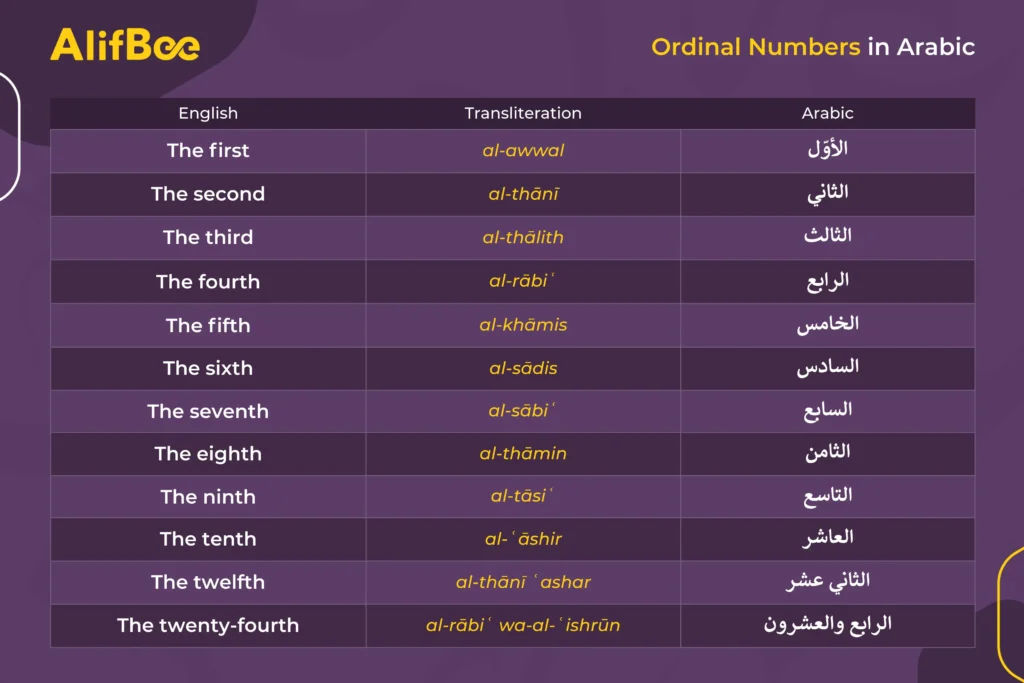
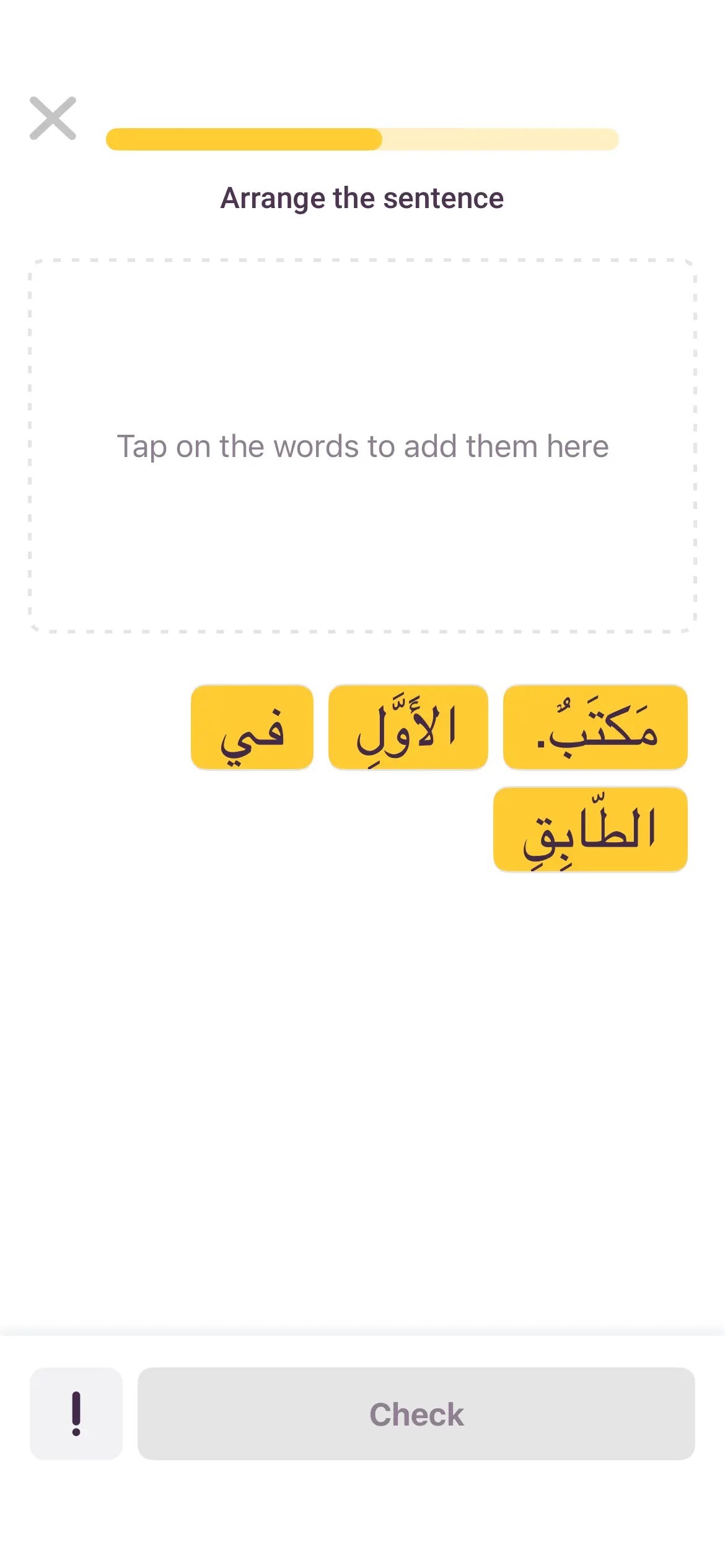
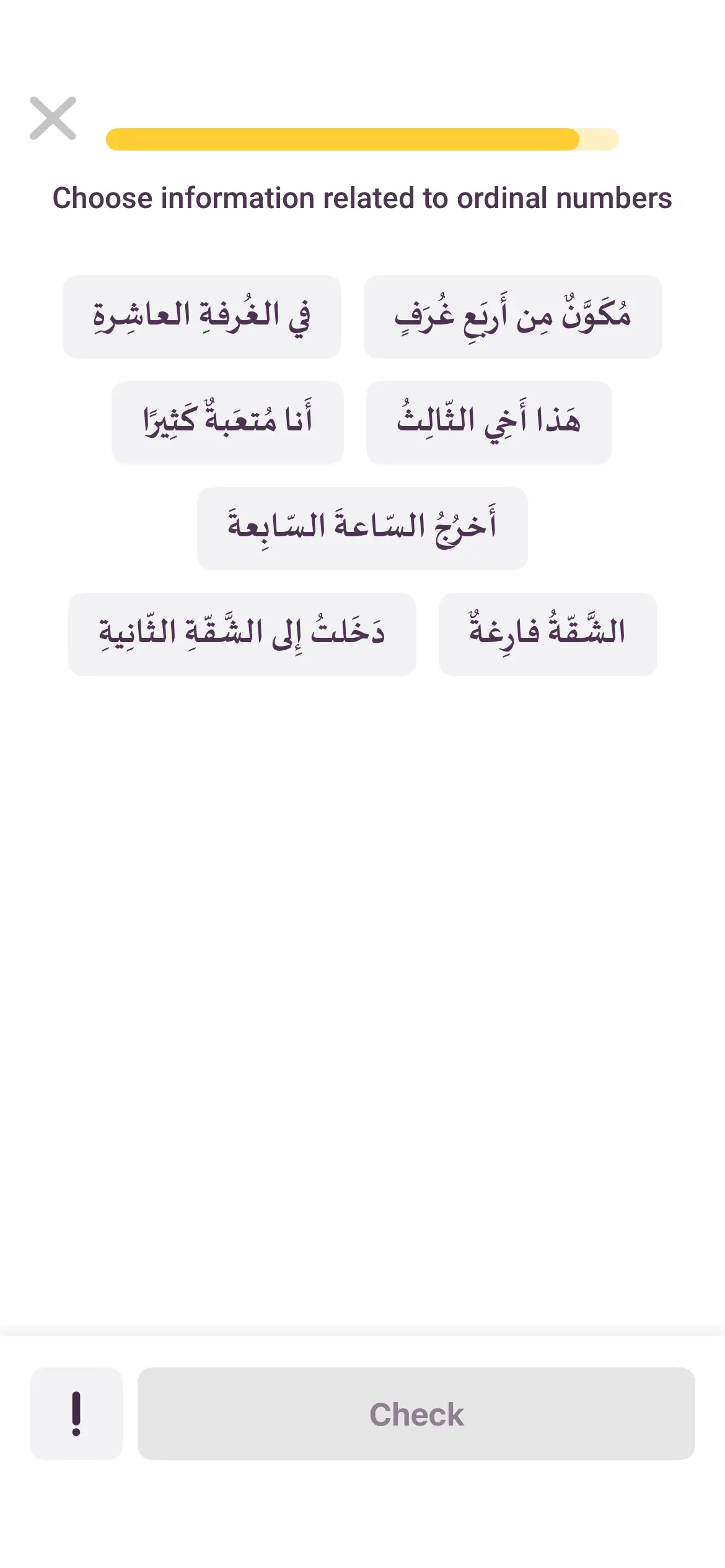
Arabic uses ordinal numbers when expressing dates. In Modern Standard Arabic, ordinal numbers—whether simple, compound, or conjoined—are used to indicate the day’s position within the month. Cardinal numbers cannot be used when expressing dates in Arabic.

English

Pronunciation

Arabic

the first

al-awwal

الأوّل

the second

al-thānī

الثاني

the third

al-thālith

الثالث

the fourth

al-rābiʿ

الرابع

the fifth

al-khāmis

الخامس

the sixth

al-sādis

السادس

the seventh

al-sābiʿ

السابع

the eighth

al-thāmin

الثامن

the ninth

al-tāsiʿ

التاسع

the tenth

al-ʿāshir

العاشر

the twelfth

al-thānī ʿashar

الثاني عشر

the twenty-fourth

al-rābiʿ wa-al-ʿishrūn

الرابع والعشرون

Arabic ordinal numbers fully agree with the noun they describe in gender. This means the shape of the number changes depending on whether the noun is masculine or feminine.

English

Pronunciation

Arabic

the second day (masculine)

al-yawm al-thānī

اليوم الثاني (مذكر)

the second year (feminine)

al-sanah al-thāniyah

السنة الثانية (مؤنث)

Arabic Months and How to Use Them in Dates

Dates in Arabic 2

You might think that Arabic-speaking countries primarily use the Islamic (Hijri) calendar, which is a lunar calendar that began with the migration (Hijra) of the Prophet Muhammad in 622 CE.

Today, many Arab countries use the two most common calendars as part of a dual-system approach. The Gregorian calendar serves as the standard for official documents and daily business, while the Islamic calendar remains essential for religious holidays.

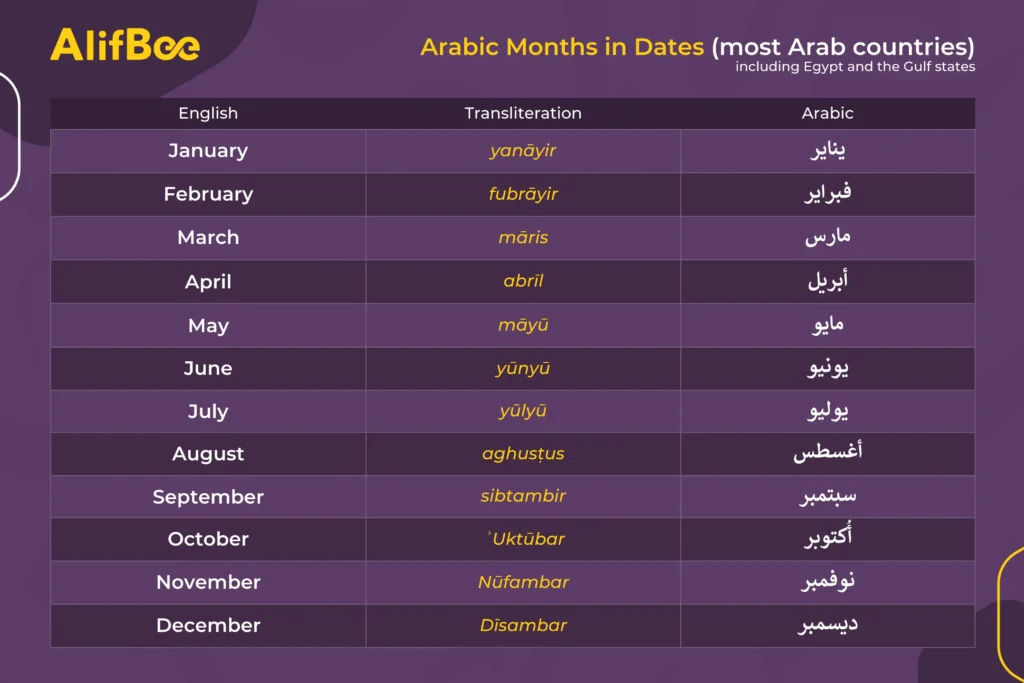
In most Arab countries, including Egypt and the Gulf states, the Gregorian month names used in the Arabic calendar are similar to English ones because they share Latin origins. These names remain unchanged and do not have masculine or feminine forms.

English

Pronunciation

Arabic

January

yanāyir

يناير

February

fubrāyir

فبراير

March

māris

مارس

April

abrīl

أبريل

May

māyū

مايو

June

yūnyū

يونيو

July

yūlyū

يوليو

August

aghusṭus

أغسطس

September

sibtambir

سبتمبر

October

ʾUktūbar

أُكتوبر

November

Nūfambar

نوفمبر

December

Dīsambar

ديسمبر

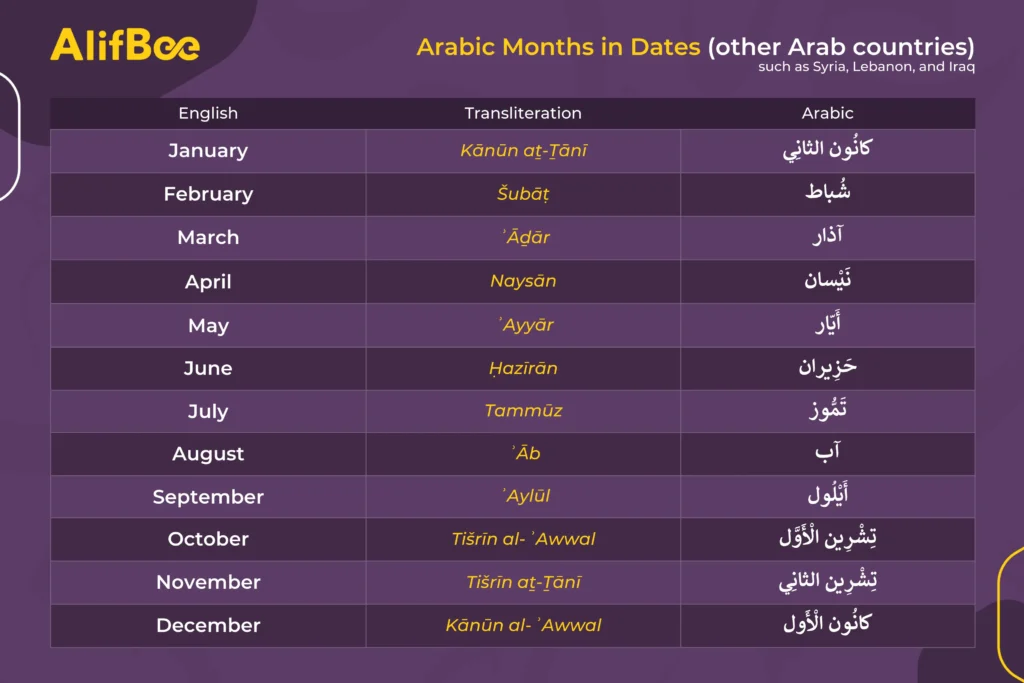
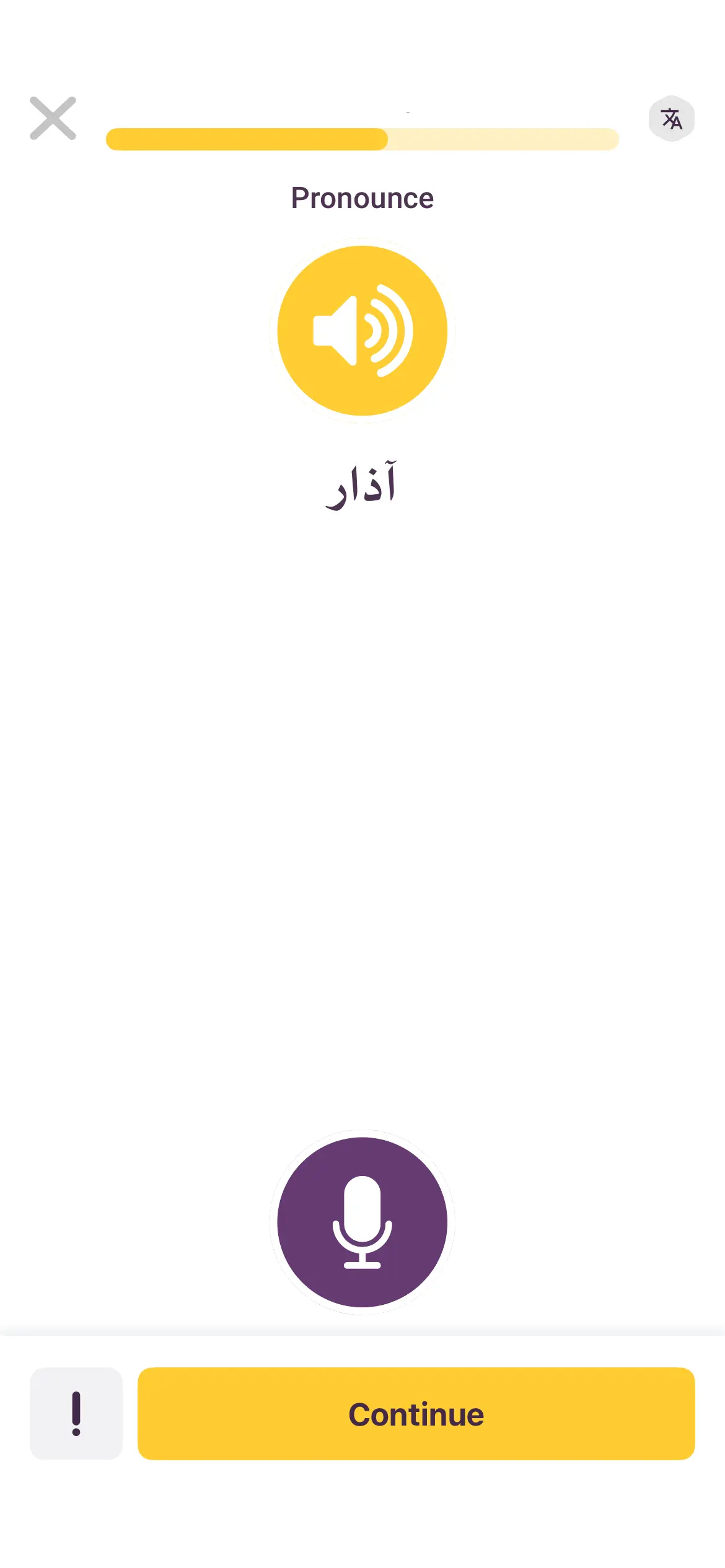
However, in other Arab countries such as Syria, Lebanon, and Iraq, different names are used for the months in Arabic. These Levantine month names are quite distinct from their English translations. Whether you use فبراير or شباط (February), the Arabic date format always follows the standard Day–Month–Year order.

Dates in Arabic 3

English

Pronunciation

Arabic

January

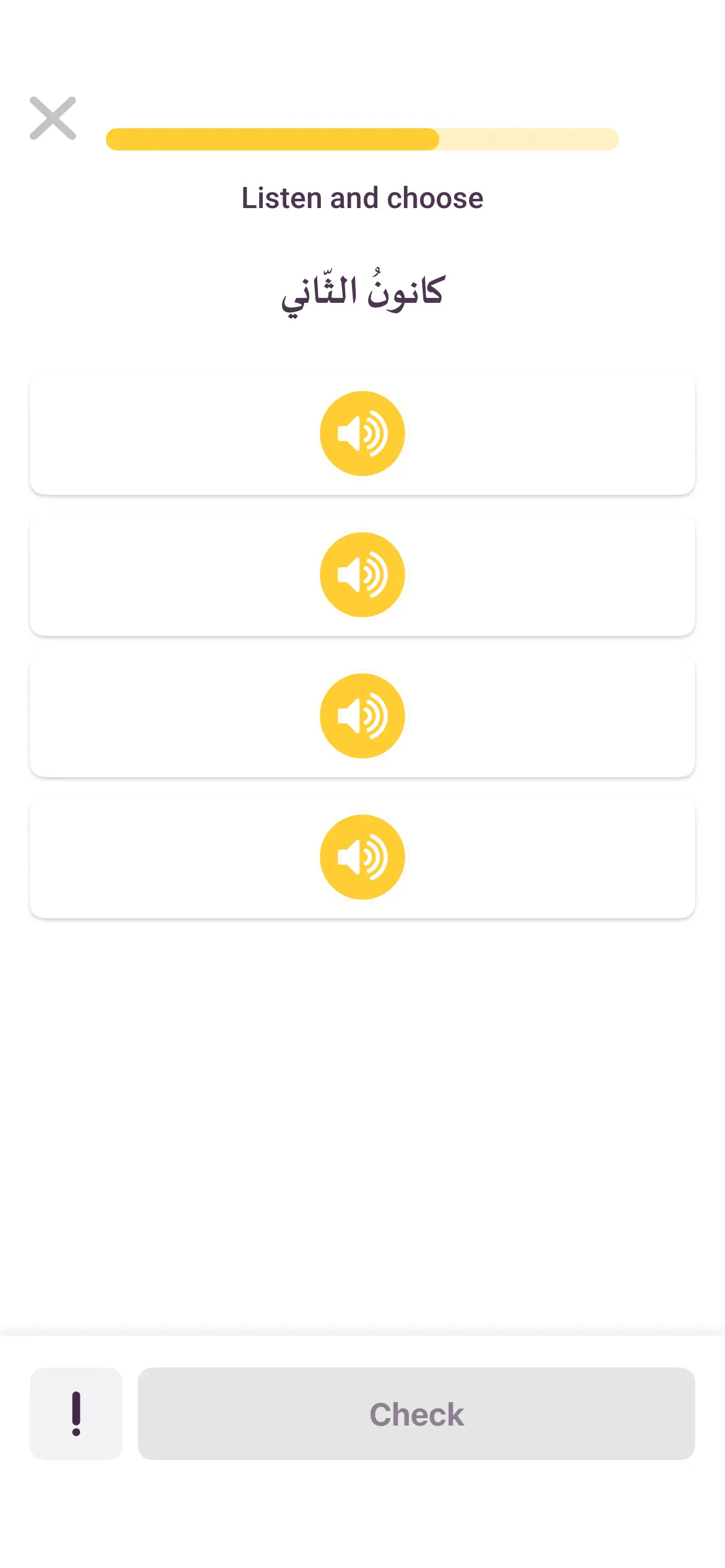
Kānūn aṯ-Ṯānī

كانُون الثانِي

February

Šubāṭ

شُباط

March

ʾĀḏār

آذار

April

Naysān

نَيْسان

May

ʾAyyār

أَيّار

June

Ḥazīrān

حَزِيران

July

Tammūz

تَمُّوز

August

ʾĀb

آب

September

ʾAylūl

أَيْلُول

October

Tišrīn al-ʾAwwal

تِشْرِين الْأَوَّل

November

Tišrīn aṯ-Ṯānī

تِشْرِين الثانِي

December

Kānūn al-ʾAwwal

كانُون الْأَول

How to Say and Write Years in Arabic

When writing years in Arabic, it is important to know that there are two recognized patterns. In older Arabic usage, years could be read from right to left, starting with the units and ending with the thousands.

The most common and widely used method is to read years from left to right, starting with the thousands and moving toward the units.

English

Pronunciation

Arabic

the year two thousand and eighteen

sanat alfayn wa-thamāniyata ʿashar

سنة ألفين وثمانية عشر

Remember that written years in Arabic follow standard number and gender agreement rules. To learn more about Arabic number rules, check this guide: Numbers in Arabic.

Putting It All Together – Full Date Examples

Let’s apply the rules to a real example and use the preposition to naturally connect the day and the month.

Our example is September 1, 1992. We start with the number one, which becomes الأوّل after applying the ordinal rule. Then we use the preposition min من (from) and the month name سبتمبر.

Write the year from the largest value to the smallest and link the parts with (و). You may add سنة or عام (year) before the number to avoid confusion, though this is optional.

The same steps apply to a second example: February 23, 2018.

English

Pronunciation

Arabic

September 1st, 1992

al-awwal min sibtambir ʿām alf wa-tisʿa miʾa wa-ithnayn wa-tisʿīn

الأوّل من سبتمبر عام ألفٍ وتسعمائةٍ واثنين وتسعين

the twenty-third of February, two thousand and eighteen

al-thālith wa-al-ʿishrūn min fubrāyir alfān wa-thamāniyata ʿashar

الثالث والعشرون من فبراير ألفان وثمانية عشر

How Dates Are Read Aloud in Arabic

When it comes to saying and reading dates, it’s quite simple. Dates are spoken in the same order they are written, which makes them easy to read once you master how to write them.

You pronounce exactly what you see on the page, starting with the day, then the month, and finally the year. You read the date as a complete spoken phrase, not as separate numbers. Don’t forget that using an Arabic preposition to connect the parts of the date makes your sentence clearer and more official.

Common Mistakes English Speakers Make with Arabic Dates

To sound fluent when using dates in Arabic, you must avoid several common pitfalls. The most frequent error is applying English word order, such as placing the month before the day, which is grammatically incorrect in formal Arabic.

Additionally, failing to use ordinal numbers or ignoring gender agreement will result in unnatural phrases. Finally, incorrect pronunciation can lead to misunderstandings regarding time and dates.

Start Learning Arabic Dates with AlifBee App

Using dates in Arabic may seem like a complex mathematical process for learners at first, but once you understand the key rules and follow the correct steps, everything will feel easier.

The AlifBee App helps you start learning ordinal numbers and months, so you can easily move on to structuring dates.


Ready to practice? Download the AlifBee app and enjoy Arabic lessons with a free 14-day trial.

Author

  • Asil Kazoun

    Asil Kazoun holds a Bachelor’s degree in Language Interpretation and Translation from Damascus University. With expertise in Arabic language education, translation, and content writing, she creates clear, learner-focused content that helps students build strong Arabic skills with confidence and ease.

Picture of Asil Kazoun
Asil Kazoun
Asil Kazoun holds a Bachelor’s degree in Language Interpretation and Translation from Damascus University. With expertise in Arabic language education, translation, and content writing, she creates clear, learner-focused content that helps students build strong Arabic skills with confidence and ease.
If you found this article helpful, please share it with your friends to spread the knowledge!
Facebook
LinkedIn
Telegram
X
Start your Arabic Learning Path with AlifBee!
syrian Logo
AlifBee App

Achieve incredible results with our platform Learn Arabic Online with AlifBee

AlifBee-Virtual School
AlifBee Virtual School

Join AlifBee Virtual School and master Arabic at your pace — from guided coaching to interactive self-learning.

AlifBee-Private Arabic Lessons
Private Arabic Lessons

Learn Arabic faster with live, one-on-one sessions tailored to your level and goals.

AlifBee-Books
AlifBee Workbooks Series

Explore AlifBee’s complete range of Arabic learning books for all ages!

Related Posts