The Arabic Alphabet: Arabic Letter Kaaf ك, Its Form, Pronunciation & Examples

Reading Time: 7 minutes
ك-Letter
Loading audio...

Introduction to the Arabic Letter Kaaf ك

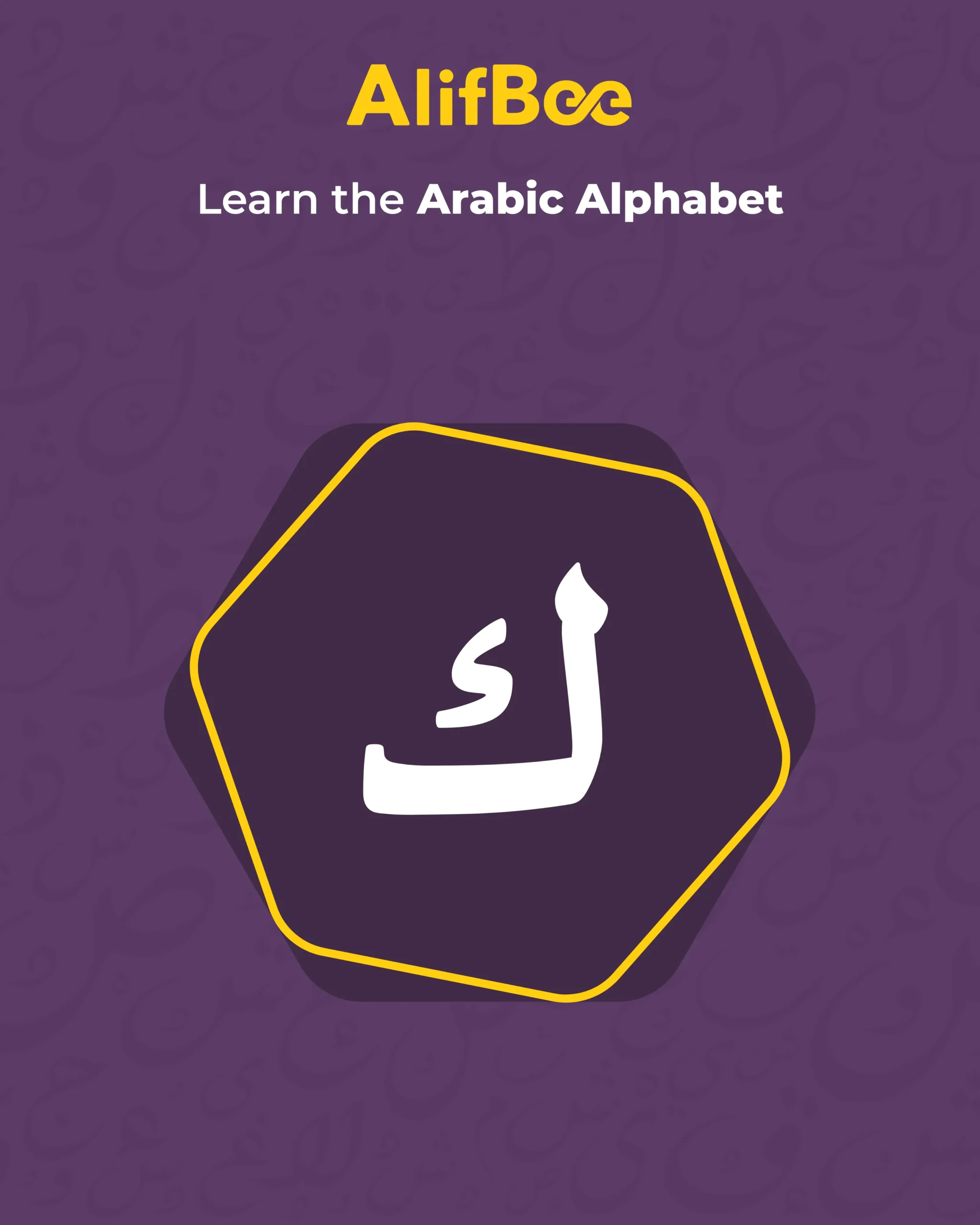
The Arabic letter ك /kāf/ is the twenty-second letter of the Arabic alphabet.

It sounds just like the English K, but it looks way more stylish. You’ll see it in tons of everyday words, like كِتاب (kitāb) “book” and كبير (kabīr) “big.”

In this post, we’ll get to know ك in detail, how it’s written, how it changes shape in words, and its pronunciation. We will also learn how to distinguish it from the letter qaaf in the Arabic language, which is articulated deeper in the throat. This will help you sound more like a native speaker.

Correct Pronunciation of letter ك

The letter Kaaf is pronounced as a voiceless velar stop. Begin by pressing the back of the tongue against the soft palate and release it with a burst of air, similar to the English k in cat and kite.

Keep the sound light and soft, and place the tongue slightly forward, unlike the deep ق.

Avoid also voicing it, so it doesn’t sound like /g/.

How to Write the Shape and Form of Kaaf ك

The letter Kaaf is special in the Arabic alphabet. Its initial and medial forms differ significantly from its isolated and final forms. Let’s learn how to write the letter kaaf step by step.

Isolated

Initial

Medial

Final

ك

كـ

ـكـ

ـك

Isolated Form of Letter Kaaf (ك) 

Draw a vertical line above the line down to the baseline, then curve back and draw a horizontal line to the left with a small hook at the end. Draw a small Hamza (ء), like a small S inside the curve.

This form comes at the end of a word, when the letter stands alone with no connections on either side. Check the following example:

English

Pronunciation

Arabic

Window

Shubbāk

شُبّاك

I opened the kitchen window.

Fataḥtu shubbāk almaṭbakh

فَتَحْتُ شُبّاك الْمَطْبَخ

Letter Kaaf in Initial Position

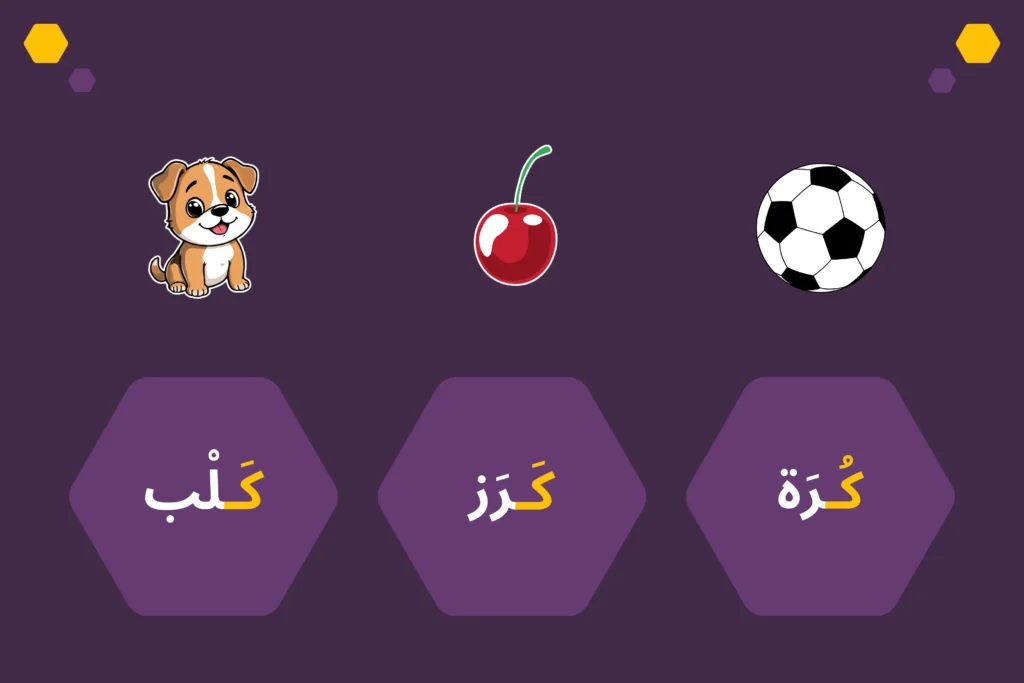
This form appears at the beginning of the word. Draw a straight line down to the baseline, then curve back to the right, and make a right angle at the baseline.

Draw a horizontal connecting line to the left, as this will be connected by another letter. Finally, draw a horizontal line across the top of the letter.

1-ك-Letter kaaf
1

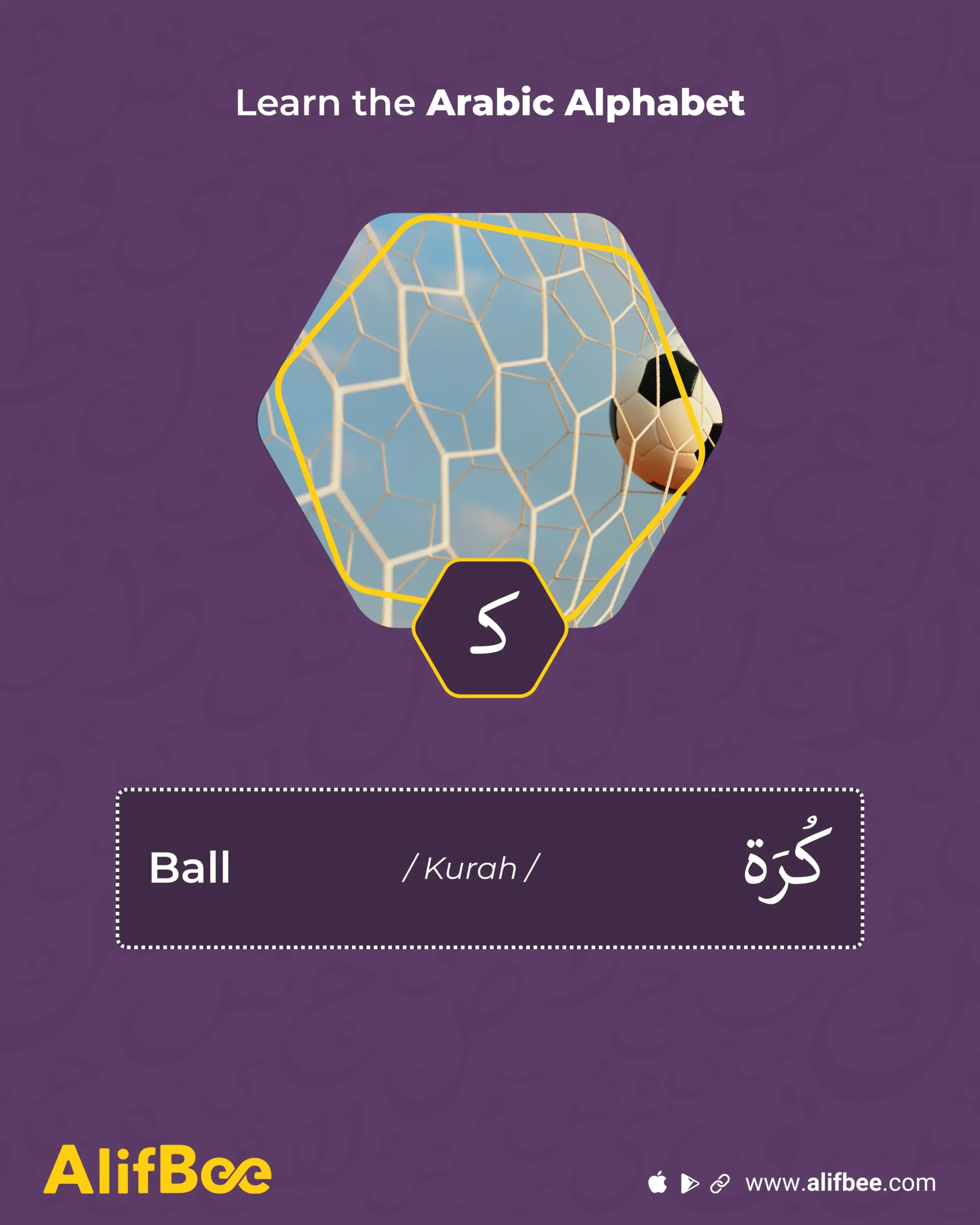
Ball

Kurah

كُرَة

The child lost the ball

aḍā‘a aṭ-ṭiflu al-kurata

أَضاعَ الطِّفلُ الكُرَةَ

2

Glass

Kaʼs

كَأْس

I drank a glass of water.

sharibtu ka’sa mā’in

شَرِبتُ كأسَ ماءٍ

3

Cherries

Karaz

كَرَز

I bought some cherries.

ishtaraitu ba‘ḍa al-karaz

اشتَرَيتُ بَعضَ الكَرَز

4

Dog

Kalb

كَلْب

I have a small dog.

ladayya kalbun ṣaghīr

لديَّ كَلْبٌ صَغِير

5

Chair

Kursy

كُرسِي

I sat on the chair.

jalastu ‘alā al-kursiyy

جَلَسْتُ على الكُرْسِيّ

Letter Kaaf in Medial Position

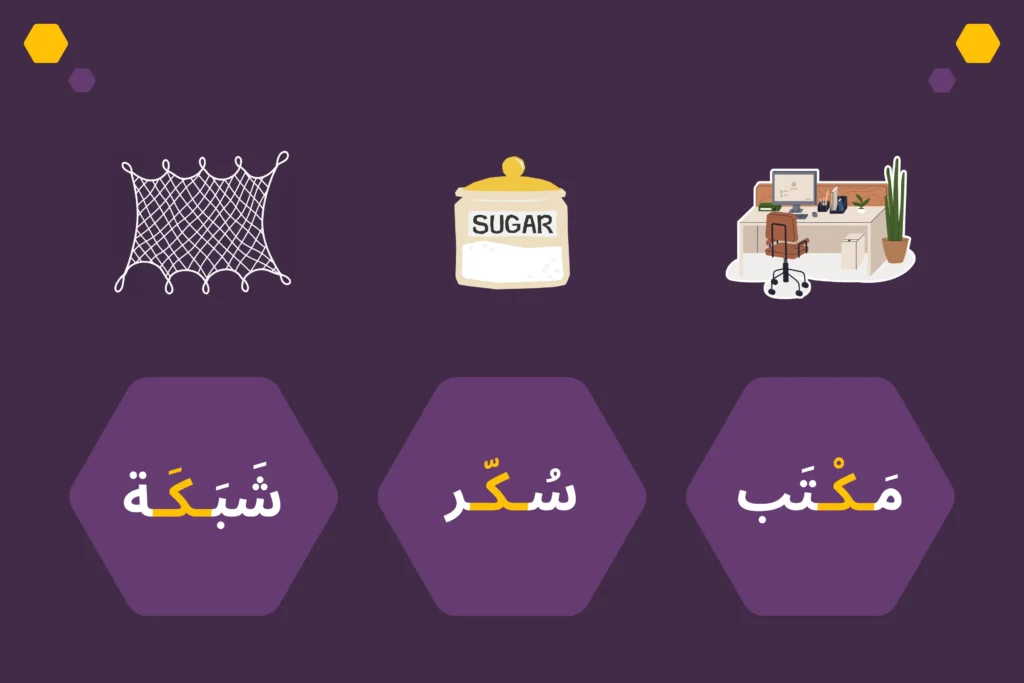
This form is identical to the initial one, but we add a small connecting line from the right, as this form has letters connecting to it from both sides when it is in the middle of a word.

2-ك-Letter
1

Net

Shabakah

شَبَكَة

The fisherman throws the net into the sea.

yarmī aṣ-ṣayyādu ash-shabakata fī al-baḥr

يَرمِي الصَيّادُ الشَّبَكةَ في البَحر

2

Sugar

Sukkar

سُكّر

I added some sugar to the tea.

aḍaftu as-sukkar lil-shāy

أضفتُ السُكّرَ للشَّاي

3

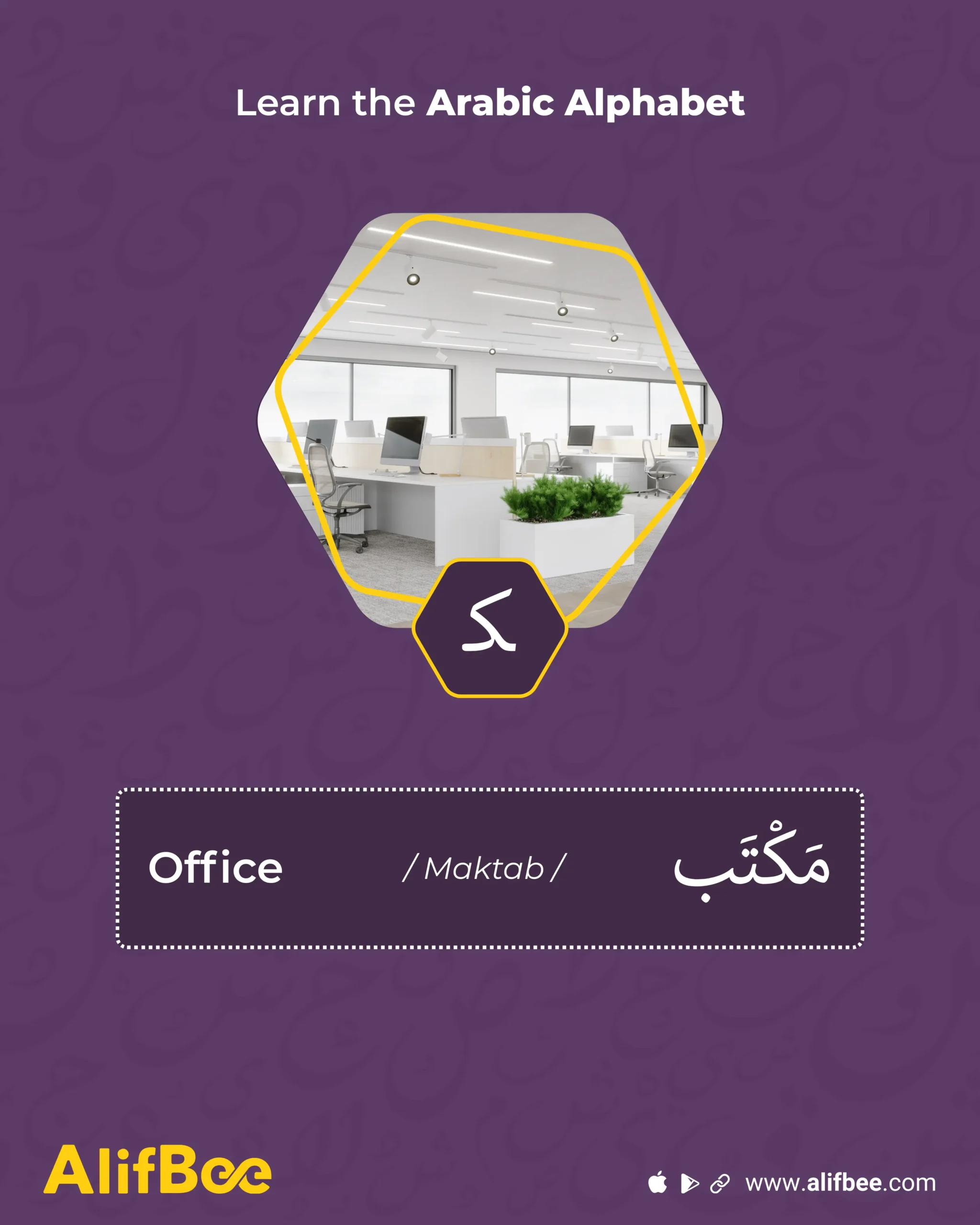
Office

Maktab

مَكْتَب

The office is clean.

al-maktabu naẓīfun

المَكتَبُ نَظيفٌ

4

Idea

Fikrah

فِكْرَة

This is a smart idea!

hādhihi fikratun dhakiyyah

هَذِهِ فِكْرَةٌ ذَكِيَّةٌ!

5

Crying

Bukāʼ

بُكَاء

I heard the child crying.

sami‘tُ bukā’a aṭ-ṭifl

سمعتُ بُكَاءَ الطِّفْلِ

Letter Kaaf in Final Position

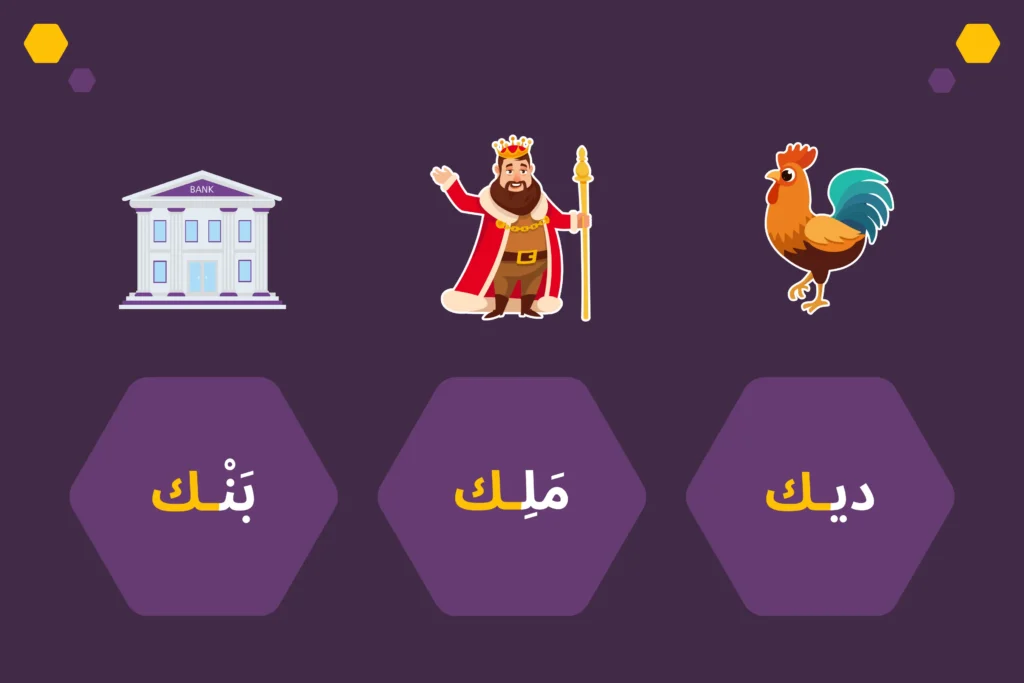
It is exactly like the isolated form, but we have a small addition. You need to add a small connecting line to the right, as it is connected to a letter that comes before it ـك.

3-ك-Letter
1

Wire

Silk

سِلْك

This is a long wire.

hādhā silk-un ṭawyl.

هذا سِلكٌ طَويل

2

Rooster

Ddīk

ديك

The rooster crows in the morning.

yaṣīḥu ad-dīku fī aṣ-ṣabāḥ

يَصِيحُ الدِّيكُ في الصَّباح

3

King

Malik

مَلِك

The king listens to his ministers’ suggestions.

yastami‘u al-maliku ilā muqtaraḥāti wuzarā’ih

يَسْتَمِعُ الْمَلِكُ إِلَى مُقْتَرَحَاتِ وزَرَائِهِ

4

Doubt

Shakk

شَكّ

Overcome doubt with faith.

taghallab ‘alā ash-shakki bi-l-īmān

تَغَلَّبَ عَلَى الشَّكِّ بِالإِيمَان

5

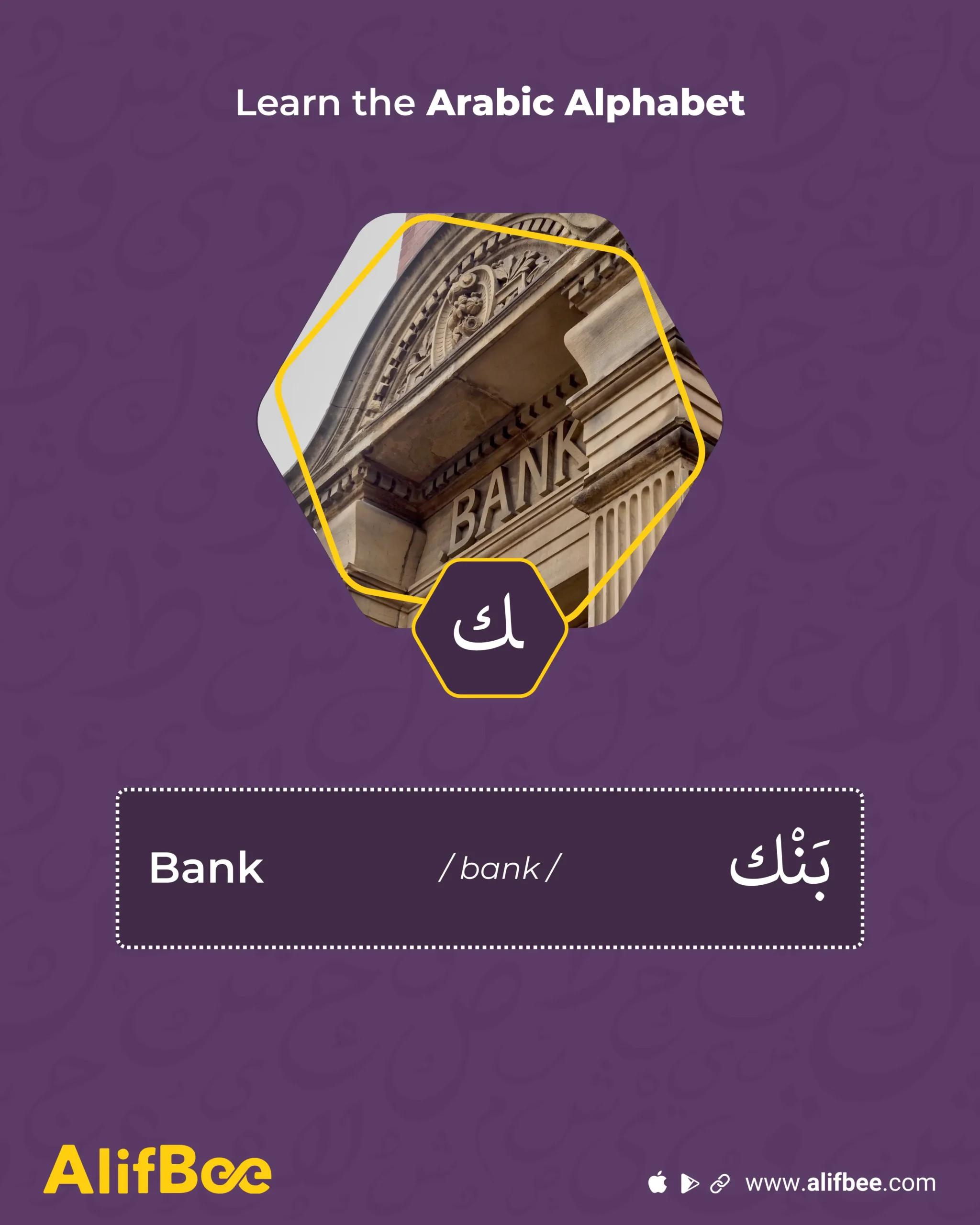
Bank

bank

بَنْك

I withdrew money from the bank.

saḥabtu nuqūdan mina al-bank

سَحَبْتُ نُقُودًا مِنَ البَنْكِ

Review The Arabic Alphabet: Arabic Letter ك (kaaf)

Learning and Practicing Kaaf ك

To learn the letter Kaaf, start by practicing its sound with the short vowels كَ، كُ، كِ, as in the examples:

dog

Kalb

كَلب

chair

Kursy

كُرسي

book

Kitāb

كِتاب

Then use simple words like كِتاب and مَلِك in your daily conversations. For writing, practice Kaaf in all its forms (كـ، ـكـ، ـك). Build familiarity by reading vocabulary lists that include ك in different positions, like the group of words and their examples, which we used in this blog. 

Consistent daily practice in listening, speaking, reading, and writing will help you recognize and use ك confidently and improve your fluency.

Kaf vs Qaf: Differences and Similarities

Kaaf and Qaaf may sound quite similar, but knowing the difference is fundamental and of high importance, as mixing them can cause a lot of misunderstanding and can change the whole meaning of your sentence. 

Qaaf has no equivalent in English. It’s one of the 7 heavy letters in Arabic. It is produced further back in the throat, using the very back of the tongue against the uvula. 

It is stronger and deeper than Kaaf, which is produced by the back of the tongue against the soft palate, similar to the English “k” in kite, but softer and less aspirated.

This is an example that can show how confusing these two letters ك and ق can alter the meaning and affect speaking and reading:

heart

Qalb

ق

قَلْب

dog

Kalb

ك

كَلْب

Quick Quiz

Take this brief quiz to practice the letter ك (kaaf). Choose the correct answer for every question and review your score in the answer key.

1

Which of the following words starts with the Arabic letter ك (Kāf)?

A. مَلِك

B. كِتاب

C. سُكَّر

D. بُكاء

2

What is the English translation of كُرة?

A. Sugar

B. Ball

C. King

D. Book

3

Which of these words contains the Arabic letter ك in the middle?

A. سُكَّر

B. كلب

C. كَأس

D. باب

4

Which of these words does NOT contain the Arabic letter ك?

A. بندمَكْتَب

B. مَلِك

C. دَرس

D. سُكَّر

Answers
  1. B. كِتاب
  2. B. Ball
  3. A. سُكَّر
  4. C. دَرس

Final word

Now that we have learned everything about the letter Kaaf, you can recognize it in Arabic words in all its different forms depending on its position in words. Make sure to practice pronouncing it with short vowels (كَ، كُ، كِ).

 Recognizing the letter Kaaf from Qaaf is essential and will help you master both letters.

Use them in your conversations daily, as with practice and regular use, they will come naturally.

Don’t forget to give the AlifBee App a try! It’s a handy tool to support your Arabic studies, and you can explore it for free for 14 days.

Picture of Diala Ghraoui
Diala Ghraoui
Diala is an experienced language educator and writer passionate about making Arabic learning simple and engaging. At AlifBee, she crafts educational content that connects English and Arabic learners through clarity and creativity.
If you found this article helpful, please share it with your friends to spread the knowledge!
Facebook
LinkedIn
Telegram
X
Start your Arabic Learning Path with AlifBee!
syrian Logo
AlifBee App

Achieve incredible results with our platform Learn Arabic Online with AlifBee

AlifBee-Virtual School
AlifBee Virtual School

Join AlifBee Virtual School and master Arabic at your pace — from guided coaching to interactive self-learning.

AlifBee-Private Arabic Lessons
Private Arabic Lessons

Learn Arabic faster with live, one-on-one sessions tailored to your level and goals.

AlifBee-Books
AlifBee Workbooks Series

Explore AlifBee’s complete range of Arabic learning books for all ages!

Related Posts