Learn Arabic Question Words (Arabic Interrogatives)

|
Reading Time: 6 minutes
Home / Arabic Basics / Learn Arabic Question Words (Arabic Interrogatives)
Listen to: Learn Arabic Question Words (Arabic Interrogatives)
Listening Bee

Why are Question Words in Arabic Important?

Have you ever wanted to ask a question in Arabic, but your mind went blank at the first word? You knew what you wanted to say. You just didn’t know how to start.

That’s where question words help. They are small, simple words. Yet they unlock real conversations fast. When you learn them, you can ask about directions, names, prices, reasons, and opinions. You’ll also be able to get to know people better, as you begin to notice these words in what they are saying back to you.

In this blog, you’ll learn the main question words Arabic learners need. We will walk you through them step by step and explain them simply and clearly.

Your Arabic Takeaway

Question Words in Arabic 2

What Are Arabic Question Words?

Question words are the words we use to start our questions. In English, they are: who, what, where, when, why, and how. The same idea applies in Arabic. Question words in the Arabic language are used all the time in daily speech and writing. They are very helpful when you’re asking about anything.

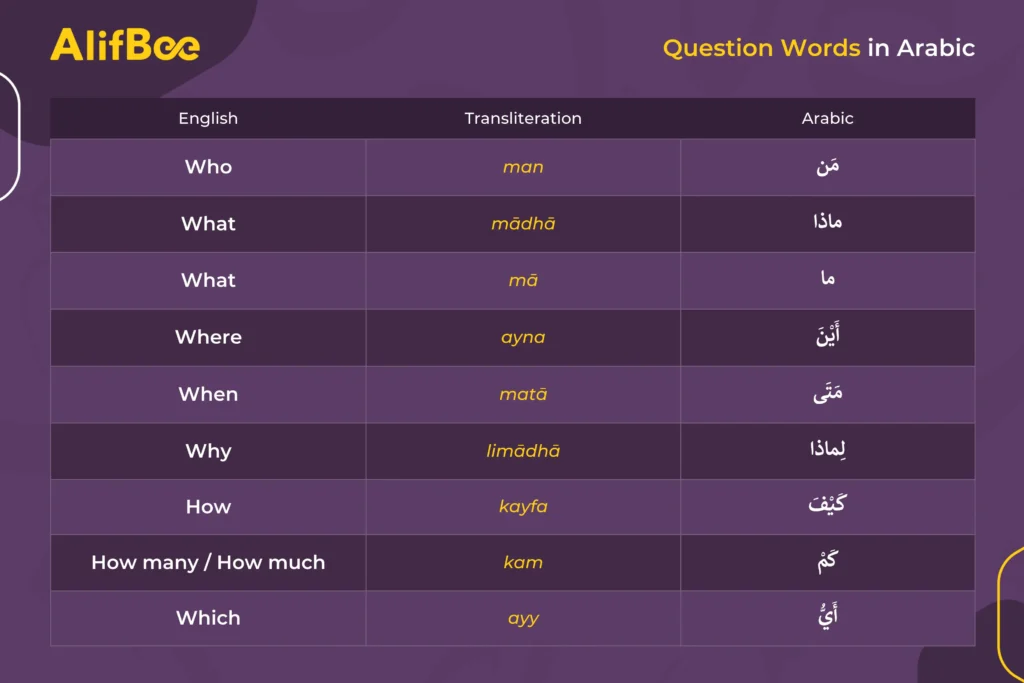
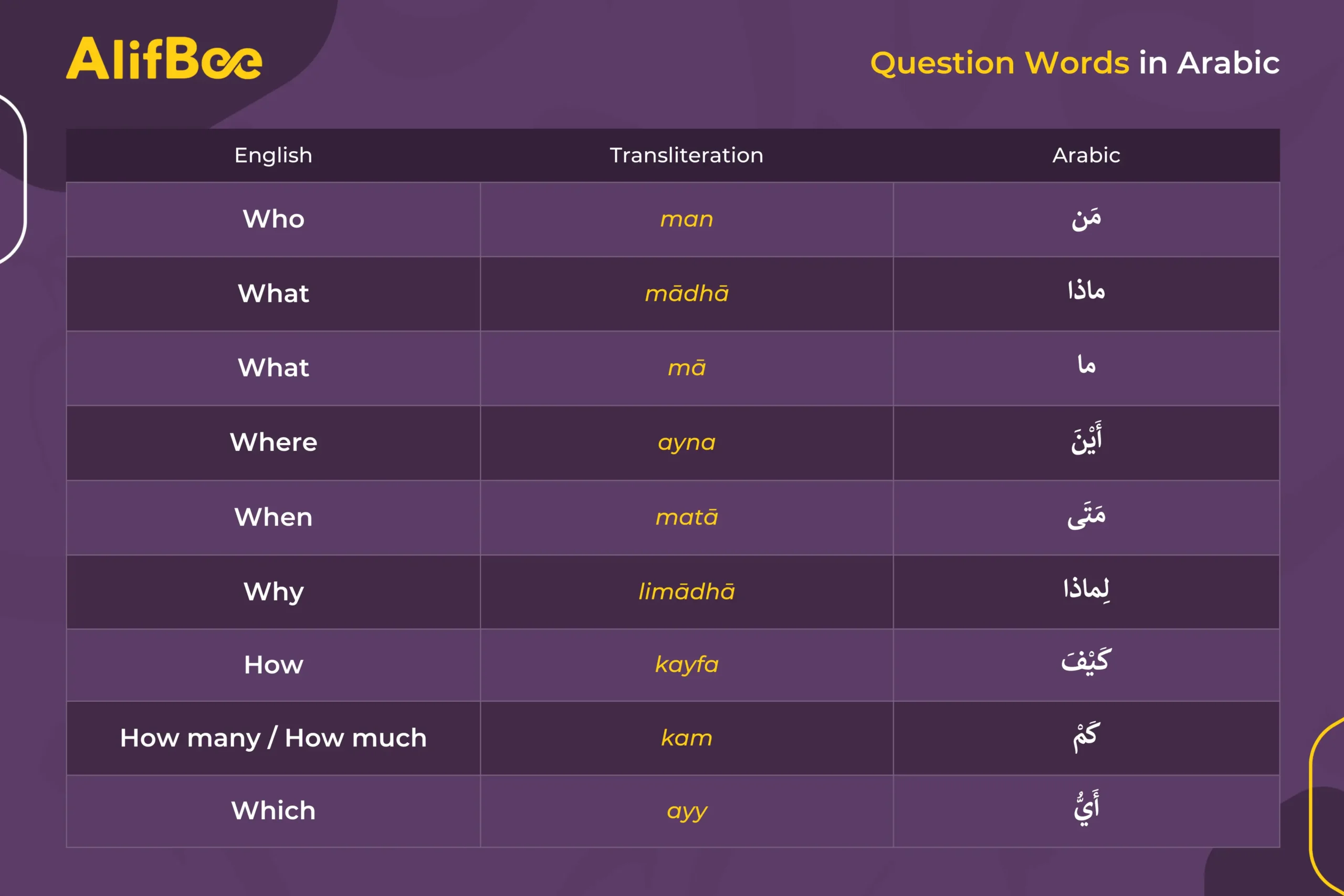
Below is a list of the main question words that you’ll keep seeing:

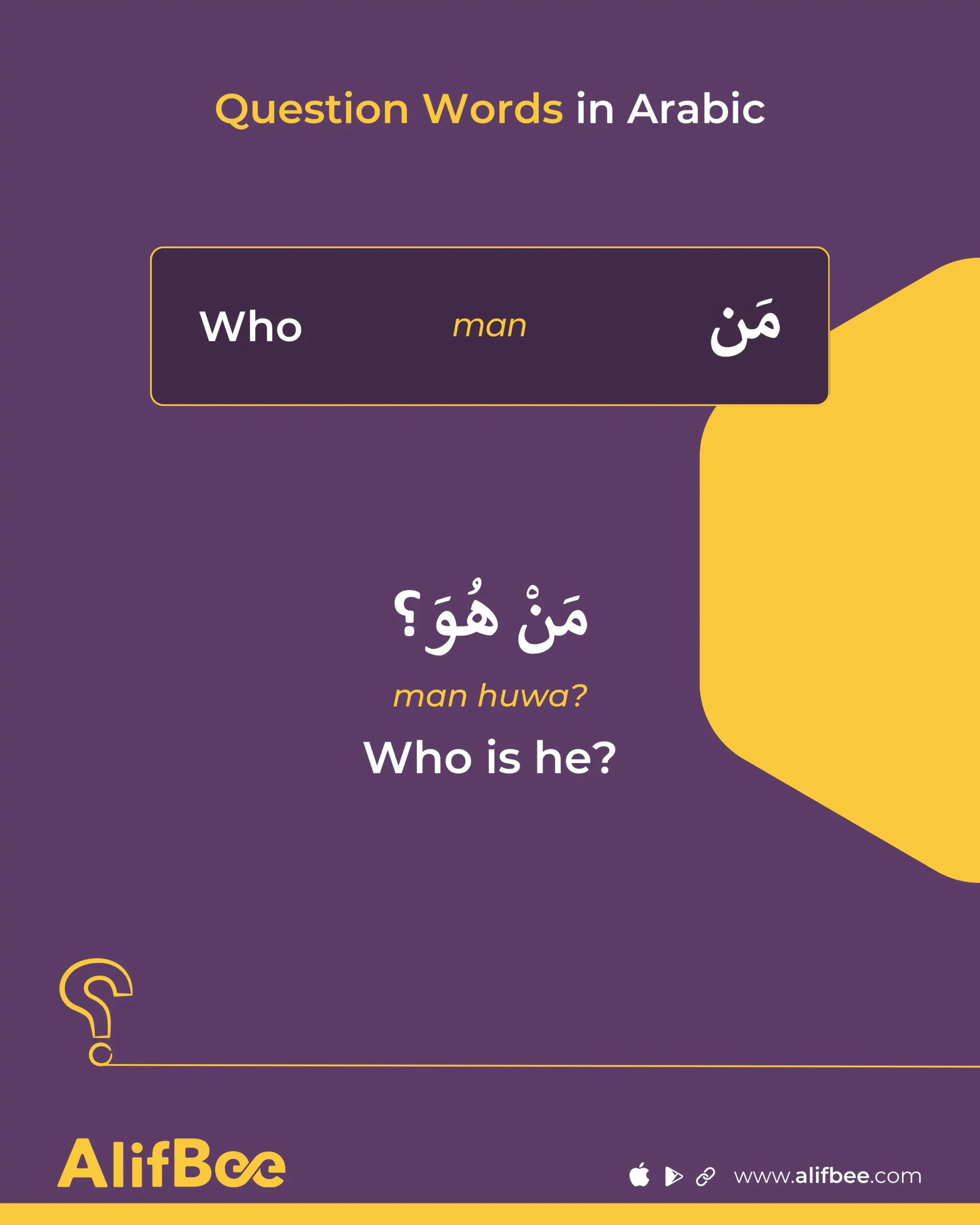
Who

man

مَن

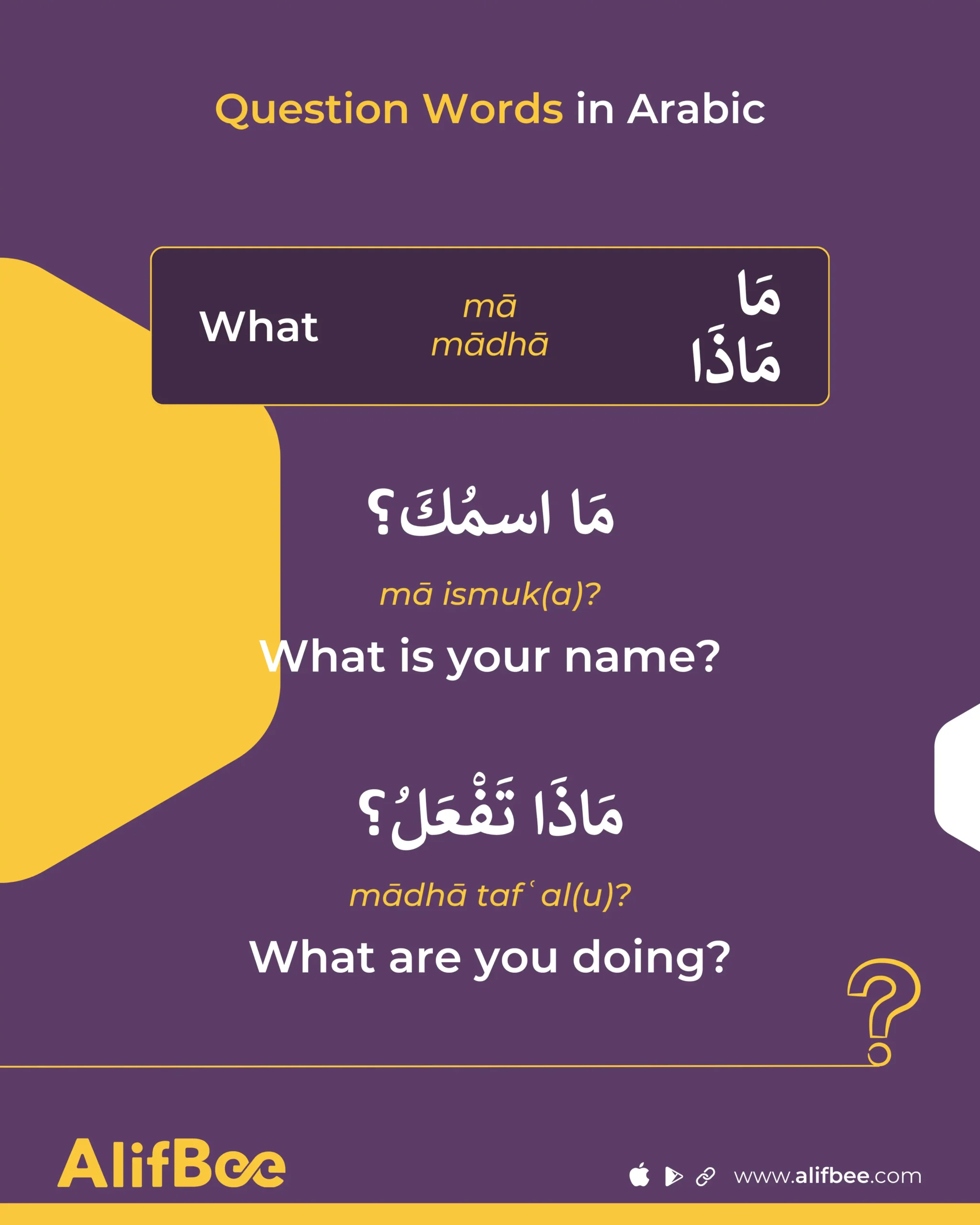
What

mādhā

ماذا

What

ما

Where

ayna

أَيْنَ

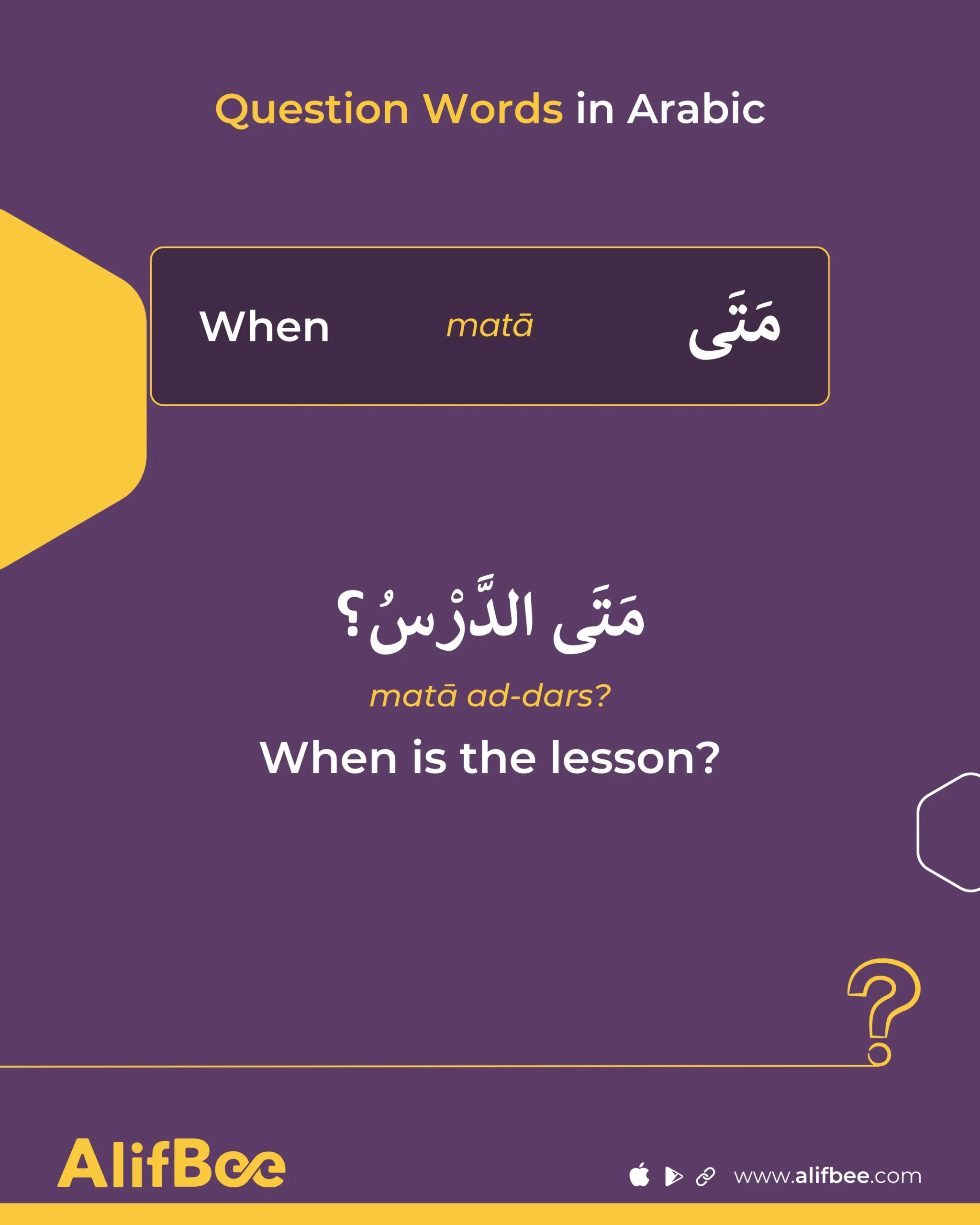
When

matā

مَتَى

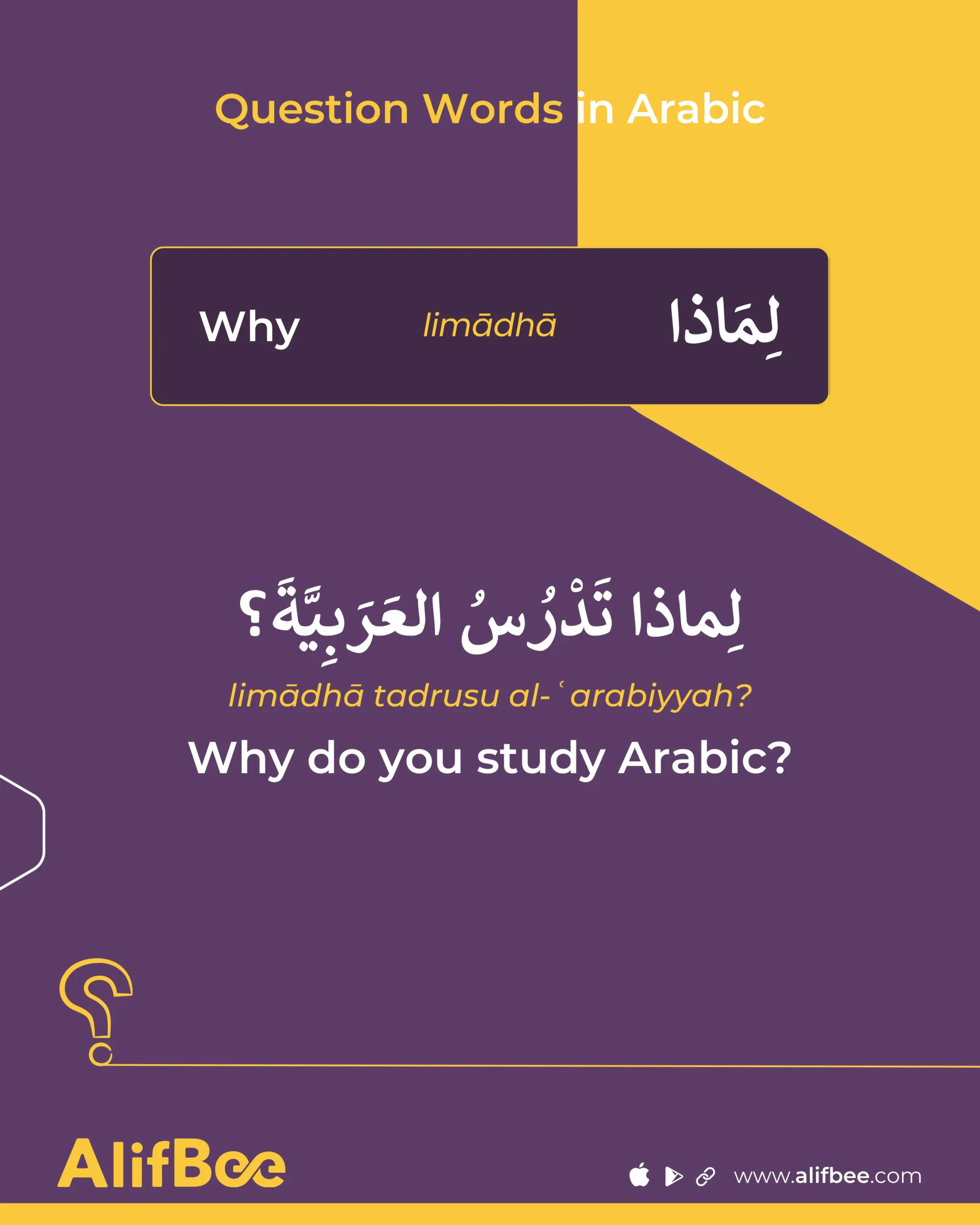
Why

limādhā

لِماذا

How

kayfa

كَيْفَ

How many / How much

kam

كَمْ

There is no need to memorize everything at the same time. Start with a few. Use them in short questions. Then add more as you go.

Also Read: How to Make Questions in Arabic

In the next section, we’ll practice each one of these words with everyday examples and questions.

8 Key Question Words in Arabic

1

Who - “man”

You can use “man” when you ask about a person. like:

Who?

man?

مَنْ؟

Who is he?

man huwa?

مَنْ هُوَ؟

Who is this?

man hādhā?

مَنْ هذَا؟

You will hear “man” in introductions, phone calls, and quick questions in public places. 

2

What - “mā” and “mādhā”

You can use “man” when you ask about a person. like:

What?

mā?

مَا؟

What is your name?

mā ismuk(a)?

مَا اسمُكَ؟

What are you doing?

mādhā tafʿal(u)?

مَاذَا تَفْعَلُ؟

If you’re a beginner, you can start with in simple questions. Add mādhā as you get more comfortable.

3

Where - “ayna”

You can use ayna to ask about a place.

Where?

ayna?

أَيْنَ؟

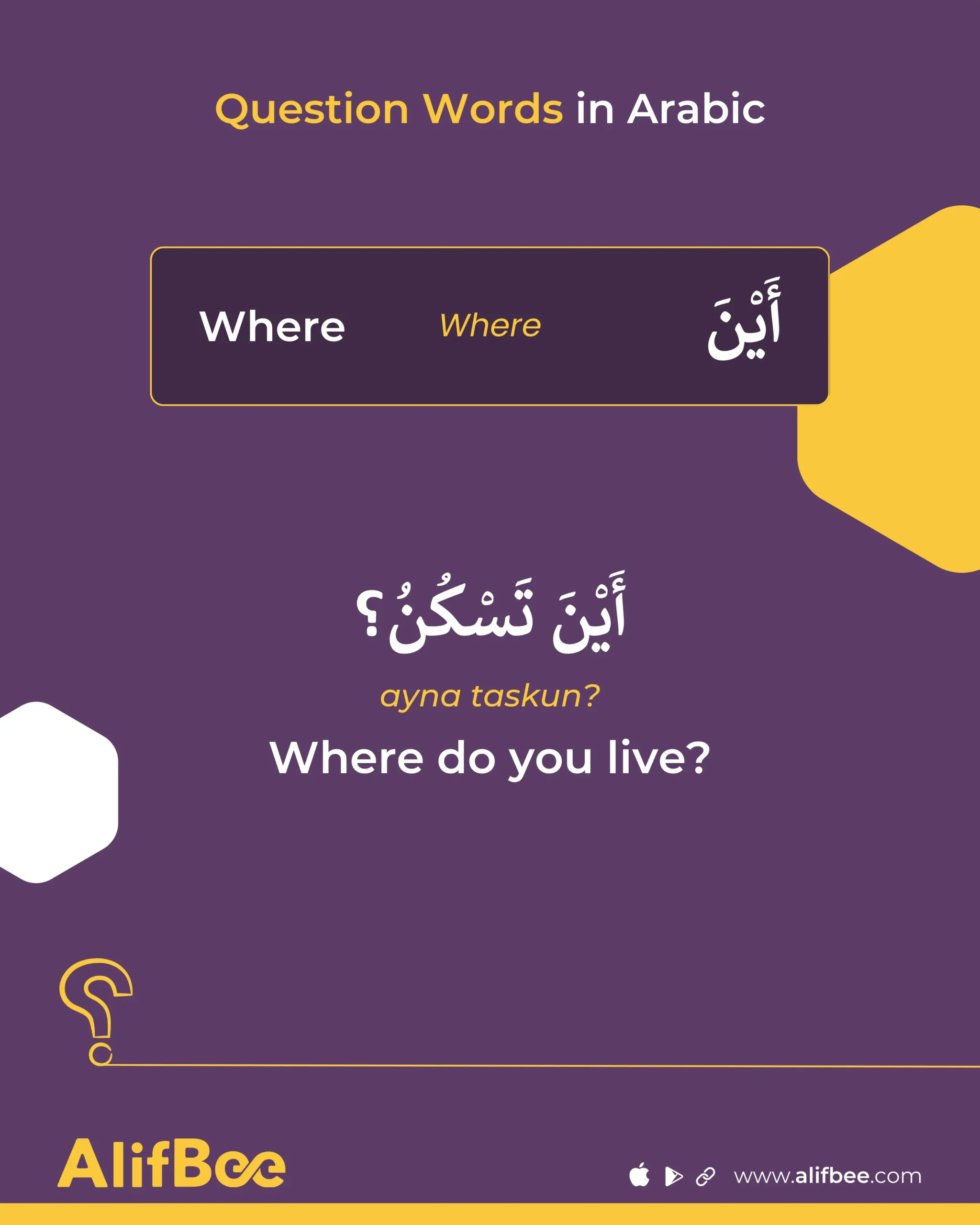
Where do you live?

ayna taskun?

أَيْنَ تَسْكُنُ؟

Where is the bathroom?

ayna al-ḥammām?

أَيْنَ الحَمَّامُ؟

You can also build a useful question using “from where,” which is frequently used in conversation. Like this example below:

Where are you from?

min ayna anta?

مِنْ أَيْنَ أَنْتَ؟

Remember that “anta” is for the masculine and “anti” is for the feminine. These patterns show up in many beginner lessons because they are practical and easy to reuse.

4

When - “matā”

You can use matā for time.

When?

matā?

مَتَى؟

When does the train leave?

matā yarḥal(u) al-qiṭār?

مَتَى يَرْحَلُ القِطارُ؟

When is the lesson?

matā ad-dars?

مَتَى الدَّرْسُ؟

You can use matā with any event: a meeting, a class, a trip, or a call.

5

Why - “limādhā”

You can use limādhā when you want a reason.

Why?

limādhā?

لِمَاذا؟

Why are you late?

limādhā anta mutaʾakhkhir?

لِمَاذا أَنْتَ مُتَأَخِّر؟

Why do you study Arabic?

limādhā tadrusu al-ʿarabiyyah?

لِماذا تَدْرُسُ العَرَبِيَّةَ؟

This word is powerful. Because when you use it, you’re seeking meaning.

6

How - “kayfa”

You can use kayfa for methods, feelings, and conditions.

How?

kayfa?

كَيْفَ؟

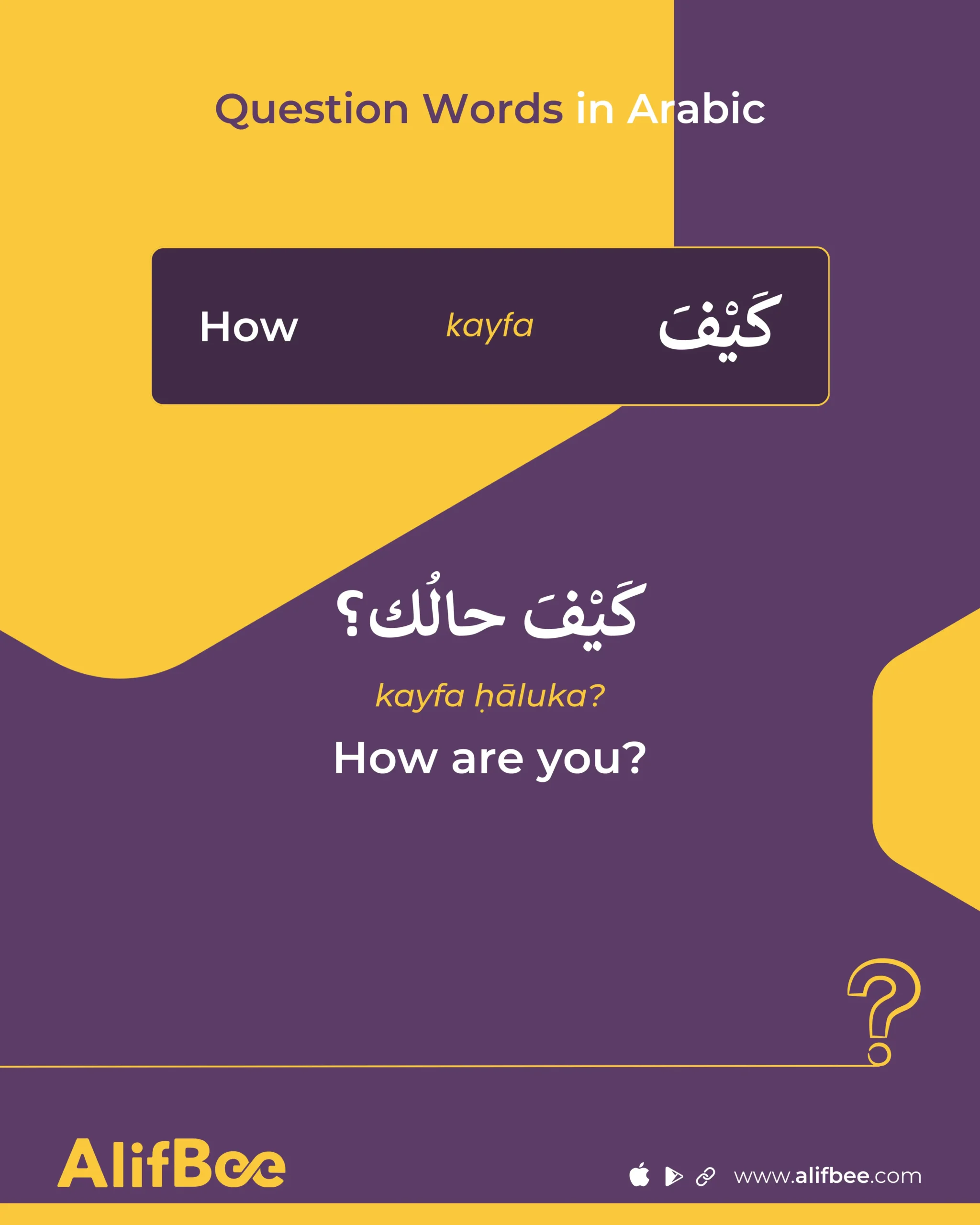
How are you?

kayfa ḥāluka?

كَيْفَ حالُك؟

How do I get out from here?

kayfa akhurūju min hunā?

كَيْفَ أخرجُ مِنْ هُنَا؟

Many learners start with “How are you?” and build confidence from there.

7

How many / How much - “kam” (and “bi-kam” for price)

You can use kam for numbers, amounts, and countable things.

How many? / How much?

kam?

كَمْ؟

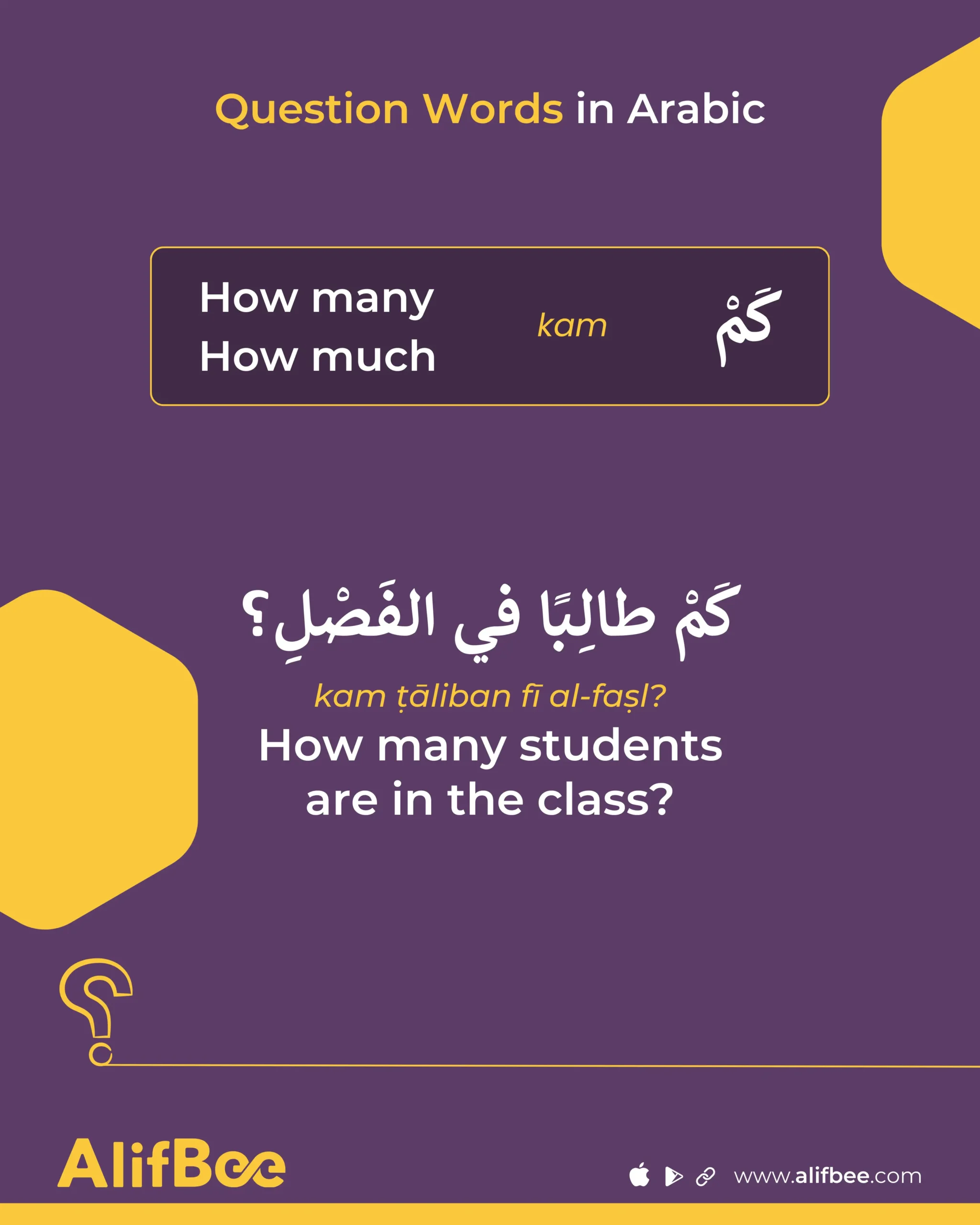
How many students are in the class?

kam ṭāliban fī al-faṣl?

كَمْ طالِبًا في الفَصْلِ؟

How many hours do you work daily?

kam sāʿah taʿmalu yawmiyyan?

كَمْ ساعَةً تَعْمَلُ يَوْمِيًّا؟

For price, Arab people often use bi-kam (“for how much?”).

How much is this book?

bi-kam hādhā al-kitāb?

بِكَمْ هذَا الكِتابُ؟

These examples are common in beginner Arabic materials because they’re needed for everyday tasks like shopping, counting, and telling time.

8

Which - “ayy”

You can use “ayy” when you choose between two or more options.

Which?

ayy?

أَيُّ؟

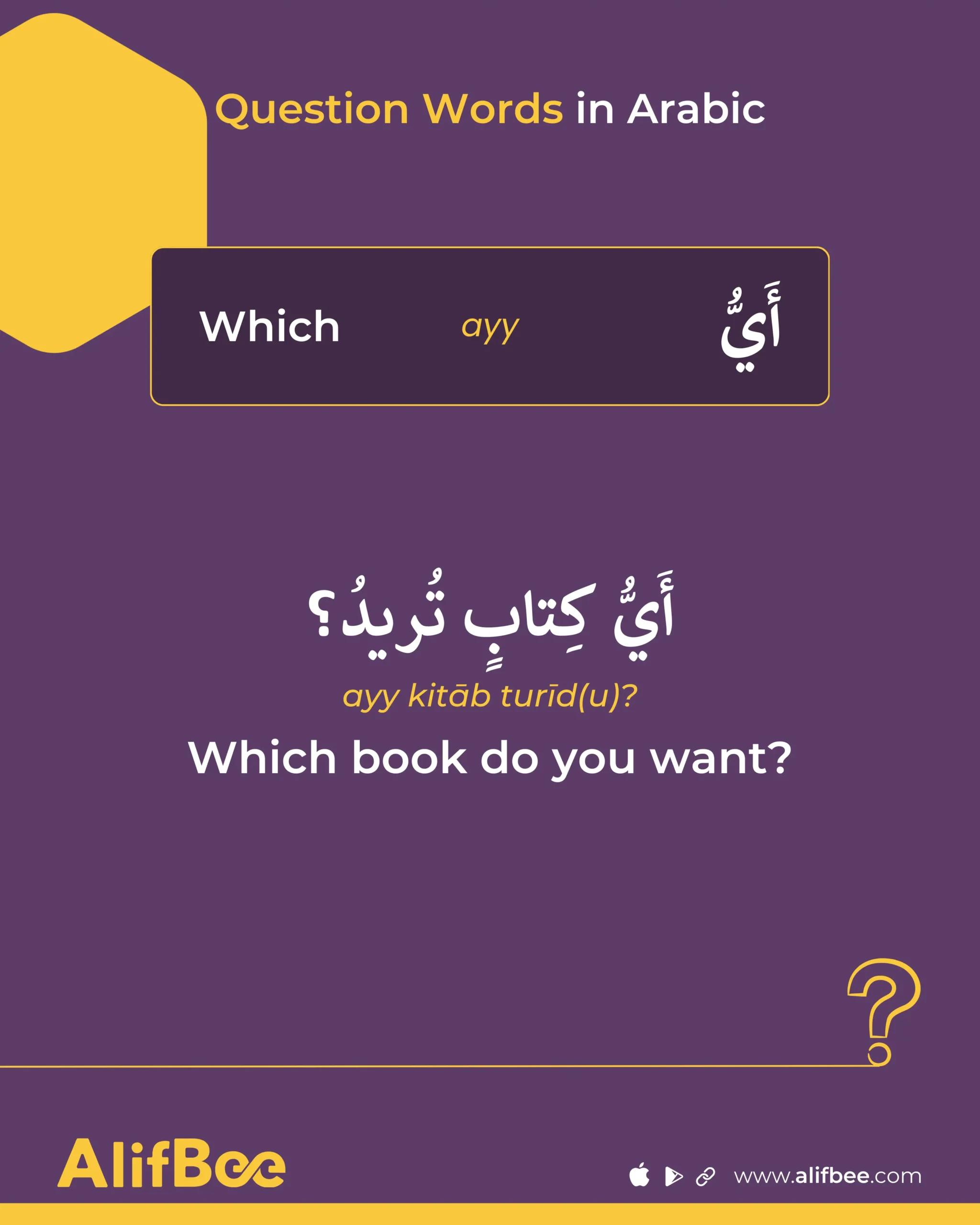
Which book do you want?

ayy kitāb turīd(u)?

أَيُّ كِتابٍ تُريدُ؟

Which city do you live in?

fī ayy madīnah taskun(u)?

في أَيِّ مَدينَةٍ تَسْكُنُ؟

This word is very helpful in shops, schools, and travel questions.

Review Arabic Question Words

How to Make Yes/No Questions in Arabic

Sometimes you don’t want to use a question word like who or where. You just want a yes-or-no answer.

In Arabic, one common tool is “hal”. In many cases, the sentence may remain unchanged in form, but your tone of voice makes it clear that it is a question.

(Yes/No question marker)

hal

هَلْ

Do you speak Arabic?

hal tatakallam(u) al-ʿarabiyyah?

هَلْ تَتَكَلَّمُ العَرَبِيَّةَ؟

Are you ready?

hal anta/anti jāhiz(a)?

هَلْ أَنْتَ جاهِز؟

If you learn “hal” early, you can ask many questions even with a small vocabulary.

6 Arabic Questions You Can Use Today

Sometimes you don’t want to use a question word like who or where. You just want a yes-or-no answer.

In Arabic, one common tool is hal. In many cases, the sentence may remain unchanged in form, but your tone of voice makes it clear that it is a question.

What is your name?

mā ismuka?

ما اسمُكَ؟

Where do you live?

ayna taskun?

أَيْنَ تَسْكُنُ؟

When is the meeting?

matā al-ijtimāʿ?

مَتَى الاجْتِماعُ؟

Why are you tired?

limādhā anta mutaab?

لِماذا أَنْتَ مُتْعَب؟

How are you today?

kayfa ḥāluka al-yawm?

كَيْفَ حَالُكَ اليَوْمَ؟

How much is this?

bi-kam hādhā?

بِكَمْ هذَا؟

Small daily practice is enough. You wouldn’t expect this, but five minutes a day can quickly change your comfort level.

Final Word

Question words are small, but they do a big job. They help you start speaking right away. They also enhance your listening, since you will begin to pay attention to these words when people speak.

Keep it simple. Pick three question words today. Use them in short questions. Say them out loud. Change one word each time. After a few days, you will feel the change. You will be able to ask with more confidence, and your Arabic will sound more natural.

If you want an easy way to practice these questions every day, try the AlifBee App. It can help you step by step, with clear lessons and practice you can do in minutes. You can also start with a free 14-day trial.

Author

  • Yahia Hawajry

    Yahia is an Arabic and English content writer with over 6 years of experience, including Arabic language education. At AlifBee, he creates engaging, SEO-focused content that helps learners build strong Arabic skills while making language learning clear and accessible.

Picture of Yahia Hawajry
Yahia Hawajry

Yahia is an Arabic and English content writer with over 6 years of experience, including Arabic language education. At AlifBee, he creates engaging, SEO-focused content that helps learners build strong Arabic skills while making language learning clear and accessible.

If you found this article helpful, please share it with your friends to spread the knowledge!
Facebook
LinkedIn
Telegram
X
Start your Arabic Learning Path with AlifBee!
syrian Logo
AlifBee App

Achieve incredible results with our platform Learn Arabic Online with AlifBee

AlifBee-Virtual School
AlifBee Virtual School

Join AlifBee Virtual School and master Arabic at your pace — from guided coaching to interactive self-learning.

AlifBee-Private Arabic Lessons
Private Arabic Lessons

Learn Arabic faster with live, one-on-one sessions tailored to your level and goals.

AlifBee-Books
AlifBee Workbooks Series

Explore AlifBee’s complete range of Arabic learning books for all ages!

Related Posts
Taraweeh Prayer in Ramadan
Arabic Culture
What Is Taraweeh Prayer?

What is Taraweeh prayer? Learn its meaning, when it’s prayed in Ramadan, how many rak’ahs it has, and key Arabic words used during Taraweeh.

Read More »