What are the Holiest Sites in Islam? Significance and Key Arabic Vocabulary

Reading Time: 7 minutes
Home / Arabic Culture / What are the Holiest Sites in Islam? Significance and Key Arabic Vocabulary
Listen to: What are the Holiest Sites in Islam? Significance and Key Arabic Vocabulary
Listening Bee

Islam has several places that hold special religious importance for Muslims. These sites are considered holy because of their connection to worship, prophets, and key moments in Islamic history. They continue to shape how Muslims pray, travel, and speak about their faith today.

The holiest sites in Islam are mainly located in Mecca and Medina. They are central to major acts of worship such as prayer, Hajj, and Umrah, and they appear frequently in Islamic texts and everyday religious language.

In this article, we will explain the significance of these holy sites and introduce key Arabic vocabulary related to them.

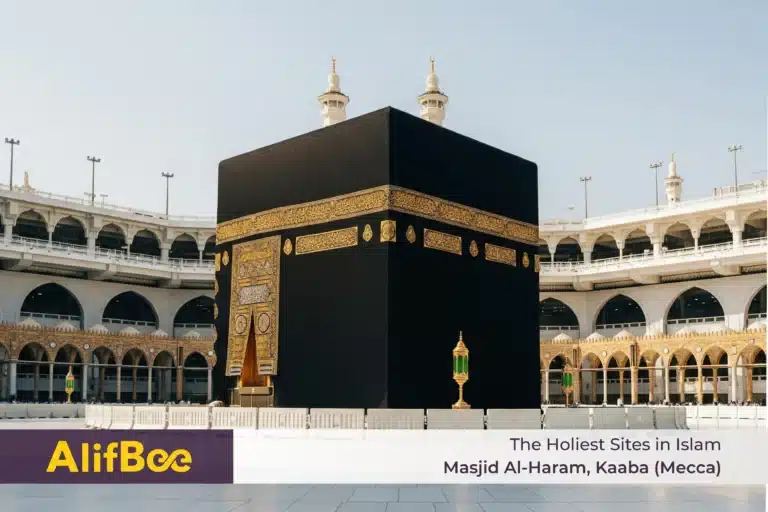
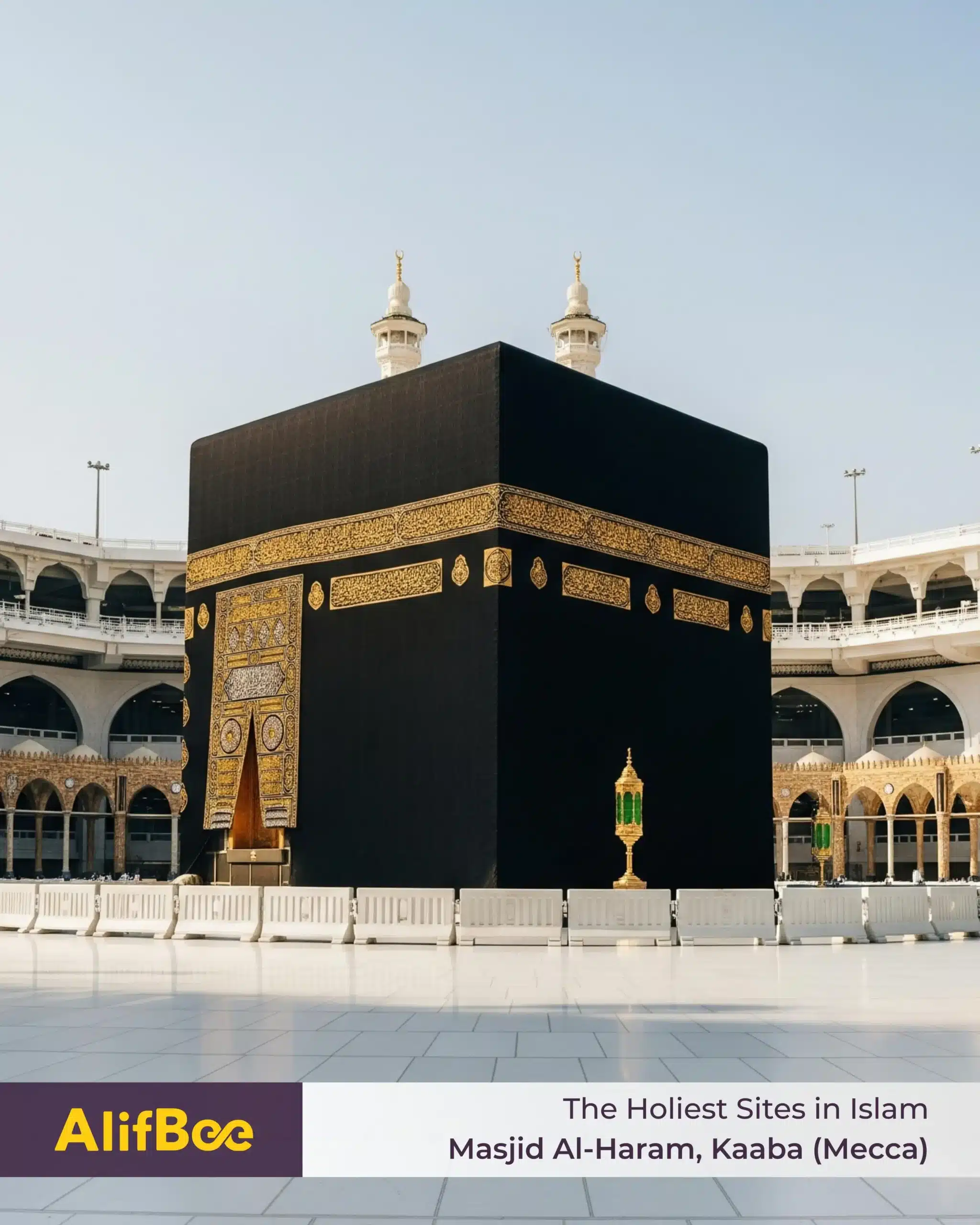
Masjid Al-Haram, Kaaba (Mecca)

Masjid Al-Haram in Mecca, Kaaba

Located in Mecca, Saudi Arabia, Masjid Al-Haram is the holiest mosque in Islam. It is the mosque of the Ka‘bah, and unlike what most people think, their origins trace back to way before Prophet Mohamed (PBUH), to Prophet Ibrahim (AS) and his son Ismail (AS).

The story states that after his return to Mecca, Allah instructed Ibrahim (AS) to build a house of worship, now known as the Kaaba.

Just before the completion of the Kaaba, Allah (SWT) sent the angel Jibreel (AS) to Prophet Ibrahim (AS) with a stone from heaven in order to complete the construction of the Kaaba and as a symbol of God’s covenant with humankind. This stone would later be known as Al-Hajar Al-Aswad, the Black Stone.

Mecca is now the destination for millions of Muslims each year. They go there to perform Hajj, one of the five pillars of Islam and a mandatory religious duty for all physically and financially able Muslims to perform at least once in their lifetime, symbolizing submission to Allah and seeking forgiveness.

The importance of the Kaaba goes beyond the borders of Mecca; it is the Qibla, the unified direction Muslims face during their five daily prayers, symbolizing unity and focus on worshiping one God, Allah, rather than the structure itself.

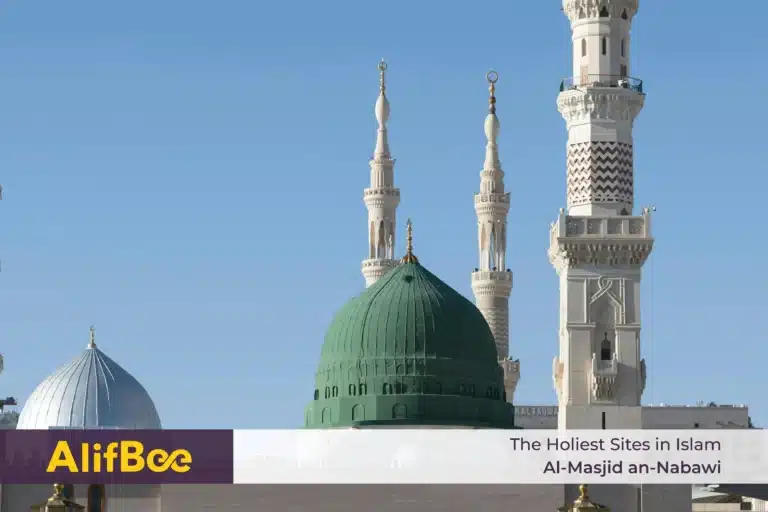
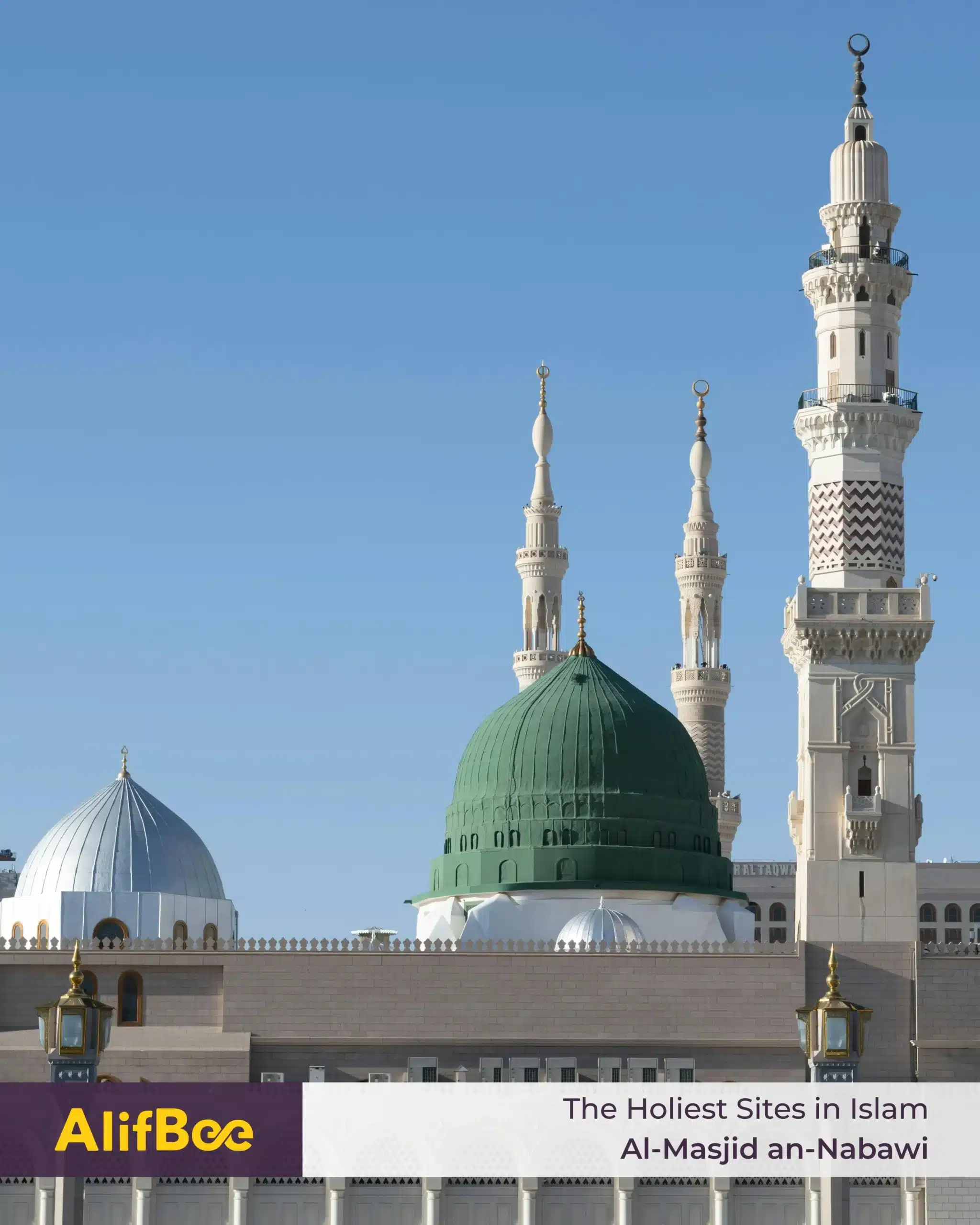
Al-Masjid an-Nabawi (The Prophet’s Mosque) in Medina

AL Masjid Al Nabawi

The Prophet’s Mosque is situated in Medina, in the Hijaz region of Saudi Arabia, approximately 400 kilometers from Mecca. It was built by Prophet Muhammad (PBUH) himself and is considered the second-holiest mosque in Islam, after Al-Masjid Al-Haram in Mecca.

The story states that after his migration from Mecca to Medina, Prophet Mohammad (PBUH) was welcomed by the people of the city. Each family hoped he would stay in their home. However, the Prophet (PBUH) explained that his she-camel, Qaswa, was commanded by Allah, and wherever it stopped would be his new home, and that’s how the location of the Prophet’s Mosque was divinely chosen.

Although praying in the Prophet’s Mosque is not mandatory in Islam, the place itself holds an emotional and spiritual connection for Muslims, as it’s the place where the Prophet (PBUH) is buried.

It’s also narrated that a single prayer in this mosque is worth a thousand prayers in other mosques, except Al-Masjid Al-Haram in Mecca, where it’s worth 100,000 prayers.

In essence, it’s a place of immense blessing, where every act of worship, especially prayer, is greatly magnified in reward.

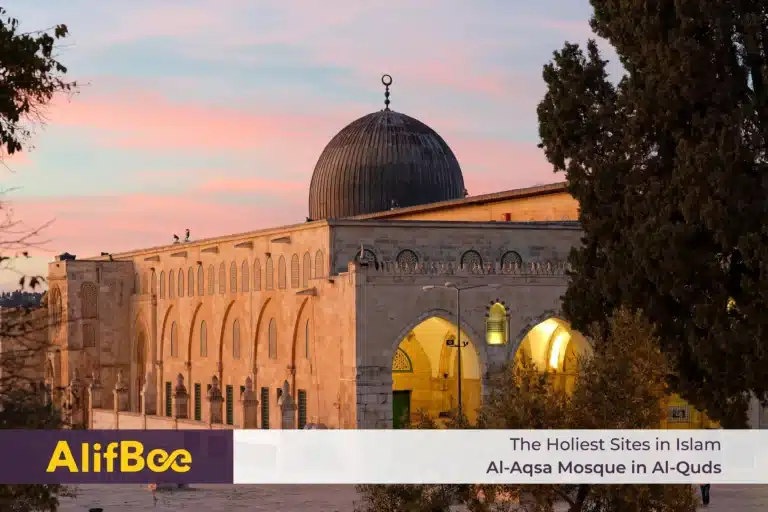
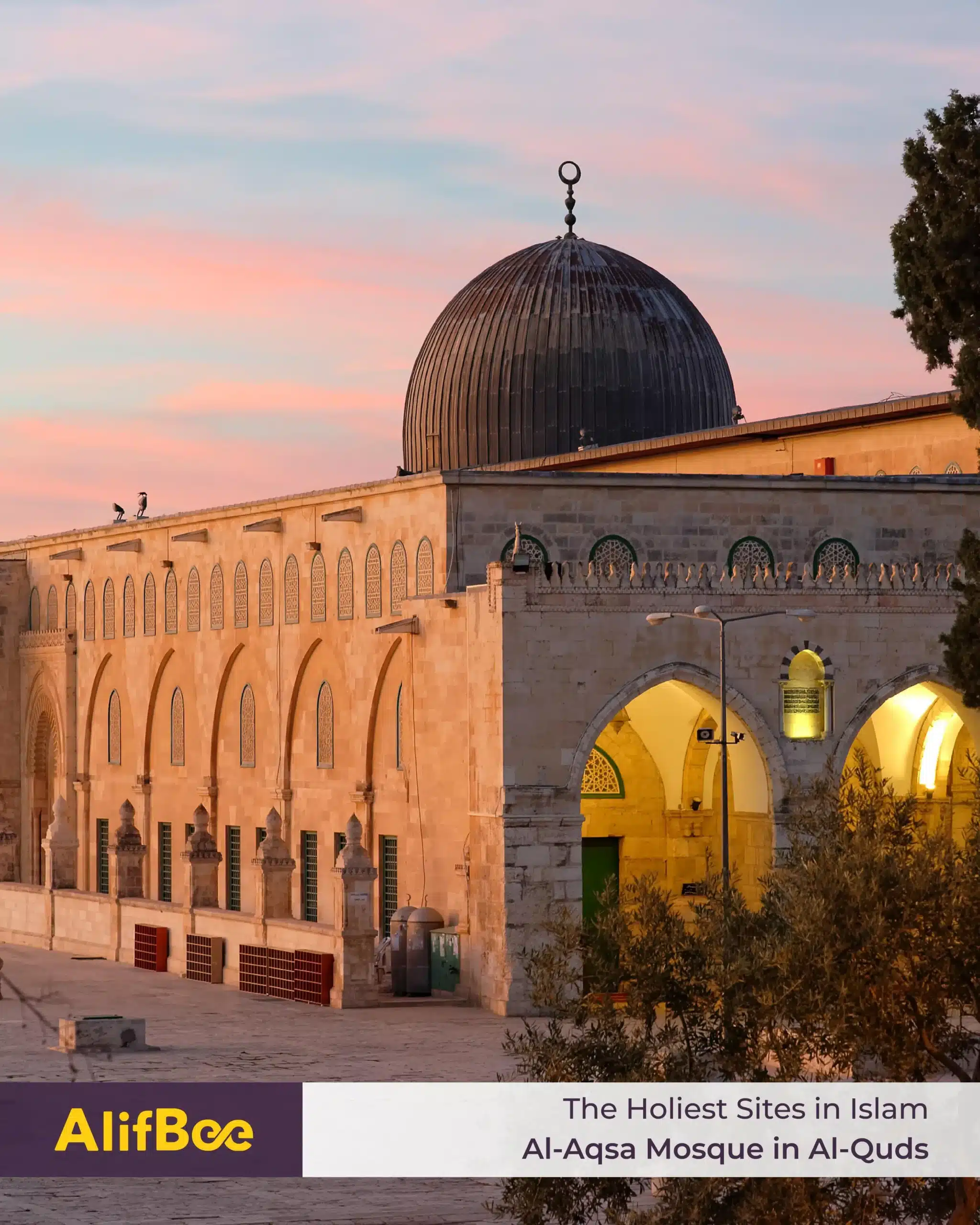
Al-Aqsa Mosque in Al-Quds (Jerusalem)

Al Masjid Al Aqsa

Located in Al-Quds, Palestine, Al-Aqsa Mosque is also one of the holiest sites in Islam, also known as the Farthest Mosque, and it was the first qibla for Muslims.

Initially, Muslims were commanded to face both the kaaba and Al-Quds. However, after the migration of the Prophet Muhammad from Mecca to Madinah, it was physically impossible to face both qiblahs at the same time, as Madinah lies between Makkah and Jerusalem (Al-Quds). That is when Allah ordered them to face Jerusalem to test their faith, since they dearly wanted to face Makkah. But eventually, right before the Battle of Badr—which marked the true confrontation between truth and falsehood and the beginning of the collapse of idolatry—the Prophet received commands from Allah to face the kaaba again.

The reason this mosque is considered so holy is that it was built by Prophet Ibrahim (AS) forty years after he built the Kaaba, and after his death, the mosque was inherited by multiple generations of prophets, including Ishaq (AS), Yaqub (AS), Yusuf (AS), Dawud (AS), and Suleiman (AS).

Another reason it is considered holy in Islam is the story of Al-Isra wal Mi‘raj, the miraculous Night Journey of Prophet Muhammad. It can be said that through Isra’ and Mi‘raj, the bond between the Islamic faith and Al-Aqsa was further strengthened.                

The journey occurred after the Prophet faced deep personal grief, losing his wife Khadijah and his uncle Abu Talib. The angel Jibreel came to him, and he was transported on a winged creature called Buraq, faster than lightning. He arrived at Al-Aqsa Mosque in Al-Quds, where he met previous prophets and led them in prayer, showing his important status in Islam.

From there, he ascended through the heavens, meeting various prophets, and witnessed Paradise and Hell, seeing things beyond human comprehension, until he finally reached the highest station and spoke directly with God, Allah. 

The Prophet also received the greatest gift from Allah to Muslims on this night – Salah. Praying five times a day became mandatory from that night.

Although the spiritual connection to Al-Aqsa Mosque has always been strong, it is now stronger than ever, as Muslims around the world are unable to visit it.

Other Important Sacred Places in Islam

In addition to the main holy sites, Islam includes other places that hold religious and historical importance. These locations are respected because of their connection to prophets, key events, and early Muslim history, even though visiting them is not part of required worship.

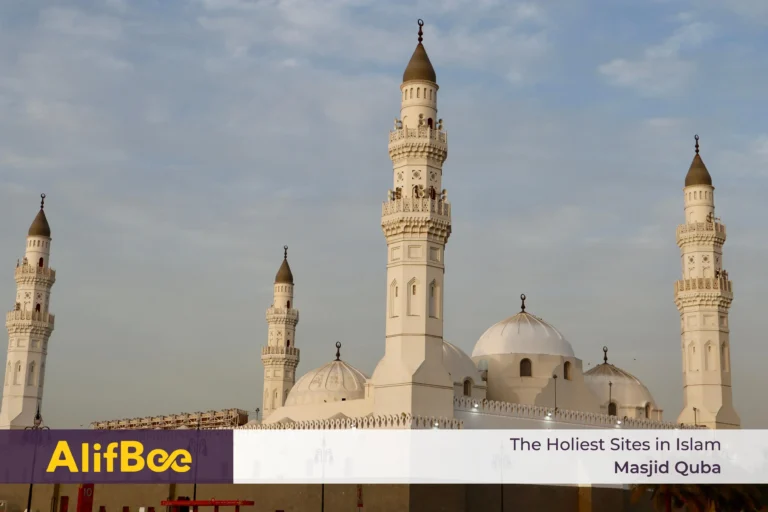
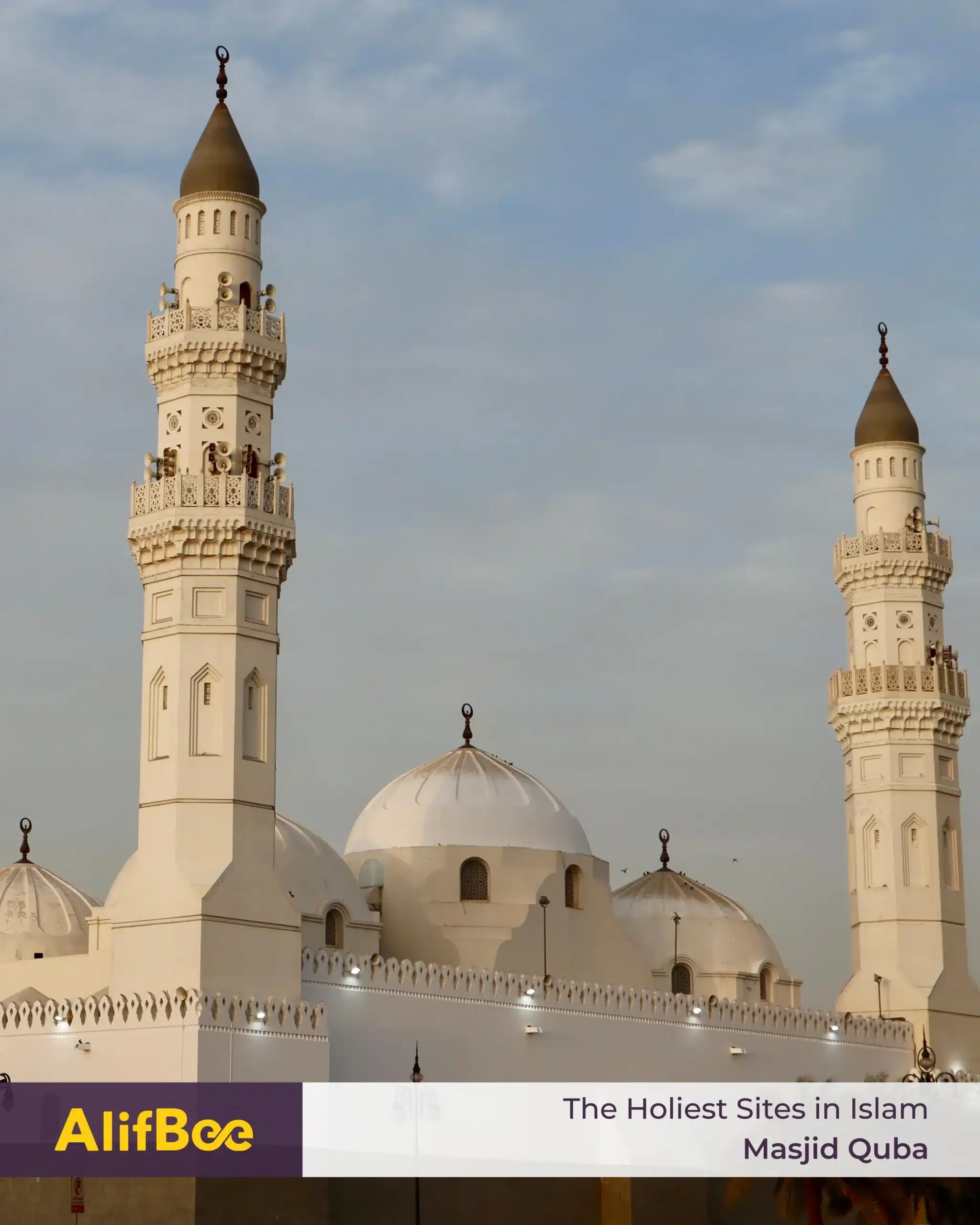
Masjid Quba

Masjid Quba

Located in Medina, this mosque was the first mosque built in Islam, symbolizing the beginning of a new era for the Muslim community. Its construction marked the establishment of the first Islamic society after the Prophet Muhammad’s (PBUH) migration from Mecca to Medina.

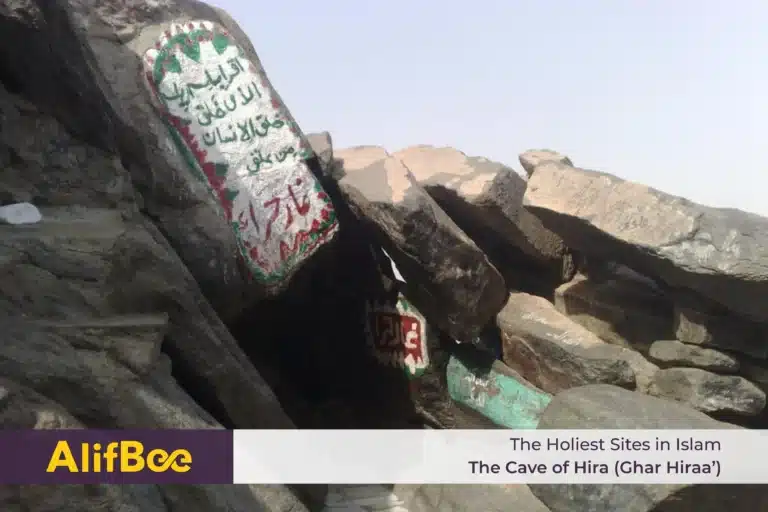
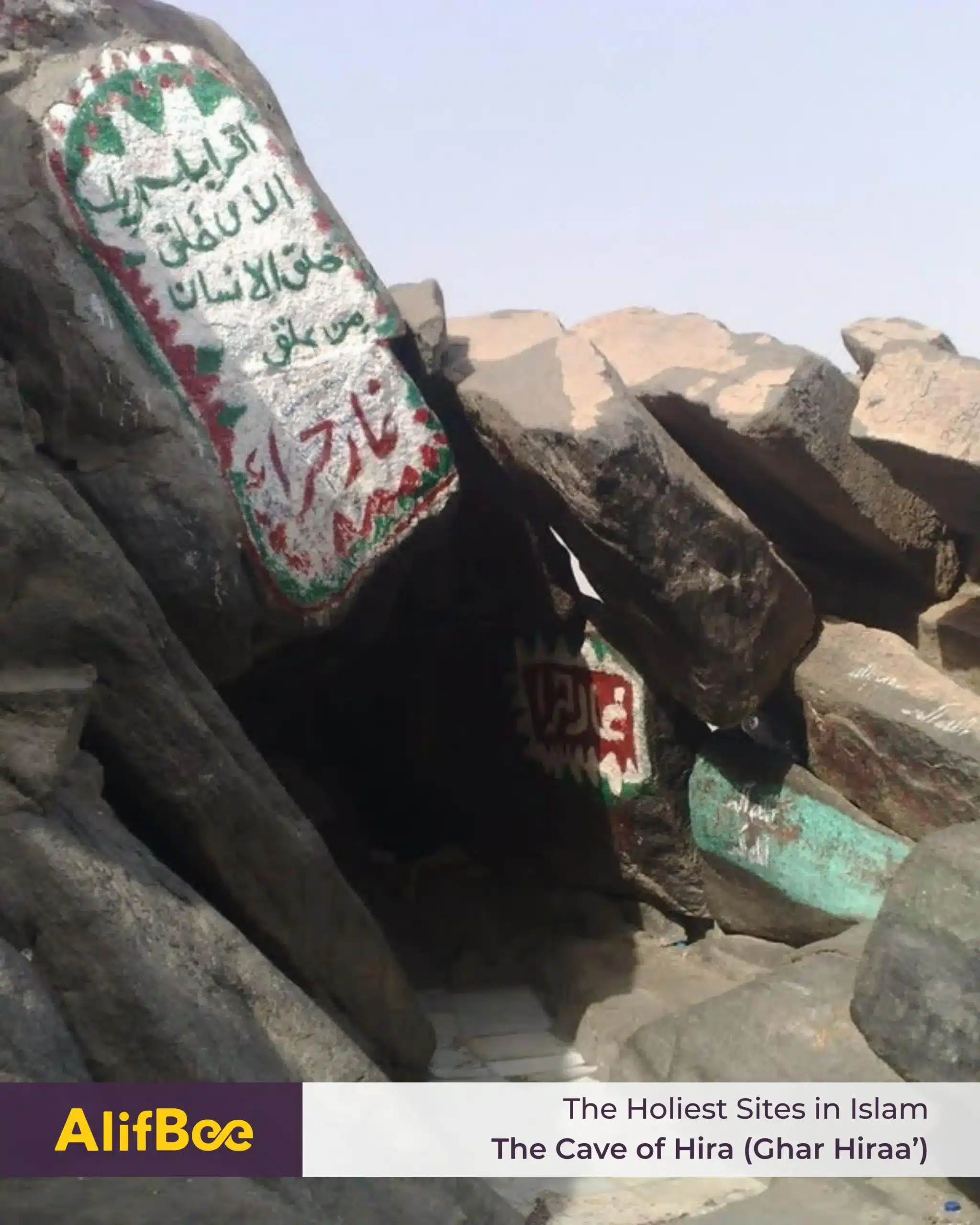
The Cave of Hira (Ghar Hiraa’)

Ghar Hira - The Cave of Hira

A small cave in Jabal al-Nour (Mountain of Light), located near Mecca, Saudi Arabia.

Before the revelation, the Prophet Muhammad (PBUH) often retreated to this cave for reflection, solitude, and devotion, and it was there that he received his revelations from Allah (SWT) through the Angel Jibreel.

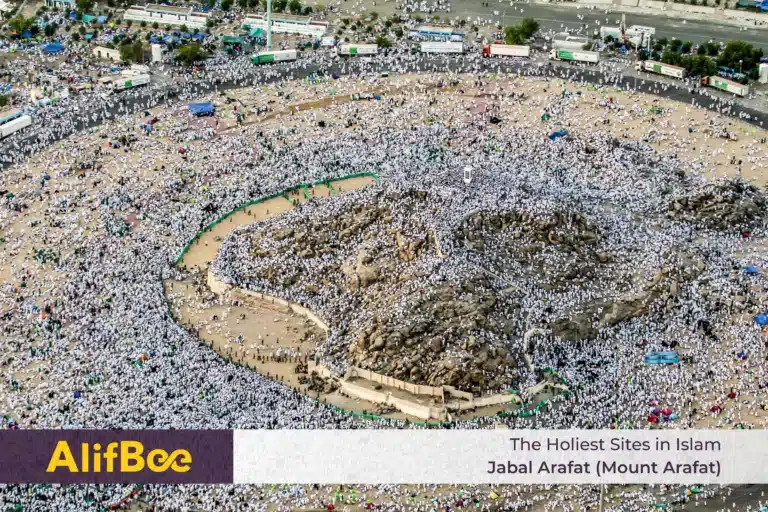
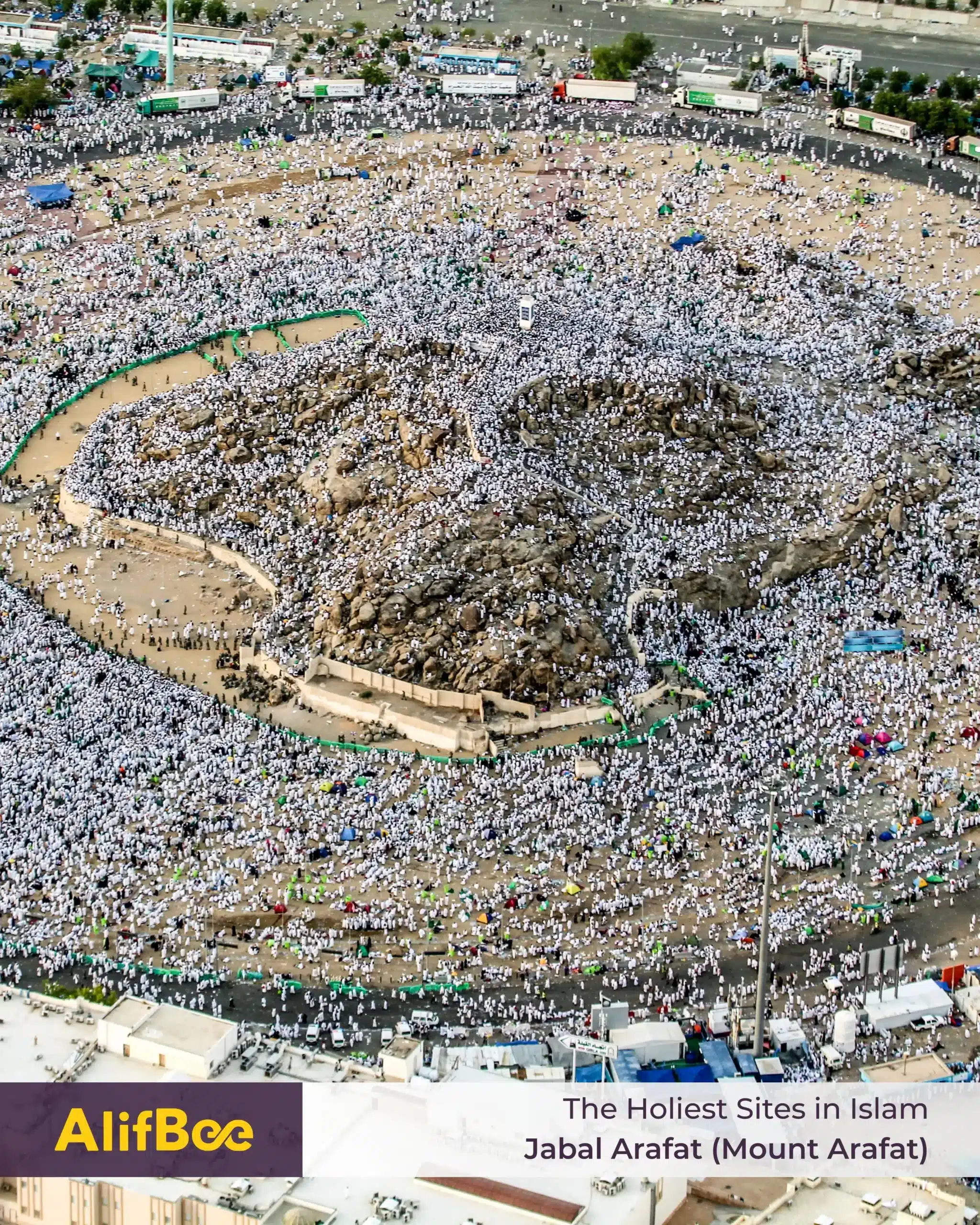
Jabal Arafat (Mount Arafat)

Jabal Arafat - Mount Arafat

A significant granite hill southeast of Mecca, Saudi Arabia. According to Islamic tradition, the hill is where the Prophet stood and delivered the Farewell Sermon (Khuṭbat al-Wadāʿ) to his companions (Ṣaḥābah) who had accompanied him on the Hajj towards the end of his life.

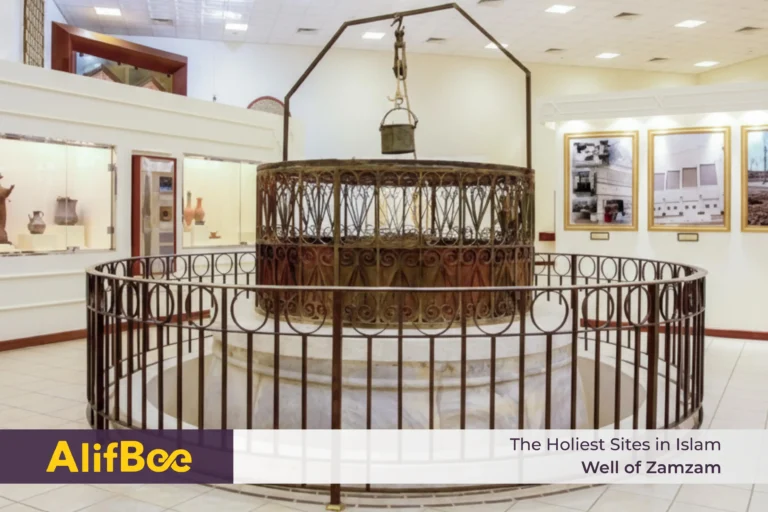
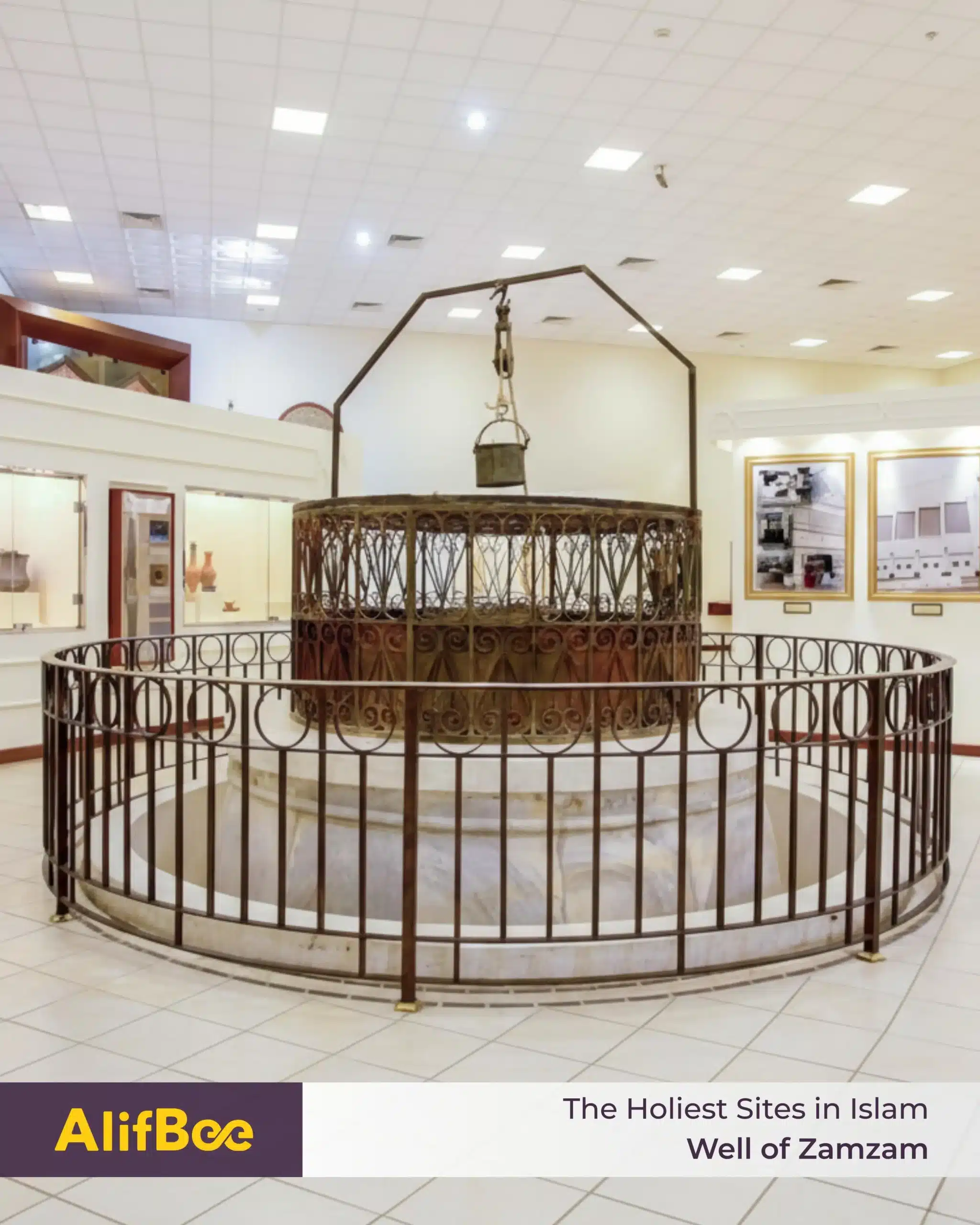
Well of Zamzam

Well of Zamzam

A miraculously flowing sacred well in the Grand Mosque in Mecca.

The story states that a source of water appeared for Hajar and the Prophet Ismail (as) in the desert, and that it helps relieve fatigue, boost immunity, and improve overall health.

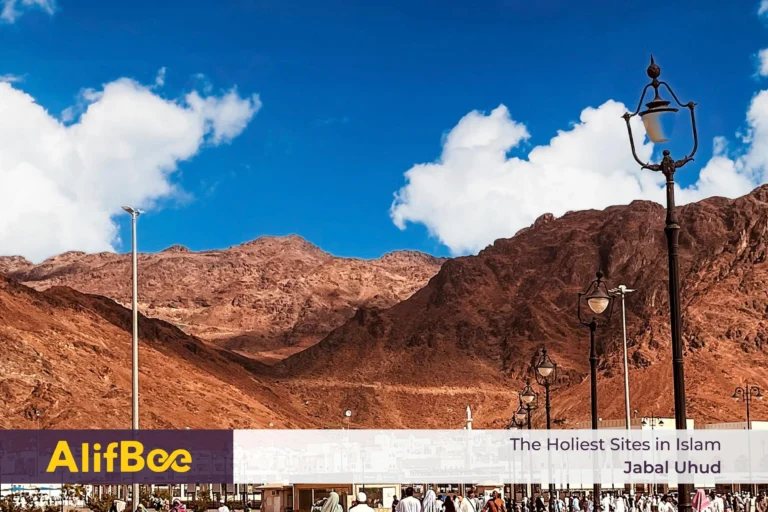
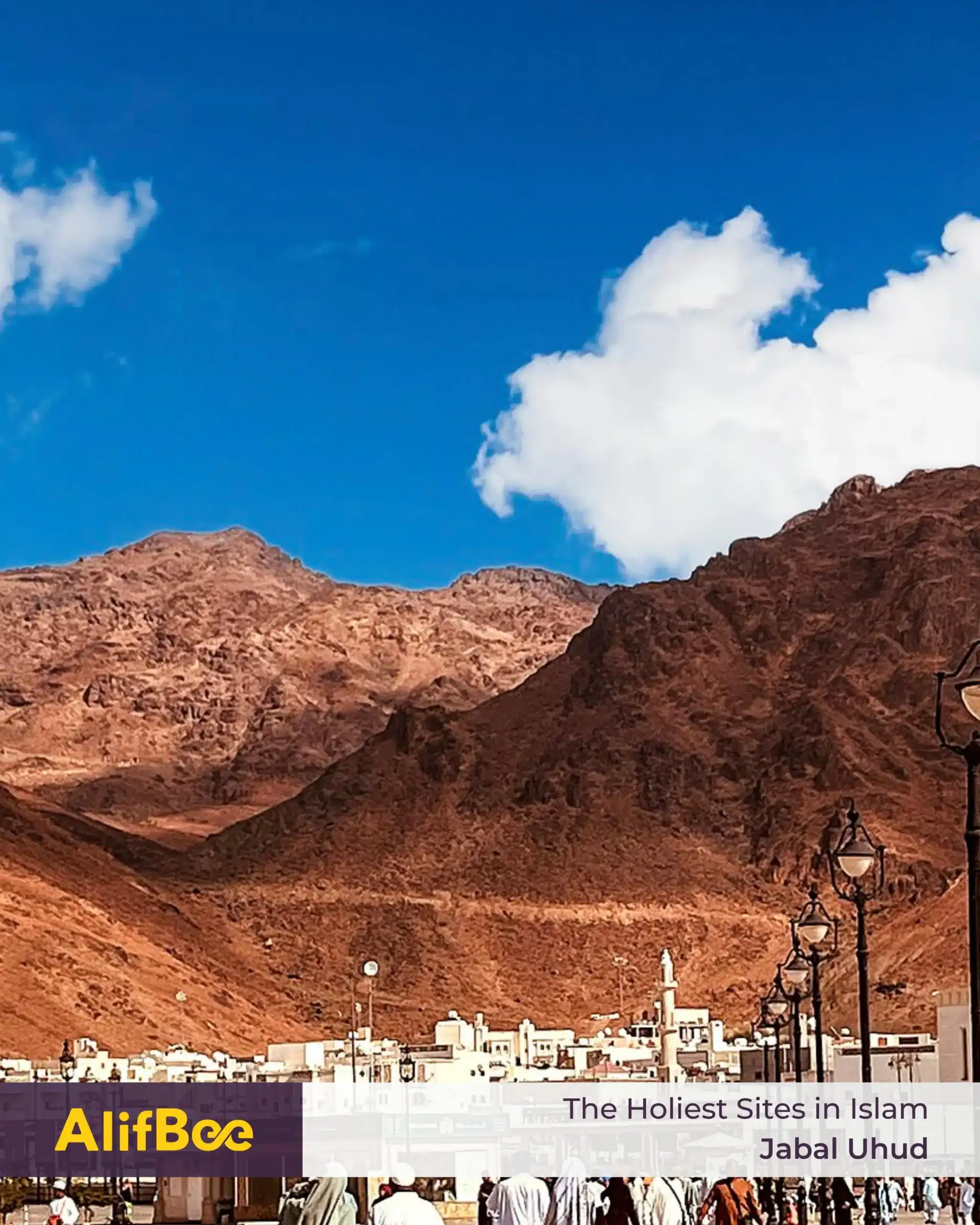
Jabal Uhud

Jabal Uhud

Mount Uhud is a mountain north of Medina, in the Hejazi region of Saudi Arabia.

It was the site of the Battle of Uhud near Medina, which taught lasting lessons about obedience and reliance on God. It is also where many companions of the Prophet (PBUH) were martyred. 

The Prophet Muhammad expressed special affection for the mountain, saying that it loves the Muslims and they love it. 

20 Common Arabic Vocabulary Related to Islamic Holy Sites

Mosque

Mas-jid

مَسْجِد

Sanctuary / Sacred Precinct

Ha-ram

حَرَم

Religious visit

(Ziyārah) – Zi-yaa-rah

زِيَارَة

Intention

Niyyah

نِيَّة

Sanctity / Sacredness

Hur-mah

حُرْمَة

Worship

ʿI-baa-dah

عِبَادَة

The Kaaba

Al-Kaʿ-bah

الْكَعْبَة

Direction of prayer

Qib-lah

قِبْلَة

Circumambulation

Tawāf

طَوَاف

Pilgrimage-

Ḥajj

حَجّ

The Prophet

An-Na-biyy

النَّبِيّ

The Illuminated City (Medina)

Al-Ma-dee-na-tul Mu-naw-wa-rah

الْمَدِينَةُ الْمُنَوَّرَة

A Garden from Paradise

(Rawḍah), Ar-Raw-dah

الرَّوْضَة

Dome of the Rock

Qub-ba-tus Sakh-rah

قُبَّةُ الصَّخْرَة

The Farthest Mosque

Al-Mas-ji-dul Aq-saa

الْمَسْجِدُ الأَقْصَى

The Night Journey and Ascension

Al-Is-raa’ wal Miʿ-raaj

الإِسْرَاءُ وَالْمِعْرَاج

The Holy Sanctuary

Bay-tul Maq-dis

بَيْتُ الْمَقْدِس

The Lesser Pilgrimage

ʿUm-rah

عُمْرَة

The Black Stone

Al-Ha-ja-rul As-wad

الْحَجَرُ الأَسْوَد

Review the Holiest Sites in Islam

Final word

Sacred places in Islam are not revered merely for their physical presence, but because they each carry a story that makes us understand Islam a little deeper, and helps us understand that Islam didn’t actually start with Prophet Muhammad (PBUH); it’s a story that goes beyond people, time, or places.

To continue exploring Islamic heritage while building your Arabic skills, discover more learning experiences on AlifBee — try it free for 14 days and learn at your own pace.

Picture of Layla AlAhmar
Layla AlAhmar
Layla Alahmar is a writer and proofreader with a master’s degree in Arabic literature and linguistics. At AlifBee, she creates clear and engaging educational content, blending storytelling with practical language insights to make Arabic learning accessible and inspiring.
If you found this article helpful, please share it with your friends to spread the knowledge!
Facebook
LinkedIn
Telegram
X
Start your Arabic Learning Path with AlifBee!
syrian Logo
AlifBee App

Achieve incredible results with our platform Learn Arabic Online with AlifBee

AlifBee-Virtual School
AlifBee Virtual School

Join AlifBee Virtual School and master Arabic at your pace — from guided coaching to interactive self-learning.

AlifBee-Private Arabic Lessons
Private Arabic Lessons

Learn Arabic faster with live, one-on-one sessions tailored to your level and goals.

AlifBee-Books
AlifBee Workbooks Series

Explore AlifBee’s complete range of Arabic learning books for all ages!

Related Posts