For Muslims around the world, Taraweeh prayer is one of the defining experiences of Ramadan. It transforms nights into moments of worship, brings communities together, and offers a chance to hear the Quran recited in long, beautiful portions.
But what exactly is Taraweeh? When is it prayed? And what do all those Arabic words mean?
This guide answers those questions clearly and simply.
What Is Taraweeh Prayer?
Taraweeh prayer is a voluntary night prayer performed during Ramadan after the Isha prayer. It includes a longer recitation of the Quran and is usually prayed in congregation at the mosque. Muslims can also pray it at home individually or with family.
The prayer is not obligatory, but it is highly recommended. The Prophet Muhammad (peace be upon him) prayed it and encouraged his followers to do the same. He said, “Whoever stands in prayer during Ramadan with faith and seeking reward, his past sins will be forgiven.”
What Does "Taraweeh" Mean in Arabic?
The word Taraweeh (تراويح) comes from the Arabic root ر و ح (r-w-ḥ), which carries meanings related to rest, comfort, and breathing.
In the early days of Islam, after every four rak’ahs of this long night prayer, the companions of the Prophet would take a short break. They would sit, rest, and catch their breath before continuing.
These breaks became known as tarweehah (singular), meaning “a moment of rest.” Over time, the entire prayer came to be called Taraweeh—the prayer that includes moments of rest.
When Is Taraweeh Prayer Performed?
Taraweeh prayer time begins after the Isha prayer and lasts until dawn. It is performed only during the month of Ramadan.
You can pray Taraweeh at any point during the night, though most people pray it immediately after Isha. Some prefer to pray it late at night, closer to dawn, as part of tahajjud (night prayer).
The prayer can be long—sometimes an hour or more in mosques that aim to complete the entire Quran over the month. This is why the “rests” between sets are helpful.
How Many Rak'ahs in Taraweeh?
The Prophet Muhammad (PBUH) prayed 8 rak’ahs of night prayer during Ramadan, and then added Witr. This is recorded in a hadith narrated by Aisha (may Allah be pleased with her), who said: “The Prophet never prayed more than 11 rak’ahs (8 Taraweeh + 3 Witr) in Ramadan or outside of it.”
However, during the time of Caliph Umar ibn al-Khattab, the companions agreed to pray 20 rak’ahs. This became the established practice in many Muslim communities, especially those following the Hanafi and Hanbali schools.
Your Arabic Takeaway
6 Key Arabic Words You'll Hear During Taraweeh
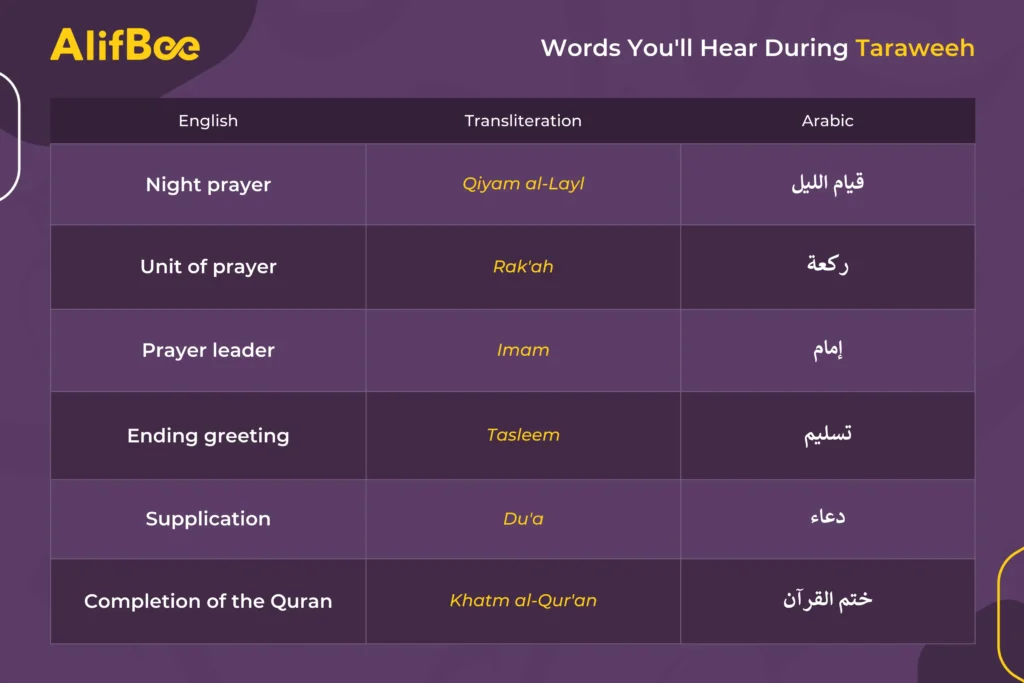
If you attend Taraweeh, you will hear certain Arabic words repeated. Knowing them helps you follow along and feel more connected.
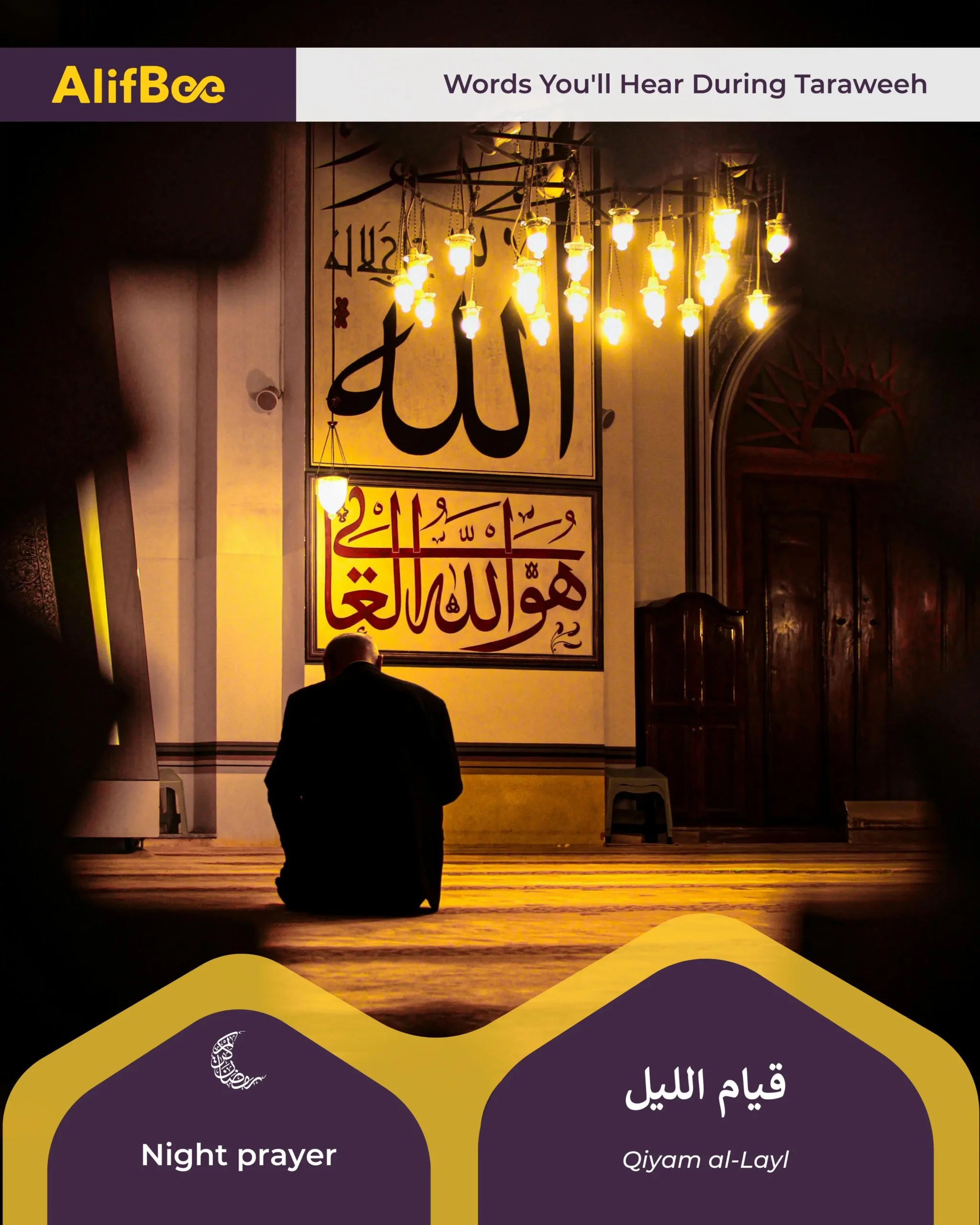
Qiyam al-Layl
Night prayer
Qiyam al-Layl
قيام الليل
This is the general term for any voluntary prayer performed at night. Taraweeh is a specific type of Qiyam al-Layl that happens only in Ramadan.
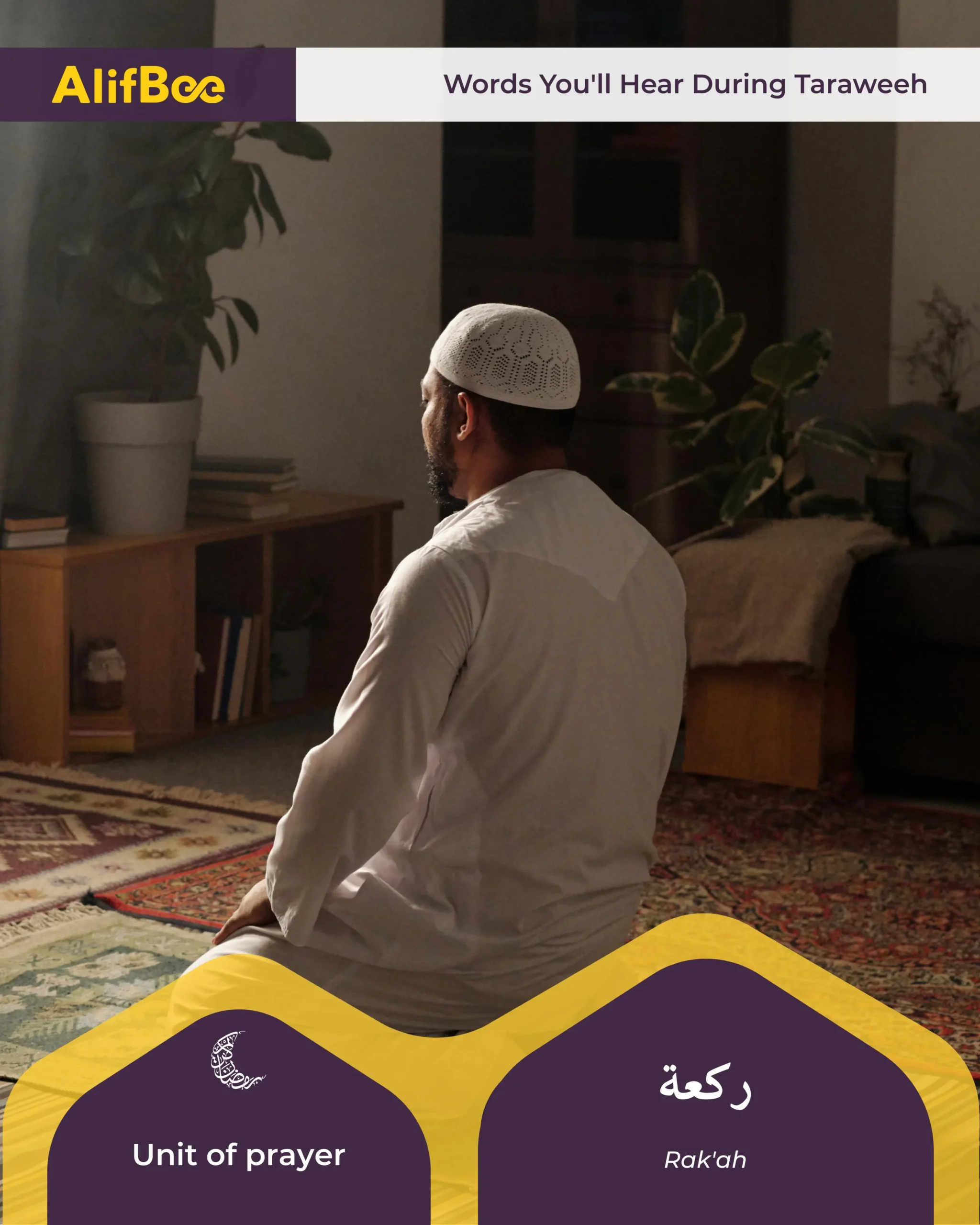
Rak'ah
Unit of prayer
Rak'ah
ركعة
A rak’ah is one complete cycle of standing, bowing, prostrating, and sitting. When people ask “how many rak’ahs,” they are asking how many units the prayer contains.
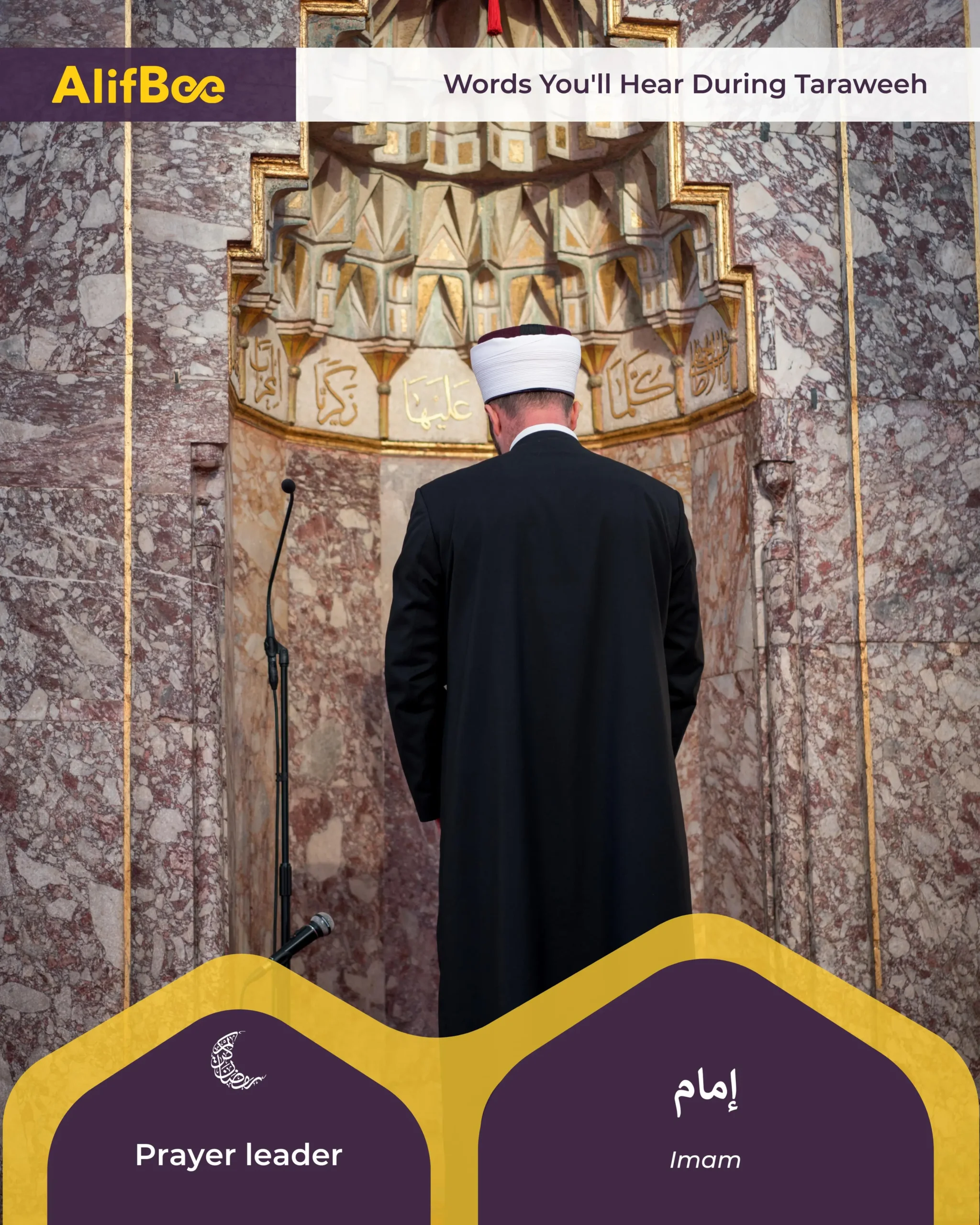
Imam
Prayer leader
Imam
إمام
The imam stands in front and leads the congregation. Everyone else follows his movements and listens to his recitation.
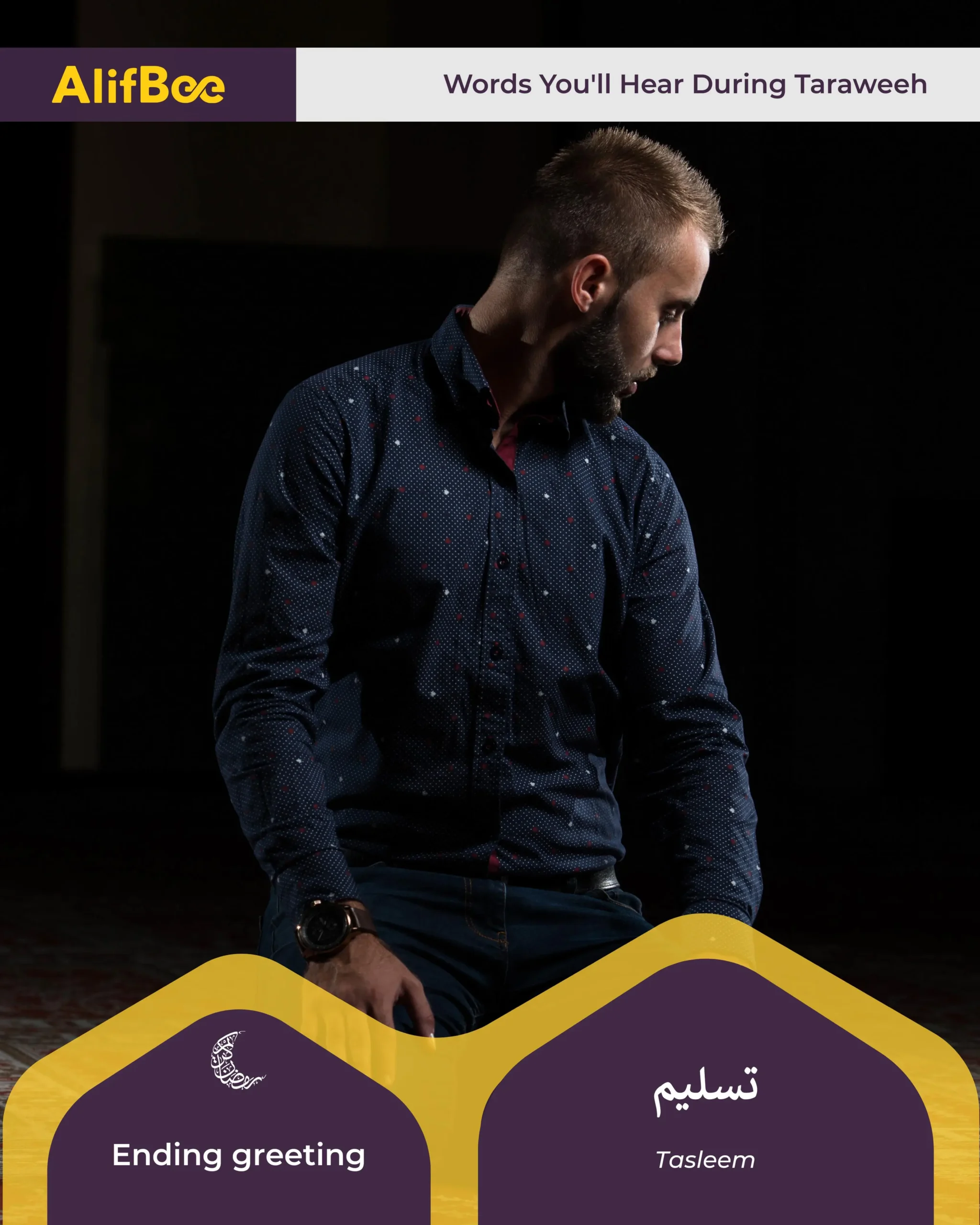
Tasleem
Ending greeting
Tasleem
تسليم
At the end of the prayer, you turn your head to the right and say “Assalamu alaikum wa rahmatullah,” then to the left and repeat. This is the tasleem, which marks the end of the prayer.
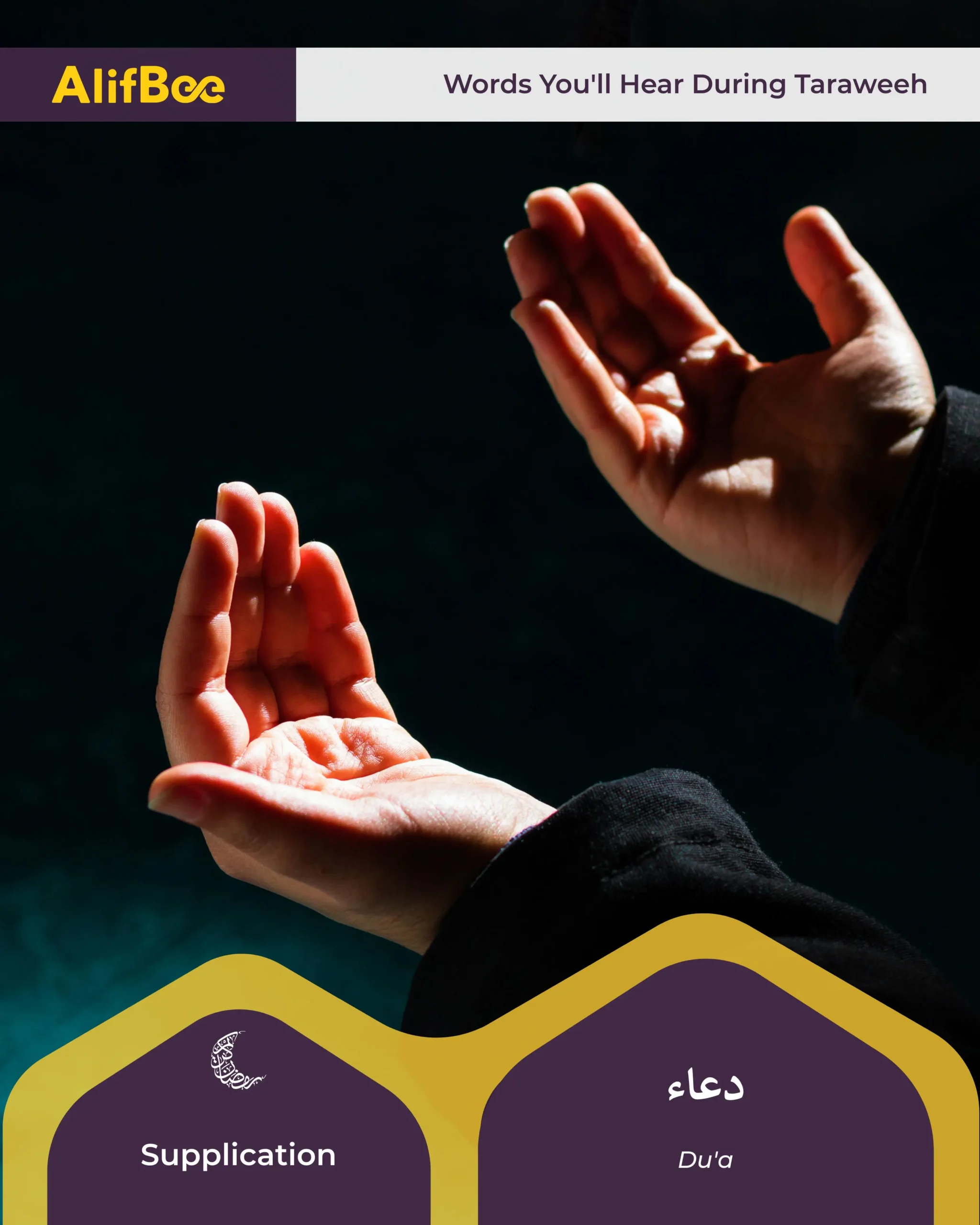
Dua
Supplication
Du'a
دعاء
After finishing the prayer, many imams make du’a—raising their hands and asking Allah for forgiveness, mercy, and blessings.
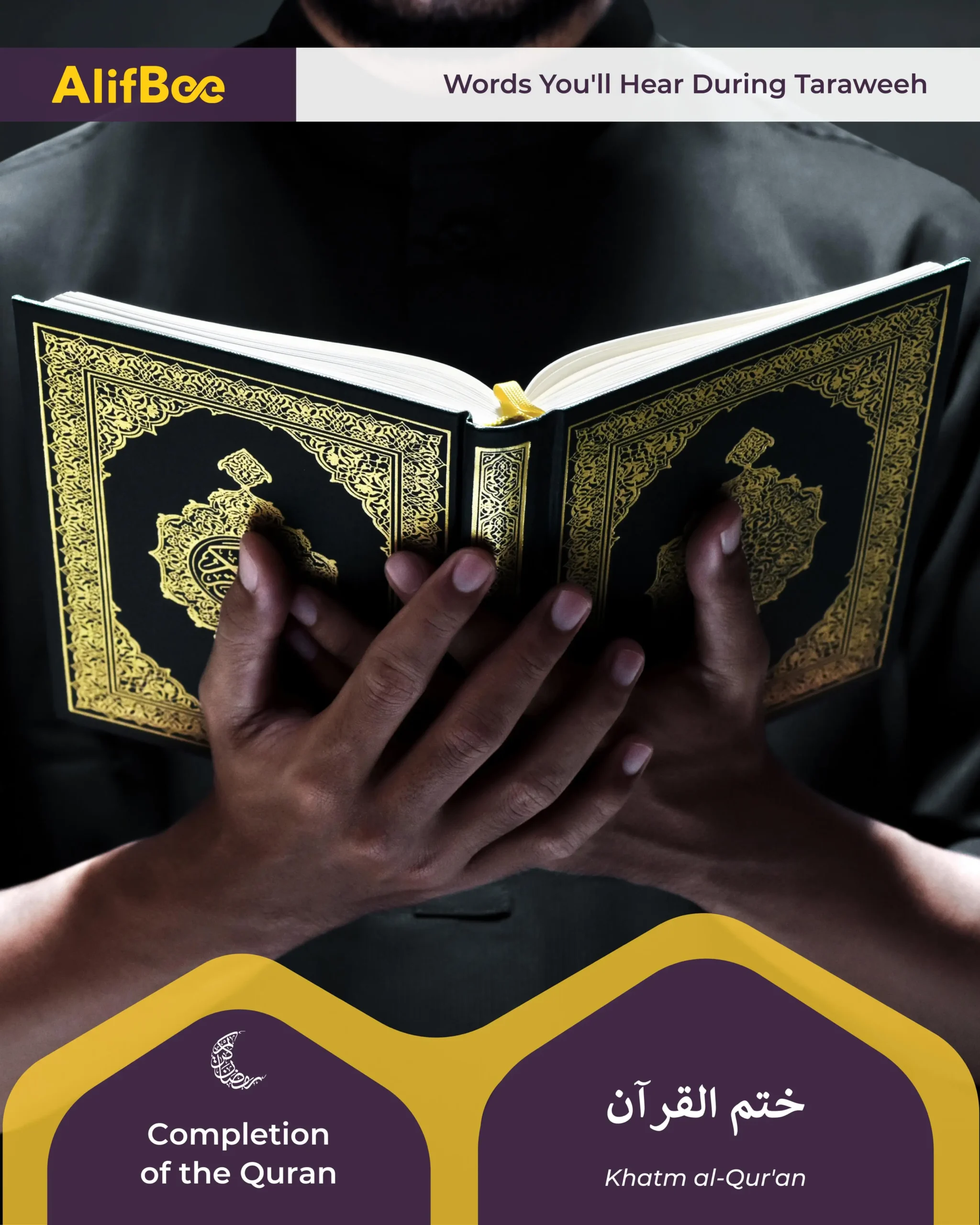
Khatm al-Qur'an
Completion of the Quran
Khatm al-Qur'an
ختم القرآن
Many mosques aim to recite the entire Quran over the 29 or 30 nights of Ramadan. The night they finish is called Khatm al-Qur’an, and it is often a special celebration.
Why Taraweeh Feels Different in Ramadan
First, the recitation is longer. In daily prayers, you might recite a short verse like Al-Ikhlas. In Taraweeh, the imam might recite for 20 or 30 minutes straight, moving through the Quran verse by verse.
Second, the community is different. Mosques that are half-empty during the year become full every night. People who rarely see each other stand shoulder to shoulder. Children attend with their parents.
Third, the timing changes everything. Praying at night, when the world is quiet, and your daily responsibilities are done, creates a different kind of focus.
Taraweeh vs Other Prayers (Quick Comparison)
Taraweeh
Isha
Voluntary (Sunnah)
Obligatory (Fard)
Only in Ramadan
Every day of the year
Longer recitation
Short recitation
Often prayed in congregation
Can be prayed alone or in congregation
Taraweeh
Tahajjud
After Isha, before sleeping
After sleeping, late night
Specific to Ramadan
Any time of year
Usually in congregation
Usually prayed alone
Dua Between Rak'ahs
During the breaks between sets of rak’ahs, many imams recite a short supplication. One common dua is:
Glory be to the Possessor of sovereignty and dominion, glory be to the Possessor of might, majesty, power, pride, and omnipotence, glory be to the King, the Ever-Living who neither sleeps nor dies, (He is) perfectly praised and perfectly holy, our Lord and the Lord of the angels and the Spirit.
Subhana dhil-mulki wal-malakut, subhana dhil-'izzati wal-'adhamati wal-qudrati wal-kibriya'i wal-jabarut, subhanal-malikil-hayyil-ladhi la yanamu wa la yamut, subbuhun quddus, rabbuna wa rabbul-mala'ikati war-ruh.
سُبْحَانَ ذِي الْمُلْكِ وَالْمَلَكُوتِ، سُبْحَانَ ذِي الْعِزَّةِ وَالْعَظَمَةِ وَالْقُدْرَةِ وَالْكِبْرِيَاءِ وَالْجَبَرُوتِ، سُبْحَانَ الْمَلِكِ الْحَيِّ الَّذِي لَا يَنَامُ وَلَا يَمُوتُ، سُبُّوحٌ قُدُّوسٌ، رَبُّنَا وَرَبُّ الْمَلَائِكَةِ وَالرُّوحِ
Final Word
Taraweeh is one of the great gifts of Ramadan. It turns nights into worship, brings communities together, and offers a chance to hear the Quran in a way that is simply not possible at other times of the year.
If you want to learn more beautiful Arabic words, the AlifBee app can help. It offers structured lessons with native audio, so you can learn the Arabic language with confidence.
You can also explore more Ramadan guides on the AlifBee blog to deepen your understanding and enrich your worship.
May your nights be blessed, and may your prayers be accepted.
Frequently Asked Questions
No, Taraweeh is not mandatory (fard). It is a highly recommended Sunnah prayer. The Prophet Muhammad prayed it and encouraged others to do so.
Yes, you can pray Taraweeh at home either individually or with your family. While praying at the mosque has more reward, praying at home is perfectly acceptable.
Taraweeh is commonly prayed as 8 or 20 rak’ahs, depending on tradition. Both numbers are valid. The prayer is usually followed by 3 rak’ahs of Witr.
Taraweeh comes from the Arabic root meaning “to rest.” It refers to the breaks taken between sets of rak’ahs during this long night prayer.