

Written by Dania Ghraoui, a translator and language teacher with 10 years of experience.
At A Glance: The adjective ” beautiful ” in Arabic is جَمِيل (jamīl) for masculine nouns and جَمِيلَة (jamīlah) for feminine nouns. Arabic adjectives usually come after the noun and match it in gender. This adjective is very useful for beginners and can be used in simple sentences. Other similar adjectives in Arabic are جَذَّاب — jadhdhāb ، وَسِيم — wasīm
When you want to say “beautiful” in Arabic, جَمِيل (jamīl) and جَمِيلَة (jamīlah) are the first words to learn. From there, Arabic gives you several useful choices depending on what you describe: a person, a place, a voice, a view, an object, or an idea.
This guide starts with the direct MSA equivalent, then shows how the adjective works in real sentences and how Arabic speakers may say it in different dialects.
Before you go further!
Explore more Arabic adjectives in 100 Common Arabic Adjectives for Beginners.To improve your understanding of Arabic sentences, read Arabic Sentence Structure Explained. And for a clear outline and learning plan, see Arabic Basics for Beginners: 10 Top Essentials to Start Learning.
Direct Meaning of Beautiful in MSA
Beautiful in Arabic is جَمِيل (jamīl) for masculine nouns and جَمِيلَة (jamīlah) for feminine nouns. These are understood across the Arab world in Modern Standard Arabic.
| Meaning | Pronunciation | Arabic | |
|---|---|---|---|
|
beautiful / handsome; masculine form |
jamīl |
جَمِيل |
|
|
beautiful; feminine form |
jamīlah |
جَمِيلَة |
|
|
beauty; noun |
jamāl |
جَمَال |
|
You can use them to describe someone or something: people , places, voices, views, days, words, and ideas.
Examples of jamīl & jamīlah
| Meaning | Pronunciation | Arabic | |
|---|---|---|---|
|
A beautiful view |
manẓarun jamīl |
مَنْظَرٌ جَمِيل |
|
|
A beautiful girl |
Fatātun jamīlah |
فتاةٌ جميلة |
|
|
A beautiful day |
yawmun jamīl |
يَوْمٌ جَمِيل |
|
|
A beautiful language |
lughatun jamīlah |
لُغَةٌ جَمِيلَة |
|
|
A beautiful memory |
dhikrā jamīlah |
ذِكْرَى جَمِيلَة |
|
Adjectives to Describe Beauty in People
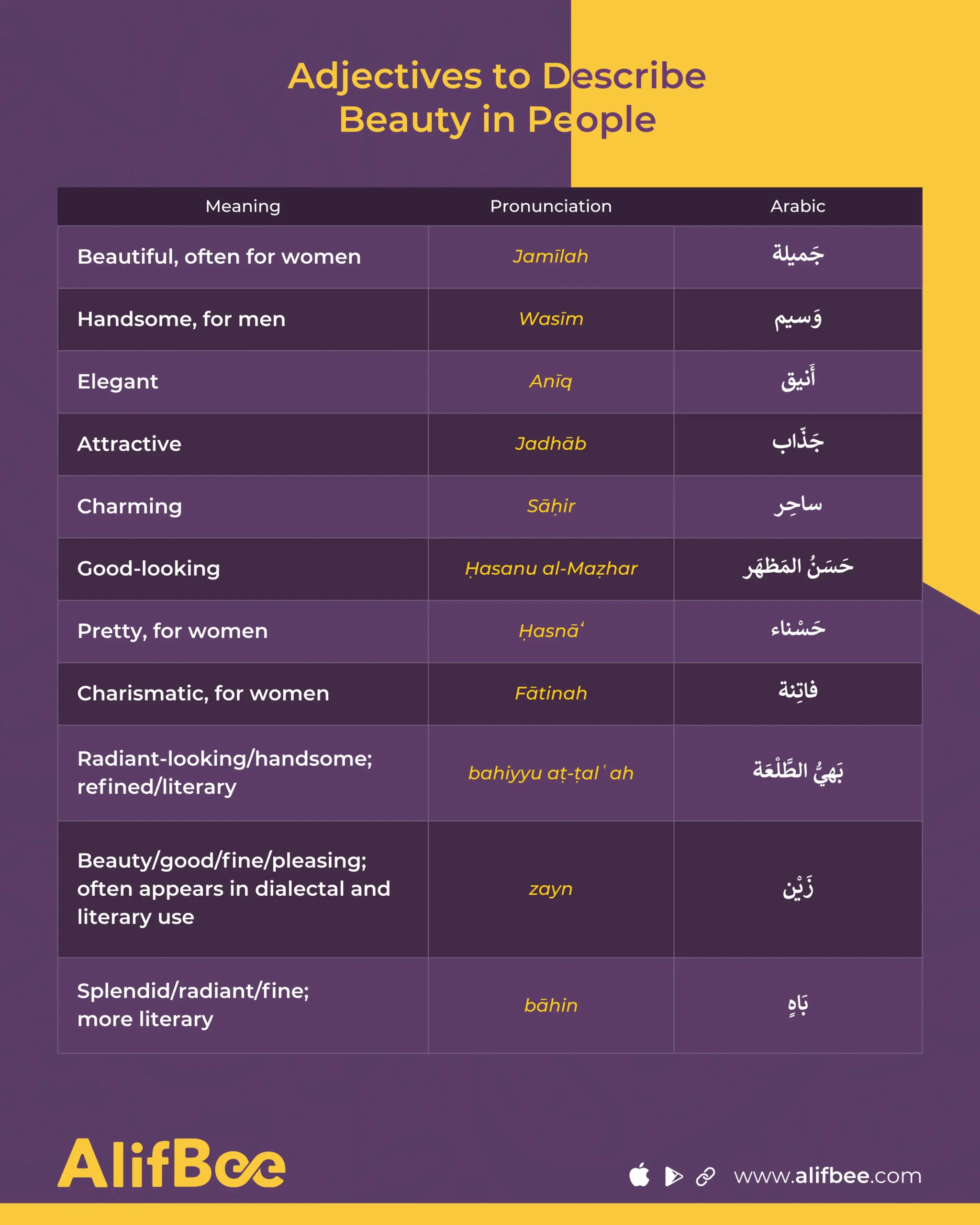
Arabic has several related adjectives that also mean “beautiful” or “pretty”. Some words are used to describe physical beauty, while others describe elegance, charm, or inner beauty.
| Meaning | Pronunciation | Arabic | |
|---|---|---|---|
|
Beautiful, often for women |
Jamīlah |
جَميلة |
|
|
Handsome, for men |
Wasīm |
وَسيم |
|
|
elegant |
Anīq |
أَنيق |
|
|
attractive |
Jadhāb |
جَذّاب |
|
|
charming |
Sāḥir |
ساحِر |
|
|
good-looking |
Ḥasanu al-Maẓhar |
حَسَنُ المَظهَر |
|
|
Pretty, for women |
Ḥasnāʻ |
حَسْناء |
|
|
Charismatic, for women |
Fātinah |
فاتِنة |
|
|
radiant-looking (literary) |
bahiyyu aṭ-ṭalʿah |
بَهيُّ الطَّلْعَة |
|
|
fine/pleasing (dialectal & literary use) |
zayn |
زَيْن |
|
|
splendid (literary) |
bāhin |
بَاهٍ |
|
The adjective jamīlah is more commonly used to describe women, and it is possible to use the masculine form to describe masculine objects and things, as stated earlier. And even though it is not entirely wrong to say “a beautiful man” (rajulun jamīlun), it is more natural to use the adjective Wasīm.
To make the female form of other adjectives in the table, just add ta marbouta (ـة /-ah) at the end of the word. For example, Fātinah, Jadhābah, etc.
Adjectives to Describe Beauty in Places & Ideas
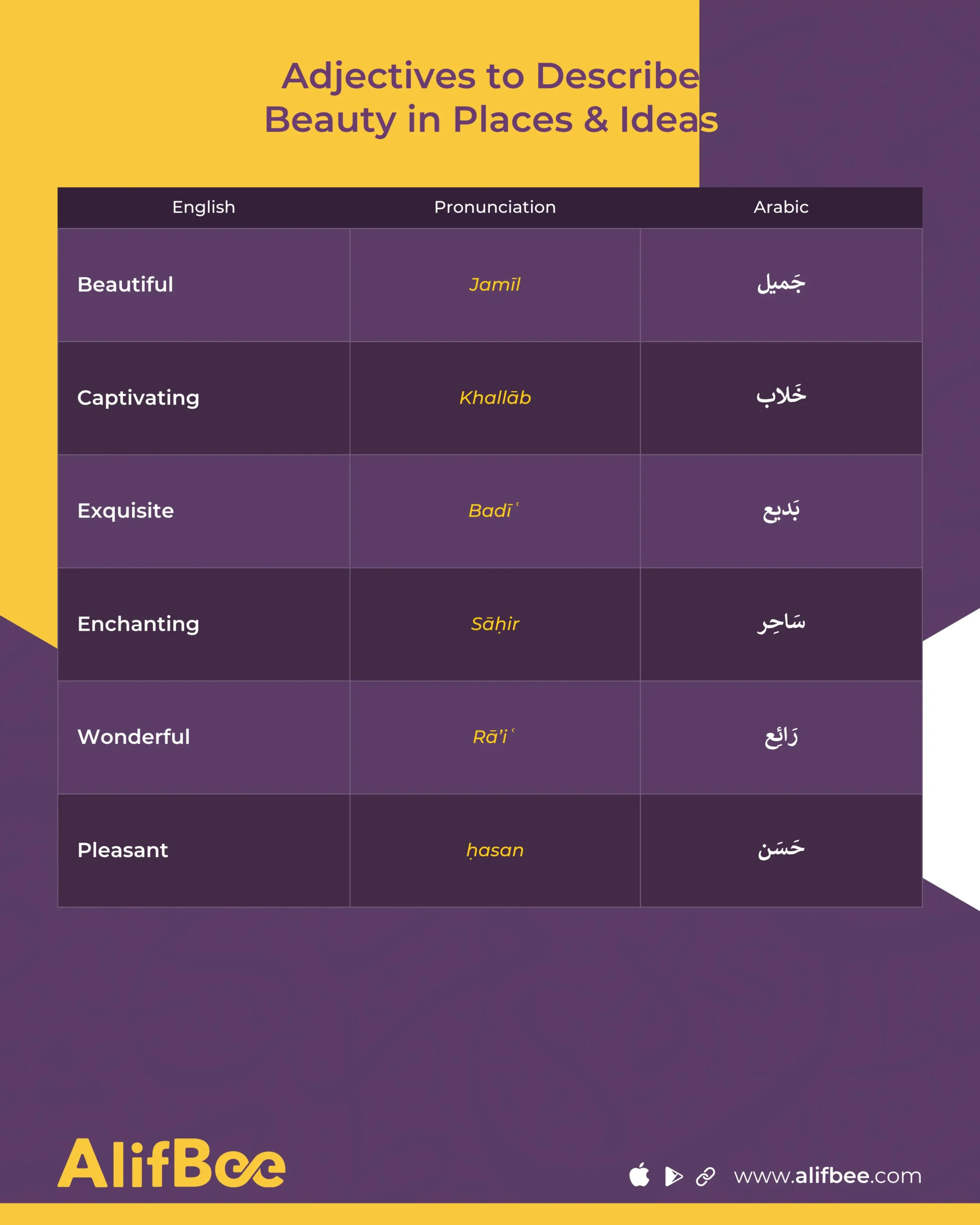
The following adjectives can be used to describe beauty in places and ideas.
| Meaning | Pronunciation | Arabic | |
|---|---|---|---|
|
Beautiful |
Jamīl |
جَميل |
|
|
Captivating |
Khallāb |
خَلاب |
|
|
Exquisite |
Badīʿ |
بَديع |
|
|
Enchanting |
Sāḥir |
سَاحِر |
|
|
Wonderful |
Rā’iʿ |
رَائِع |
|
|
Pleasant |
ḥasan |
حَسَن |
|
You can quickly pair any of the above adjectives with the word “manzar” (view), and you will have a complete sentence complimenting where you are or what you are looking at.
Some of these adjectives can also be used to describe ideas, such as Jamīl, Rā’iʿand ḥasan. With feminine nouns, you will need to add ta marbouta (ah/ ـة).
Look at these examples:
| Meaning | Pronunciation | Arabic | |
|---|---|---|---|
|
Wonderful idea! |
Fikrah Rā’iʿatun |
فِكرَةٌ رائِعةٌ |
|
|
Beautiful suggestion |
Iqtirāhun Jamīlun |
اِقتِراحٌ جَميل |
|
|
Nice opinion |
Ra’yun hasanun |
رَأيٌ حَسَن |
|
Beautiful in Arabic Dialects
In everyday speech, many Arabic speakers use dialect words that can mean beautiful, pretty, nice, sweet, or good, depending on the country and context.
| Meaning | Pronunciation | Arabic | |
|---|---|---|---|
|
pretty, nice, sweet
(common in the Levant) |
ḥilw / ḥilwah |
حِلْو / حِلْوَة |
|
|
good, nice, beautiful
(common in Maghrebi Arabic and some regional speech in the Levant) |
mlīḥ / mlīḥah |
مْلِيح / مْلِيحَة |
|
|
good, nice, beautiful
(common in Moroccan/Darija use) |
mzyān / mzyānah |
مِزْيَان / مِزْيَانَة |
|
|
good, fine, beautiful
(common in Gulf Arabic) |
zīn / zīnah |
زِين / زِينَة |
|
|
good, nice, beautiful
(common in some North African countries like Tunisia and Libya) |
bāhī / bāhiyah |
بَاهِي / بَاهِيَة |
|
The adjectives ḥilw and ḥilwah mean “nice,” “pretty,” “cute,” or, literally, “sweet.” They are very common in spoken Arabic, and according to the Almaany Dictionary, they are listed in MSA examples.
Another word is malīḥ / malīḥah, which can mean “good-looking” or “nice.” It is more regional and varies by dialect, but it can also be used in MSA.
How to Say You Are Beautiful in Arabic
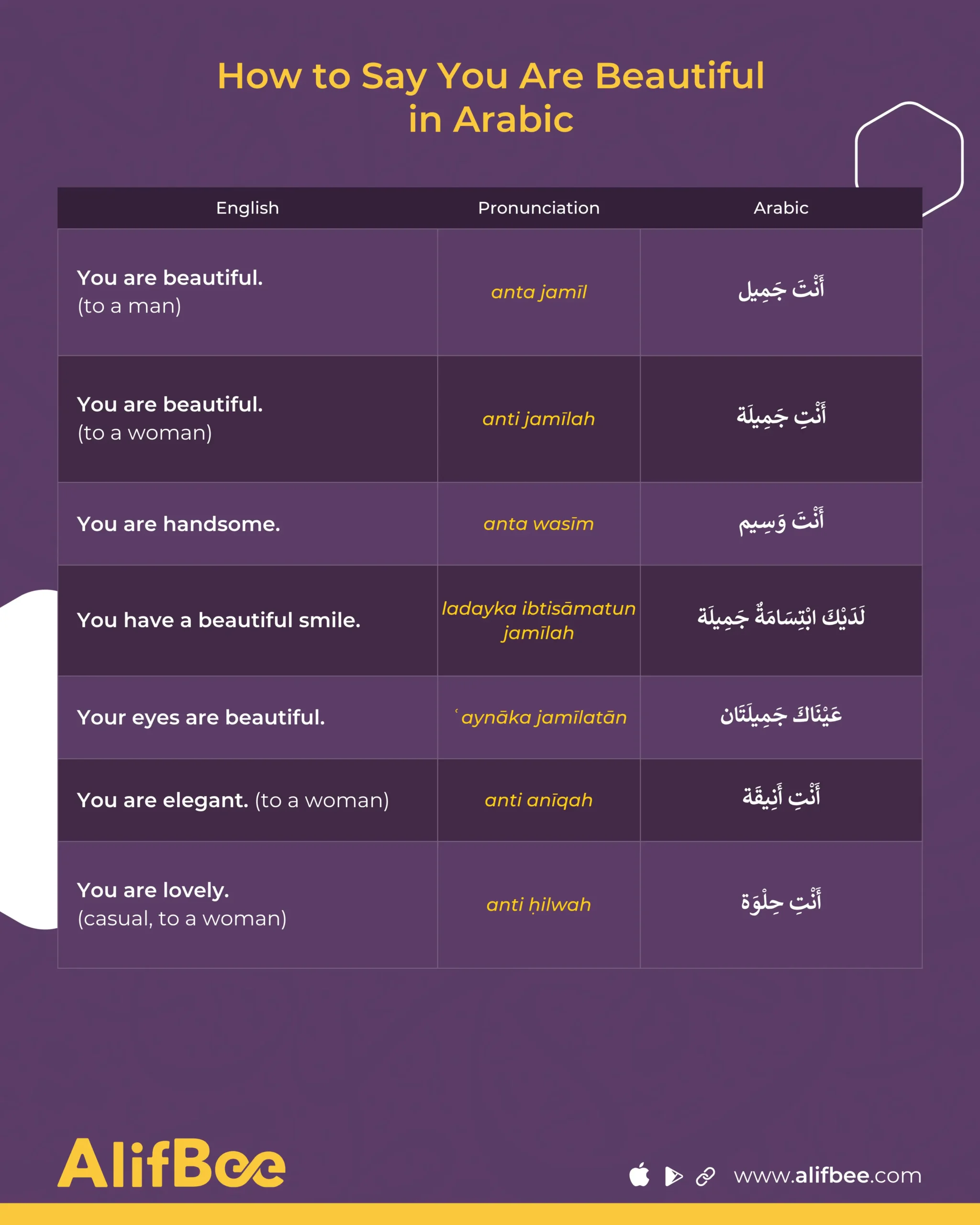
To say “you are beautiful” in Arabic, choose the expression according to who you are speaking to. Arabic changes depending on gender, so the phrase for a man is different from the phrase for a woman.
| Meaning | Pronunciation | Arabic | |
|---|---|---|---|
|
You are beautiful. — to a man |
anta jamīl |
أَنْتَ جَمِيل |
|
|
You are beautiful. — to a woman |
anti jamīlah |
أَنْتِ جَمِيلَة |
|
|
You are handsome. |
anta wasīm |
أَنْتَ وَسِيم |
|
|
You have a beautiful smile. |
ladayka ibtisāmatun jamīlah |
لَدَيْكَ ابْتِسَامَةٌ جَمِيلَة |
|
|
Your eyes are beautiful. |
ʿaynāka jamīlatān |
عَيْنَاكَ جَمِيلَتَان |
|
|
You are elegant. — to a woman |
anti anīqah |
أَنْتِ أَنِيقَة |
|
|
You are lovely. — casual, to a woman |
anti ḥilwah |
أَنْتِ حِلْوَة |
|
You can use jamīl / jamīlah as the general word for beautiful, wasīm for handsome, and ḥilw / ḥilwah for a warmer, more casual compliment.
More Examples with Adjectives Describing Beauty
The fastest way to remember the adjectives we learned is to practice them with nouns you actually use. Let’s learn some compliments:
| Meaning | Pronunciation | Arabic | |
|---|---|---|---|
|
This is a beautiful dress. |
hādhā fustānun jamīl |
هذا فُسْتانٌ جَمِيل |
|
|
This is a beautiful picture. |
hādhihi ṣūratun jamīlah |
هذِهِ صُورَةٌ جَمِيلَة |
|
|
He is a handsome man. |
huwa rajulun wasīm |
هُوَ رَجُلٌ وَسِيم |
|
|
This is an elegant dress. |
hādhā fustānun anīq |
هذا فُسْتانٌ أَنِيق |
|
|
She has an attractive smile. |
ladayhā ibtisāmatun jadhdhābah |
لَدَيْها ابْتِسامَةٌ جَذَّابَة |
|
|
This is a charming place. |
hādhā makānun sāḥir |
هذا مَكانٌ ساحِر |
|
|
The view is breathtaking. |
al-manẓaru khallāb |
المَنْظَرُ خَلَّاب |
|
|
This is a magnificent design. |
hādhā taṣmīmun badīʿ |
هذا تَصْمِيمٌ بَدِيع |
|
|
You have beautiful handwriting. |
ladayka khaṭṭun jamīl |
لَدَيْكَ خَطٌّ جَمِيل |
|
|
Arabic is a beautiful language. |
al-ʿarabiyyatu lughatun jamīlah |
العَرَبِيَّةُ لُغَةٌ جَمِيلَة |
|
Read the Arabic phrase, notice the gender of the noun, then repeat the full phrase aloud.
Compare Jamīl, Wasīm and Ḥilw
| Used for | Register | Notes | Pronunciation | Arabic | |
|---|---|---|---|---|---|
|
People, places, objects, ideas, voices, and experiences |
Standard Arabic; safe in formal and general use |
The best general word for “beautiful.” Use jamīl with masculine nouns and jamīlah with feminine nouns. |
Jamīl / Jamīlah |
جَمِيل / جَمِيلَة |
|
|
Mainly physical appearance, especially a handsome man |
Standard Arabic; more specific than jamīl |
Wasīm usually means “handsome” or “good-looking.” It sounds more natural than jamīl when describing a man’s appearance. |
Wasīm |
وَسِيم |
|
|
People, places, ideas, objects, experiences, and sometimes taste |
Conversational / spoken Arabic |
Literally means “sweet,” but commonly means “nice,” “pretty,” “cute,” or “lovely” in everyday Arabic. |
Ḥilw / Ḥilwah |
حِلْو / حِلْوَة |
|
“Jamīl” in Famous Quotes and Poetry in Arabic
Arabic uses words from the root ج-م-ل in poetry, religious language, and everyday expressions. A famous line by the Lebanese poet إيليا أبو ماضي says: كُنْ جَمِيلًا تَرَ الوُجُودَ جَمِيلًا, often understood as “Be beautiful within, and you will see the world as beautiful.” You may also hear the well-known hadith: إِنَّ اللهَ جَمِيلٌ يُحِبُّ الجَمَال, “Allah is Beautiful and loves beauty.”
| Meaning | Pronunciation | Arabic | |
|---|---|---|---|
|
Be beautiful, and you will see the world as beautiful. |
kun jamīlan tara al-wujūda jamīlan |
كُنْ جَمِيلًا تَرَ الوُجُودَ جَمِيلًا |
|
|
Allah is Beautiful and loves beauty. |
inna allāha jamīlun yuḥibbu al-jamāl |
إِنَّ اللهَ جَمِيلٌ يُحِبُّ الجَمَال |
|
Review How to Say Beautiful in Arabic
Common Mistakes Learners Make
Most mistakes in using the adjective Jamīl come from directly applying English structures to Arabic. Keep these points in mind when you write or speak:
- Do not use Jamīl for every noun. Feminine nouns usually need Jamīlah.
- Do not place the adjective before the noun in normal Arabic adjective phrases. Say بَيْتٌ جَمِيل, not جَمِيل بَيْت.
- Do not confuse جَمِيل (beautiful) with جَمَال (beauty). One is an adjective, and one is a noun.
- Do not treat dialect words such as حِلْو or مْزْيَان as formal Arabic in every context.
Final word
The direct way to say beautiful in Arabic is جَمِيل (jamīl, masculine) or جَمِيلَة (jamīlah, feminine). Once you learn the gender pattern, you can describe people, places, objects, and ideas more naturally. You can then expand your vocabulary with richer Arabic adjectives such as وَسِيم, حَسَن, خَلَّاب, as well as common dialect words like حِلْو and مْزْيَان.
Learn with AlifBee
Want to practice Arabic adjectives with clear pronunciation, examples, and guided lessons? Explore vocabulary and sentence practice in the AlifBee app, where you can listen, repeat, review, and build useful Arabic sentences step by step.
FAQs
What is the Arabic word for beautiful?
The Arabic word for beautiful is جَمِيل (jamīl). Use جَمِيلَة (jamīlah) when the noun or person is feminine.
What is the difference between jamīl and jamīlah?
Jamīl is masculine, while jamīlah is feminine. Arabic adjectives change form to match the noun they describe.
How do you say “you are beautiful” in Arabic?
Say أَنْتَ جَمِيل (anta jamīl) to a male and أَنْتِ جَمِيلَة (anti jamīlah) to a female.
What does ḥilw mean in Arabic?
حِلْو (ḥilw) literally means sweet, but it is also widely used to mean nice, pretty, lovely, or cute, especially in spoken Arabic. Some dictionaries list meanings such as “sweet,” “nice,” “lovely,” and “pretty” for ḥilw
Which word should beginners use for beautiful in Arabic?
Beginners should start with jamīl and jamīlah because they are clear, standard, and useful in many contexts. Then they can learn wasīm for “handsome” and ḥilw / ḥilwah for casual compliments in spoken Arabic.