

Written by Dania Ghraoui, a translator and language teacher with 10 years of experience.
At a Glance: In Arabic, the country name and the nationality adjective are related but not always identical. After al-muntakhab, “the national team,” use the masculine nationality adjective because muntakhab is grammatically masculine. This guide gives the MSA country names, pronunciation, and team forms for countries and nationalities from the 2026 World Cup.
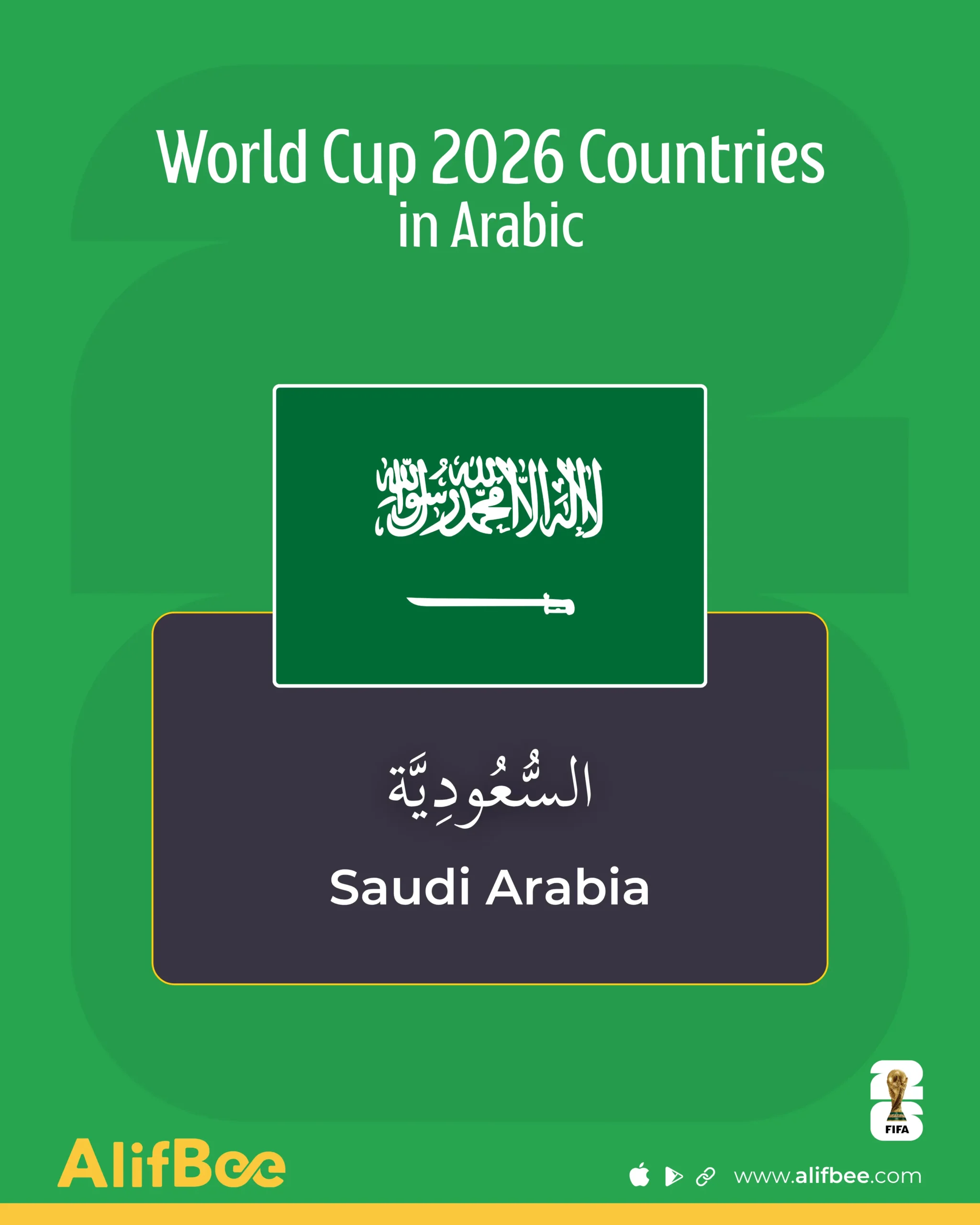
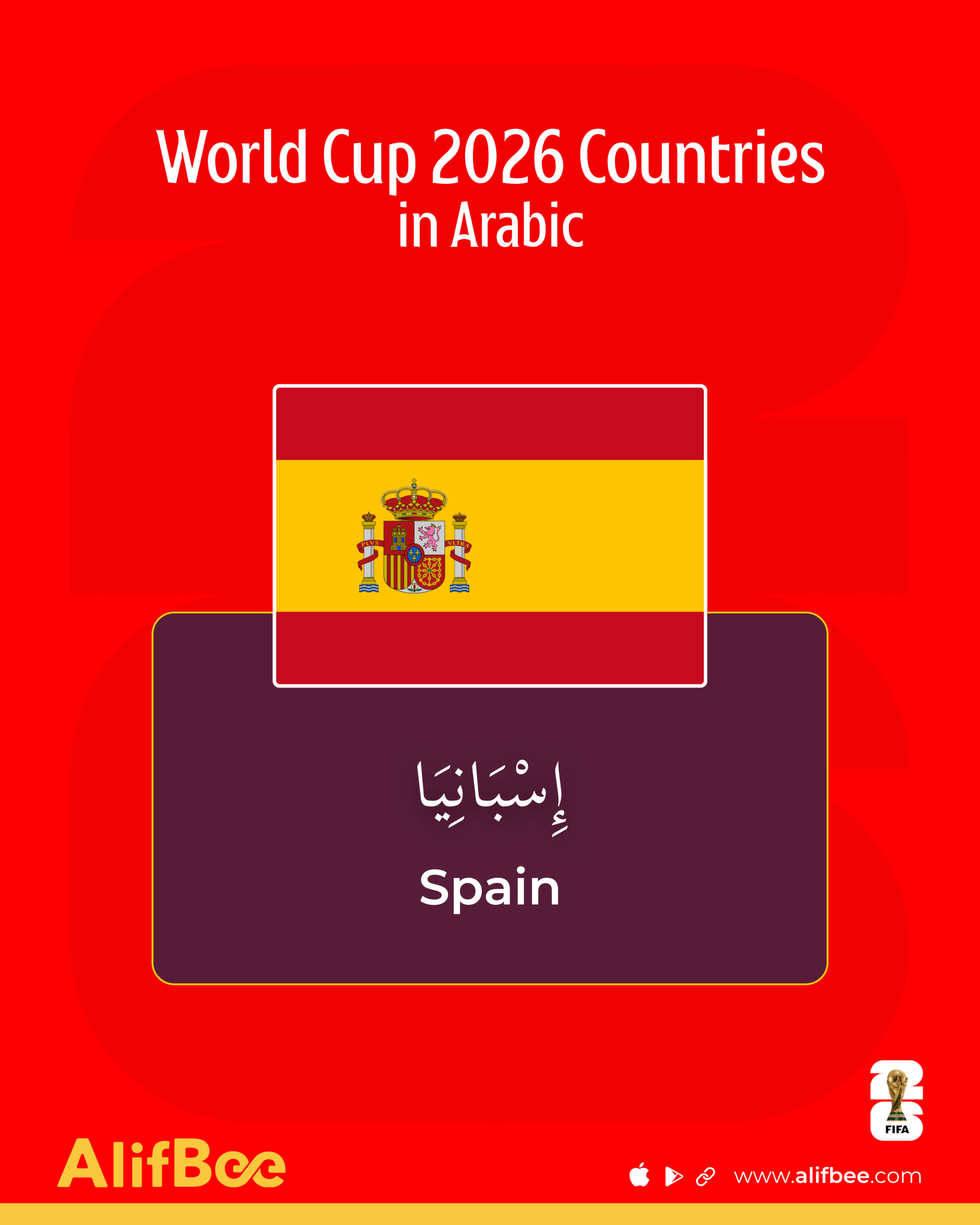
One of the first things you notice in Arabic football commentary is that a country name can seem to change halfway through a sentence. For example, Spain is Isbānyā, but the Spanish national team is al-muntakhabu al-isbāniyy. Saudi Arabia is as-Suʿūdiyyah, while “Saudi” is suʿūdiyy.
The change is not random. Arabic usually uses one form for the country and a related adjective for a person, nationality, language, or team. This guide brings together World Cup 2026 countries and nationalities in Arabic, arranged by the official tournament groups.
The forms are in Modern Standard Arabic, so they are useful for reading, learning, and following formal sports coverage. Not every team here represents an Arabic-speaking country; our separate guide explains Arabic-speaking countries and dialects in more detail.
What Is the Difference Between a Country Name and a Nationality in Arabic?
A country name identifies the place. A nationality adjective tells you that a person, object, or team belongs to that country. In Arabic, the adjective often looks similar to the country name, but it is not always formed in exactly the same way.
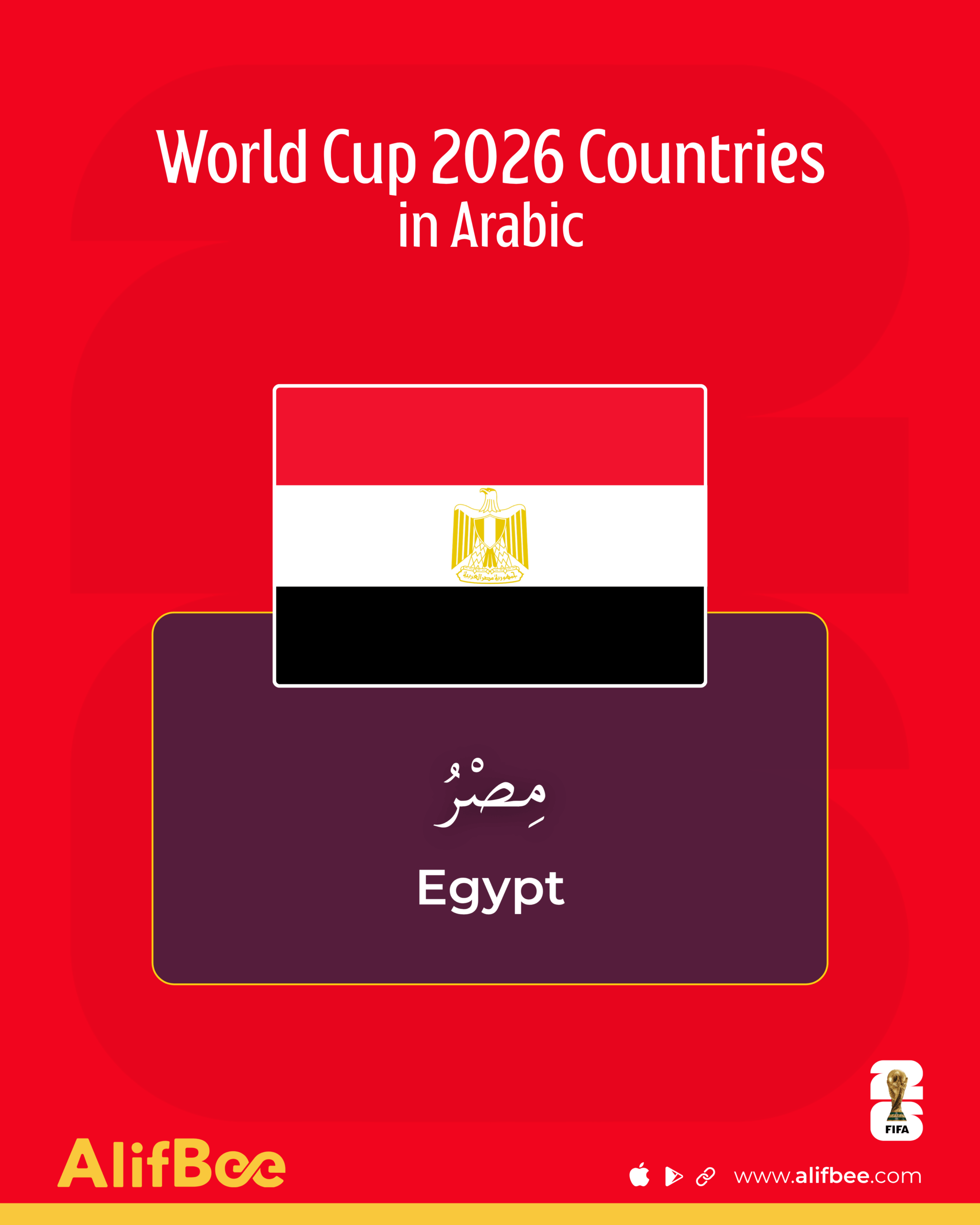
For example, Miṣr means Egypt, while miṣriyy means Egyptian in the masculine. The feminine form is miṣriyyah. When you talk about Egypt’s national team, you use the masculine adjective because the word muntakhab, “team,” is grammatically masculine.
| Meaning | Pronunciation | Arabic | |
|---|---|---|---|
|
Egypt
(country name)
|
Miṣr |
مِصْر |
|
|
Egyptian
(masculine adjective/team adjective) |
miṣriyy |
مِصْرِيّ |
|
|
Egyptian
(feminine adjective) |
miṣriyyah |
مِصْرِيَّة |
|
|
Spain
(country name) |
Isbānyā |
إِسْبَانْيَا |
|
|
Spanish
(masculine adjective/team adjective) |
isbāniyy |
إِسْبَانِيّ |
|
|
Spanish
(feminine adjective) |
isbāniyyah |
إِسْبَانِيَّة |
|
Key Terms
Before exploring the World Cup countries and nationalities in Arabic, let’s learn a few key Arabic terms related to countries, nationalities, and national teams. These words appear frequently in sports coverage and throughout this guide.
| Meaning | Pronunciation | Arabic | |
|---|---|---|---|
|
State or country
(formal term) |
dawlah |
دَوْلَة |
|
|
Country, homeland, or place
(depending on context) |
balad |
بَلَد |
|
|
Nationality |
jinsiyyah |
جِنْسِيَّة |
|
|
A selected team
(commonly used for a national sports team) |
muntakhab |
مُنْتَخَب |
|
Continue Reading: How to Talk About Sports in Arabic
How Are Nationalities Formed in Arabic?
Many Arabic nationality adjectives are nisba adjectives. A nisba form connects a person or thing to a place, group, or field. The most common masculine ending is -iyy, and the feminine ending is -iyyah. For example, Miṣr becomes miṣriyy or miṣriyyah.
This is a useful pattern, but it is not a simple rule that applies mechanically to every country name. The definite article al- may drop, a final -ā may be removed, and some established forms change more noticeably. It is better to learn the country name and its adjective together, rather than trying to derive every form from a single rule.
Masculine Nationalities and National-Team Adjectives
The masculine form matters most in this article because muntakhab is masculine. That gives us phrases such as al-muntakhabu as-suʿūdiyy (“the Saudi national team”) and al-muntakhabu al-isbāniyy (“the Spanish national team”).
The adjective agrees with muntakhab, not with the grammatical gender of the country name. Saudi Arabia is feminine as a country name, but “the Saudi team” still uses suʿūdiyy because the head noun muntakhab is masculine.
| Meaning | Pronunciation | Arabic | |
|---|---|---|---|
|
The Saudi national team |
al-muntakhabu as-suʿūdiyy |
المُنْتَخَبُ السَّعُودِيُّ |
|
|
The Spanish national team |
al-muntakhabu al-isbāniyy |
المُنْتَخَبُ الإِسْبَانِيُّ |
|
|
The Saudi national team won. |
fāza al-muntakhabu as-suʿūdiyyu |
فَازَ المُنْتَخَبُ السَّعُودِيُّ |
|
|
The Qatari national team advanced to the second round. |
intaqala al-muntakhabu al-qaṭariyyu ilā ad-dawri ath-thānī |
اِنْتَقَلَ المُنْتَخَبُ القَطَرِيُّ إِلَى الدَّوْرِ الثَّانِي |
|
|
I support the Moroccan national team. |
ushajjiʿu al-muntakhaba al-maghribiyya |
أُشَجِّعُ المُنْتَخَبَ المَغْرِبِيَّ |
|
|
The Spanish national team played against the German national team. |
laʿiba al-muntakhabu al-isbāniyyu ḍidda al-muntakhabi al-almāniyyi |
لَعِبَ المُنْتَخَبُ الإِسْبَانِيُّ ضِدَّ المُنْتَخَبِ الأَلْمَانِيِّ |
|
|
Who will win the match? |
man sayafūzu bi-al-mubārāt? |
مَنْ سَيَفُوزُ بِالمُبَارَاةِ؟ |
|
Feminine Nationalities
When a woman states her nationality, the adjective normally takes the feminine form. A man can say anā miṣriyy (“I am Egyptian”), while a woman says anā miṣriyyah. The same pairing appears with isbāniyy and isbāniyyah, or suʿūdiyy and suʿūdiyyah.
This difference is worth learning, even though football team names usually use the masculine form. It helps you move from reading a fixture list to introducing yourself and talking about other people.
| Meaning | Pronunciation | Arabic | |
|---|---|---|---|
|
I am Egyptian. (male speaker) |
anā miṣriyy |
أَنَا مِصْرِيّ |
|
|
I am Egyptian. (female speaker) |
anā miṣriyyah |
أَنَا مِصْرِيَّة |
|
|
I am Spanish. (male speaker) |
anā isbāniyy |
أَنَا إِسْبَانِيّ |
|
|
I am Spanish. (female speaker) |
anā isbāniyyah |
أَنَا إِسْبَانِيَّة |
|
How do you say “Where are you from?” in Arabic?
In MSA, say min ayna anta? to a man and min ayna anti? to a woman. Answer with anā min followed by the country: anā min al-Urdunn, “I am from Jordan.” Our guide to saying where you are from in Arabic offers more introductory patterns.
| Meaning | Pronunciation | Arabic | |
|---|---|---|---|
|
Where are you from?
(addressing a man)
|
min ayna anta? |
مِنْ أَيْنَ أَنْتَ؟ |
|
|
Where are you from?
(addressing a woman) |
min ayna anti? |
مِنْ أَيْنَ أَنْتِ؟ |
|
|
I am from Jordan. |
anā mina al-Urdunn |
أَنَا مِنَ الأُرْدُنّ |
|
World Cup 2026 Countries and Nationalities in Arabic
You do not need to memorize a nationality adjective for every team in the World Cup. Some forms are common in Arabic conversation and sports coverage, while others sound unusual or are rarely needed outside formal reference works.
The table below focuses on useful nationality words that Arabic speakers regularly use for people, players, and teams.
| Country | Country in Arabic | Masculine nationality | Feminine nationality | |||
|---|---|---|---|---|---|---|
|
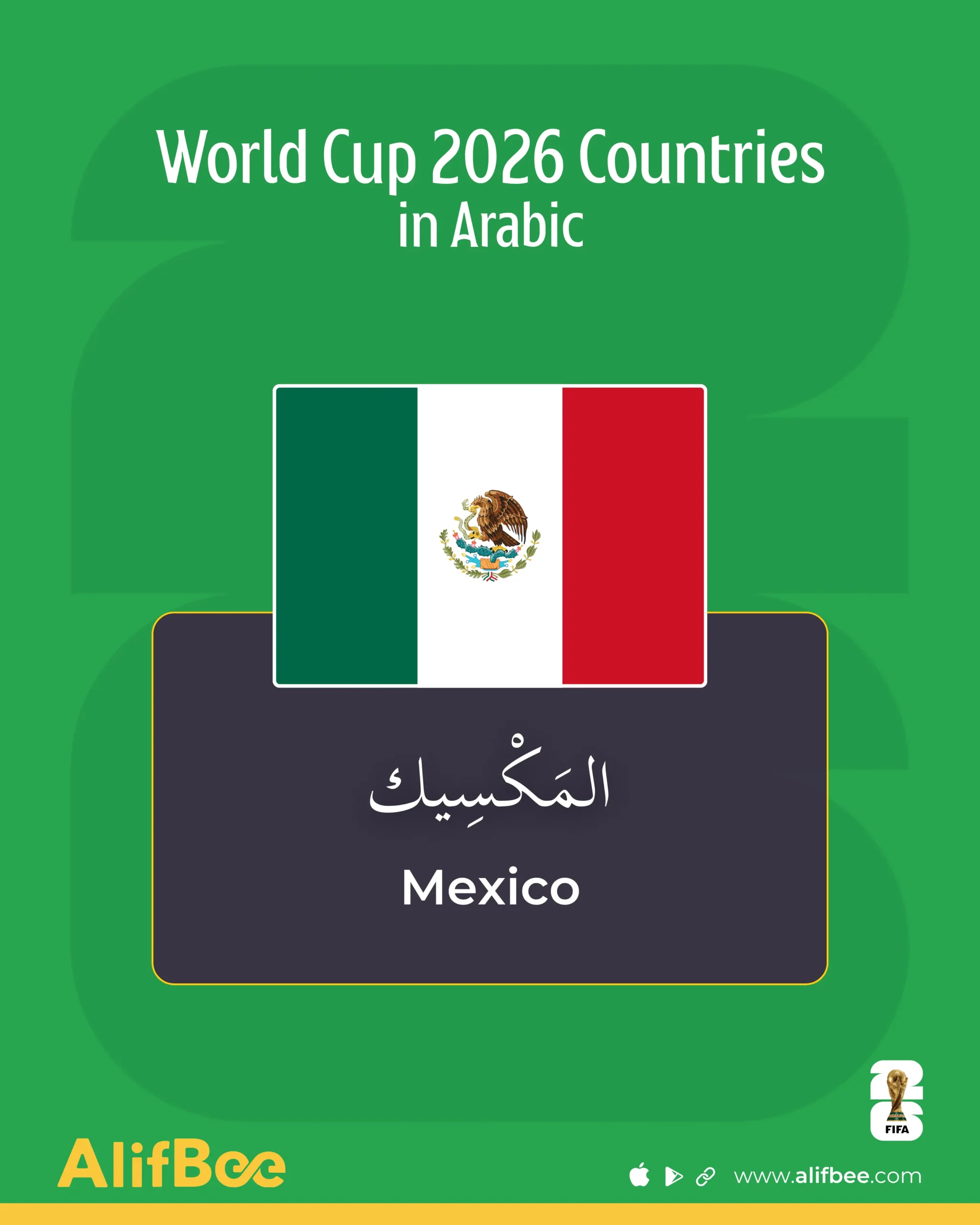
Mexico |
المَكْسِيك |
|
مَكْسِيكِيّ |
|
مَكْسِيكِيَّة |
|
|
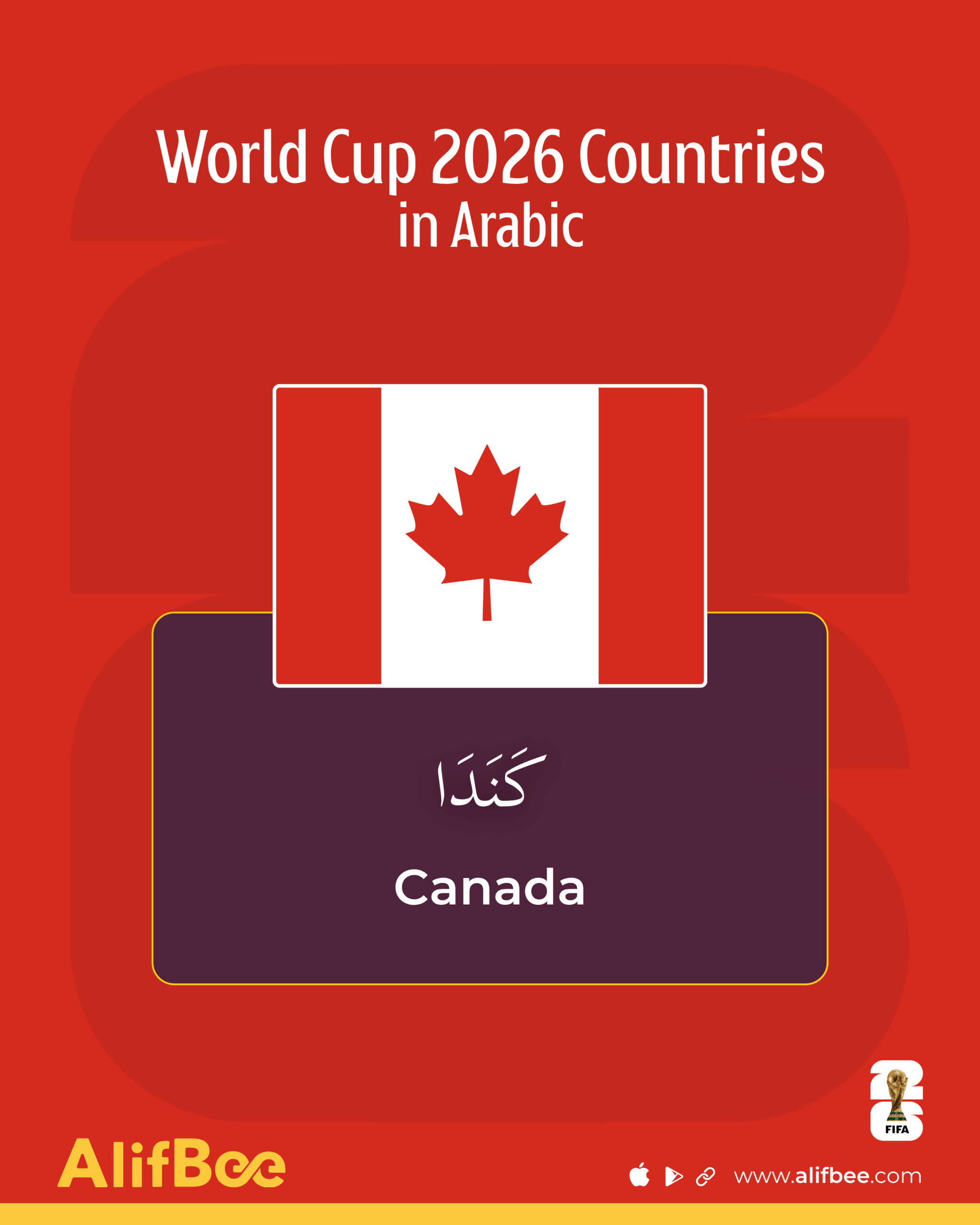
Canada |
كَنَدَا |
|
كَنَدِيّ |
|
كَنَدِيَّة |
|
|
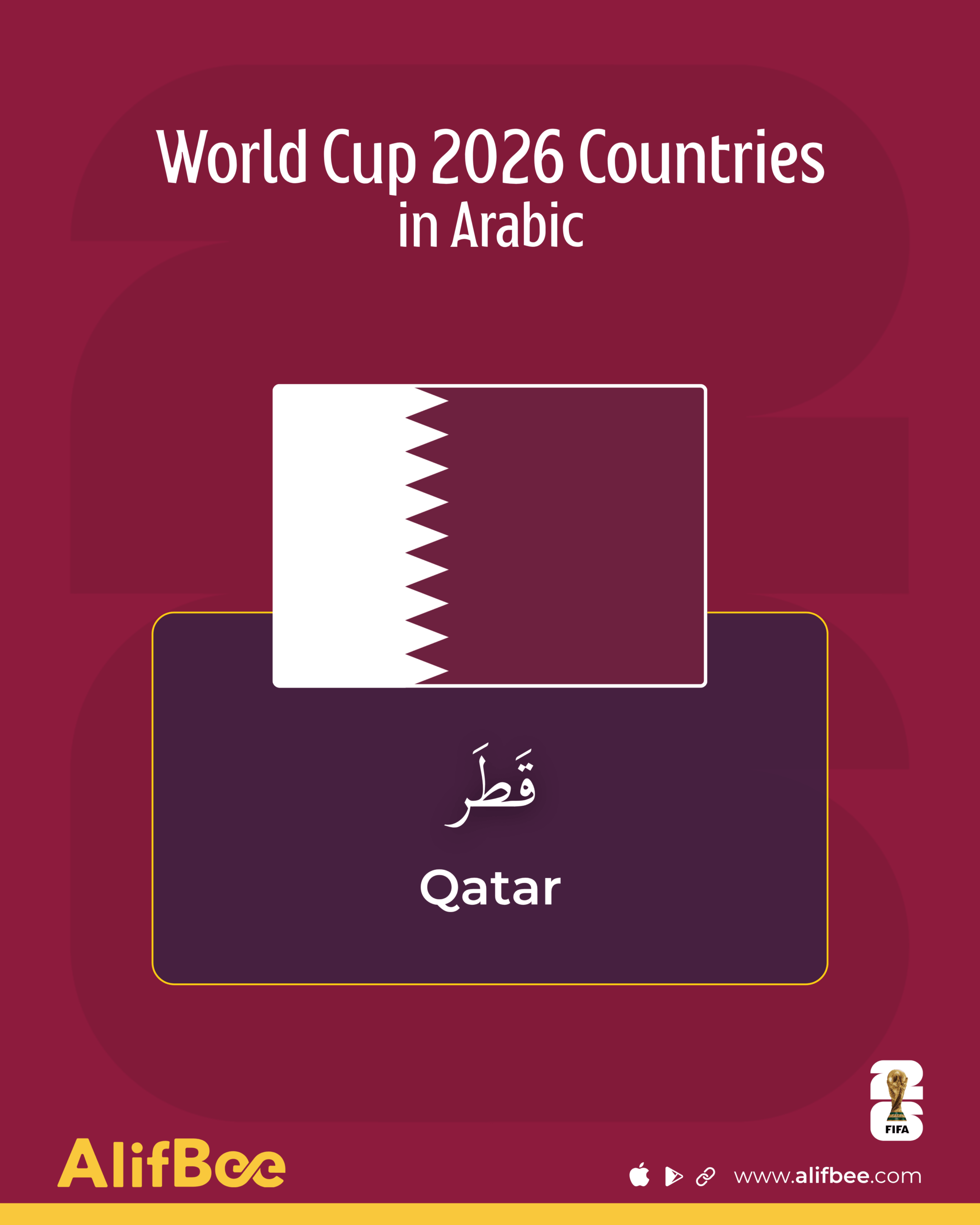
Qatar |
قَطَر |
|
قَطَرِيّ |
|
قَطَرِيَّة |
|
|
Brazil |
البَرَازِيل |
|
بَرَازِيلِيّ |
|
بَرَازِيلِيَّة |
|
|
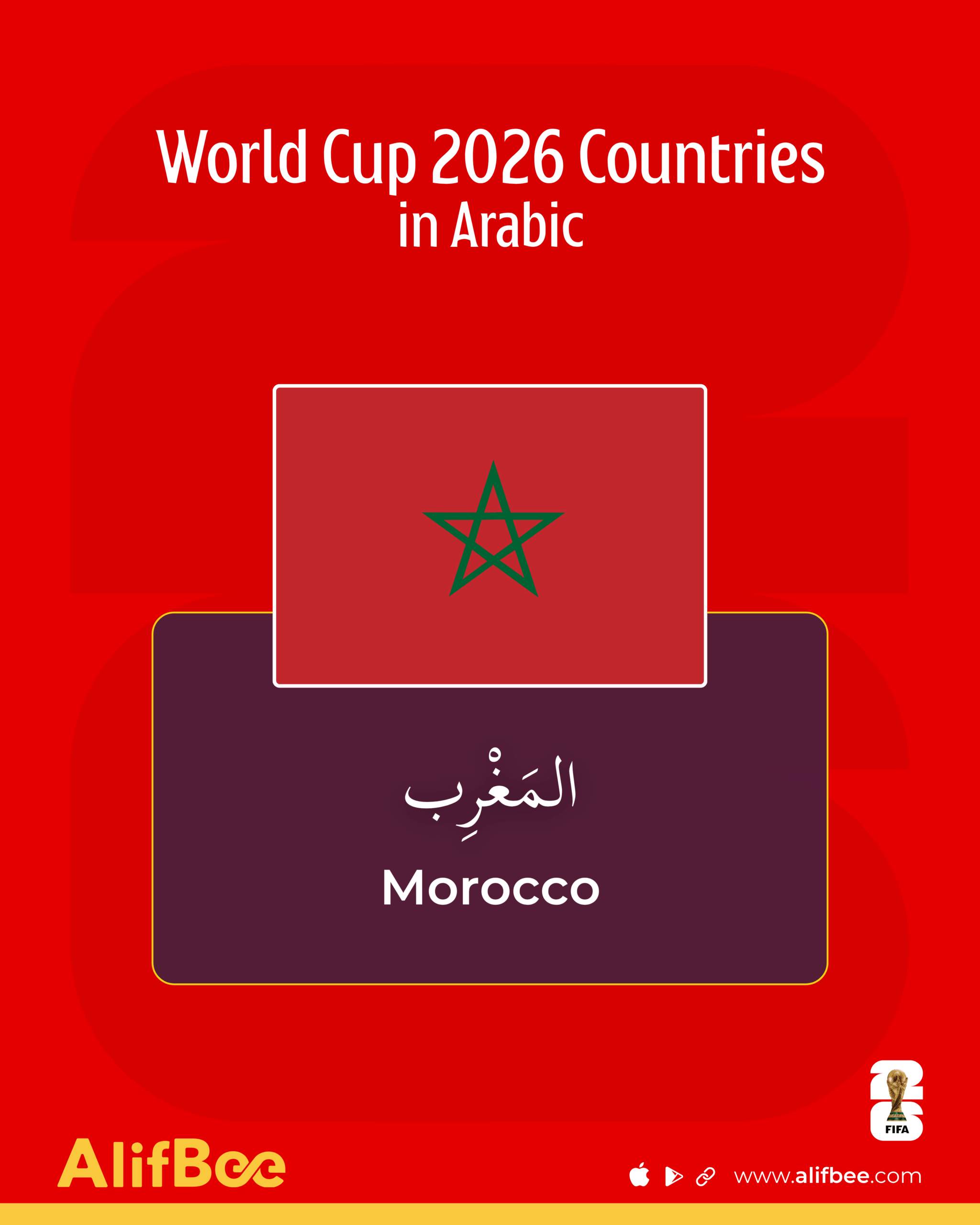
Morocco |
المَغْرِب |
|
مَغْرِبِيّ |
|
مَغْرِبِيَّة |
|
|
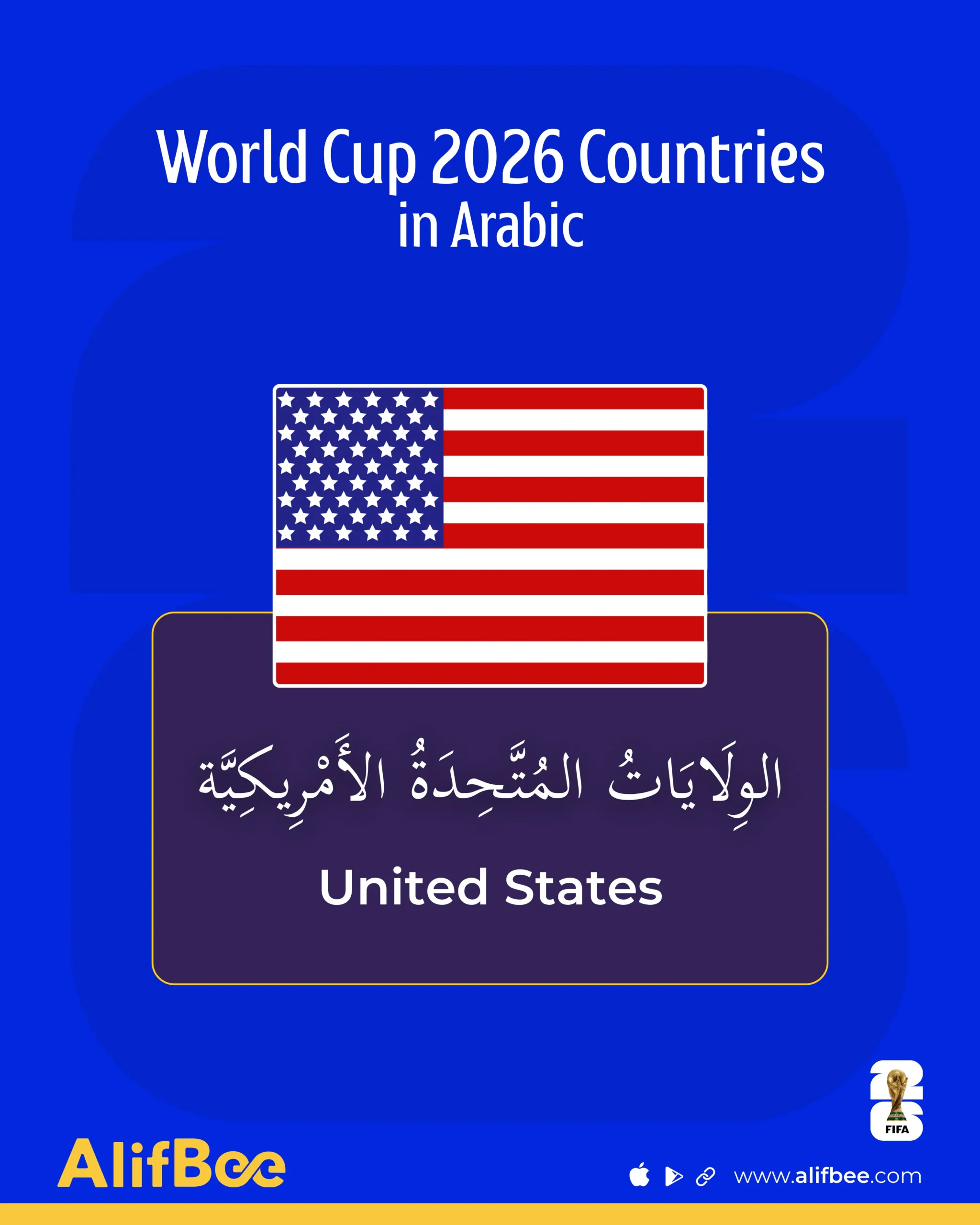
United States |
الوِلَايَاتُ المُتَّحِدَةُ الأَمْرِيكِيَّة |
|
أَمْرِيكِيّ |
|
أَمْرِيكِيَّة |
|
|
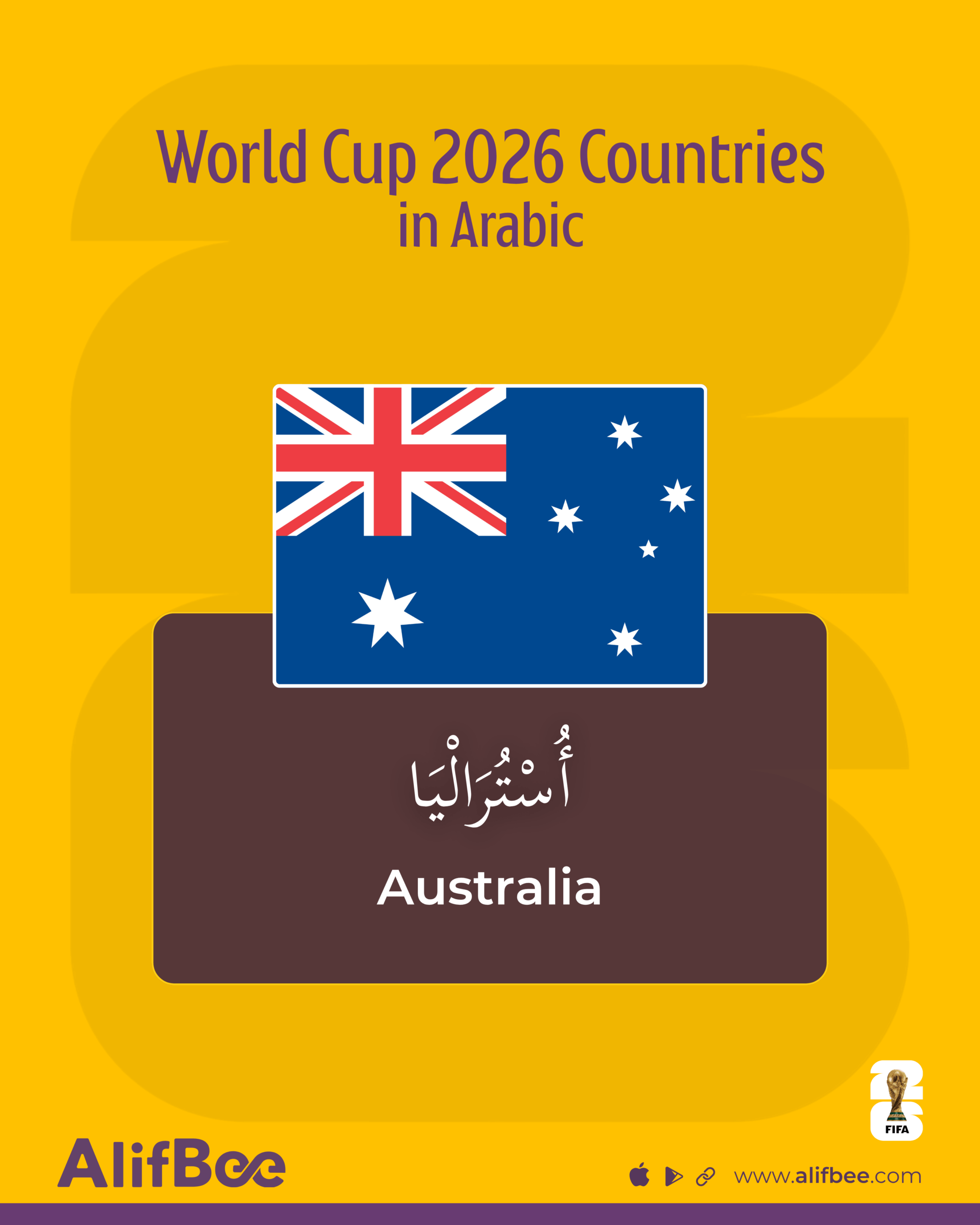
Australia |
أُسْتُرَالْيَا |
|
أُسْتُرَالِيّ |
|
أُسْتُرَالِيَّة |
|
|
Türkiye |
تُرْكِيَا |
|
تُرْكِيّ |
|
تُرْكِيَّة |
|
|
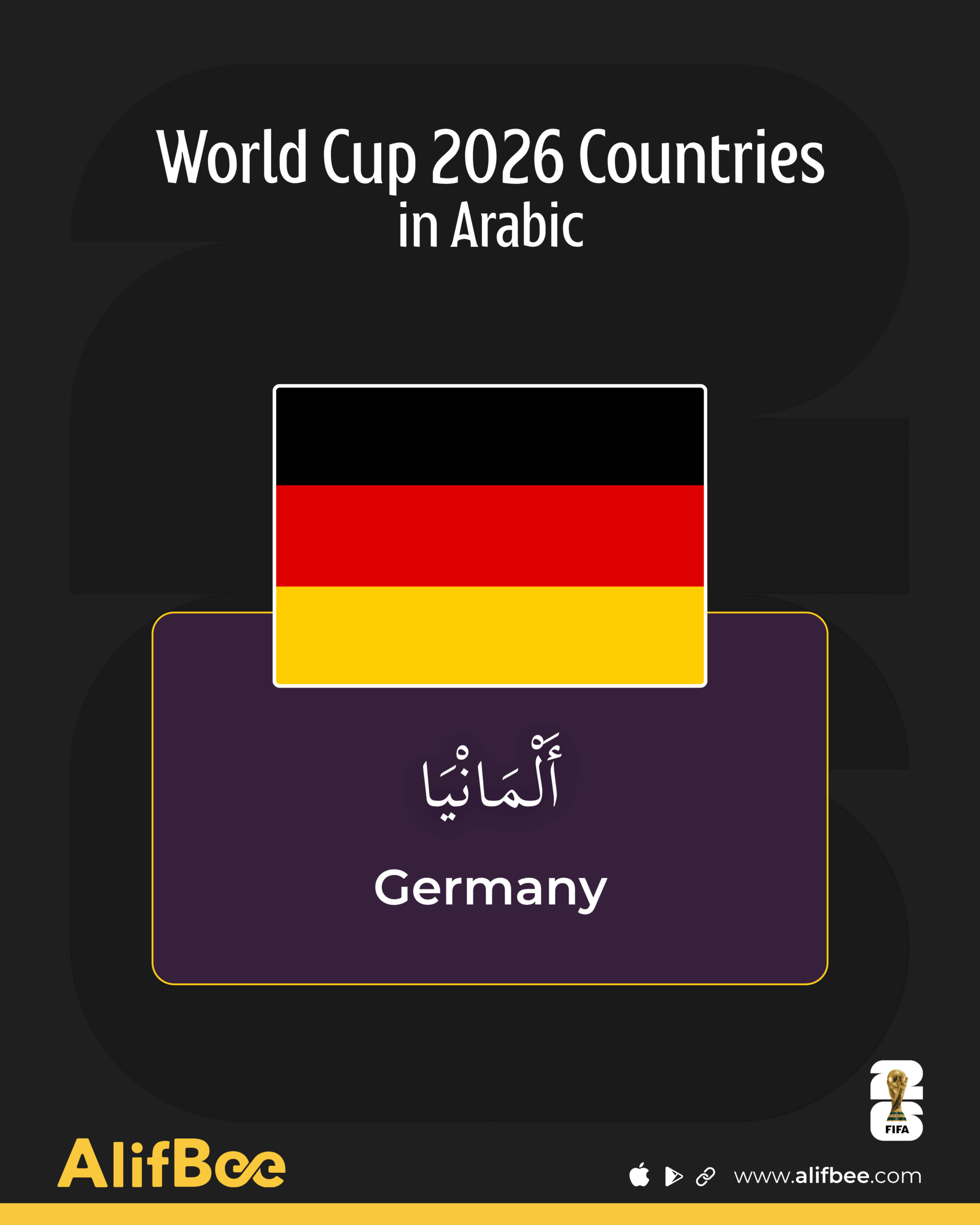
Germany |
أَلْمَانْيَا |
|
أَلْمَانِيّ |
|
أَلْمَانِيَّة |
|
|
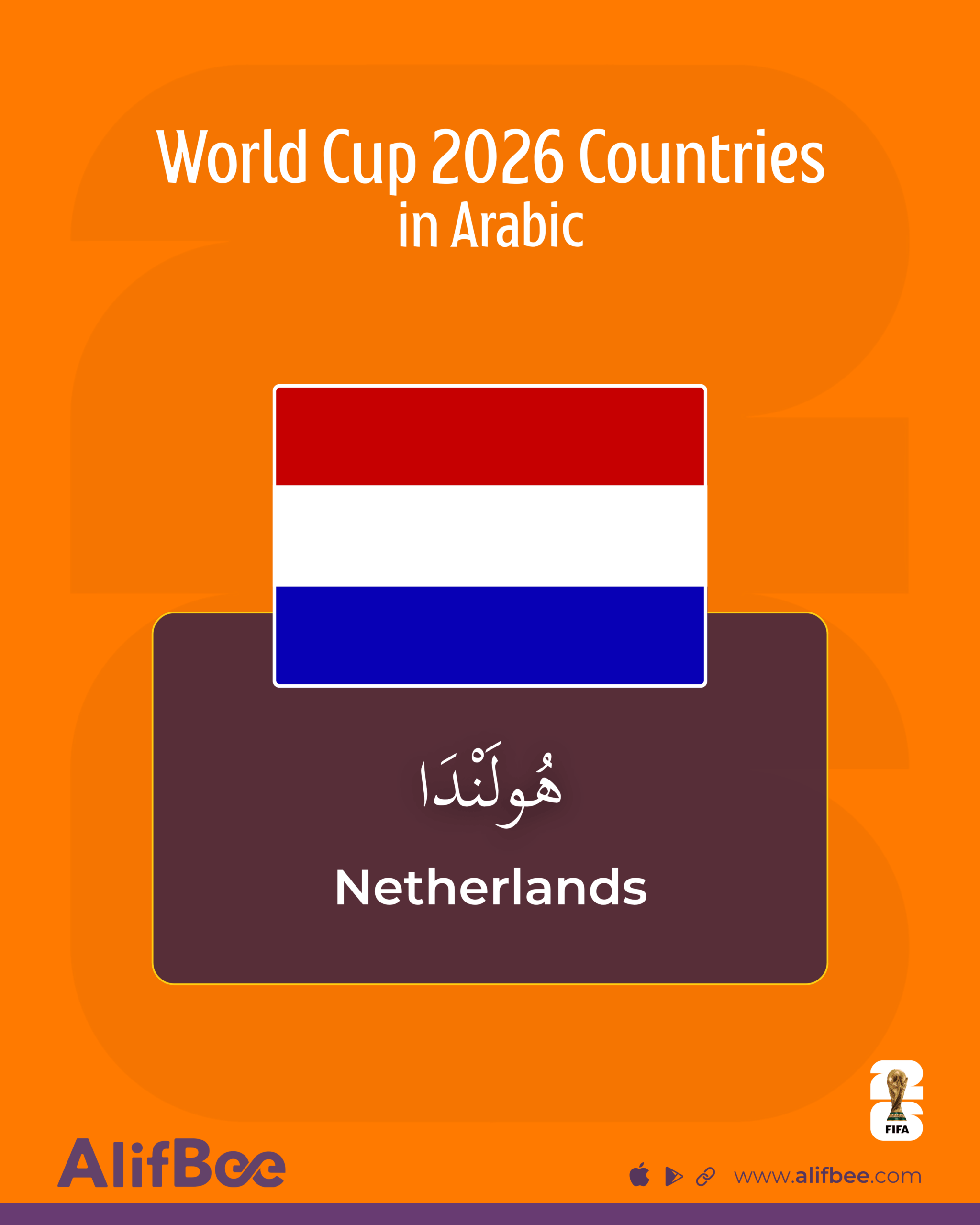
Netherlands |
هُولَنْدَا |
|
هُولَنْدِيّ |
|
هُولَنْدِيَّة |
|
|
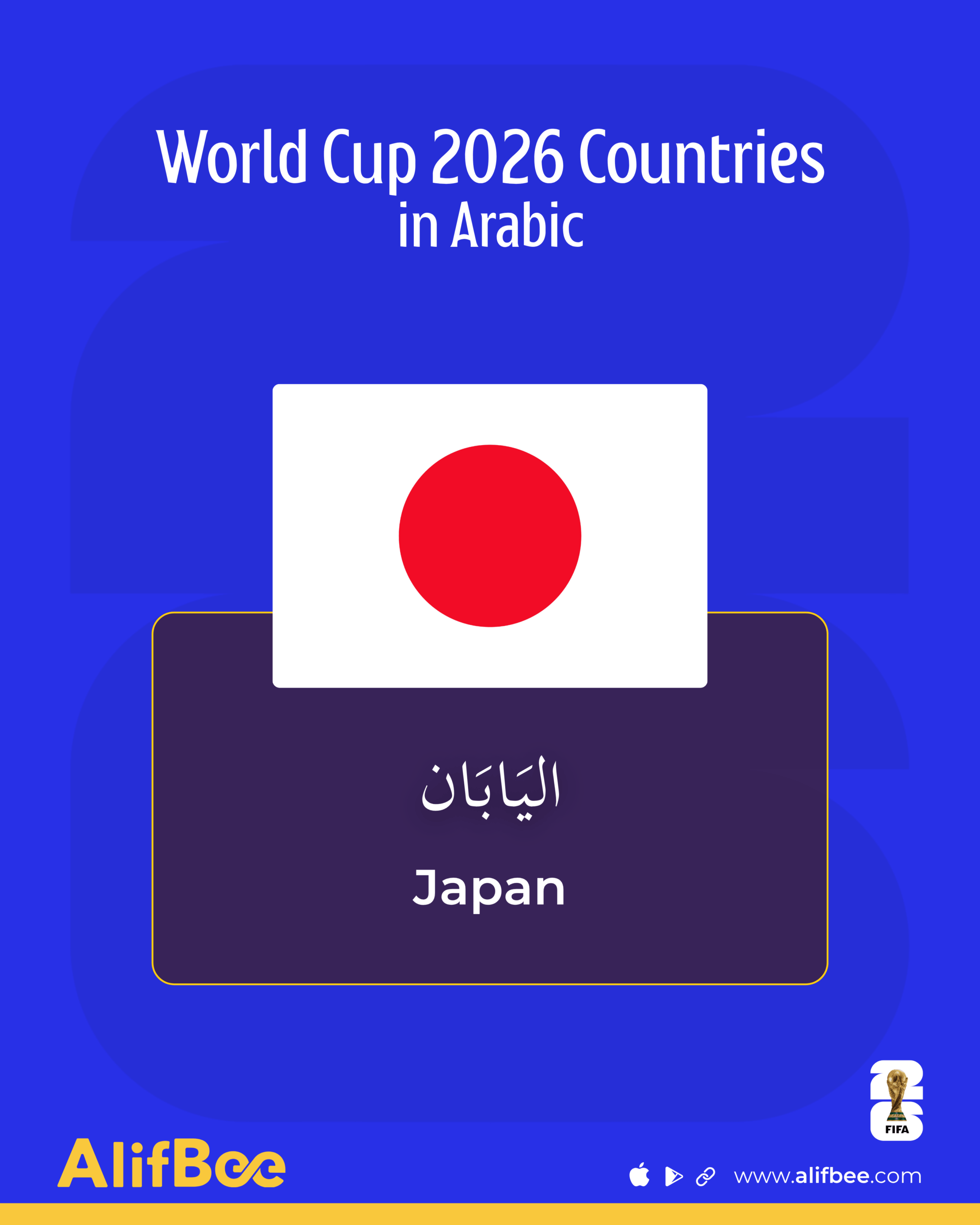
Japan |
اليَابَان |
|
يَابَانِيّ |
|
يَابَانِيَّة |
|
|
Tunisia |
تُونِس |
|
تُونِسِيّ |
|
تُونِسِيَّة |
|
|
Belgium |
بِلْجِيكَا |
|
بِلْجِيكِيّ |
|
بِلْجِيكِيَّة |
|
|
Egypt |
مِصْر |
|
مِصْرِيّ |
|
مِصْرِيَّة |
|
|
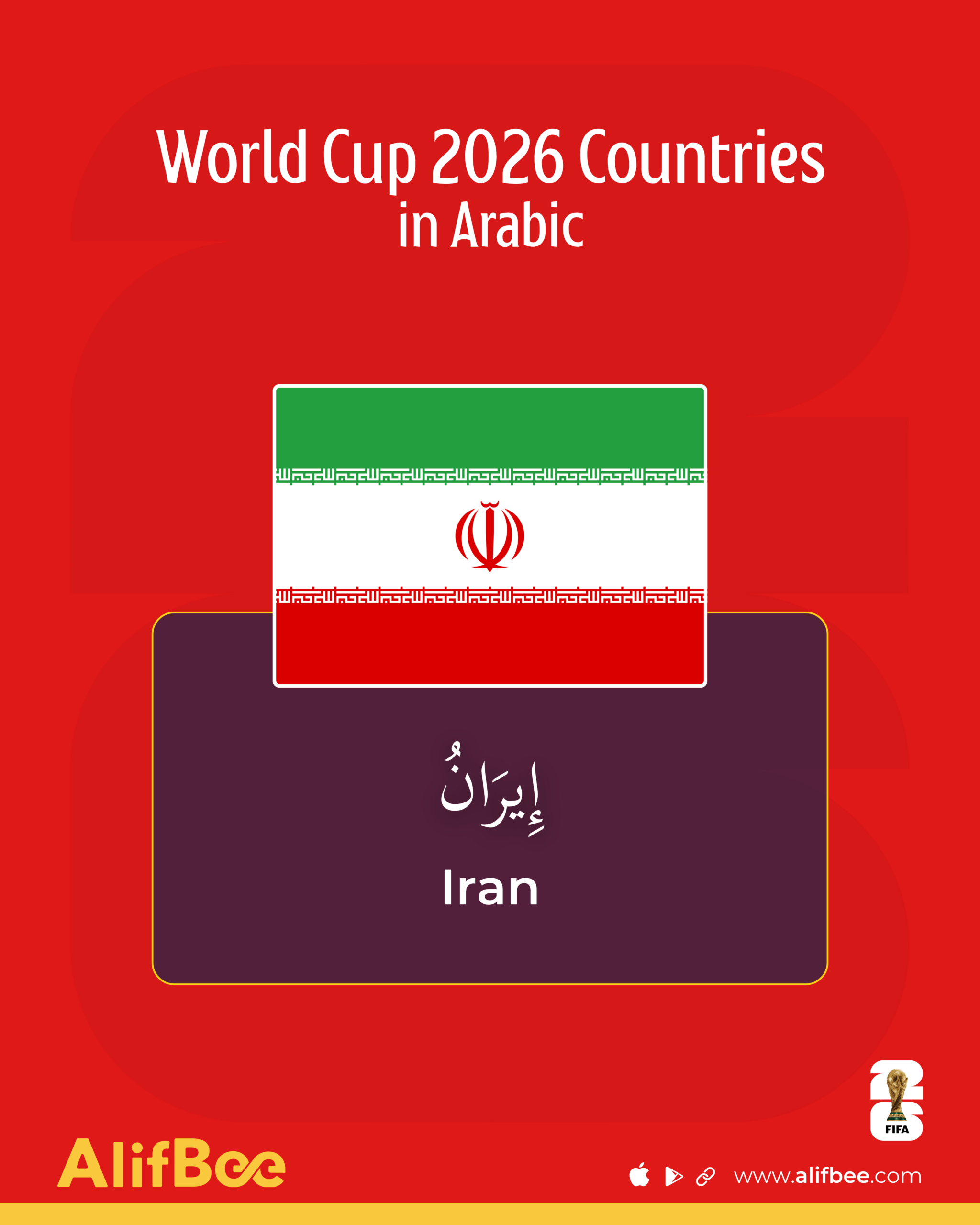
Iran |
إِيرَان |
|
إِيرَانِيّ |
|
إِيرَانِيَّة |
|
|
Spain |
إِسْبَانْيَا |
|
إِسْبَانِيّ |
|
إِسْبَانِيَّة |
|
|
Saudi Arabia |
السُّعُودِيَّة |
|
سُعُودِيّ |
|
سُعُودِيَّة |
|
|
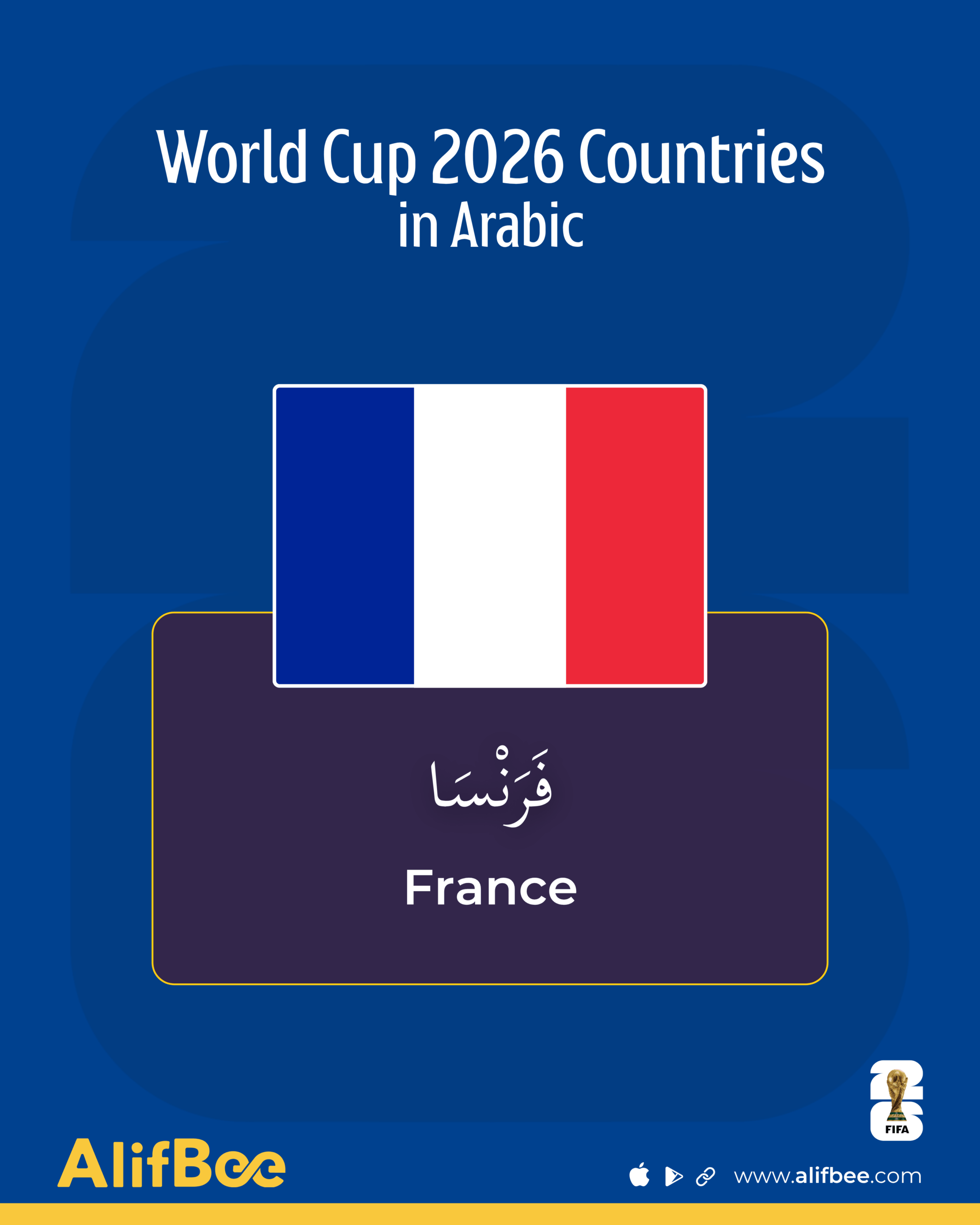
France |
فَرَنْسَا |
|
فَرَنْسِيّ |
|
فَرَنْسِيَّة |
|
|
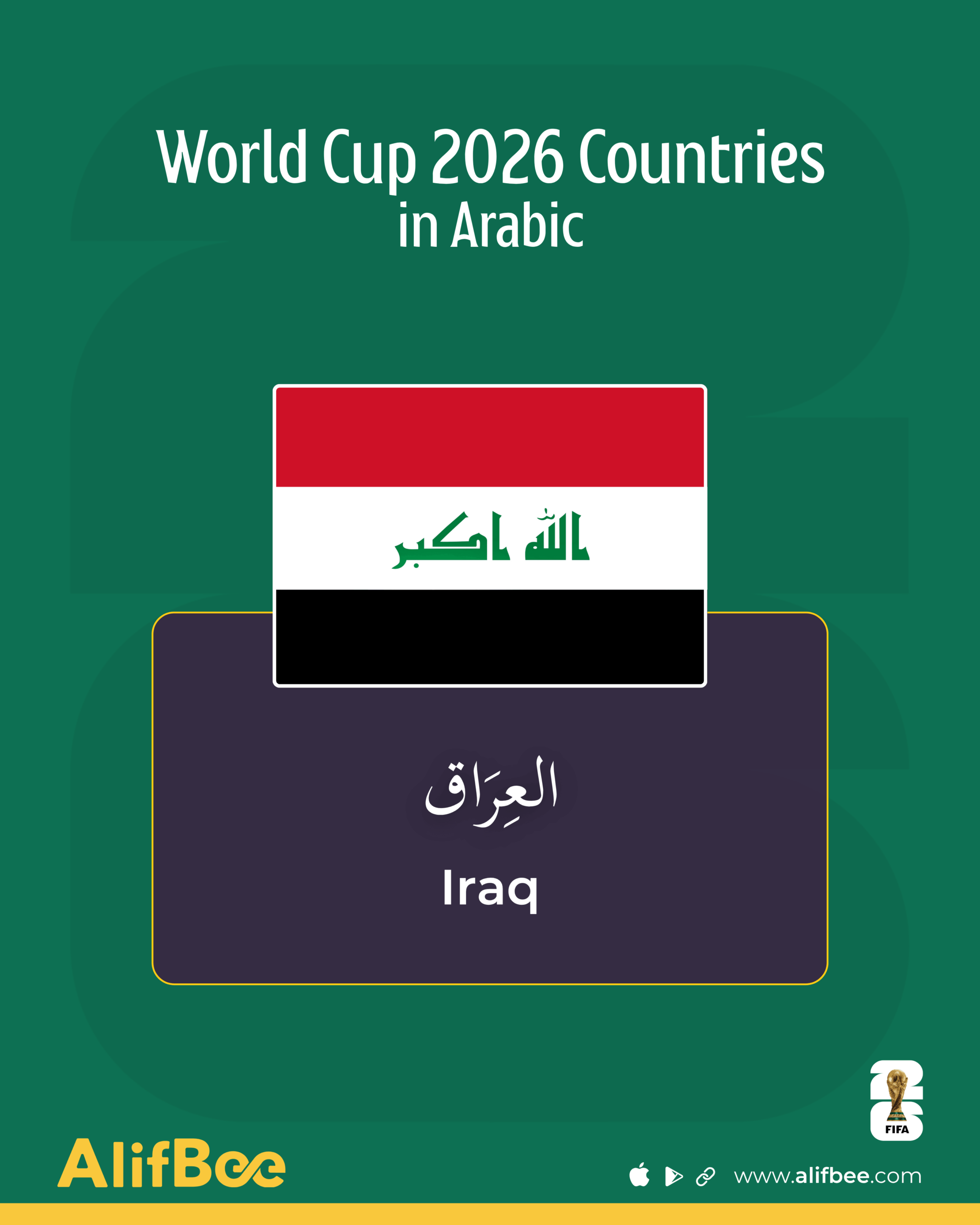
Iraq |
العِرَاق |
|
عِرَاقِيّ |
|
عِرَاقِيَّة |
|
|
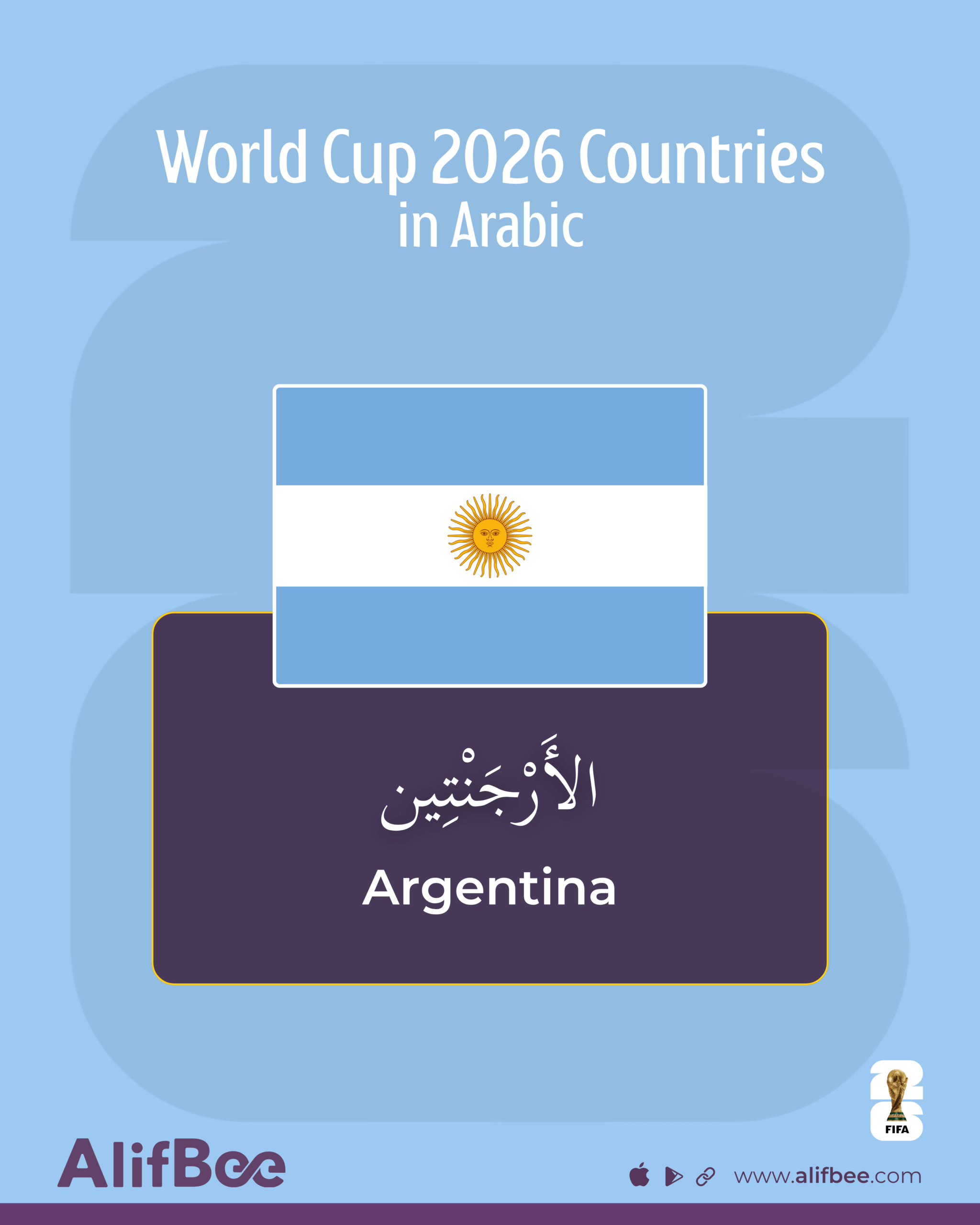
Argentina |
الأَرْجَنْتِين |
|
أَرْجَنْتِينِيّ |
|
أَرْجَنْتِينِيَّة |
|
|
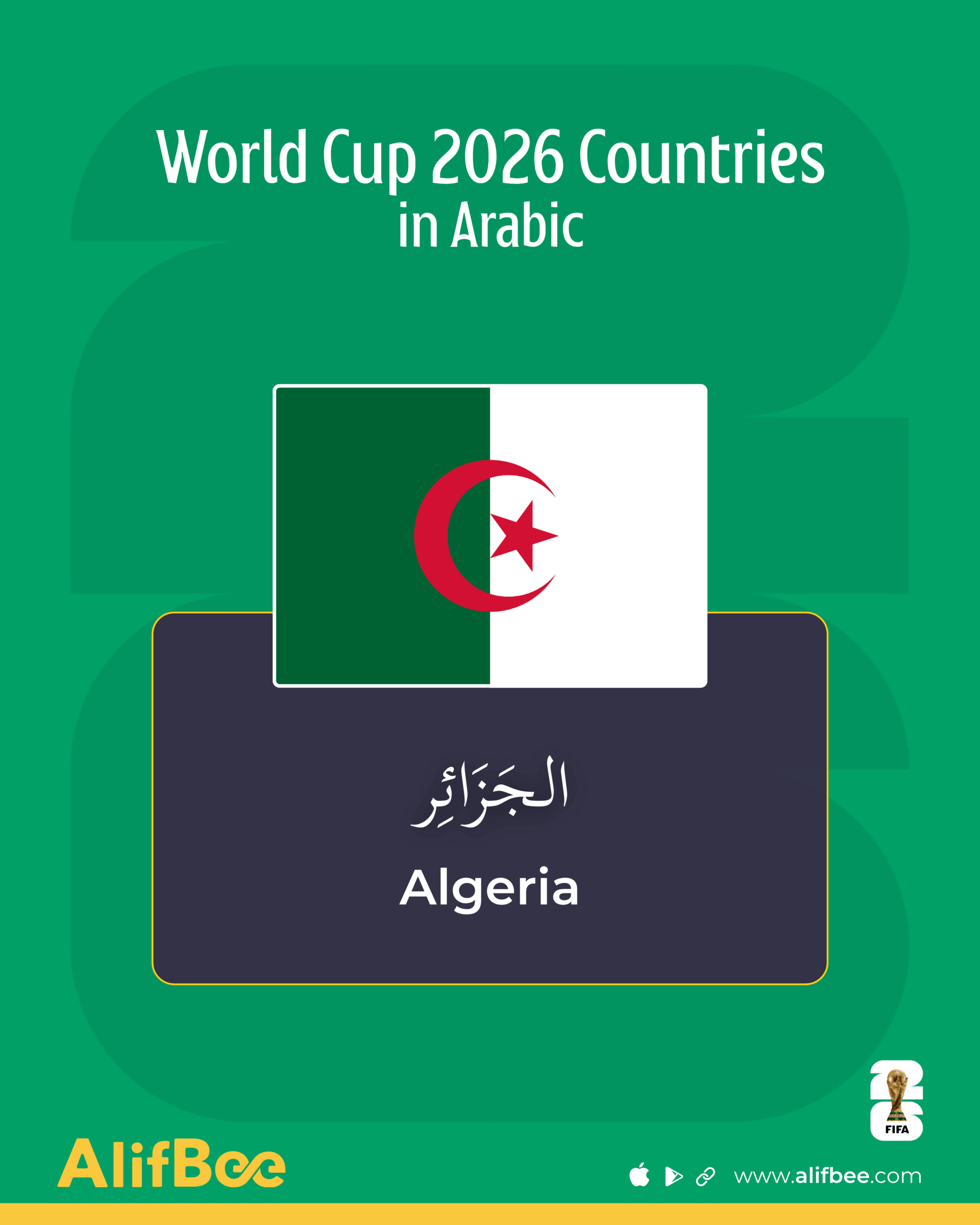
Algeria |
الجَزَائِر |
|
جَزَائِرِيّ |
|
جَزَائِرِيَّة |
|
|
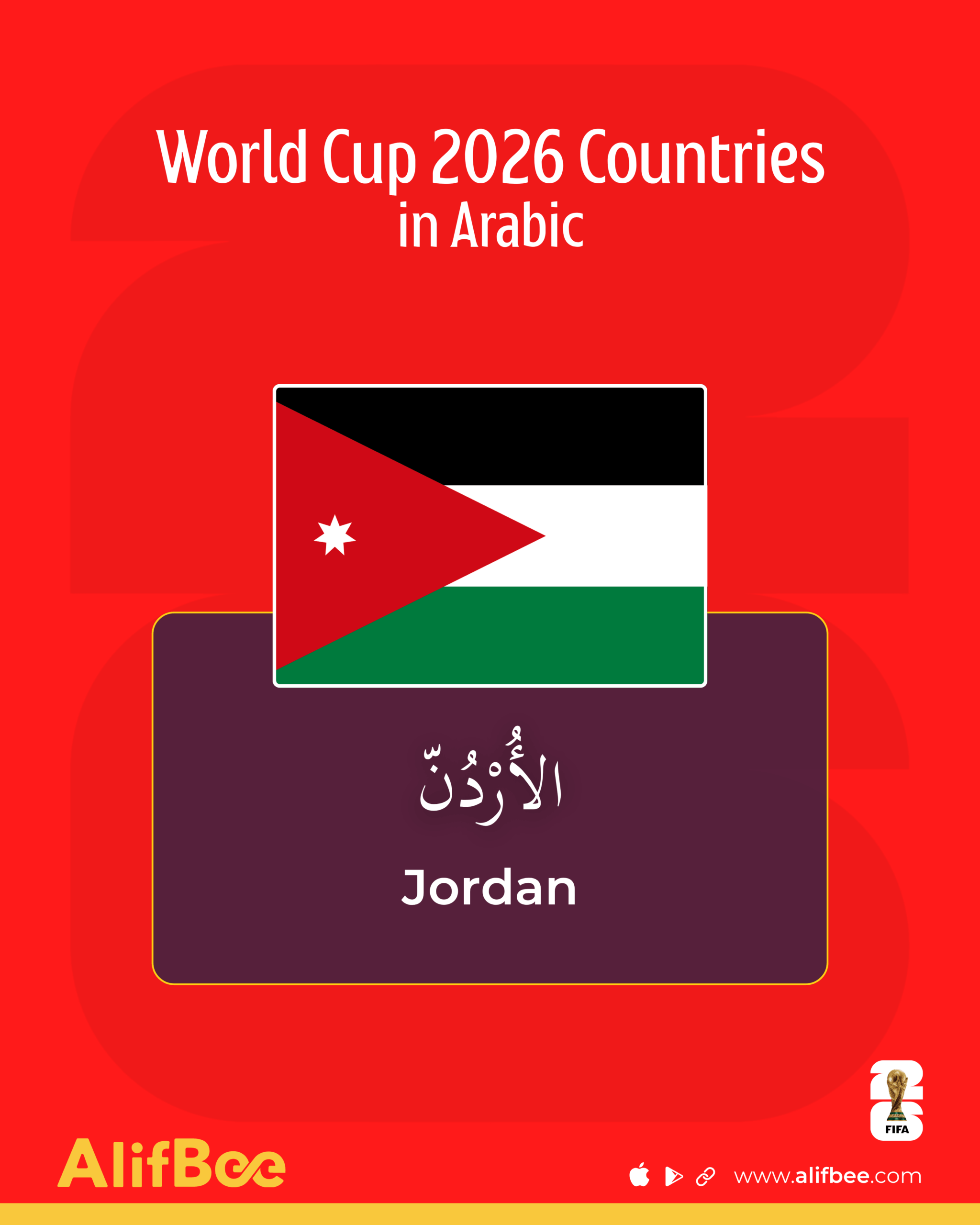
Jordan |
الأُرْدُنّ |
|
أُرْدُنِيّ |
|
أُرْدُنِيَّة |
|
|
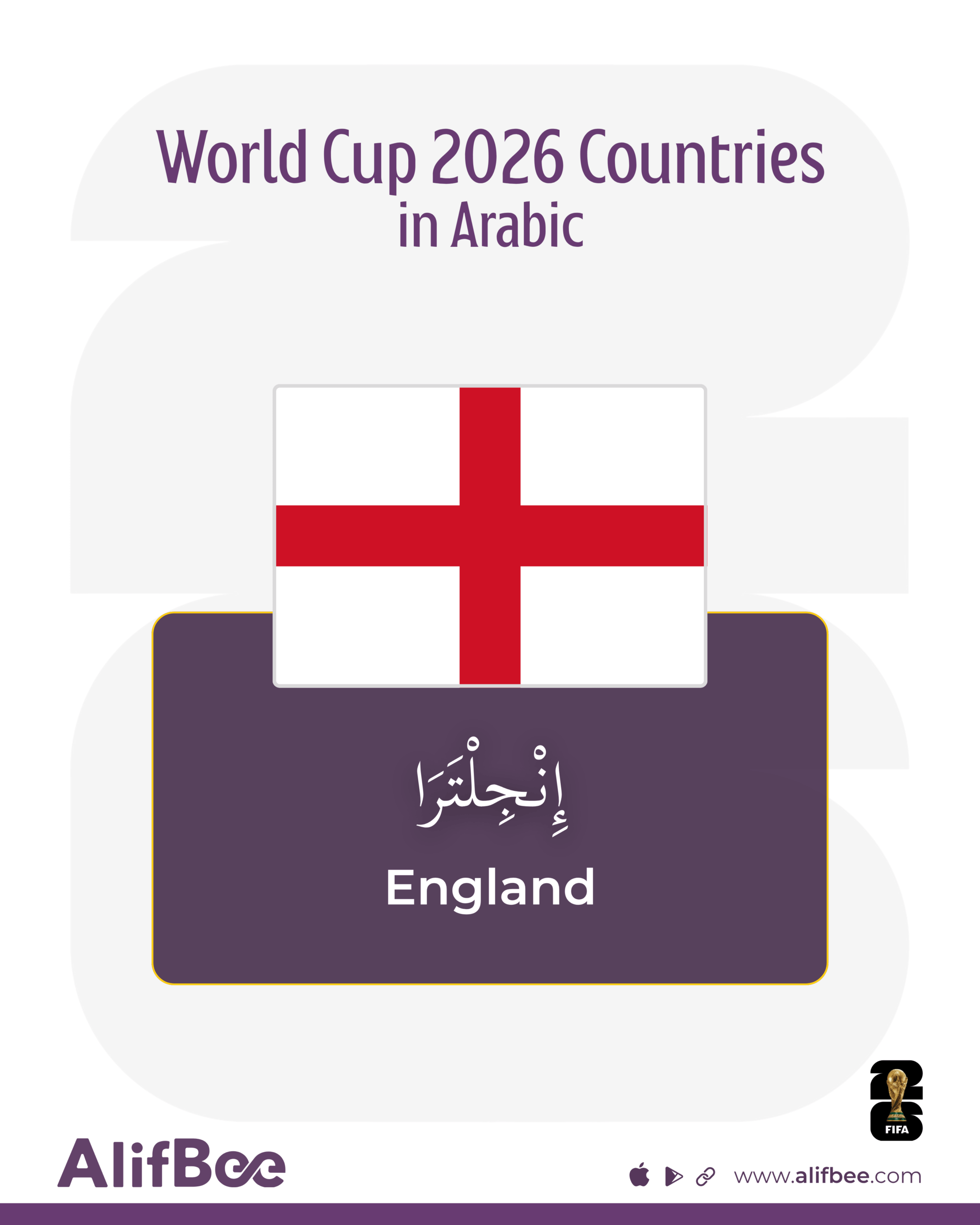
England |
إِنْجِلْتَرَا |
|
إِنْجِلِيزِيّ |
|
إِنْجِلِيزِيَّة |
|
Review Arabic Words for Hajj
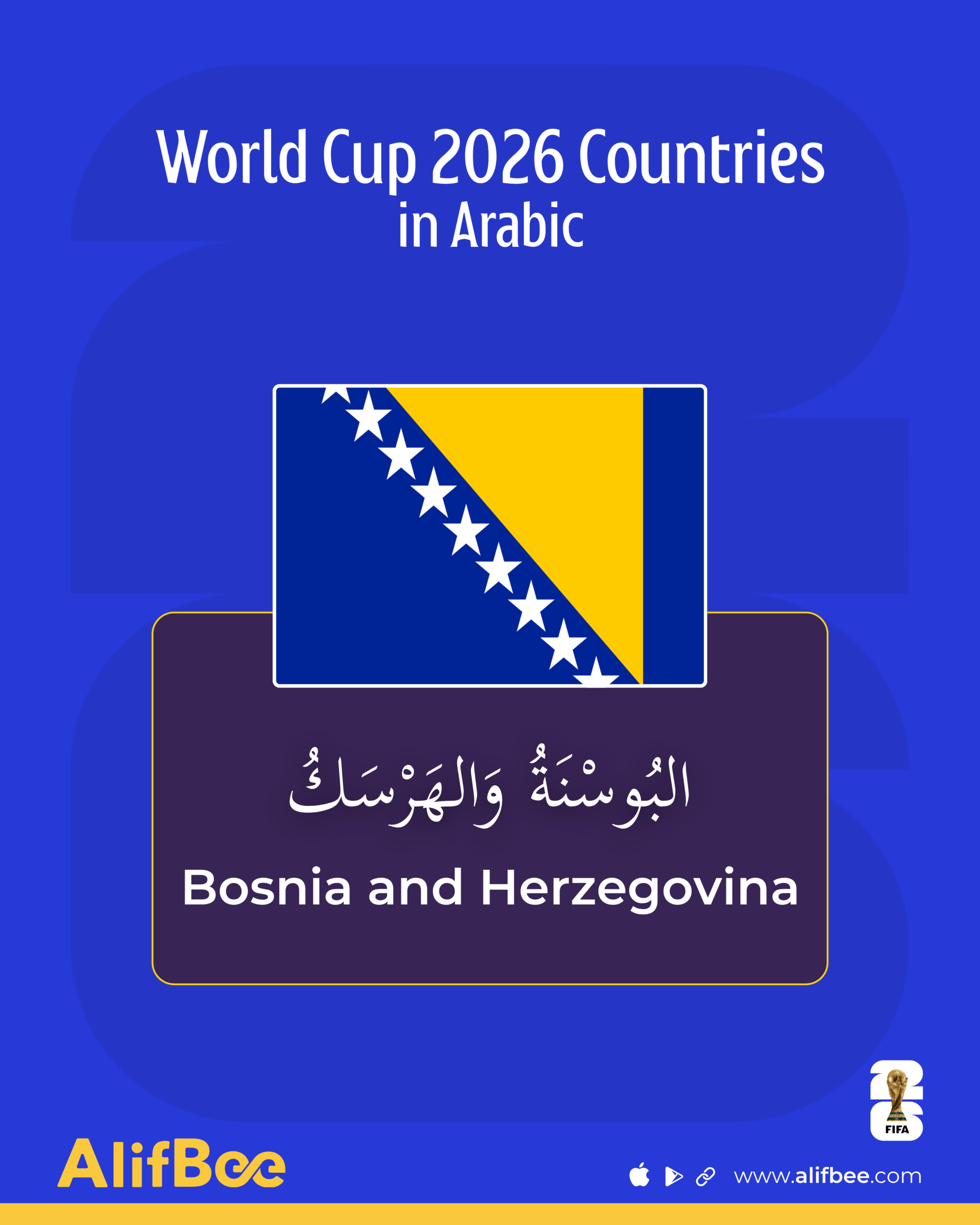
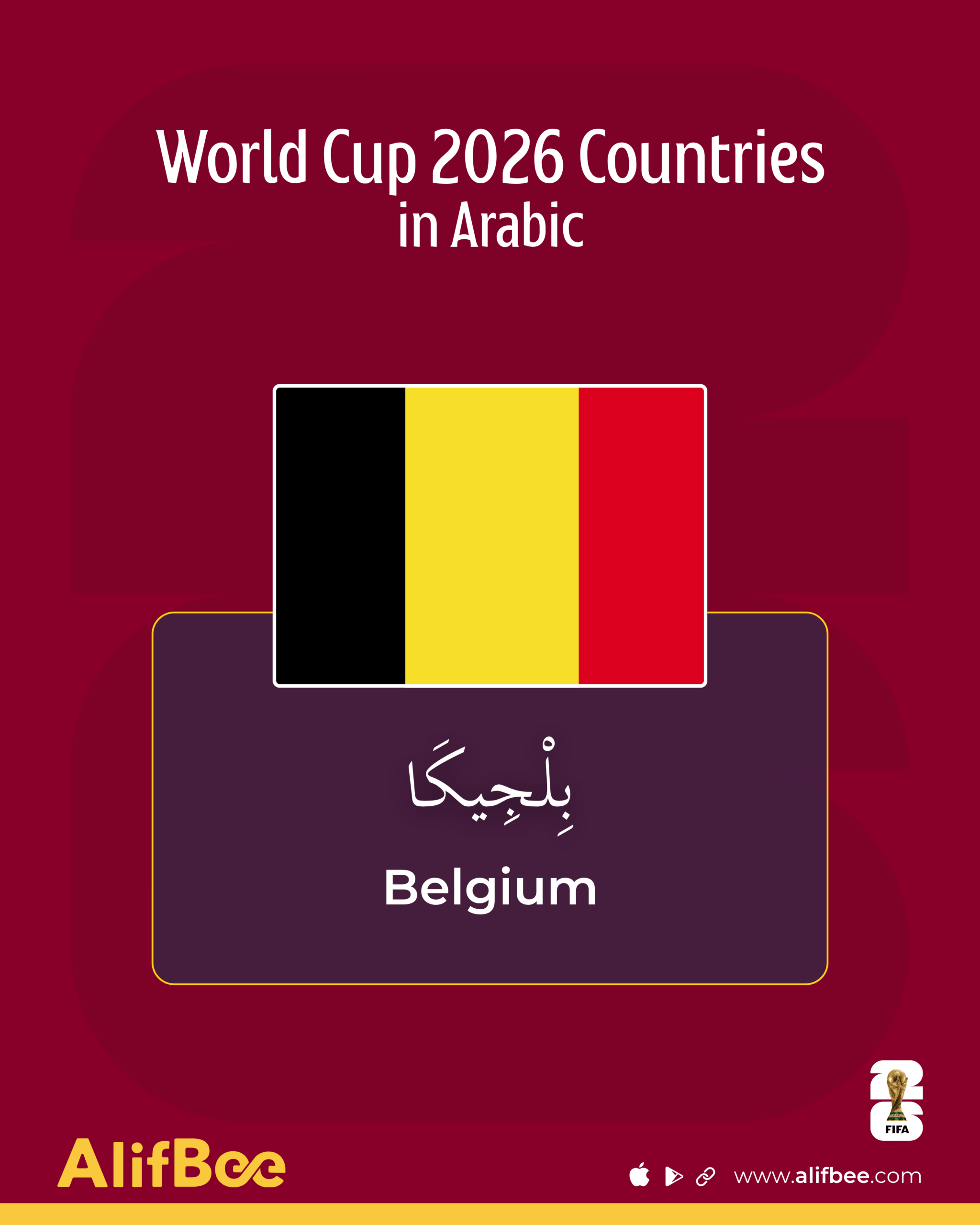
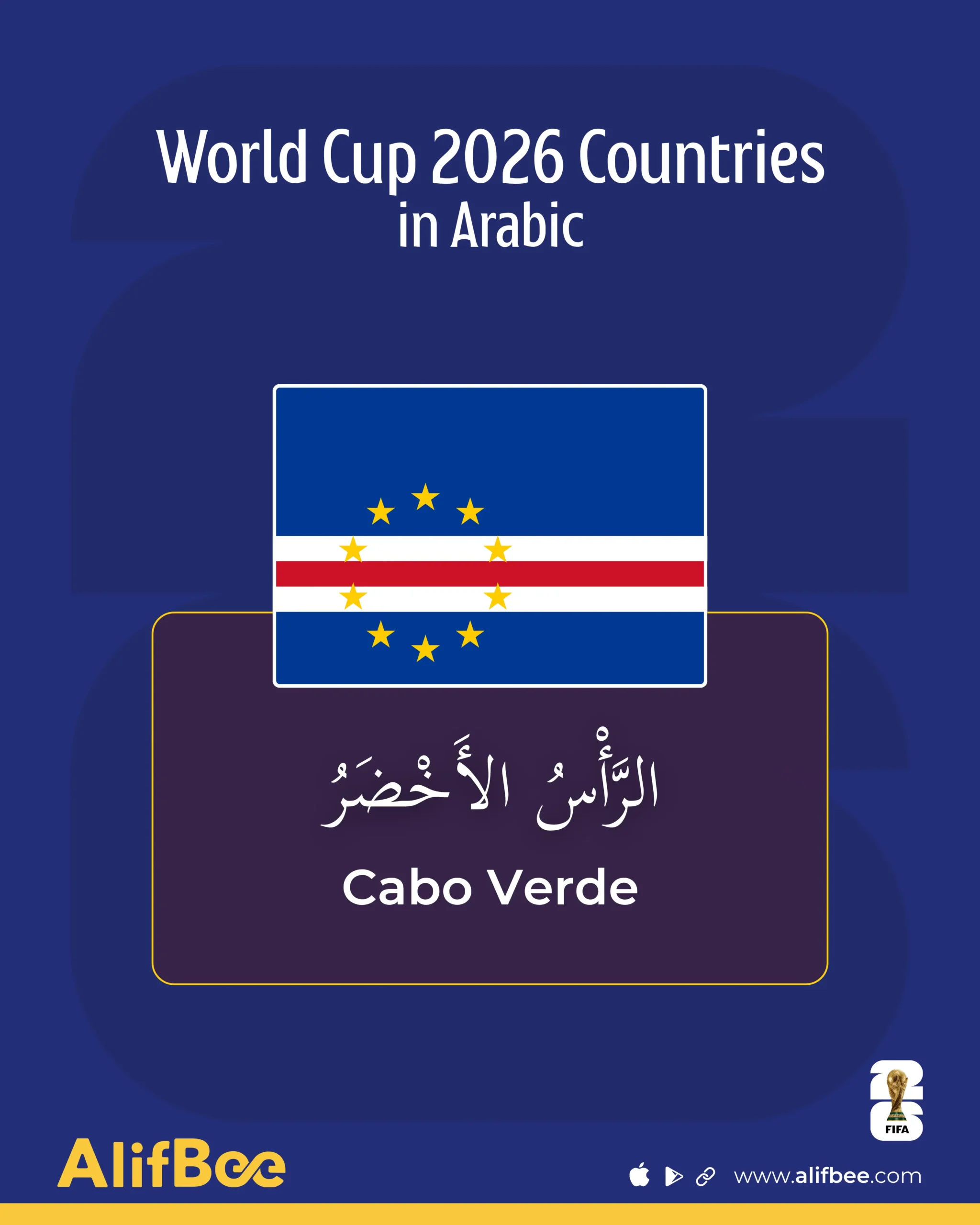
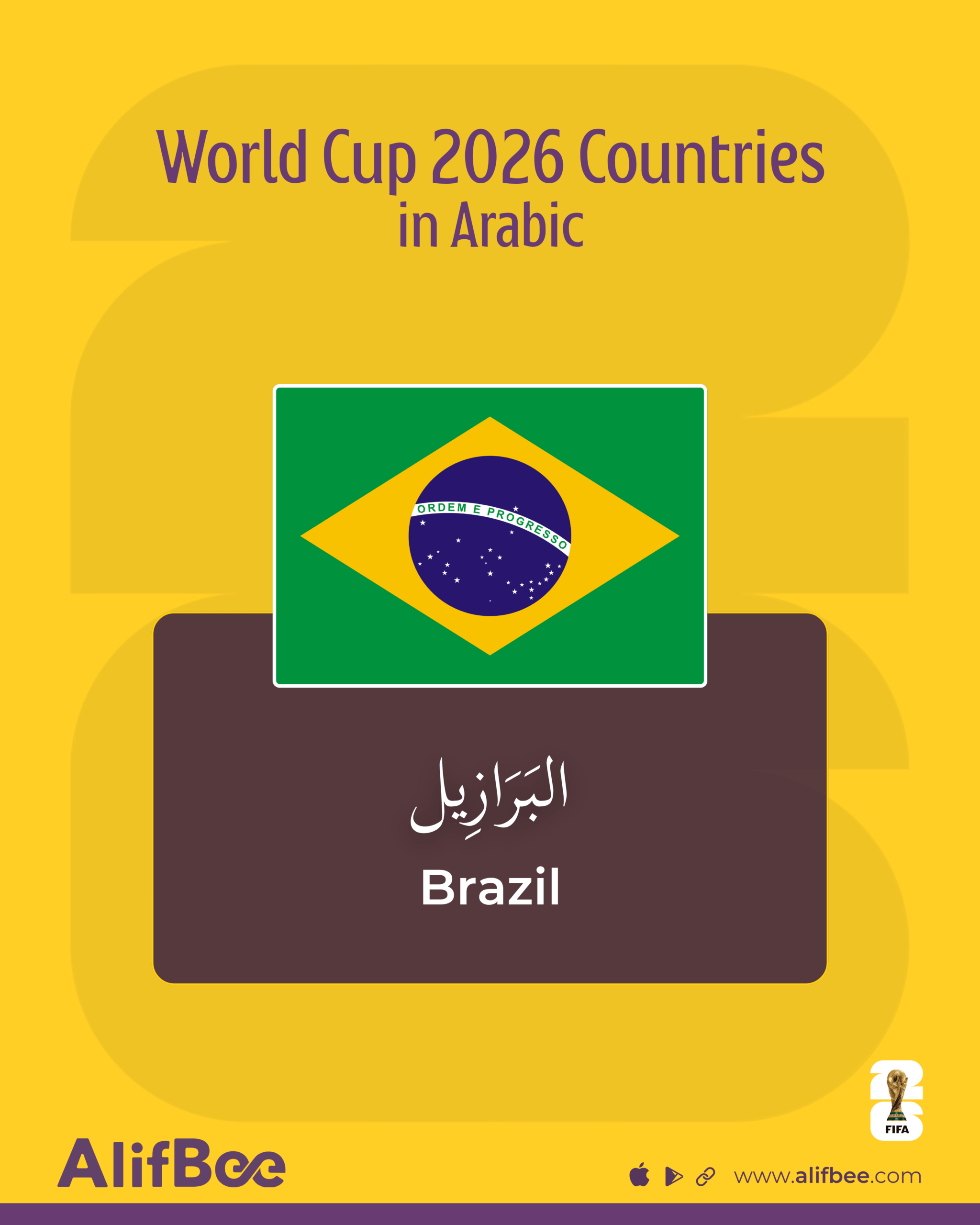
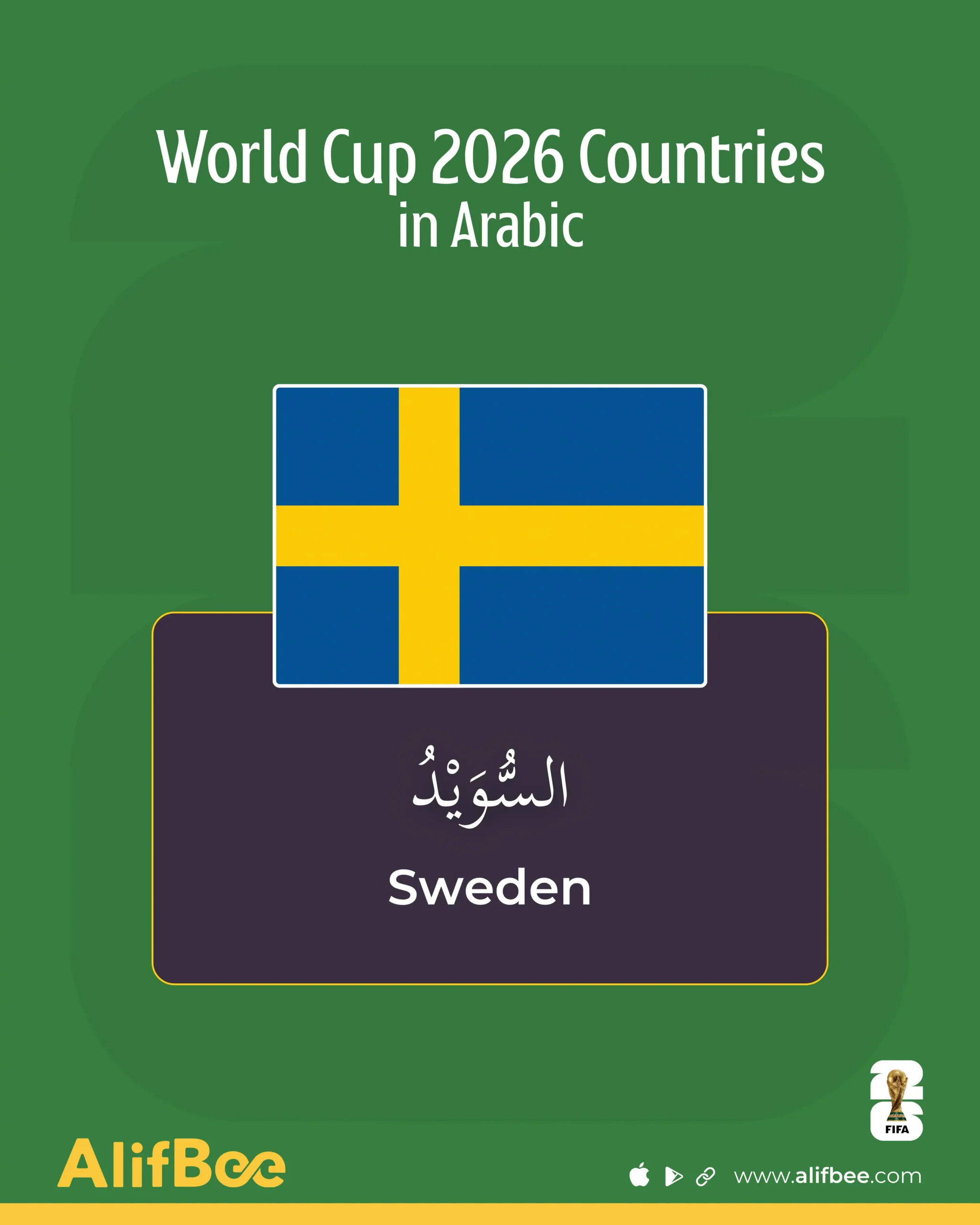
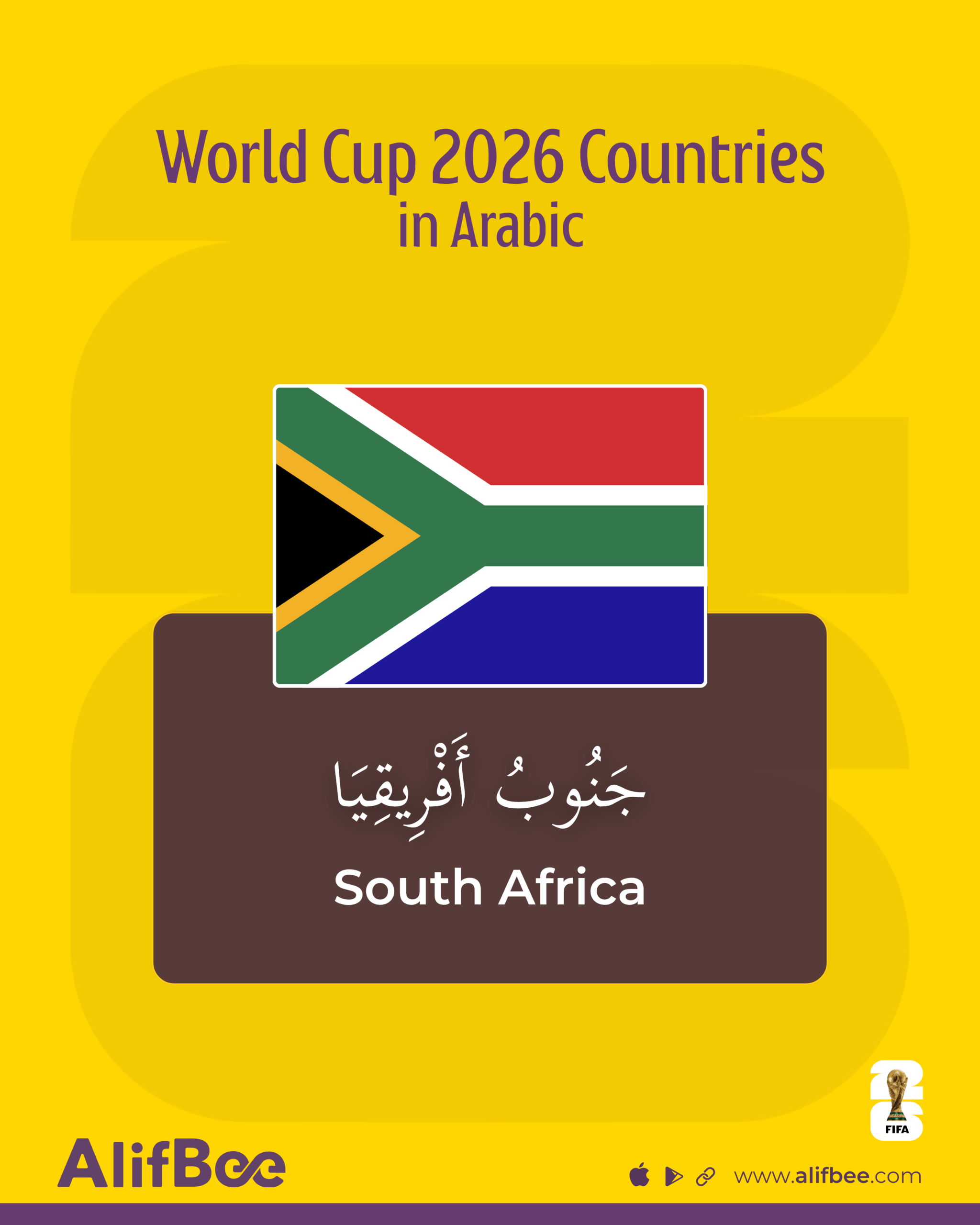
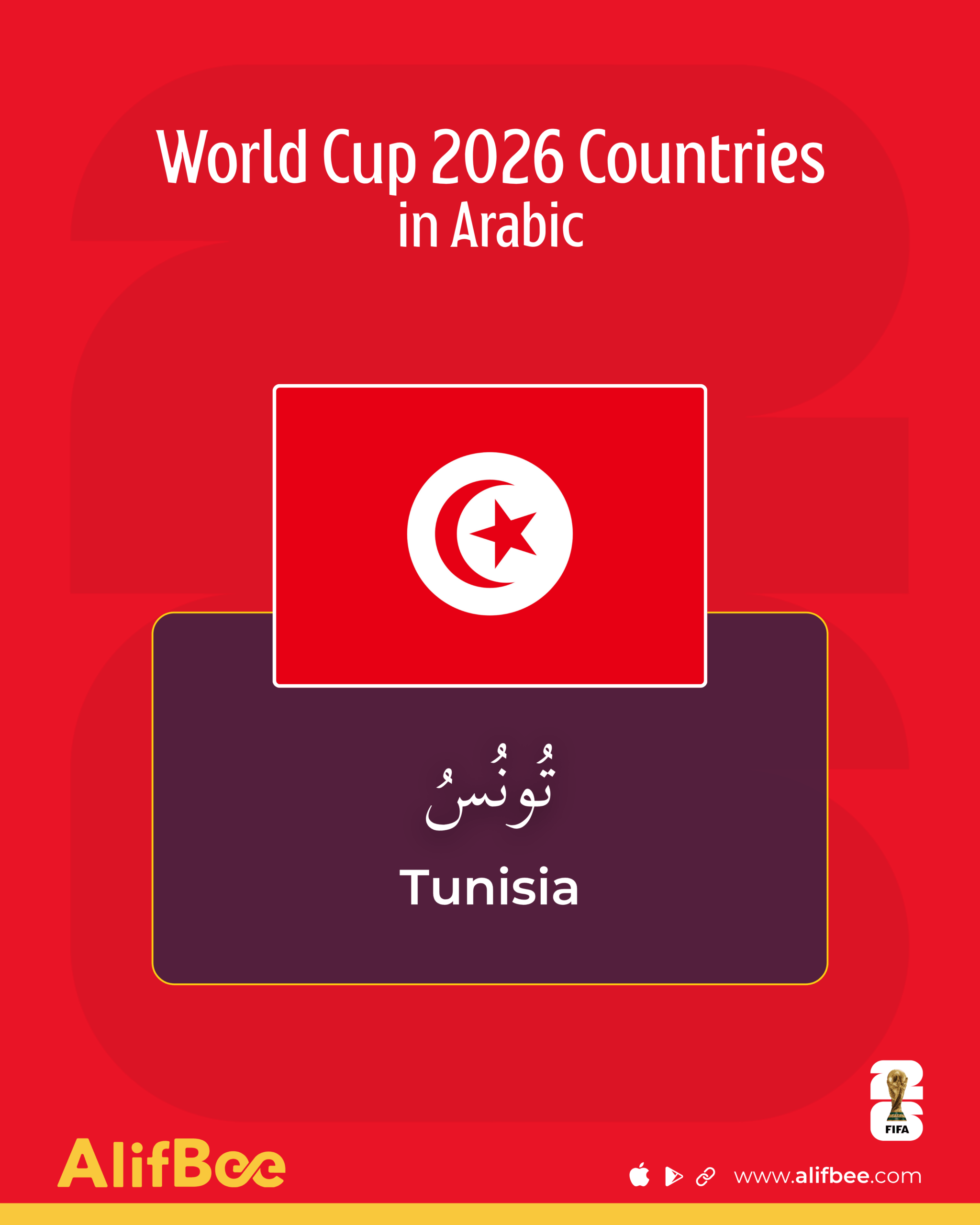
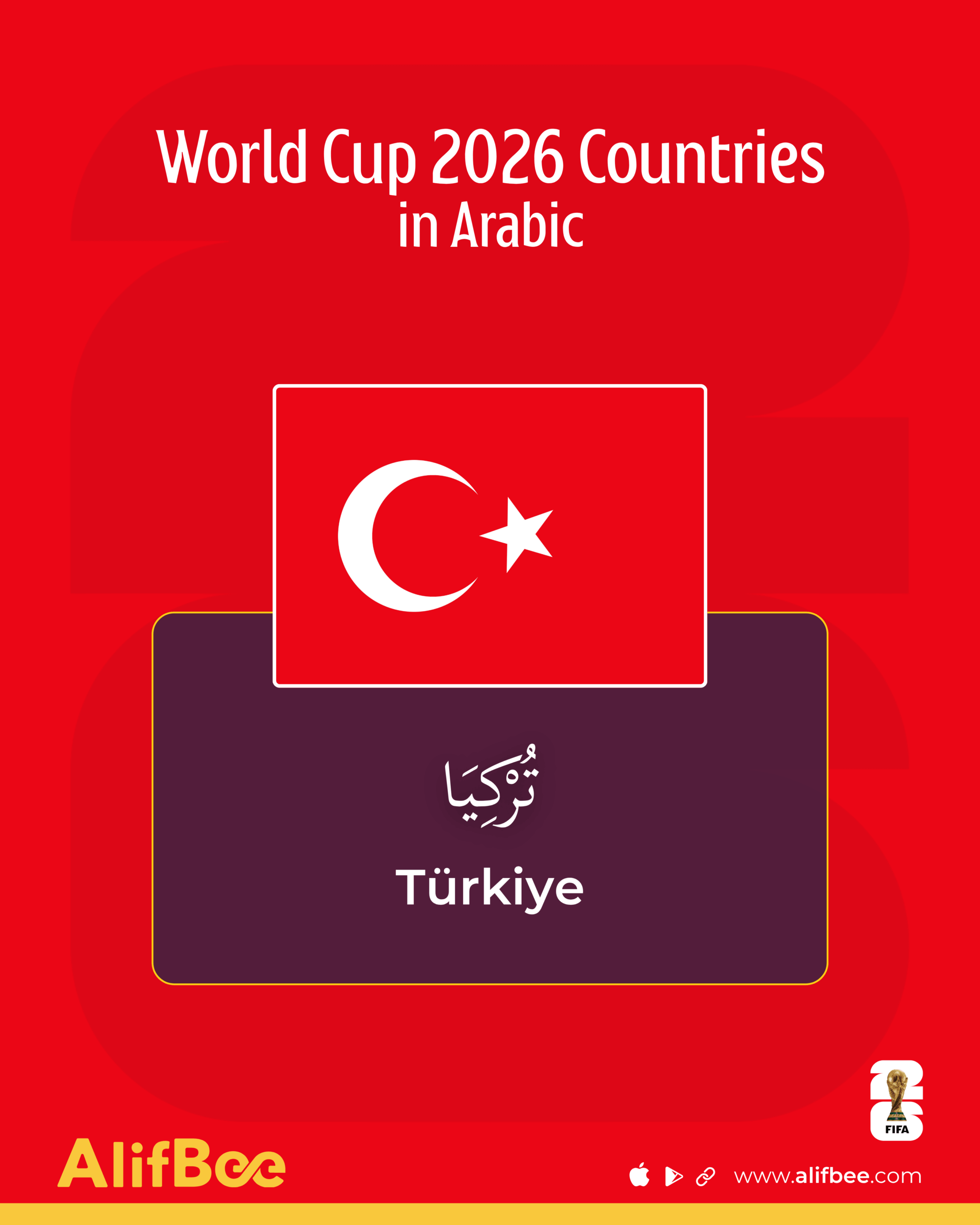
How to Talk About World Cup Matches and National Teams in Arabic
Football gives you an easy way to practice these words because the same sentence patterns return in every match. Use the country name when referring to the place itself, especially after words such as bayna (“between”), min (“from”), and fī (“in”). Use the nationality adjective after al-muntakhab when referring to the team.
At first, focus on recognizing the standard forms of the country and adjective. Fully vocalized MSA examples may also show case endings, but you do not need to master every final vowel before using the vocabulary.
Use the Country Name After Prepositions
When referring to a country after a preposition, use the country name rather than the nationality adjective. In the sentence “Today’s match is between Brazil and Morocco,” Brazil and Morocco are country names.
In fully vocalized MSA, the final short vowels reflect a word’s grammatical role in the sentence. In ordinary writing, these endings are often omitted, so beginners should first learn the basic forms of al-Barāzīl and al-Maghrib. The sentence pattern will still be clear when you encounter it without complete tashkīl.
| Meaning | Pronunciation | Arabic | |
|---|---|---|---|
|
Today’s match is between Brazil and Morocco.
|
mubārātu al-yawmi bayna al-Barāzīli wa-al-Maghribi |
مُبَارَاةُ اليَوْمِ بَيْنَ البَرَازِيل وَالمَغْرِب |
|
How to Remember the World Cup Countries in Arabic
Read the country, say the adjective, then use both in a short sentence.
A useful routine is to listen for team names during Arabic commentary, pause after a country is mentioned, and predict the adjective. You can also write one imaginary result for each group. Once the words belong to a match rather than an isolated list, they are much easier to keep.
Final word
Country names and nationality adjectives stop looking random once you learn them in pairs. Begin with your favorite team or one World Cup group, then place both forms in a match sentence. After a few games, several of the patterns will already sound familiar.
Learn with AlifBee
AlifBee helps you build the Modern Standard Arabic behind the commentary, from country names and adjective agreement to listening and sentence practice. Continue with guided Arabic lessons from AlifBee, then use essential Arabic travel phrases when you are ready to take the language beyond the match.
FAQs
How do you say “country” in Arabic?
Dawlah is the more formal term for a state or country, while balad is more common and has a broader meaning. Depending on context, balad may refer to a country, a town, or someone’s homeland. In a list of geographic terms, dawlah is usually the more precise choice.
How do you say “nationality” in Arabic?
Nationality is jinsiyyah in Arabic, and the plural is jinsiyyāt. This word refers to a person’s nationality or citizenship. Do not confuse it with nationality adjectives such as miṣriyy (“Egyptian”) or qaṭariyy (“Qatari”), which describe a person, team, or other noun.
How do you form a nationality from a country name in Arabic?
A common method is to form a nisba adjective with the masculine ending -iyy and the feminine ending -iyyah. Miṣr becomes miṣriyy and miṣriyyah. However, not every nationality is formed by simply adding -iyy or -iyyah to the country name. Some country names change, and some nationality forms are irregular, so it is best to learn each country–nationality pair as vocabulary.
Why is the adjective masculine when talking about a national team?
Because muntakhab (“team” in this context) is grammatically masculine. The adjective that describes it therefore takes the masculine singular form: al-muntakhabu al-qaṭariyyu, “the Qatari national team.” This remains true even when the country name itself is grammatically feminine.
Are all country names feminine in Arabic?
No. Many country names are grammatically feminine, especially those ending in -ā or -ah, but others are grammatically masculine. For example, al-ʿIrāq and al-Maghrib are commonly treated as masculine. When referring to a national team, however, the important point is that muntakhab is grammatically masculine, so the adjective that follows it is also masculine.