
Written by Dania Ghraoui, a translator and language teacher with 10 years of experience.
At A Glance: Mashallah, written مَا شَاءَ الله in Arabic and pronounced mā shāʾ Allāh, literally means “what God has willed.” In everyday use, it expresses admiration, praise, joy, or appreciation when someone sees something good or beautiful. It is different from Inshallah, which points to a future hope, and Alhamdulillah, which expresses gratitude.
You may hear someone say Mashallah after seeing a beautiful baby, a new home, a friend’s exam result, or even a plant that is growing well. The phrase is common, but learners often stop and wonder: does it mean “wow,” “God bless,” “good luck,” or something else?
This guide explains the meaning of Mashallah, how to write it in Arabic, when to use it naturally, and how it differs from Inshallah and Alhamdulillah.
Before you go further!
Continue exploring everyday Arabic expressions by learning what Inshallah means, discovering seven common Arabic Islamic phrases, and exploring unique Arabic words and expressions that do not translate neatly into English.
Mashallah Meaning in Arabic
It means “what God has willed.” People use it to express admiration, joy, praise, or appreciation when they see something good.
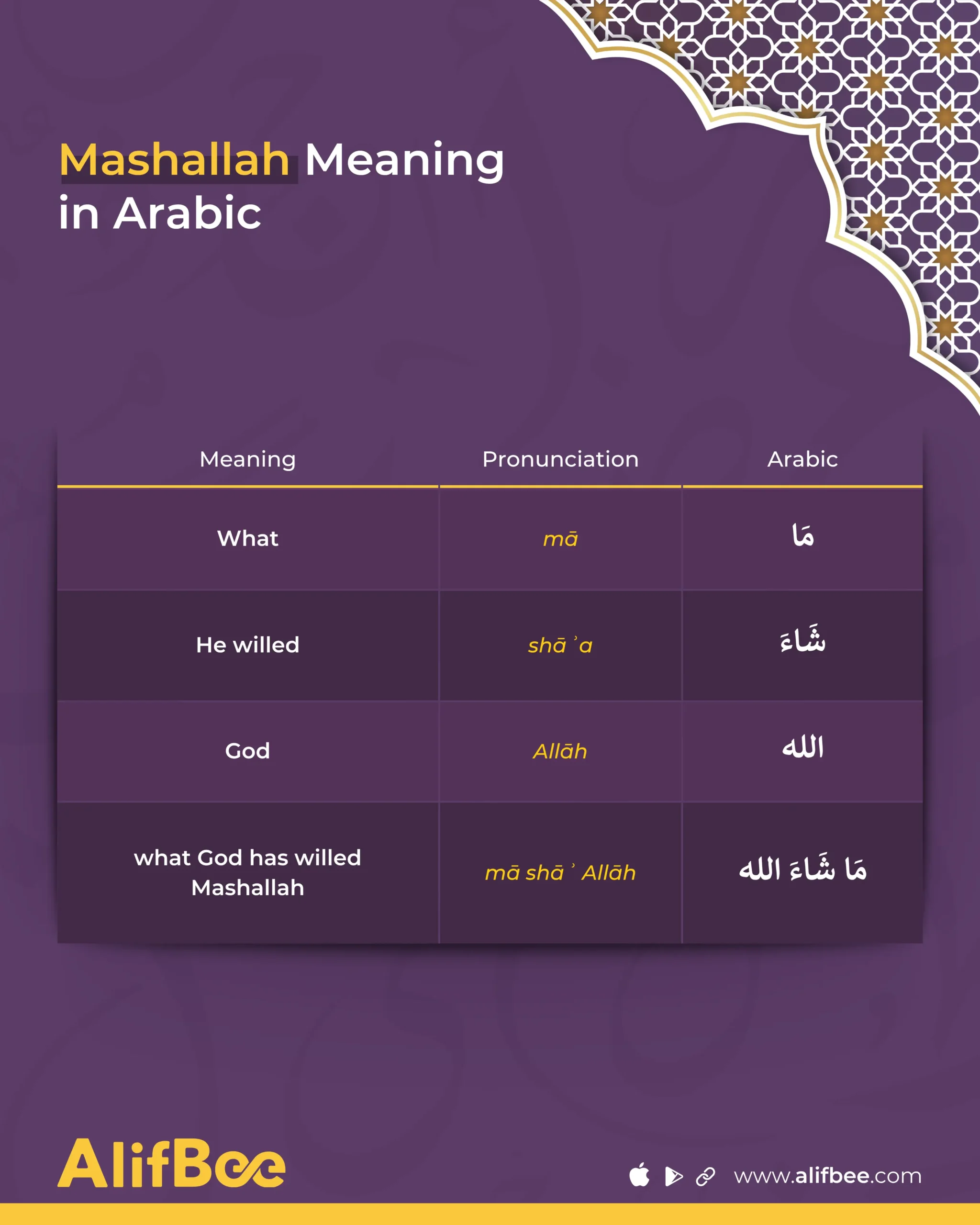
In Arabic, مَا شَاءَ الله is made of three parts:
– Mā means “what,”
– shāʾa means “He willed,”
– Allāh means “God.”
Put together, the phrase points to something good that exists or has already happened. That is why this expression is often used after good news, a compliment, or a beautiful moment.
| Meaning | Pronunciation | Arabic | |
|---|---|---|---|
|
what |
mā |
مَا |
|
|
He willed |
shāʾa |
شَاءَ |
|
|
God |
Allāh |
الله |
|
|
What God has willed / Mashallah |
mā shāʾ Allāh |
مَا شَاءَ الله |
|
How to Write Mashallah in Arabic
The standard Arabic spelling is مَا شَاءَ الله. In Arabic, it appears as three words. In English, you may see other spellings, such as Masha Allah, Ma sha Allah, Masha’Allah, or ma sha’ Allah.
For Arabic learners, the Arabic spelling is the clearest guide. English spellings vary because they try to represent Arabic sounds with Latin letters.
| Meaning | Pronunciation | Arabic | |
|---|---|---|---|
|
Mashallah / what God has willed |
mā shāʾ Allāh |
مَا شَاءَ الله |
|
|
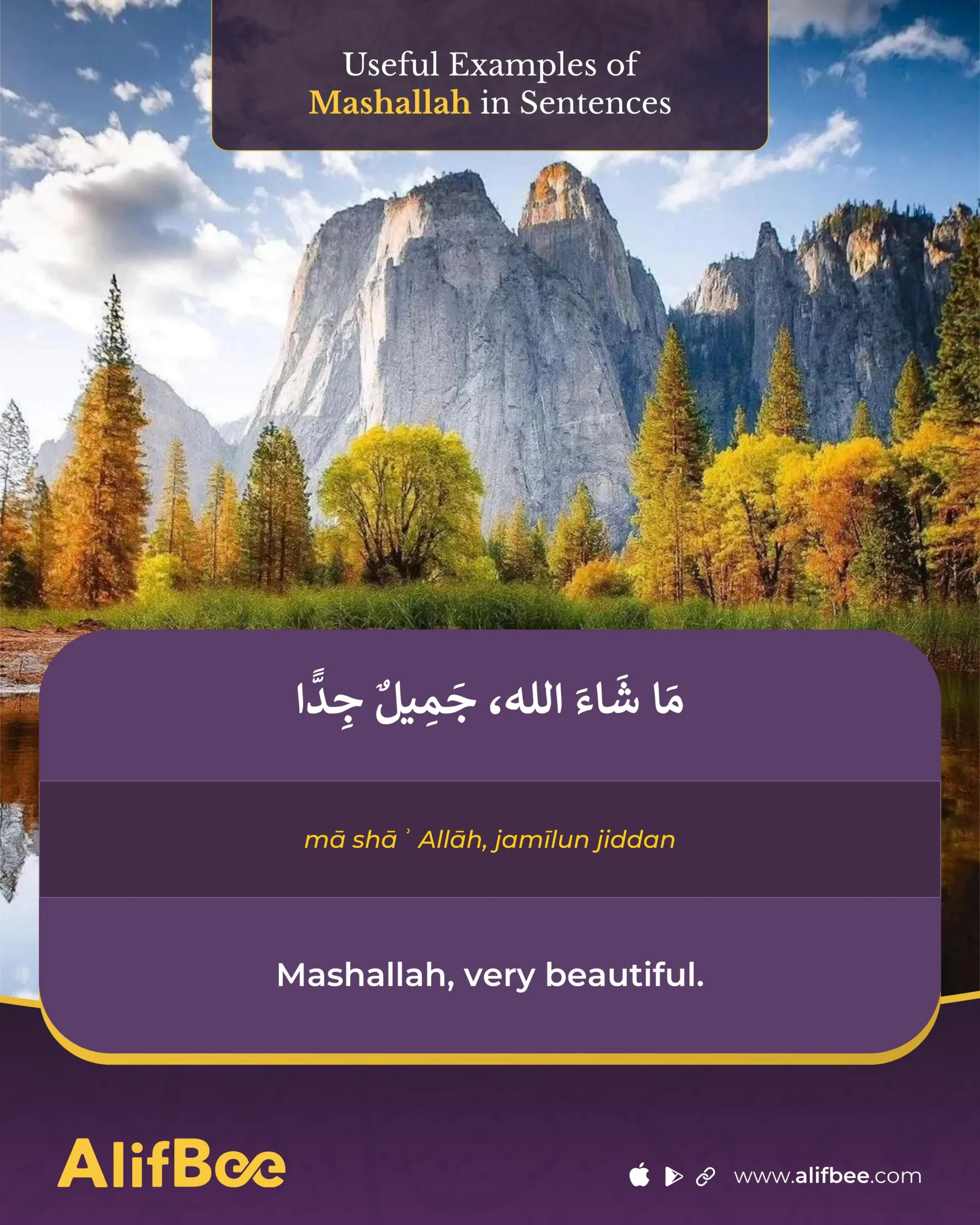
Mashallah, very beautiful. |
mā shāʾ Allāh, jamīlun jiddan |
مَا شَاءَ الله، جَمِيلٌ جِدًّا |
|
Is Mashallah One Word or Three?
In Arabic, Mashallah is three words: مَا شَاءَ اللهُ. In English transliteration, it is often written as a single word because borrowed expressions are simpler in everyday typing. So, “Mashallah” is normal in English, but مَا شَاءَ اللهُ is the exact Arabic form.
How to Pronounce Mashallah
A simple pronunciation is mā shāʾ Allāh. Keep the ā sound long in mā and shāʾ, like a longer “aa.” The small mark after shāʾ represents hamza, a brief catch or pause in the throat. You do not need to overthink it at first. Start with a clear mā shāʾ Allāh, then refine the sound as you listen to native speakers.
When Do You Say Mashallah?
Say it when you admire something good or respond warmly to good news. It can fit a child’s achievement, a new home, someone’s success, a beautiful view, a kind action, or steady progress in learning.
In many families and communities, it also helps praise something without sounding envious. The tone matters: it should feel sincere, not exaggerated or sarcastic.
To Admire Something Beautiful
It often appears in compliments. You might say it when you see a beautiful baby, a nice outfit, a clean home, a strong performance, or someone’s clear improvement. It carries admiration, but with a softer feeling than a plain “wow.”
To Congratulate Someone
It can also respond to success. If a friend passes an exam, starts a new job, or shares happy news, this phrase sounds warm and supportive. You can add a short sentence after it, such as “I am happy for you,” to make the message feel more personal.
Mashallah in the Quran
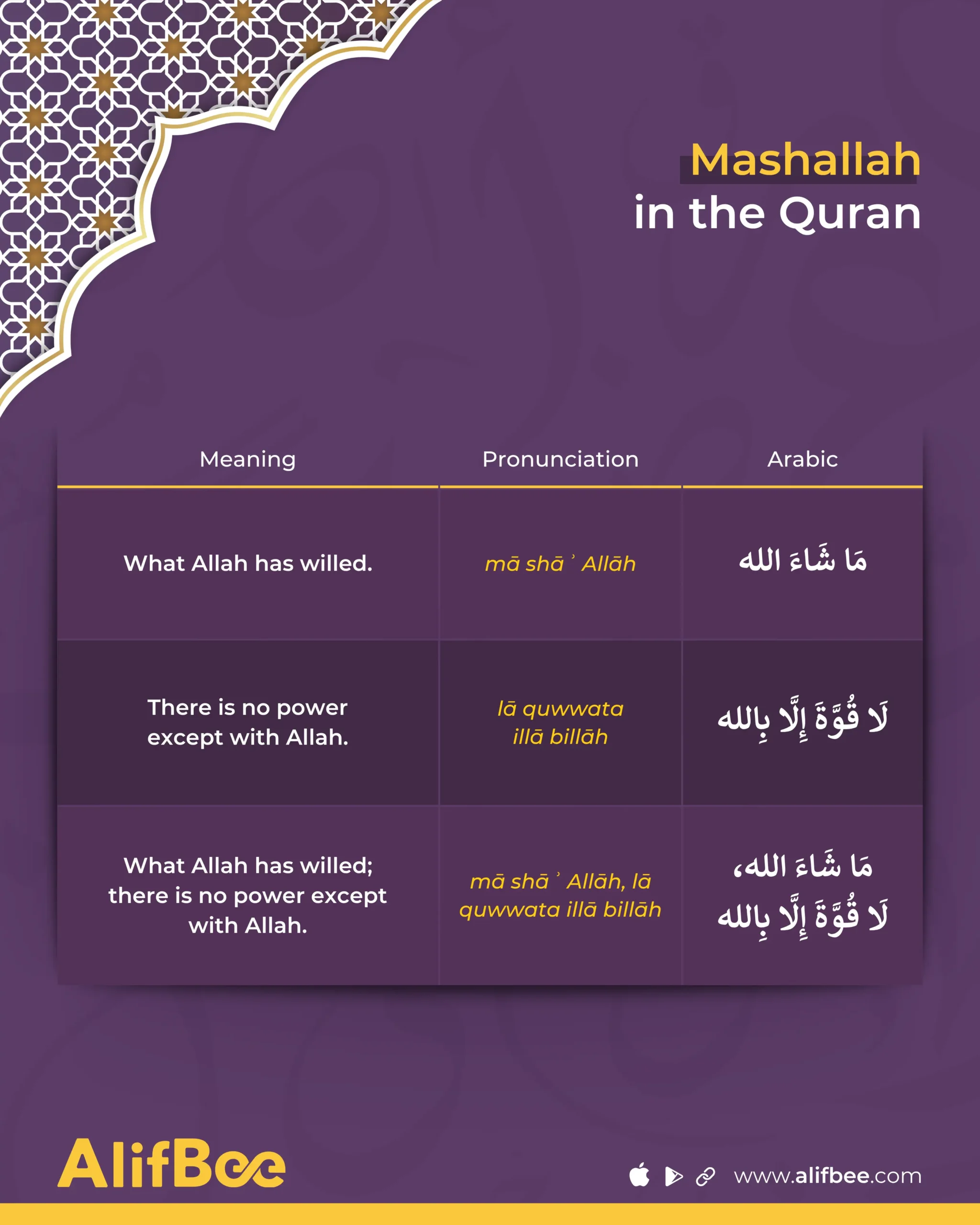
This expression appears in the Quran in Surah Al-Kahf 18:39 as part of the longer phrase مَا شَاءَ الله لَا قُوَّةَ إِلَّا بِالله. In the story, one man reminds another to recognize that blessings come by Allah’s will, not by personal pride alone.
| Meaning | Pronunciation | Arabic | |
|---|---|---|---|
|
What Allah has willed. |
mā shāʾ Allāh |
مَا شَاءَ الله |
|
|
There is no power except with Allah. |
lā quwwata illā billāh |
لَا قُوَّةَ إِلَّا بِالله |
|
|
What Allah has willed; there is no power except with Allah. |
mā shāʾ Allāh, lā quwwata illā billāh |
مَا شَاءَ الله، لَا قُوَّةَ إِلَّا بِالله |
|
So, when you see something good, you say it to remember that it is ultimately from Allah.
Mashallah and Protection from the Evil Eye in Islamic Culture
In Islamic culture, the evil eye is usually called al-ʿayn (the eye). It refers to harm connected with envy, jealousy, or with an admiring look that is not blessed.
That’s why Muslims say Mashallah, Tabarakallah, or Allahumma barik when they praise a child, a home, success, beauty, or good news. This is to keep praise humble and ask Allah to bless what is being admired.
Does Saying Mashallah Protect from the Evil Eye?
Many people say it with this protective meaning, but it is better to explain it carefully: the phrase is a respectful way to acknowledge Allah’s will and avoid praise that sounds possessive, boastful, or envious.
A well-known hadith in Sahih Muslim states, “al-ʿaynu ḥaqq,” meaning “the evil eye is real.” So, when you admire something personal or beautiful, saying this expression makes the compliment sound more respectful and culturally appropriate.
Mashallah vs Inshallah vs Alhamdulillah
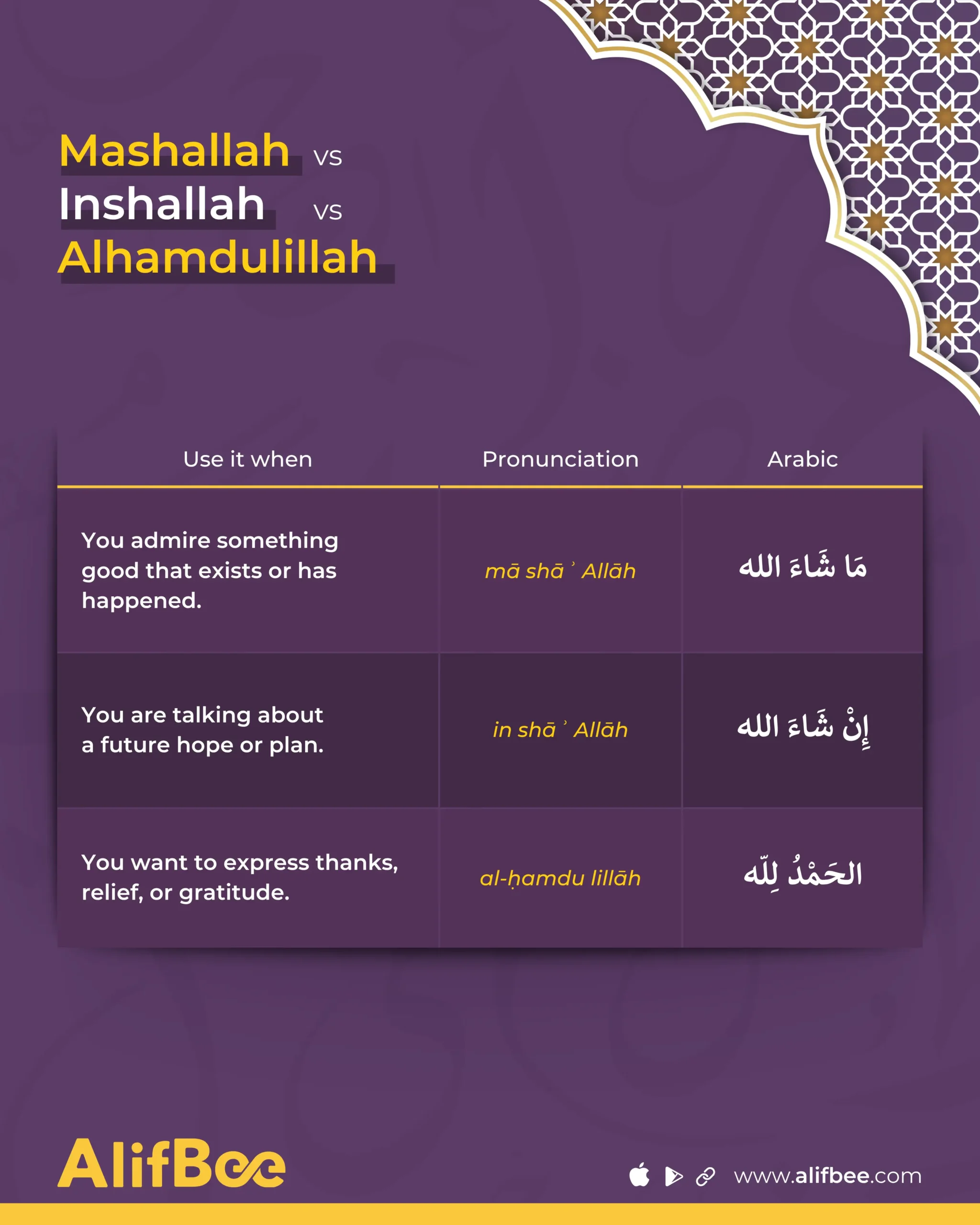
Learners often mix up these three expressions because they are all common Arabic Islamic phrases and are used in everyday speech. A simple way to remember them is:
- Mashallah is said when admiring or acknowledging something good that already exists or has happened.
- Inshallah is used when talking about something you hope or intend will happen in the future, meaning “if Allah wills.”
- Alhamdulillah expresses gratitude and praise to Allah, similar to saying “Praise be to Allah” or “Thank God.”
| Use it when... | Phrase | Pronunciation | Arabic | |
|---|---|---|---|---|
|
You admire something good that exists or has happened. |
Mashallah |
mā shāʾ Allāh |
مَا شَاءَ الله |
|
|
You are talking about a future hope or plan. |
Inshallah |
in shāʾ Allāh |
إِنْ شَاءَ الله |
|
|
You want to express thanks, relief, or gratitude. |
Alhamdulillah |
al-ḥamdu lillāh |
الحَمْدُ لِلّه |
|
For more everyday gratitude phrases, see this AlifBee guide to thank you in Arabic.
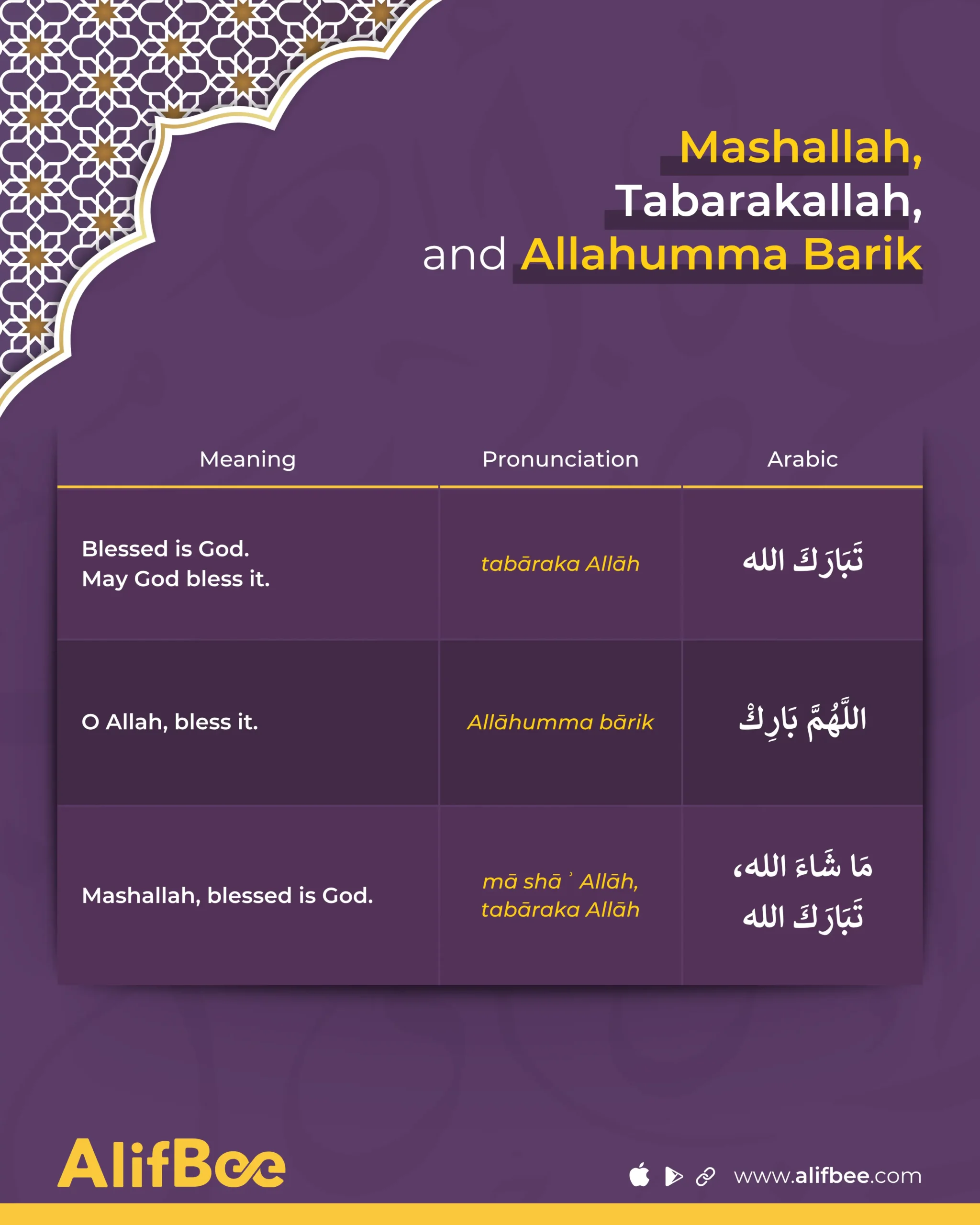
Tabarakallah and Allahumma Barik
These are related phrases that give blessings to what is being admired. They can be used when praising someone’s child, home, beauty, success, or something precious.
| Use / note | Phrase | Pronunciation | Arabic | |
|---|---|---|---|---|
|
Often paired with Mashallah. |
Blessed is God / May God bless it |
tabāraka Allāh |
تَبَارَكَ الله |
|
|
Dua said after praising a child, home, success, or beauty. |
O Allah, bless it |
Allāhumma bārik |
اللَّهُمَّ بَارِكْ |
|
|
Warm, blessing-focused praise. |
Mashallah, blessed is God |
mā shāʾ Allāh, tabāraka Allāh |
مَا شَاءَ الله، تَبَارَكَ الله |
|
So, while our focus expression expresses admiration, Tabarakallah and Allahumma barik add a stronger sense of blessing.
Can You Say Mashallah to a Girl?
Yes. You can say it to a girl or woman when praising her beauty, kindness, success, talent, or achievements. The basic phrase مَا شَاءَ الله does not change by gender. If you add “upon you,” the ending changes: ʿalayka for a male and ʿalayki for a female.
| Meaning | Pronunciation | Arabic | |
|---|---|---|---|
|
Mashallah upon you (spoken/informal in Levantine or Gulf Arabic) |
mā shāʾ Allāh ʿalayki |
مَا شَاء الله عليكي |
|
|
Mashallah, I am happy for you. (to a female) |
mā shāʾ Allāh, fariḥtu laki |
مَا شَاءَ الله، فَرِحْتُ لَكِ |
|
Is Mashallah Only for Muslims?
Mashallah is an Islamic phrase, but it is also part of everyday Arabic in many communities. Arabic-speaking Christians and other Arabic speakers may also use Allāh to mean God, because Allāh is the Arabic word for God.
Usage can vary by country, family, and context. You can also learn more about regional context in AlifBee’s guide to Arabic-speaking countries.
Common Mistakes Learners Should Avoid
This Islamic expression is easy to learn, but a few small mistakes can make it sound awkward. Keep these points in mind as you practice:
- Do not use it for future plans. Use Inshallah when you mean “God willing” or “I hope it happens.”
- Do not treat it as only a fancy way to say “wow.” It has a deeper sense of admiration and recognition of God’s will.
- Do not worry too much about English spelling. Focus on the Arabic form and the right situation.
- Do not overuse it after every small comment. Natural use depends on tone and context.
Useful Exampl Sentences
Examples make the phrase easier to use. Notice that Mashallah often comes first, followed by a short comment from the speaker. You can keep the sentence simple while you are still building your Arabic.
| Meaning | Pronunciation | Arabic | |
|---|---|---|---|
|
Mashallah, very beautiful. |
mā shāʾ Allāh, jamīlun jiddan |
مَا شَاءَ الله، جَمِيلٌ جِدًّا |
|
|
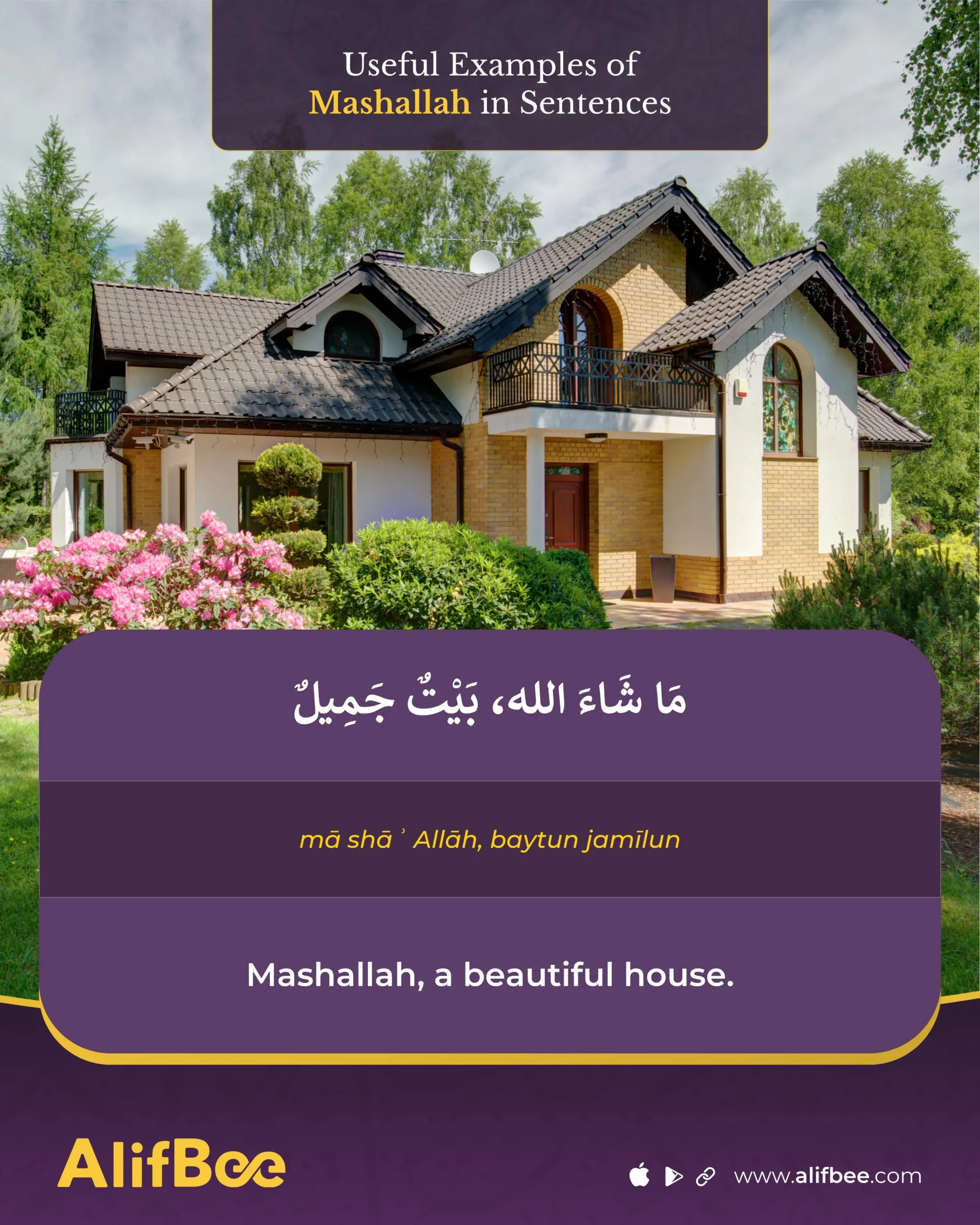
Mashallah, a beautiful house. |
mā shāʾ Allāh, baytun jamīlun |
مَا شَاءَ الله، بَيْتٌ جَمِيلٌ |
|
|
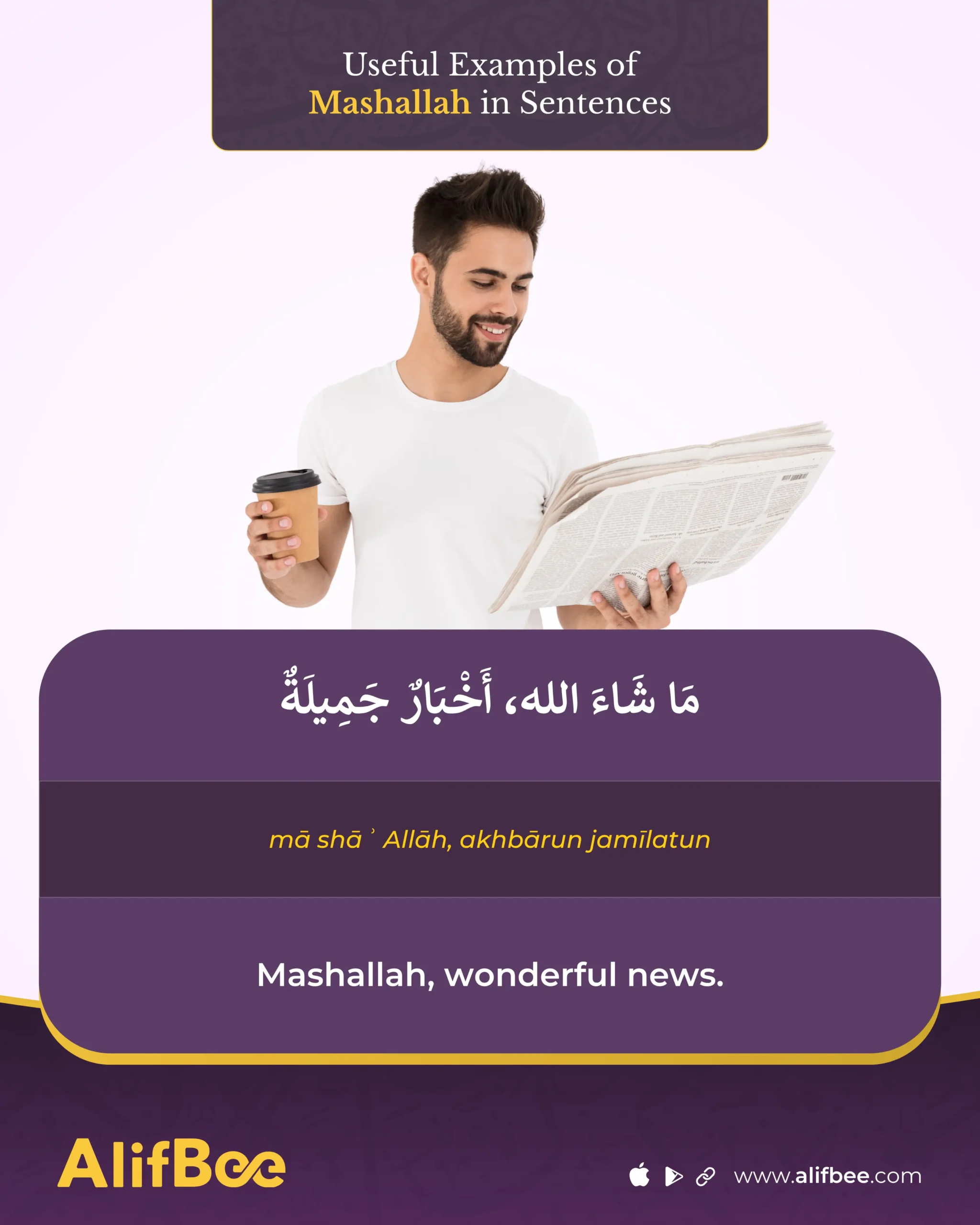
Mashallah, wonderful news. |
mā shāʾ Allāh, akhbārun jamīlatun |
مَا شَاءَ الله، أَخْبَارٌ جَمِيلَةٌ |
|
|
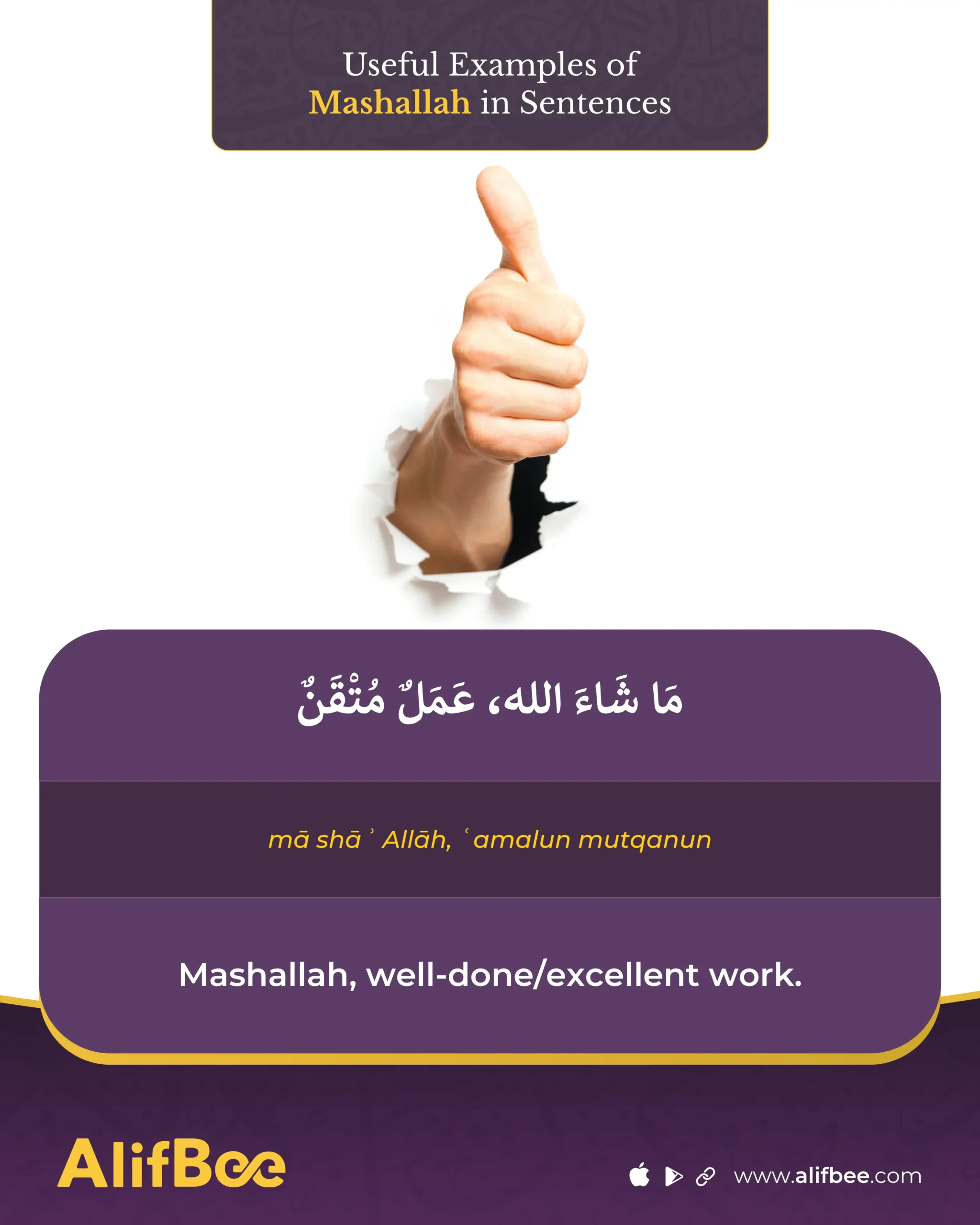
Mashallah, well-done/excellent work. |
mā shāʾ Allāh, ʿamalun mutqanun |
مَا شَاءَ الله، عَمَلٌ مُتْقَنٌ |
|
Review
Final word
Mashallah is a short phrase with deep meaning. It is more than just saying “wow” or expressing admiration. It acknowledges that something good has happened or exists by the will of Allah, making it a beautiful way to show appreciation and respect.
It is one of the most useful expressions in everyday Arabic, allowing you to compliment someone, celebrate good news, and recognize blessings in a natural and respectful way.
The next time someone shares good news, shows you something beautiful, or tells you about a blessing in their life, say Mashallah. You can also use the other expressions you learned in this guide to respond appropriately and with confidence.
Learn with AlifBee
Want to practice phrases like Mashallah, Inshallah, and Alhamdulillah with audio, examples, and guided lessons? Explore everyday Arabic inside the AlifBee app and keep building useful phrases one step at a time. You can also continue with Arabic greetings and replies on the AlifBee Blog.
FAQs
What does Mashallah mean in Arabic?
Mashallah means “what God has willed.” In everyday use, it expresses admiration, appreciation, joy, or praise when you see something good or beautiful.
Is Mashallah one word or three words?
In Arabic, it is three words: مَا شَاءَ الله. In English transliteration, it is often written as one word because borrowed phrases are usually simplified in the Latin script.
What is the difference between Mashallah and Inshallah?
Mashallah is used for something good that has happened or already exists. Inshallah is used for something you hope will happen in the future.
What is the difference between Mashallah and Alhamdulillah?
Mashallah expresses admiration or praise for something good. Alhamdulillah expresses gratitude to God, often after good news, relief, or the completion of an action.
What does Mashallah Tabarakallah mean?
Mashallah Tabarakallah combines admiration with blessing. It roughly means “what God has willed, blessed is God,” and is often said when praising something beautiful or admirable.