
Written by Dania Ghraoui, a translator and language teacher with 10 years of experience.
At A Glance: Eid Takbeer in Arabic refers to the phrases that glorify Allah during the Muslim holidays of Eid Al-Fitr and Eid Al-Adha. They center on saying اللهُ أَكْبَرُ (Allāhu akbar), meaning “Allah is the Greatest.”
You may hear Eid Takbeer in Arabic in mosques, on the way to Eid prayer, or in recordings before and during Eid.
These words are beautiful, but they may be difficult for Arabic learners to follow at first. This guide gives you the full Arabic text, pronunciation, and simple notes on when Muslims say it.
Before you go further!
Read other articles to learn essential Eid greetings in Arabic for Eid Al-Fitr and Eid Al-Adha, Adhan words in Arabic, and common Arabic Islamic phrases.
What Is the Eid Takbeer?
Eid Takbeer, or Takbeerat al-Eid, refers to the phrases Muslims repeat on Eid al-Fitr and Eid al-Adha to glorify Allah. These takbeers are connected to two important moments in the Islamic calendar:
- In Eid al-Fitr, following the fasting days of Ramadan,
- In Eid al-Adha, during the days of Hajj and sacrifice.
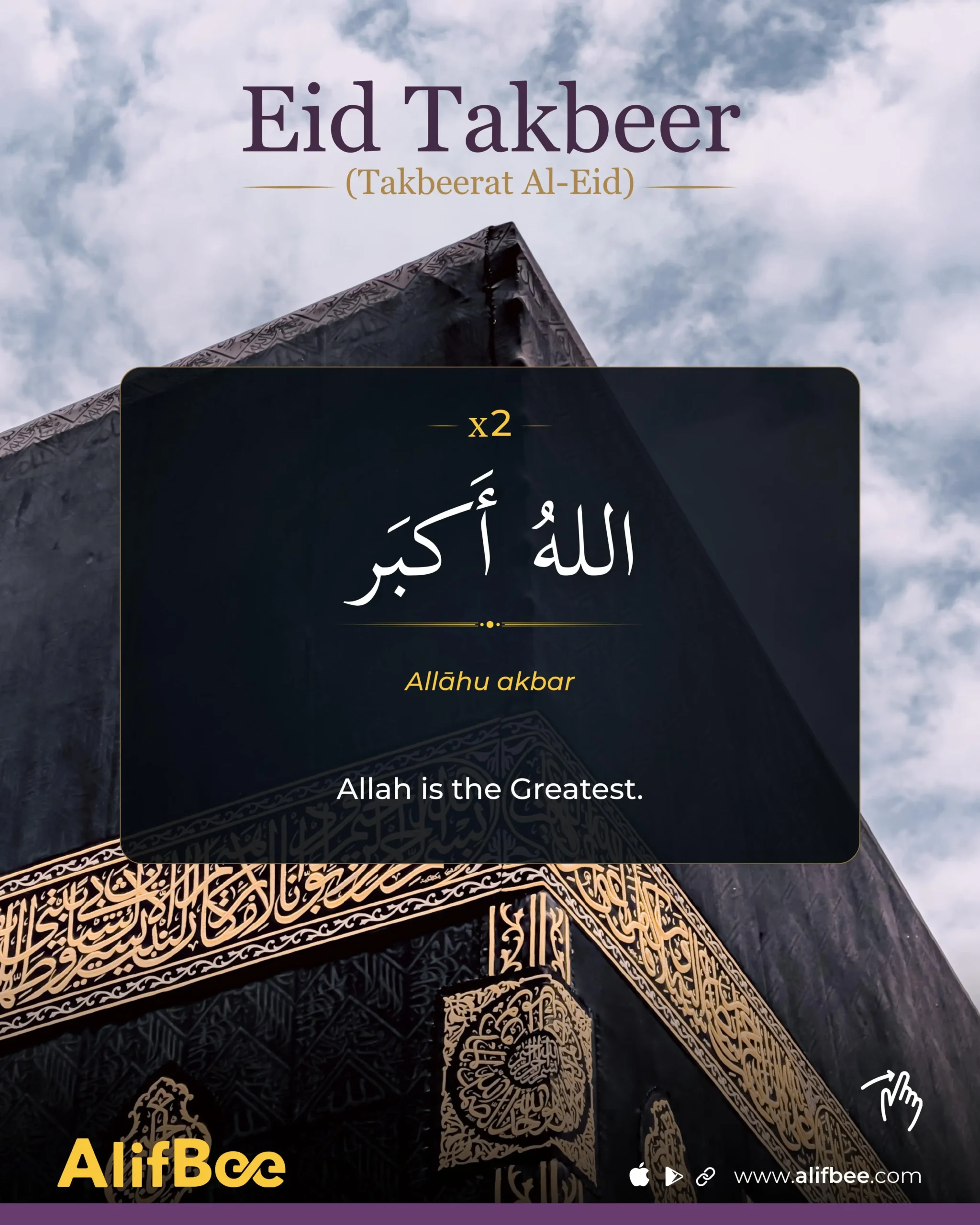
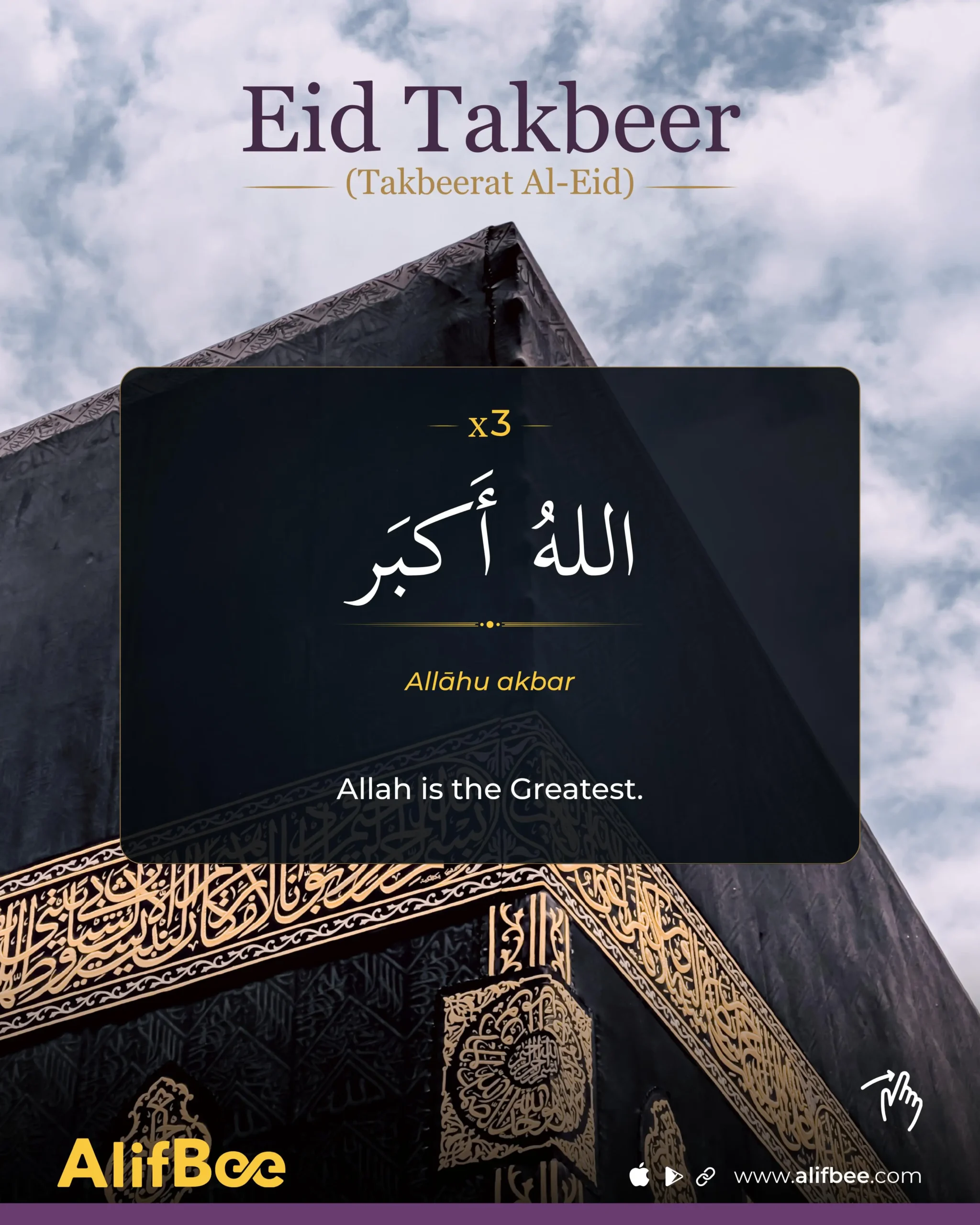
The main phrase in Eid takbeer is الله أكبر (Allāhu akbar), which means “Allah is the Greatest.”
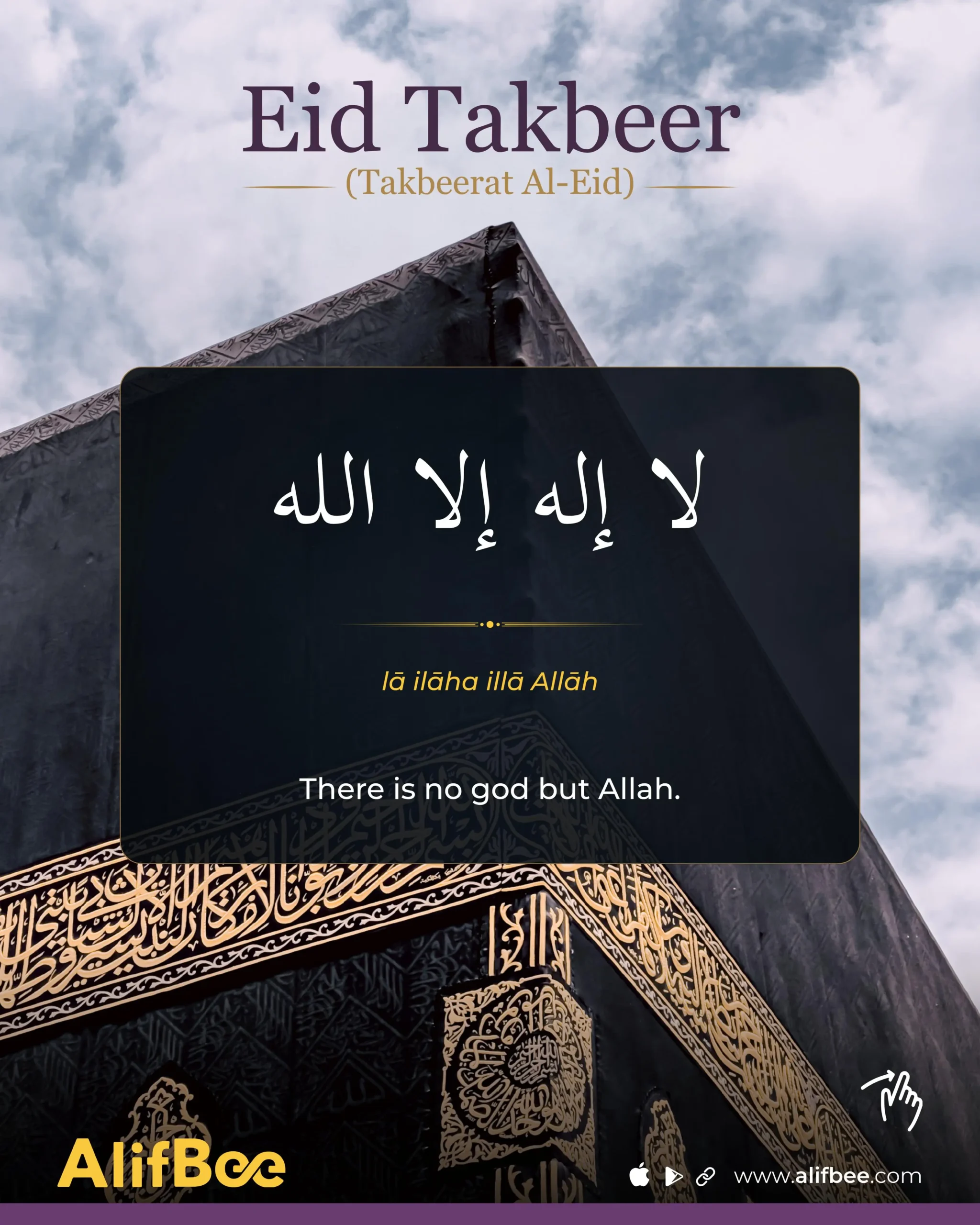
The Eid Takbeer also includes Tahlil: لَا إِلٰهَ إِلَّا اللهُ (lā ilāha illā Allāh), meaning “there is no deity worthy of worship except Allah.” According to Hadith, Tahlil is part of one of the best duas of the Day of Arafah, during Hajj.
The full takbeerat, which are often recited during Eid prayer, include other phrases that remind us of how Allah fulfilled His promise to the Prophet Muhammad and granted him victory.
Eid Takbeer also affirms the oneness of Allah and sends Salawat (prayers) to the Prophet, his companions, wives, and descendants. You can read the full text of Eid takbeer below.
Eid Takbeer in the Quran: Proclaiming the Greatness of Allah
The Quran mentions glorifying Allah after completing Ramadan and also connects proclaiming Allah’s greatness with sacrifice and guidance.
… so that you may proclaim the greatness of Allah for what He has guided you to, and give good news to the good-doers.
… لِتُكَبِّرُوا۟ ٱللَّهَ عَلَىٰ مَا هَدَىٰكُمْ ۗ وَبَشِّرِ ٱلْمُحْسِنِينَ ٣٧
— Dr. Mustafa Khattab, The Clear Quran
…, so that you may complete the prescribed period and proclaim the greatness of Allah for guiding you, and perhaps you will be grateful.
… وَلِتُكْمِلُوا۟ ٱلْعِدَّةَ وَلِتُكَبِّرُوا۟ ٱللَّهَ عَلَىٰ مَا هَدَىٰكُمْ وَلَعَلَّكُمْ تَشْكُرُونَ ١٨٥
— Dr. Mustafa Khattab, The Clear Quran
Why Learn Eid Takbeer in Arabic?
Learning Eid Takbeer in Arabic helps you:
- Join in glorifying and praising Allah for His Guidance
- Participate more confidently in the Eid atmosphere
- Teach Eid Takbeer to your kids so they can feel more involved in the occasion
- Understand Takbeer al-Tashreeq, which is considered wājib in the Hanafi school during Eid al-Adha
- Build familiarity with Islamic Arabic through powerful expressions such as أَكْبَر (akbar, greatest), الحَمْد (al-ḥamd, praise), and لَا إِلٰهَ إِلَّا الله (lā ilāha illā Allāh, there is no god but Allah)
What Does Allahu Akbar Mean?
Allāhu akbar means Allah is the Greatest. It reminds us that Allah is greater than everything else: greater than fear, worry, hardship, success, wealth, and everything in this world.
Saying Allahu Akbar is not only part of Eid Takbeer; it is part of everyday Dhikr (remembrance of Allah), so we can face life’s hardships with this important fact in mind.
Is Eid Takbeer Mandatory?
In general, reciting the Eid Takbeer is a highly recommended act of worship and one of the clear signs of Eid.
Prophet Muhammad (PBUH) mentions in Hadith that takbeer is an important act in the great ten days of Dhul Hijjah, where we glorify Allah by repeating takbir, tahlil, and praise to Allah.
In Hadith, Ibn Umar reported: The Prophet, peace and blessings be upon him, said, “There are no days greater and more beloved to Allah than these ten days of Dhul Hijjah, so increase in them your declaration of the oneness of Allah, your exaltation of Him, and your praise of Him.”
Source: Musnad Aḥmad 5446
Grade: Sahih (authentic) according to Ahmad Shakir
عَنِ ابْنِ عُمَرَ عَنْ النَّبِيِّ صَلَّى اللَّهُ عَلَيْهِ وَسَلَّمَ قَالَ مَا مِنْ أَيَّامٍ أَعْظَمُ عِنْدَ اللَّهِ وَلَا أَحَبُّ إِلَيْهِ مِنْ الْعَمَلِ فِيهِنَّ مِنْ هَذِهِ الْأَيَّامِ الْعَشْرِ فَأَكْثِرُوا فِيهِنَّ مِنَ التَّهْلِيلِ وَالتَّكْبِيرِ وَالتَّحْمِيدِ
Eid Takbeer in Arabic
This is the main form of the Eid Takbeer, repeated after obligatory prayers, at home, and on the way to Eid prayer.
| Meaning | Pronunciation | Arabic | |
|---|---|---|---|
|
Allah is the Greatest. Allah is the Greatest. Allah is the Greatest. |
Allāhu akbar Allāhu akbar Allāhu akbar |
اللهُ أَكبَر اللهُ أَكبَر اللهُ أَكبَر |
|
|
There is no god but Allah. |
lā ilāha illā Allāh |
لا إله إلا الله |
|
|
Allah is the Greatest. Allah is the Greatest. |
Allāhu akbar Allāhu akbar |
اللهُ أَكبَر اللهُ أَكبَر |
|
|
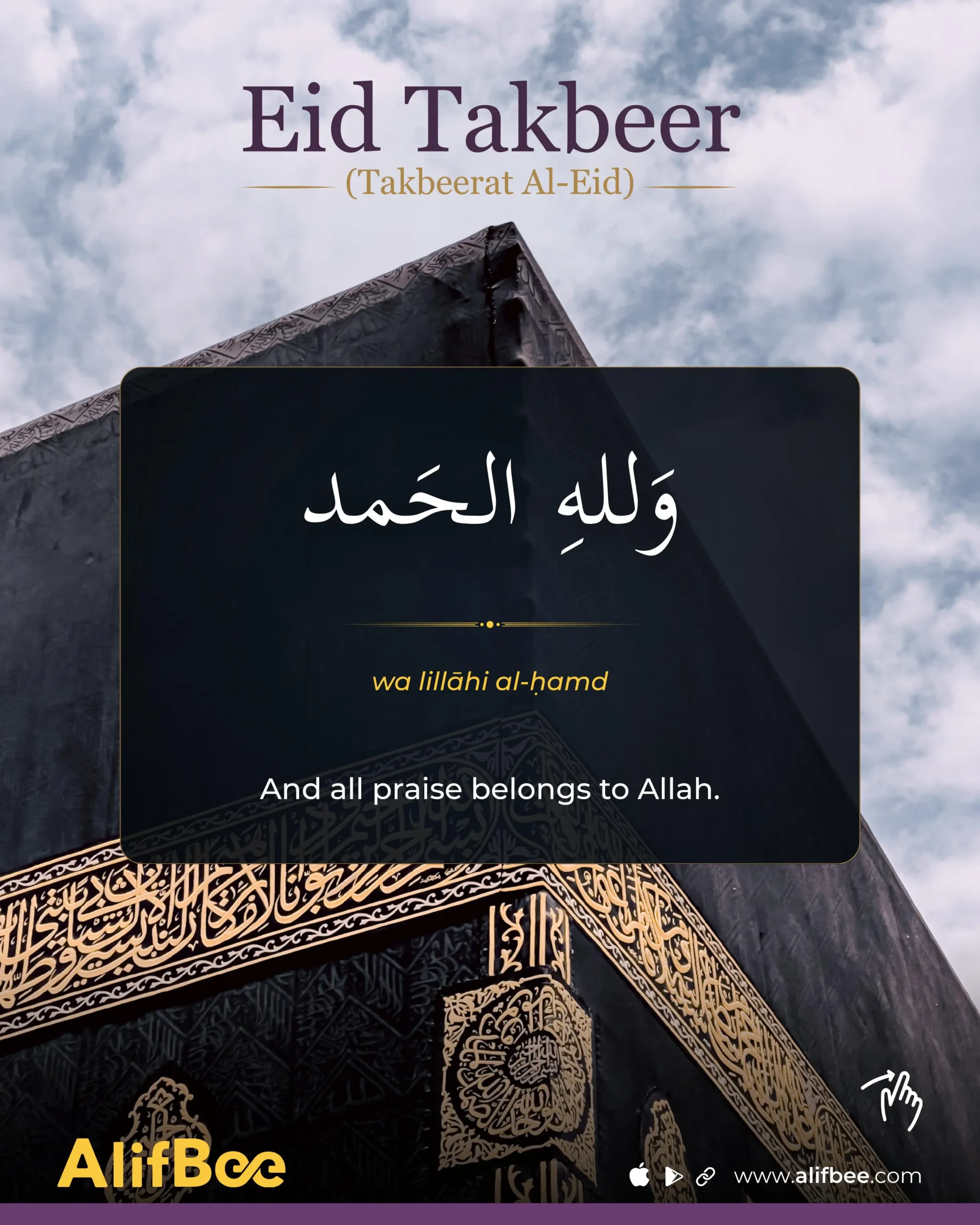
And all praise belongs to Allah. |
wa lillāhi al-ḥamd |
وَللهِ الحَمد |
|
You can learn it phrase by phrase. It is very easy to learn since it contains no difficult letters or sounds.
When Is Eid Takbeer Recited?
Eid Takbeer is generally recited on all Eid days, but the timing differs between Eid al-Fitr and Eid al-Adha.
For Eid al-Fitr, it is recited from the night before Eid until the Eid prayer begins. It is repeated at home, in the mosque, or on the way to the Eid prayer. For Eid al-Adha, it is recited during the first days of Dhul-Hijjah and the days of Eid.
As for the full Eid Takbeer, you hear it in some countries recited from mosque minarets during the Eid prayer in the early morning.
Takbeer is also repeating “Allahu Akbar”, the Dhikr, which recurs through the ten days of Dhul Hijjah that precede Eid Al-Adha.
What is Takbeer al-Tashreeq?
There is also Takbeer al-Tashreeq in Eid al-Adha, another name for the takbeer recited after obligatory prayers on specific days of Dhul-Hijjah. In the Hanafi school, Takbeer al-Tashreeq is considered wājib (necessary/obligatory) after the obligatory prayers from Fajr on the 9th of Dhul-Hijjah until ʿAsr on the 13th of Dhul-Hijjah.
Eid Takbeer Time Summary
| Eid Al-Fitr | Eid Al-Adha | Takbeer Tashreeq | |
|---|---|---|---|
|
When it starts |
From sunset on the last day of Ramadan, once Eid is confirmed |
From the first day of Dhul-Hijjah, according to many scholars |
Common Hanafi timing: after Fajr prayer on the 9th of Dhul-Hijjah, the Day of Arafah |
|
When it ends |
When the Eid prayer begins, or when the imam comes out to lead the prayer |
Until sunset on the 13th of Dhul-Hijjah, the last Day of Tashreeq |
Common Hanafi timing: after Asr prayer on the 13th of Dhul-Hijjah |
|
When it is recited |
At home, in the mosque, on the way to Eid prayer, and before the Eid prayer |
Throughout the days: at home, in the mosque, outside, on the way to Eid prayer, and during the Days of Tashreeq |
Immediately after each obligatory prayer |
Listen to Eid Takbeer (Takbeerat Al-Eid)
Full Text of Eid Takbeer in Arabic
This is the complete text of Eid takbeer. Beginner learners of Arabic are not required to learn or repeat all of it, but it is a good start to listen to and understand its beautiful meaning.
| Meaning | Pronunciation | Arabic | |
|---|---|---|---|
|
Allah is the Greatest. |
Allāhu akbar |
اللهُ أَكبَر |
|
|
Allah is the Greatest. |
Allāhu akbar |
اللهُ أَكبَر |
|
|
Allah is the Greatest. |
Allāhu akbar |
اللهُ أَكبَر |
|
|
There is no god but Allah. |
lā ilāha illā Allāh |
لا إله إلا الله |
|
|
Allah is the Greatest. |
Allāhu akbar |
اللهُ أَكبر |
|
|
Allah is the Greatest. |
Allāhu akbar |
اللهُ أَكبَر |
|
|
And all praise belongs to Allah. |
wa lillāhi al-ḥamd |
وَللهِ الحَمد |
|
|
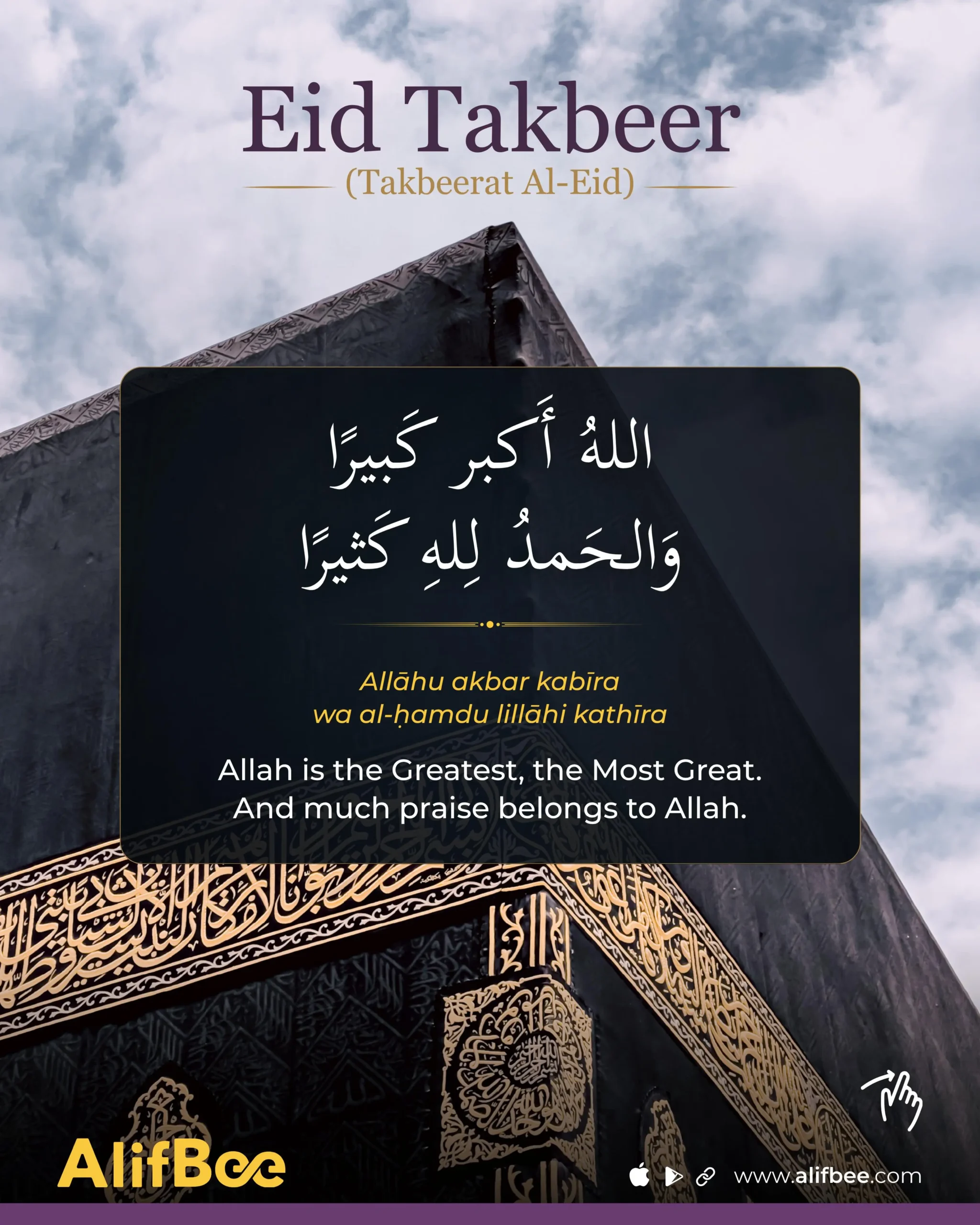
Allah is the Greatest, the Most Great. |
Allāhu akbar kabīra |
اللهُ أَكبر كَبيرًا |
|
|
And much praise belongs to Allah. |
wa al-ḥamdu lillāhi kathīra |
وَالحَمدُ لِلهِ كَثيرًا |
|
|
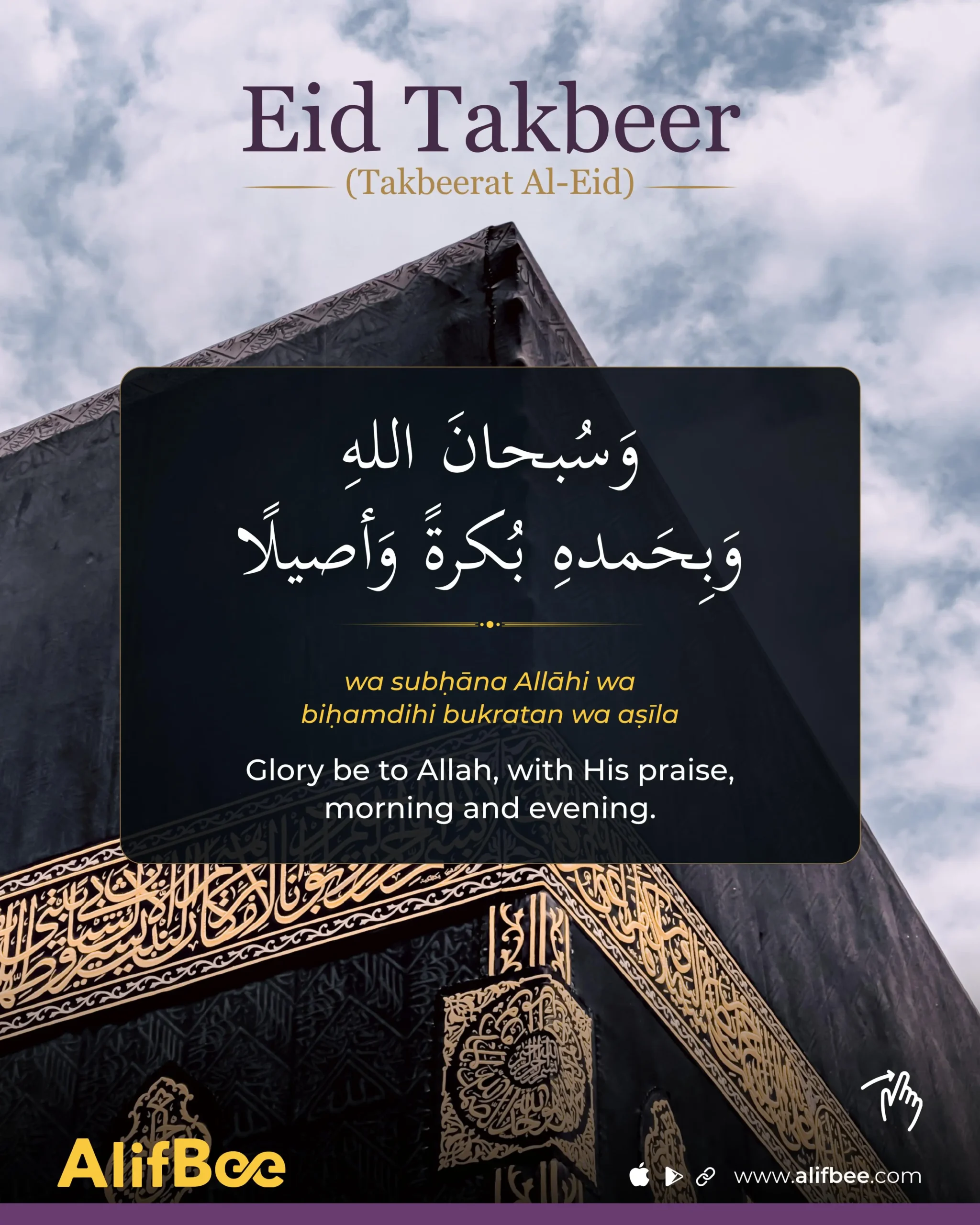
Glory be to Allah, with His praise, morning and evening. |
wa subḥāna Allāhi wa biḥamdihi bukratan wa aṣīla |
وَسُبحانَ اللهِ وَبِحَمدهِ بُكرةً وَأصيلًا |
|
|
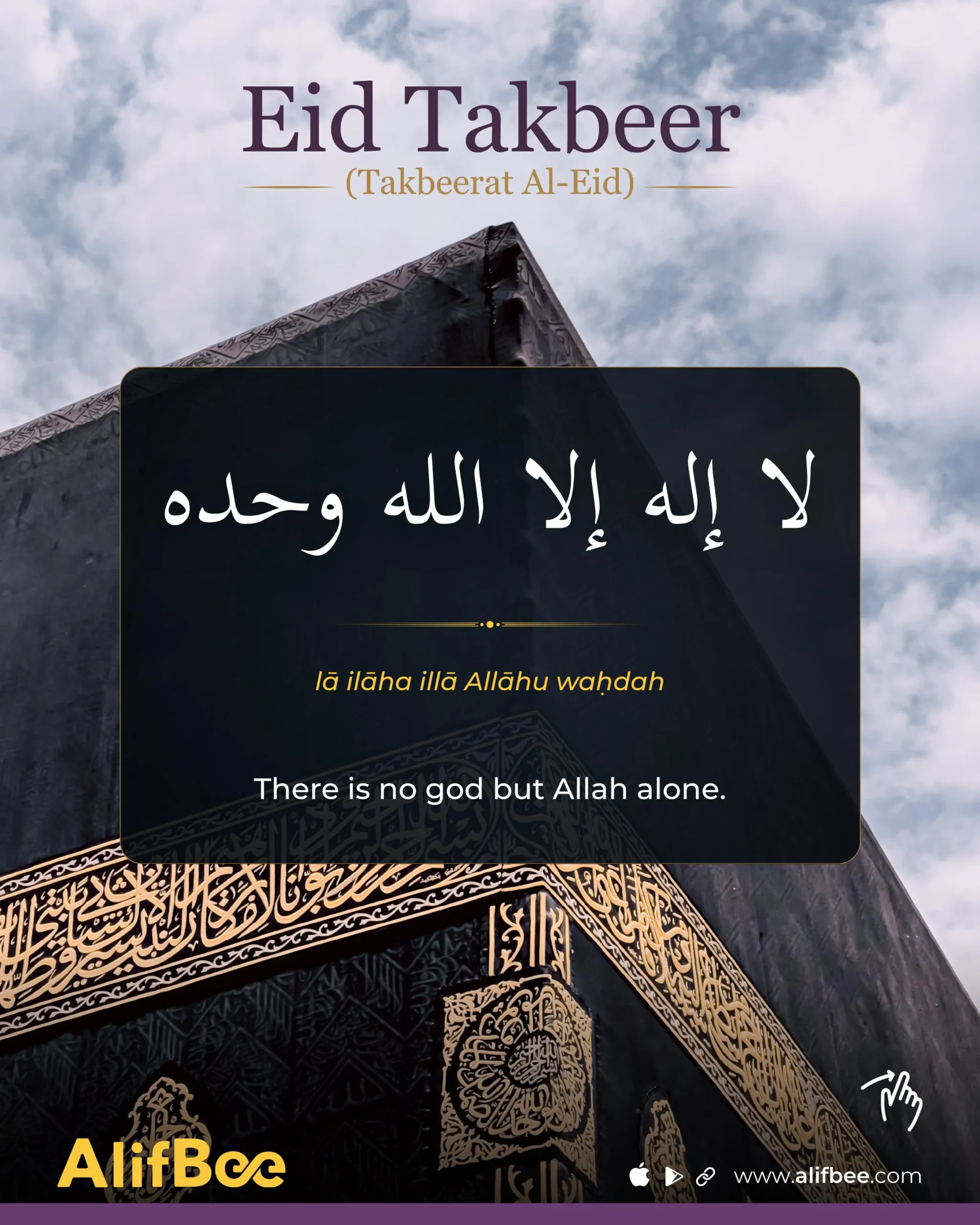
There is no god but Allah alone. |
lā ilāha illā Allāhu waḥdah |
لا إله إلا الله وحده |
|
|
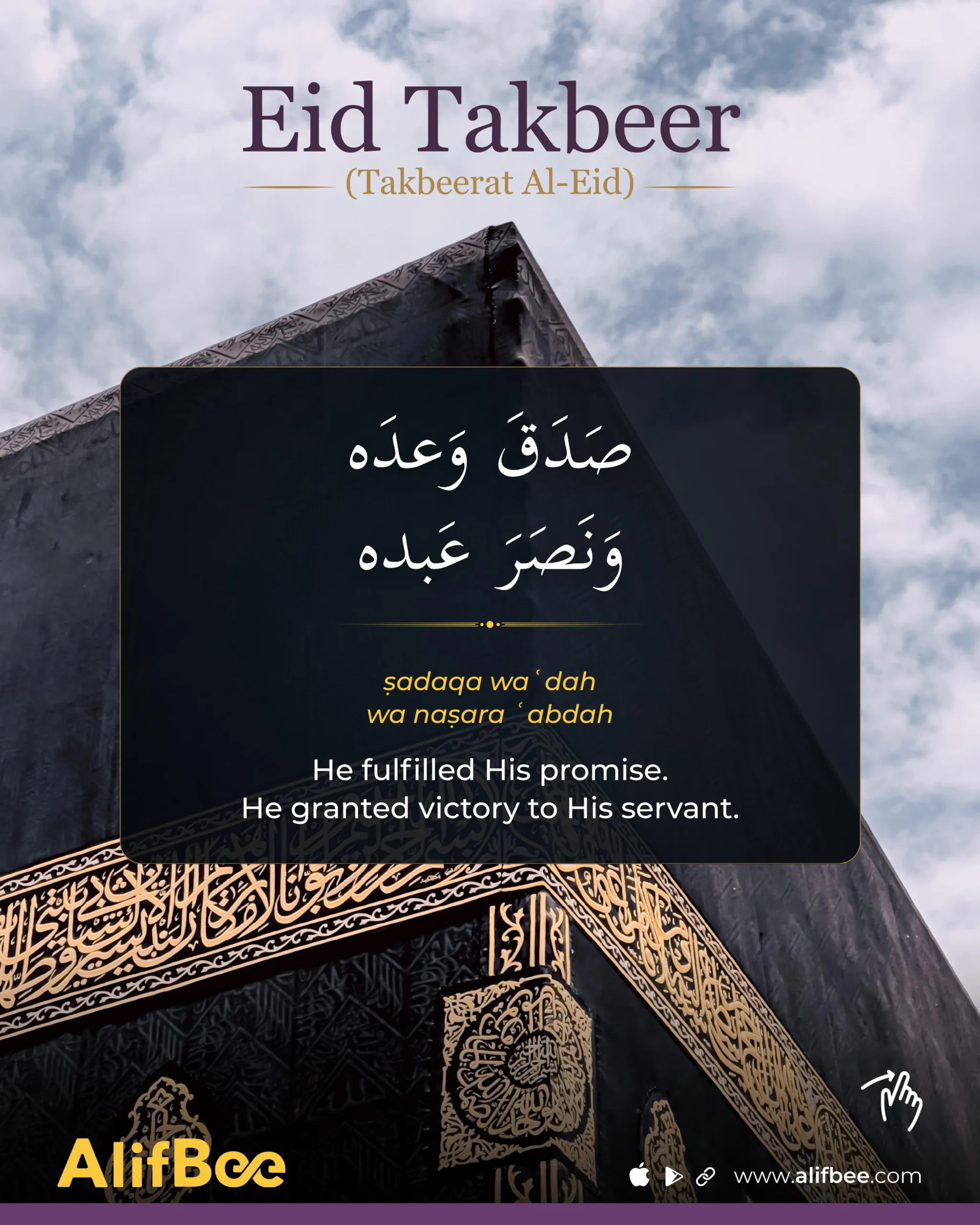
He fulfilled His promise. |
ṣadaqa waʿdah |
صَدَقَ وَعدَه |
|
|
He granted victory to His servant. |
wa naṣara ʿabdah |
وَنَصَرَ عَبده |
|
|
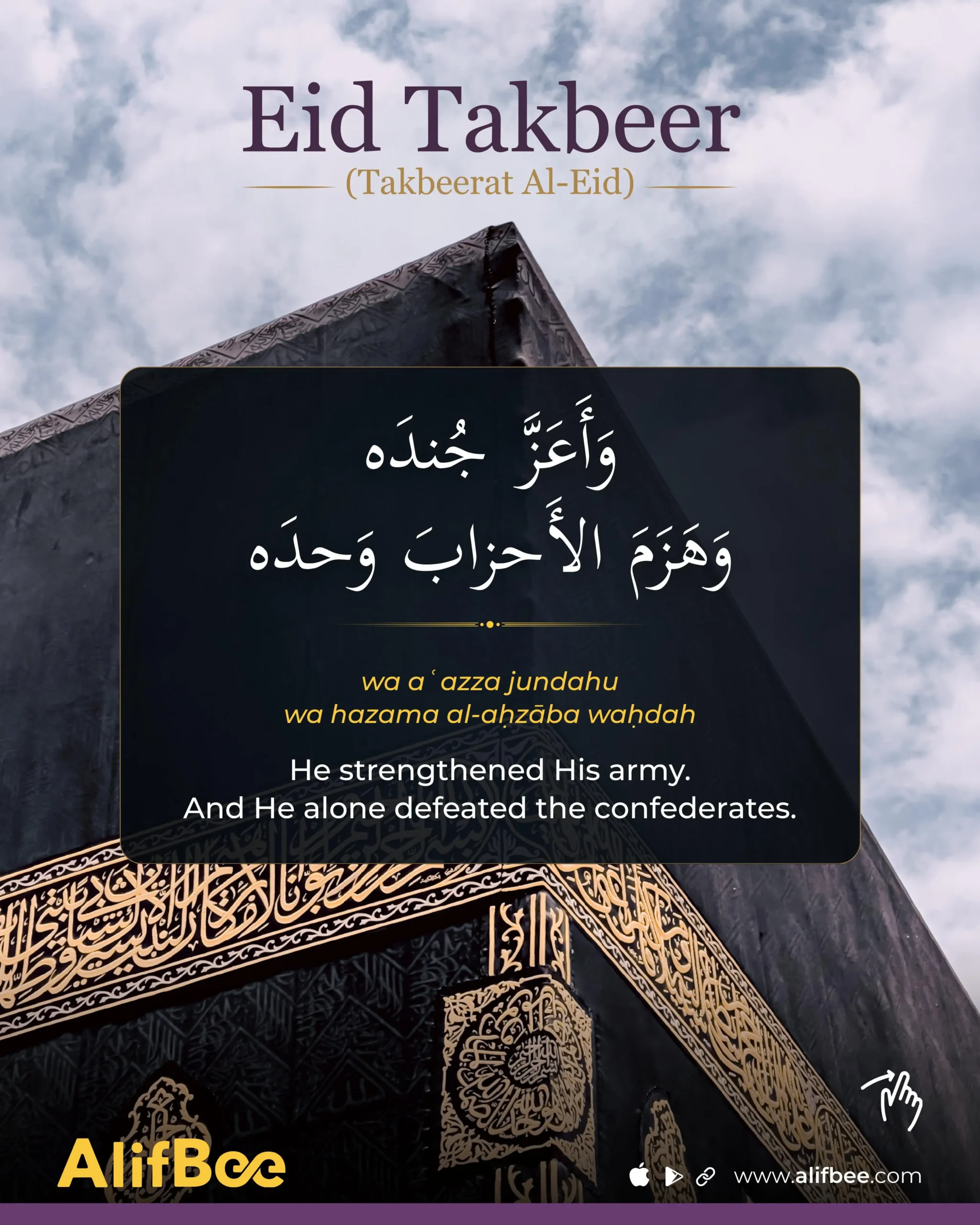
He strengthened His army. |
wa aʿazza jundahu |
وَأَعَزَّ جُندَه |
|
|
And He alone defeated the confederates. |
wa hazama al-aḥzāba waḥdah |
وَهَزَمَ الأَحزابَ وَحدَه |
|
|
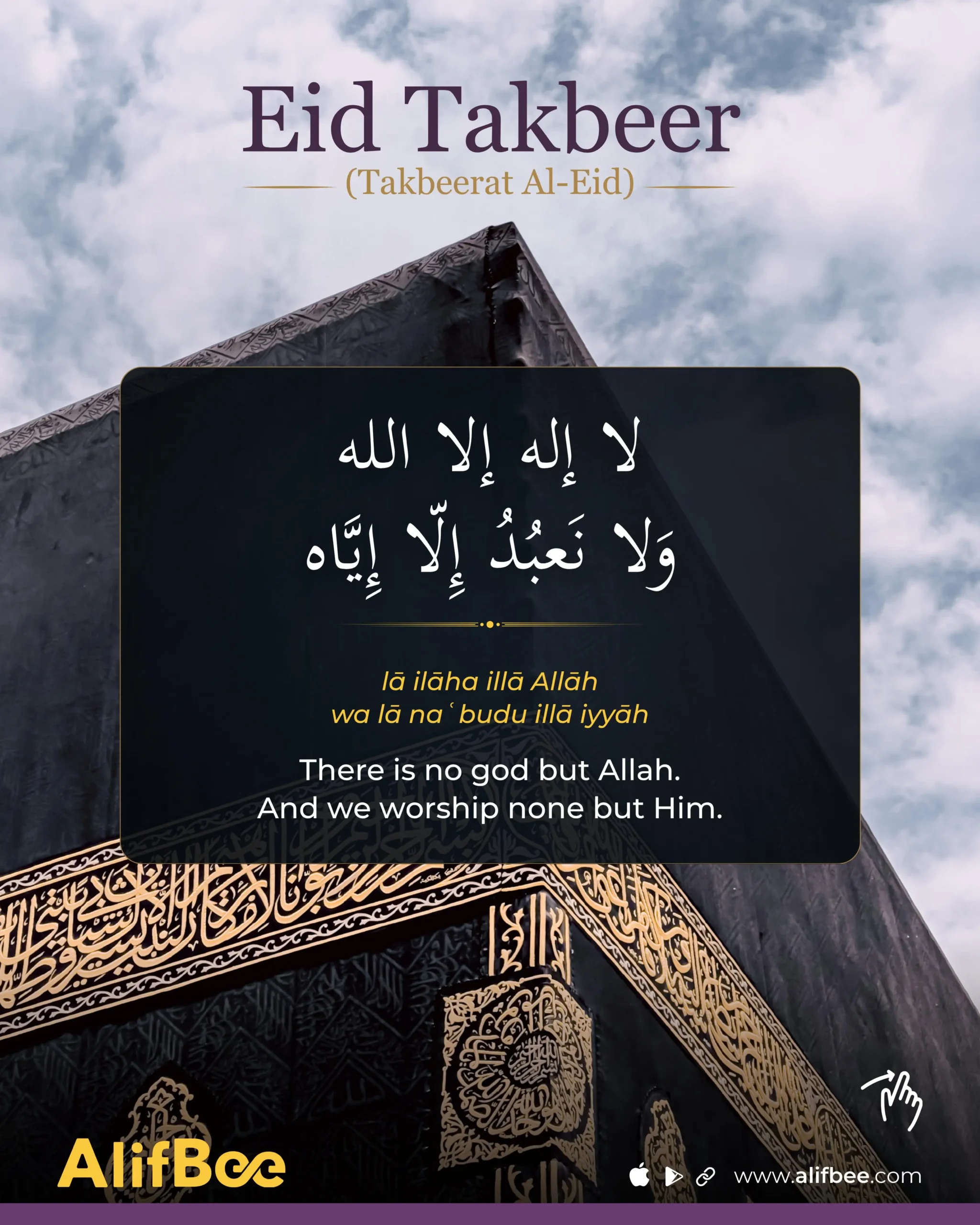
There is no god but Allah. |
lā ilāha illā Allāh |
لا إله إلا الله |
|
|
And we worship none but Him. |
wa lā naʿbudu illā iyyāh |
وَلا نَعبُدُ إِلّا إِيَّاه |
|
|
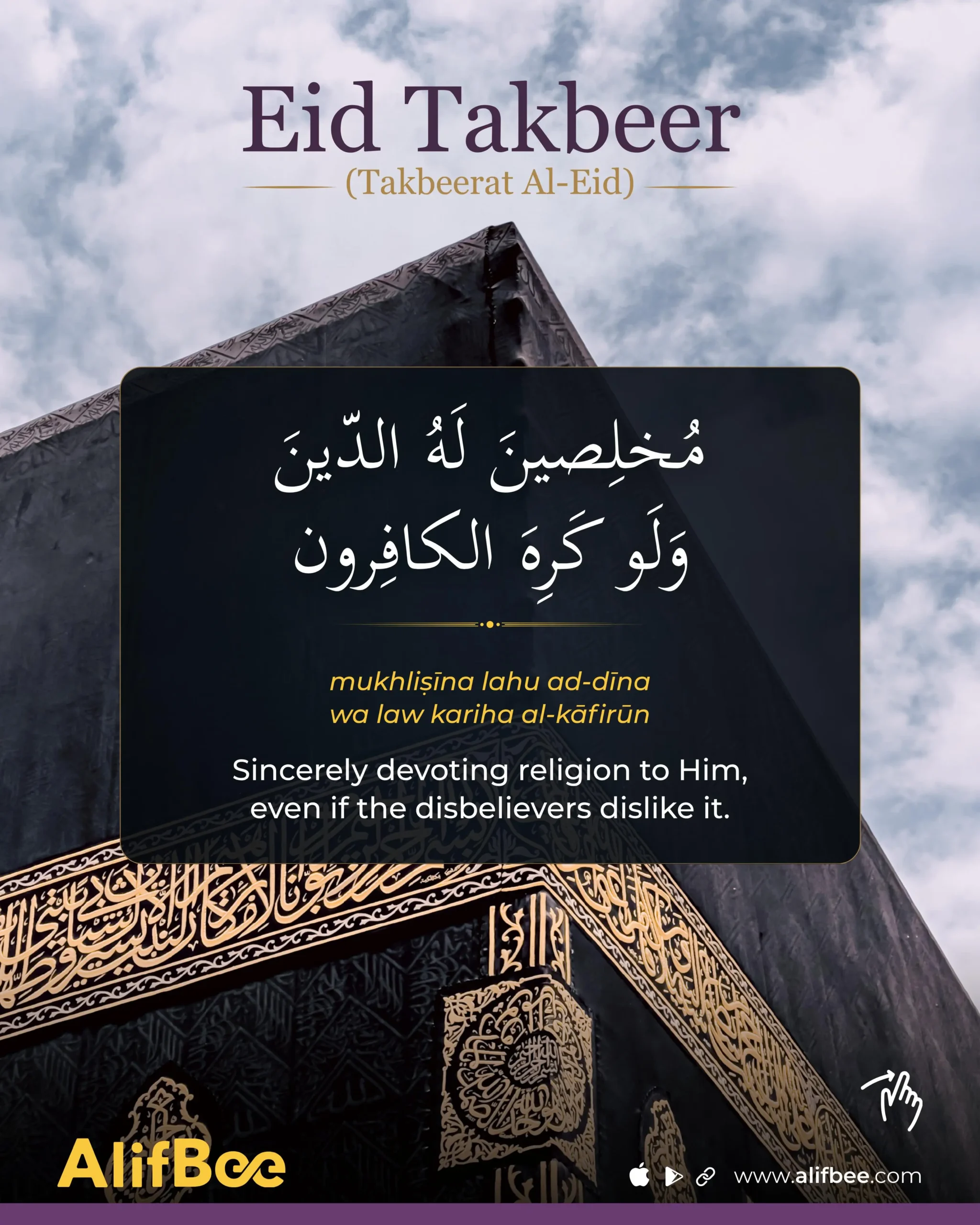
Sincerely devoting religion to Him, even if the disbelievers dislike it. |
mukhliṣīna lahu ad-dīna wa law kariha al-kāfirūn |
مُخلِصينَ لَهُ الدّينَ وَلَو كَرِهَ الكافِرون |
|
|
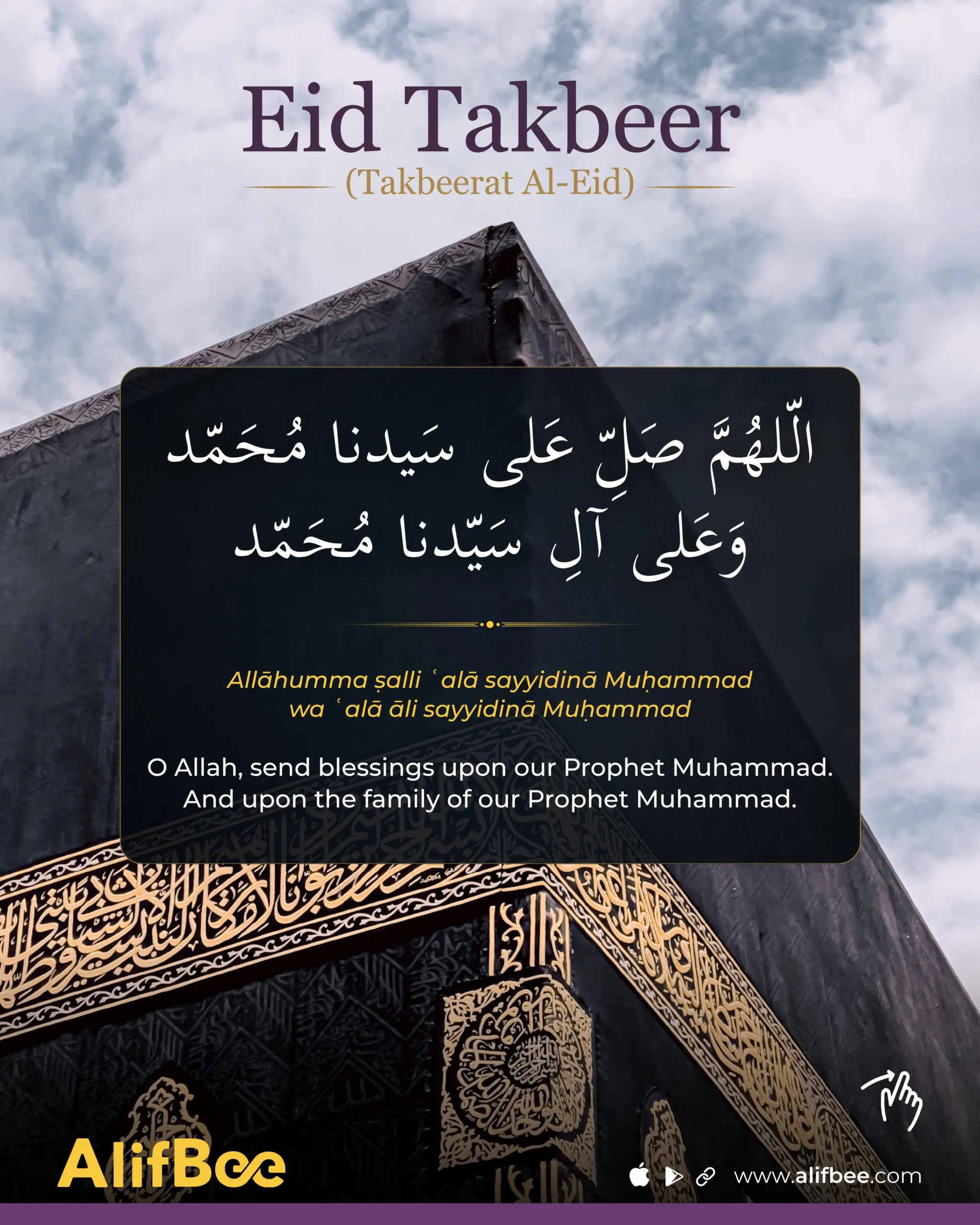
O Allah, send blessings upon our Prophet Muhammad. |
Allāhumma ṣalli ʿalā sayyidinā Muḥammad |
الّلهُمَّ صَلِّ عَلى سَيدنا مُحَمّد |
|
|
And upon the family of our Prophet Muhammad. |
wa ʿalā āli sayyidinā Muḥammad |
وَعَلى آلِ سَيّدنا مُحَمّد |
|
|
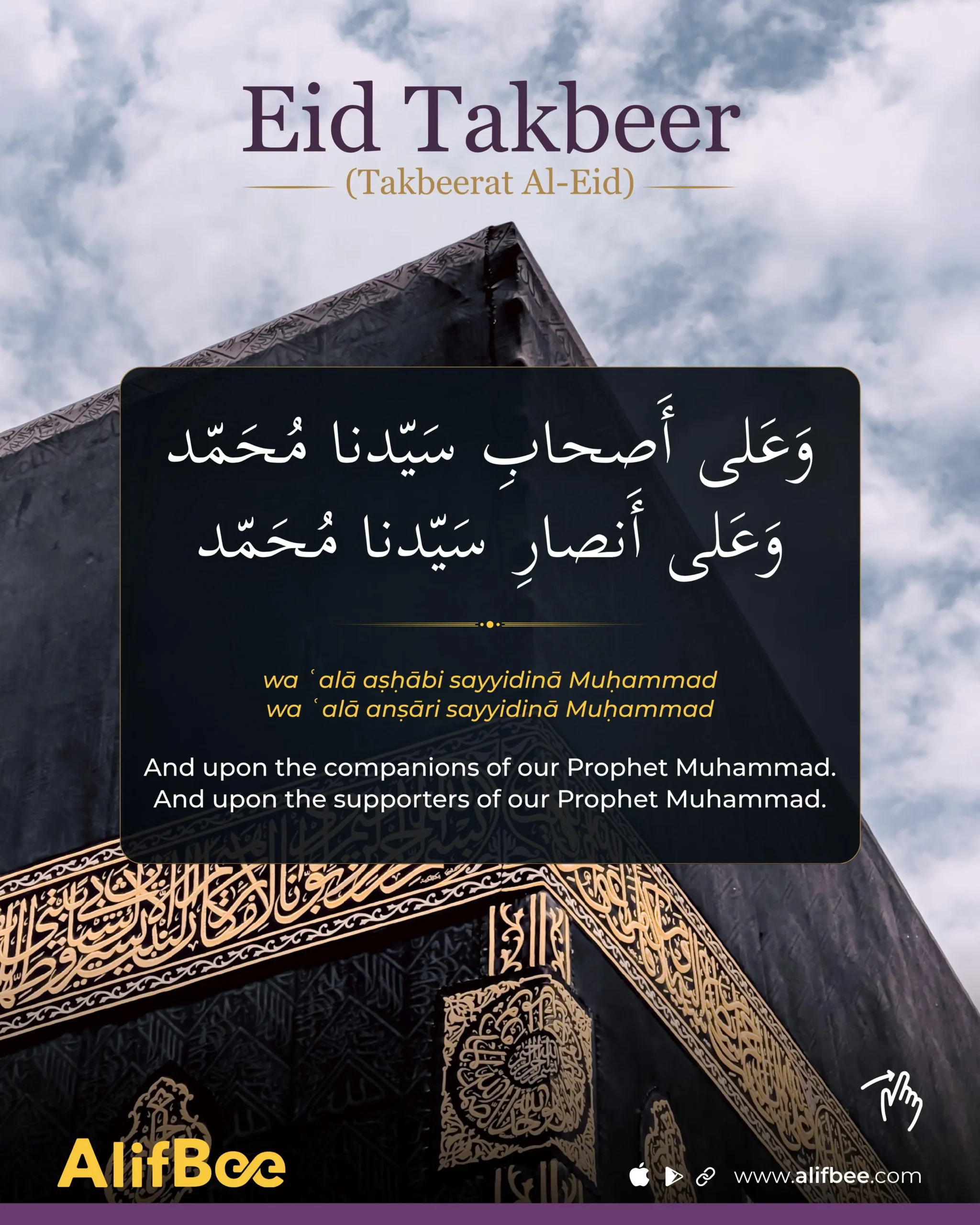
And upon the companions of our Prophet Muhammad. |
wa ʿalā aṣḥābi sayyidinā Muḥammad |
وَعَلى أَصحابِ سَيّدنا مُحَمّد |
|
|
And upon the supporters of our Prophet Muhammad. |
wa ʿalā anṣāri sayyidinā Muḥammad |
وَعَلى أَنصارِ سَيّدنا مُحَمّد |
|
|
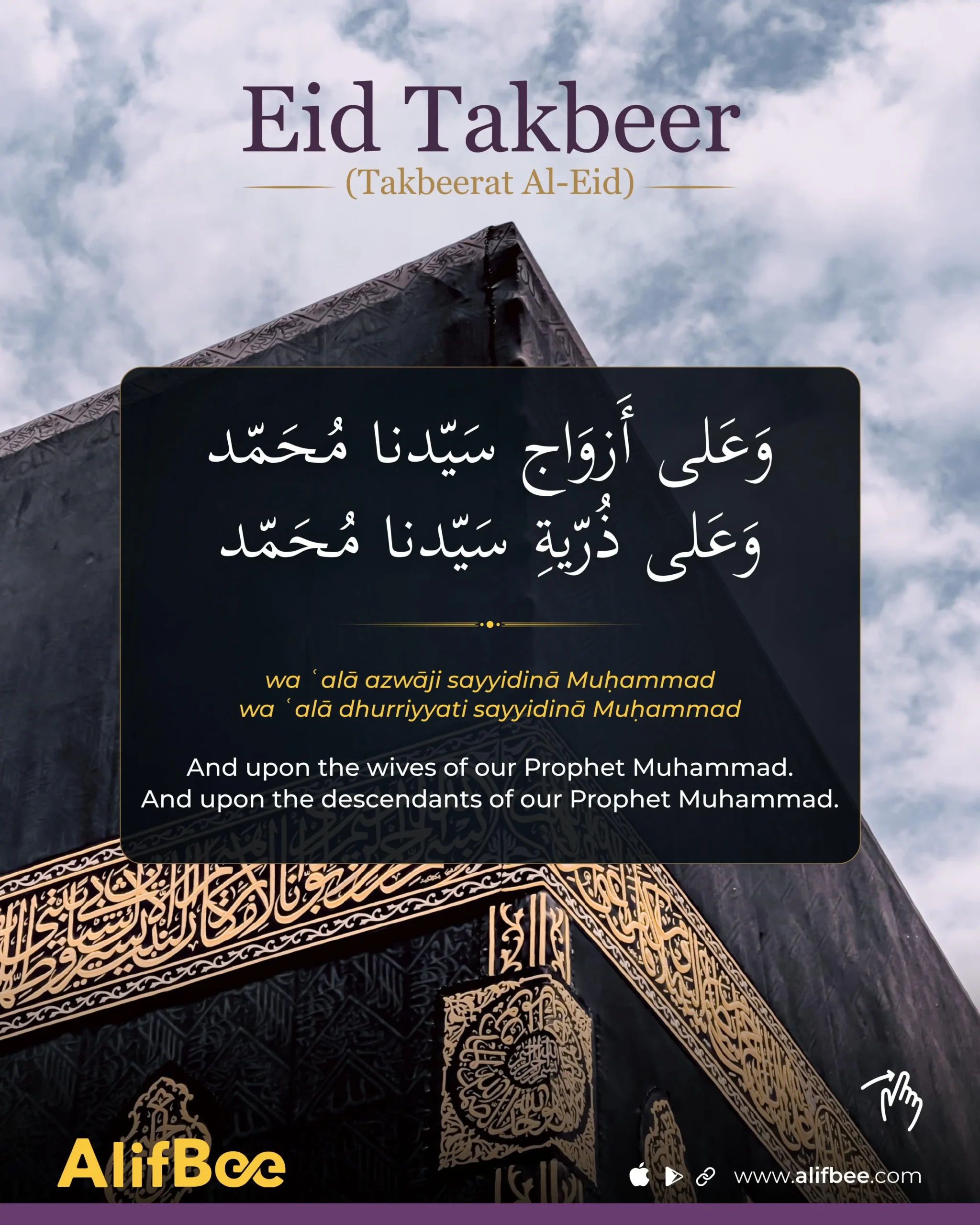
And upon the wives of our Prophet Muhammad. |
wa ʿalā azwāji sayyidinā Muḥammad |
وَعَلى أَزوَاج سَيّدنا مُحَمّد |
|
|
And upon the descendants of our Prophet Muhammad. |
wa ʿalā dhurriyyati sayyidinā Muḥammad |
وَعَلى ذُرّيةِ سَيّدنا مُحَمّد |
|
|
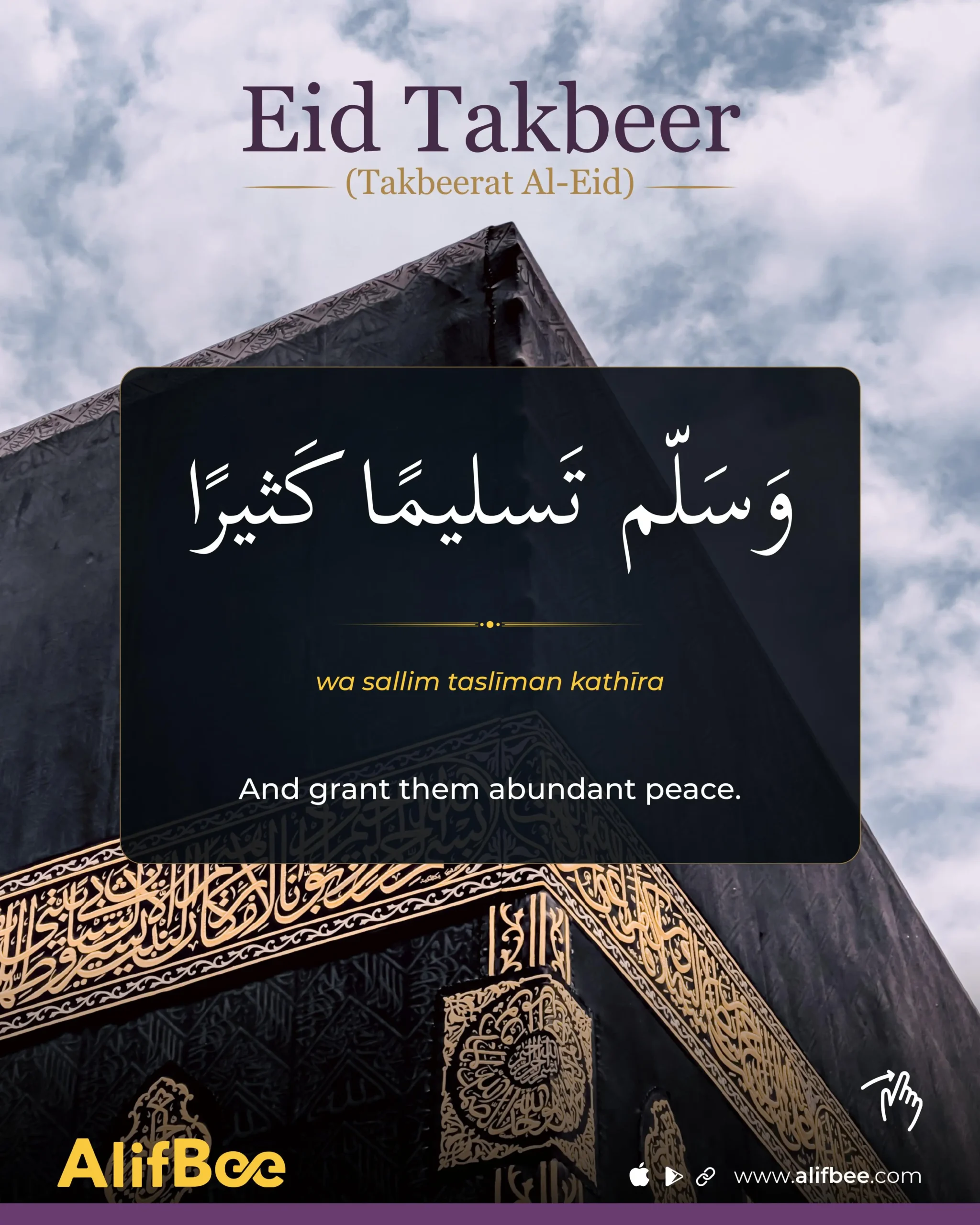
And grant them abundant peace. |
wa sallim taslīman kathīra |
وَسَلّم تَسليمًا كَثيرًا |
|
|
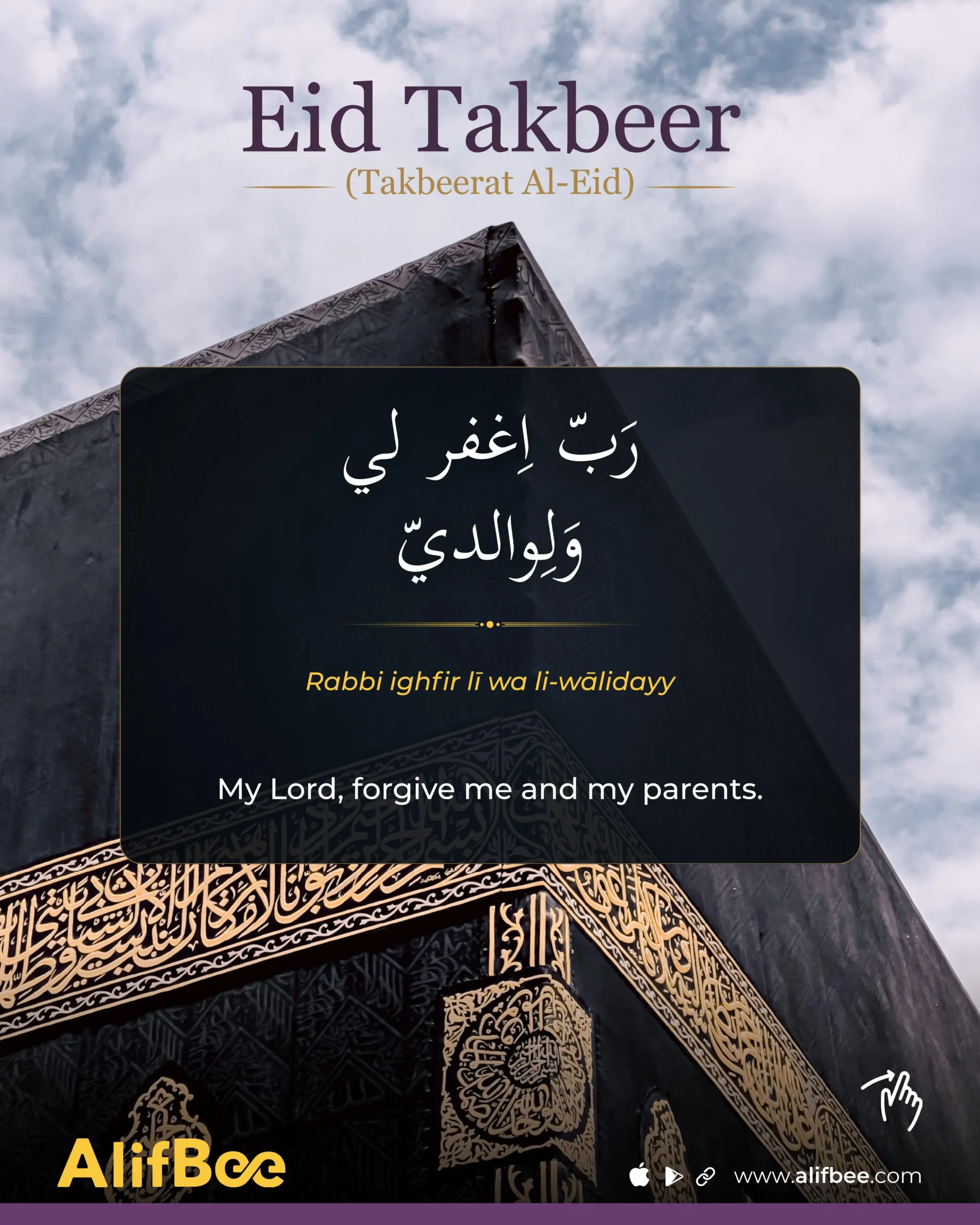
My Lord, forgive me and my parents. |
Rabbi ighfir lī wa li-wālidayy |
رَبّ اِغفر لي وَلِوالديّ |
|
|
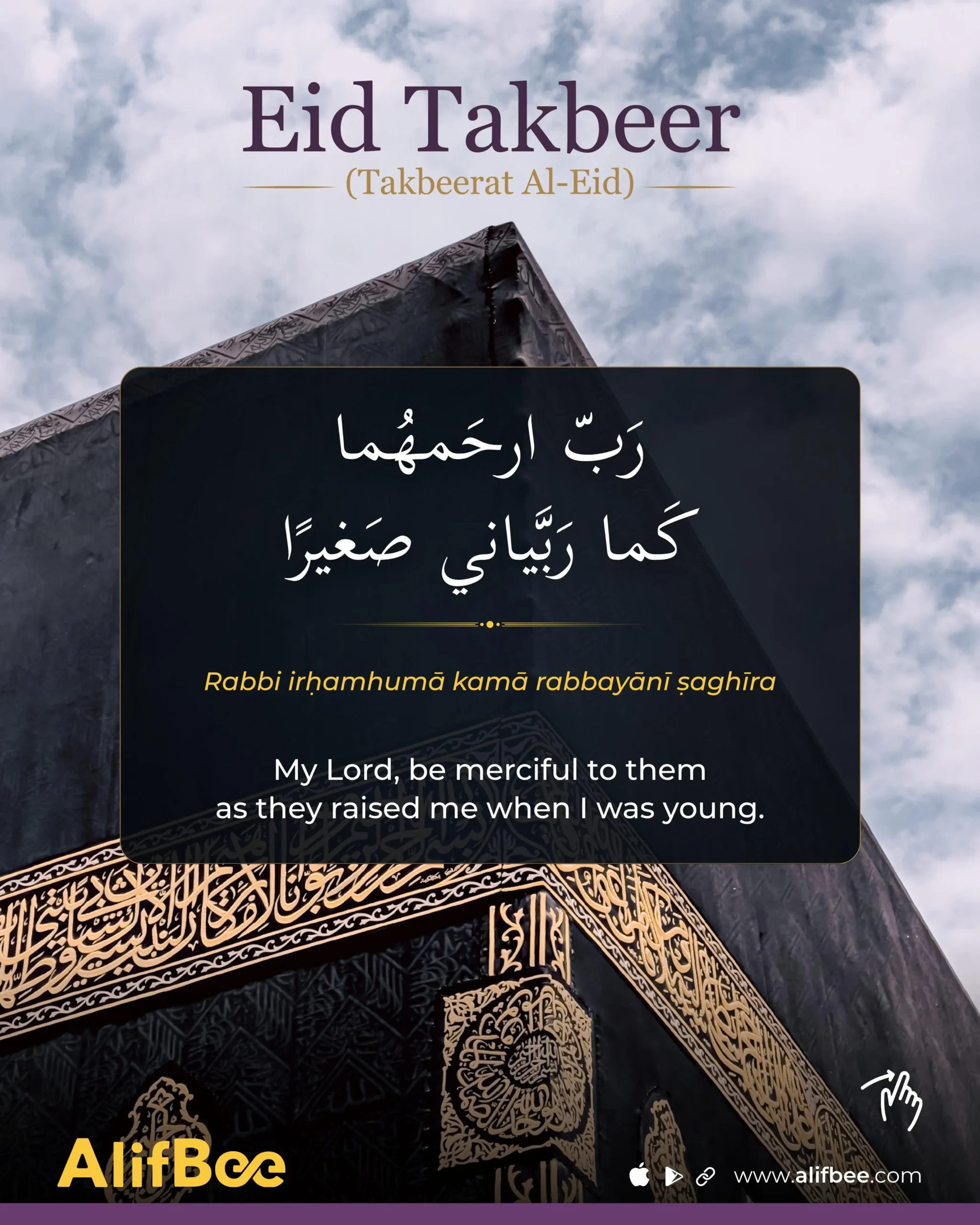
My Lord, be merciful to them as they raised me when I was young. |
Rabbi irḥamhumā kamā rabbayānī ṣaghīra |
رَبّ ارحَمهُما كَما رَبَّياني صَغيرًا |
|
Review Eid Takbeer in Arabic
Final word
Eid Takbeer, in Arabic, is a short yet powerful set of phrases that helps you experience Eid with greater understanding and joy. Start with “Allāhu akbar” as part of your everyday dhikr, learn the short common form, and then add the longer phrases step by step.
Learn with AlifBee
Want to practice Islamic Arabic phrases with clear pronunciation, examples, and guided lessons? Explore Arabic vocabulary and everyday phrases in the AlifBee app, where you can listen, repeat, review, and build your Arabic skills step by step.
FAQs
1. What is Eid Takbeer in Arabic?
Eid Takbeer in Arabic refers to Eid phrases of glorifying Allah, centered on saying اللهُ أَكْبَرُ (Allāhu akbar), meaning “Allah is the Greatest.”
2. Is Eid Takbeer the same for Eid al-Fitr and Eid al-Adha?
The core wording is often similar, but timing and community practice may differ between Eid al-Fitr and Eid al-Adha.
3. What does Allāhu akbar mean?
Allāhu akbar is commonly translated as “Allah is the Greatest.” It is the central phrase of takbeer.
4. Is Eid Takbeer a greeting?
No. Eid Takbeer is a phrase of praise and remembrance, while “Eid Mubarak” is a greeting.