
Many learners ask the same question before they start: Can I really learn Arabic by myself?
The short answer is yes.
Thousands of learners study Arabic independently every year and start speaking Arabic without a private teacher. What matters most is not who teaches you, but how you learn, how consistently you practice, and whether you follow a clear plan. It is also important to choose the right Arabic dialect and find the right sources to help you.
This guide focuses on practical steps, realistic expectations, and effective self-study methods.
Can You Learn Arabic by Yourself?
Learning Arabic on your own is completely possible. Modern tools, structured courses, and audio-based resources have removed many of the barriers that learners faced in the past. Self-study works especially well when learners follow a guided path instead of jumping between random materials.
Arabic may feel unfamiliar at first, especially for English speakers, but unfamiliar does not mean impossible. With the right structure, learners can build skills gradually and confidently. Self-learners often progress faster than expected because they control their pace and focus on what they need most.
What You Need to Learn Arabic on Your Own
Independent Arabic learning does not require expensive classes or advanced knowledge. It requires a few essential elements:
- Clear goals
Decide what you want to achieve. Basic conversation, reading, or general communication all require different levels of focus.
- Consistency
Short, daily practice is more effective than long, irregular sessions. - Structured material
A clear progression from beginner to advanced helps avoid confusion and gaps. - Correct input
Listening to accurate pronunciation from native speakers is essential when learning alone.
Without structure, learners often feel lost. With structure, self-study becomes manageable.
When time is limited, this practical plan for learning Arabic quickly can help you organize short daily sessions without rushing the basics.
How to Start Learning Arabic by Yourself Step by Step
Starting correctly makes a big difference.
Step 1: Begin with the Arabic alphabet
Learning the alphabet is the foundation of reading and pronunciation. Focus on recognizing letters and their sounds rather than memorizing rules.
Step 2: Learn basic words in context
Instead of long vocabulary lists, learn words through short phrases and simple sentences. This helps memory and understanding.
Step 3: Practice listening early
Listening trains your ear before speaking feels natural. Start with slow, clear audio designed for learners.
Step 4: Repeat and review regularly
Repetition is essential in self-study. Reviewing what you learned keeps progress steady and prevents forgetting.
This process builds confidence without overload.
How to Practice All Arabic Skills Without a Teacher
Learning Arabic alone does not mean ignoring important skills. A good self-study routine includes all four:
- Reading
Start with short, level-appropriate texts and build gradually. - Listening
Use guided audio that matches your level and repeat often. - Speaking
Practice aloud through repetition and shadowing, even when studying alone. - Writing
Simple writing exercises help reinforce reading and structure.
Balanced practice keeps learning active instead of passive.
Should You Learn MSA or A Spoken Dialect?
Decide whether you want to learn the formal option, Modern Standard Arabic, if you are interested in Learning Arabic for studying or work. Or, choose a local dialect, like Levantine or Egyptian Arabic, if your goal is to tour or visit Arabic countries.
Common Mistakes When Learning Arabic Alone
Many self-learners struggle not because Arabic is too hard, but because of avoidable mistakes.
Common issues include:
- Studying grammar too early without enough exposure
- Switching between too many resources
- Skipping review sessions
- Expecting fluency too quickly
Avoiding these mistakes helps learners stay motivated and focused.
Using an App to Learn Arabic by Yourself
For independent learners, a learning app can replace many functions of a teacher. A good app provides structure, progression, audio support, and regular practice.
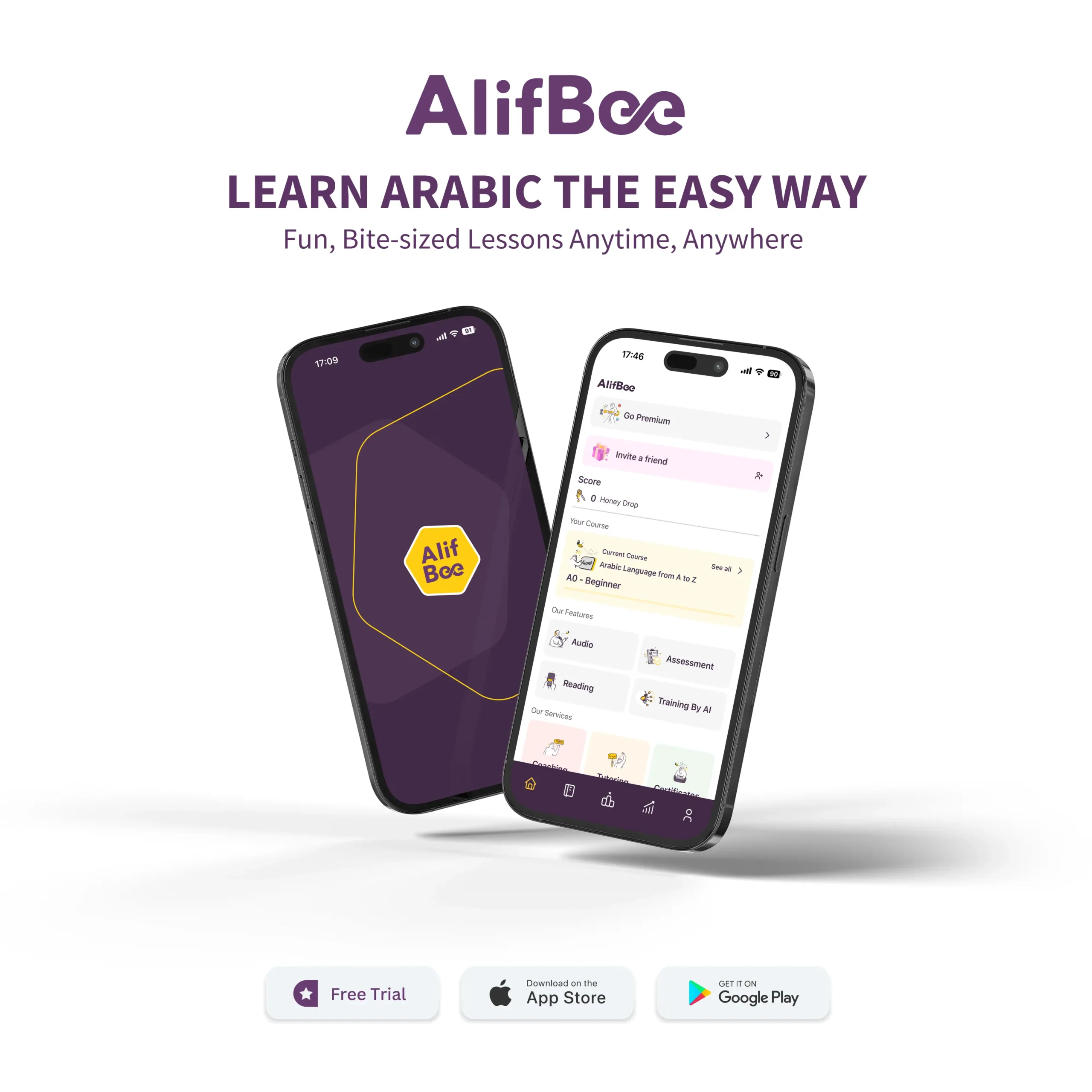
The AlifBee app is designed specifically for self-learners. Lessons follow a clear sequence from beginner to advanced levels, helping learners build reading, listening, and grammar skills step by step. Practice exercises, audio pronunciation, and progress tracking support consistent learning without external guidance.
Using one structured platform reduces confusion and keeps learning focused.
Practice Arabic Independently with the AlifBee App
Learning Arabic by yourself works best when practice is built into the process. Instead of memorizing information, learners apply what they study immediately through repetition and use.
With AlifBee, learners can:
- Follow a clear learning path
- Practice daily at their own pace
- Reinforce lessons through exercises and audio
- Track progress over time
This approach supports independence while maintaining direction.
Final Word
Learning Arabic by yourself is not about rushing or mastering everything at once. It is about steady progress, clear goals, and consistent practice. With the right structure and realistic expectations, self-study becomes not only possible, but effective.
Arabic rewards patience and regular use. When learners focus on process rather than speed, progress follows naturally.