The Role of Body Language in Arab Cultures
What makes Arabic such a beautiful and inviting language is the fact that it isn’t just a language- it’s a complete culture expressed in many ways.
When you speak Arabic, you don’t communicate only with words. There is also your body language. Arab cultural traits of warmth and hospitality are reflected not only in how they speak but also in how they move.
In fact, two Arabic speakers can have a short conversation without saying a single word. You’ll often see people raise their hands in a certain way, and the other person will respond with the same gesture—one of the many ways Arabs say hello.
That said, these gestures aren’t always easy for non-native speakers to understand, even if they know the words themselves.
So here is a complete guide with 10 key Arabic gestures and their meanings to help you avoid cultural miscommunication when visiting an Arabic country or speaking to someone from the Arab world.
Common Arabic Hand Gestures and What They Really Mean
This list explains the most common Arab hand gestures often seen in the Middle East and other Arab countries in North Africa and the Gulf.
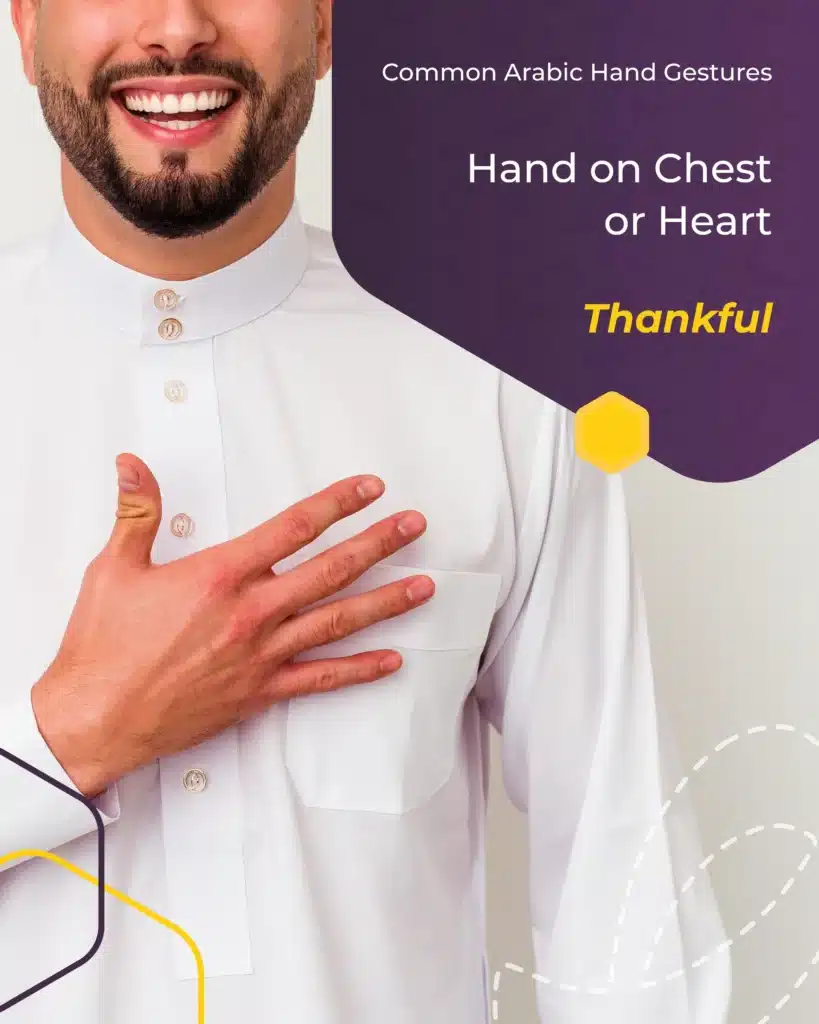
Hand on Chest or Heart - Thankful
This one is easy to understand. It’s when a person places their hand—usually the right hand—over their chest (heart) and slightly bows forward.
The meaning can vary depending on the context, but it’s generally a warm gesture that expresses sincerity and respect. Most commonly, it’s used to say thank you, especially when words feel unnecessary or too formal.
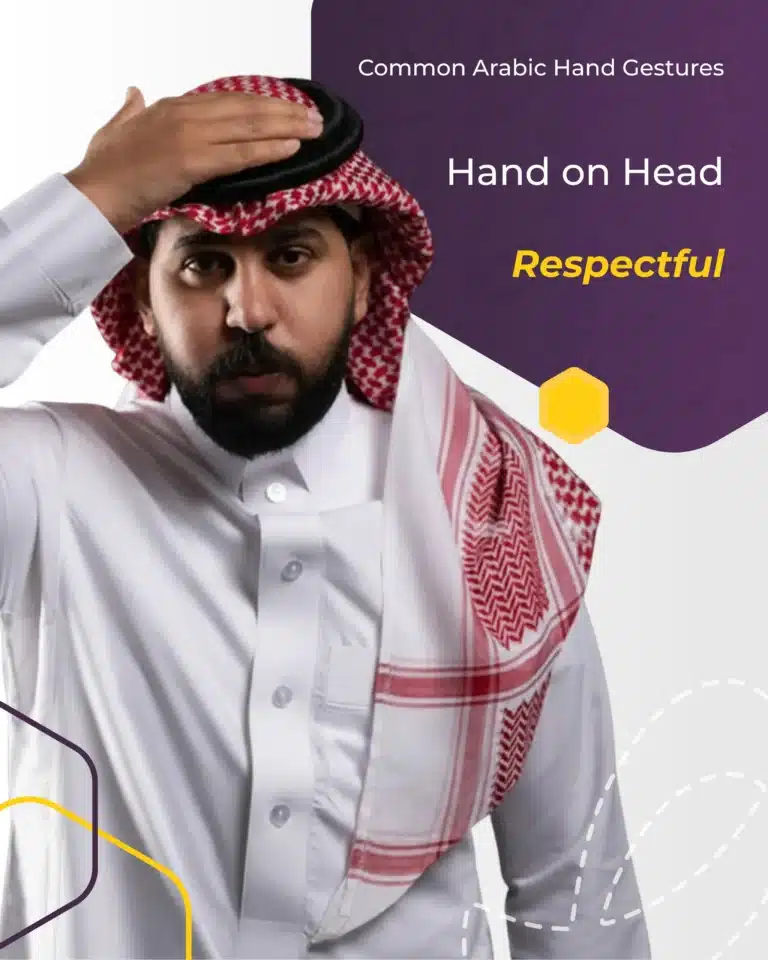
Hand on Head - Respectful
This is another hand gesture in which a person touches the top of their head. It’s used to show respect, warmth, and willingness. Often, it’s a way of signaling that someone is respected and honored—especially when someone asks for a favor. By doing this, you’re showing that they’re welcome and that you’re glad to help.
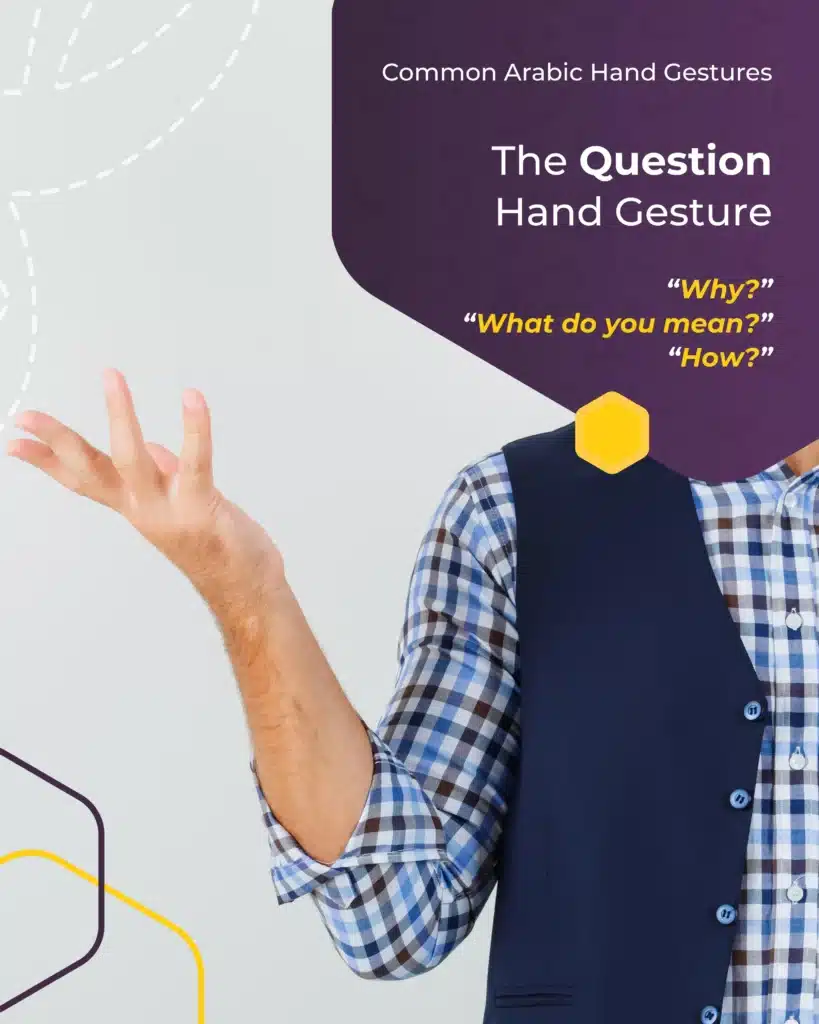
The Question Hand Gesture
In this gesture, the hand—usually the right—is held out in front of the person, palm up, with fingers slightly spread and a bit of shaking or wiggling.
For Arabic speakers, this gesture is like an exclamation mark. Depending on the context, it can mean “Why?”, “What do you mean?”, or “How?”. It’s a way of expressing surprise, confusion, or disbelief without words.
This gesture appears constantly in Egyptian and Levantine Arabic, especially in fast, emotional conversations.
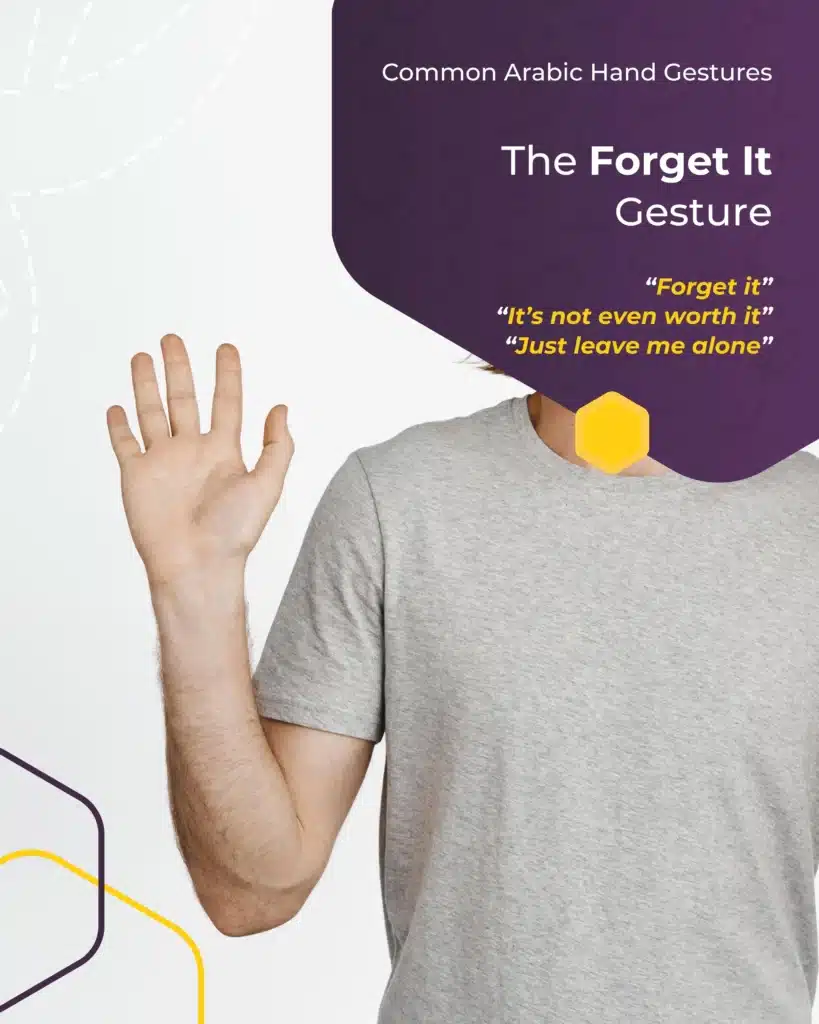
The “Forget It” Gesture
This one has the hand wagging with palm facing down, and it usually means “forget it”, “it’s not even worth it”, or could even mean “just leave me alone.”
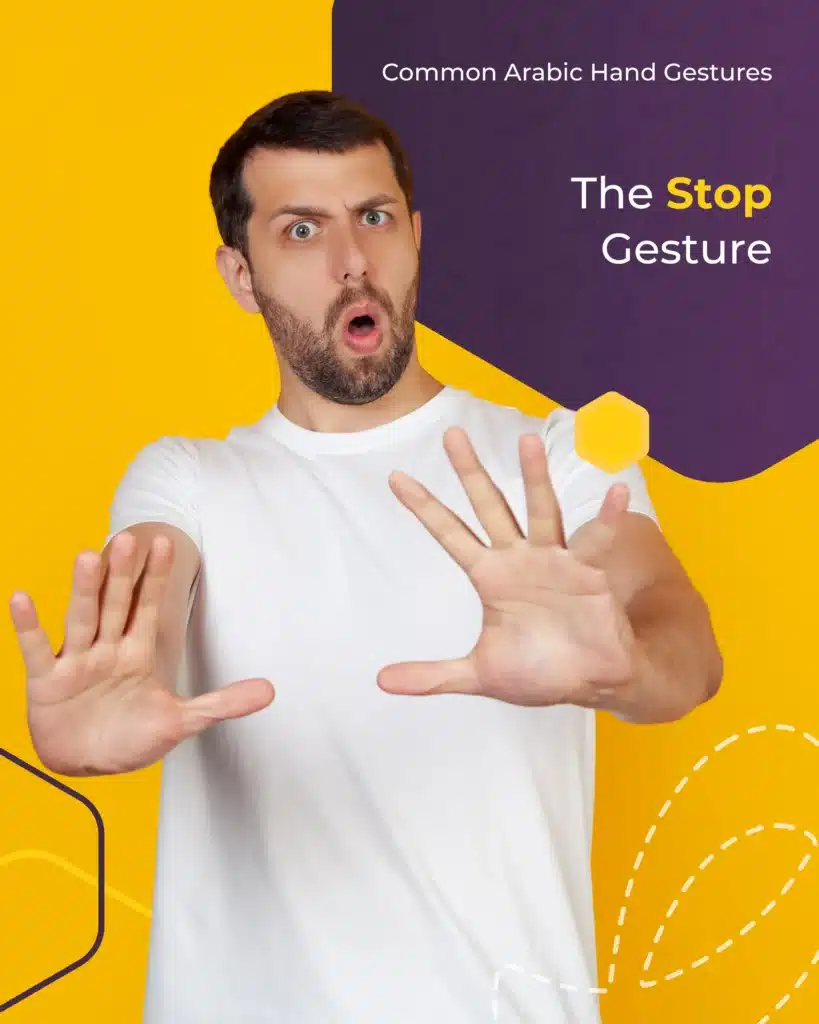
The “Stop” Gesture
This one could be familiar: a hand raised slightly, palm outwards. It can simply mean stop, but it can also be a way of saying no.
For example, if someone offers you food or a drink, you can take it and then add the thank-you gesture we talked about earlier (Hand on Chest).
However, we don’t recommend refusing to have food from Arabs, because they won’t stop until they feed you!
Both Hands Open, Palms Up
This is another widely recognized hand gesture across many cultures, and it carries the same meaning in Arab culture. It expresses “I don’t know” or “What can I do?” and is usually accompanied by a slight lift of the shoulders to reinforce uncertainty or helplessness.
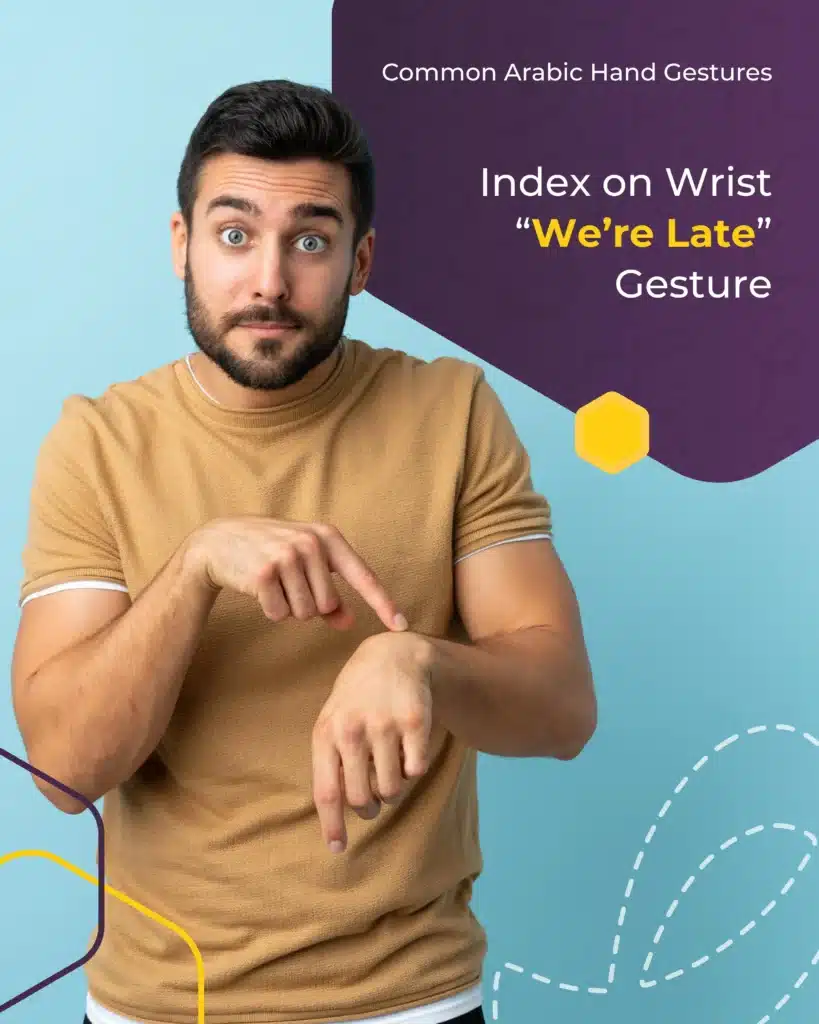
Index on Wrist (“We’re Late”) Gesture
This gesture is also familiar in many other cultures. It’s done by using the index finger of one hand to tap the top of the other wrist, as if you’re tapping a watch.
Why is it especially meaningful in Arab culture, you ask? Because Arabs are famously not punctual. If a party invitation says it starts at 8:00, no one is showing up before 9:15. So when an Arab person uses this gesture and tells you “you’re late,” trust me — you’re REALLY late.
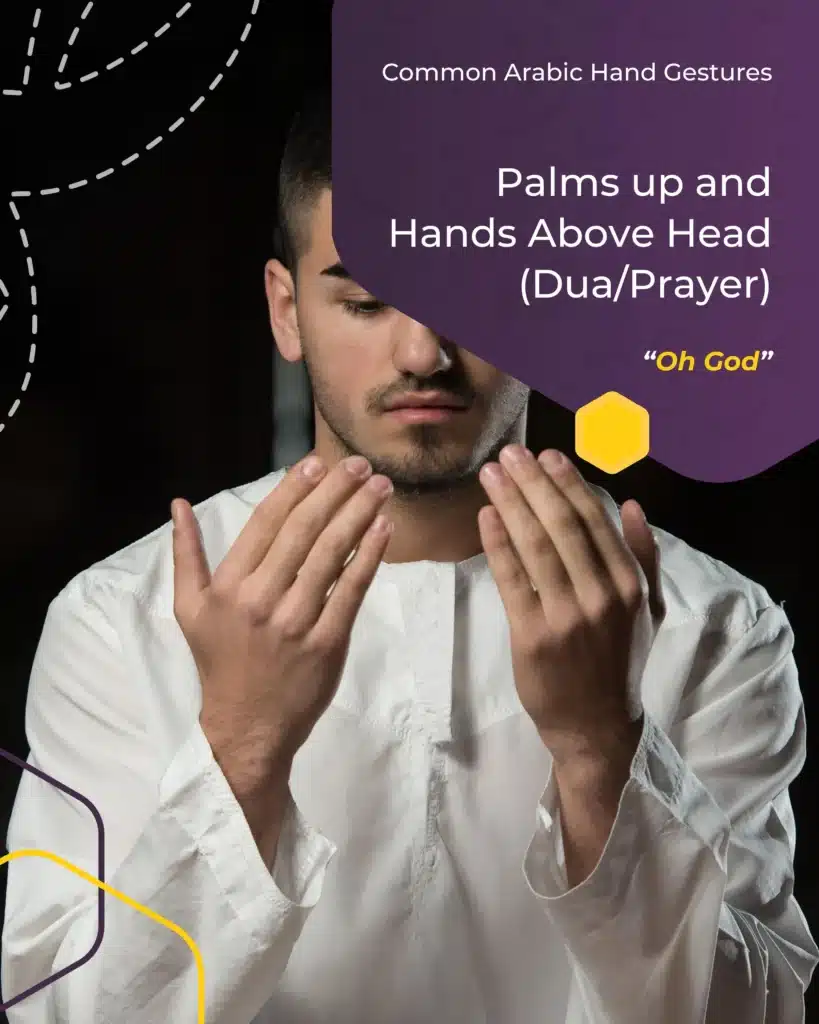
Palms up and Hands Above Head (Dua/Prayer)
Last but definitely not least, you have the inshallah gesture. This one is often used in conversation when someone mentions the expectation of something good. You’ll also see it when people say “ya rab,” meaning “Oh God,” as a way of saying amen. Unlike what most people think, this is not just an Islamic gesture — although known to be used by Muslims when they pray, it’s common in Arab culture in general and not only for Islam.
Read more about the meaning of InshaAllah and other Islamic Phrases in Arabic.
Gestures that May Confuse Non-Arabic Speakers
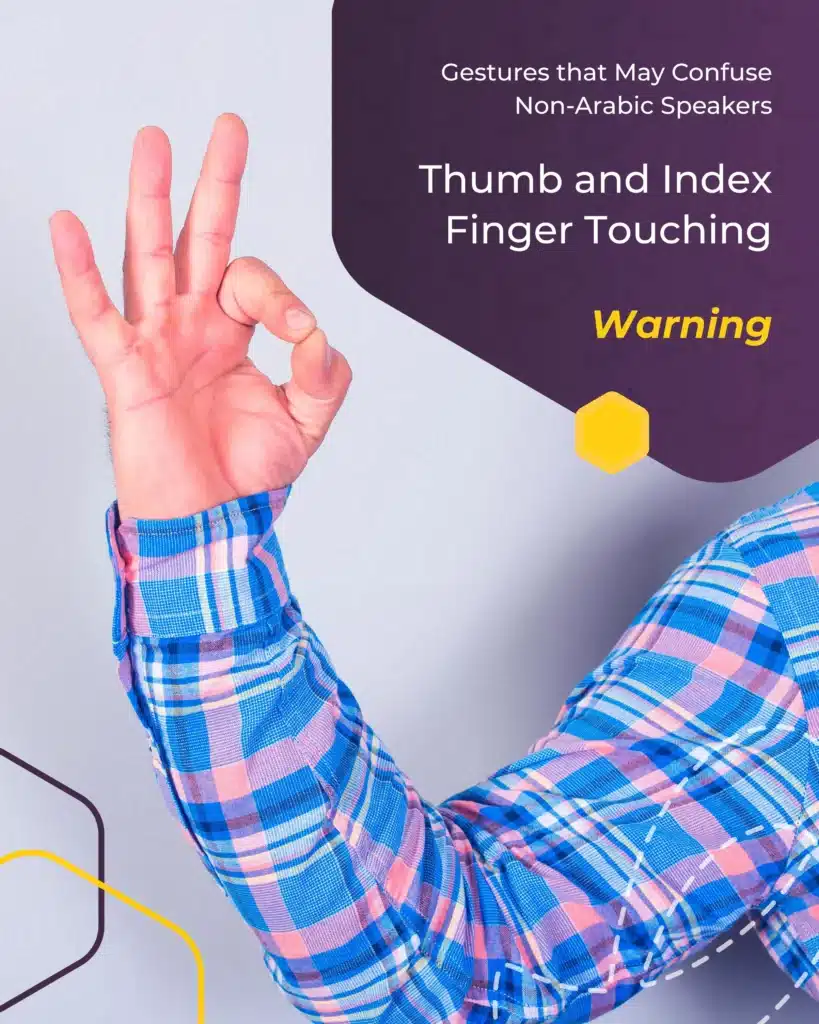
Thumb and Index Finger Touching (Small Circle)
This gesture can be tricky because it has two very different meanings depending on the context. It can either mean “perfect” or “exactly”, or it can serve as a subtle warning, signaling that you’re running out of patience with someone.
How do you tell which meaning applies? Simply read the room—the tone, facial expressions, and situation will usually make it clear.
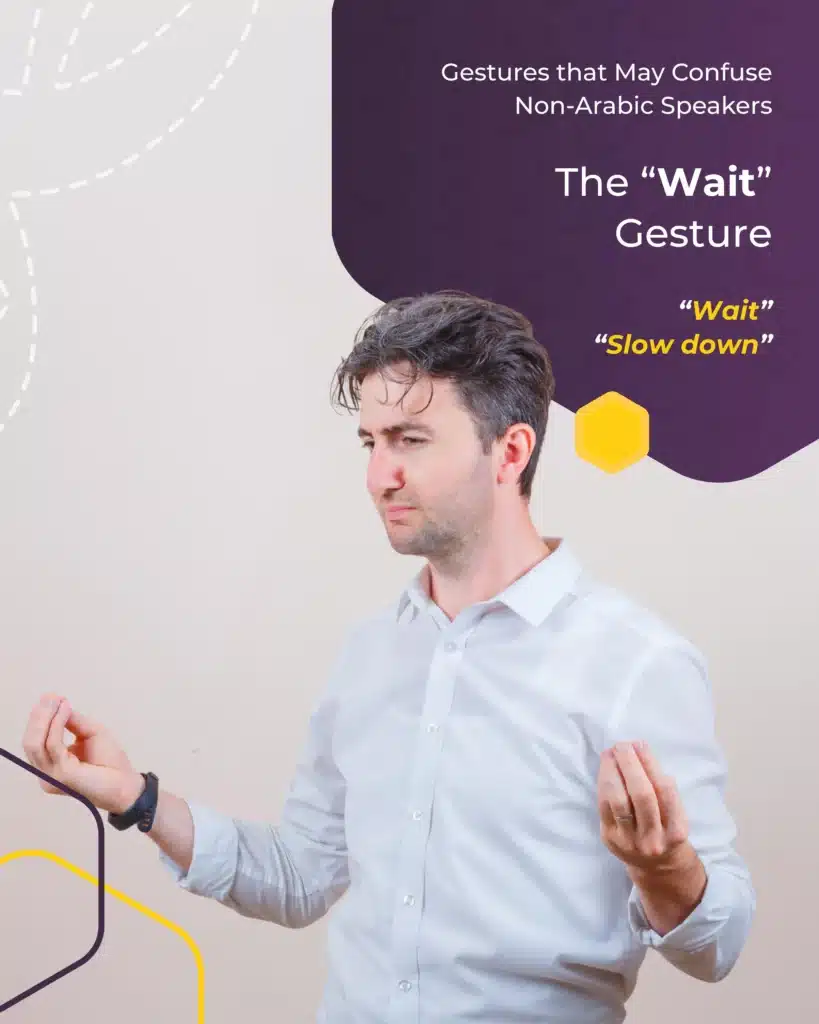
The “Wait” Gesture
Bring all five fingertips together (with the thumb touching the other fingers, forming a point), turn the palm upward, with the fingers pointing slightly up, then move the hand gently up and down.
This gesture can confuse non-Arabic speakers because it has different meanings in other cultures. Italians, for example, use it often, but in Arabic culture it carries a different meaning. In Arabic, it usually means “wait” or “slow down.”
Be careful when using it, though, as it can be perceived as rude if done too close to someone’s face or with harsh facial expressions. To keep it polite, use slow movements and a soft, calm expression.
Why Should I Practice Arabic Hand Gestures?
Simply because if you wish to have native-level communication skills in Arabic, this step is essential. Arabic is an expressive language that goes far beyond words and sentences, so practicing these gestures is a way of showing confidence and fluency in your communication.
But don’t stress it—you’ll get the hang of it in no time. Don’t be afraid to mix them up a little now that you know what they mean; just be careful to pay attention to context, or you might end up with a bigger miscommunication.
Final Word
So we have covered 10 basic Arabic gestures used across the Arab world. There are other signs common to specific regions. These can be easily explored with the accompanying voice tone and facial expressions in numerous YouTube videos.
While some of the signs we covered are used to threaten or warn someone, many are pretty warm and friendly, used as a form of greeting or to show respect and appreciation.
If you want to practice basic Arabic greetings to complement what you have learned or enhance your learning experience, download the Alifbee app and unlock a rich, enjoyable learning path.