Every year on March 8, people around the world celebrate International Women’s Day. It is a time to honour the achievements, strengths, and contributions of women everywhere. From mothers and teachers to leaders and innovators, women influence every part of our lives.
Arab culture has a long and rich tradition of honoring women. Long before modern discussions about equality, Arabic poetry, proverbs, and religious texts included powerful sayings about the role of women in society, family, and history. These sayings celebrate their wisdom, strength, compassion, and the important role women play in shaping communities.
In this article, we explore 10 beautiful Arabic quotes about women. Each one carries a deep meaning and reflects the respect and admiration Arab culture holds for women. We will look at the Arabic text, transliteration, and meaning, and explain why these words matter.
Islamic Quotes About Women
Islamic teachings and traditions include many sayings that emphasize kindness, respect, and fairness toward women. The following quotes from the Prophet Muhammad (PBUH) reflect the importance of honoring women in family and society.
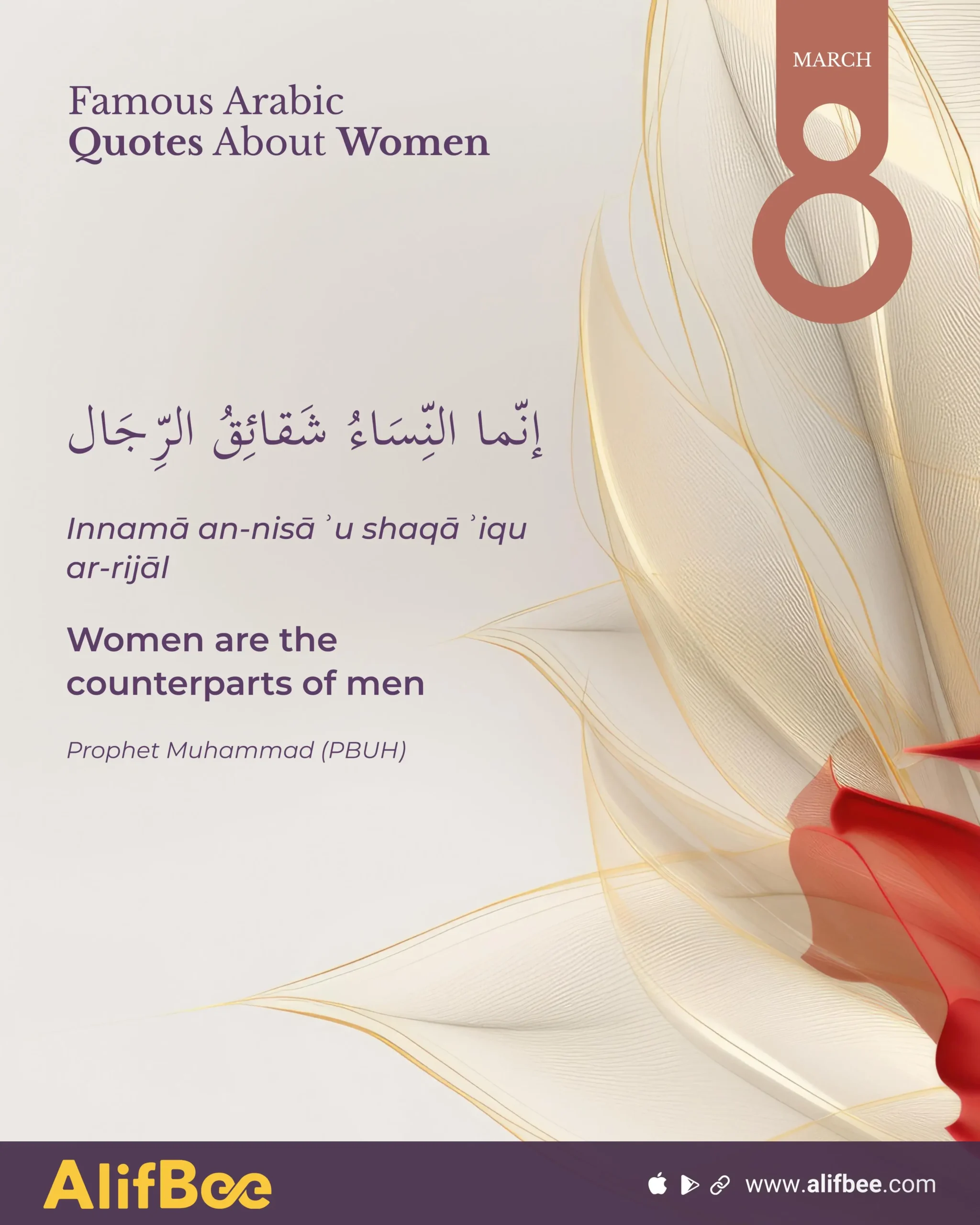
Women Are the Counterparts of Men
Women are the counterparts of men
Innamā an-nisāʾu shaqāʾiqu ar-rijāl
إنّما النِّسَاءُ شَقائِقُ الرِّجَال
This is one of the most famous sayings in Islamic tradition, attributed to the Prophet Muhammad (PBUH). The word shaqāʾiq literally means “halves” or “counterparts.” It emphasizes that men and women come from the same origin and share the same essential humanity. This saying highlights equality in dignity, worth, and religious responsibility.
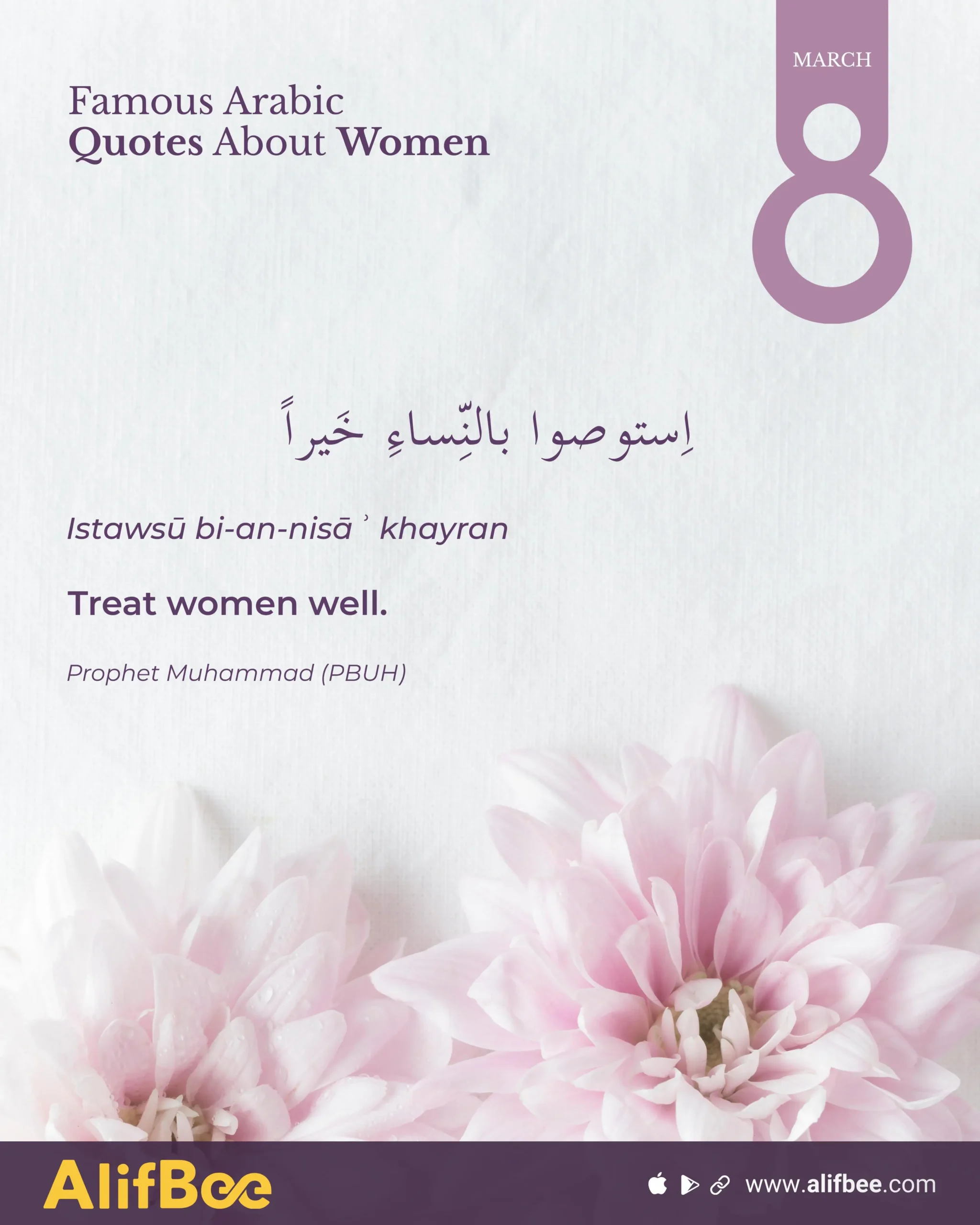
Treat Women Well
Treat women well.
Istawsū bi-an-nisāʾ khayran
اِستوصوا بالنِّساءِ خَيراً
This is another direct teaching about women from the Prophet Muhammad (PBUH). The word istawsū means “treat well” and “be fair” to them. It acts as an invitation to Muslim men to actively do good to their women.
The Prophet emphasized this message in many teachings and in his Farewell Sermon, reminding men to treat women with kindness and avoid injustice toward them.
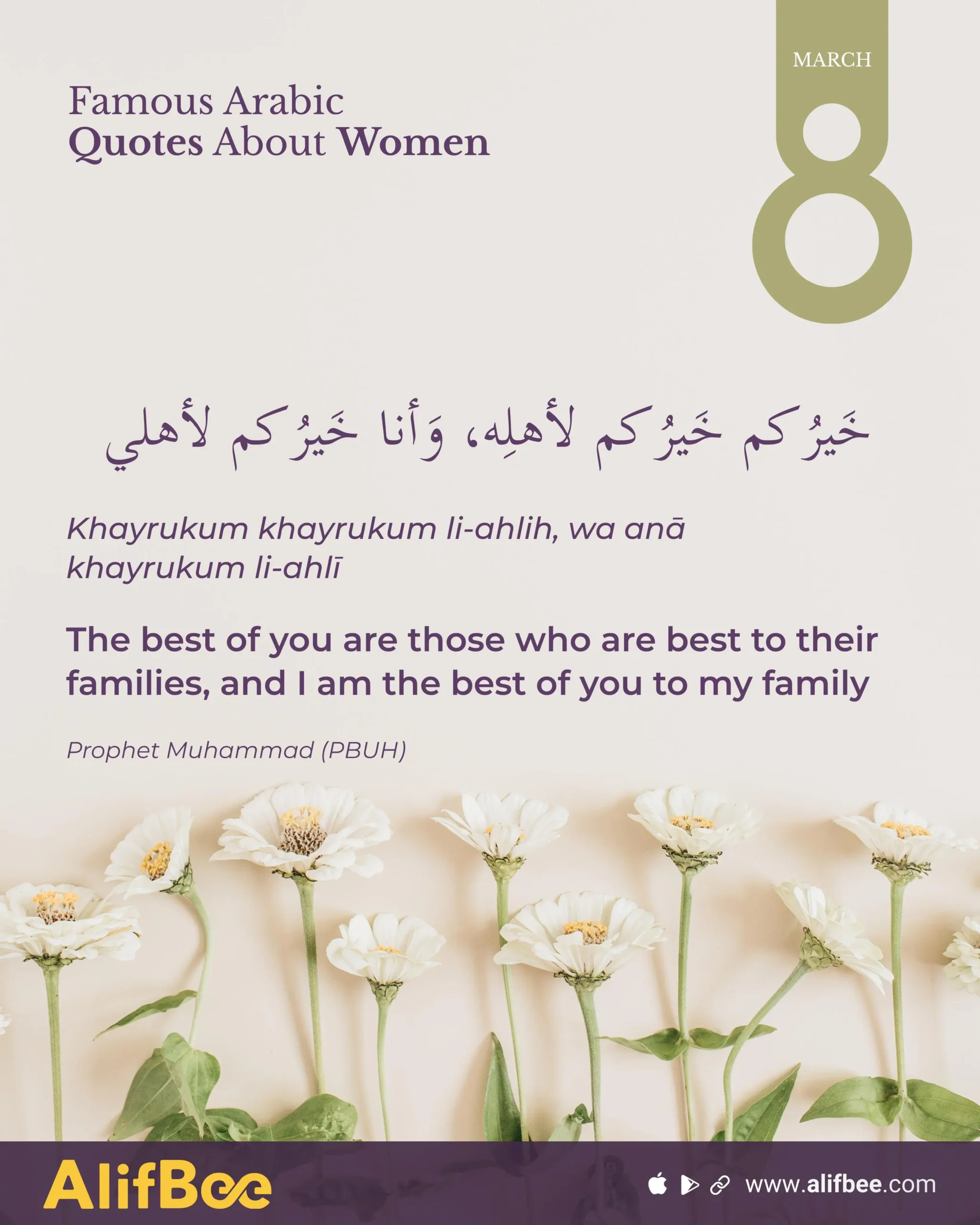
The Best of You Are Best to Their Families
The best of you are those who are best to their families, and I am the best of you to my family.
Khayrukum khayrukum li-ahlih, wa anā khayrukum li-ahlī
خَيرُكم خَيرُكم لأهلِه، وَأنا خَيرُكم لأهلي
This is another Prophetic hadith that connects goodness directly to how a person treats their family. The Prophet Muhammad (PBUH) demonstrated this teaching in his own home and with his family. He helped with household chores, treated his wives with kindness, and played with his grandchildren.
Through this hadith, and through the Prophet as Muslims’ role model in everyday actions, Muslims are instructed to be their best with their families, especially women and children.
Arabic Proverbs & Sayings Celebrating Women
Beyond religious texts, Arab culture has a rich tradition of proverbs that honor women. These sayings have been passed down through generations and reflect collective wisdom.
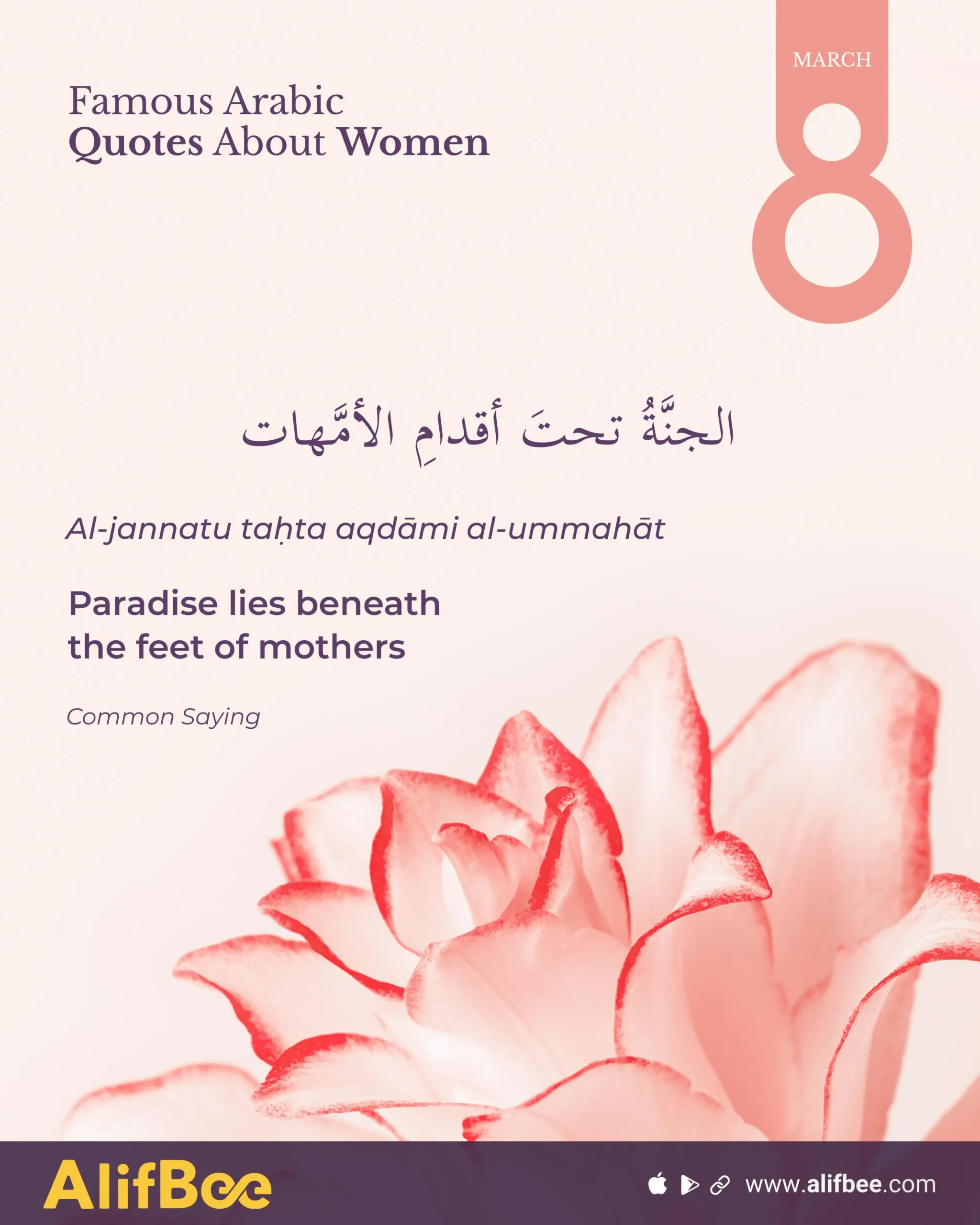
Paradise Lies Beneath the Feet of Mothers
Paradise lies beneath the feet of mothers
Al-jannatu taḥta aqdāmi al-ummahāt
الجنَّةُ تحتَ أقدامِ الأمَّهات
This is perhaps the most famous Arabic saying about mothers. It does not mean that simply having a mother guarantees paradise. Rather, it emphasizes the immense honor and respect due to mothers by serving them, caring for them, and treating them with kindness.
A Mother Is a School
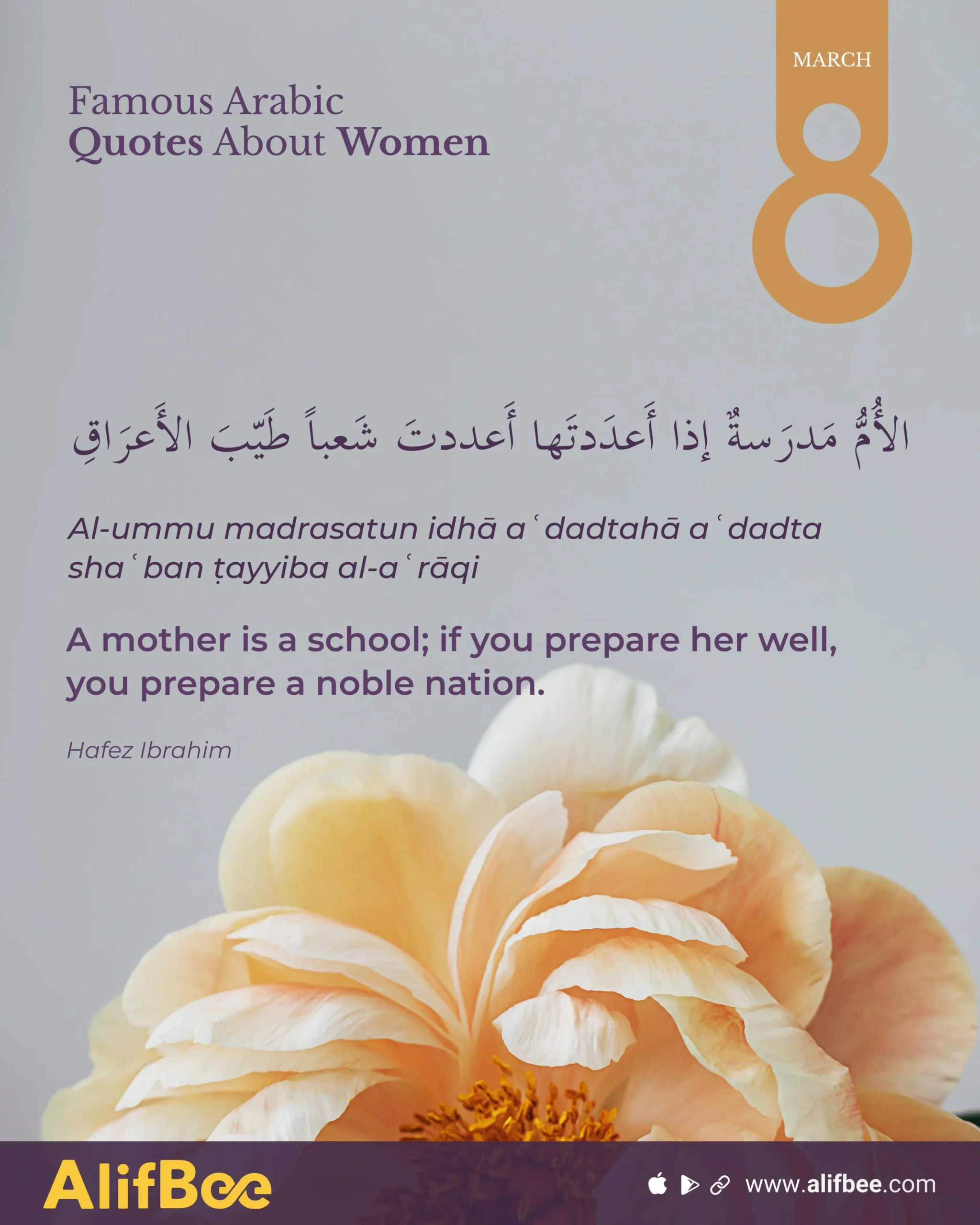
A mother is a school; if you prepare her well, you prepare a noble nation.
Al-ummu madrasatun idhā aʿdadtahā aʿdadta shaʿban ṭayyiba al-aʿrāqi
الأُمُّ مَدرَسةٌ إذا أَعدَدتَها أَعددتَ شَعباً طَيّبَ الأَعرَاقِ
This is perhaps the most famous Arabic saying about mothers. It does not mean that simply having a mother guarantees paradise. Rather, it emphasizes the immense honor and respect due to mothers by serving them, caring for them, and treating them with kindness.
Woman Is Half of Society
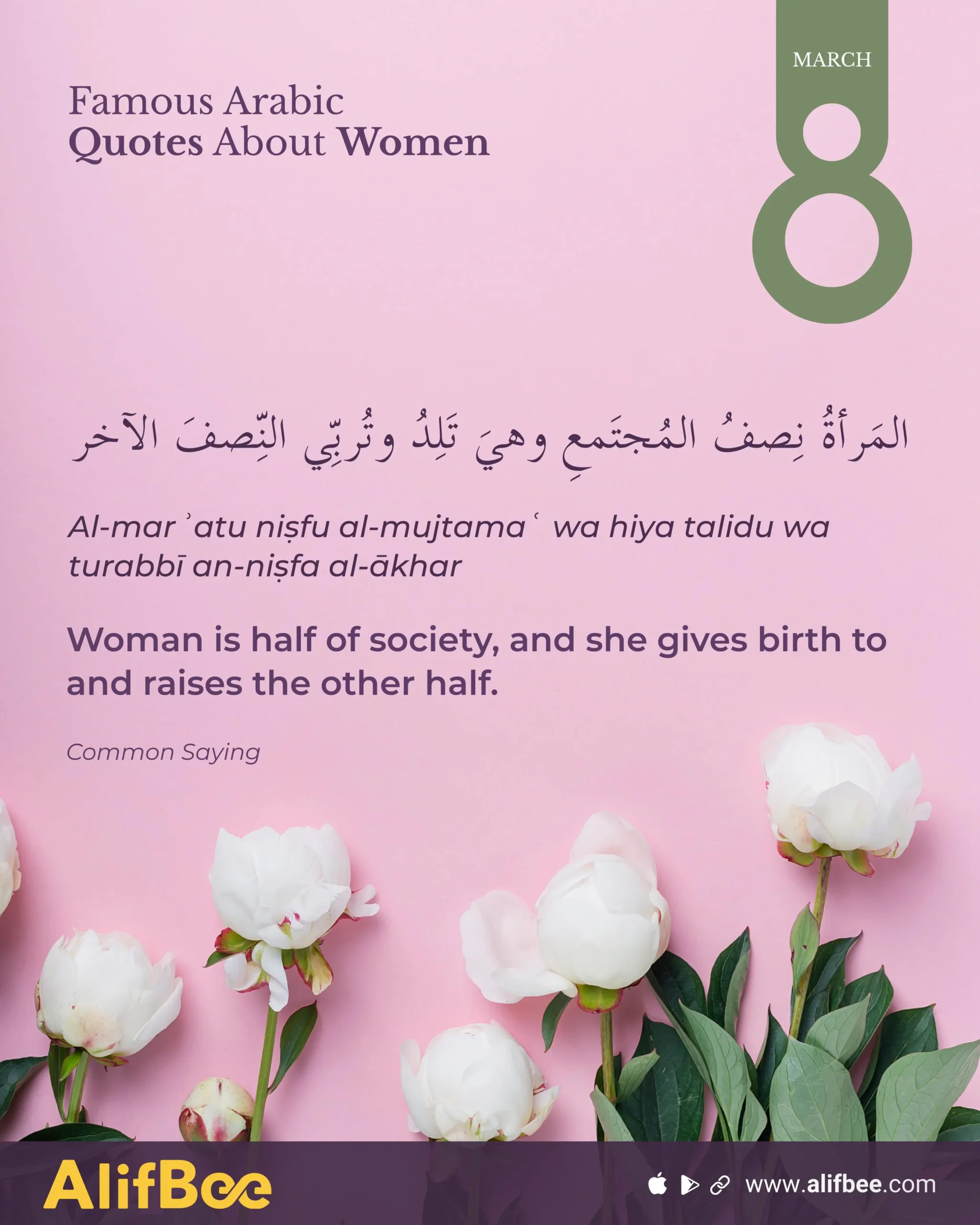
Woman is half of society, and she gives birth to and raises the other half.
Al-marʾatu niṣfu al-mujtamaʿ wa hiya talidu wa turabbī an-niṣfa al-ākhar
المَرأةُ نِصفُ المُجتَمعِ وهيَ تَلِدُ وتُربِّي النِّصفَ الآخر
This Arabic saying goes beyond the familiar idea that women make up half the population. It adds something deeper: women do not only exist as half of society—they also create and shape the other half. Through motherhood and education, women influence everyone. Their role is not passive but foundational.
Behind Every Great Man Is a Great Woman
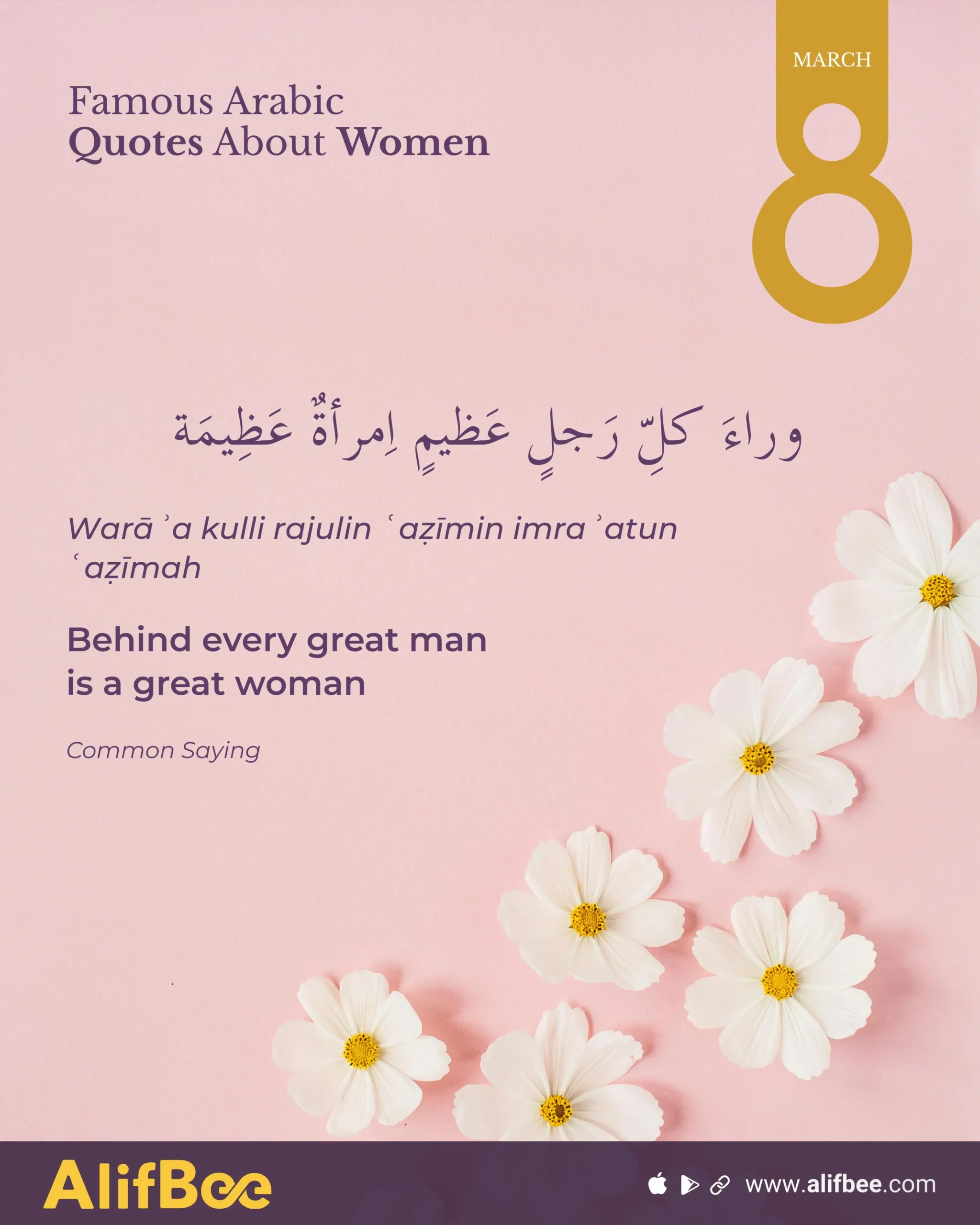
Behind every great man is a great woman
Warāʾa kulli rajulin ʿaẓīmin imraʾatun ʿaẓīmah
وراءَ كلِّ رَجلٍ عَظيمٍ اِمرأةٌ عَظِيمَة
This proverb exists in many cultures, and Arabic is no exception. It acknowledges that the achievements of men are often supported, enabled, and inspired by the women in their lives—mothers, wives, sisters, or daughters. It is a recognition that greatness is rarely a solo effort.
A House Without a Mother
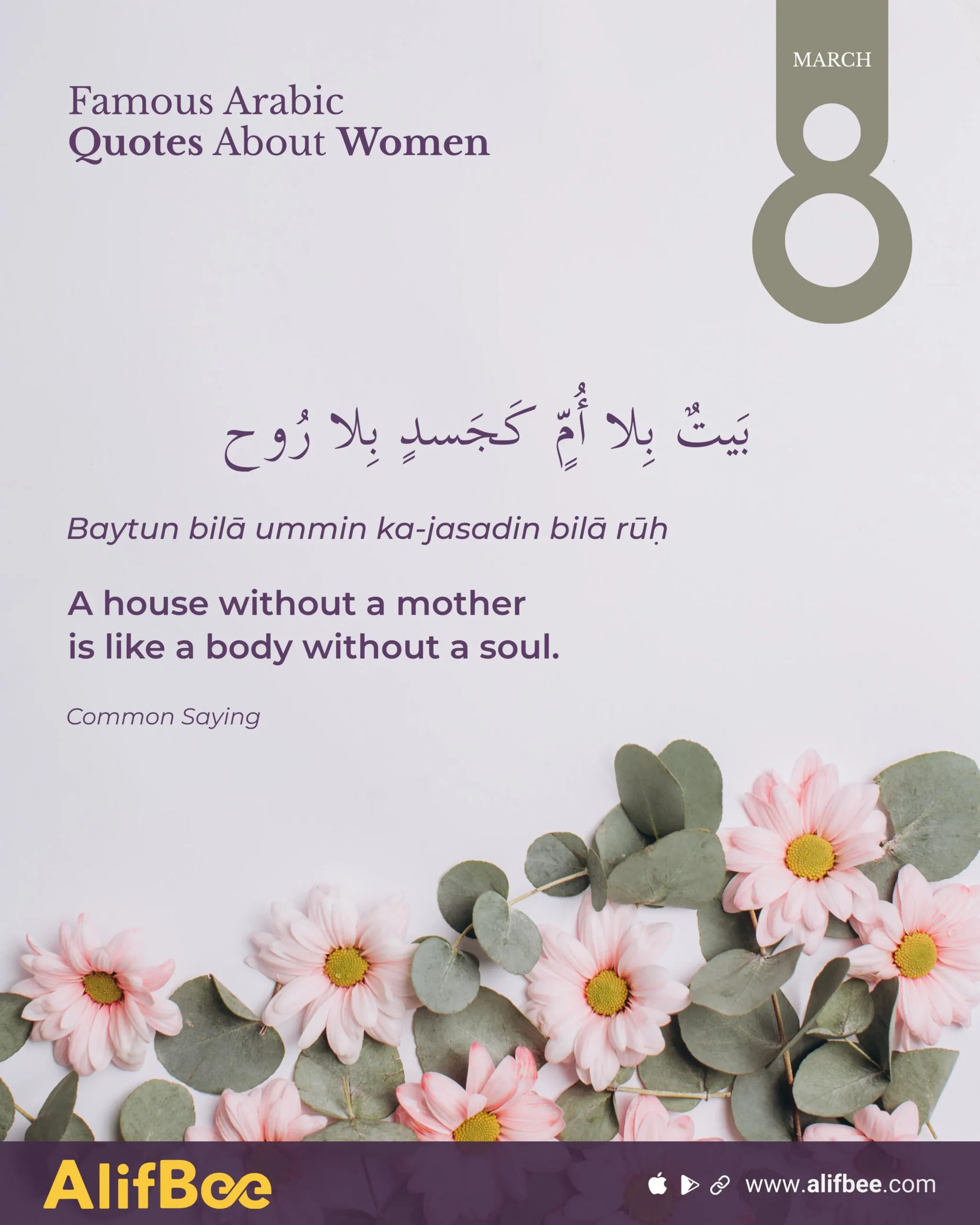
A house without a mother is like a body without a soul.
Baytun bilā ummin ka-jasadin bilā rūḥ
بَيتٌ بِلا أُمٍّ كَجَسدٍ بِلا رُوح
This proverb uses a strong image to express the mother’s central role in family life. A house is not just walls and furniture. It is warmth, care, and emotional connection. The mother often provides that heartbeat. The saying honors the emotional labor and love that women pour into their homes.
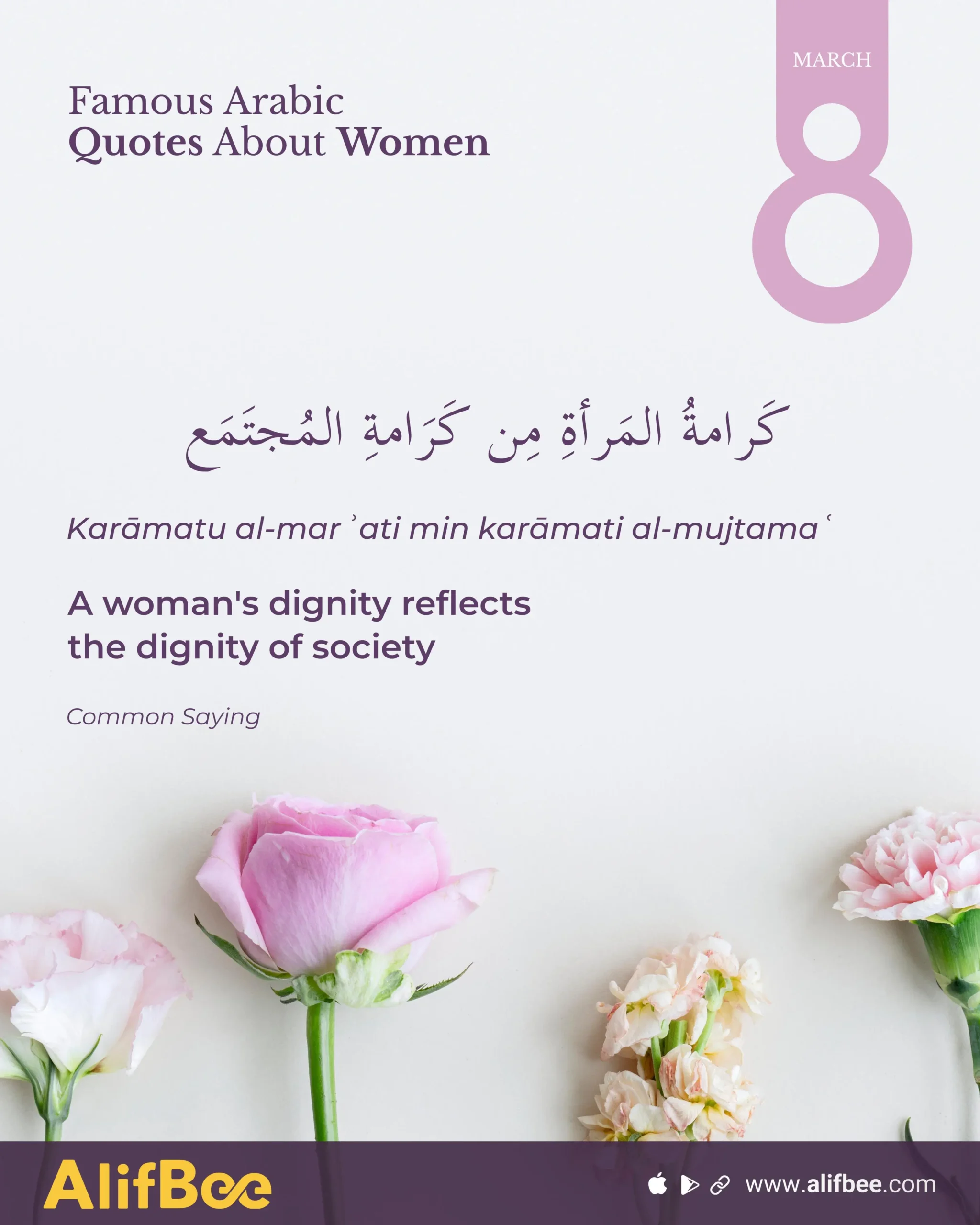
Women's Dignity Reflects Society
A woman's dignity reflects the dignity of society
Karāmatu al-marʾati min karāmati al-mujtamaʿ
كَرامةُ المَرأةِ مِن كَرَامةِ المُجتَمَع
This saying makes a bold statement: you can judge a society by how it treats its women. When women are respected, protected, and valued, the whole community rises. When they are harmed or dismissed, it reveals a deeper problem. Dignity is not a private matter—it is a public measure.
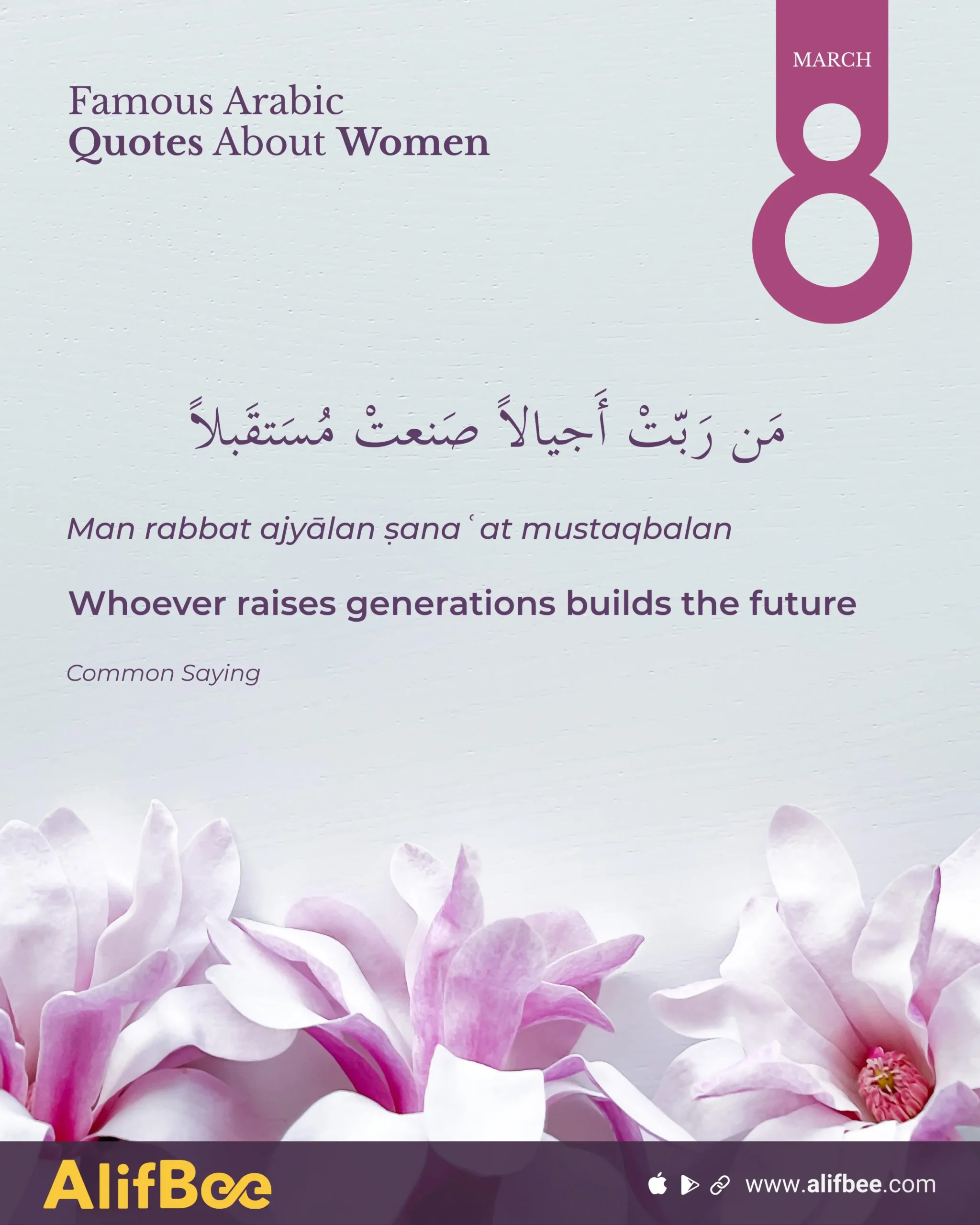
Women Shape Future Generations
Whoever raises generations builds the future
Man rabbat ajyālan ṣanaʿat mustaqbalan
مَن رَبّتْ أَجيالاً صَنعتْ مُسَتقَبلاً
This is a modern Arabic saying that captures an ancient truth. Raising children is not just domestic work—it is nation-building. The women who teach, guide, and nurture children are literally shaping what the world will look like tomorrow. Their work deserves recognition, not as a small thing, but as one of the most important contributions anyone can make.
Arabic Vocabulary from These Quotes
Learning these Arabic quotes is also a great way to build your Arabic vocabulary. Here are some key words that appear in the sayings above:
Meaning
Transliteration
Arabic
woman
imraʾa
امرَأَة
women (plural)
nisāʾ
نِسَاء
mother
umm
أُم
mothers (plural)
ummahāt
أُمَّهات
man
rajul
رَجُل
society
mujtamaʿ
مُجتَمع
house / home
bayt
بَيْت
dignity
karāma
كَرَامَة
generation
jīl
جِيل
future
mustaqbal
مُستَقبَل
goodness / best
khayr
خَير
feet
aqdām
أَقدَام
Learn More Arabic Expressions with AlifBee
The AlifBee app is designed to help learners learn Arabic in context and as part of the Arabic culture. Instead of isolated word lists, you learn Arabic through real sentences, cultural context, and native pronunciation. Each lesson builds on the last, so you progress from the alphabet to full conversations naturally.
If you are just starting or looking to deepen your understanding, AlifBee gives you the tools to learn Arabic the way it is actually used.
Final Word
International Women’s Day is a moment to celebrate the achievements and contributions of women everywhere. In Arab culture, that celebration is not new. For centuries, poets, prophets, and everyday people have spoken and written words that honor women.
The quotes in this article reflect a deep respect for women as mothers, leaders, partners, and builders of society. They remind us that kindness toward women is a measure of character. That mothers hold a special place of honor. That women’s dignity reflects the dignity of entire communities.
As you go through this day, carry these words with you. And if you are learning Arabic, let them be part of your journey. Because language and culture are connected—and understanding one helps you understand the other.
Happy International Women’s Day.