The Arabic language is known for being quite expressive when it comes to emotions.
If you are starting to learn Arabic and looking to express your feelings for those you hold dear, Arabic offers a wide range of beautiful terms.
Both in Standard Arabic and in local dialects, there are numerous Arabic terms of endearment to put those hard-to-describe feelings in verbal shape.
For the word love or hubb alone, dozens of expressions paint the feeling according to its intensity, duration, and inner state. Here are some famous words:
Words for Love in Arabic
English Meaning
Transcription
Arabic Word
inclination, attraction
hawā
هوى
warm affection
wudd
ودّ
love (general, neutral)
ḥubb
حب
passionate love
ʿishq
عشق
love that clings and causes pain
gharām
غرام
complete emotional enslavement
taym
تيم
You can check other essential love words in Arabic, how to express your love for your mother, and 7 Ways to Say I Love You in Arabic.
When we translate the feeling of love and express it to the people we love, we have countless ways to do so. In this article, we have chosen 10 Arabic terms of affection to use with your beloved, a dear family member, or a close friend.
But let’s first talk about the unique meaning of these Arabic expressions and why they are among the most beautiful in the world.
How does Arabic Express love and Affection?
Love is very hard to describe or measure. But the Arabic language is one of the best at encapsulating big words in deep meanings, and through meaningful imagery and expressions.
In almost all of the Arabic terms expressing deep affection here, Arabs tend to use the most valuable things in life, such as one’s life, heart, eyes, and soul. Once you learn this fact, all terms become really easy to understand and use.
Terms of Endearment in Arabic
These are the most commonly used terms of endearment in Arabic. Only the first one has two forms for gender, but the rest can be used with either male or female.
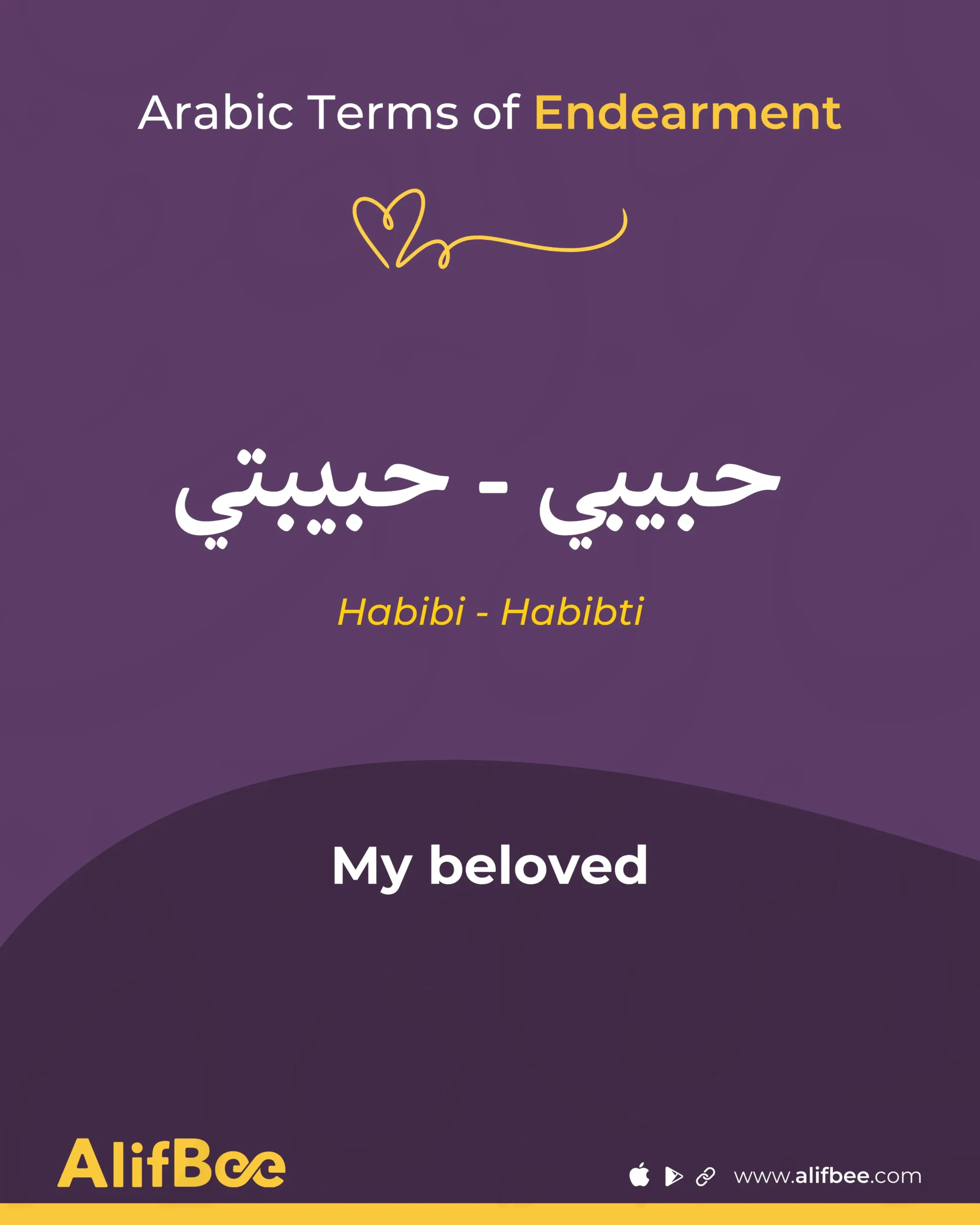
Habibi / Habibti - حبيبي \ حبيبتي (My beloved)
This is one of the most famous Arabic love nicknames, even among those who don’t speak the language. And the reason is that it is often heard in famous Arabic songs.
Another reason that made it so popular is that it is part of the MSA version of Arabic as well as in all local Arabic dialects, and is easily understood throughout the Arab world and Arabic-speaking countries.
Habibi means “my beloved,” and it comes from the noun “habeeb”, which means “a beloved”. This term is used by lovers and married couples, and is rarely used between other relations.
It is sometimes used, though, sarcastically or angrily, among casual relations to express impatience or anger. In this case, it is not genuine and carries a negative meaning.
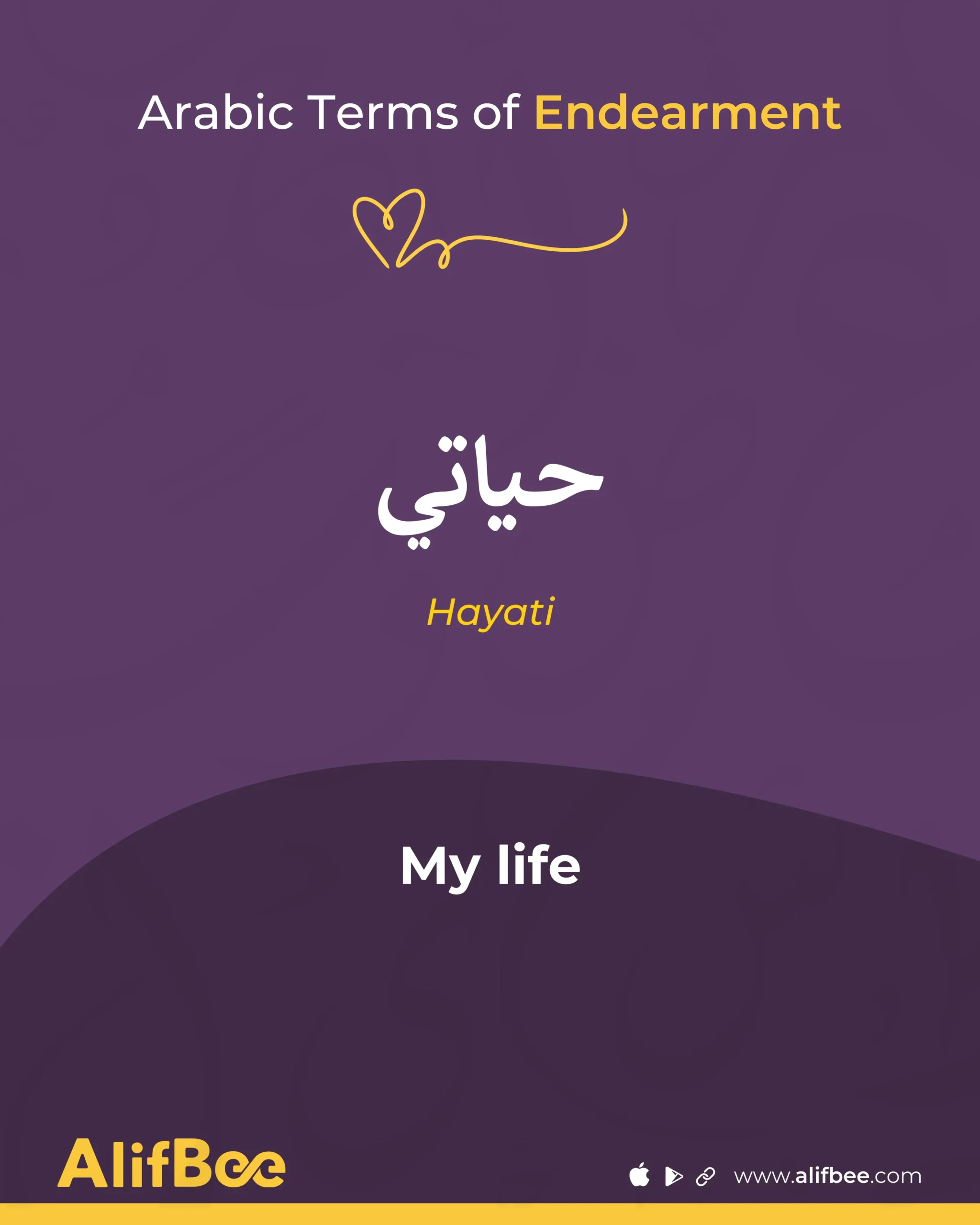
Hayati - حياتي (My life)
Hayati in Arabic means “My life”. This is also a very common Arabic expression to call your wife, husband, or fiancée. It is very romantic and often written in love letters and cards, and heard in songs.
It is common in Levantine Arabic, as well as in Egyptian and Gulf Arabic.
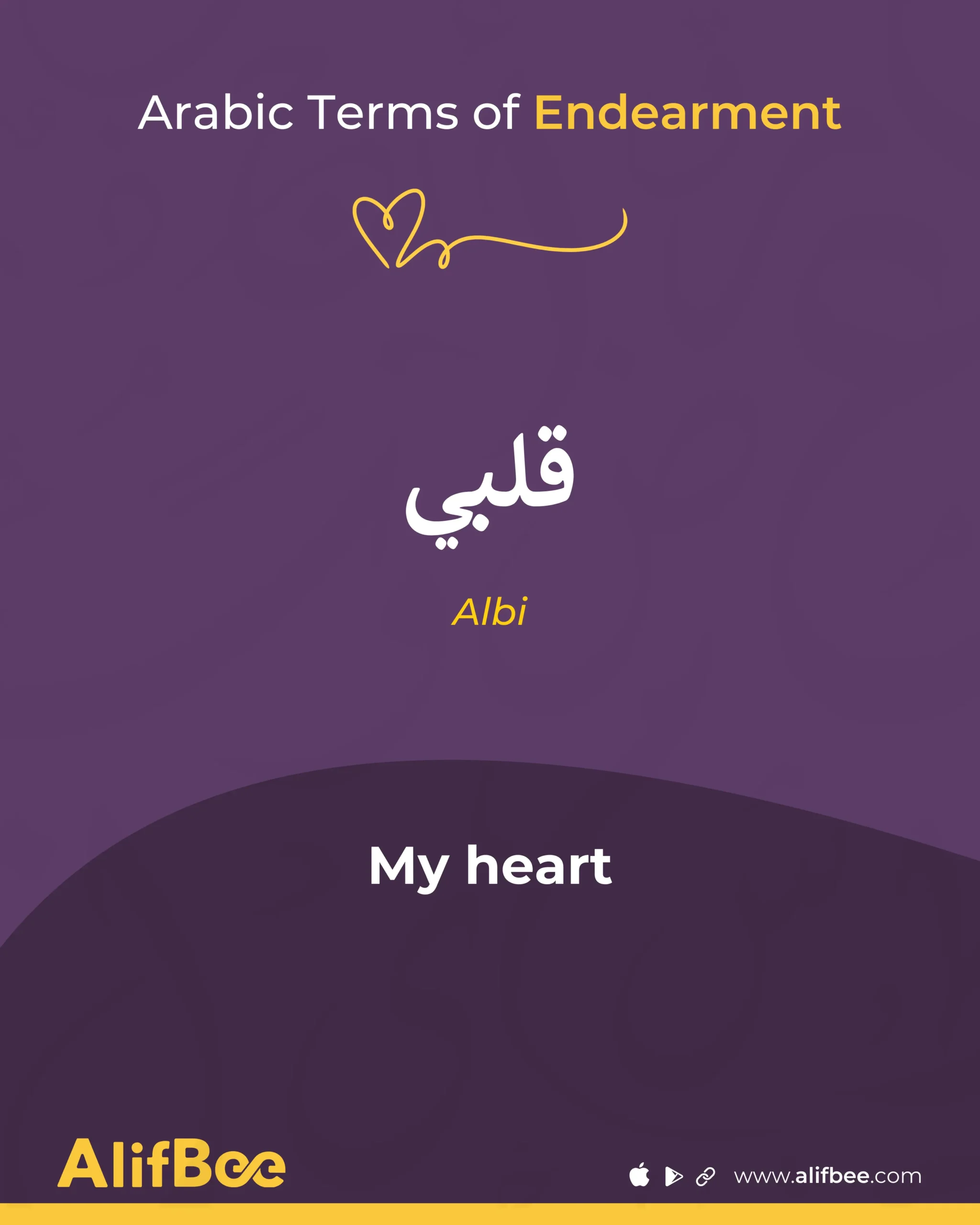
Albi - قلبي (My heart)
Hayati in Arabic means “My life”. This is also a very common Arabic expression to call your wife, husband, or fiancée. It is very romantic and often written in love letters and cards, and heard in songs.
It is common in Levantine Arabic, as well as in Egyptian and Gulf Arabic.
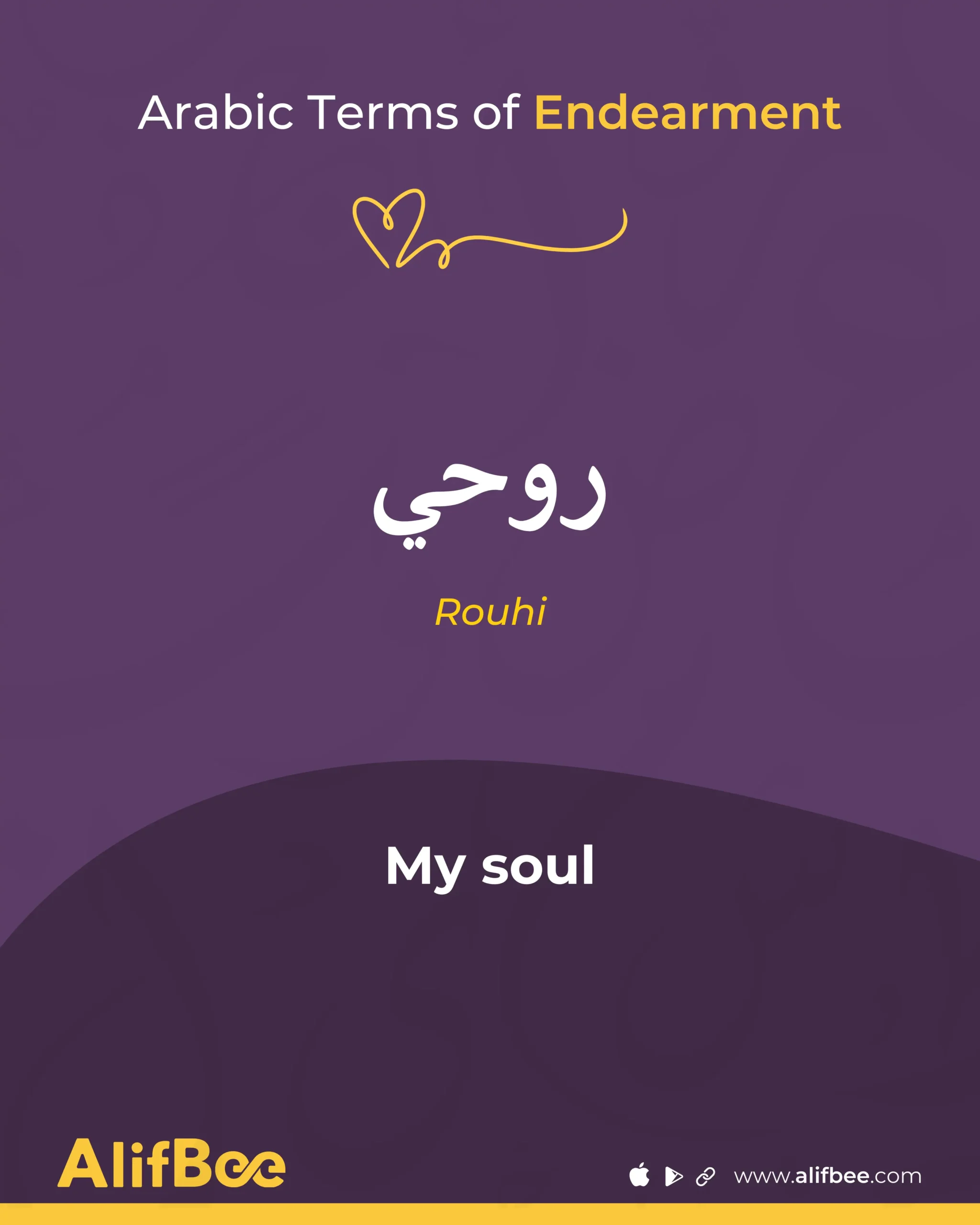
Rouhi - روحي (My soul)
Rouhi in Arabic means “My soul” or “My spirit,” a person’s most precious possession, so is the person you call Rouhi.
It is a deep term of endearment in Arabic, often used with partners, parents, or children. It is used with people who are very precious in our lives.
Some people also use “Rouh rouhi”, which means “the soul of my soul”. It is a deeper term for incredibly precious relationships.
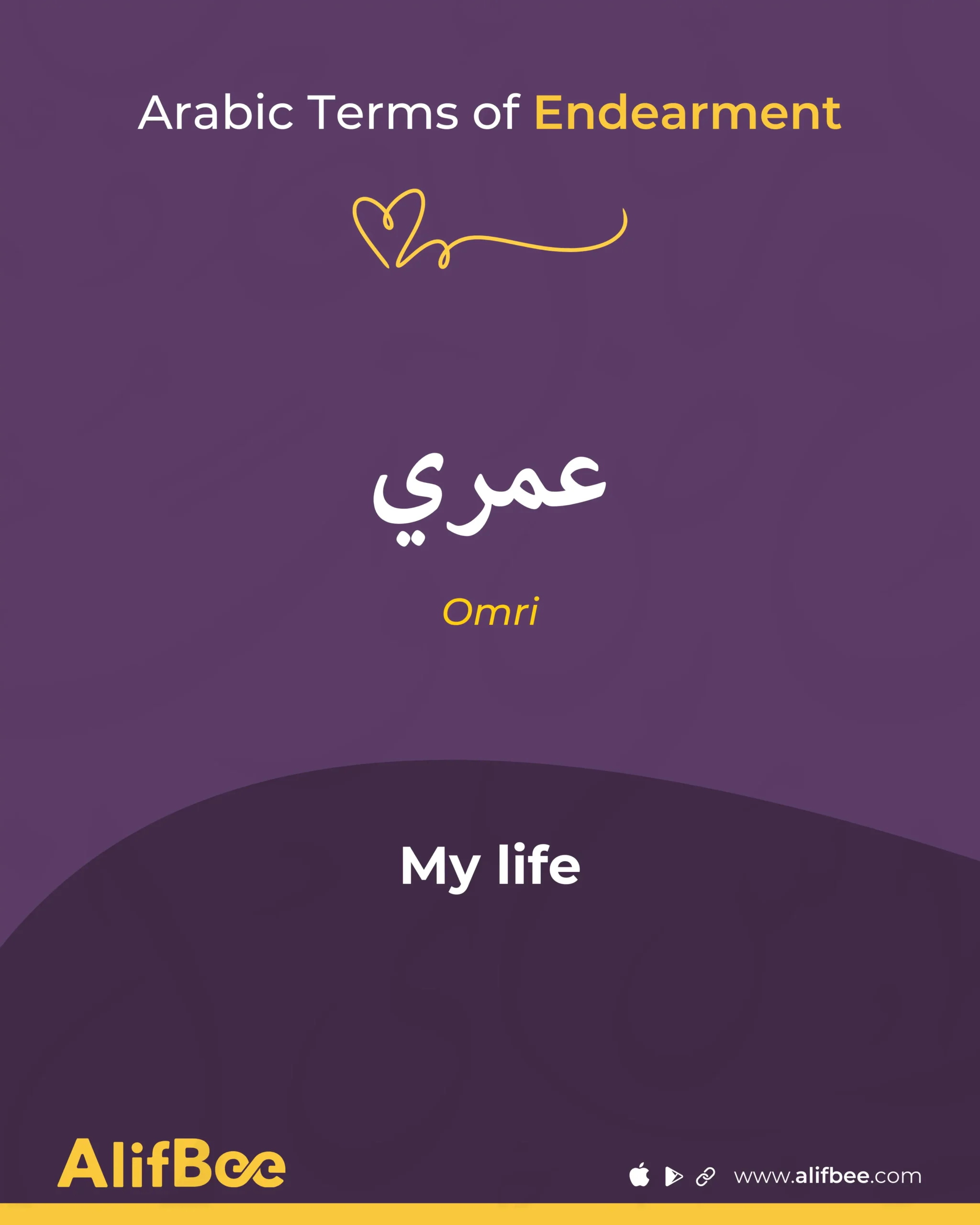
Omri - عمري (My life)
“Omr” in Arabic refers to someone’s life or, more accurately, lifetime. Telling someone “Omri” reflects the deep status they hold in your life.
Arabic speakers often use it with partners, parents, and children.
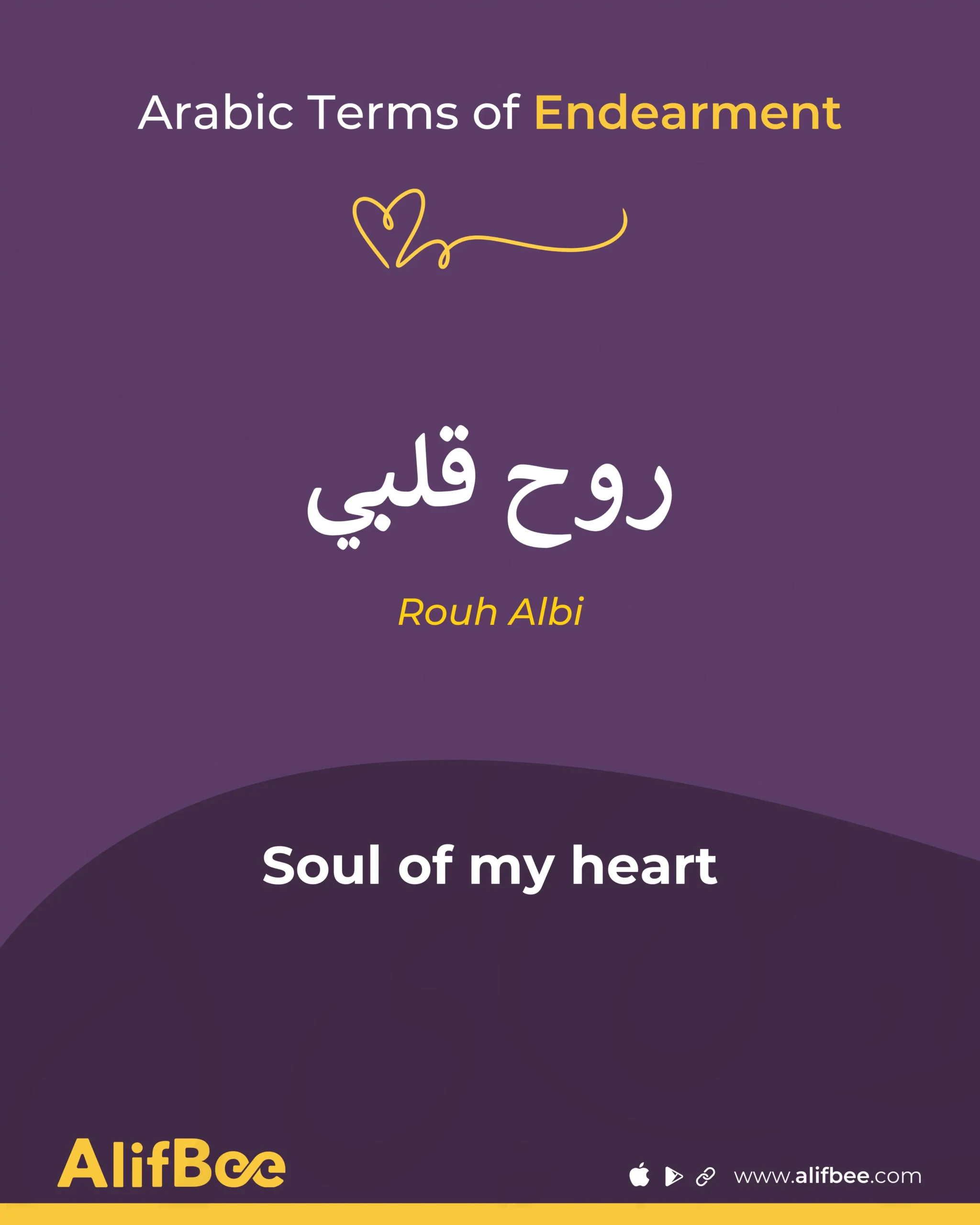
Rouh Albi - روح قلبي (Soul of my heart)
This beautiful expression is a combination of phrases 3 & 4. It translates to “the soul of my heart” and is another way to express profound affection towards partners and children.
The pronunciation of “Albi” is similar to expression 3, more so because this is a phrase common in Egyptian Arabic, not MSA. It is also more heard in spoken Arabic, whereas “Qalbi” in Fusha is more formal and read in poetry, love letters, and literature.
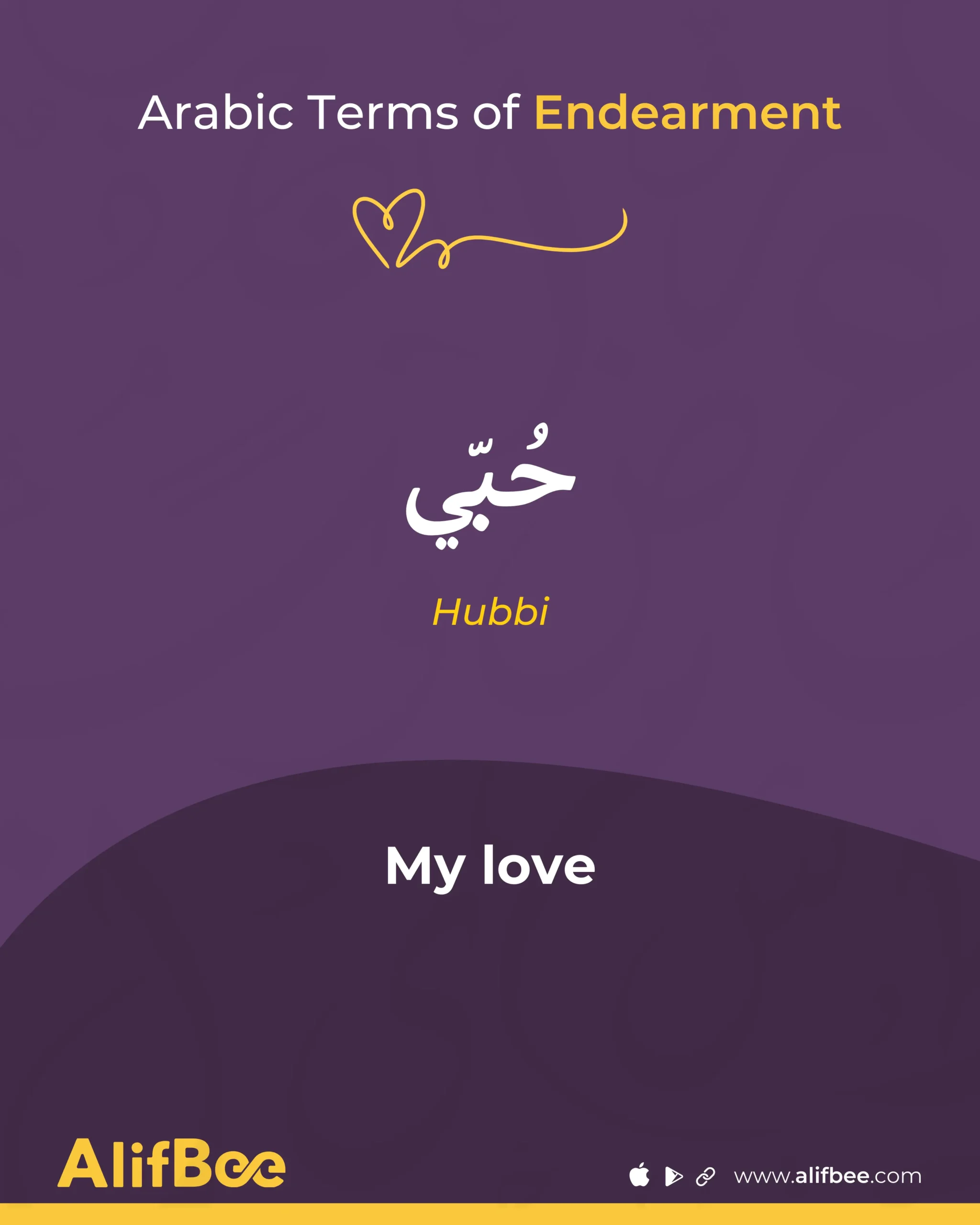
Hubbi - حُبّي (My love)
This one is simple, derived from the word hubb, “love”. Though less common than other expressions, it is still understood easily in MSA and Arabic dialects.
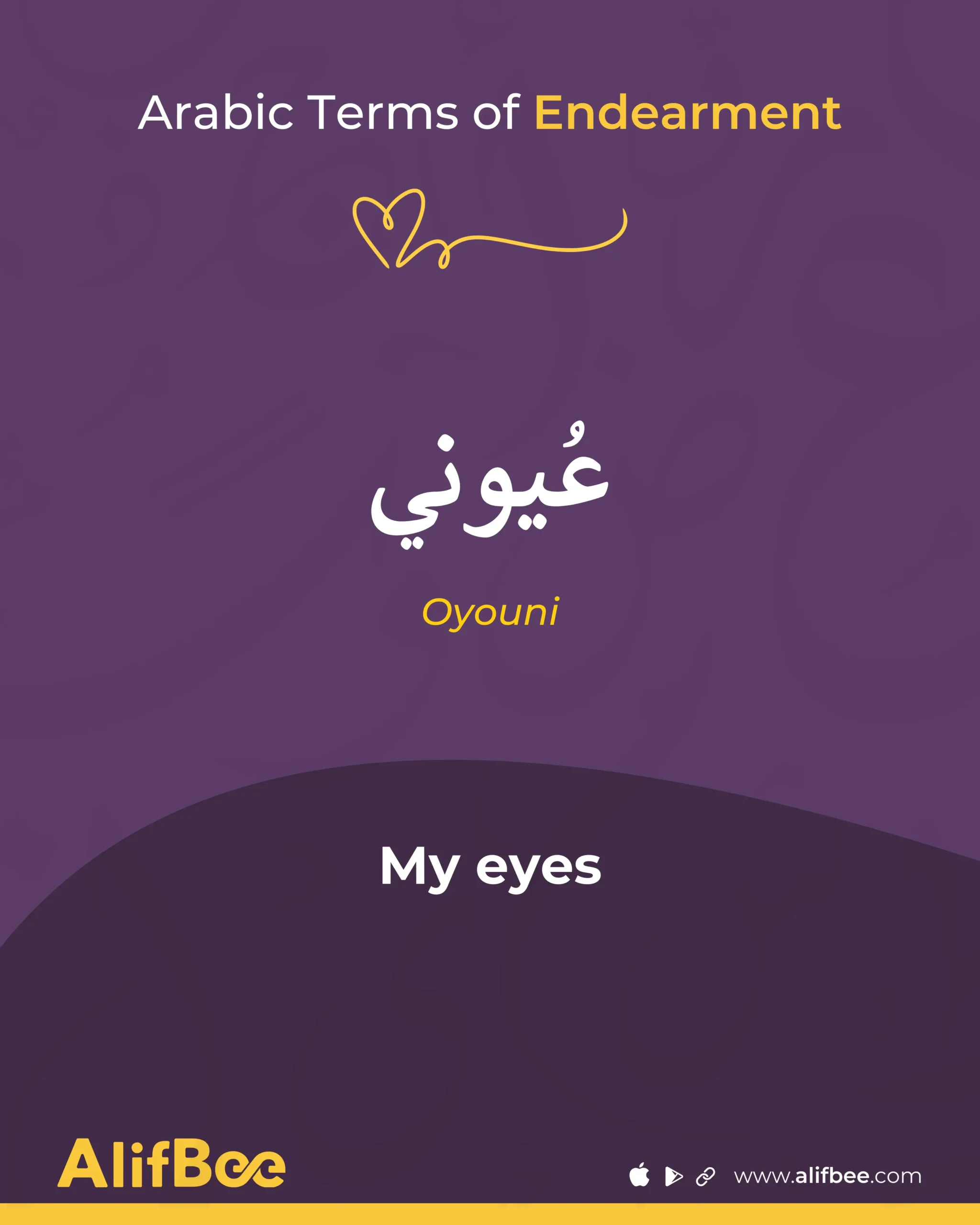
Oyouni - عُيوني (My eyes)
This term uses the precious body part “the eyes” to refer to those dear to us. It means you see the world through this person and their happiness. It is an affectionate expression to use with your partner, parents, or children.
Nour Eeni - نور عيني (Light of my eye)
This charming expression is similar to the previous one. It translates to “the light of my eye” and is often used with our loved ones and intimate relations.
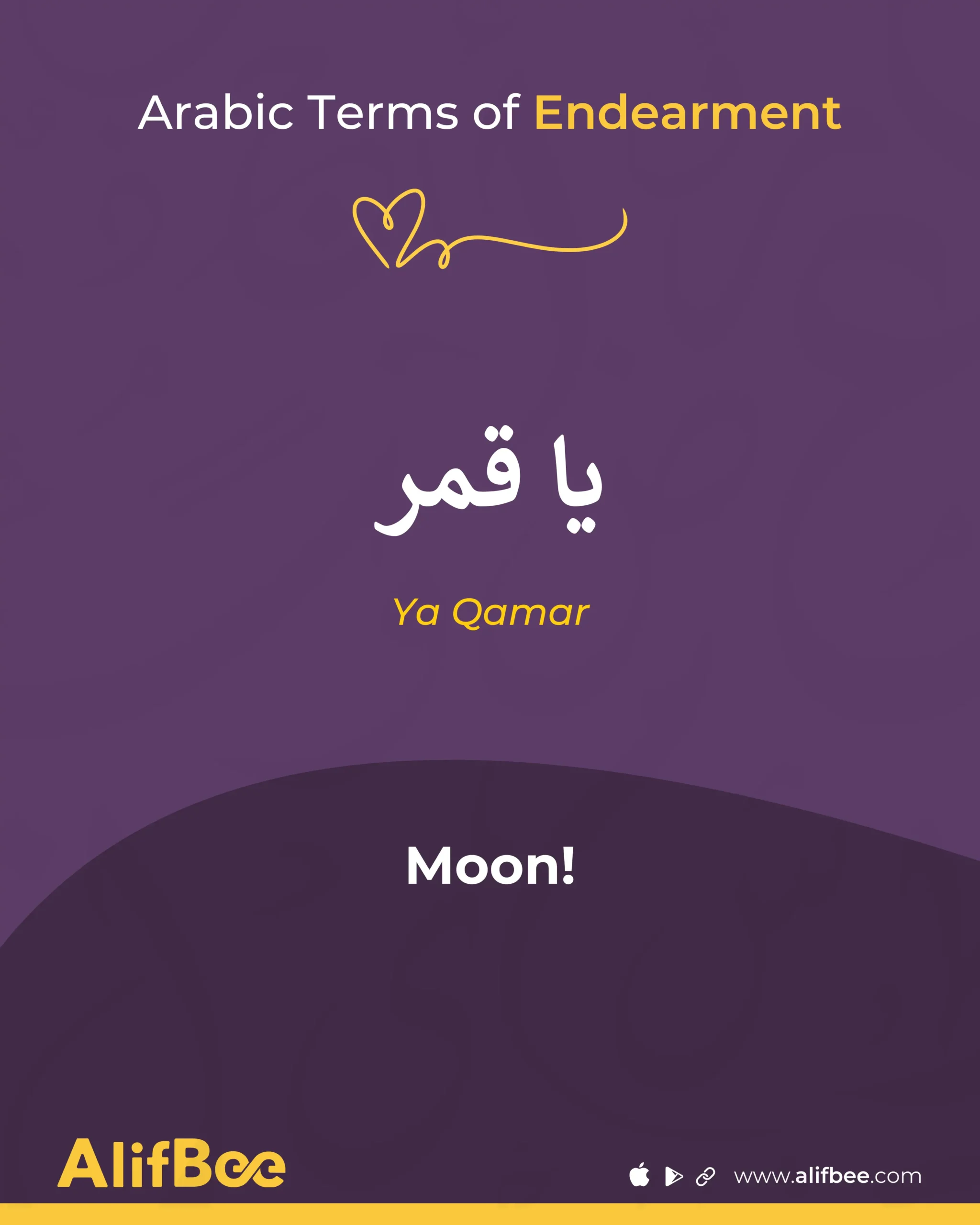
Ya Qamar - يا قمر (Moon!)
This is another popular phrase of endearment that likens the person you are talking to to the moon.
It is a warm expression used among lovers and even among close friends to express friendliness. The pronunciation in local dialects softens to become “ya amar”, dropping the letter Qaaf.
Learning Arabic Terms of Endearment Easily: Grammar Tips
To easily learn these terms, you need to notice the pattern in almost all the Arabic terms of endearment. They all, except for 10, have the suffix “-i” in the end, which stands for the possessive “my”.
For example, in “Rouhi”, Rouh means “soul” in Arabic. With the -i at the end, it becomes “My soul”.
All of these expressions can also be preceded by “ya”, a calling particle that further deepens the phrase.
Expressions of Affection in the Arabic Culture
These terms reflect the deep emotional nature of Arabic relationships and family.
They also permeate all forms of Arabic culture, from artistic designs and calligraphy to famous poetry and literature, and, of course, popular Arabic songs.
So when you learn these common Arabic terms of endearment, you will add rich and warm expressions to your Arabic vocabulary to express your love daily to your family and loved ones.
You will also get a feel of the Arabic poetry and romantic literature.
Final word
Learning these expressions is essential, no doubt, for deeper expression, but that is not everything for Arabic learners who seek to speak Arabic fluently.
On this trip, you need a trusted companion, and what better way and a more loving friend than AlifBee to guide you through it?
Download AlifBee and start learning Arabic with guided and structured lessons, all while having fun. Don’t delay this easy step and take advantage of the free 14-day trial period.