
As every Arabic learner knows, Arabic is considered one of the most challenging languages in the world. Learning Arabic as a foreigner can be difficult, and you may start with weak or basic language skills. However, this does not mean you will always remain at this level.
With consistent practice, time, and hard work, you can significantly improve your Arabic communication skills. To make real progress, you need to work on all language skills: listening, speaking, reading, and writing, while staying patient and confident.
How Do You Get Better at Arabic and Improve Your Arabic Skills?
Knowing how to improve your Arabic language skills is essential to learning. Learning basic vocabulary and grammar is enough to reach a beginner level, but if your goal is fluency, you need to focus on further developing your language skills.
First, you should understand that asking “how to improve your Arabic skills” means being ready for hard work. Becoming fluent in Arabic requires improving all four skills: writing, speaking, listening, and reading.
Here are some ways to help you improve your Arabic language skills and take the first steps toward fluency.
Improving Your Listening in Arabic
Listening is essential for understanding others and taking part in conversations. One effective way to improve your listening skills is mirroring, which involves listening to Arabic audio and repeating what you hear.
In addition, regular exposure to Arabic content is key. Listening to songs, radio programs, and YouTube videos provides valuable practice. Watching Arabic videos with Arabic subtitles is especially helpful, as it helps you connect spoken words to their written form.
How to Improve Arabic Speaking Skills
Knowing how to pronounce Arabic words and speaking naturally with a native speaker are two different things. To express yourself confidently in Arabic, you need to develop strong speaking skills and be able to recall words quickly and spontaneously.
Improving your Arabic speaking skills requires consistent practice. You need to speak Arabic regularly until it feels natural. There are several ways to do this, including:
- Mirroring: One of the most effective ways to improve your speaking skills is to mirror native speakers. You can watch Arabic videos and repeat what is said multiple times. Recording yourself and comparing your speech to the original audio helps you notice mistakes and gradually improve your pronunciation.
- Speaking with a learning partner: Practicing with another person is essential for breaking the language barrier and improving your Arabic communication skills. Don’t worry about making mistakes, as your primary goal is to get comfortable speaking Arabic and gradually develop a more natural, native-like accent.
- Learning common phrases: It’s important to learn the most frequently used Arabic phrases. You can organize them into categories, such as “common phrases in the market” or “common phrases at the airport,” to make learning easier and more practical.
Improving Your Reading in Arabic
Reading can be challenging for beginners in Arabic, especially when the vocabulary is limited. Practicing Arabic reading with simple texts, such as children’s books, can help because they are short and easy to understand.
Another effective method is to read parallel texts or books with translations, which helps beginners understand sentence meaning more easily.
As your vocabulary grows and you can understand larger texts with less reliance on a dictionary, focus on improving reading speed. Choose books in a specific genre or by a single author so you encounter the same words repeatedly, allowing you to understand meaning from context and read more smoothly.
Gradually increase the difficulty of the books you read. As your reading skills improve, challenge yourself with texts that have more advanced vocabulary and complex expressions.
How to Improve my Arabic Writing Skills?
To improve your Arabic writing skills, you need a solid understanding of grammar and correct spelling. If you don’t have a teacher, YouTube videos and apps like AlifBee can be very helpful for learning grammar.
AlifBee provides many lessons that help you understand, practice, and master Arabic grammar. It also supports spelling practice and teaches essential vocabulary across a wide range of topics.
What is the Best Way to Learn the Arabic Subject?
Many people believe that reading Arabic is the best way to start learning the language. This can work well if you have a teacher to guide you with pronunciation and grammar; otherwise, it can feel confusing and overwhelming.
If you want to learn Arabic without a teacher, starting with a learning app is often the best option. Arabic learning apps are ideal for beginners, as they teach the alphabet, everyday vocabulary, and grammar step by step. Watching Arabic learning videos on YouTube is also helpful, as many channels explain grammar clearly and support listening and speaking practice.
Another effective way to improve your Arabic is by communicating with native speakers. Speaking with them greatly enhances listening and speaking skills, improves pronunciation, and helps you understand Arabic faster. Texting with native speakers can also strengthen your reading and writing skills.
Which Version of Arabic is the Easiest to Learn?
Since every Arabic-speaking country has its own dialect, many learners believe it is better to start by learning a popular dialect. However, beginning with a dialect is usually not the best approach.
While learning a dialect can help you communicate with locals in a specific country, it can also be complicated for beginners. Arabic dialects lack clear written rules or standardized grammar and are mainly learned through direct interaction with native speakers.
So, which form of Arabic should you learn? The best answer is Modern Standard Arabic (MSA).
Modern Standard Arabic has clear grammar rules that are widely documented and easy to find in books, apps, and courses. Learning MSA helps you form correct words and sentences, improves your reading and speaking skills, and provides a strong foundation for learning other dialects later.
Another advantage of MSA is that it is closely related to Quranic Arabic and is used in books, newspapers, and magazines. Learning it allows you to study in Arabic-speaking countries and navigate Arabic websites with ease.
One effective way to learn Modern Standard Arabic is through the AlifBee app, which supports learners at all levels, regardless of their previous knowledge of Arabic.
Most spoken Arabic Dialects
After learning Modern Standard Arabic, it is a good idea to learn a popular Arabic dialect if you plan to travel to an Arabic country. Egyptian Arabic is often considered one of the best options, as it is widely understood across most Arabic-speaking countries.
How Can I Maintain my Arabic skills?
The saying “use it or lose it” applies strongly to learning a new language. If you don’t practice Arabic regularly, you will gradually forget it. So how can you maintain your Arabic skills? There are several effective ways to keep the level you have achieved through hard work, including:
1. Listening to Arabic Songs frequently
You can find many songs in Modern Standard Arabic on YouTube. Listening to songs, especially with lyrics, helps maintain both listening and reading skills. Over time, you may even sing along, which also improves speaking skills. Since music is enjoyable, it feels more like entertainment than study.
2. Reading books and magazines in Arabic
Reading Arabic books, magazines, or news articles once a week or every few weeks is an effective way to maintain your reading skills. It also helps you retain the vocabulary you have already learned.
3. Speaking to an Arabic friend
If you have Arabic-speaking friends, try to contact them from time to time. Phone calls are a great way to stay connected and maintain your speaking skills.
4. Use Learning apps
Arabic learning apps can help you maintain all your language skills. For example, AlifBee offers many lessons that cover all skills and help you remember essential everyday vocabulary.
5. Attend social events
Even if you don’t live in an Arabic-speaking country, you can often find a local Arabic community nearby. Attending cultural events or gatherings offers a great opportunity to meet Arabic speakers, practice the language, and make new friends.
6. Teach Arabic to Others
Yes, you can teach Arabic even if you are not a native speaker. Teaching others helps you maintain the language, avoid forgetting it, and even earn extra income. You can start by teaching beginners Arabic letters, sounds, vowels, basic grammar rules, and common phrases.
What Online Platforms Can Help Master Arabic?
If you’re wondering how to learn Arabic online, many available tools can help you learn and master the language. Online platforms and apps offer a wide range of features and services to support Arabic learning. If you’re asking where to learn Arabic online, here is a list of some of the best Arabic learning apps and platforms:
1. AlifBee
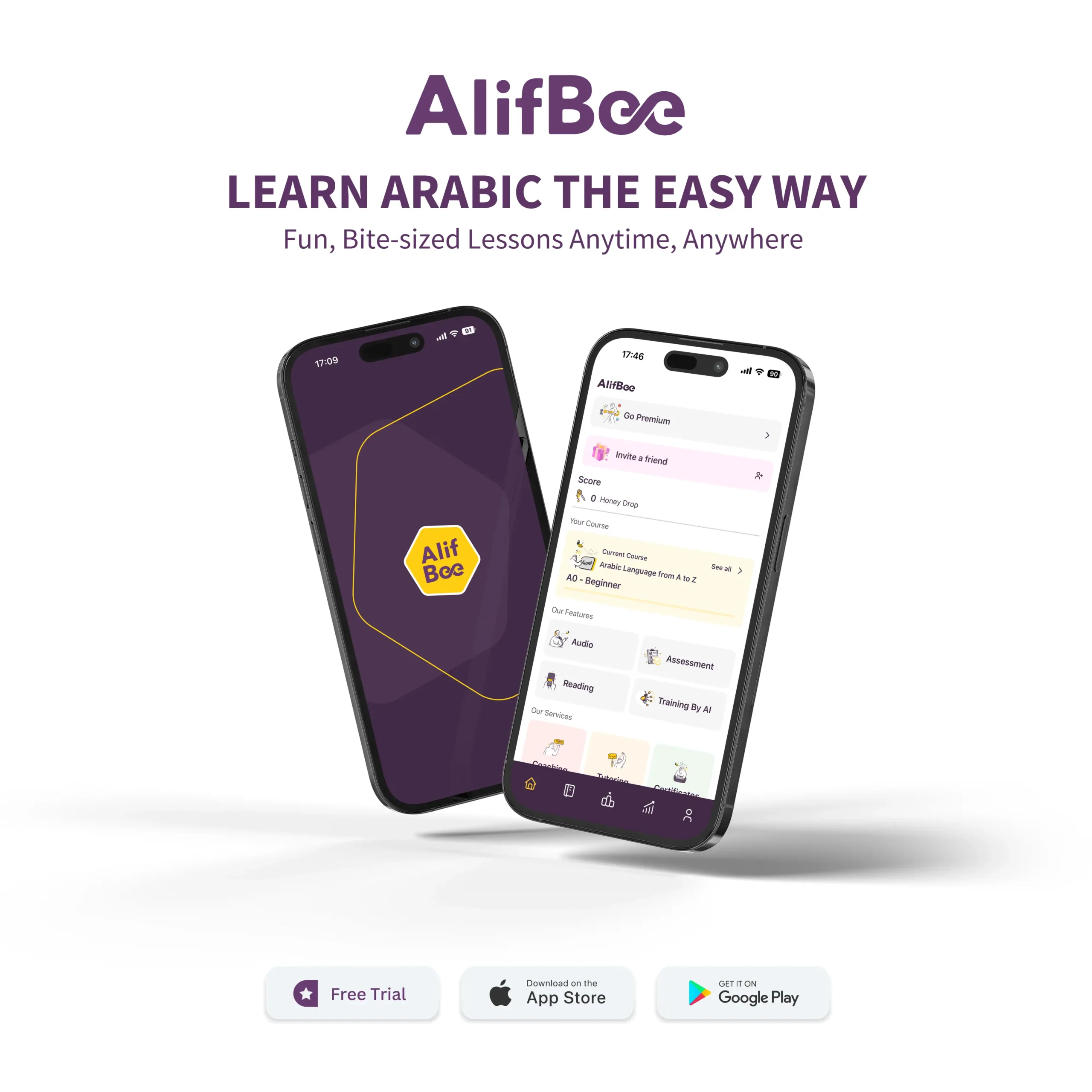
The AlifBee app is one of the best platforms for learning and mastering Arabic. It offers learning levels from beginner to advanced, so you can start with AlifBee regardless of your current level of Arabic.
With AlifBee, you will learn the Arabic alphabet, grammar, and new vocabulary across a wide range of topics, as well as develop your reading, listening, and writing skills. The platform focuses on teaching Modern Standard Arabic at reasonable prices, making it an excellent choice for beginners.
You can use the AlifBee app on both Android and iOS, and you can also access your lessons through the website on a desktop, laptop, or mobile phone. When you register, you gain free access to several lessons, allowing you to try the app before subscribing.
2. Duolingo
Duolingo is one of the best Arabic learning apps for learners who want to study Arabic as a second language. It is especially useful for building vocabulary. However, it is not the best choice if you want to learn Arabic grammar in depth.
3. Preply
This platform is a good option if you want to talk to native Arabic speakers. You can find native speakers from different Arabic countries to practice with and improve your language skills. You can also find Arabic tutors who can help you learn and practice Arabic more effectively.
Final Word
Always keep in mind that learning Arabic is a continuous process. You need to practice the language regularly to avoid forgetting it, and the AlifBee app offers an enjoyable learning experience at reasonable prices.