Ways to Say Ok in Arabic: Use Guide & Examples
Learn how to say OK in Arabic! Discover common phrases and useful words like *tayyib* & * tamam* to use in everyday Egyptian Arabic conversation.
In Arabic, a simple response can have several meanings. For example, a word like “OK” can signal agreement, confirm plans, be a polite response, indicate someone’s condition, or mean everything is fine.
Saying ‘Ok’ in Arabic is not limited to a single fixed expression. There are several alternatives that depend on the context, tone, and level of formality. Some phrases can be used in a work setting, while others are more common in everyday conversation.
This guide will help you learn how to say OK in Arabic in a proper, natural way, especially when speaking with native speakers. You’ll learn the most common phrases, what they mean, when to use them, and how people say them by looking at examples in English.
Below are the most common Arabic phrases that are often used for Ok meaning in Arabic, as well as explaining the slight differences between each one and when to use them.
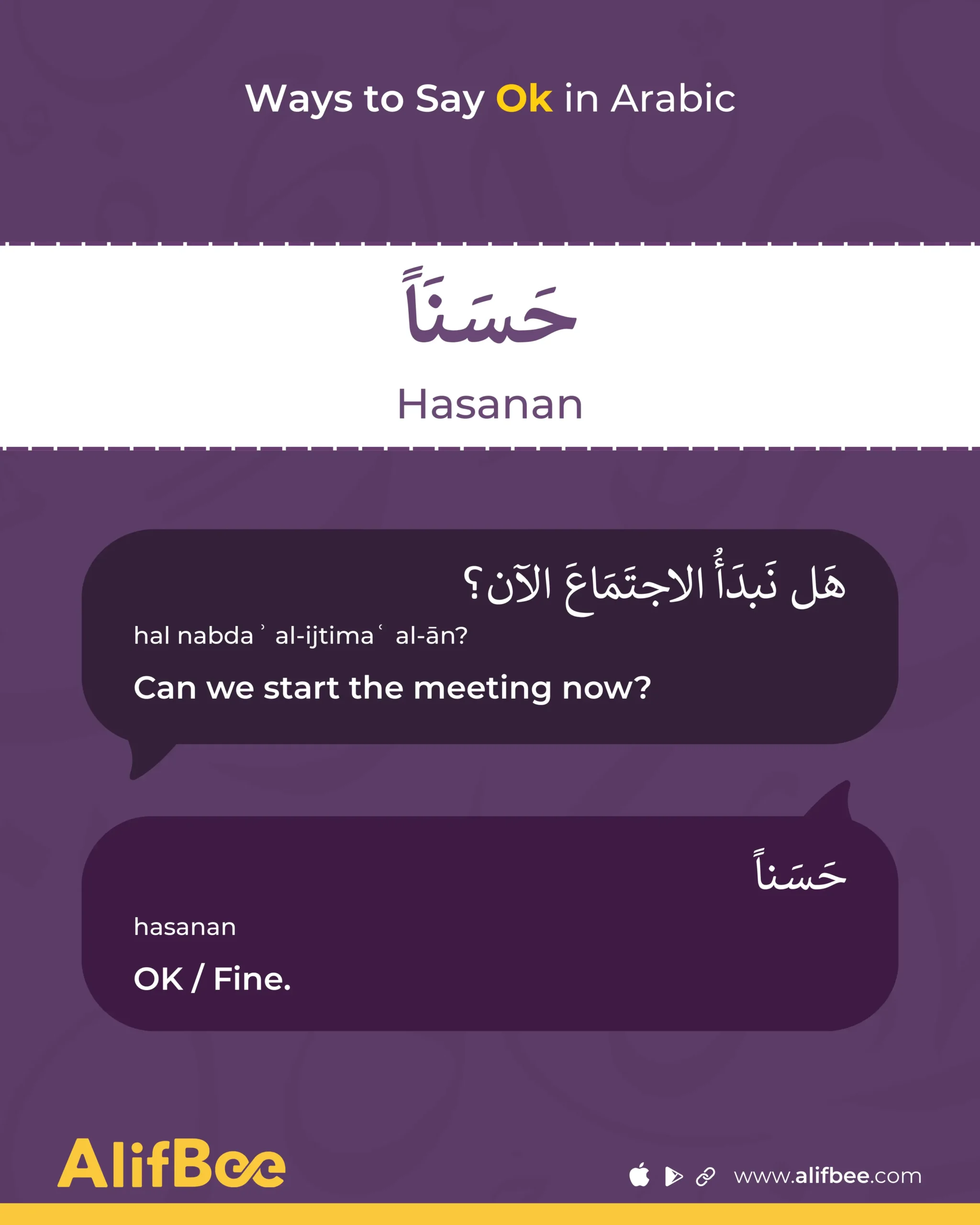
Hasanan is a neutral, formal way to say “OK” or “fine.” It is commonly used when you want to sound polite, calm, and professional, such as in meetings or official discussions. This word shows agreement and consent without sounding casual.
English
Pronunciation
Arabic
Can we start the meeting now?
hal nabdaʾ al-ijtimaʿ al-ān?
هَل نَبدَأُ الاجتِمَاعَ الآن؟
OK / Fine
hasanan
حَسَناً
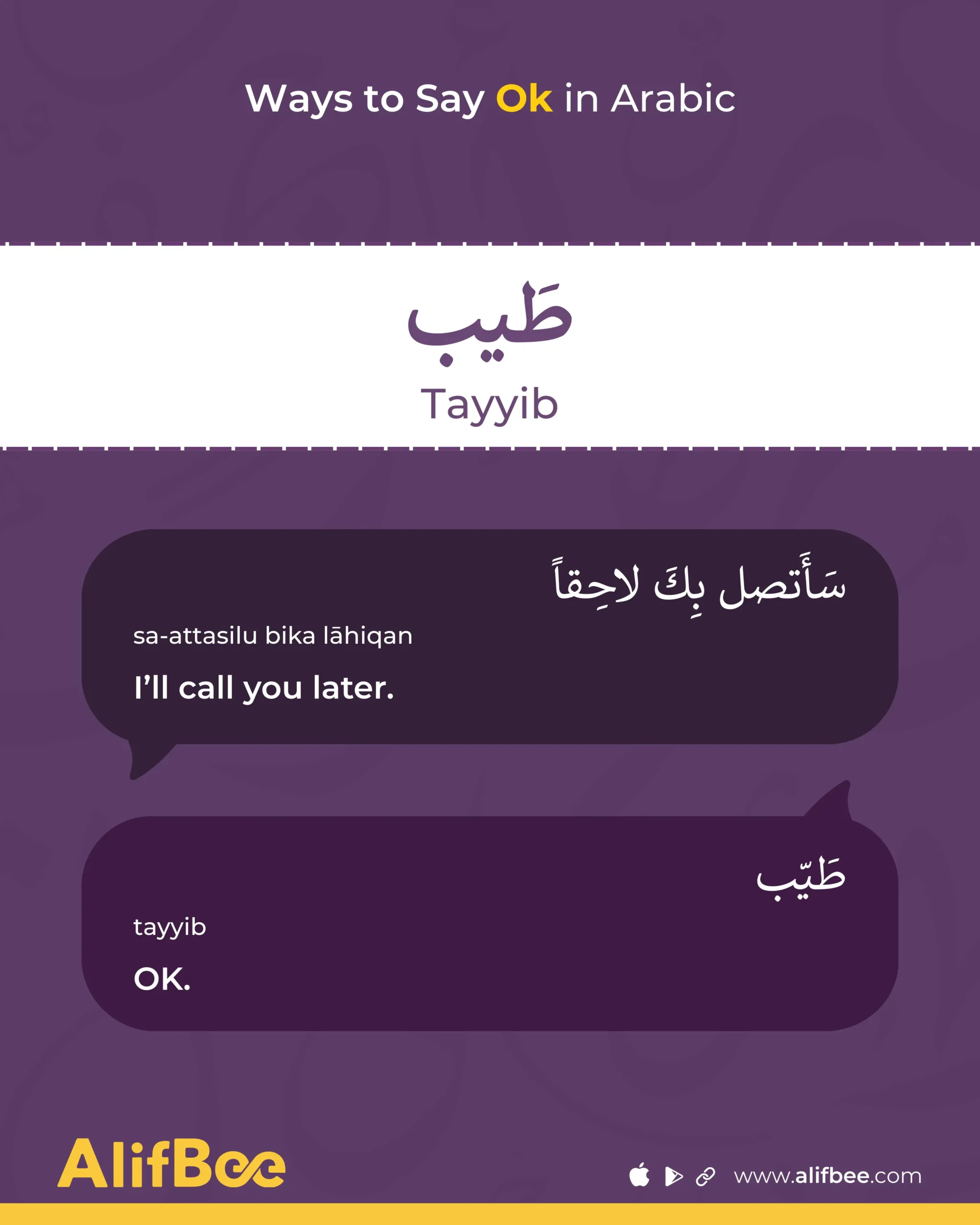
Tayyib is one of the most flexible and common responses in Arabic. People say it constantly in daily life. It can mean okay, alright, or then, and is often used to accept a suggestion or move a conversation forward naturally.
English
Pronunciation
Arabic
I’ll call you later.
sa-attasilu bika lāhiqan
سَأَتصل بِكَ لاحِقاً
OK
tayyib
طَيّب
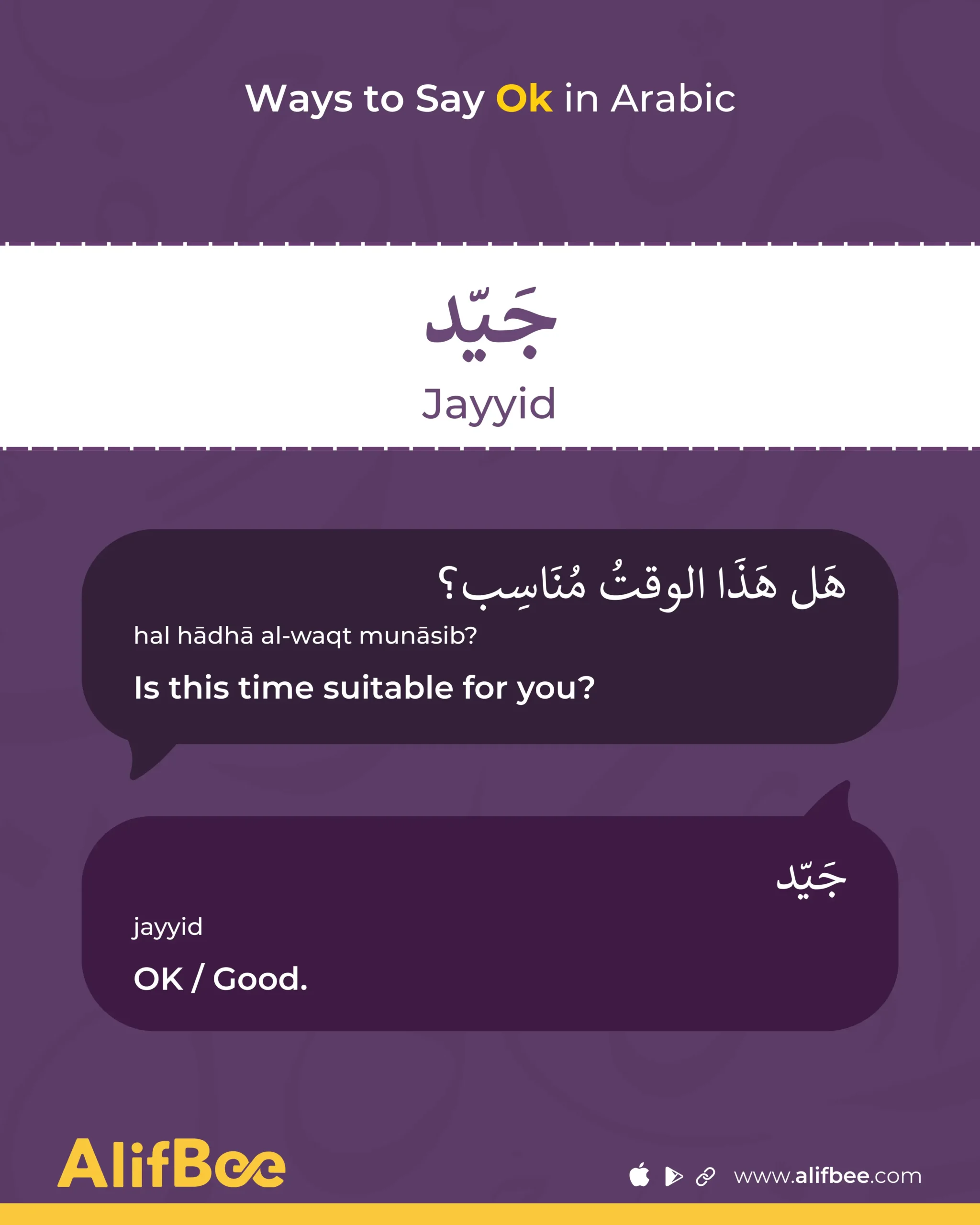
Jayyid literally means ‘good,’ but in actual conversation it often functions as ‘okay’ or ‘fine.’ It is commonly used to confirm something, respond to information, or express neutral approval, especially when something works well enough.
English
Pronunciation
Arabic
Is this time suitable for you?
hal hādhā al-waqt munāsib?
هَل هَذَا الوقتُ مُنَاسِب؟
OK / Good
jayyid
جَيّد
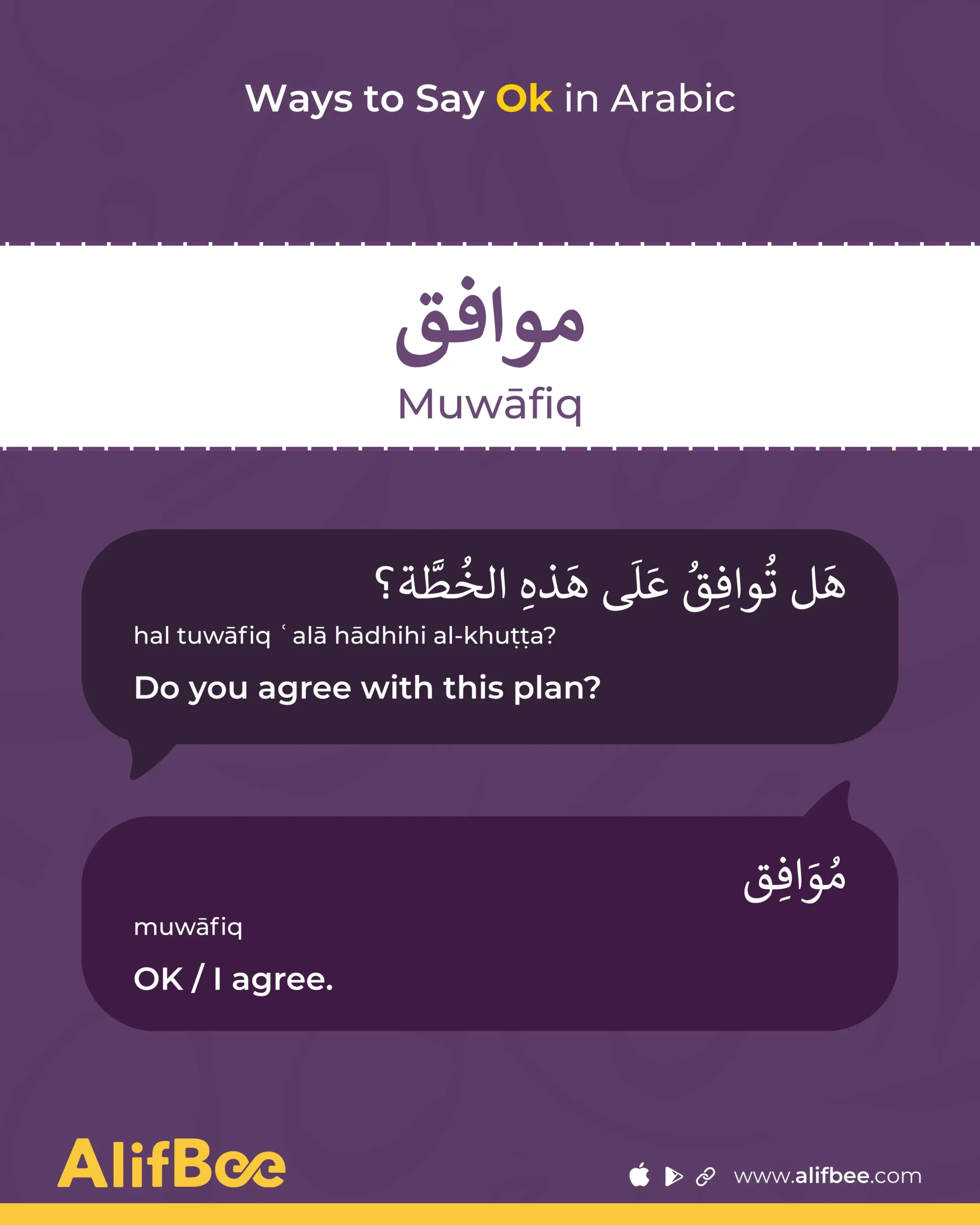
Muwāfiq expresses clear agreement and consent. It translates to “I agree” or “I approve” and is used when you want to make your acceptance clear and direct. This phrase works well in both formal and semi-formal situations.
English
Pronunciation
Arabic
Do you agree with this plan?
hal tuwāfiq ʿalā hādhihi al-khuṭṭa?
هَل تُوافِقُ عَلَى هَذهِ الخُطَّة؟
OK / I agree
muwāfiq
مُوَافِق
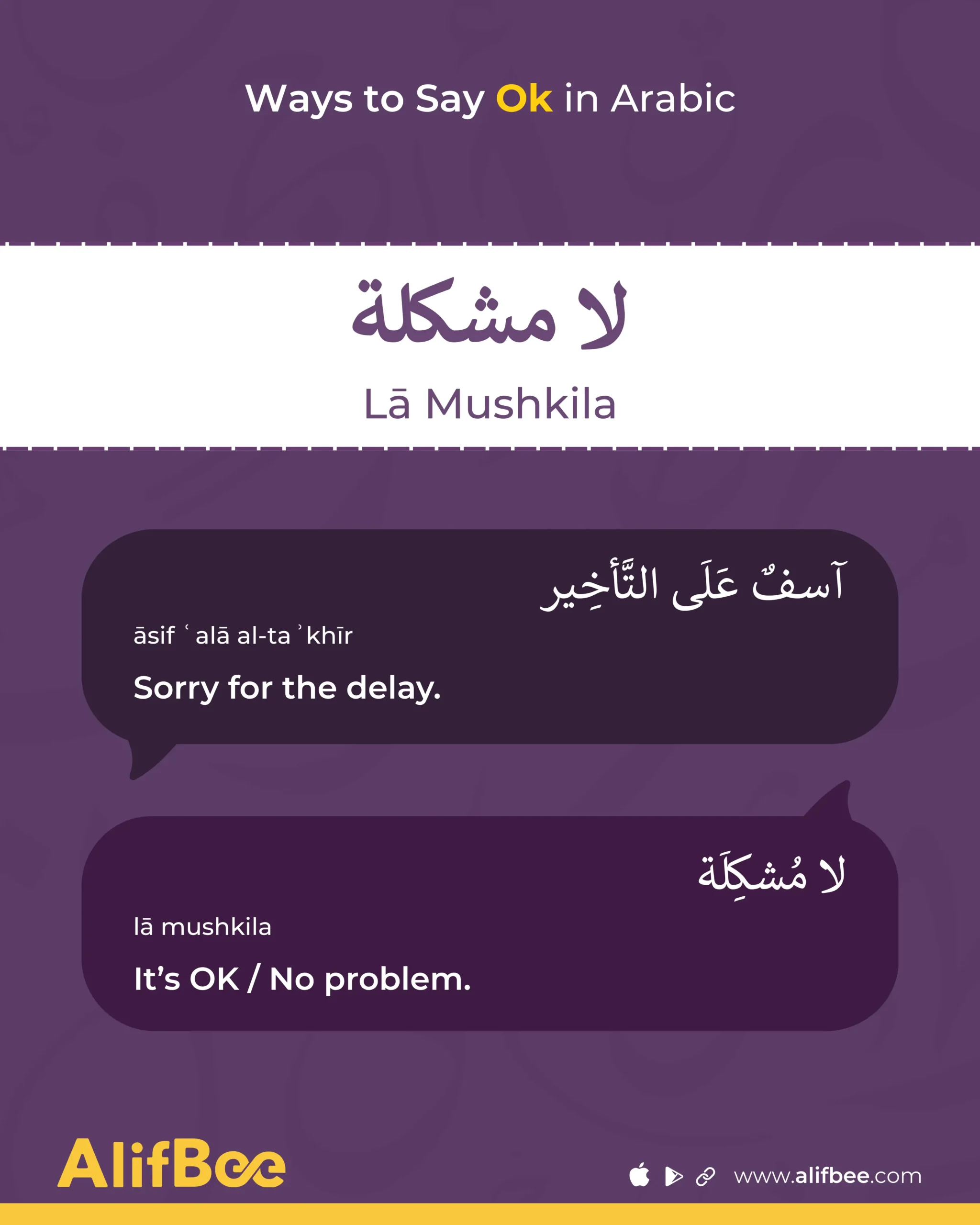
Lā Mushkila means no problem and is widely used in relaxed, everyday situations. It reassures the other person and keeps the tone friendly, especially when responding politely to apologies or small issues.
English
Pronunciation
Arabic
Sorry for the delay.
āsif ʿalā al-taʾkhīr
آسفٌ عَلَى التَّأخِير
It’s OK / No problem
lā mushkila
لا مُشكِلَة
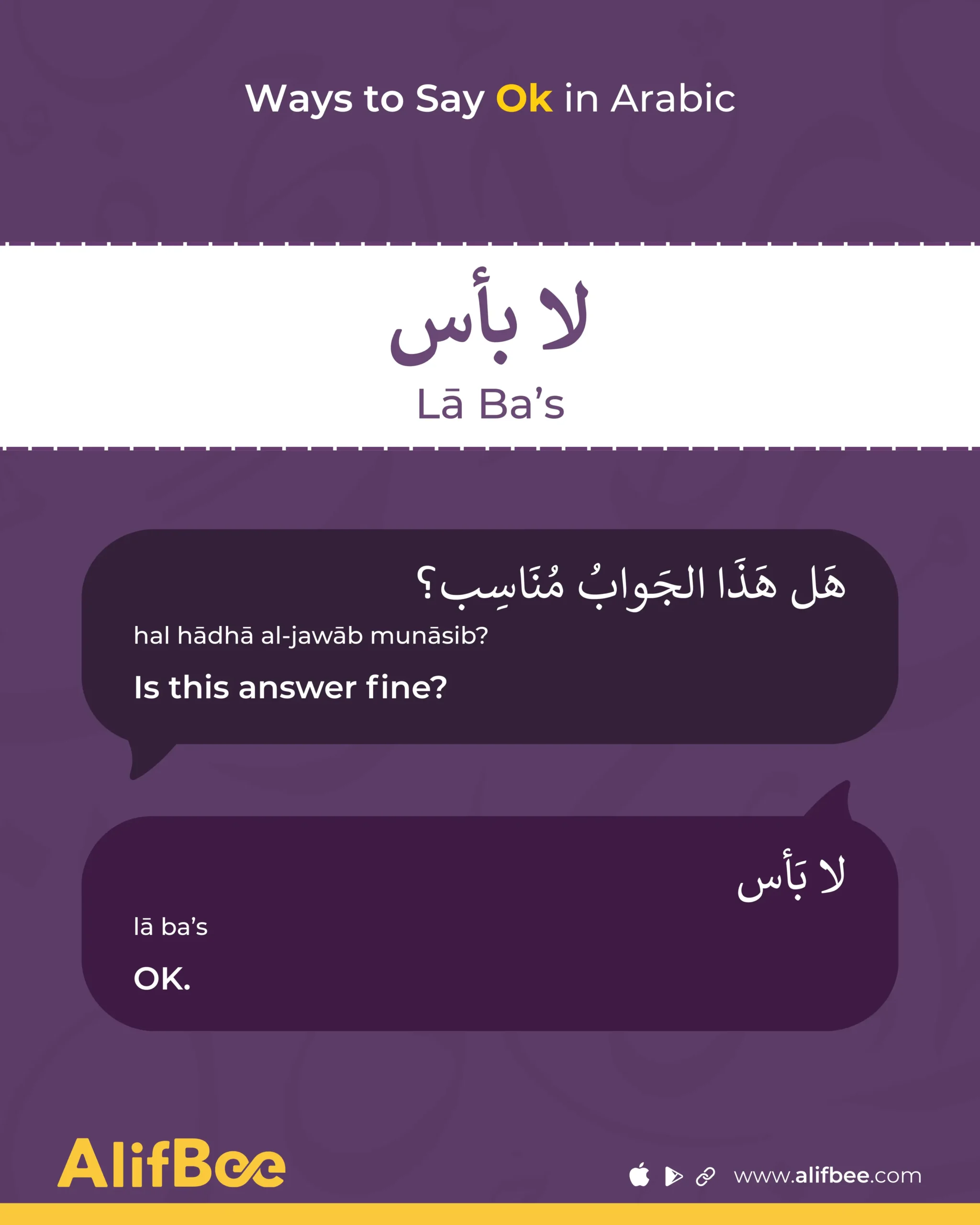
Lā ba’s means it’s okay or that’s fine. It sounds calm and slightly more polite than lā mushkila. It is often used to reassure someone or to give gentle approval without strong emotion.
English
Pronunciation
Arabic
Is this answer fine?
hal hādhā al-jawāb munāsib?
هَل هَذَا الجَوابُ مُنَاسِب؟
OK
lā ba’s
لا بَأس
Arabs often ask simple questions to check whether someone is doing well. These questions are the natural way to say “Are you ok?” and are used in both formal and everyday situations.
The following questions are often used in conversations with friends, family members, and colleagues. They show care and attention, especially when someone looks tired, quiet, or unwell.
English
Pronunciation
Arabic
Are you OK?
hal anta bikhayr?
هَل أنتَ بِخير؟
Are you alright?
hal anta ʿalā mā yurām?
هَل أنتَ عَلَى مَا يُرَام؟
When answering questions like “Are you ok?”, “How are you?” or “How have you been?”, Arabic speakers use a few common replies that mean fine or okay. The choice depends on the context and the formality of the situation.
English
Pronunciation
Arabic
I am in good health
anā biṣiḥḥa jayyida
أَنا بِصحَّةٍ جيّدة
I’m OK / All is perfect
tamam
تَمَام
Yes / I’m fine
naʿam
نَعَم
These replies are part of everyday Arabic language. The phrase anā biṣiḥḥa jayyida explains your condition and sounds complete, so it fits formal situations.
Tamam is short, friendly, and the most commonly spoken reply, especially in Egyptian Arabic. Naʿam literally means “yes” and is often used when the situation is clear, and no extra explanation is needed.
Arabic dialects vary by region, and each has its own way of saying OK in Arabic. While Modern Standard Arabic is important for learning, dialect phrases are essential for social interaction, travel, and friendly conversation with native speakers across the Arab world.
The expressions in the table below are used every day, and each one reflects how people say “OK” in real life.
English
Region / Dialect
Pronunciation
Arabic
It’s OK / That works
Levantine Arabic
māshī
مَاشِي
Everything is fine / It’s going well
Levantine Arabic
māshī al-ḥāl
مَاشِي الحَال
OK / Good
Gulf Arabic
zayn
زِين
Good / Fine
Egyptian Arabic
kuwayyis
كُويِّس
OK (borrowed from English)
Widely used
okay
أُوكي
Knowing how to say ok in Arabic helps you respond naturally and interact better with native speakers, and it will directly build your confidence in the language.
To continue learning, download the AlifBee App and enjoy a free 14-day trial period. AlifBee helps you master essential phrases, pronunciation, and real-life usage step by step.
Alifbee made it easy for you to learn Arabic the way people actually speak, and it all starts with “OK.”
Author
Munia Jamal is a content and copywriter with 4+ years of experience in SEO writing, storytelling, and journalism, specializing in Arabic language learning and human-centered narratives from Gaza. She holds a Master’s in Sustainable Development from Al-Quds University and a Bachelor of Pharmacy from Al-Azhar University.

Achieve incredible results with our platform Learn Arabic Online with AlifBee

Join AlifBee Virtual School and master Arabic at your pace — from guided coaching to interactive self-learning.

Learn Arabic faster with live, one-on-one sessions tailored to your level and goals.

Explore AlifBee’s complete range of Arabic learning books for all ages!
Learn how to say OK in Arabic! Discover common phrases and useful words like *tayyib* & * tamam* to use in everyday Egyptian Arabic conversation.

Learn about the Arabic letter Yaa (ي). Discover the letter Yaa’s pronunciation in the Arabic alphabet. Explore how to write the letter Yaa (ي).

Learn the Arabic Alphabet: The Arabic Letter Waw و. Master the arabic letter waw (و)! Discover how to pronounce “w”, its forms, and words in the arabic alphabet.

Learn all Arabic pronouns in one clear guide. Personal, demonstrative, relative & possessive pronouns explained with examples for learners.