
Written by Dania Ghraoui, a translator and language teacher with 10 years of experience.
At a Glance: The Arabic alphabet has 28 basic letters and is written from right to left. Most Arabic letters connect to other letters, so their shape can change inside a word. Use this Arabic alphabet chart with pronunciation as a reference, then listen to native audio and practice short words.
When you first look at the Arabic alphabet, you’ll likely notice its beautiful, flowing shapes. But reading full words may feel challenging at the beginning.
It’s normal.
With the help of an Arabic alphabet chart, however, reading will gradually become easier.
In this article, you will have a complete Arabic Alphabet Chart with Pronunciation, English sound cues for comparison, and important notes to remember about each letter. We will also explain Arabic vowels and give you tips to learn the Arabic Alphabet from the AlifBee App.
Before you go further!
These AlifBee guides will help you understand how Arabic letters sound, connect, and work inside real words. Start with the full Arabic Alphabet guide, then review Arabic vowels and the Arabic pronunciation guide. You can also learn Why Is Arabic Written from Right to Left?
Arabic Alphabet Chart with Pronunciation
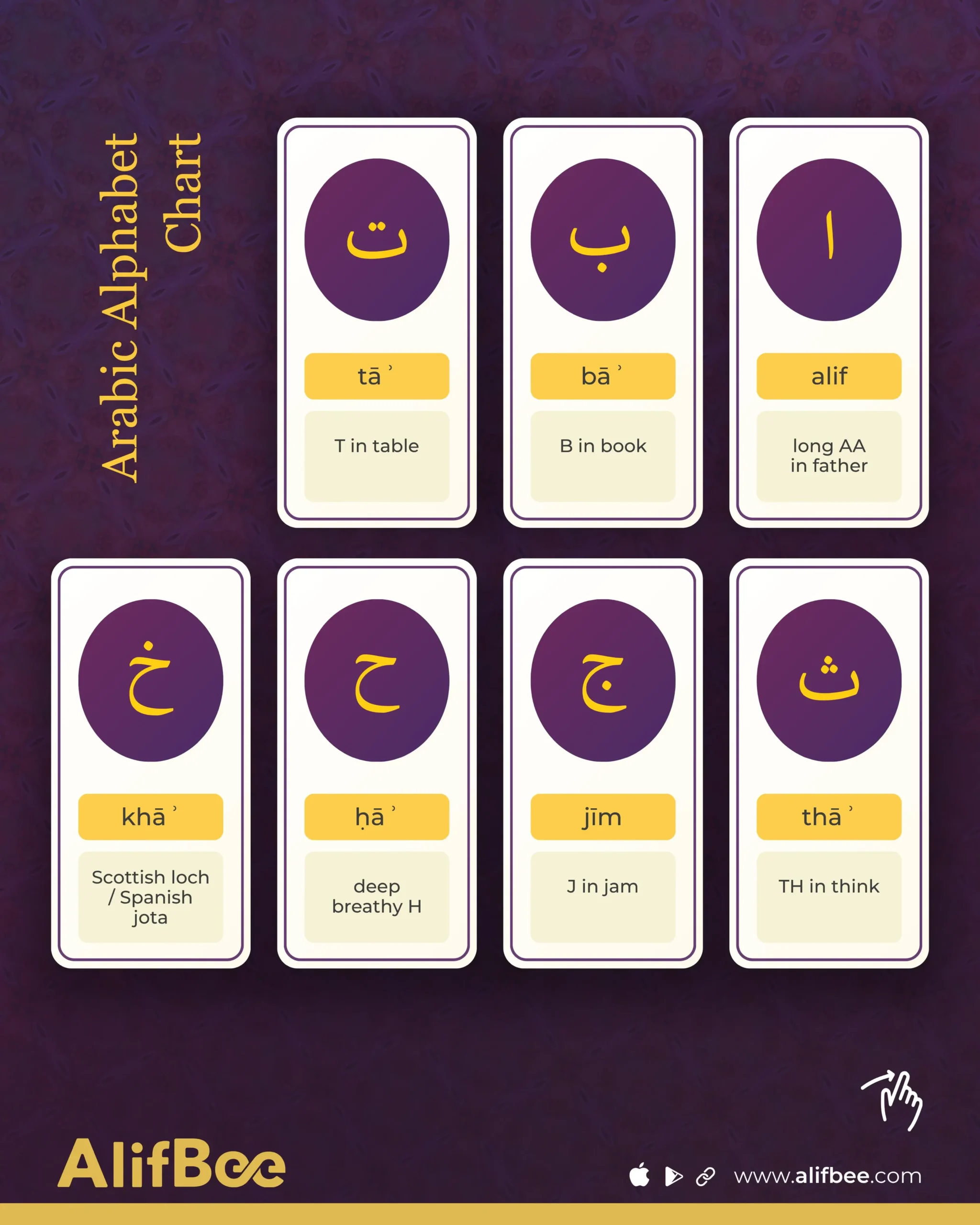
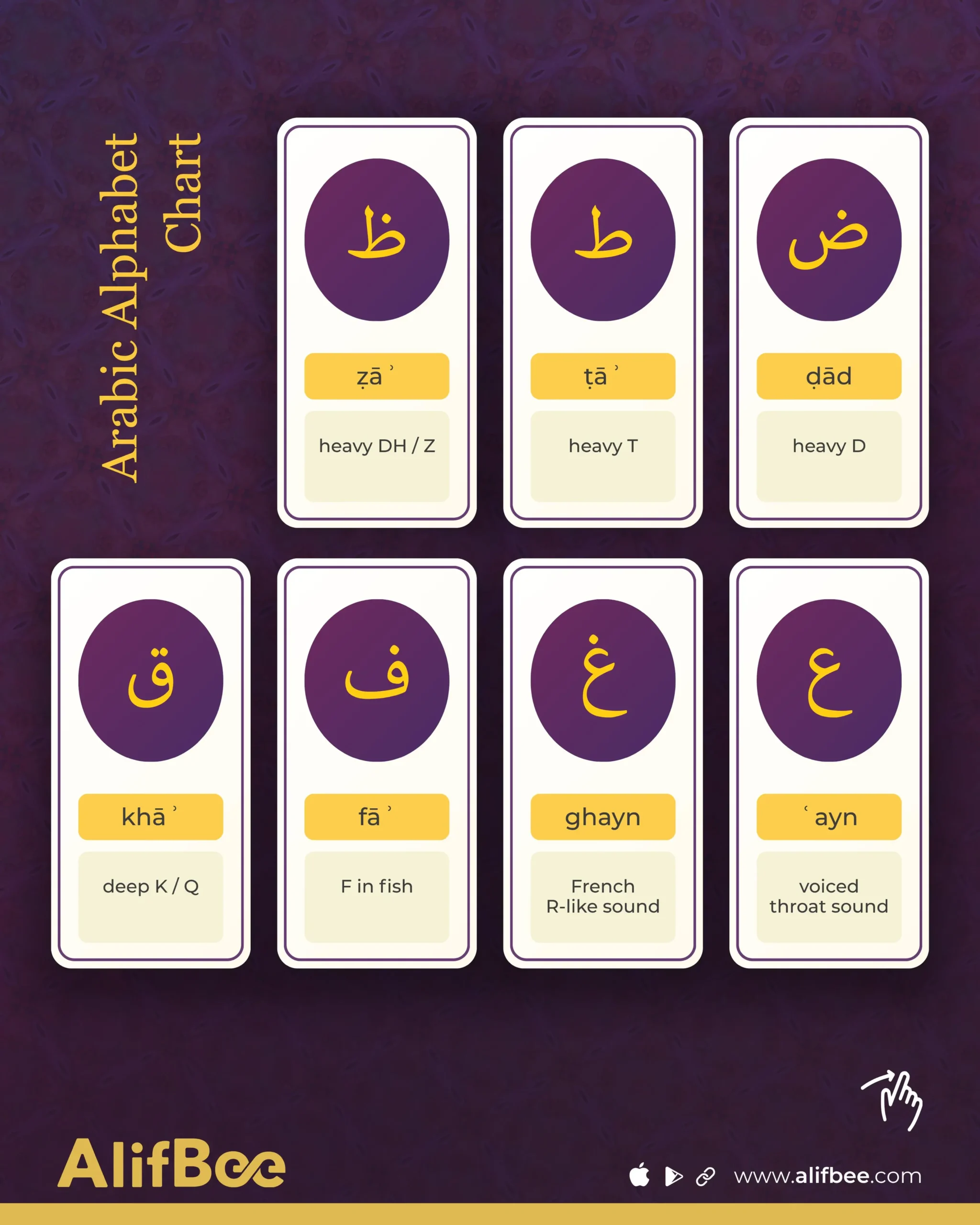
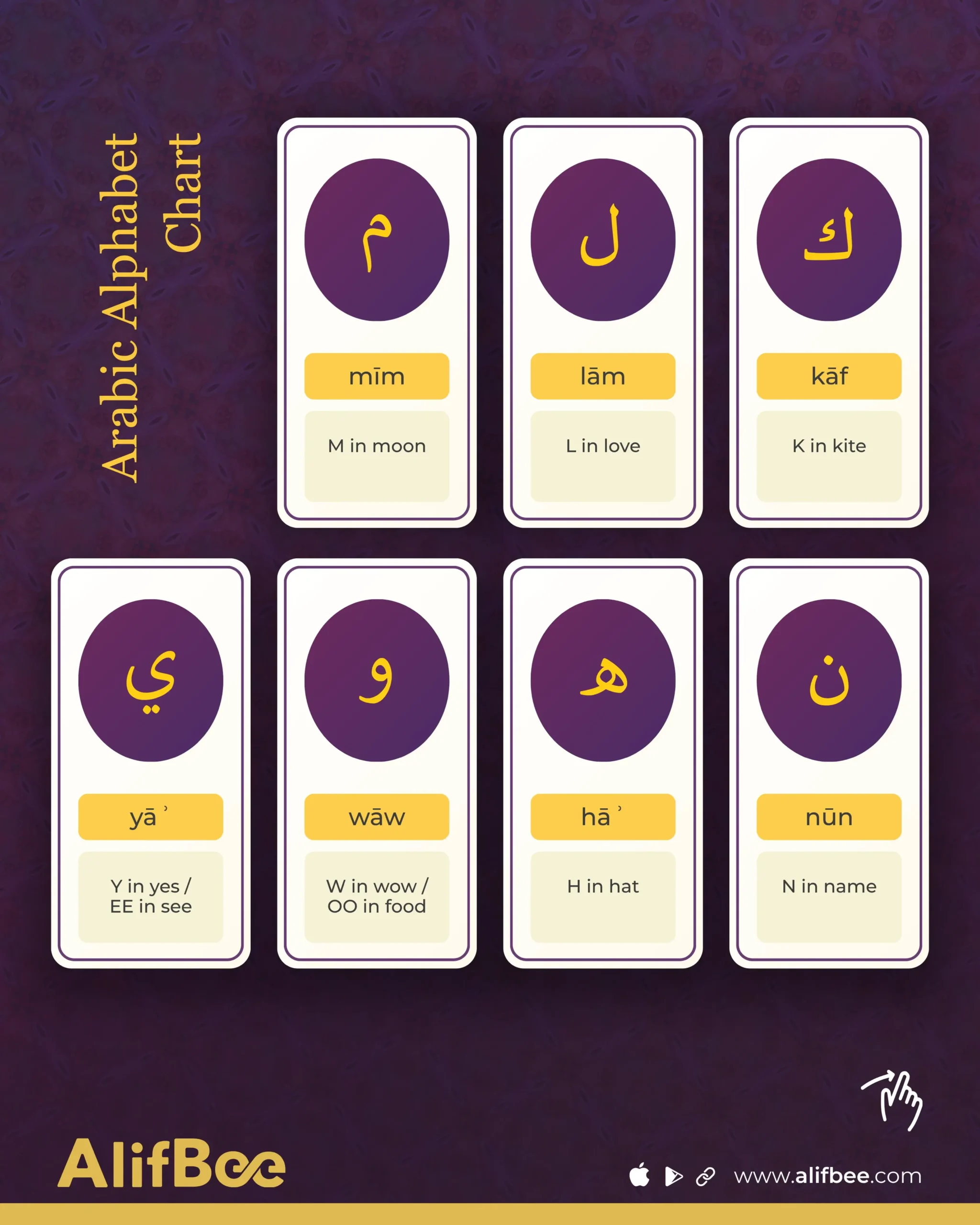
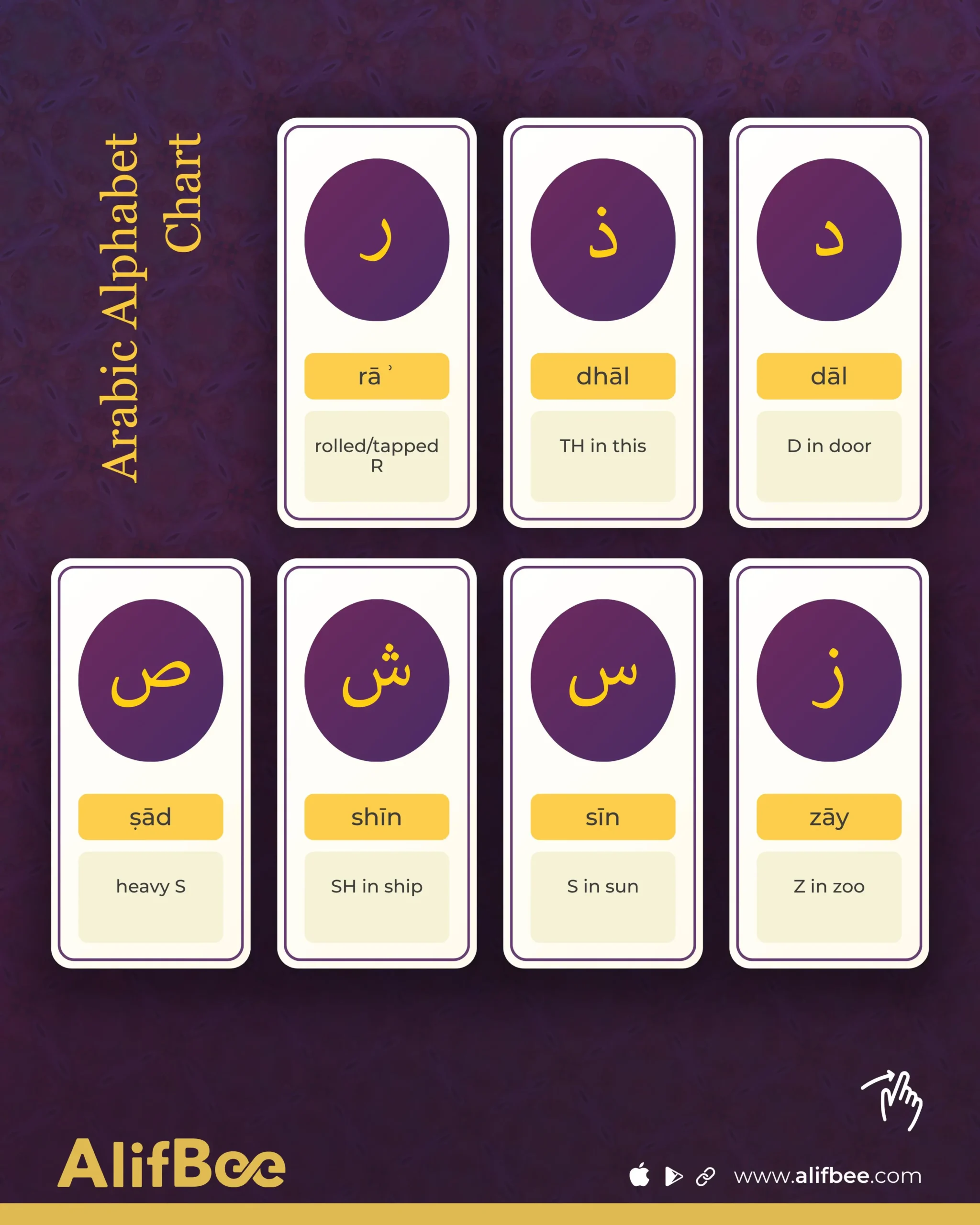
This is the Arabic Alphabet in order. The English sound cues below are simplified for beginners. They help you get close to the sound, but they do not replace listening practice. For the letters marked as throat, back, or emphatic sounds, audio makes a big difference.
| Name | Pronunciation | English Cue | Quick Note | Arabic Letter | |
|---|---|---|---|---|---|
|
alif |
ā |
long aa in father |
Often carries hamza or represents long ā. It does not connect to the following letter |
ا |
|
|
bāʾ |
b |
b in book |
Connects to both sides. |
ب |
|
|
tāʾ |
t |
t in table |
Two dots above. |
ت |
|
|
thāʾ |
th |
th in think |
Three dots above. |
ث |
|
|
jīm |
j |
j in jam |
MSA sound; dialects may vary. |
ج |
|
|
ḥāʾ |
ḥ |
deep breathy h |
No exact English match. |
ح |
|
|
khāʾ |
kh |
Scottish loch / Spanish jota |
Back-of-throat sound. |
خ |
|
|
dāl |
d |
d in door |
Does not connect to the following letter. |
د |
|
|
dhāl |
dh |
th in this |
Does not connect to the following letter. |
ذ |
|
|
rāʾ |
r |
rolled/tapped r |
Does not connect to the following letter. |
ر |
|
|
zāy |
z |
z in zoo |
Does not connect to the following letter. |
ز |
|
|
sīn |
s |
s in sun |
Light s sound. |
س |
|
|
shīn |
sh |
sh in ship |
Same base shape as sīn with dots. |
ش |
|
|
ṣād |
ṣ |
heavy s |
Emphatic/heavy sound. |
ص |
|
|
ḍād |
ḍ |
heavy d |
Famous distinctive Arabic sound. |
ض |
|
|
ṭāʾ |
ṭ |
heavy t |
Emphatic (deep) sound. |
ط |
|
|
ẓāʾ |
ẓ |
heavy dh/z |
Emphatic sound; best learned with audio. |
ظ |
|
|
ʿayn |
ʿ |
voiced throat sound |
No English equivalent. |
ع |
|
|
ghayn |
gh |
French r-like sound |
Voiced throat/back sound. |
غ |
|
|
fāʾ |
f |
f in fish |
One dot above. |
ف |
|
|
qāf |
q |
deep k/q |
Back of tongue; no exact English match. |
ق |
|
|
kāf |
k |
k in kite |
Lighter than qāf. |
ك |
|
|
lām |
l |
l in love |
It combines with alif to form لا (lā), which means no. |
ل |
|
|
mīm |
m |
m in moon |
A clear, continuous sound made by closing the lips. |
م |
|
|
nūn |
n |
n in name |
One dot above. |
ن |
|
|
hāʾ |
h |
h in hat |
Soft h, different from ḥāʾ. |
ه |
|
|
wāw |
w / ū |
w in wow / oo in food |
Also used as the long vowel ū. It does not connect to the following letter. |
و |
|
|
yāʾ |
y / ī |
y in yes / ee in see |
Also used as the long vowel ī. |
ي |
|
How Arabic Letters Work
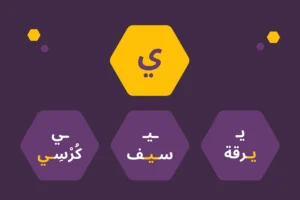
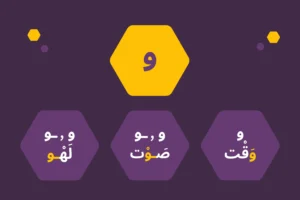
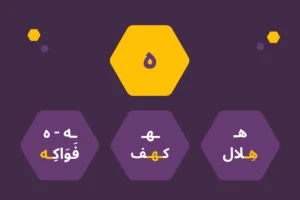
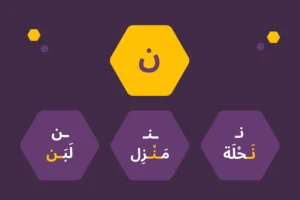
Arabic has 28 basic letters and is written from right to left. Unlike English, Arabic does not have uppercase and lowercase letters. Most letters connect to those around them, so the same letter may look slightly different when it appears alone, at the beginning, in the middle, or at the end of a word. For example, the letter bāʾ has a standalone form as well as connected forms used in actual words.
This is why it is important to learn each letter in two ways: as a sound and as a shape. At first, the changing shapes may look confusing, but they follow clear patterns. Once you begin to recognize these patterns, Arabic words start to feel much less mysterious.
| Isolated | Initial | Medial | Final |
|---|---|---|---|
|
ب |
بـ |
ـبـ |
ـب |
Review Arabic Alphabet
Arabic Sounds That English Speakers Notice First
Some Arabic letters feel familiar right away, such as bāʾ (b), tāʾ (t), kāf (k), mīm (m), and nūn (n). Others need more patience because English does not have the same sounds. Learners usually notice the throat and back sounds first: ḥāʾ, khāʾ, ʿayn, ghayn, and qāf. If you want a closer look, start with AlifBee’s lessons on the letter ع and the letter ق.
You will also meet emphatic or heavy letters, such as ṣād, ḍād, ṭāʾ, and ẓāʾ. These sounds feel heavier than their lighter cousins sīn, dāl, tāʾ, and dhāl. Do not force them. Listen, repeat slowly, and let your mouth adjust with practice. The letters ص and ض are good examples to study separately.
What About Arabic Vowels?
Arabic has short vowels that appear as small marks above or below letters. Fatḥah gives a short “a” sound, kasrah gives a short “i” sound, and ḍammah gives a short “u” sound. Arabic also uses alif, wāw, and yāʾ for long vowel sounds, such as ā, ū, and ī.
| Pronunciation | Arabic | |
|---|---|---|
|
ba |
بَ |
|
|
bi |
بِ |
|
|
bu |
بُ |
|
You may not see short vowel marks in every Arabic text. They appear more often in beginner lessons, children’s books, dictionaries, and Quranic texts. For now, learn the letters first, then add vowels with simple syllables and words.
How to Practice the Arabic Alphabet
- Choose 4 or 5 letters at a time. A small set is easier to remember than all 28 letters in one day.
- Listen before you write. Pronunciation comes first, especially for sounds that do not exist in English.
- Trace each letter in its basic shape. Then notice how it changes when it connects to other letters.
- Read tiny syllables, such as ba, bi, and bu, before you move to longer words.
- Review often. A few minutes every day works better than one long session once a week.
You can also continue through AlifBee’s Arabic Alphabet series to study each letter with examples, pronunciation notes, and beginner-friendly practice.
Final word
You do not need to master the full Arabic alphabet in one afternoon. Start with one letter, listen to its sound, write it a few times, and read it in a simple word. Then move to the next letter. This chart gives you the map, but steady practice helps the letters become real reading skills.
Learn the Arabic Alphabet with AlifBee
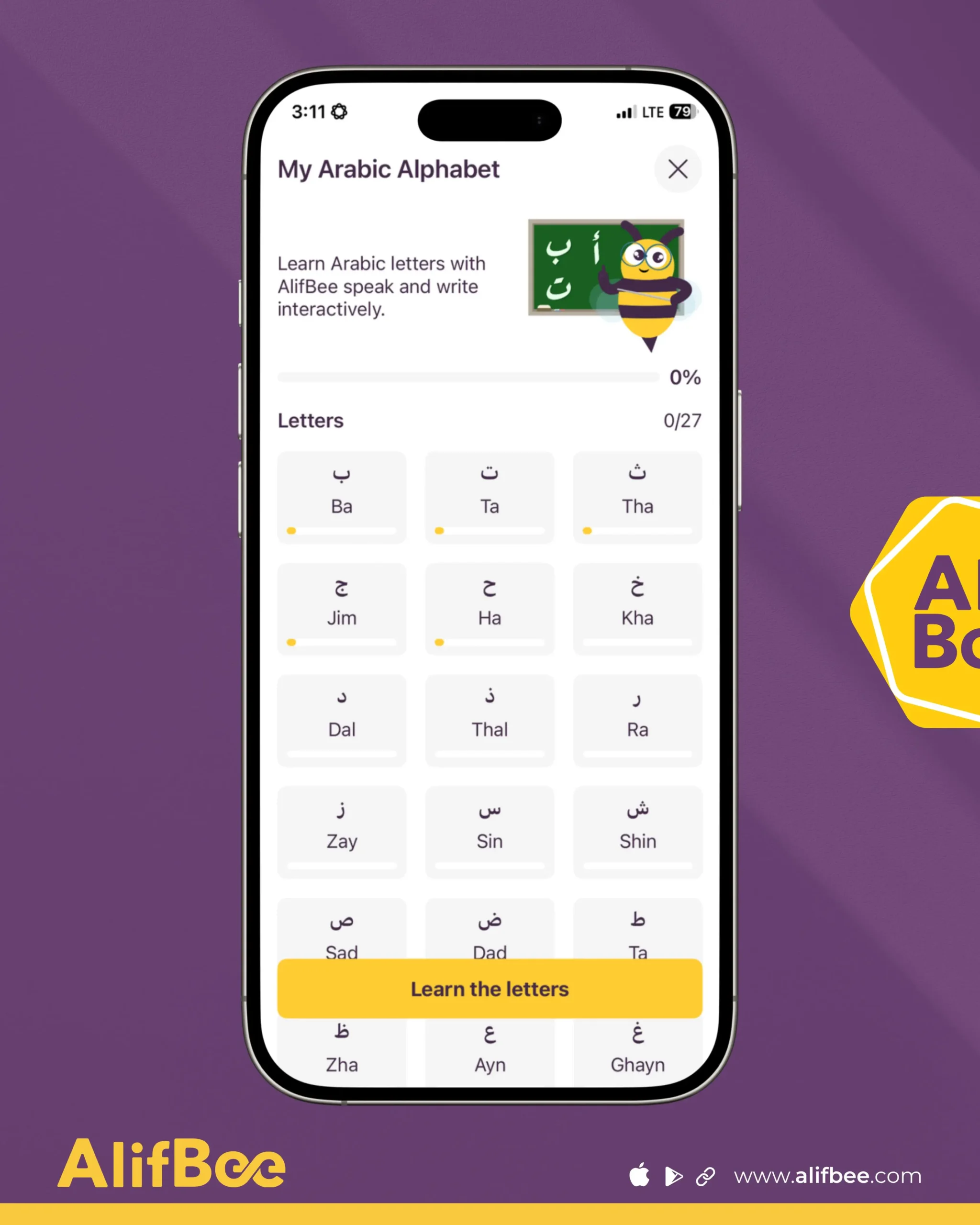
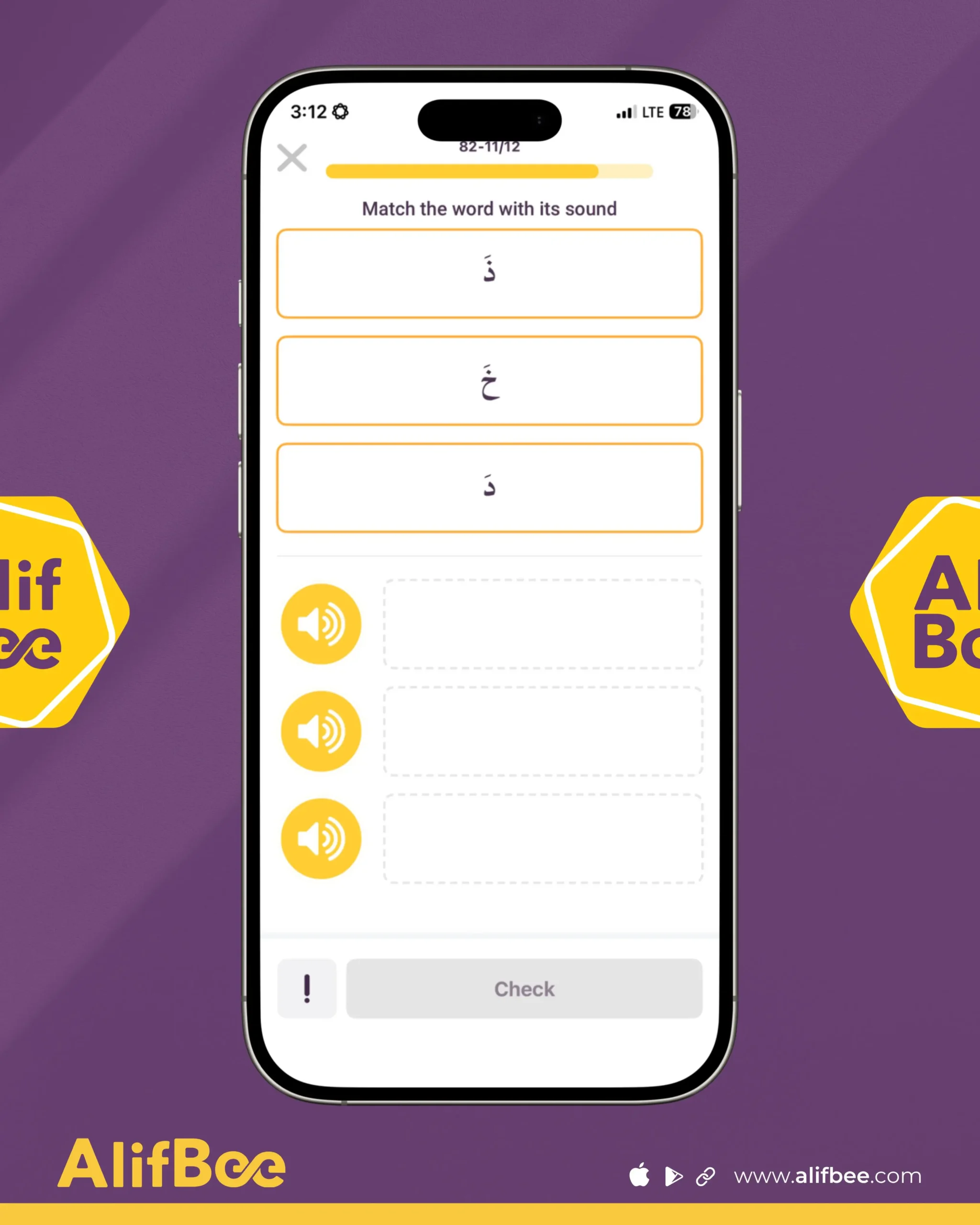
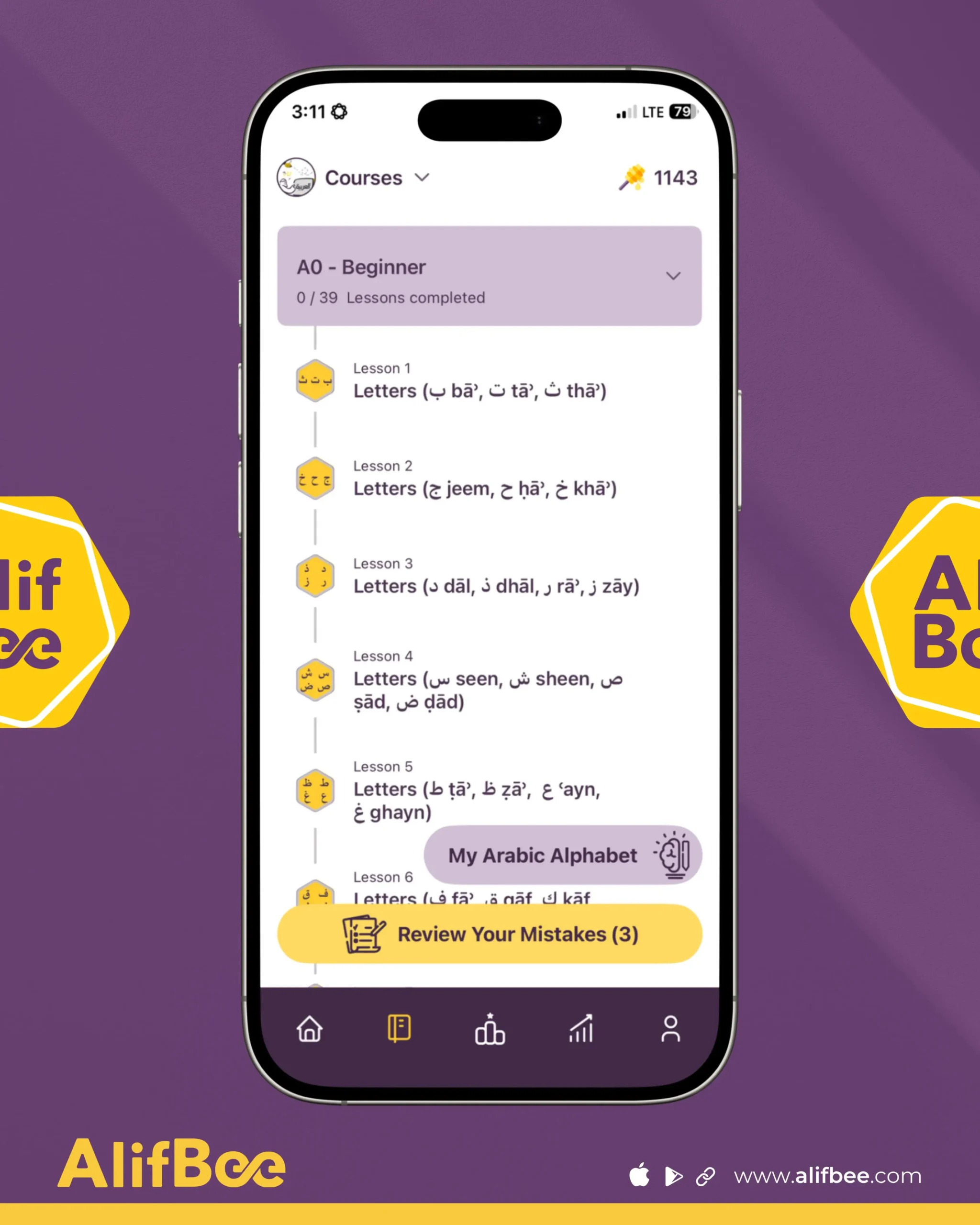
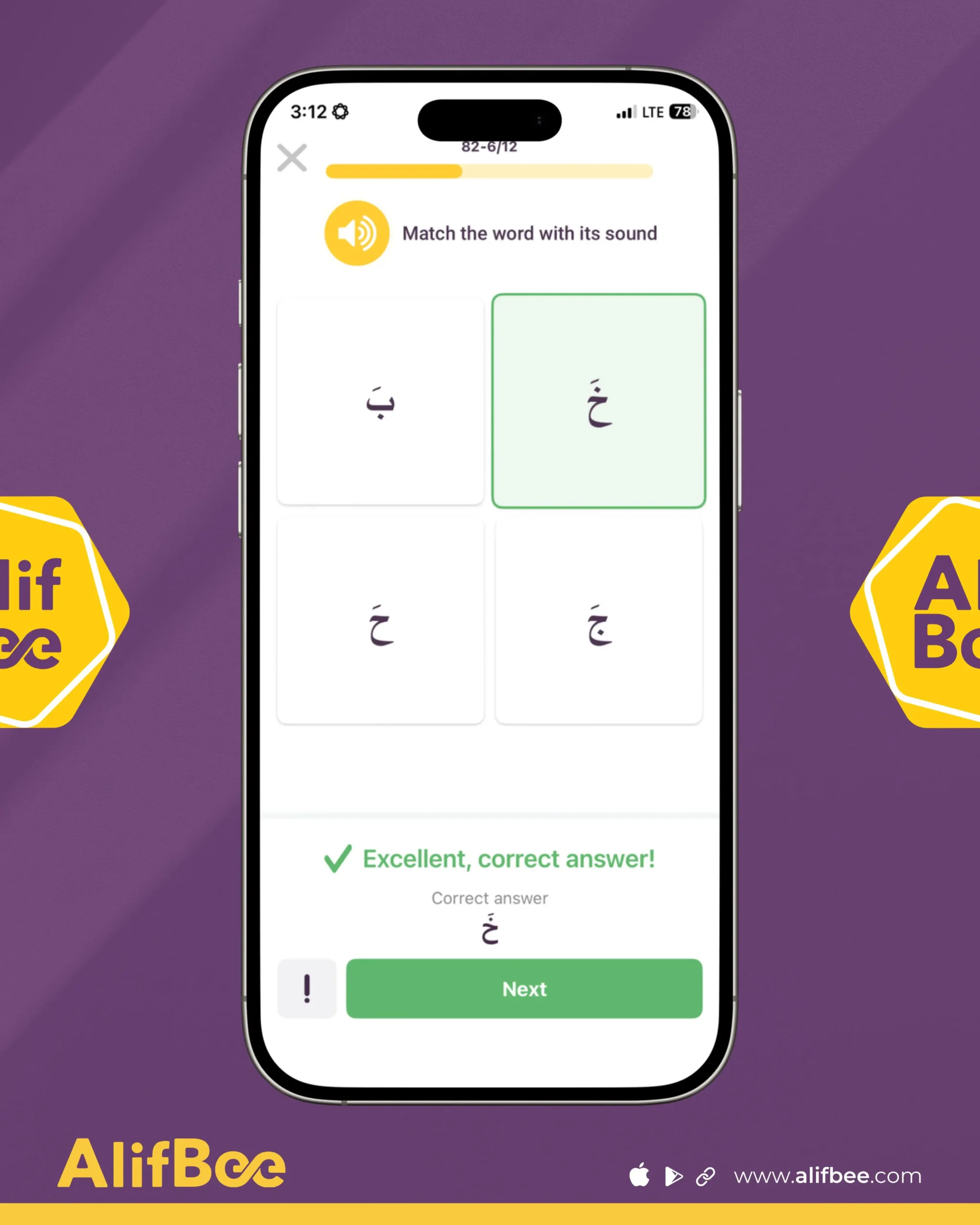
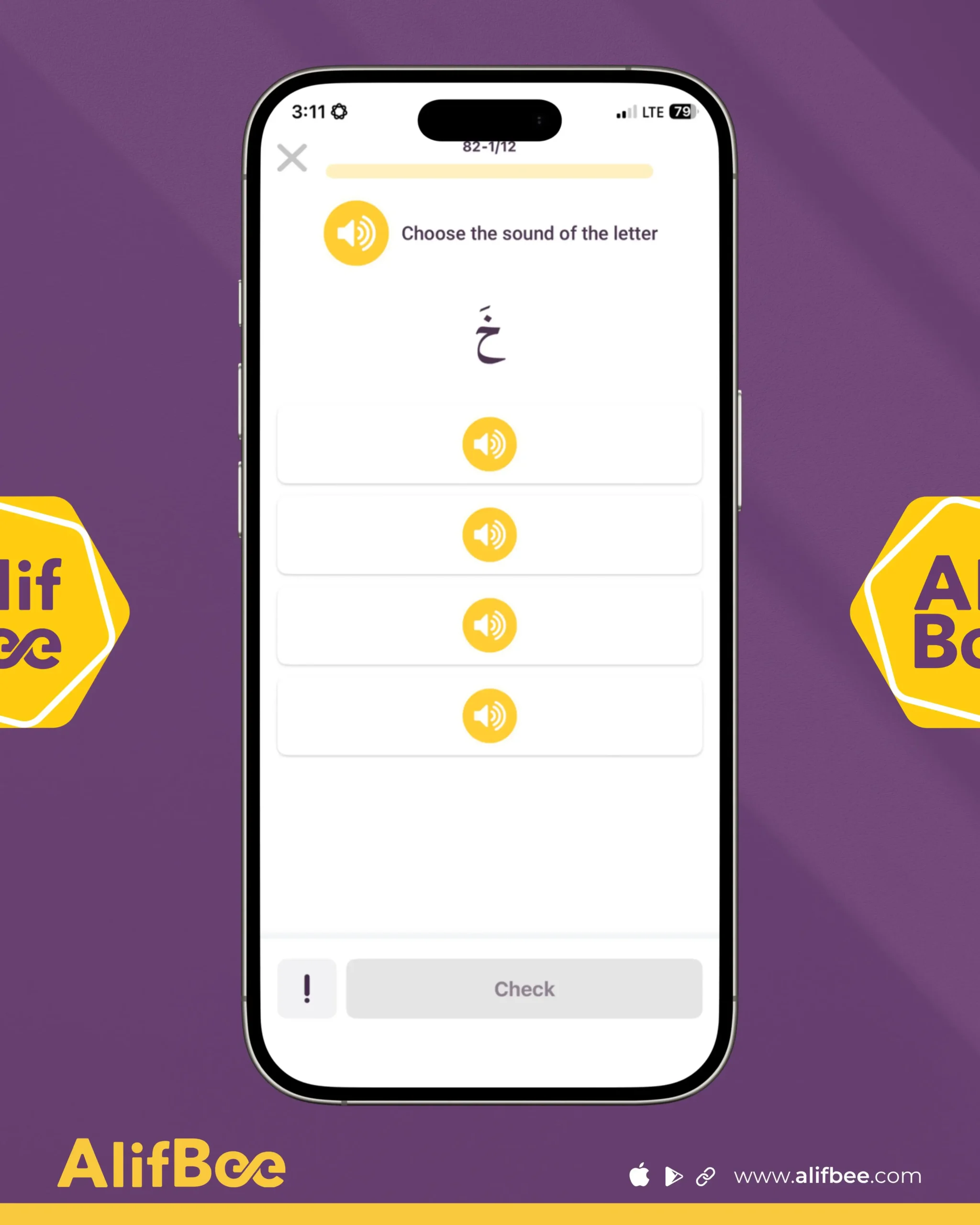
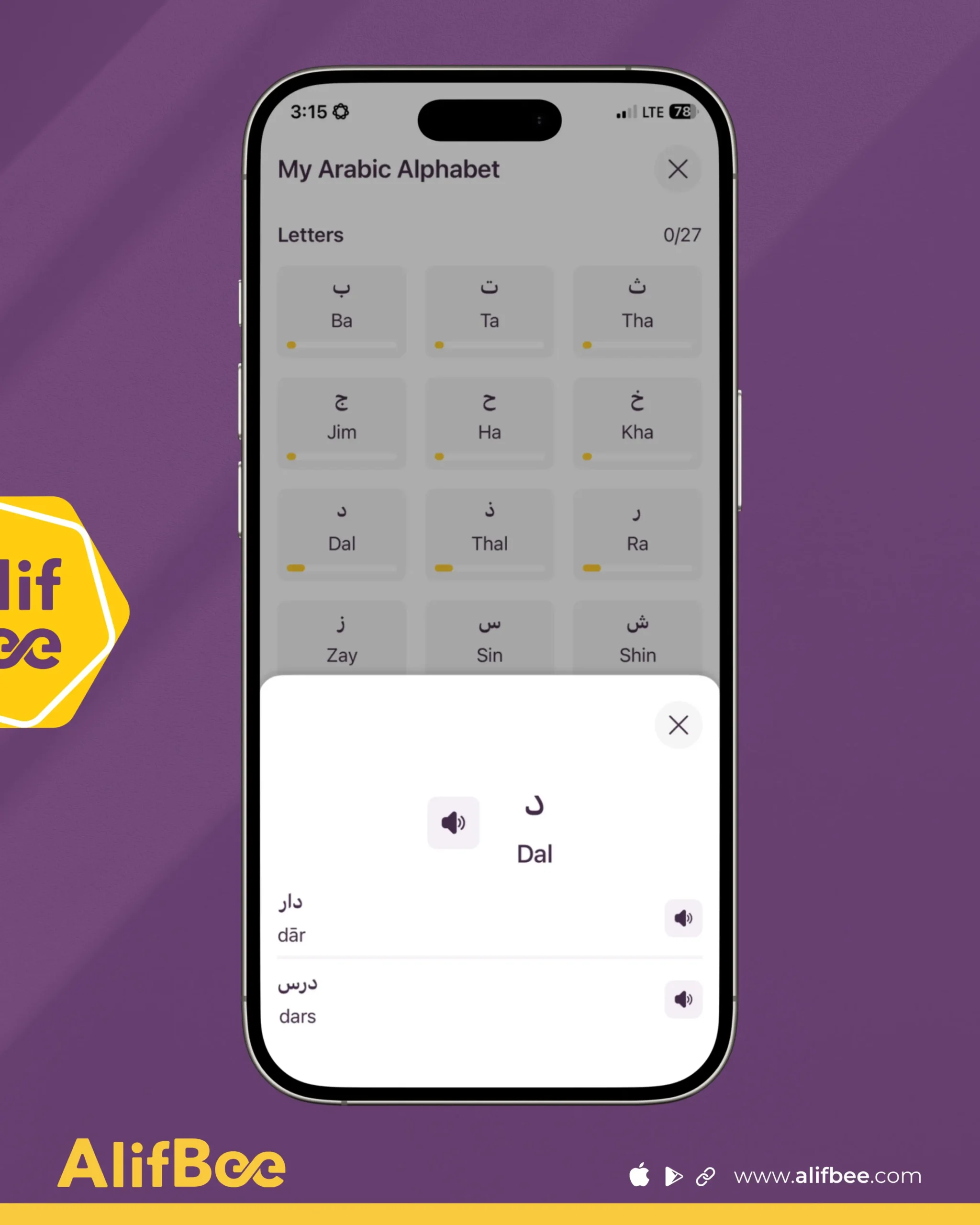
Want to learn the Arabic alphabet in a fun, interactive way? Download the AlifBee app and try the My Arabic Alphabet feature.
Powered by AI, this feature helps you learn Arabic letters step by step, tracks your progress in the A to Z Arabic course, and creates custom exercises based on your needs. It identifies the letters and sounds you find difficult, then gives you extra practice to help you improve with confidence.
FAQs
How many letters are in the Arabic alphabet?
The Arabic alphabet has 28 basic letters. Hamza (ء) is often taught with the alphabet because it appears in many Arabic words, but it is usually treated separately from the 28 main letters.
Is Arabic written from right to left?
Yes. Arabic is written and read from right to left. Beginners should focus first on reading Arabic letters and words in that direction, then practice with short words and simple phrases.
Why do Arabic letters change shape?
Arabic is a connected script. Most letters join to the letters around them, so a letter may look different when it appears alone, at the beginning, in the middle, or at the end of a word.
Does Arabic have vowels?
Yes. Arabic has short vowel marks, such as fatḥah, kasrah, and ḍammah. It also uses alif, wāw, and yāʾ for long vowel sounds. Beginners usually learn letters first, then add vowels with simple syllables.
Can I learn Arabic pronunciation from English spelling?
English cues help at the beginning, but they are only approximations. Sounds like ʿayn, ḥāʾ, khāʾ, ghayn, and qāf need listening practice because they do not match English sounds exactly.
What is the best way to memorize Arabic letters?
Group similar letters together, listen to each sound, write the letter by hand, and read short syllables. Do not memorize the chart only by sight. Arabic becomes easier when your eyes, ears, and hand practice together.