
At a Glance: Arab Traditions are daily habits that reflect the warmth and diversity of the Arabic community, such as serving coffee, greeting others with peace, using henna at special occasions, offering guests dates, dancing the dabke at weddings, welcoming guests in majlis, and many more!
Some traditions feel like habits. Others feel like home. In Arab communities, traditions do both. They guide the way people greet one another, share meals, celebrate love, and show respect. At their core, they reflect what matters most—family, faith, generosity, and a strong sense of belonging.
For anyone learning Arabic, visiting an Arab country, or simply curious, these traditions help you see the language and the people behind it more clearly.
In this article, we will give you a quick look at where every tradition came from and why it still matters today. You’ll also learn a few Arabic words and phrases that are part of the tradition, with the Arabic script, pronunciation, and English meaning to help you feel more confident using them.
By the end of this journey, you won’t just know what these traditions are; you’ll understand why people love them.
Let’s begin.
How Important are Arab Traditions in Daily Life
In the Arab world, tradition is a part of daily life and shapes how people treat each other. You notice it in the way people come together, share food, talk to elders, and even where they sit. These little habits carry big meaning, built on kindness, family, respect, and hospitality.
These customs maintain strong communities and make people remember their origins. Even though life is always changing, these customs help people stay close and proud of their culture.
Arab traditions aren’t old customs locked in the past. They’re living ways of keeping identity strong and relationships close. The more you understand them, the more naturally you’ll feel part of the culture.
Key Arab Traditions and Customs
Here are 10 of the most common and cherished traditions in Arab culture:
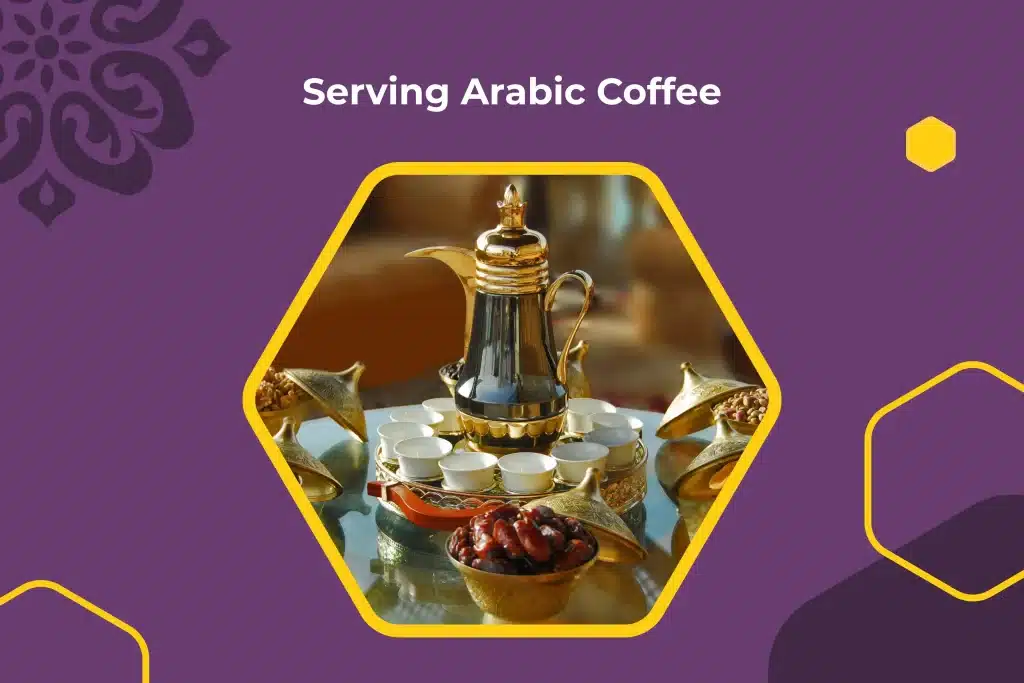
Serving Arabic Coffee (Qahwa)
In many Arab countries, especially in the Gulf, serving Arabic coffee is a daily tradition that shows respect and kindness. It’s common when welcoming guests, visiting family, gathering with friends, celebrating weddings, or even meeting for business.
The coffee, usually flavored with cardamom, is poured from a traditional pot called a dallah into small cups known as finjān and offered to guests as a warm welcome.
| Meaning | Pronunciation | Arabic | |
|---|---|---|---|
|
Arabic coffee |
qah-wah |
قَهْوَة |
|
|
Small coffee cup |
fin-jaan |
فِنْجَان |
|
|
Coffee pot |
dal-lah |
دَلَّة |
|
|
Please (offering) |
ta-faḍ-ḍal |
تَفَضَّل |
|
|
Guest |
dhayf |
ضَيْف |
|
Arabic coffee is always served with the right hand, beginning with the eldest guest. When you’re done drinking, gently shake the cup to signal you’ve finished. Saying “Shukran” (thank you) as you hand it back is a polite way to show respect.
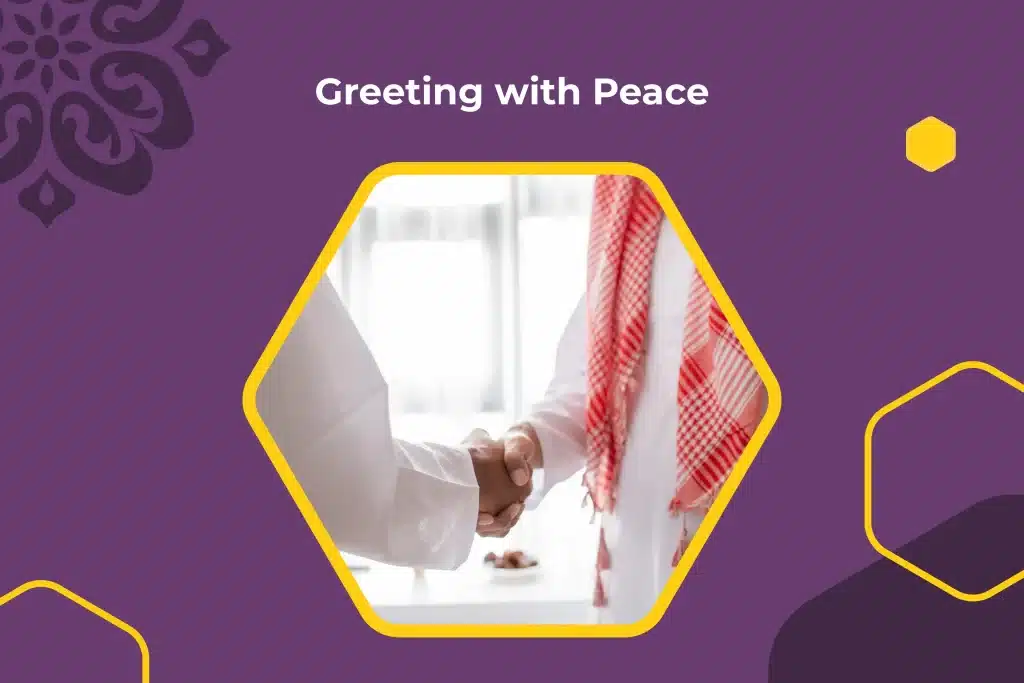
Greeting with Peace
When you enter a home, join a gathering, or begin a conversation, you will often hear as-salāmu ʿalaykum (السَّلَامُ عَلَيْكُمْ), meaning “peace be upon you.” When someone greets you this way, reply with wa ʿalaykumu as-salām (وَعَلَيْكُمُ السَّلَام), “and peace be upon you.”
The greeting comes from Islamic tradition, but its use extends well beyond religious settings. You may hear it in everyday conversations, family visits, workplaces, and formal gatherings across the Arabic-speaking world. Depending on the situation, it can sound warm, respectful, traditional, or simply familiar.
| Meaning | Pronunciation | Arabic | |
|---|---|---|---|
|
Peace be upon you |
as-sa-laam ʿa-lay-kum |
السَّلَامُ عَلَيْكُمْ |
|
|
And peace be upon you too |
wa ʿa-lay-kum as-sa-laam |
وَعَلَيْكُمُ السَّلَامُ |
|
|
Hello / Welcome |
mar-ha-ban |
مَرْحَبًا |
|
|
Welcome |
ah-lan wa sah-lan |
أَهْلًا وَسَهْلًا |
|
|
Nice to meet you |
ta-shar-raf-na |
تَشَرَّفْنَا |
|
Always reply to a greeting, as ignoring it can seem rude. In formal settings, men often follow with a light handshake. When greeting between men and women, it’s polite to wait and see if the other person offers a handshake first.
Check other basic Arabic greetings.
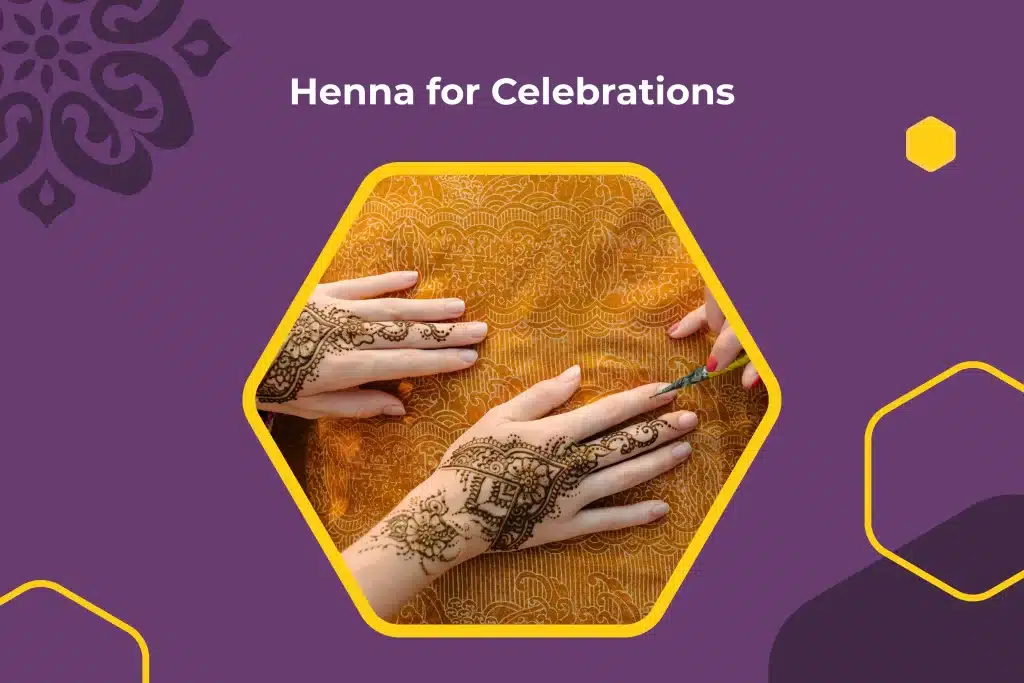
Henna for Celebrations
Henna night is a pre-wedding celebration common in North African, Egyptian, Palestinian, and Gulf cultures. A night or two before the wedding, Laylat al-Henna brings family and friends together with music, dancing, and the tradition of painting the bride’s hands and feet with henna.
Even though it’s done a bit differently in each place, it’s always a happy time filled with blessings and bonding between women. Henna is believed to bring good luck, keep away jealousy, and stand for joy and fertility.
| Meaning | Pronunciation | Arabic | |
|---|---|---|---|
|
Henna |
hin-naaʼ |
حِنَّاء |
|
|
Henna night |
lay-latu al-hin-naaʼ |
لَيْلَةُ الحِنَّاء |
|
|
Bride |
ʿa-roos |
عَرُوس |
|
|
Ululations (cheers) |
za-gha-reed |
زَغَارِيد |
|
|
Joy / celebration |
far-ha |
فَرْحَة |
|
On henna night, you’ll often hear music and see people dancing while the bride gets her hands and feet decorated. In many places, friends and family bring her small gifts—like a scarf, a bottle of perfume, or jewelry—to wish her love and happiness.
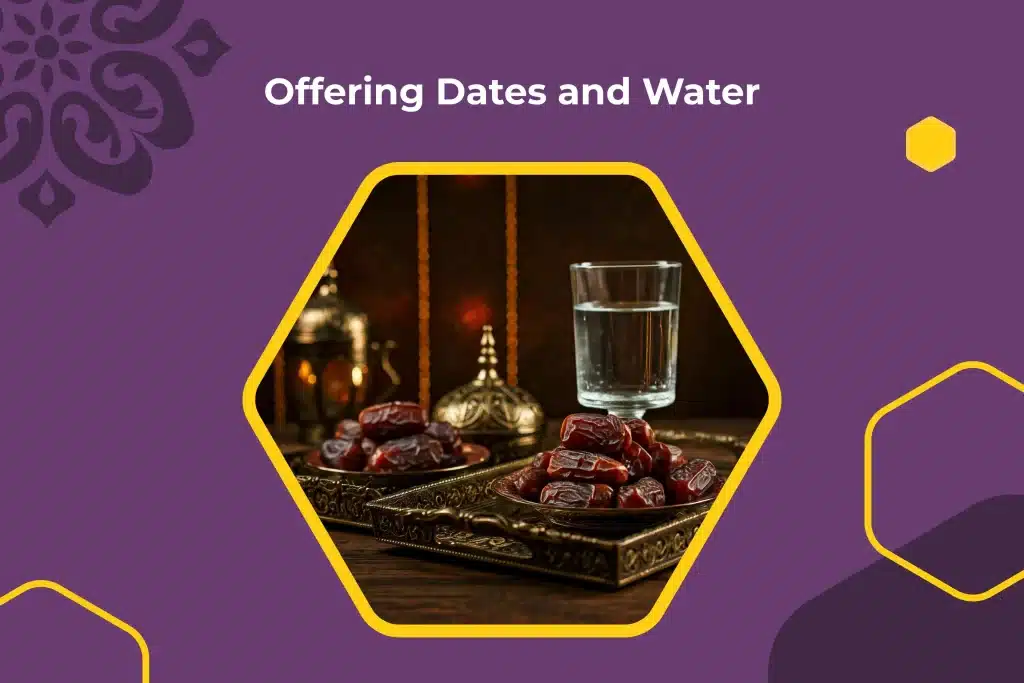
Offering Dates and Water
In many Arab homes during Ramadan, it’s common to welcome people with dates and water. This follows the Prophet Muhammad’s tradition and shows kindness and care. Even outside Ramadan, offering dates is a warm way to greet guests or show hospitality.
| Meaning | Pronunciation | Arabic | |
|---|---|---|---|
|
Dates (fruit) |
tamr |
تَمْر |
|
|
Water |
maaʼ |
مَاء |
|
|
Breaking the fast |
if-ṭaar |
إِفْطَار |
|
|
Fasting |
ṣawm |
صَوْم |
|
|
Blessing |
ba-ra-ka |
بَرَكَة |
|
When breaking fast with others, it’s polite to say “Ṣawman maqbulan, ifṭāran shahiyan” (صَوْمًا مَقْبُولًا، إِفْطَارًا شَهِيًّا) “May your fast be accepted and your meal be delicious.” This small phrase warmly shares blessings at ifṭār.
Dancing the Dabke
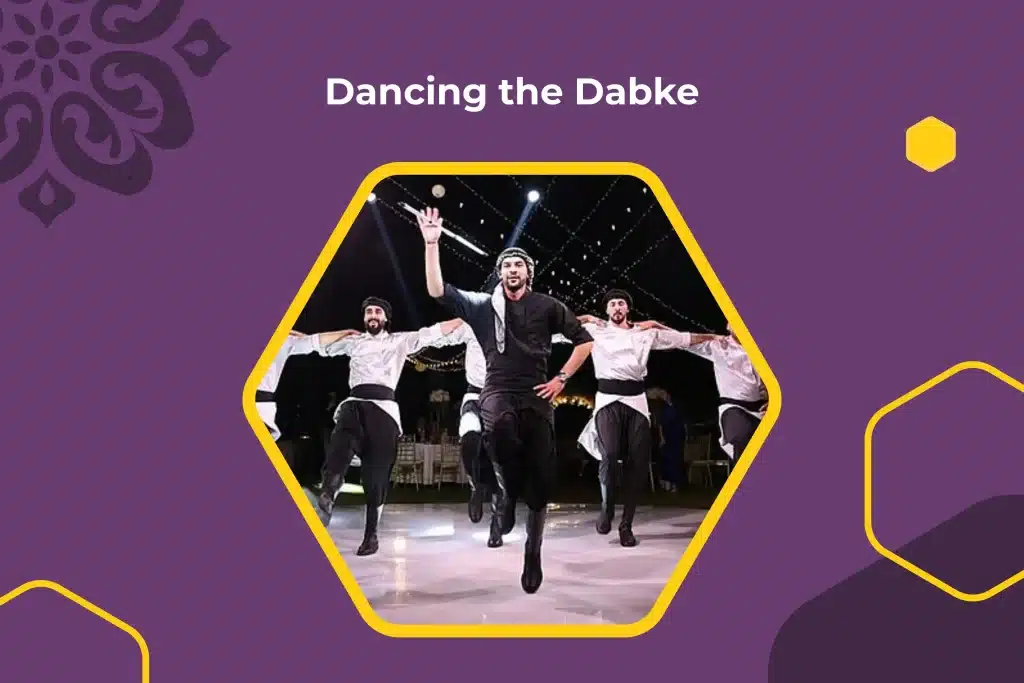
Dabke is a traditional dance you’ll see at weddings and parties in places like Palestine and Lebanon. People link hands or shoulders and move together to music, usually led by someone in front called Raqqāṣ who sets the rhythm. It’s loud, fun, and brings everyone together.
| Meaning | Pronunciation | Arabic | |
|---|---|---|---|
|
Traditional folk dance |
dab-keh |
دَبْكَة |
|
|
Dancer / lead dancer |
raq-qāṣ |
رَقَّاص |
|
|
Drum |
ṭabl |
طَبْل |
|
|
Traditional double-pipe flute |
mij-wiz |
مِجْوِز |
|
|
Joy / celebration |
far-ḥa |
فَرْحَة |
|
At celebrations, joining the Dabke line—even if you don’t know the steps—is a great way to connect with the community and share in the joy.
The Majlis — Gathering for Conversation
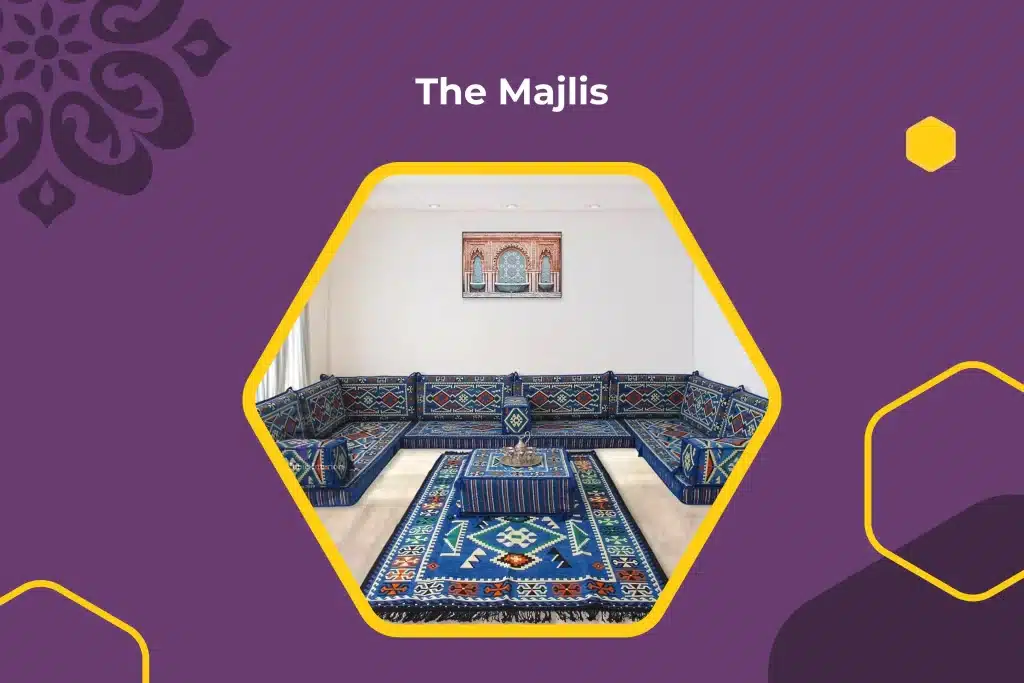
The Majlis is where people gather to talk, drink tea or coffee, and spend time together. In many Arab homes, it’s the heart of the house—a place for stories, laughs, and catching up with visitors. The Majlis can be formal or casual and is often decorated with cushions and carpets for comfort.
| Meaning | Pronunciation | Arabic | |
|---|---|---|---|
|
Sitting room / gathering |
maj-lis |
مَجْلِس |
|
|
Tea |
shāy |
شَاي |
|
|
Coffee |
qah-wah |
قَهْوَة |
|
|
Another word for Majlis |
dee-wān |
دِيوَان |
|
|
Warmth / coziness |
dif’ |
دِفْء |
|
Inviting someone to your Majlis is a sign of great respect and friendship. Guests usually sit according to age and status, with elders given priority.
Wearing the Keffiyeh
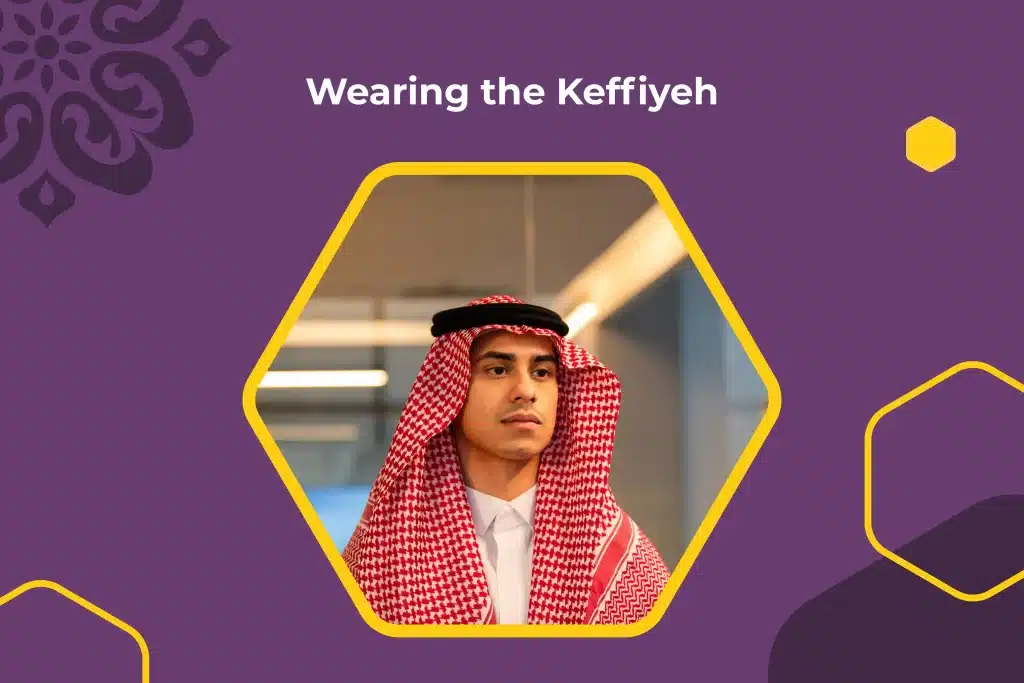
The Keffiyeh, or Hatta, is a checkered scarf often worn by men in Palestine and nearby countries. It symbolizes national pride, heritage, and resistance. While it started as practical protection from sun and dust, today it’s also a political and cultural symbol worn proudly in daily life and special occasions.
| Meaning | Pronunciation | Arabic | |
|---|---|---|---|
|
Traditional headscarf |
kef-ee-yeh / hat-ta |
كُوفِيَّة / حَطَّة |
|
|
Woman’s headscarf |
shay-la |
شِيلَة |
|
|
Protection |
ḥi-mā-yah |
حِمَايَة |
|
|
Traditions / customs |
ta-qā-līd |
تَقَالِيد |
|
|
Headband to hold scarf |
ʿiṣ-mah |
عِصْمَة |
|
Wearing the Keffiyeh with the right colors and style can express regional identity. It’s often draped over the shoulders or wrapped around the head.
Read: What Do Arabs Wear? 7 Classic Traditional Arabic Clothing Items.
Sharing Mezze
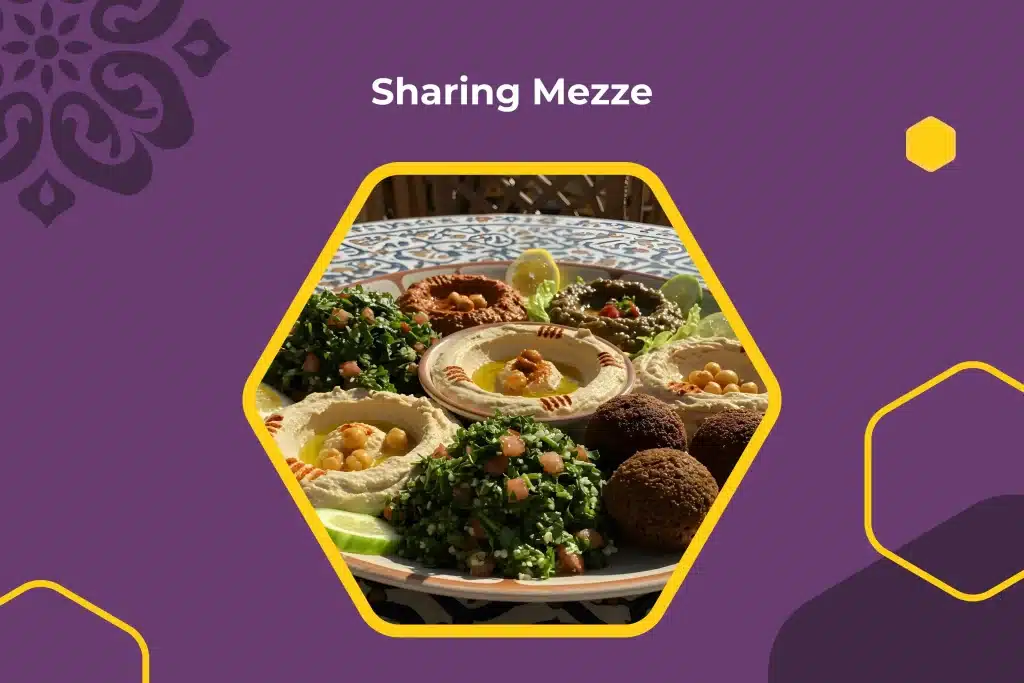
Mezze is a mix of small plates that people share before the main dish. It’s not just about food—it’s a way for family and friends to sit together, chat, and enjoy different tastes like hummus, falafel, and tabbouleh.
| Meaning | Pronunciation | Arabic | |
|---|---|---|---|
|
Small dishes / appetizers |
mez-zeh |
مِزَّة |
|
|
Chickpea dip |
hum-mus |
حُمُّص |
|
|
Parsley salad |
tab-boo-leh |
تَبُّولَة |
|
|
Fried chickpea balls |
fa-la-fel |
فَلافِل |
|
|
Flatbread with toppings |
ma-na-qeesh |
مَنَاقِيش |
|
When eating mezze, it’s polite to share and try a bit of everything. Eating together strengthens bonds and celebrates generosity.
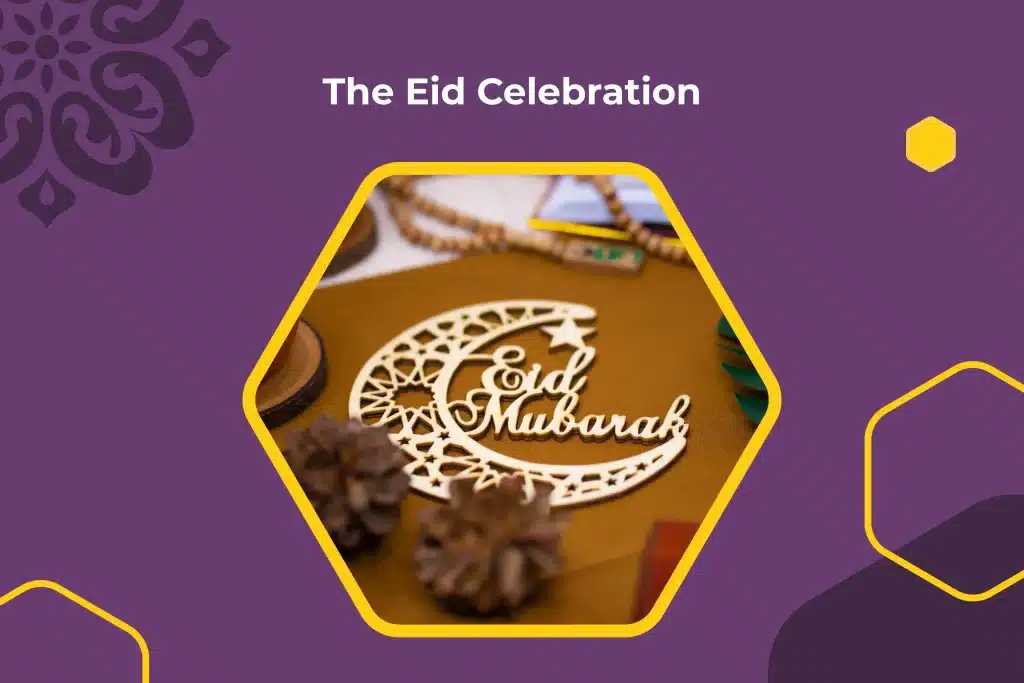
The Eid Celebration
Eid al-Fitr and Eid al-Adha are special holidays for Muslims. Families come together to pray, eat, visit relatives, and give to those in need. Eid al-Fitr marks the end of Ramadan, while Eid al-Adha commemorates sacrifice.
On the morning of the two Eids, Muslims gather for the special Eid prayer at mosques or open areas. People wear new clothes and share special meals. It’s a time of joy, forgiveness, and community spirit.
| Meaning | Pronunciation | Arabic | |
|---|---|---|---|
|
Festival / holiday |
ʿīd |
عِيْد |
|
|
Breaking the fast |
fitr |
فِطْر |
|
|
Sacrifice feast |
ʾaḍḥā |
أَضحَى |
|
|
Praise of God (chant) |
tak-bīr |
تَكبِير |
|
|
Eid Prayer |
ṣalātu al-ʿīd |
صَلاةُ العِيدِ |
|
Eid greetings like “Eid Mubarak” (Blessed Eid) are exchanged widely. Giving Eidiya (amount of money) or sweets to children is also common.
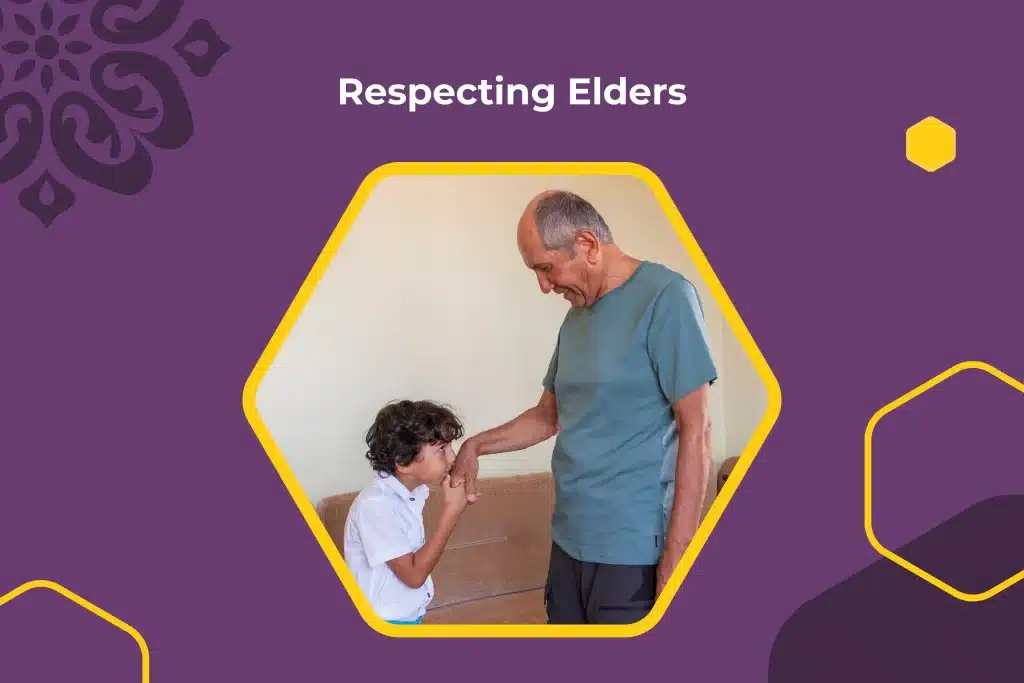
Respecting Elders
In many Arab families, elders are treated with deep respect. Younger people greet them first, offer them a good seat, and pay attention to what they say. Speaking politely, lowering one’s voice, and showing good manners are key signs of respect.
| Meaning | Pronunciation | Arabic | |
|---|---|---|---|
|
Elder / senior |
ka-beer |
كَبِير |
|
|
Respect |
iḥ-ti-raam |
اِحْتِرَام |
|
|
Blessing |
ba-ra-ka |
بَرَكَة |
|
|
Manners |
a-daab |
أَدَب |
|
|
Obedience |
ṭā-‘a |
طَاعَة |
|
Greeting elders first and using respectful language is seen as polite and well-mannered. Many children are taught to kiss an elder’s hand or forehead as a sign of love and honor.
Final word
Every tradition has a story and in the Arab world, stories are everywhere. They remind us that culture isn’t something we learn in books, it’s something we feel, live, and pass on.
If any of these traditions made you smile or reminded you of something warm and familiar, that’s the beauty of it, these small things connect us.
The AlifBee app is a good place to start learning Arabic at your own pace. Download it and practice Arabic in a way that feels light and fun.
See you next time, and until then, keep the spirit of these traditions close.