List of Arabic Food Names: Popular Dishes Across the Arab World

Reading Time: 5 minutes
Home / Arabic Culture / List of Arabic Food Names: Popular Dishes Across the Arab World
Listen to: List of Arabic Food Names: Popular Dishes Across the Arab World
Listening Bee

What Is Arabic Food?

Arabic cuisine covers the traditional food cultures of the Levant, the Gulf, and North Africa. Each country has its own cooking style and habits, but Arabic cooking is built on common ingredients such as grains, rice, meat, dairy, herbs, and aromatic spice blends, shaped by daily life across the Arab region.

Arabic food is part of everyday life, especially when people invite guests or eat together as a family. These beloved dishes are not prepared only for special events; they are also served often at home, during parties, or when hosting visitors, making food an important part of long-standing Arab traditions and culture.

Common Arabic Food Names

hummus - Arabic Food names
1

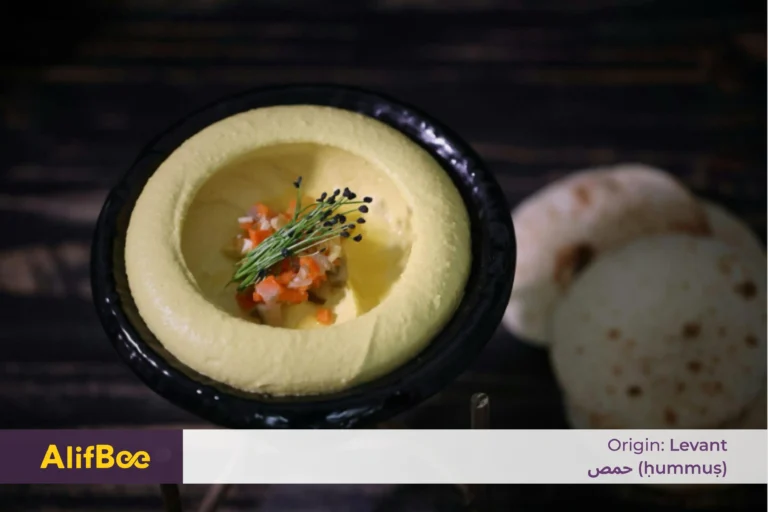
Hummus

ḥummuṣ

حمص

Hummus is a smooth dip made from mashed chickpeas, tahini, garlic, lemon juice, and olive oil. This dish is commonly served as a spread with pita bread or vegetables. It is a standard item in homes and restaurants and is considered a favorite side for many meals across the Middle Eastern world.

Origin: Levant

falafil
2

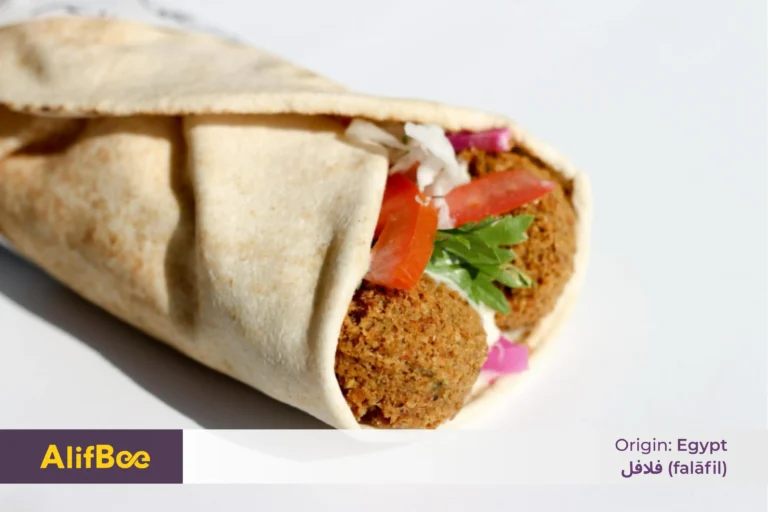
Falafel

falāfil

فلافل

Falafel is a fried vegetarian snack prepared from ground legumes, onion, herbs, and spices. It is commonly eaten as street food, often served with bread, salad, and sauce. The outside is usually crunchy, while the inside stays soft, making it a delicious and filling daily meal.

Origin: Egypt

shawirma
3

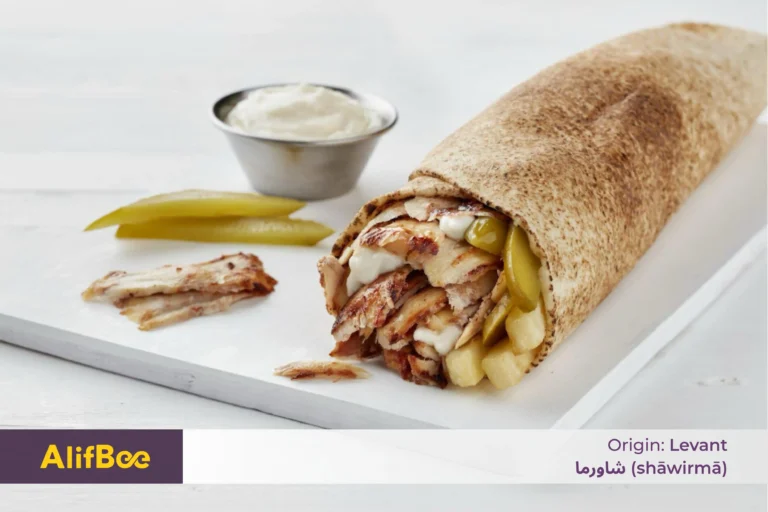
Shawarma

shāwirmā

شاورما

Shawarma consists of thin slices of chicken or meat that are carefully marinated with spices, stacked, and slowly roasted. This dish is widely served wrapped in bread with vegetables and sauce and is one of the most popular foods sold on the street, especially near workplaces and busy areas.

Origin: Levant

kabab
4

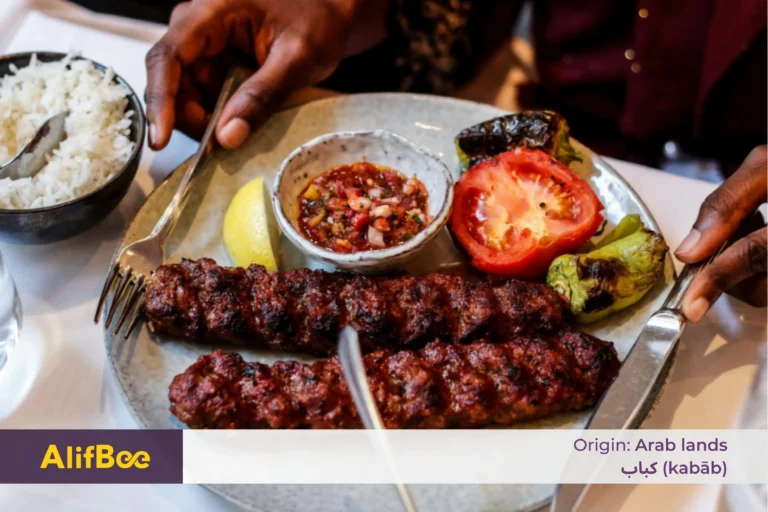
Kebab

kabāb

كباب

Kebab is prepared from seasoned meat, commonly lamb, shaped on a skewer and cooked over a grill. This dish has a simple ingredient combination but appears in many versions, from casual meals to more fancy restaurant plates served with rice or bread.

Origin: Arab lands 

mansaf
5

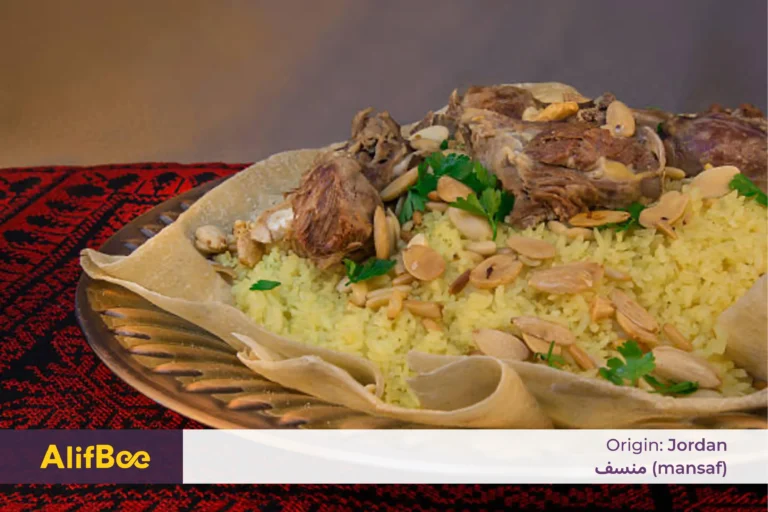
Mansaf

mansaf

منسف

Mansaf is a national dish made with lamb, fermented yogurt sauce, and rice. It is traditionally served at large gatherings where people eat from a single shared plate. This dish is closely connected to hospitality, respect, and family occasions.

Origin: Jordan 

mandi
6

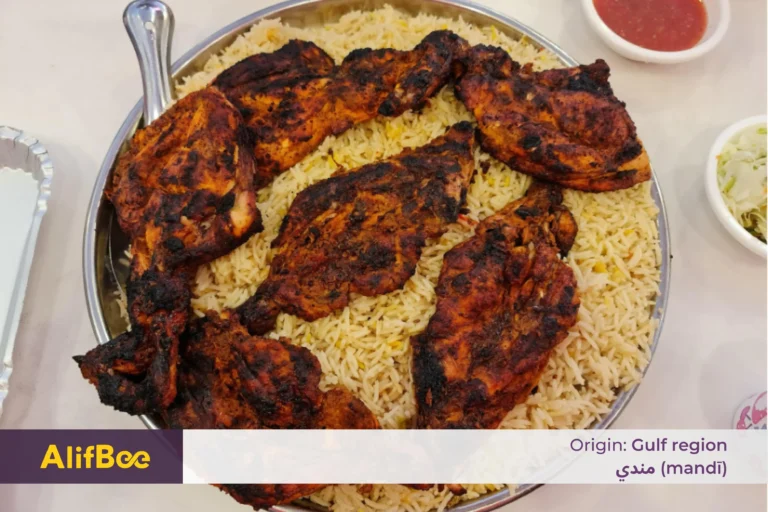
Mandi

mandī

مندي

Mandi is a rice-based dish featuring juicy, tender meat flavored with aromatic spice blends. The food is usually served on a large platter and shared by several people, highlighting group meals rather than individual portions in Gulf dining culture.

Origin: Gulf region 

kabsah
7

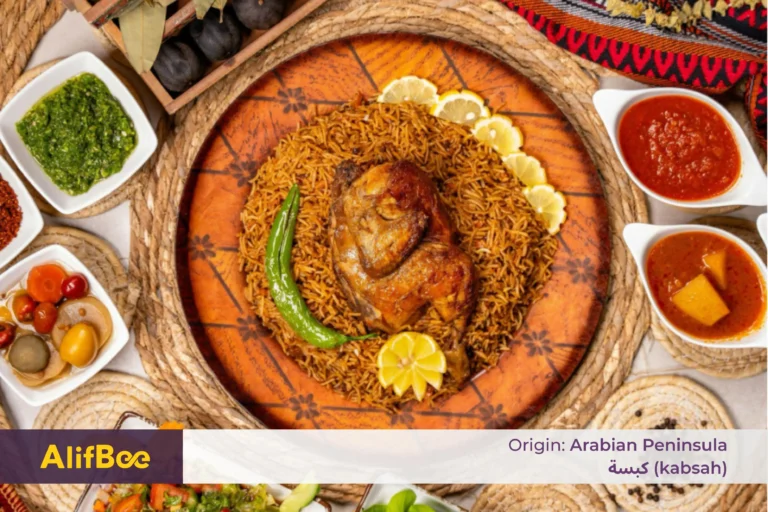
Kabsa

kabsah

كبسة

Kabsa is a main dish combining rice, chicken or meat, tomato, and blended spices. It is a common household food and a standard option served to guests. Many families prepare this dish weekly as part of regular home cooking.

Origin: Arabian Peninsula 

mshashi
8

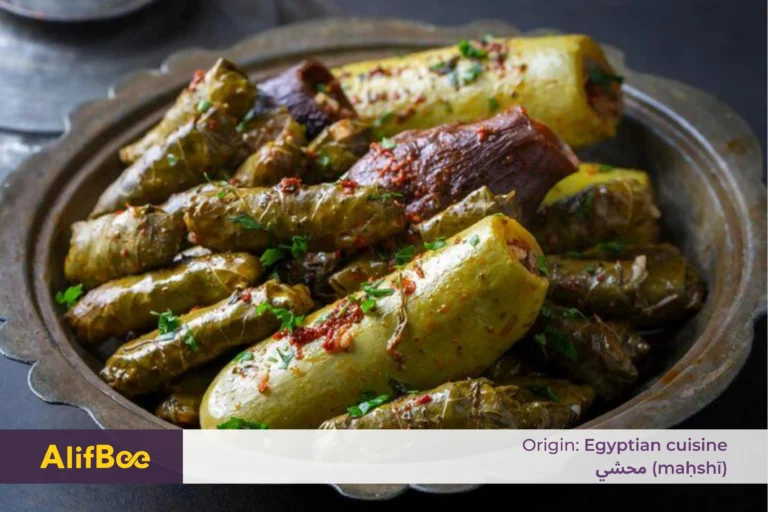
Mahshi

maḥshī

محشي

Mahshi includes vegetables stuffed with rice, herbs, and sometimes meat, then cooked slowly as a stew. The exact mix of vegetables changes by season, but the dish remains a familiar family food passed down through generations.


Origin: Egyptian cuisine 

fattush
9

Fattoush

fattūsh

فتوش

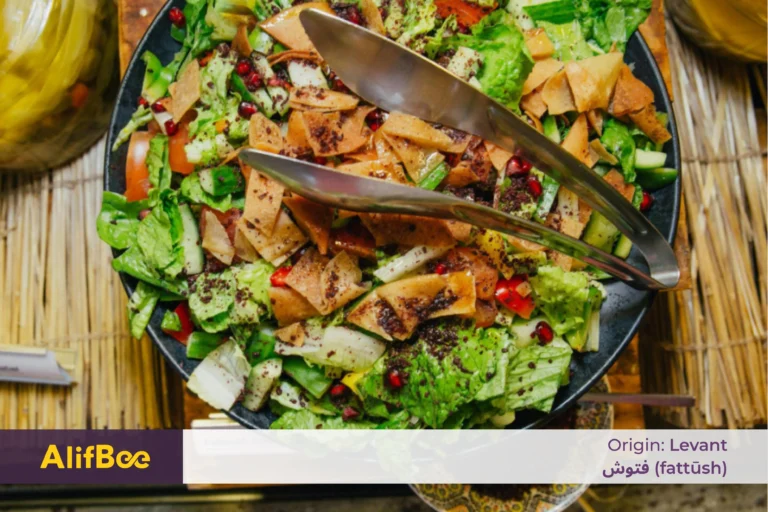
Fattoush is a fresh salad made with vegetables, herbs, toasted bread, and a light sauce. This dish has a balanced taste and is often served alongside grilled meat. A fine sprinkle of herbs adds extra flavor before serving.

Origin: Levant 

tabbulah
10

Tabbouleh

tabbūlah

تبولة

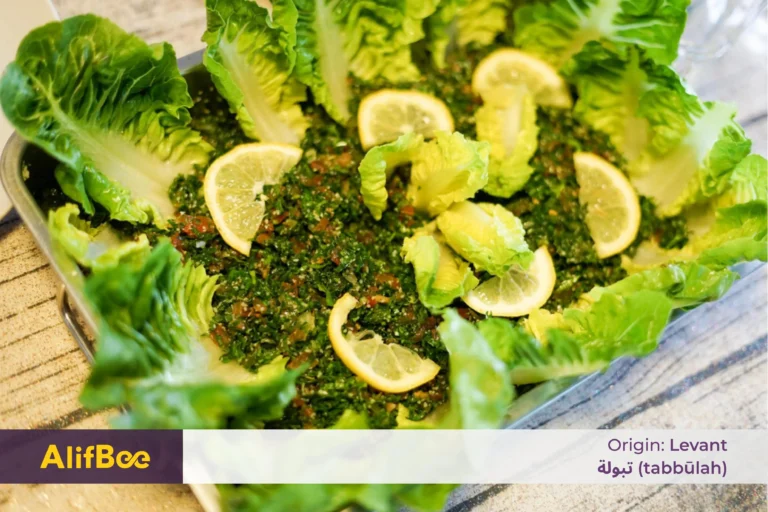
Tabbouleh is a herb-based salad made with parsley, tomatoes, onions, lemon juice, and bulgur wheat. It is served chilled and is a common side dish at shared meals, especially during warm seasons.


Origin: Levant 

sambusak
11

Sambousek

sambūsak

سمبوسك

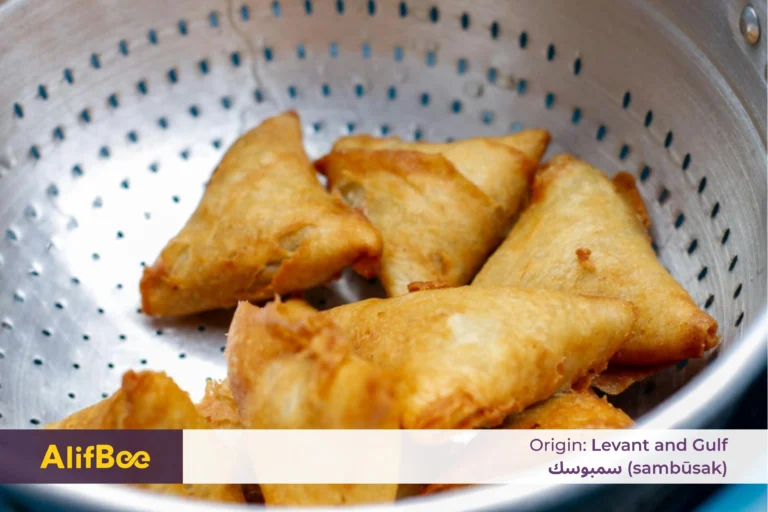
Sambousek is a filled pastry made from dough and cheese or meat, baked or fried. This snack is one of the most popular foods during Ramadan and is often served at iftar tables, alongside other popular foods in Ramadan.


Origin: Levant and Gulf 

baqlawah
12

Baklava

baqlāwah

بقلاوة

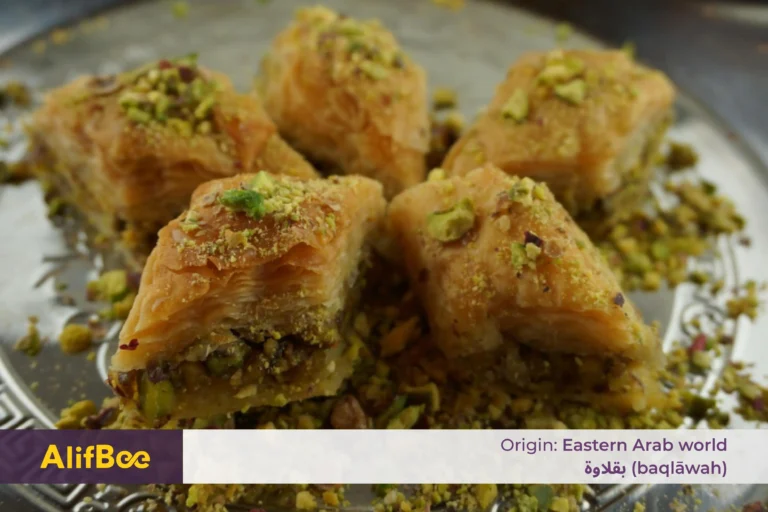
Baklava is a layered dessert made with filo, chopped nuts, pistachio, sweet syrup, and honey. This dish represents a rich pastry tradition and is usually ready to serve when guests arrive.

Origin: Eastern Arab world 

kunafah
13

Kunafa

kunāfah

كنافة

Kunafa is a dessert made from shredded dough, melted cheese, and sugar syrup. Different versions exist across cities, but the dish is commonly served at celebrations and family gatherings.

Origin: Levant

umm-ali
14

Umm Ali

umm ʿalī

أم علي

Umm Ali is a baked pudding made using milk, cream, bread, and nuts. This dish is common at family events and festive occasions and is often served warm and shared directly from the dish.

Origin: Egypt

haris
15

Harees

harīs

هريس

Harees is a hearty dish combining wheat and meat, cooked slowly to a smooth, standard texture. It is traditionally served during religious occasions and communal meals, especially in Oman.

Origin: Oman

Final Word

This list of Arabic food names shows how Arabic cuisine combines simple ingredients, traditional techniques, and everyday habits. Learning Arabian food names helps learners enjoy menus, recognize famous and delicious meals, and build practical vocabulary connected to real life across the Arab region.

If you want to learn more about food topics, the AlifBee App helps you practice Arabic with everyday examples.

FAQs

1. What is Arabic food called?

Arabic food is usually called Arabic cuisine or simply Arabic food. It’s a term used to describe traditional dishes from the Levant, the Gulf, and North Africa that share similar ingredients, cooking styles, and food customs.

2. Why are Arabic food names important to learn?

Learning Arabian food names helps learners read menus, order food confidently, and understand everyday conversations, especially when traveling or eating in local restaurants across the Arab region.

Author

  • Munia Jamal

    Munia Jamal is a content and copywriter with 4+ years of experience in SEO writing, storytelling, and journalism, specializing in Arabic language learning and human-centered narratives from Gaza. She holds a Master’s in Sustainable Development from Al-Quds University and a Bachelor of Pharmacy from Al-Azhar University.

Picture of Munia Jamal
Munia Jamal
Munia Jamal is a content and copywriter with 4+ years of experience in SEO writing, storytelling, and journalism, specializing in Arabic language learning and human-centered narratives from Gaza. She holds a Master’s in Sustainable Development from Al-Quds University and a Bachelor of Pharmacy from Al-Azhar University.
If you found this article helpful, please share it with your friends to spread the knowledge!
Facebook
LinkedIn
Telegram
X
Start your Arabic Learning Path with AlifBee!
syrian Logo
AlifBee App

Achieve incredible results with our platform Learn Arabic Online with AlifBee

AlifBee-Virtual School
AlifBee Virtual School

Join AlifBee Virtual School and master Arabic at your pace — from guided coaching to interactive self-learning.

AlifBee-Private Arabic Lessons
Private Arabic Lessons

Learn Arabic faster with live, one-on-one sessions tailored to your level and goals.

AlifBee-Books
AlifBee Workbooks Series

Explore AlifBee’s complete range of Arabic learning books for all ages!
Related Posts