How to Say Eid Mubarak in Arabic?
Learn how to say “Eid Mubarak” in Arabic, it’s meaning, pronunciation and other common Eid greetings used across the Arab world. Includes examples, responses and cultural context for Arabic learners.
In the Arab world, especially among Muslim communities, both Eid Al-Adha and Eid Al-Fitr are widely celebrated, and if you happen to be fortunate enough to be among them during these two holidays, you’ll notice one specific phrase that’s always repeated: “Eid Mubarak”. But what does this phrase actually mean?
In this article, we will explain its pronunciation, the meaning behind it, and alternative greetings you can use during Eid.
“Eid Mubarak” consists of two words: “Eid,” meaning festival or celebration, and “Mubarak,” meaning blessed. Together, the phrase literally means “blessed celebration,” but it is commonly used to mean “have a blessed celebration.” It expresses happiness, goodwill, and blessings during the holiday.
Festival/ celebration
Eid
عِيد
Blessed
Mubarak
مُبَارَك
Have a blessed celebration
Eid Mubarak
عِيدٌ مُبَارَك
Although “Eid Mubarak” is a simple phrase, its pronunciation might be a bit tricky, especially for new Arabic learners, so let’s break it down to make it easier.
Starting with the word “Eid”: to make it as simple as possible, pronounce it like the English word “eed” (rhymes with “seed”), while slightly tightening the throat at the beginning.
As for the word “Mubarak”, breaking it into three parts will help you better practice the pronunciation: “Mu” sounds like “Moo” in the English word “moon,” “ba” sounds like “baa” with a long “a” sound as in “father”, and “rak” sounds like “rock” without the “o” sound—just “rak.”
Although the phrase “Eid Mubarak” is understood by Arabic speakers around the world as it is written and pronounced in Modern Standard Arabic, you will often hear different alternatives depending on the region or the country.
Country/ region
English
Transliteration
Arabic
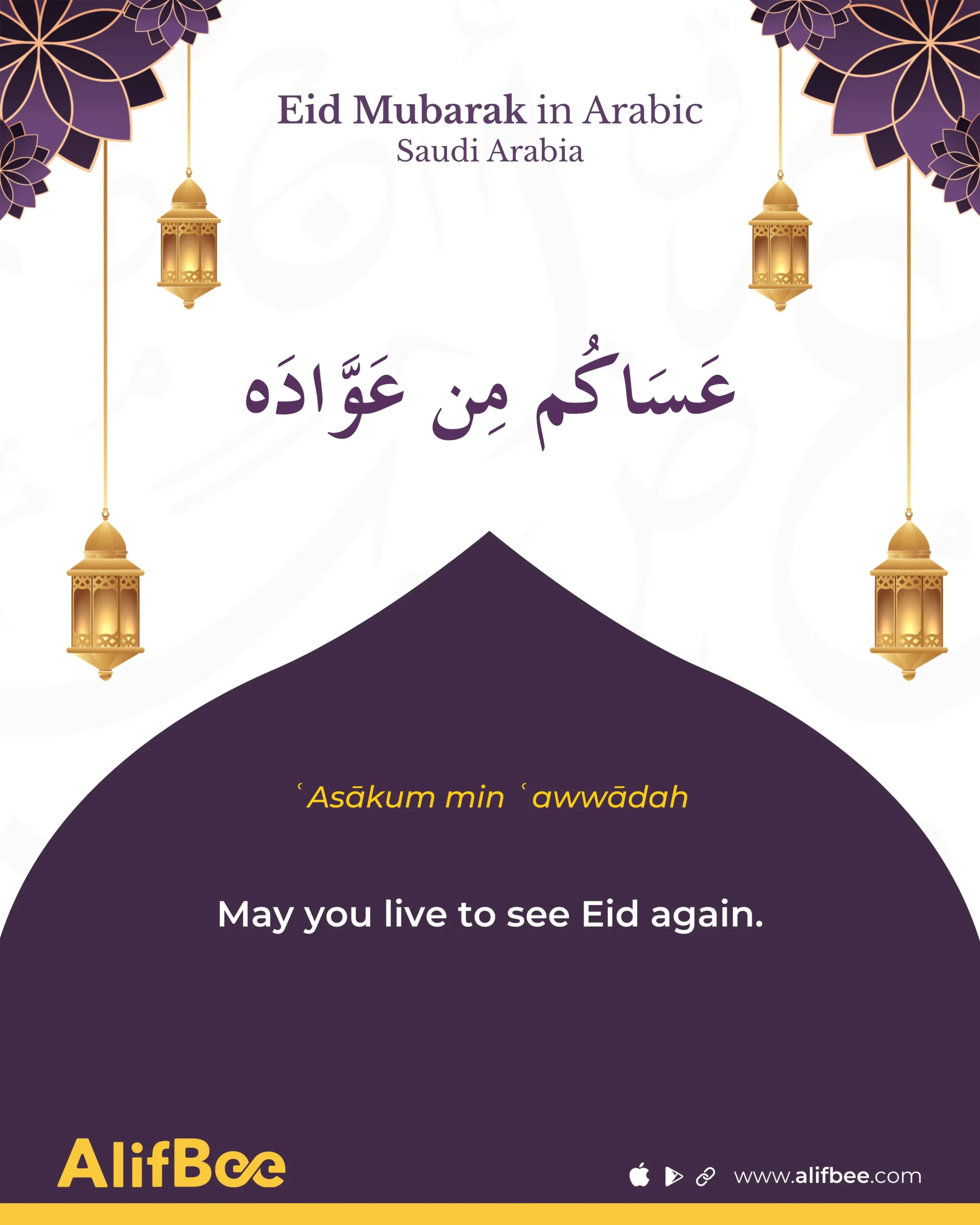
Saudi Arabia
May you live to see Eid again
ʿAsākum min ʿawwādah
عَسَاكُم مِن عَوَّادَه
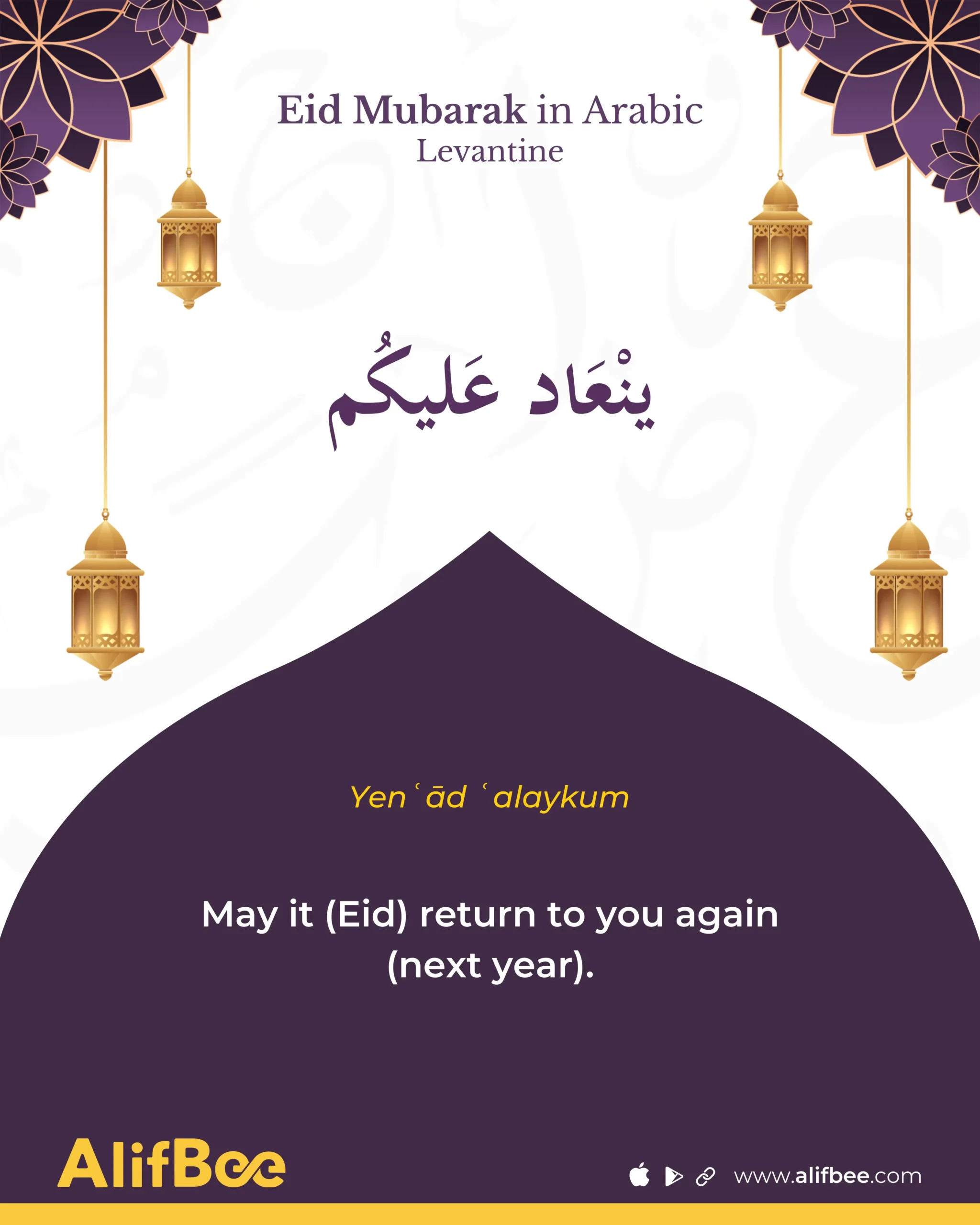
Levantine (Syria, Lebanon, Jordan, and Palestine)
May it (Eid) return to you again (next year)
Yenʿād ʿalaykum
ينْعَاد عَليكُم
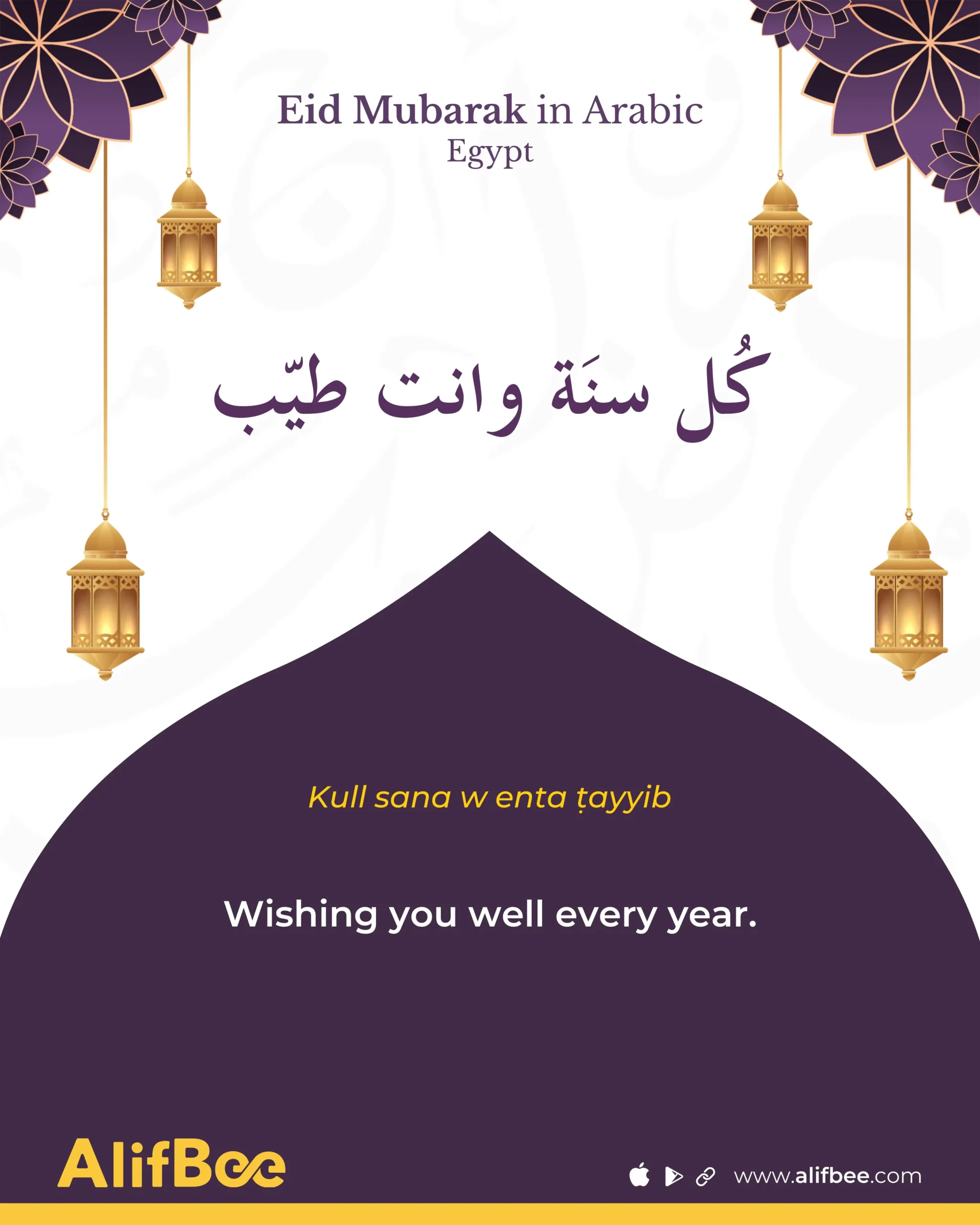
Egypt
Wishing you well every year
Kull sana w enta ṭayyib
كُل سنَة وانت طيّب
Iraq
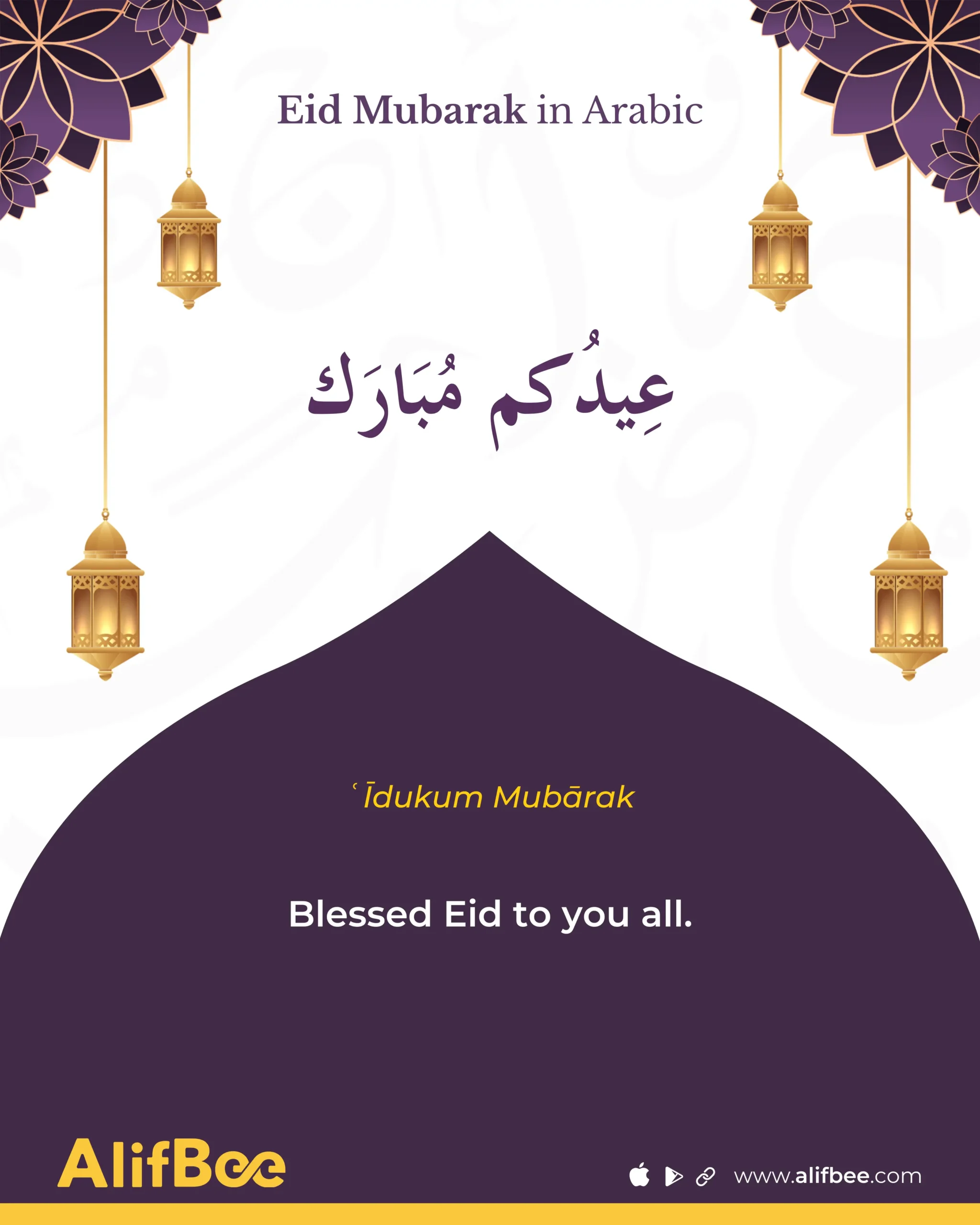
Blessed Eid to you all
ʿĪdukum Mubārak
عِيدُكم مُبَارَك
In Islam, the two main holidays celebrated by Muslim communities are Eid al-Fitr, which starts at the end of Ramadan and lasts for three days, and Eid al-Adha, which takes place during the Hajj and is celebrated for four days
During those days, Muslims around the world gather with their families and celebrate, and they naturally use the phrase “Eid Mubarak” when greeting each other.
It is also common for people to exchange messages to congratulate each other on the last night of Ramadan, once Eid al-Fitr is confirmed the next day, using the phrase “Eid Mubarak” or simply posting it on social media.
You’ll hear it almost everywhere during these celebrations, especially in mosques during Eid prayers.
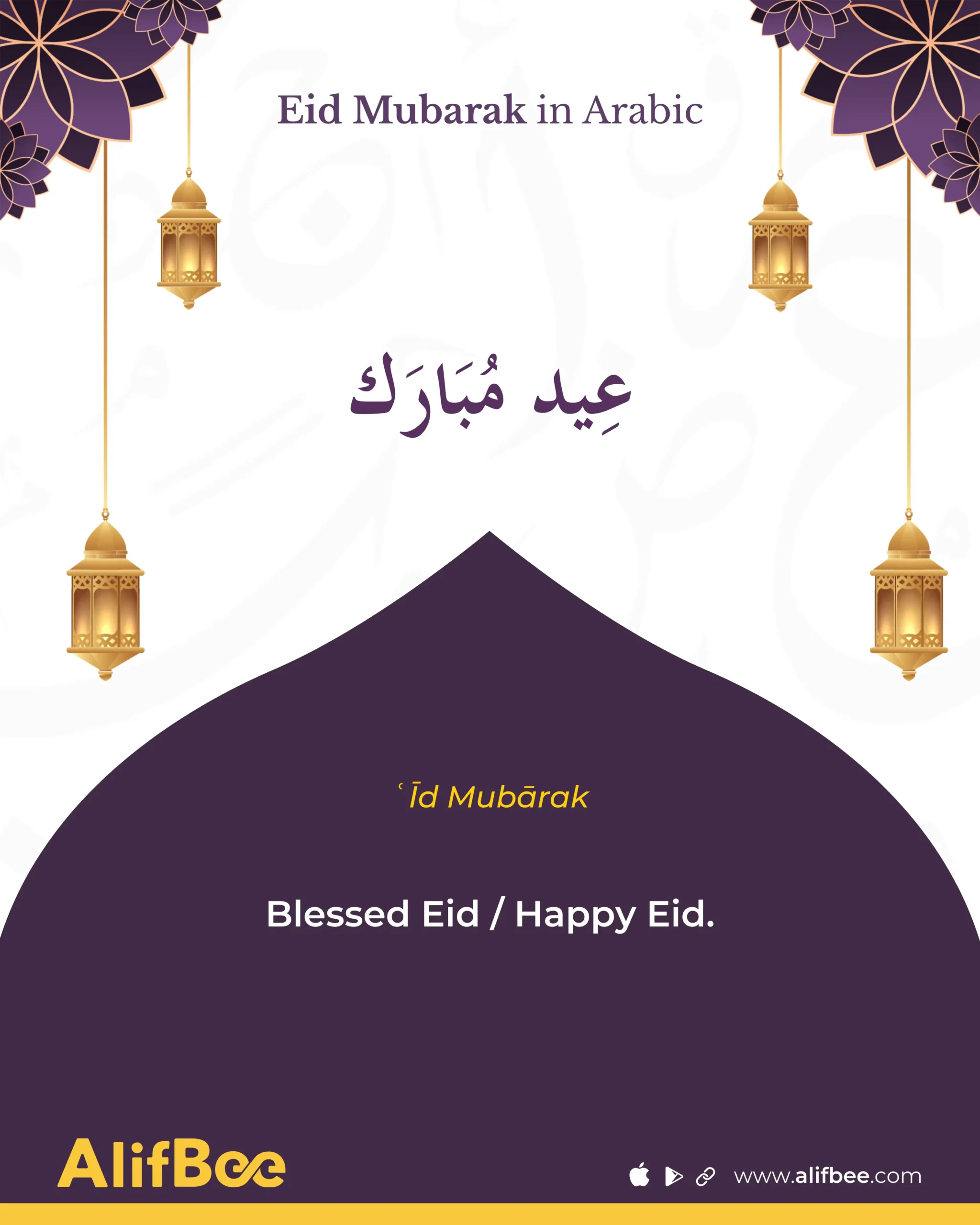
Blessed Eid / Happy Eid
ʿĪd Mubārak
عِيد مُبَارَك
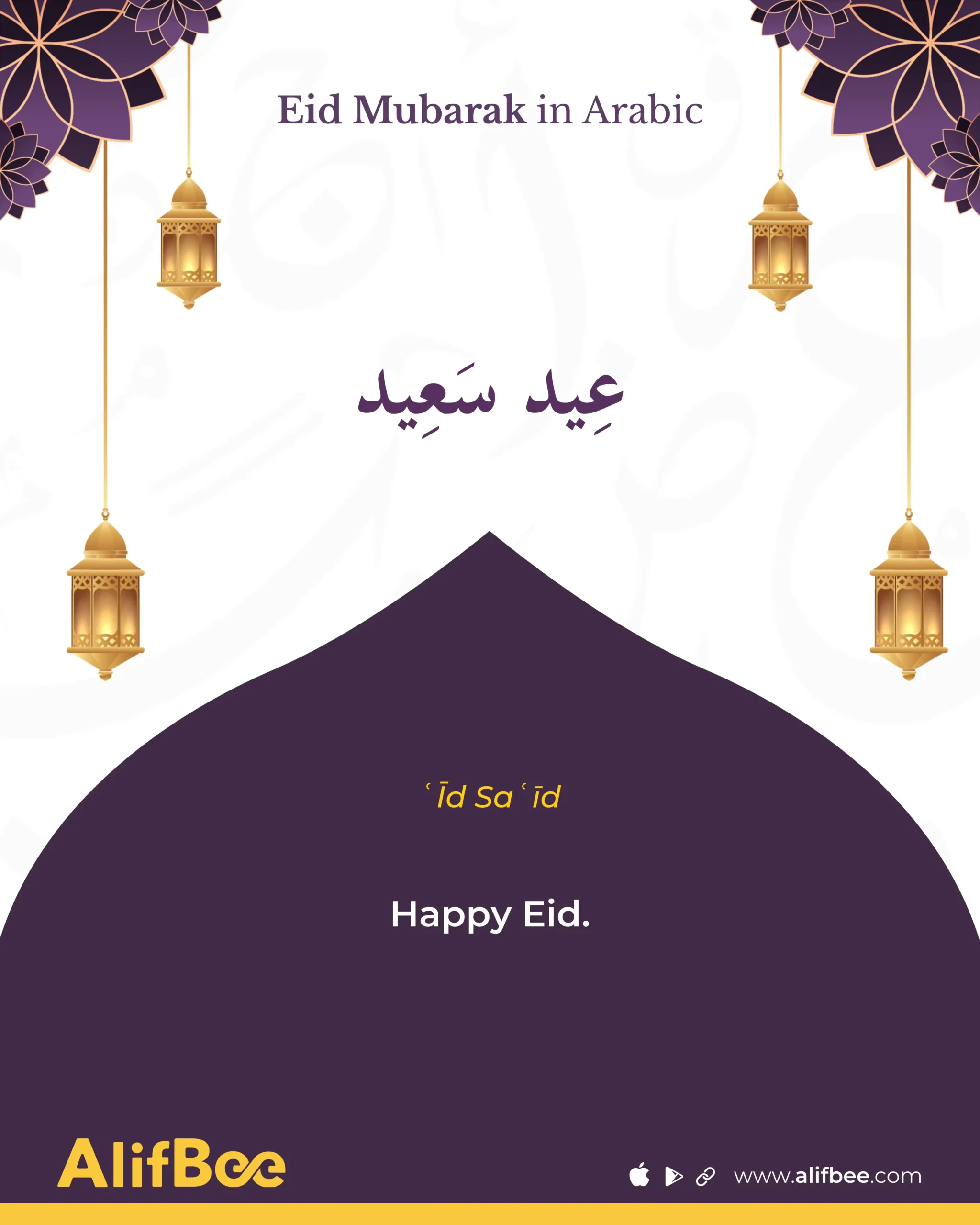
Happy Eid
ʿĪd Saʿīd
عِيد سَعِيد
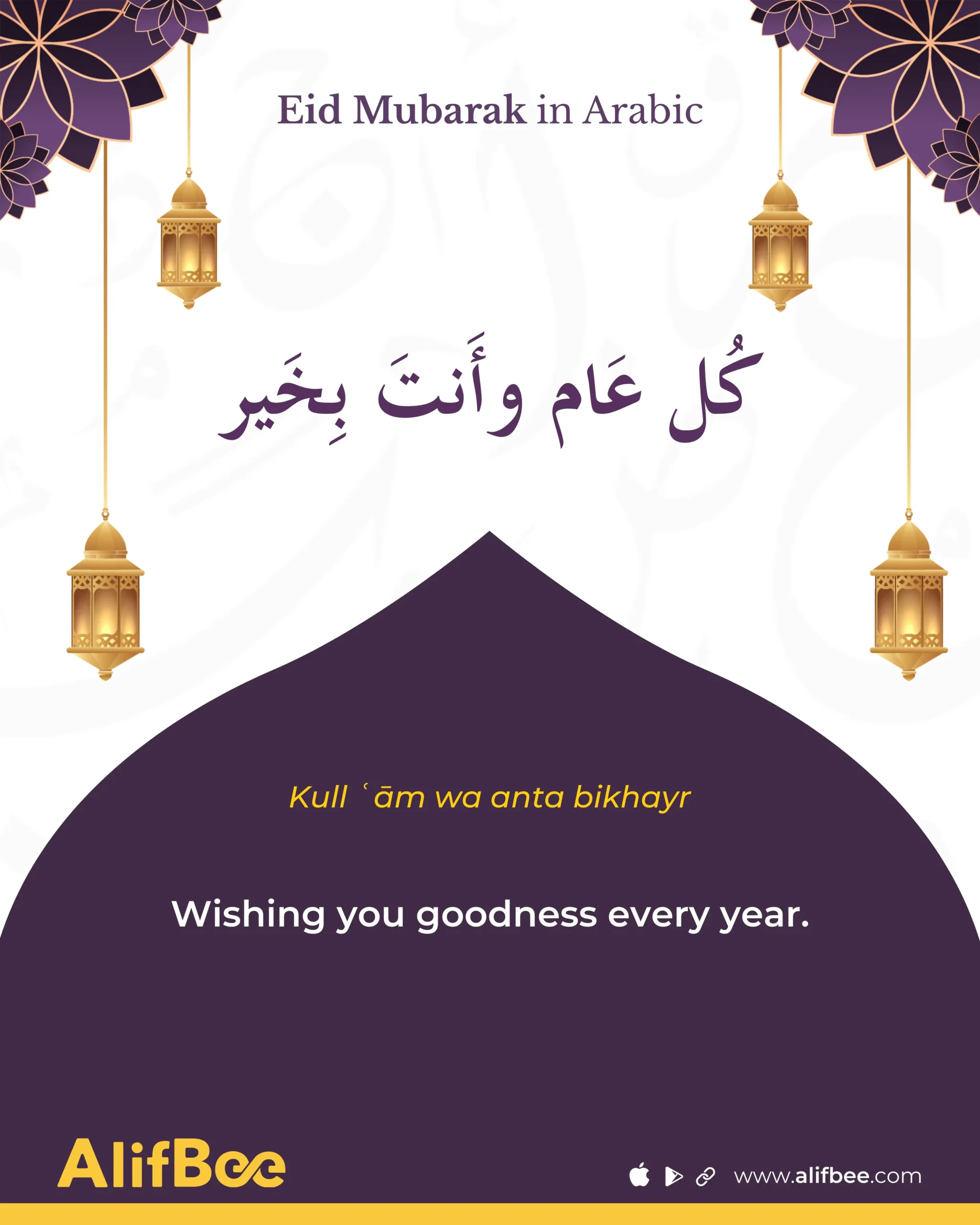
Wishing you goodness every year
Kull ʿām wa anta bikhayr
كُل عَام وأَنتَ بِخَير
Blessed Eid to you all
ʿĪdukum Mubārak
عِيدُكُم مُبَارَك
When someone says “Eid Mubarak,” it is polite to respond appropriately. Many new learners get nervous or a bit confused when it comes to replying, but that’s completely normal. Here are the most common ways to respond to “Eid Mubarak”:
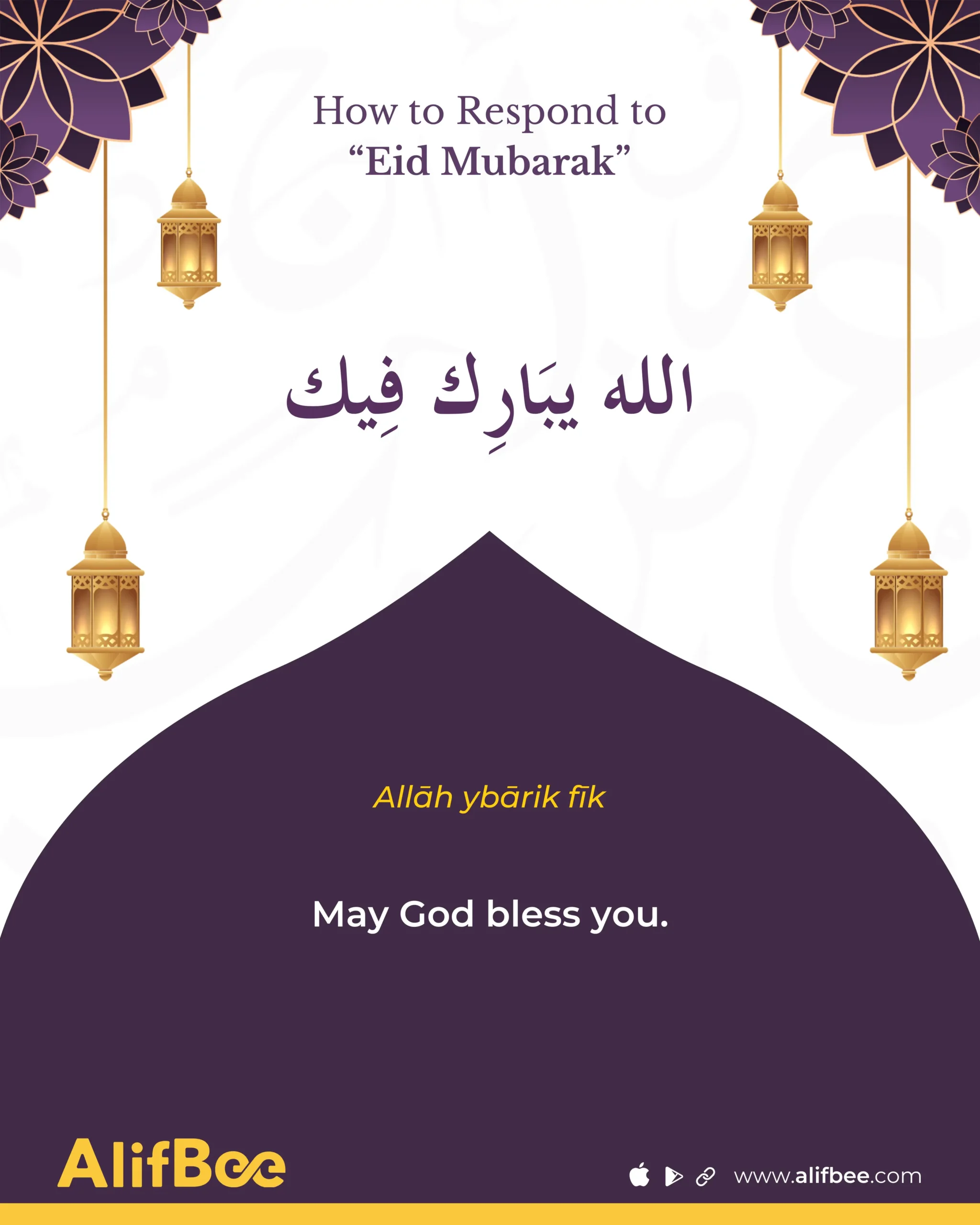
May God bless you
Allāh ybārik fīk
الله يبَارِك فِيك
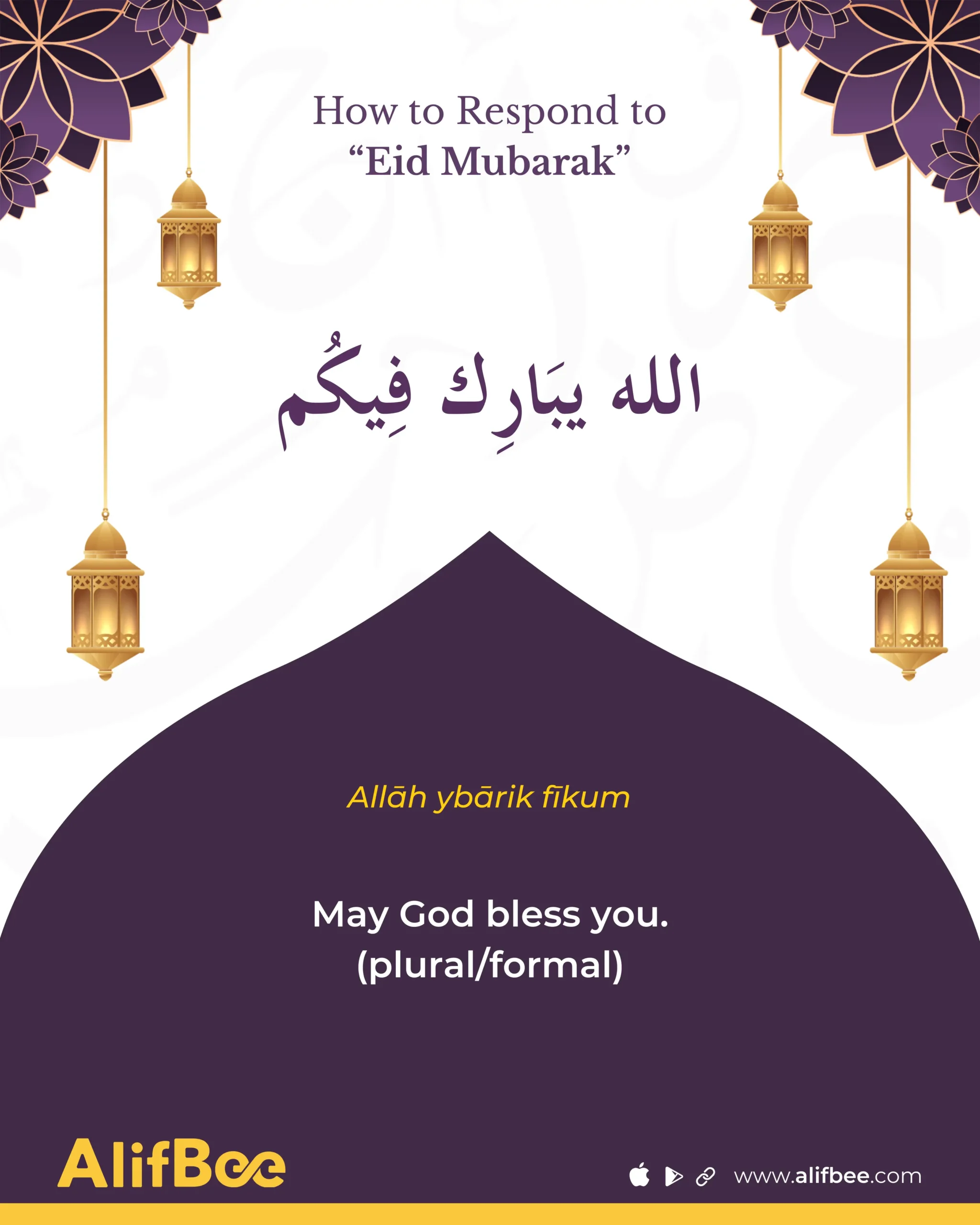
May God bless you (plural/formal)
Allāh ybārik fīkum
الله يبَارِك فِيكُم
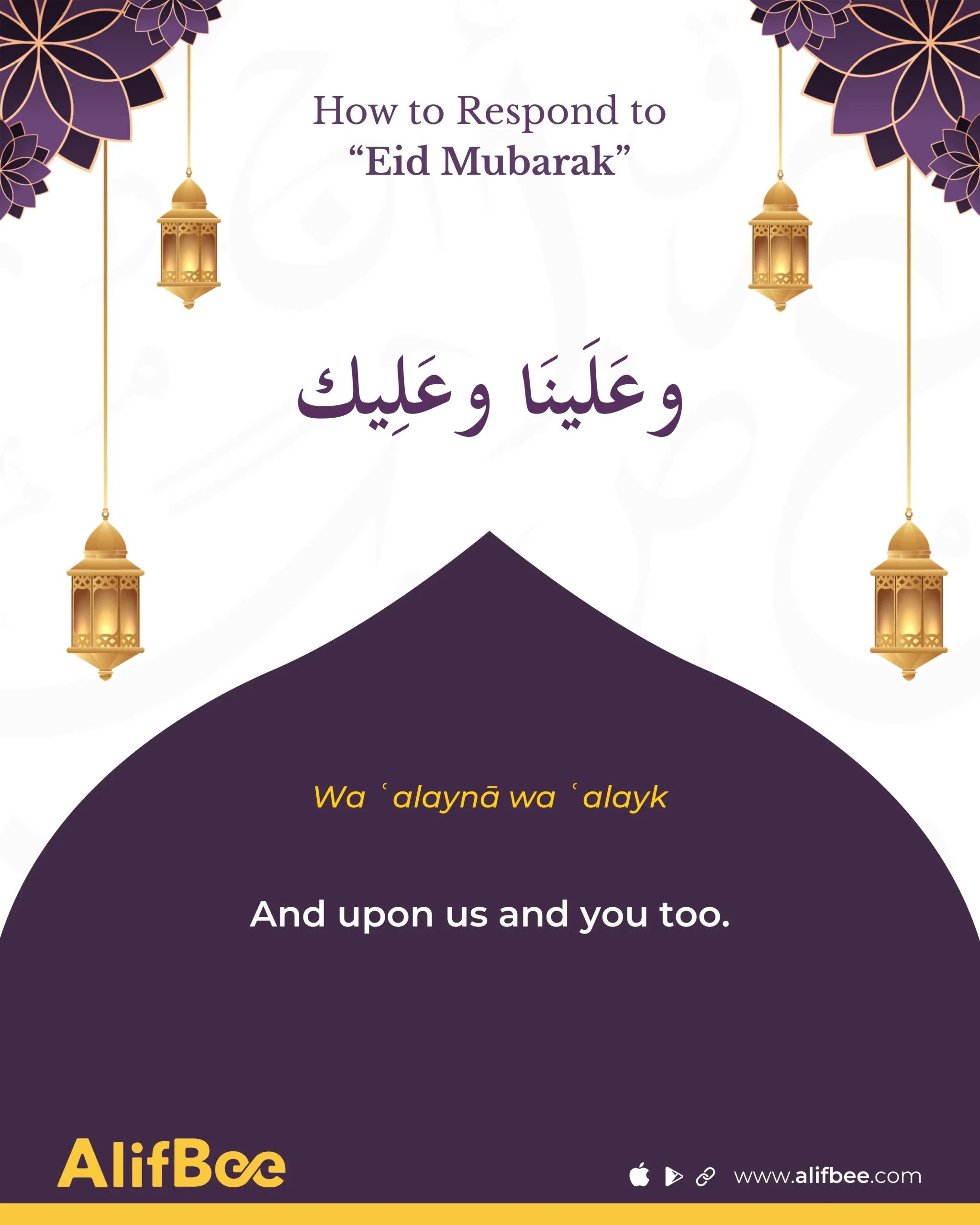
Upon us and you too
ʿalaynā wa ʿalayk
عَلَينَا وعَلَيك
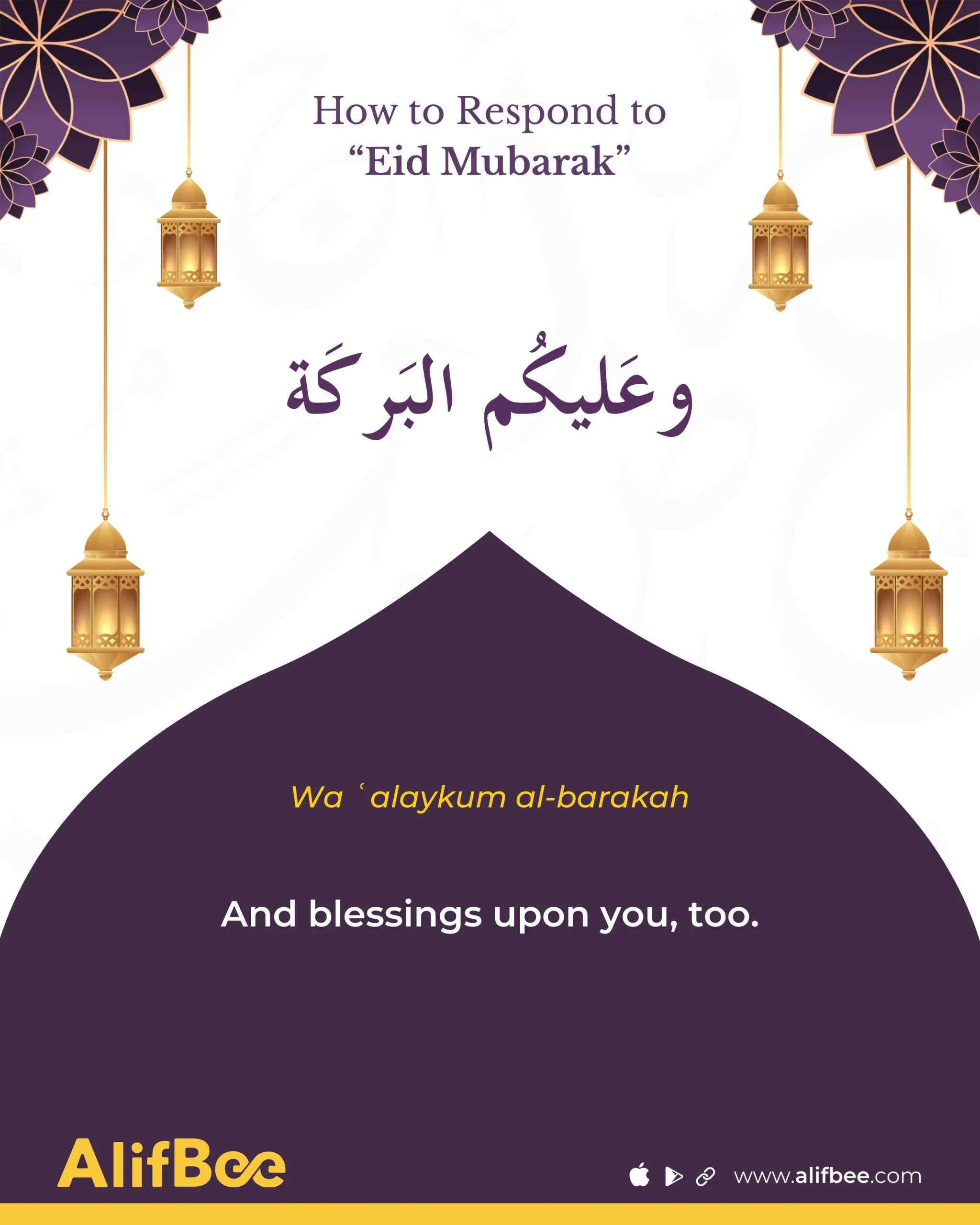
And blessings upon you, too
Wa ʿalaykum al-barakah
وعَليكُم البَركَة
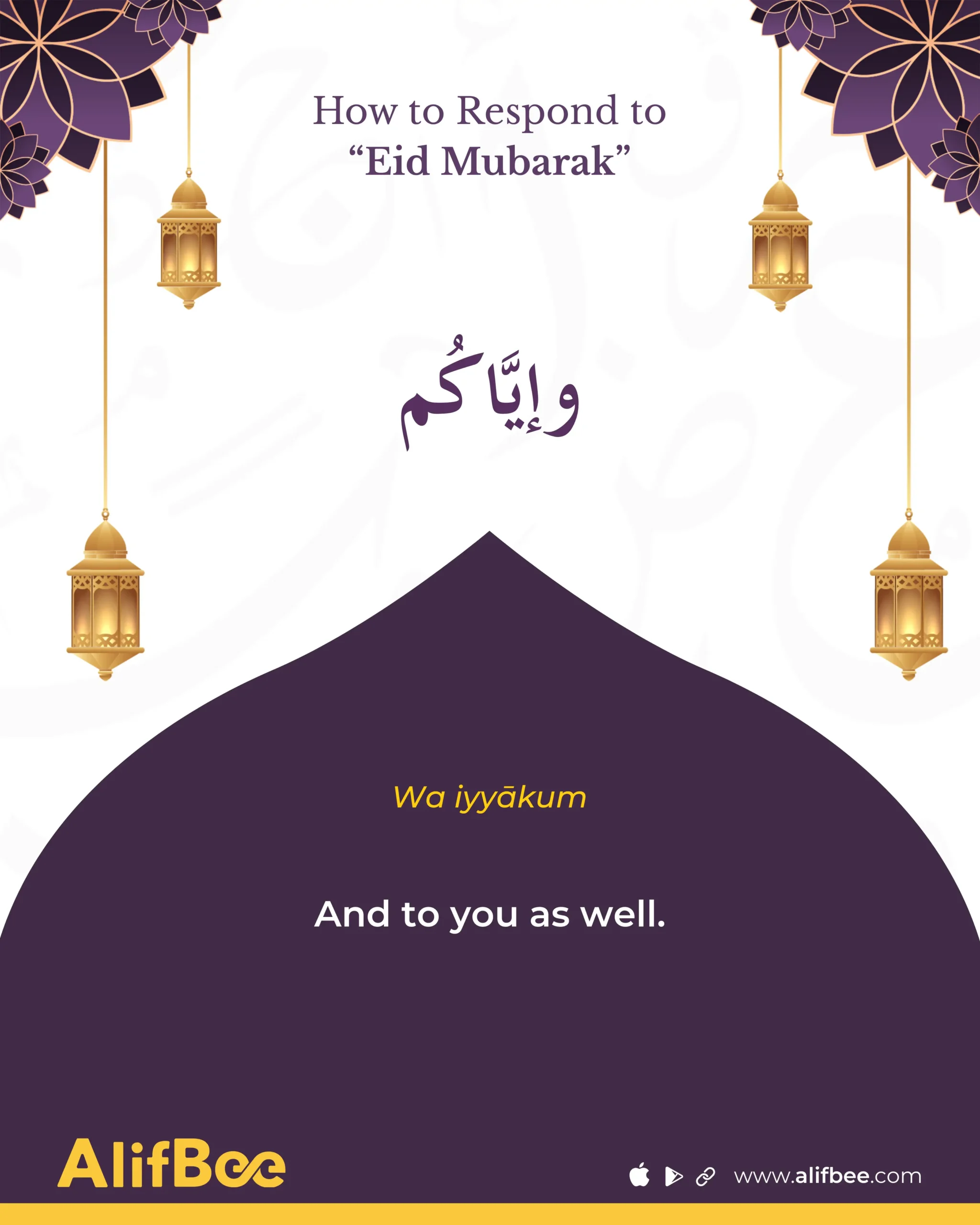
And to you as well
Wa iyyākum
وإيَّاكُم
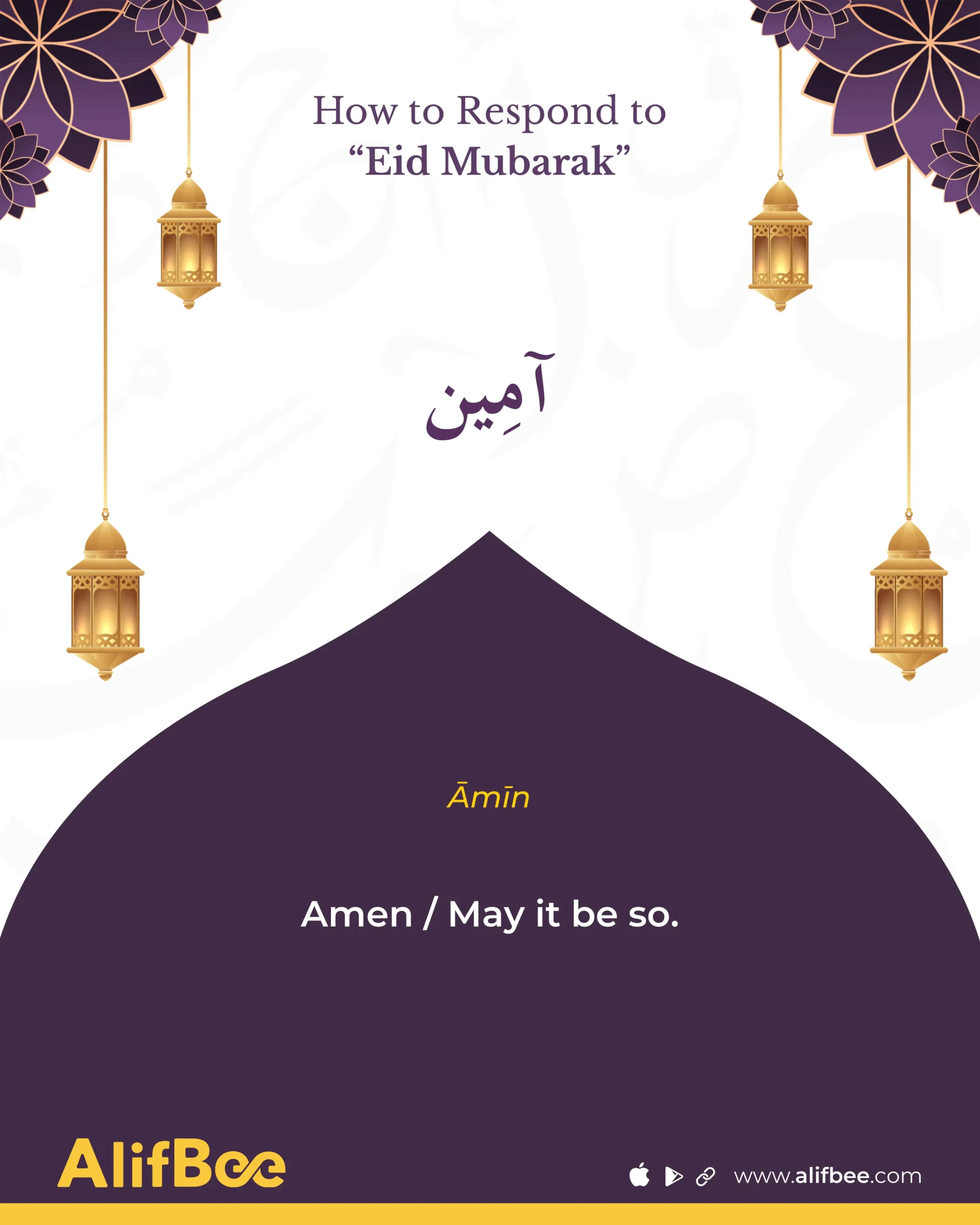
Amen / May it be so
Āmīn
آمِين
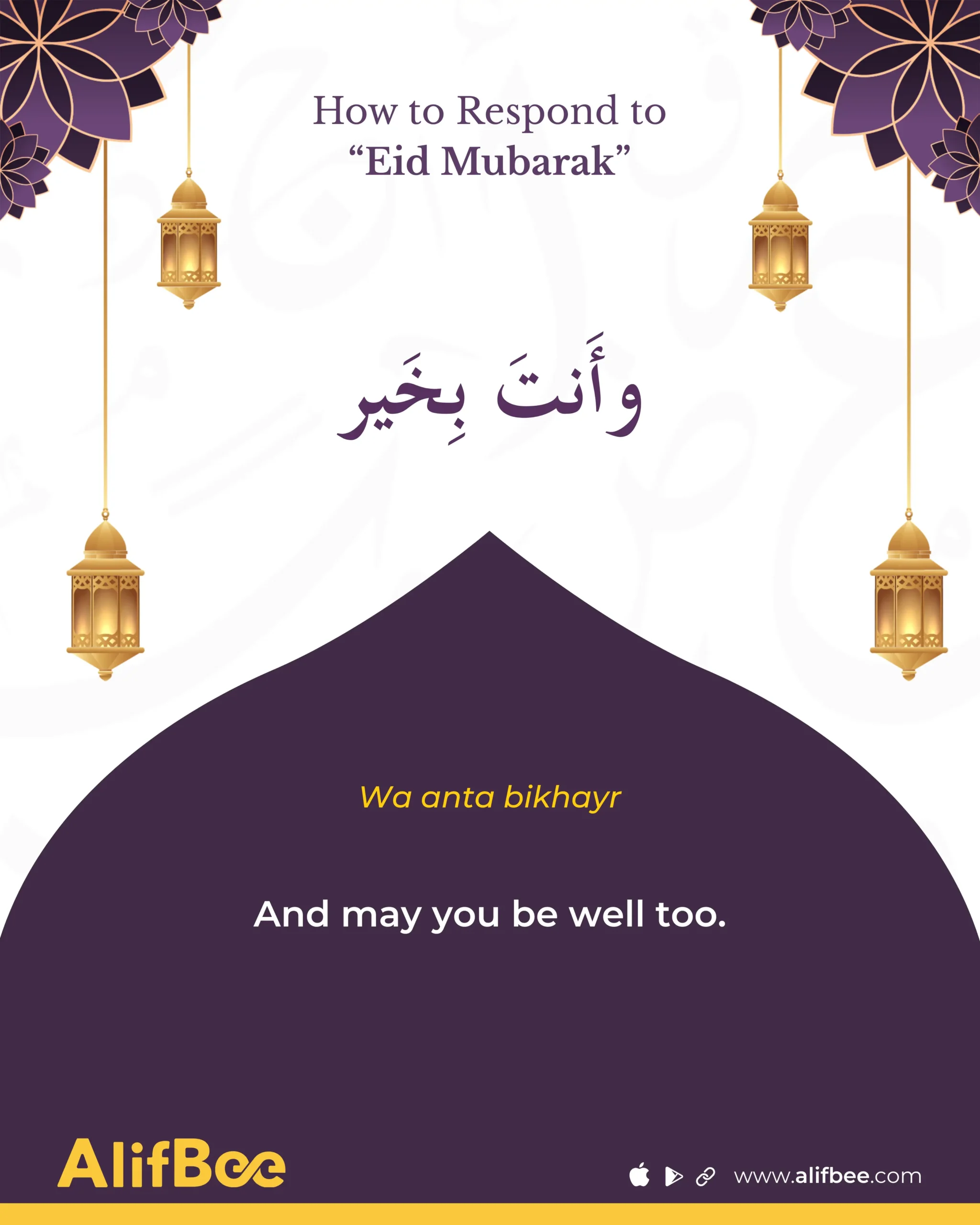
And may you be well too
Wa anta bikhayr
وأَنتَ بِخَير
At the end of the day, what matters most in saying “Eid Mubarak” isn’t just the pronunciation, but also the way you say it. So make sure you smile and say it with your whole heart. By the end of the first day of Eid, you’ll have heard it so many times that you’ll feel like an expert!
And don’t forget to check out the AlifBee app for more Arabic learning content, which will help you with your Arabic learning journey, with plenty of lessons and lots of practice exercises.
Author
Layla Alahmar is a writer and proofreader with a master’s degree in Arabic literature and linguistics. At AlifBee, she creates clear and engaging educational content, blending storytelling with practical language insights to make Arabic learning accessible and inspiring.

Learn how to say “Eid Mubarak” in Arabic, it’s meaning, pronunciation and other common Eid greetings used across the Arab world. Includes examples, responses and cultural context for Arabic learners.

Learn what to say to someone going to Hajj or returning from Hajj in Arabic, with simple phrases, pronunciation, meaning, and respectful usage notes.

Learn Hajj rituals in Arabic with clear step-by-step vocabulary, pronunciation, and meanings for beginners, from ihram and tawaf to Arafah and Mina.

Want to learn body parts in Arabic? This beginner-friendly guide covers everything from head to toe with tables, pronunciation tips, and grammar insights. Start learning with AlifBee today!