
Written by Dania Ghraoui, a translator and language teacher with 10 years of experience.
At a Glance
- Body parts in Arabic are the everyday words used to name parts of the human body, such as رَأْس (raʾs, head), يَد (yad, hand), عَيْن (ʿayn, eye), and قَلْب (qalb, heart).
- They include external parts like the face, arms, and legs, as well as internal organs like the brain, lungs, and stomach.
- For beginners, these words are important because they help with real communication and make it easier to learn Arabic grammar, such as gender, possession, and the dual form.
Learning body parts in Arabic gives beginners useful Arabic vocabulary for everyday situations such as describing appearance, talking about pain, and handling simple health-related conversations.
This guide teaches essential human body words in Arabic for the head, face, upper body, lower body, and internal organs, with clear pronunciation support and practical examples.
Why Learn Human Body Words in Arabic First?
It helps to learn Arabic words for the human body early on because you end up needing them more often than you might expect. They come up in simple, real situations like talking about pain, appearance, movement, or basic everyday needs, so they feel useful almost immediately.
They also do more than just expand your vocabulary. Body words give you a fairly natural way to practice Arabic grammar too, especially gender, possession, and the dual form. So while you are learning words you can actually use, you are also building grammar in a way that feels less forced.
What are Head and Face Words in Arabic?
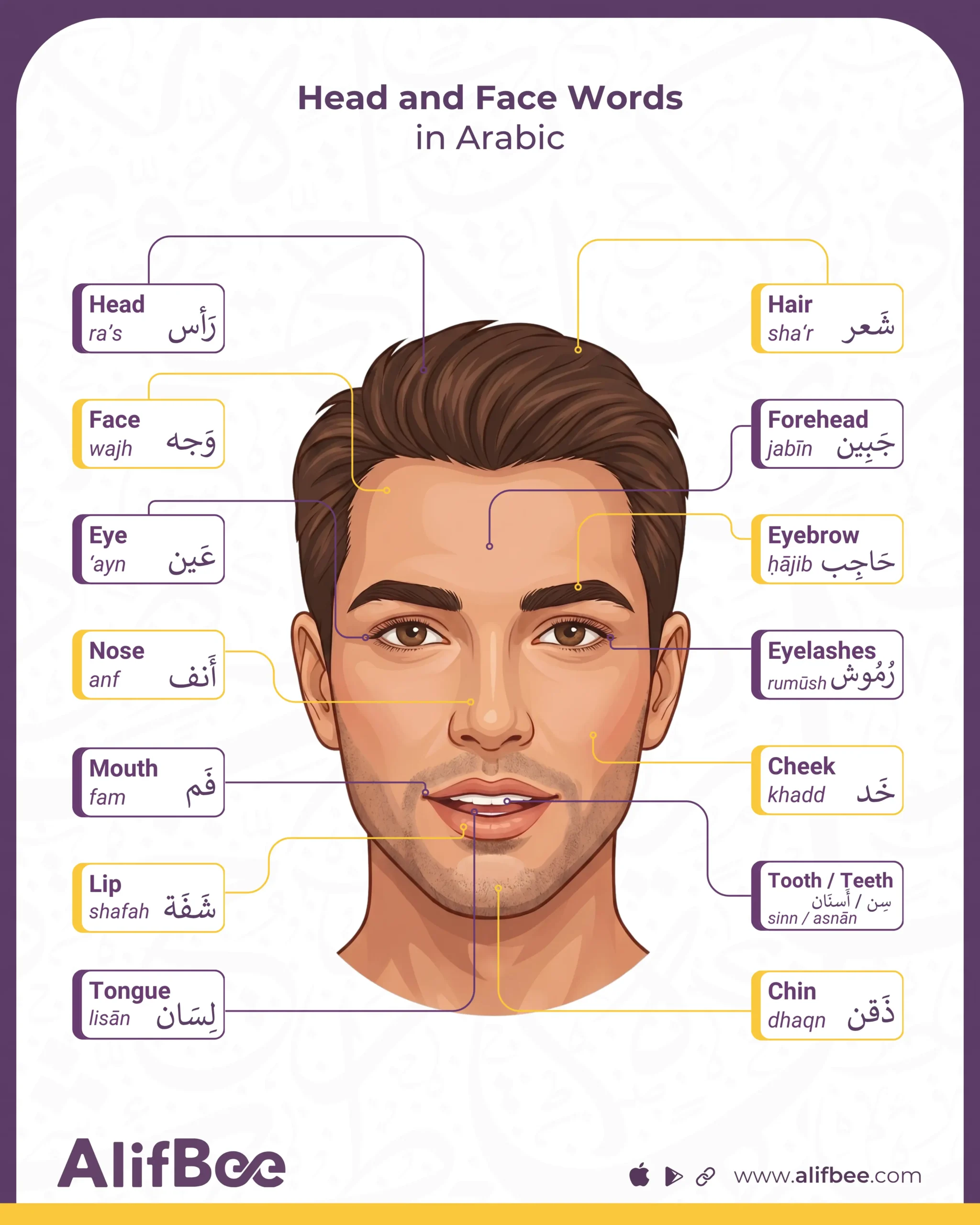
Words for the head and face are usually among the first body words that feel genuinely useful. You hear them in simple, everyday situations all the time, whether someone talks about appearance, feelings, pain, or a small detail they notice. That is why they make a good starting point.
| English | Pronunciation | Arabic | |
|---|---|---|---|
|
Head |
ra’s |
رَأس |
|
|
Hair |
sha‘r |
شَعر |
|
|
Face |
wajh |
وَجه |
|
|
Forehead |
jabīn |
جَبِين |
|
|
Eye |
‘ayn |
عَين |
|
|
Eyebrow |
ḥājib |
حَاجِب |
|
|
Eyelashes |
rumūsh |
رُمُوش |
|
|
Nose |
anf |
أَنف |
|
|
Cheek |
khadd |
خَد |
|
|
Mouth |
fam |
فَم |
|
|
Lip |
shafah |
شَفَة |
|
|
Tooth / Teeth |
sinn / asnān |
سِن / أَسنَان |
|
|
Tongue |
lisān |
لِسَان |
|
|
Chin |
dhaqn |
ذَقن |
|
They also fit easily into short Arabic sentences you can imagine using right away. For example, you might say shaʿruhā ṭawīl (“her hair is long”) or ʿaynī tūjiʿunī (“my eye hurts”). The examples under “How to Use Body Parts in Arabic Sentences” below will make that clearer.
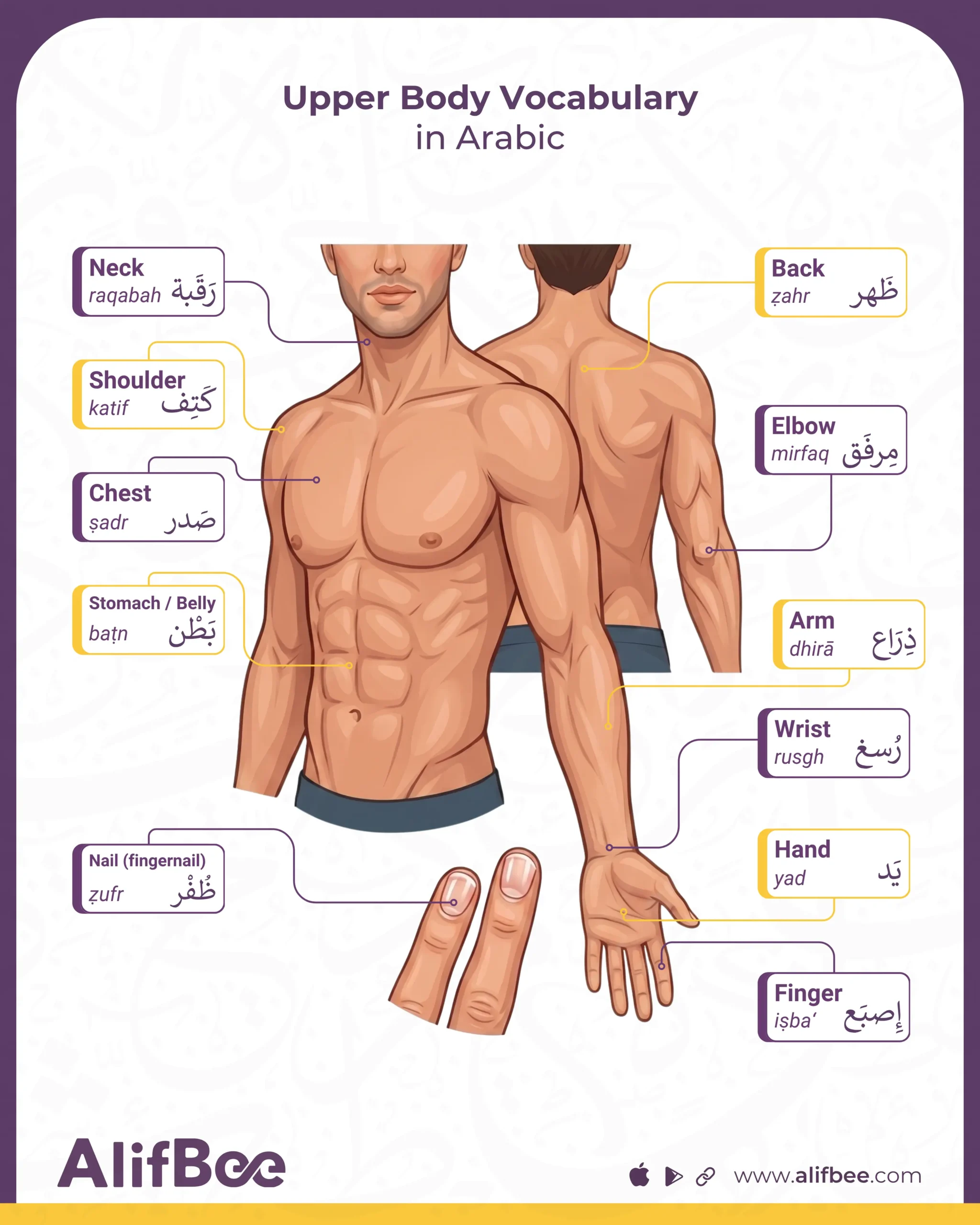
Upper Body Vocabulary in Arabic
Upper body words come up more often than you may think. You need them when you talk about movement, everyday tasks, clothes, exercise, or pain, so they quickly become useful in real conversation. They also help when you want to say what your body is doing or point to where something hurts.
| English | Pronunciation | Arabic | |
|---|---|---|---|
|
Neck |
raqabah |
رَقَبة |
|
|
Shoulder |
katif |
كَتِف |
|
|
Arm |
dhirā‘ |
ذِرَاع |
|
|
Elbow |
mirfaq |
مِرفَق |
|
|
Wrist |
rusgh |
رُسغ |
|
|
Hand |
yad |
يَد |
|
|
Finger |
iṣba‘ |
إِصبَع |
|
|
Nail (fingernail) |
ẓufr |
ظُفْر |
|
|
Chest |
ṣadr |
صَدر |
|
|
Stomach / Belly |
baṭn |
بَطْن |
|
|
Back |
ẓahr |
ظَهر |
|
This group also gives you an easy way to notice how possession works in Arabic. Instead of adding a separate word for “my” or “your,” Arabic often attaches a suffix to the noun itself. So you get forms like yadī (يَدِي, “my hand”) and yaduka (يَدُكَ, “your hand”). Once you start seeing that pattern, it becomes much easier to remember.
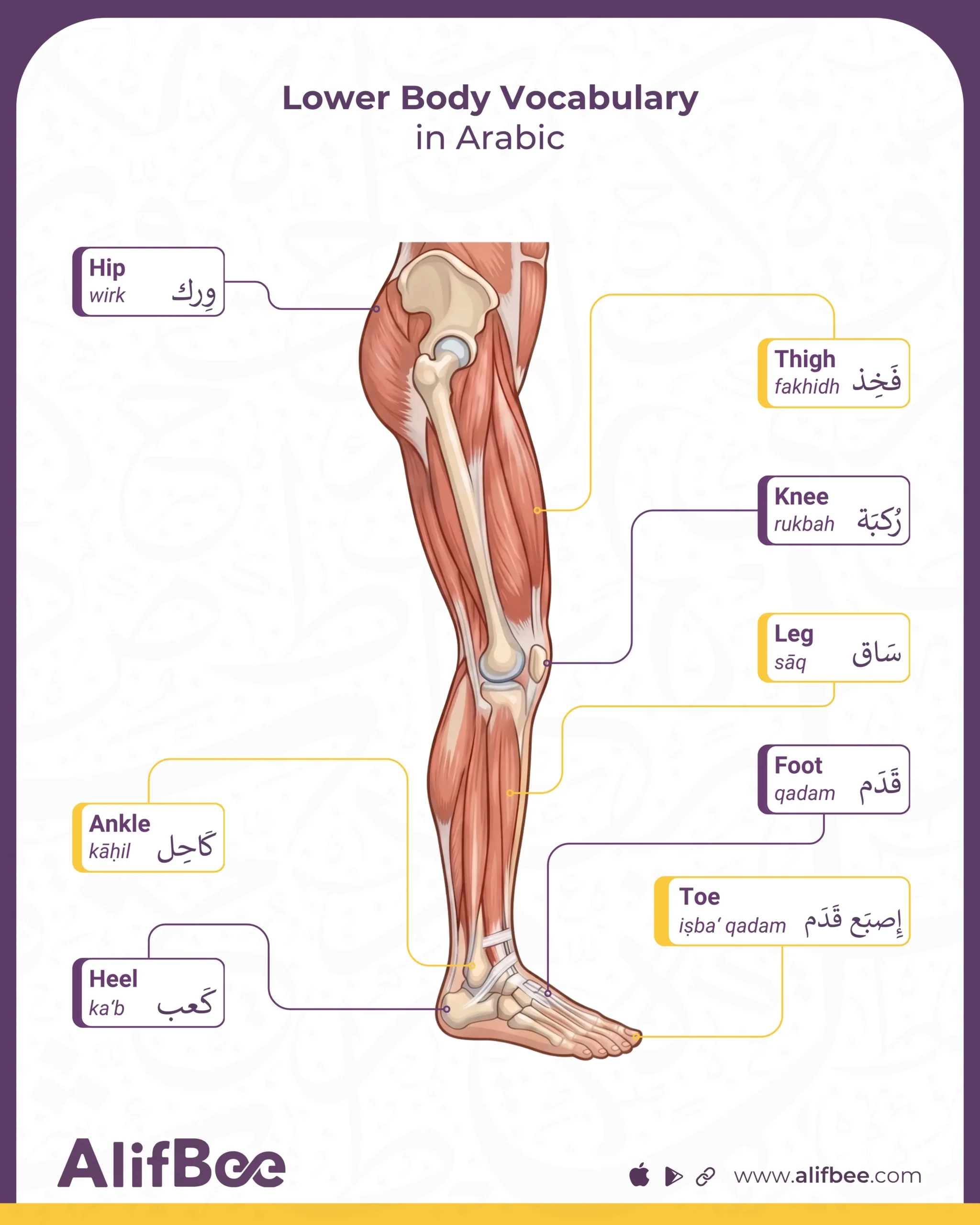
Lower Body Vocabulary in Arabic
Lower body words are very useful because they show up in so many ordinary situations. You may need them when talking about walking, standing, sitting, exercise, shoes, or pain.
| English | Pronunciation | Arabic | |
|---|---|---|---|
|
Hip |
wirk |
وِرك |
|
|
Leg |
sāq |
سَاق |
|
|
Knee |
rukbah |
رُكبَة |
|
|
Thigh |
fakhidh |
فَخِذ |
|
|
Ankle |
kāḥil |
كَاحِل |
|
|
Foot |
qadam |
قَدَم |
|
|
Toe (literally “finger of the foot”) |
iṣba‘ qadam |
إِصبَع قَدَم |
|
|
Heel |
ka‘b |
كَعب |
|
This group also helps you describe the body more precisely. Sometimes learners know a general word like “leg” but are not sure how to name parts such as the thigh, ankle, or heel.
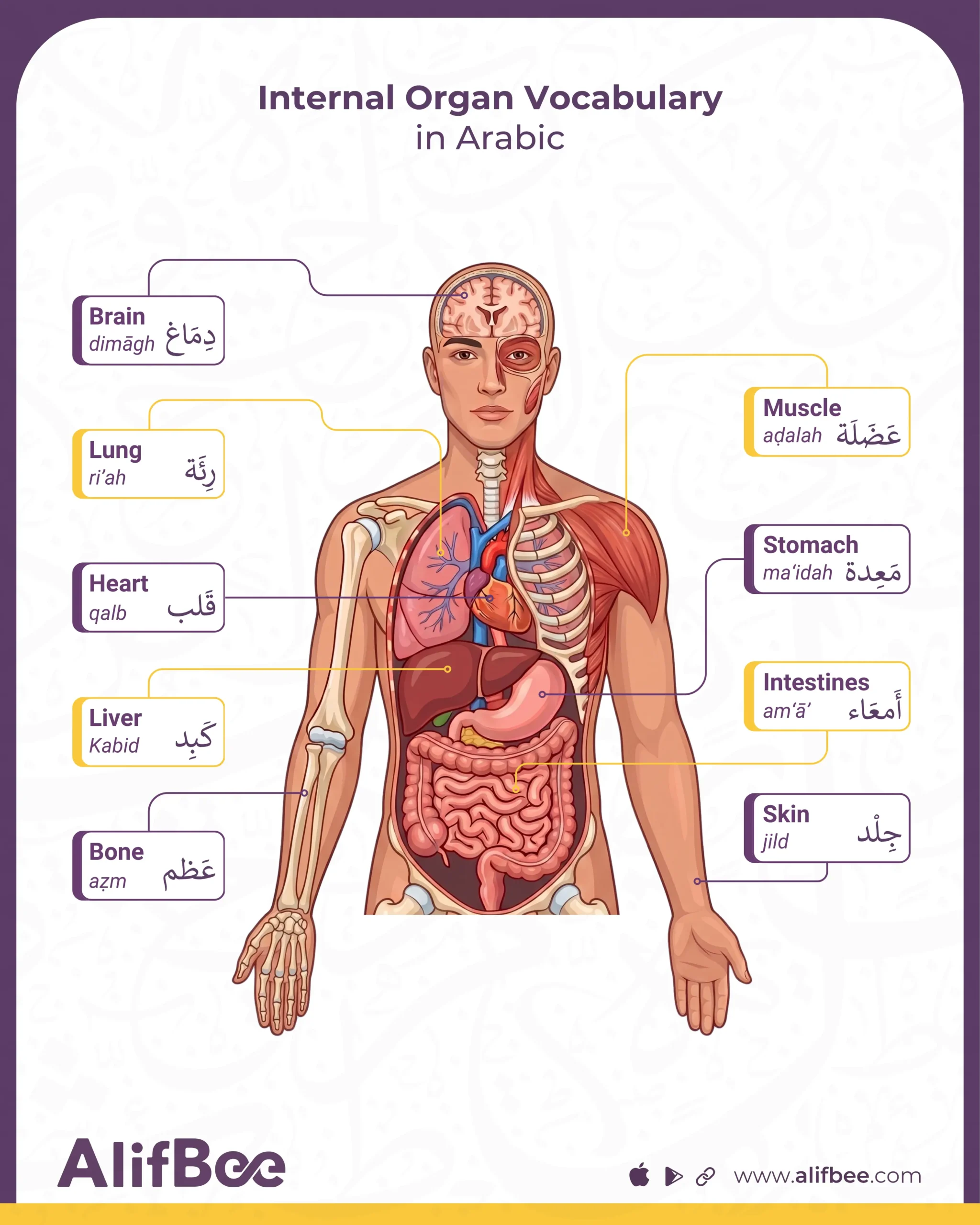
Internal Organ Vocabulary in Arabic
Internal organ words may not feel as common at first as words like hand or eye, but they become very useful once you want to talk about health in a more exact way. You hear them in contexts like pain, illness, medical visits, or even everyday comments about feelings and the body.
| English | Pronunciation | Arabic | |
|---|---|---|---|
|
Brain |
dimāgh |
دِمَاغ |
|
|
Heart |
qalb |
قَلب |
|
|
Lung |
ri’ah |
رِئَة |
|
|
Liver |
Kabid |
كَبِد |
|
|
Stomach (internal organ) |
ma‘idah |
مَعِدة |
|
|
Intestines |
am‘ā’ |
أَمعَاء |
|
|
Bone |
‘aẓm |
عَظم |
|
|
Muscle |
‘aḍalah |
عَضَلَة |
|
|
Skin |
jild |
جِلْد |
|
Some of these words may take a little more effort to remember, but they are worth learning because they make your Arabic more precise and more practical.
How to Practice The Dual Form with Arabic Body Parts Words?
Arabic body words offer a great opportunity to practice the Arabic dual form. Most importantly, it is useful to learn these words in both forms, the singular and the dual:
| English | Pronunciation | Arabic | |
|---|---|---|---|
|
eye – two eyes |
ʿayn – ʿaynān |
عَيْن – عَيْنان |
|
|
ear – two ears |
udhun – udhunān |
أُذُن – أُذُنان |
|
|
hand – two hands |
yad – yadān |
يَد – يَدان |
|
|
foot – two feet |
qadam – qadamān |
قَدَم – قَدَمان |
|
|
leg – two legs |
sāq – sāqān |
ساق – ساقان |
|
|
lung – two lungs |
riʾah – riʾatān |
رِئَة – رِئَتان |
|
|
arm – two arms |
dhirāʿ – dhirāʿān |
ذِراع – ذِراعان |
|
Note that these forms are in the nominative case, while the ending -ين (-ayn) are used in the accusative and genitive cases.
How to Use Body Parts in Arabic Sentences
Knowing the vocabulary is one thing, but using it in a sentence is what really builds confidence. Let’s look at three simple sentence structures you can start using today.
1. Describing Pain or Injury
This is probably one of the most useful patterns to learn early. If something hurts, we use the verb yuʾlim (“hurts” / “causes pain”)
| English | Pronunciation | Arabic | |
|---|---|---|---|
|
My head hurts |
Ra’sī yu’limunī |
رَأسِي يُؤلِمُني |
|
|
I feel a pain in my stomach |
ashʿuru bi-alamin fī baṭnī |
أشعر بألمٍ في بطني |
|
2. Describing Appearance
Body vocabulary also appears a lot in simple descriptions. You might want to describe someone’s hair, eyes, face, or height, and these short sentences are a very natural way to do that.
| English | Pronunciation | Arabic | |
|---|---|---|---|
|
Her hair is long |
Sha‘ruhā ṭawīl |
شَعرُهَا طَويل |
|
|
Your eyes are beautiful |
‘Uyūnuka jamīlah |
عُيونُك جَمِيلَة |
|
3. Using Adjectives
This pattern is especially useful because it helps with both vocabulary and grammar at the same time. In Arabic, the adjective usually comes after the noun, and it needs to match it in gender.
| English | Pronunciation | Arabic | |
|---|---|---|---|
|
A big hand |
Yadun kabīrah |
يَدٌ كَبِيرَةٌ |
|
|
A big head |
Raʾsun kabīr |
رَأْسٌ كَبِيرٌ |
|
Notice the feminine agreement in the first example: yad is feminine, so kabīrah is feminine, too.
Common Mistakes to Avoid with Body Parts in Arabic
When learners begin studying body parts in Arabic, a few mistakes show up quite often. That is normal. Arabic includes patterns that may feel unfamiliar at first, especially if you are coming from English.
- Forgetting the dual form
This is one of the most common mistakes. Arabic has a special form for two things, so if you mean “two eyes” or “two hands,” you have to use the dual, not the singular. For example, say ʿaynān (عَيْنَانِ) for “two eyes” and yadān (يَدَانِ) for “two hands.” - Using the wrong gender agreement
Body parts in Arabic have grammatical gender, and the adjective needs to match. For example, ʿayn (عَيْن) is feminine, so “the eye is big” should be al-ʿaynu kabīrah (العَيْنُ كَبِيرَةٌ), not kabīr. - Treating Arabic possession like English
Beginners sometimes try to translate word for word from English and expect a separate word for “my” or “your.” In Arabic, possession often appears as a suffix attached to the noun itself, such as yadī (يَدِي, “my hand”) or raʾsuhu (رَأْسُهُ, “his head”). - Learning the word but not using it in context
It is easy to memorize a list and still hesitate when you want to speak. Try to learn body words inside short, useful sentences, such as raʾsī yuʾlimunī (رَأْسِي يُؤْلِمُنِي, “my head hurts”) or shaʿruhā ṭawīl (شَعْرُهَا طَوِيل, “her hair is long”).
Review Body Parts in Arabic
Final word
By this point, you have picked up a solid set of Arabic body words that are useful in everyday situations. You can now name common body parts, understand simple descriptions, and talk more clearly about things like appearance, movement, or pain.
The next part is simply repetition and use. The more often you see these words in short sentences, the more natural they will start to feel.
Learn with AlifBee
If you want a more guided way to review them, the AlifBee app gives you structured practice with interactive lessons, native audio, and quizzes that help you remember what you learn.