
Written by Dania Ghraoui, a translator and language teacher with 10 years of experience.
At a Glance: Before Hajj, people usually make duʿāʾ for pilgrims or wish them a blessed journey. For example, you say: لَا تَنْسَنَا مِنْ دُعَائِكَ — Lā tansanā min duʿāʾika — “Do not forget us in your prayers.” After Hajj, you usually welcome the pilgrim back and pray that the Hajj was accepted. You can say: حَجًّا مَبْرُورًا — Ḥajjan mabrūran — “May it be an accepted Hajj.”
You may know that Hajj is important, yet still freeze when a friend, relative, or classmate is leaving for it or coming back from it. Do you congratulate them? Do you make duʿāʾ? Do you say “Hajj Mubarak,” or is there a better phrase?
This guide gives you clear, respectful Arabic phrases for both situations, with simple pronunciation and notes on when each one is best used.
Before you go further!
If you want wider Hajj-season vocabulary, see Eid Al-Adha: 31 Useful Arabic Phrases for Eid and Hajj, and if you want the timing of Hajj explained clearly, see What Is the Islamic Calendar? Hijri Months, Meanings, and Key Events. For related dua: 8 Ways to Say Travel Prayer in Arabic for Hajj and Umrah.
What Is Hajj?
Hajj is the pilgrimage to Mecca and one of the five pillars of Islam. It takes place in Dhū al-Ḥijjah, the twelfth month of the Islamic calendar, and it marks one of the most important seasons in Muslim life.
That is why greetings around Hajj often carry more than simple congratulations. They usually include prayer, warmth, and respect.
What Do People Usually Say Before Hajj?
Before departure, people usually focus on dua, safe-travel wishes, and spiritual encouragement.
You may ask the pilgrim to remember you in dua, or you may pray that Allah accepts their effort and protects them on the journey.
Arabic Phrases to Say to Someone Going to Hajj
| English Meaning | Pronunciation | Arabic | |
|---|---|---|---|
|
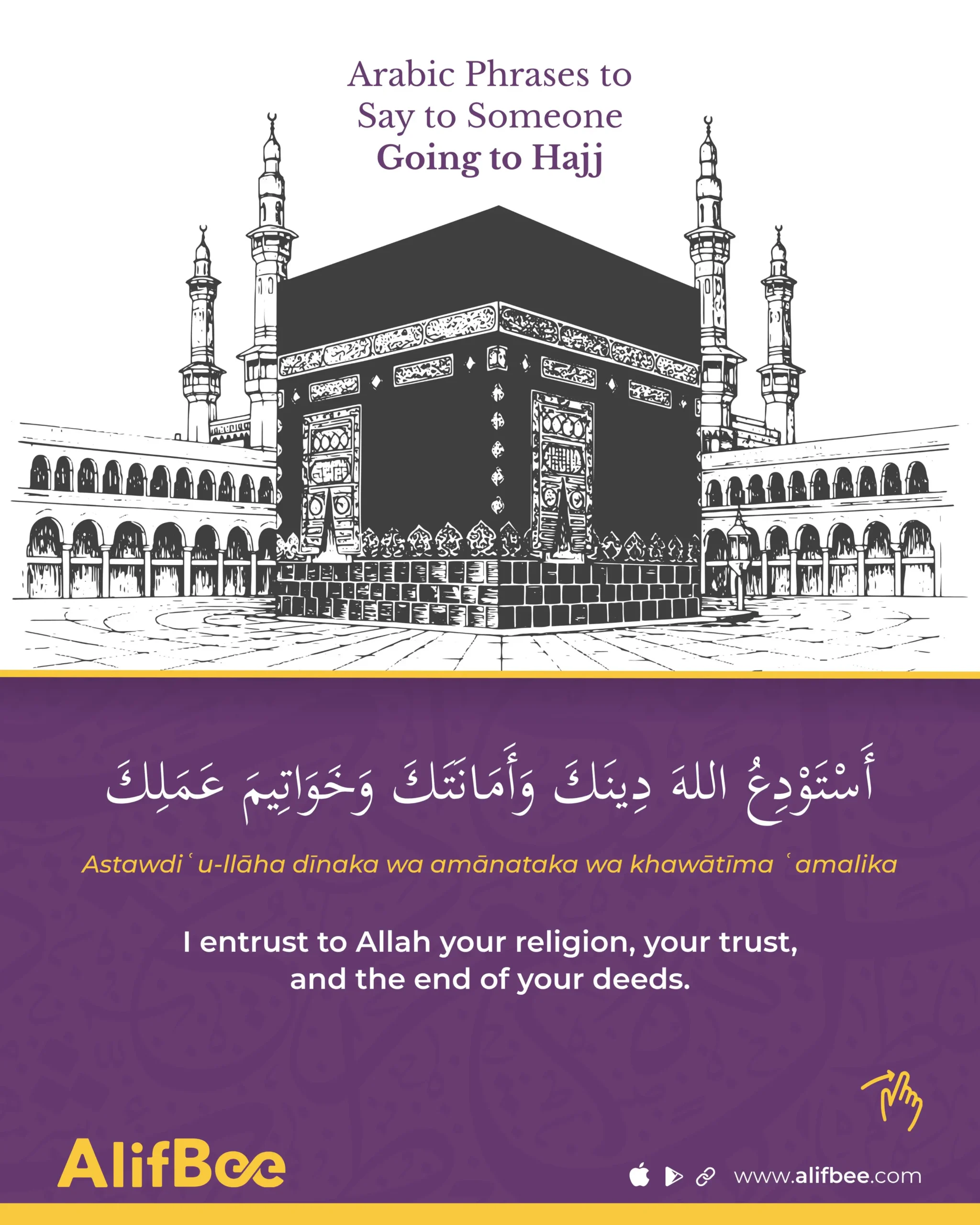
I entrust to Allah your religion, your trust, and the end of your deeds. |
Astawdiʿu-llāha dīnaka wa amānataka wa khawātīma ʿamalik |
أَسْتَوْدِعُ اللهَ دِينَكَ وَأَمَانَتَكَ وَخَوَاتِيمَ عَمَلِكَ |
|
|
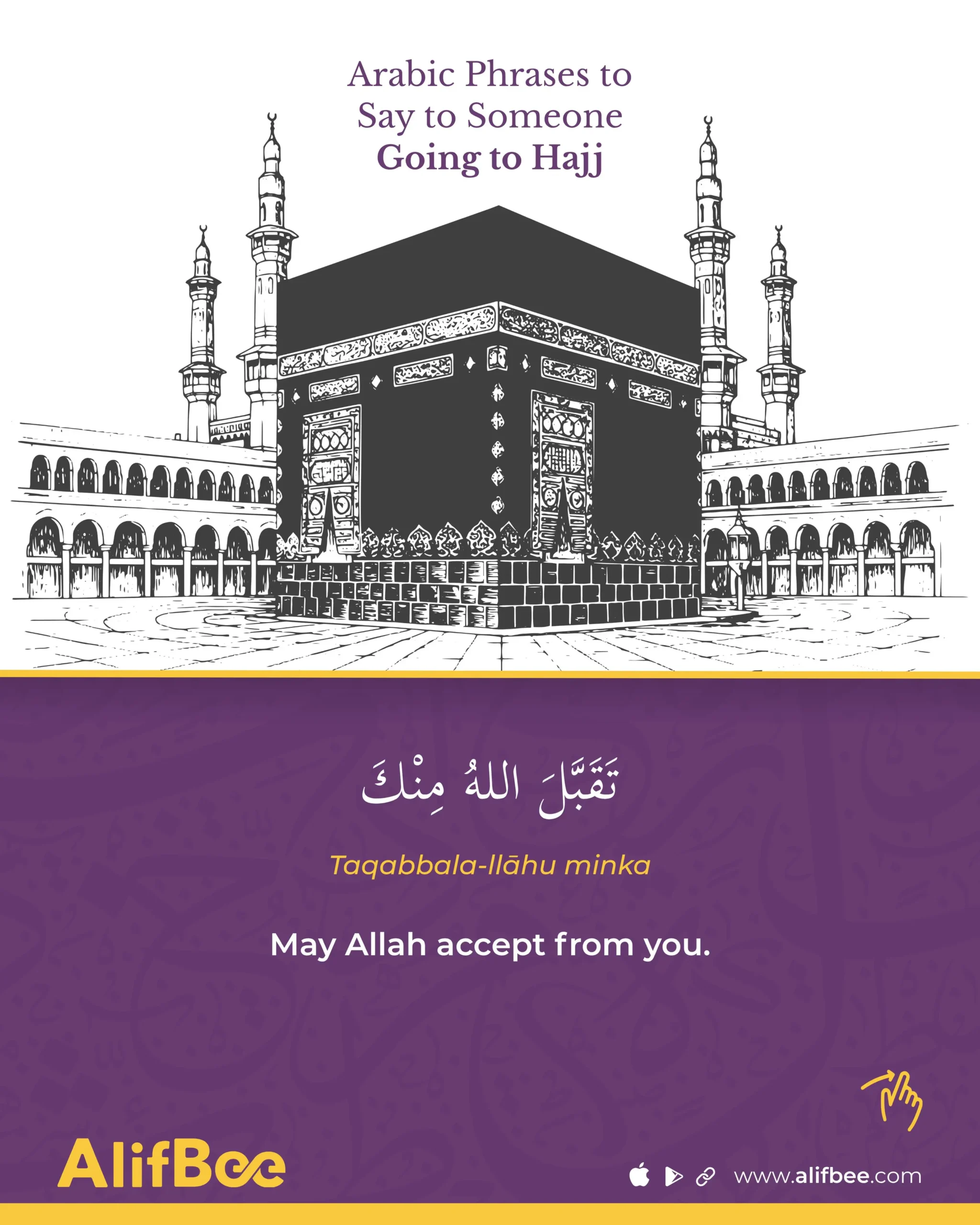
May Allah accept from you. |
Taqabbala-llāhu mink |
تَقَبَّلَ اللهُ مِنْكَ |
|
|
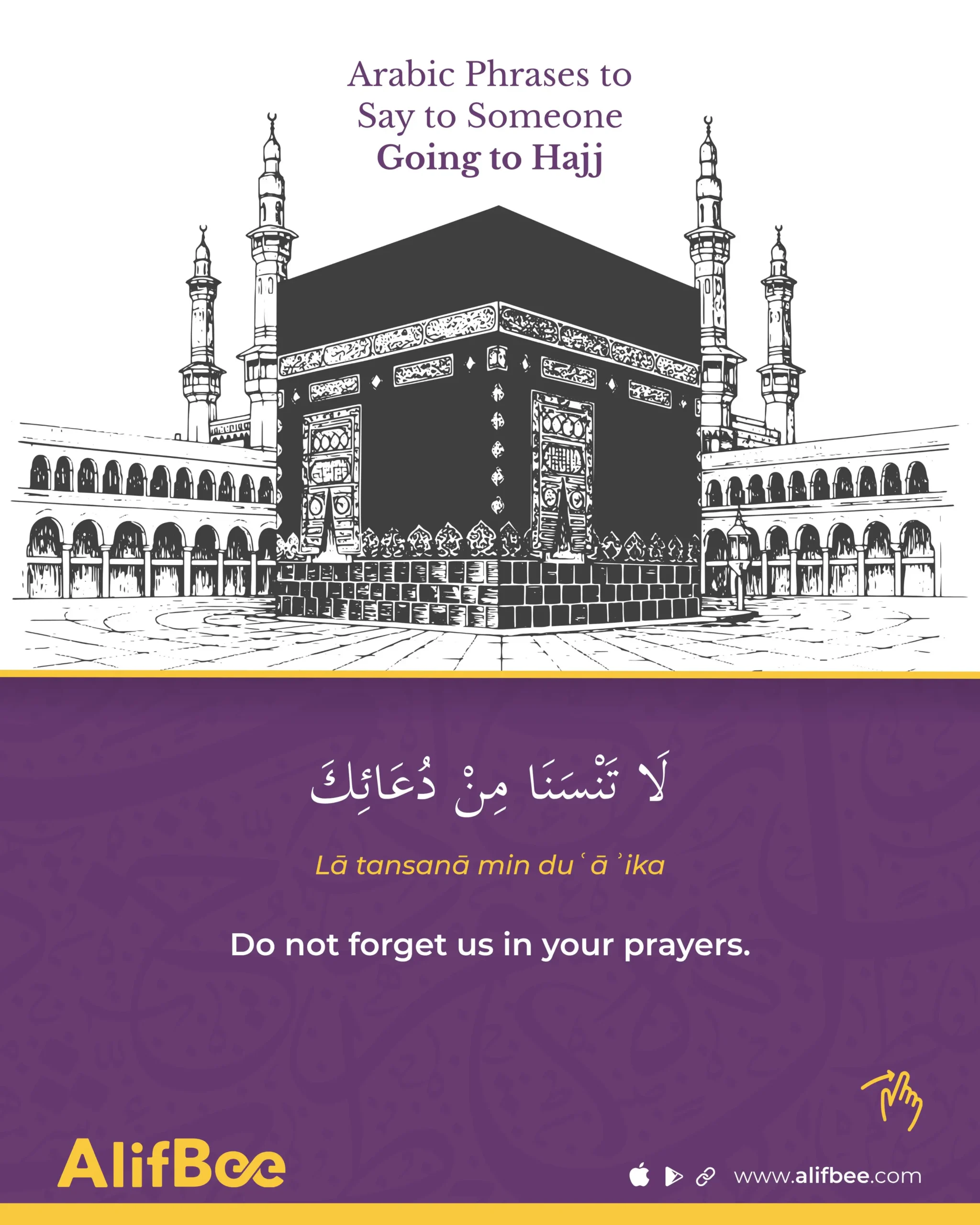
Do not forget us in your prayers. |
Lā tansanā min duʿāʾik |
لَا تَنْسَنَا مِنْ دُعَائِكَ |
|
The first phrase above is a traditional farewell supplication reported in hadith collections about bidding farewell to a traveler.
If you are speaking to a woman, forms such as مِنْكَ (minka) and دِينَكَ (dīnaka) usually change to مِنْكِ (minki) and دِينِكِ (dīnaki).
What Do You Say When Someone Returns From Hajj?
After Hajj, your greeting usually becomes one of welcome, congratulations, and prayer that the pilgrimage was accepted. The most common phrase is hajjan mabruran, a prayer that asks Allah to accept and reward their effort.
There are other useful phrases too:
Arabic Phrases to Welcome Someone Back From Hajj
| English Meaning | Pronunciation | Arabic | |
|---|---|---|---|
|
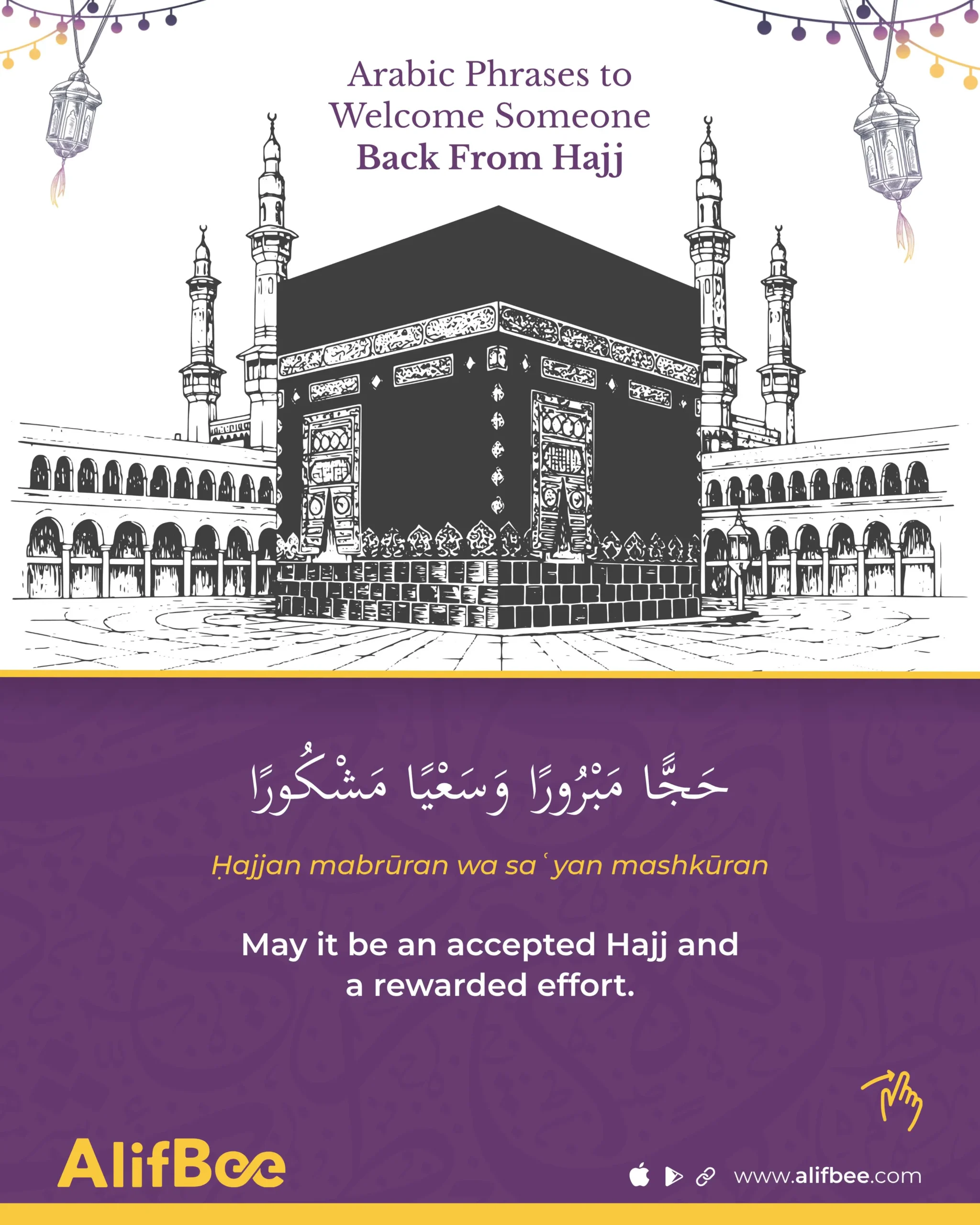
May it be an accepted Hajj and a rewarded effort. |
Ḥajjan mabrūran wa saʿyan mashkūran |
حَجًّا مَبْرُورًا وَسَعْيًا مَشْكُورًا |
|
|
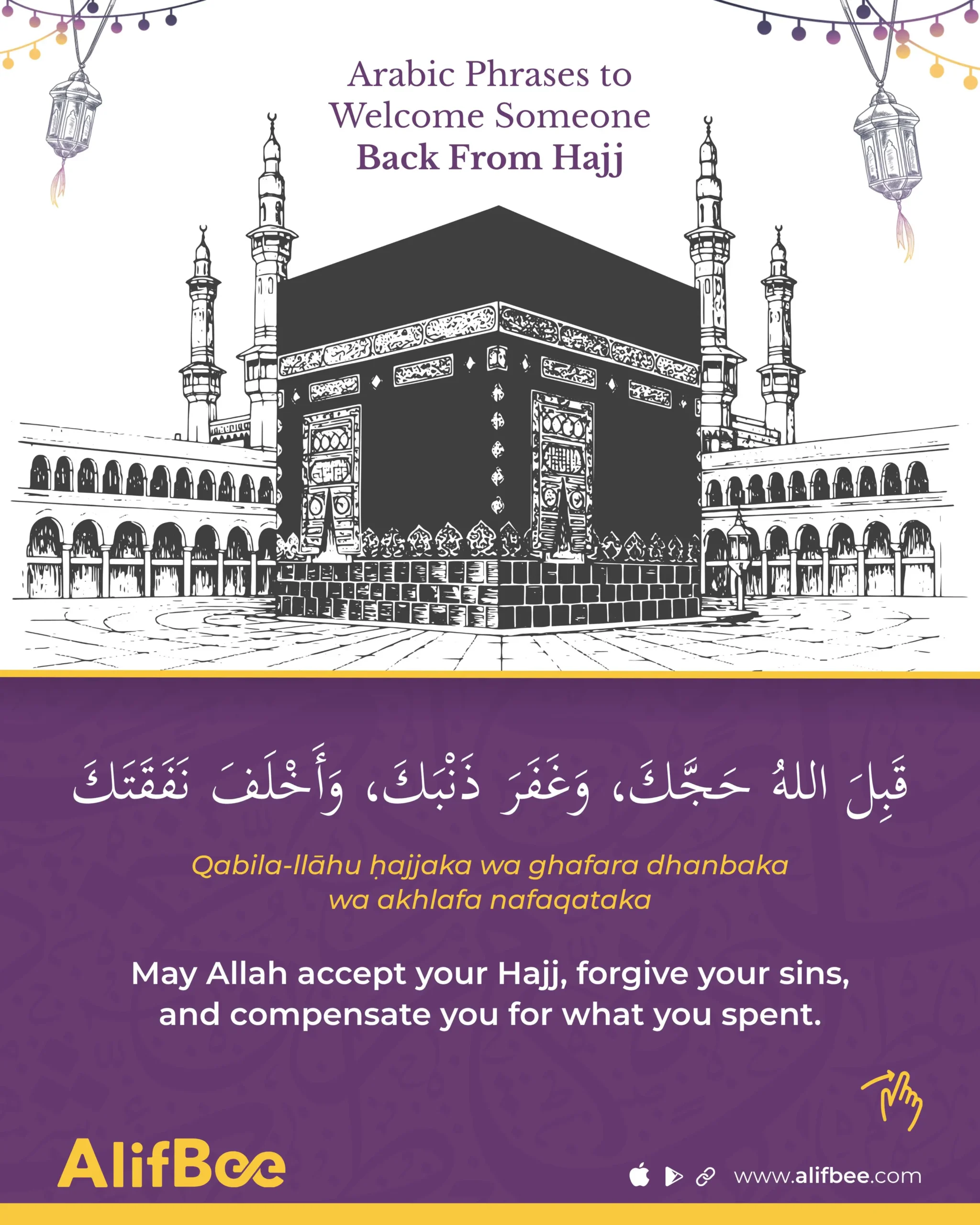
May Allah accept your Hajj, forgive your sins, and compensate you for what you spent. |
Qabila-llāhu ḥajjaka wa ghafara dhanbaka wa akhlafa nafaqatak |
قَبِلَ اللهُ حَجَّكَ، وَغَفَرَ ذَنْبَكَ، وَأَخْلَفَ نَفَقَتَكَ |
|
|
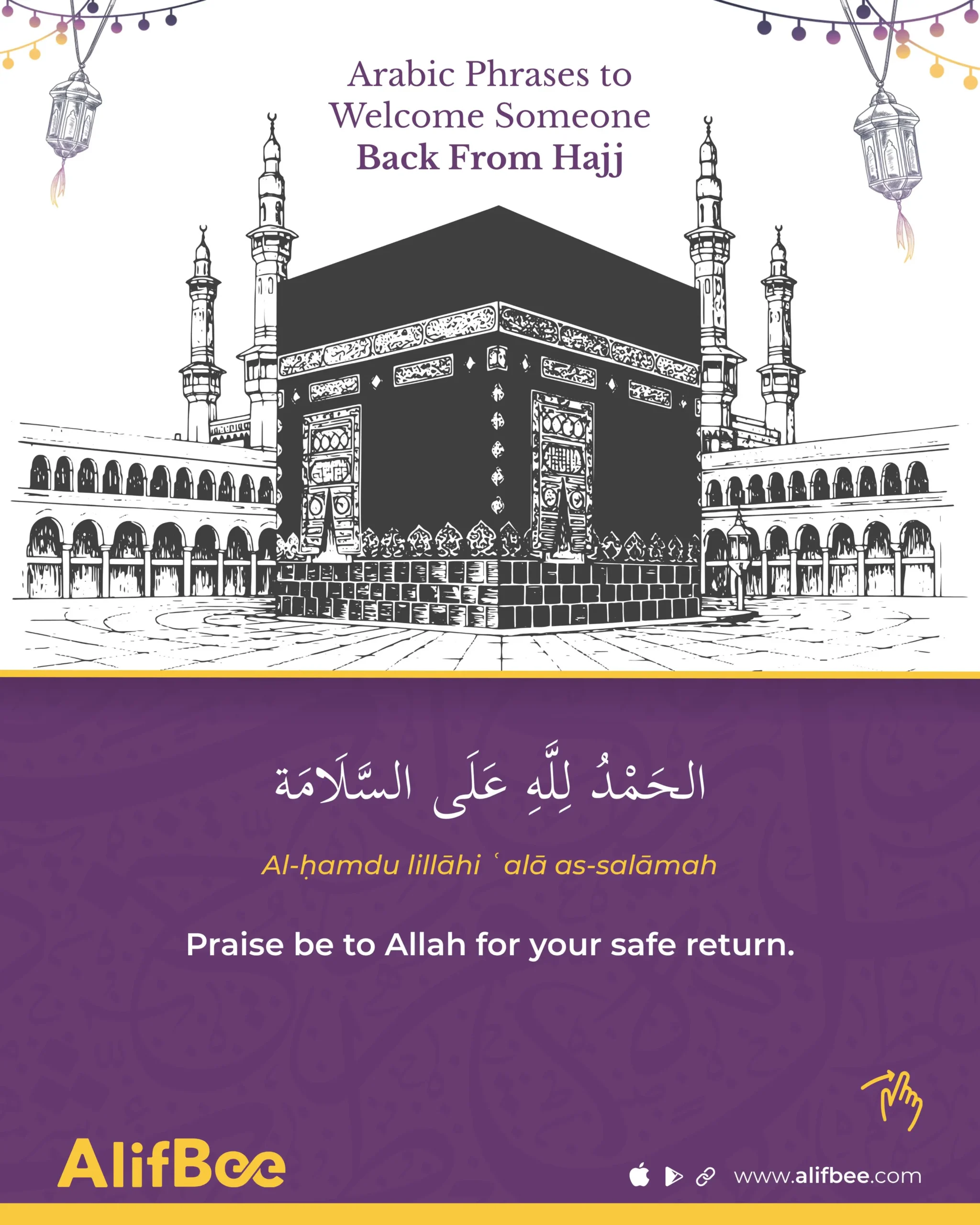
Praise be to Allah for your safe return. |
Al-ḥamdu lillāhi ʿalā as-salāmah |
الحَمْدُ لِلَّهِ عَلَى السَّلَامَة |
|
You do not need all three. If your Arabic is still basic, the third phrase is a general phrase that is safe and useful. You can also combine the third with either the first or the second. So, you start with the general phrase and add the common prayer for acceptance.
Is Hajj Mubarak Correct?
Yes. People do say Hajj Mubarak, and most listeners will understand it as a warm blessing. But it is broader and less specific than phrases such as Hajj mabroor. So if you want a phrase that sounds closer to a traditional post-Hajj greeting, Hajj mabroor is usually the stronger choice.
What Does Hajj Mabroor Mean?
The phrase Hajj mabroor means an accepted Hajj. In hadith, Hajj mabroor is described as a Hajj whose reward is nothing but Paradise. The word Mabroor comes from Al-Birr, which refers to piety and obedience to Allah.
An accepted Hajj is one that is free from sins, quarreling, or showing off (Riyaa’). It purifies the pilgrim from their wrongdoings.
Review What to Say to Someone Going to Hajj or Returning From Hajj
Final word
If you were wondering what to say to someone going to Hajj or returning from Hajj, the answer is simpler than it may seem. Before Hajj, offer duʿāʾ and warm encouragement. After Hajj, welcome the pilgrim back and pray that the Hajj was accepted. A small phrase, said with care, can carry a lot of meaning.
Learn with AlifBee
Want to practice these phrases with audio, meanings, and real examples? The AlifBee app includes Arabic content for Hajj and Umrah that goes far beyond a simple phrase list.
It helps you learn the language of the journey from the first preparation steps, including travel needs, health terms, and useful situations, all the way to Hajj vocabulary, the Day of ʿArafah, the main rites, and the language you may need after returning home.
FAQs
1. Is “Hajj Mubarak” correct to say?
Yes. It is understandable and widely used as a warm blessing. If you want a more specific post-Hajj phrase, Hajjan mabruran is usually better.
2. What can I say to someone going to Hajj if my Arabic is basic?
Two easy options are تَقَبَّلَ اللهُ مِنْكَ (Taqabbala-llāhu minka) and لَا تَنْسَنَا مِنْ دُعَائِكَ (Lā tansanā min duʿāʾika). The first is a short prayer, and the second asks the pilgrim to remember you in duʿāʾ.
3. What can I say to someone returning from Hajj?
You can either say الحَمْدُ لِلَّهِ عَلَى السَّلَامَةِ (Al-ḥamdu lillāhi ʿalā as-salāmah) or حَجًّا مَبْرُورًا وَسَعْيًا مَشْكُورًا (Ḥajjan mabrūran wa saʿyan mashkūran) to welcome them back safely.
4. Do I have to use Arabic?
No. A sincere message in English is completely fine. Arabic just adds a sense of cultural closeness and helps you take part in the moment more naturally.
5. How do I change these phrases for a woman?
In some phrases, the ending changes from -ka to -ki, such as مِنْكَ becoming مِنْكِ and حَجَّكَ becoming حَجَّكِ.