

Written by Dania Ghraoui, a translator and language teacher with 10 years of experience.
At a Glance: The most popular phrase to say good luck in Arabic is بِالتَّوْفِيقِ (bi-t-tawfīq), which means “with success” or “wishing you success.” There is also حَظًّا سَعِيدًا (ḥaẓẓan saʿīdan), which is the immediate equivalent of “good luck.” Both are understood, but bi-t-tawfīq often sounds more natural before exams, interviews, trips, and new projects.
A friend has an exam tomorrow. A colleague has a job interview. Someone you know starts a new project. In English, you can simply say “good luck.” In Arabic, you have more than one good choice. This guide explains how to say “good luck” in Arabic, which phrase to use, and how to choose the right wording for different situations.
Before you go further!
For more everyday phrases, read other AlifBee guides on how to say hello in Arabic, ways to say thank you in Arabic, and basic Arabic sentences for beginners
The Best Phrase to Say Good Luck in Arabic
You can start by learning the short and polite phrase bi-t-tawfīq. It is widely understood in MSA and Arabic dialects. Its literal meaning is “with success,” but in real use it works like “good luck,” “best of luck,” or “wishing you success.”
| Meaning | Pronunciation | Arabic | |
|---|---|---|---|
|
Good luck / wishing you success |
bi-t-tawfīq |
بِالتَّوْفِيقِ |
|
This phrase is great for beginners because it does not depend on gender and fits many everyday situations. You can use it with someone who is about to take an exam, go on a trip, start a new job, or begin a new project.
Other Phrases in Arabic to Give Good Wishes
Several Arabic expressions are used to extend well-wishes. Some are direct; others are formal, warm, or religious, depending on the phrase you choose. The table below gives you useful options:
| Meaning | Pronunciation | Arabic | |
|---|---|---|---|
|
Good luck |
ḥaẓẓan saʿīdan |
حَظًّا سَعِيدًا |
|
|
All the best / all success |
kullu t-tawfīq |
كُلُّ التَّوْفِيقِ |
|
|
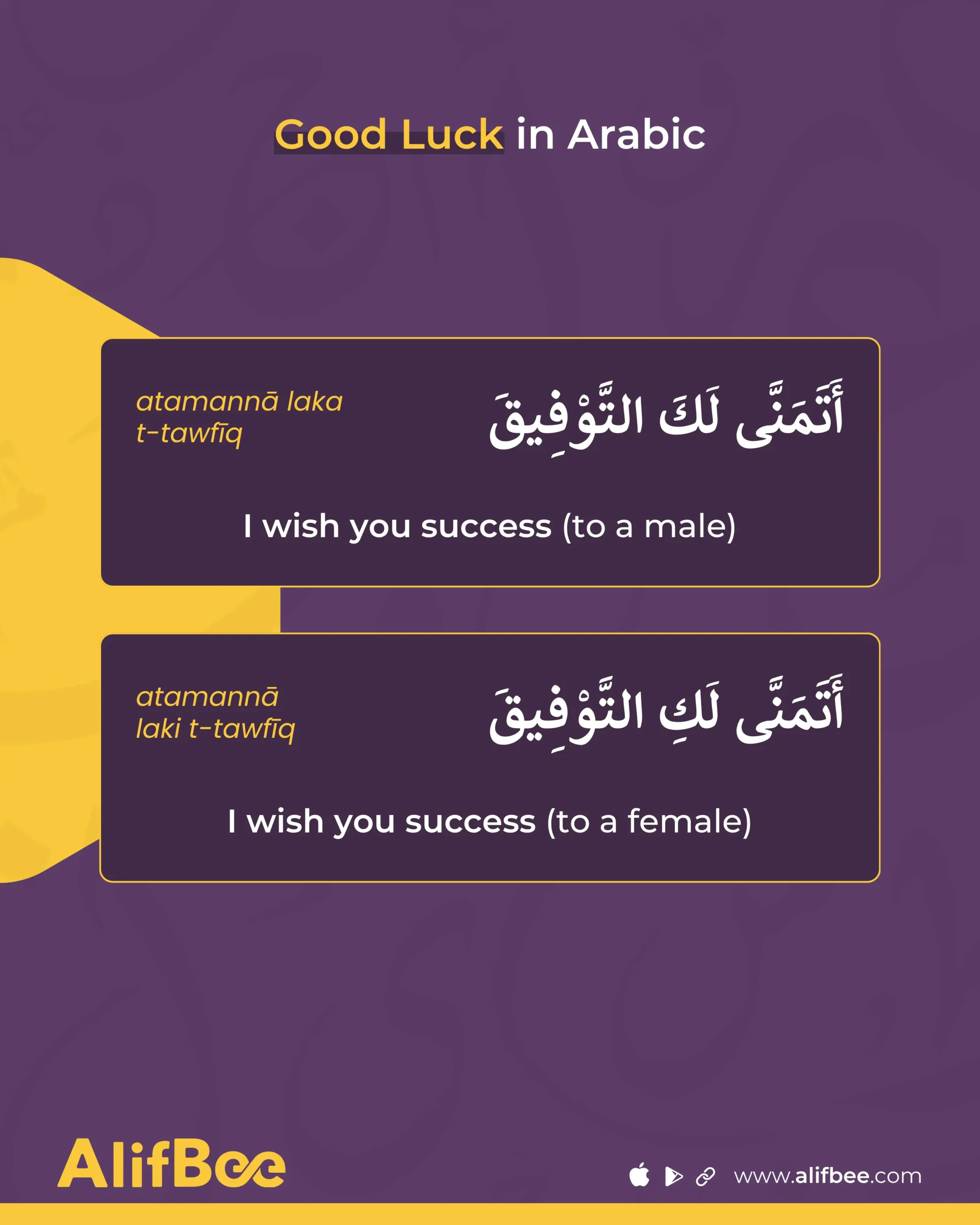
I wish you success (to a male) |
atamannā laka t-tawfīq |
أَتَمَنَّى لَكَ التَّوْفِيقَ |
|
|
I wish you success (to a female) |
atamannā laki t-tawfīq |
أَتَمَنَّى لَكِ التَّوْفِيقَ |
|
|
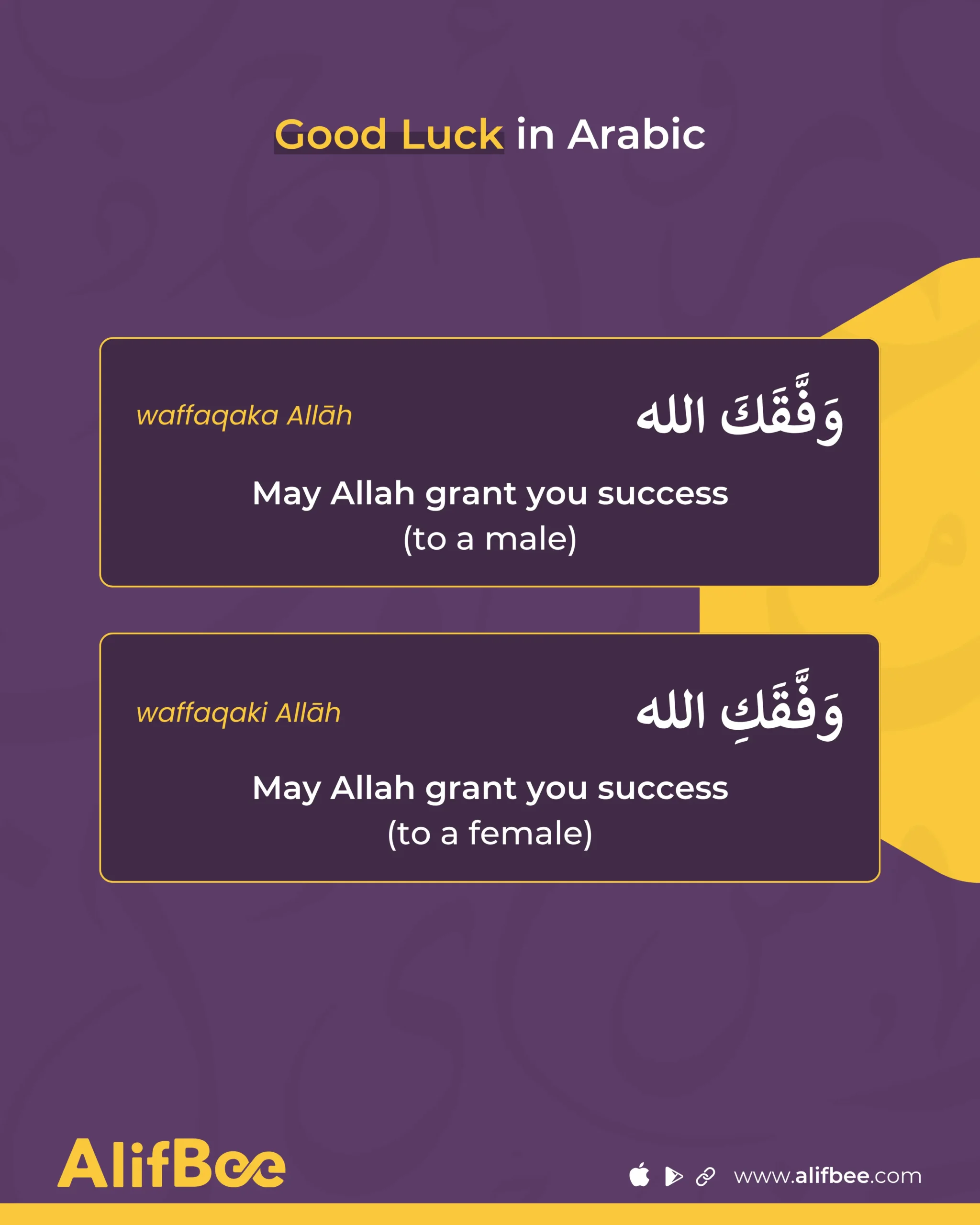
May Allah grant you success (to a male) |
waffaqaka Allāh |
وَفَّقَكَ الله |
|
|
May Allah grant you success (to a female) |
waffaqaki Allāh |
وَفَّقَكِ الله |
|
All these phrases are in MSA, and you do not need to memorize them all at once. Learn bi-t-tawfīq first, then add the others when you need a more specific tone.
Common Situations to Wish Someone Good Luck
A phrase becomes easier to remember when you connect it to a real moment. Use the examples below to wish someone good luck before exams, interviews, work, travel, projects, and competitions.
| Meaning | Pronunciation | Arabic | |
|---|---|---|---|
|
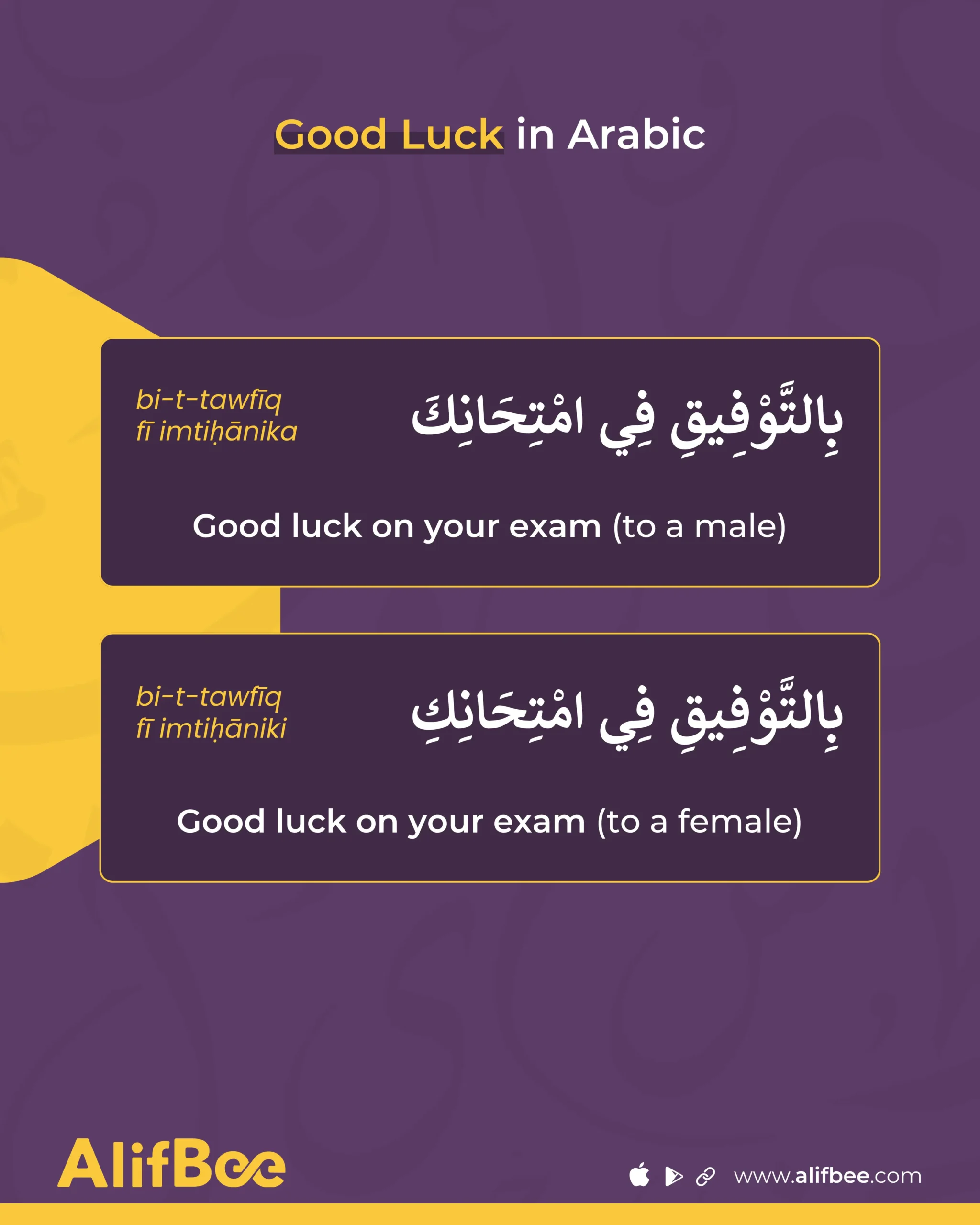
Good luck on your exam (to a male) |
bi-t-tawfīq fī imtiḥānika |
بِالتَّوْفِيقِ فِي امْتِحَانِكَ |
|
|
Good luck on your exam (to a female) |
bi-t-tawfīq fī imtiḥāniki |
بِالتَّوْفِيقِ فِي امْتِحَانِكِ |
|
|
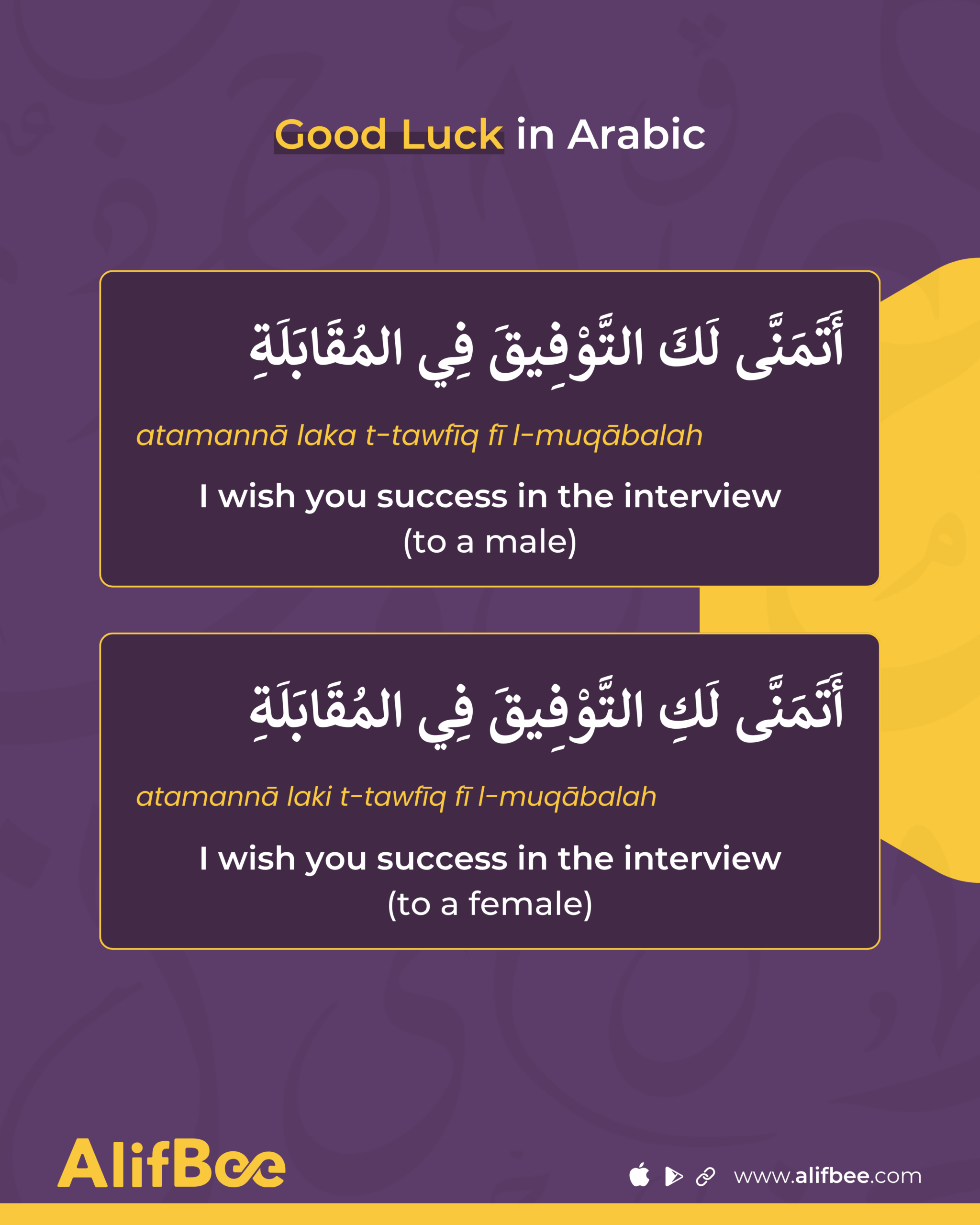
I wish you success in the interview (to a male) |
atamannā laka t-tawfīq fī l-muqābalah |
أَتَمَنَّى لَكَ التَّوْفِيقَ فِي المُقَابَلَةِ |
|
|
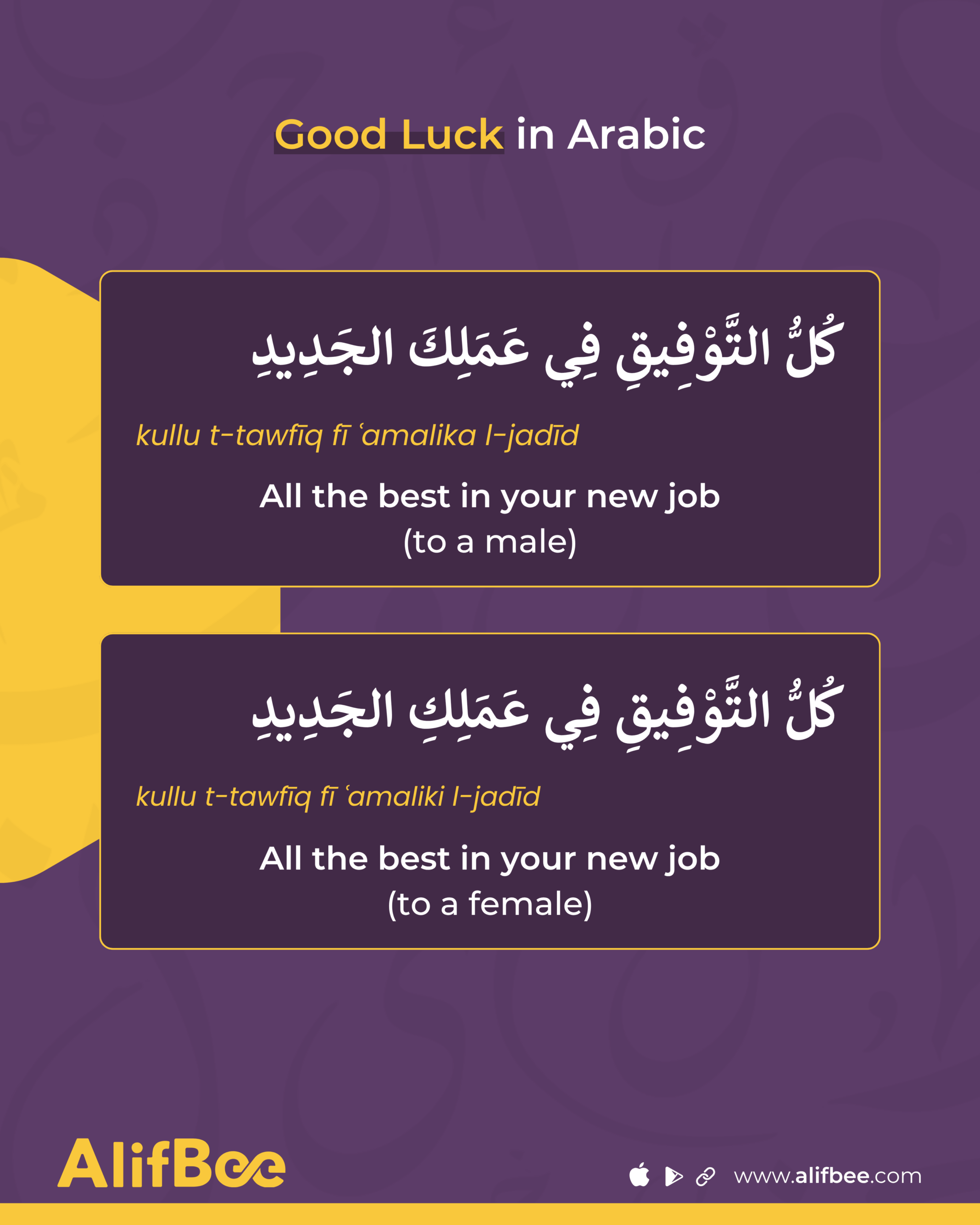
All the best in your new job (to a male) |
kullu t-tawfīq fī ʿamalika l-jadīd |
كُلُّ التَّوْفِيقِ فِي عَمَلِكَ الجَدِيدِ |
|
|
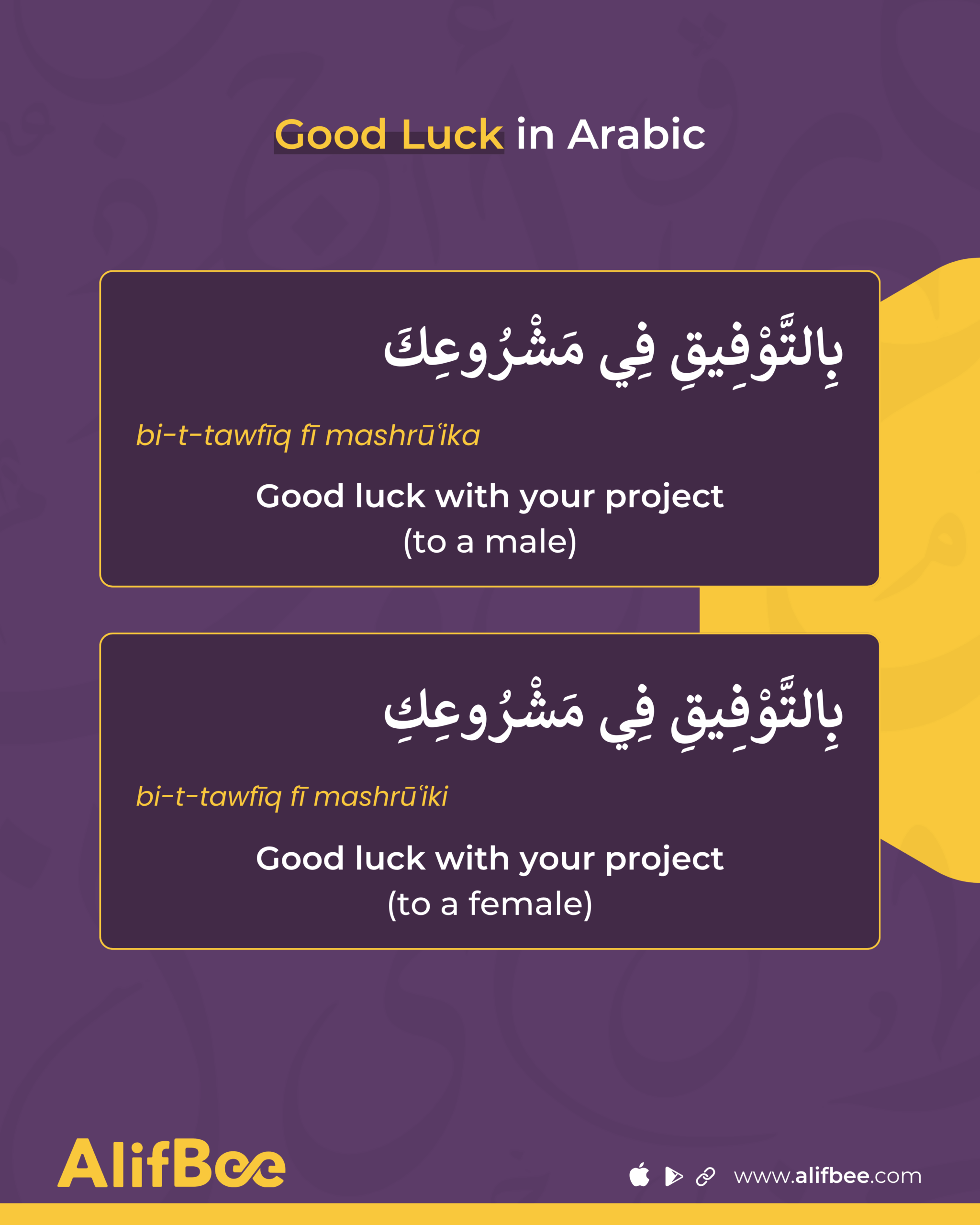
Good luck with your project (to a male) |
bi-t-tawfīq fī mashrūʿika |
بِالتَّوْفِيقِ فِي مَشْرُوعِكَ |
|
Notice how the ending can change depending on whether the listener is male or female in Imtiḥān (exam), ʿamal (work), and mashrūʿ (project).
Is “Good Luck” in Arabic About Luck or Success?
Here is a useful difference for learners: ḥaẓẓ means luck, while tawfīq means success, guidance, or being helped in achieving a good result. That is why Arabic often expresses good wishes by wishing someone success, whereas English often wishes someone good luck.
MSA vs Dialect: Which Phrase Should You Use?
For Modern Standard Arabic, use بِالتَّوْفِيقِ (bi-t-tawfīq). It is clear in writing, safe in formal settings, and widely understood across Arabic-speaking countries.
In daily speech, dialects may keep the same written phrase but change the pronunciation. Arabic varies by context and region, so it is normal to hear different sounds for the same word.
Look at the following variations:
| Pronunciation note | Variety | Pronunciation | Arabic | |
|---|---|---|---|---|
|
The ق is pronounced as a deep q sound from the back of the mouth. Use waffaqaka for a male and waffaqaki for a female. |
MSA / Formal Arabic |
waffaqaka Allāhu / waffaqaki Allāhu |
وَفَّقَكَ اللهُ / وَفَّقَكِ اللهُ |
|
|
In many Levantine accents, ق may sound like a glottal stop ʾ in everyday words, though careful speech may keep q. The ending may sound like -ak to a male and -ik / -ek to a female. |
Levantine |
Allāh ywaffeʾak / ywaffeʾik |
الله يوفقك |
|
|
In casual speech, in shāʾ Allāh often becomes nshallah / inshalla, and final ق in التوفيق may be softened to a glottal stop: tawfīʾ. |
Levantine |
in shāʾ Allāh bi-t-tawfīʾ |
إن شالله بالتَّوفيق |
|
|
The ق often sounds like a glottal stop ʾ. ربنا is commonly pronounced rabbena, and the ending changes by gender: -ak for a male, -ik for a female. |
Egyptian |
rabbena ywaffaʾak / ywaffaʾik |
ربنا يوفّقك |
|
|
This literally means “May God be with you.” Use maʿāk for a male and maʿāki for a female. It is warm, casual, and very natural in Egyptian Arabic. |
Egyptian |
rabbena maʿāk / maʿāki |
ربنا معاك / ربنا معاكي |
|
|
This phrase means “May success be your good fortune.”Many speakers keep q in formal words; in some Gulf speech, ق may sound closer to g. |
Gulf |
fālak it-tawfīq / fālak it-tawfīg |
فالك التوفيق |
|
Colloquial Arabic Expressions That Give Good Wishes
If you are speaking with friends, family, classmates, or close colleagues, these expressions can sound warmer than a literal “good luck.” Some are religious, some are casual, and some simply mean “I hope it goes well.”
| Meaning / use | Common in | Pronunciation | Arabic | |
|---|---|---|---|---|
|
May God make things easy for you.
(Warm and supportive.) |
Levant / Gulf / widely understood |
Allāh yisahhil umūrak |
الله يسهّل أمورك |
|
|
May God be with you.
(Often said before someone leaves or faces something important.) |
Levant / widely understood |
Allāh maʿak |
الله معك |
|
|
Do your best, good luck. (Encouraging and informal.) |
Levant / Egypt / Gulf |
shidd ḥēlak, bit-tawfīq |
شدّ حيلك، بالتوفيق |
|
|
May God open doors for you.
(Good for work, livelihood, or a new start.) |
Levant / colloquial |
Allāh yiftaḥhā bi-wijhak |
الله يفتحها بوجهك |
|
|
May God make it easy. (Used when someone has a task, trip, or challenge.) |
Moroccan / Maghrebi / also understood elsewhere |
Llāh ysəhhel |
الله يسهِّل |
|
These phrases also work well near other conversational exits. For example, if a learner already knows how to say see you later in Arabic, they can add a warm good wish before saying goodbye: أَشُوفَك عَلَى خَيْر، بِالتَّوْفِيقِ (ashūfak ʿalā khayr, bi-t-tawfīq).
Which Arabic Good Luck Phrase Should You Choose?
| Situation | Best choice | Why |
|---|---|---|
|
You are a beginner |
بِالتَّوْفِيقِ |
Short, natural, and does not change by gender. |
|
You want a direct translation |
حَظًّا سَعِيدًا |
Closest equivalent to “good luck.” |
|
You are writing a polite message |
أَتَمَنَّى لَكَ / لَكِ التَّوْفِيقَ |
Complete and respectful. |
|
You want a warm Islamic expression |
اللهُ يُوَفِّقُكَ / يُوَفِّقُكِ |
Sounds heartfelt and supportive. |
|
You are speaking casually |
الله يوفّقك / ربنا يوفّقك / الله يسهّل أمورك |
More natural in everyday conversation. |
|
You are unsure of the dialect |
بِالتَّوْفِيقِ |
Widely understood across regions. |
Review How to Say Good Luck in Arabic
Final word
Arabic has several ways to wish someone well, and each expression has its own meaning and use. For most situations, bi-t-tawfīq is the best phrase to learn first because it is short, natural, and widely understood across the Arabic-speaking world. As your Arabic improves, you can add other expressions to your vocabulary and choose the one that best fits the situation.
Learn with AlifBee
Want to practice Arabic phrases with audio, examples, and guided lessons? Explore everyday Arabic inside the AlifBee app and build your confidence one useful expression at a time.
FAQs
How do you say good luck in Arabic?
Say بِالتَّوْفِيقِ (bi-t-tawfīq). It means “with success” and works like “good luck” or “best of luck” in many everyday situations.
Is ḥaẓẓan saʿīdan correct?
Yes. حَظًّا سَعِيدًا (ḥaẓẓan saʿīdan) means “good luck” directly. It is understood, but bi-t-tawfīq often sounds more natural.
What does bi-t-tawfīq mean?
Bi-t-tawfīq literally means “with success.” In real use, it expresses good luck, best wishes, or hope that someone succeeds.
How do you say good luck to a male or female?
Use bi-t-tawfīq for anyone. For “I wish you success,” say atamannā laka t-tawfīq to a male and atamannā laki t-tawfīq to a female.
How do you say good luck for an exam in Arabic?
Say bi-t-tawfīq fī imtiḥānika to a male, and bi-t-tawfīq fī imtiḥāniki to a female. Both mean “good luck on your exam.”