
At a Glance: Arabic cardinal numbers change according to the number group, the gender of the counted noun, and grammatical case. The main patterns cover 1 and 2, 3 to 10, 11 to 19, tens and compound numbers, and hundreds. This guide explains each pattern in Modern Standard Arabic and shows how the numbers work in practical examples.
Learning how to form Arabic numbers is an important first step for beginners, so you can use them correctly.
They follow recurring patterns, so you do not need to memorize every number separately. Once you understand how units, tens, and hundreds combine, as well as how gender and noun forms change, you can form Arabic numbers and build larger numbers more confidently.
Start with the base forms in the guide below, then use the rules in each section to put them together.
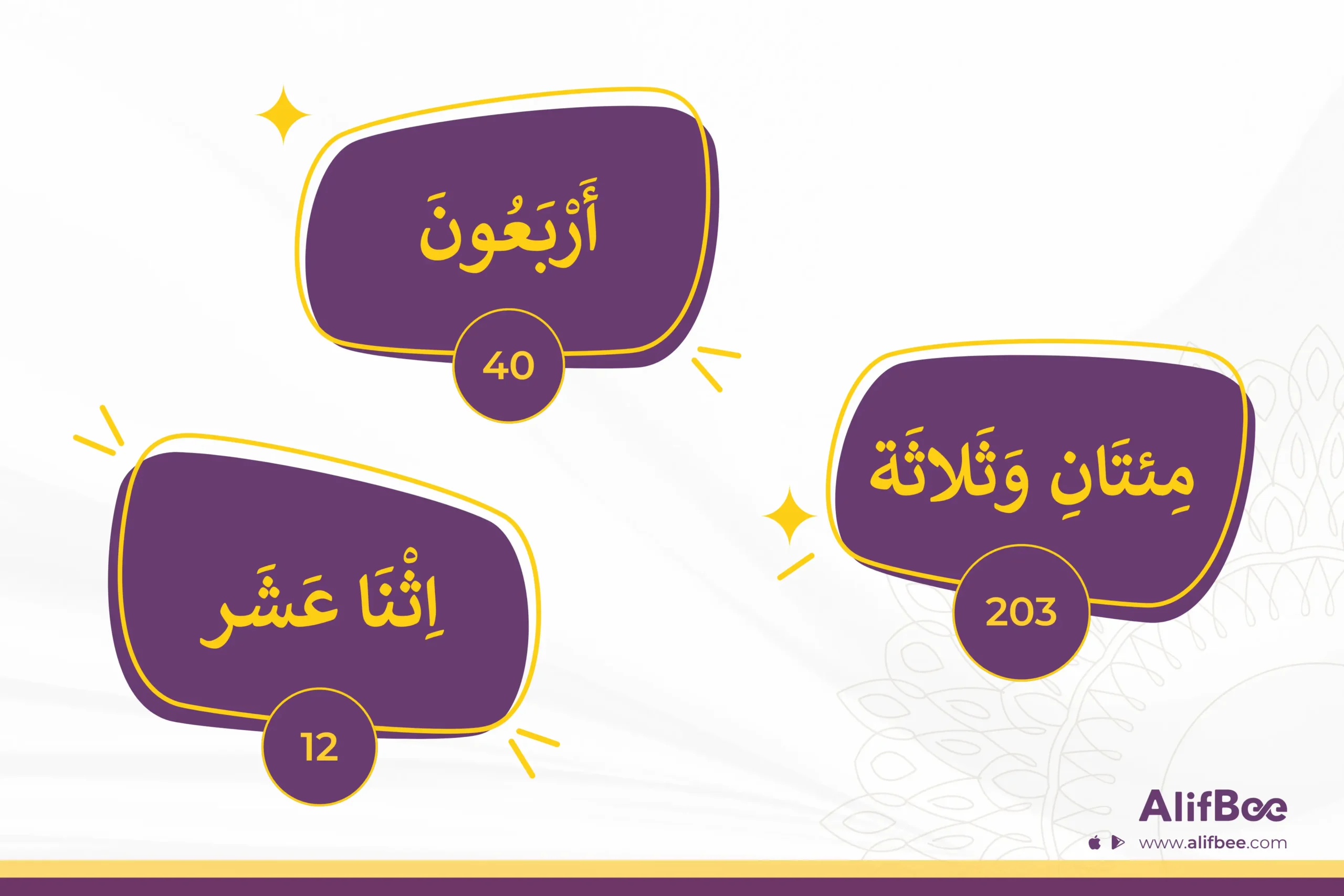
Note: This guide focuses on cardinal number words in Modern Standard Arabic. Spoken dialects may pronounce them differently and often simplify the case endings used in formal Arabic.
Arabic Number Rules at a Glance
| Arabic Number | Position | Gender pattern | Form of counted noun | Example |
|---|---|---|---|---|
|
١ |
After the noun
|
Agrees with the noun
|
Singular |
قلمٌ واحد |
|
٢ |
After the noun
|
Agrees with the noun
|
Dual |
قلمانِ اثنان
|
|
٣ -> ١٠ |
Before the noun
|
Opposite gender |
Plural genitive |
ثلاثةُ أقلام
|
|
١١ – ١٢ |
Before the noun |
Both parts agree |
Singular accusative |
أحدَ عشر قلمًا |
|
١٣ – > ١٩ |
Before the noun |
Unit is opposite; ten agrees |
Singular accusative |
خمسةَ عشر قلمًا |
|
٢٠ , ٣٠, – > ٩٠ |
Before the noun |
No gender distinction |
Singular accusative |
عِشرونَ قلمًا |
|
٢١ – > ٩٩
|
Unit + wa + tens
|
1-2 agree; 3-9 are opposite
|
Singular accusative
|
واحدٌ وعشرونَ قلمًا – ثلاثةٌ وعشرونَ قلمًا
|
|
١٠٠ – > ٩٠٠
|
Before the noun
|
No gender distinction
|
Singular genitive
|
مائةُ قلم
|
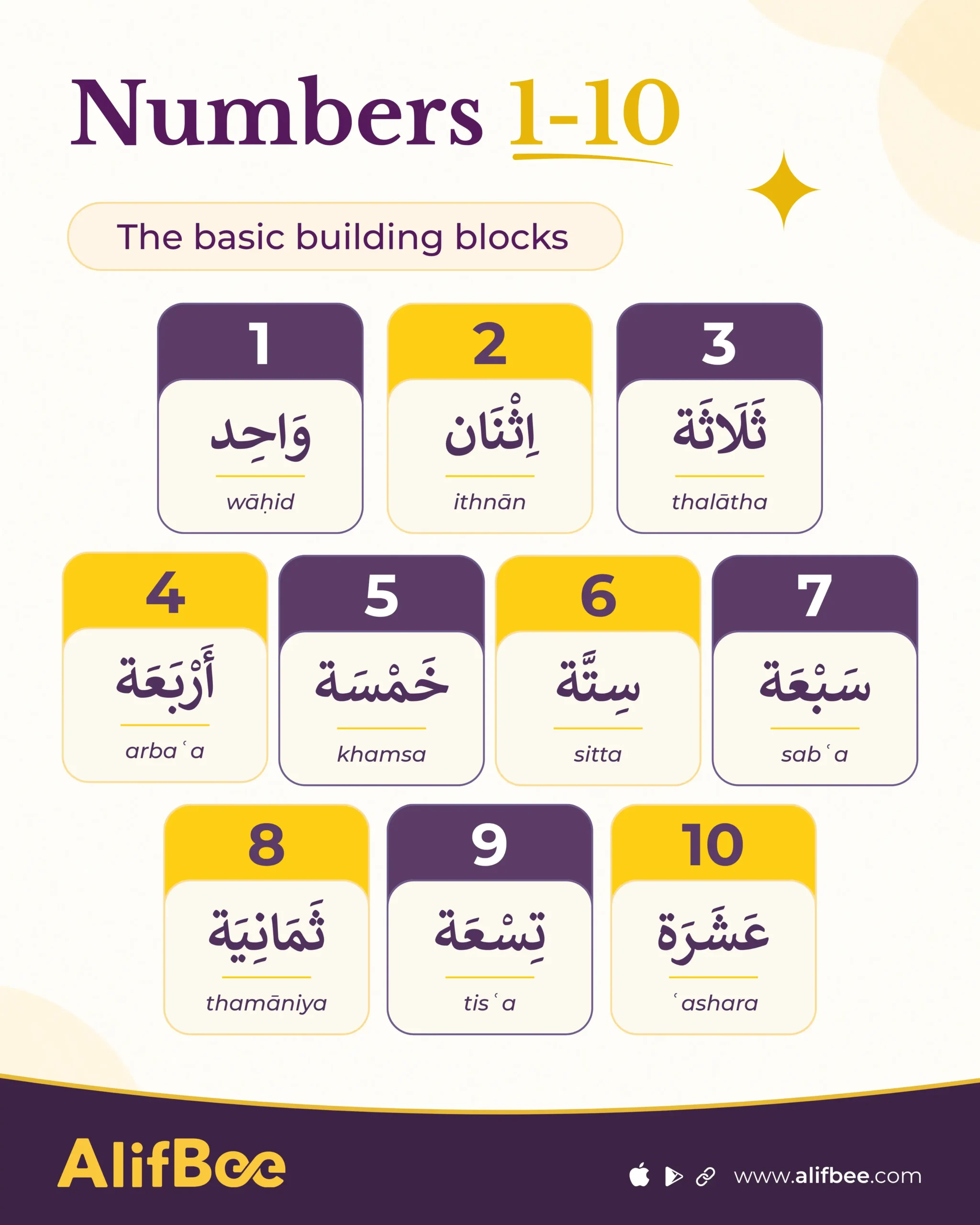
Arabic Numbers 1 to 19
| Number | Pronunciation | Arabic writing | |
|---|---|---|---|
|
1 |
wāḥid |
وَاحِد |
|
|
2 |
ithnān |
اِثْنَان |
|
|
3 |
thalātha |
ثَلَاثَة |
|
|
4 |
arbaʿa |
أَرْبَعَة |
|
|
5 |
khamsa |
خَمْسَة |
|
|
6 |
sitta |
سِتَّة |
|
|
7 |
sabʿa |
سَبْعَة |
|
|
8 |
thamāniya |
ثَمَانِيَة |
|
|
9 |
tisʿa |
تِسْعَة |
|
|
10 |
ʿashara |
عَشَرَة |
|
|
11 |
aḥada ʿashar
|
أَحَدَ عَشَر
|
|
|
12 |
ithnā ʿashar
|
اِثْنَا عَشَر
|
|
|
13 |
thalāthata ʿashar
|
ثَلَاثَةَ عَشَر
|
|
|
14 |
arbaʿata ʿashar
|
أَرْبَعَةَ عَشَر
|
|
|
15 |
khamsata ʿashar
|
خَمْسَةَ عَشَر
|
|
|
16 |
sittata ʿashar
|
سِتَّةَ عَشَر
|
|
|
17 |
sabʿata ʿashar
|
سَبْعَةَ عَشَر
|
|
|
18 |
thamāniyata ʿashar
|
ثَمَانِيَةَ عَشَر
|
|
|
19 |
tisʿata ʿashar
|
تِسْعَةَ عَشَر
|
|
One and Two in Arabic
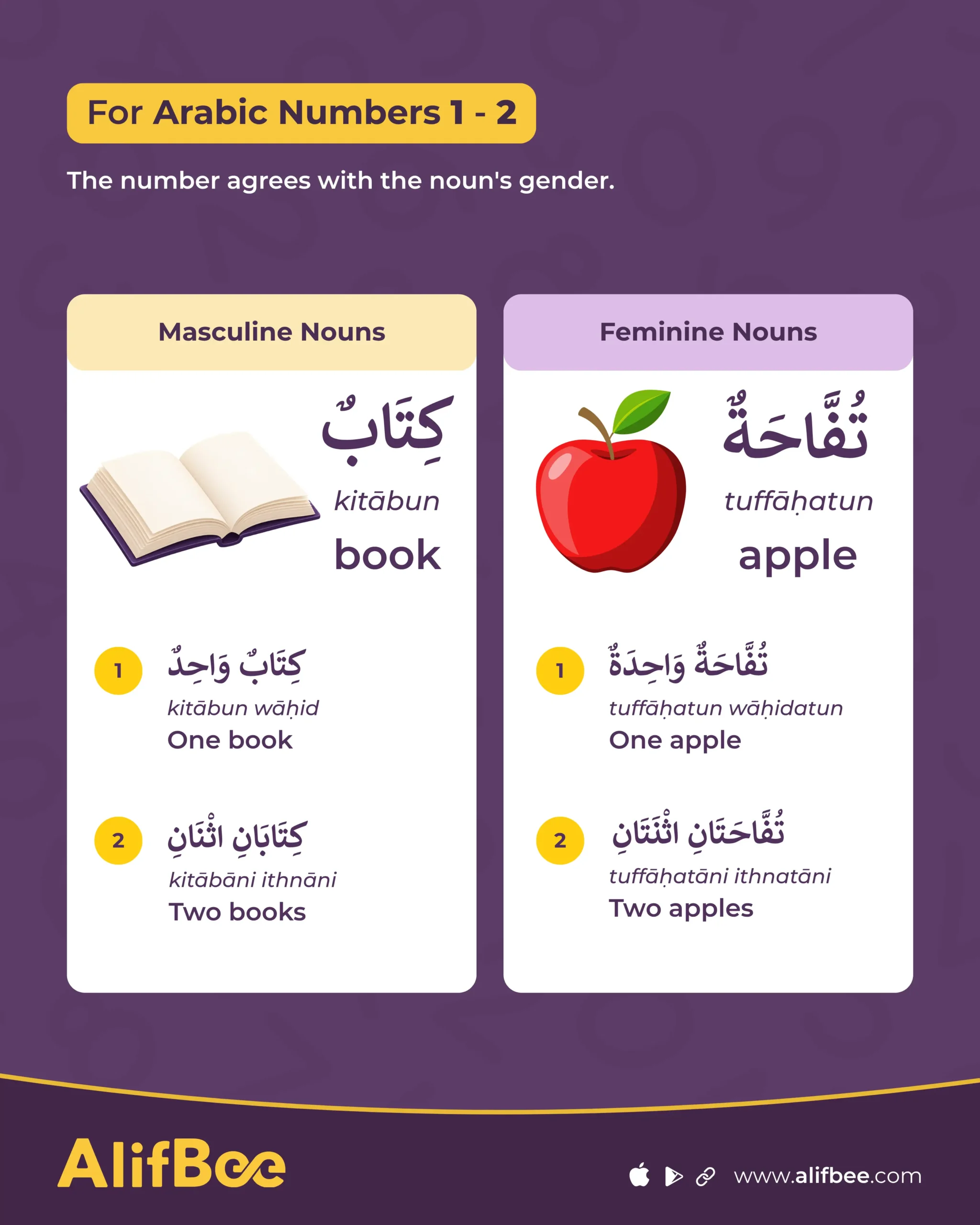
The cardinal numbers one (واحِد) and two (اِثنان) normally follow the noun they describe. This differs from most higher cardinal numbers, which usually come before the noun.
Both numbers agree with the noun in gender. Wāḥid also agrees in case and definiteness when used as an adjective, like kitabun wahid (one book).
In some cases, the dual form of a noun already expresses the number two (like tuffahatan; two apples), so the explicit use of اِثنان is unnecessary.
| Example | Pronunciation | Arabic | |
|---|---|---|---|
|
One book
|
kitābun wāḥid
|
كِتَابٌ وَاحِدٌ
|
|
|
One apple
|
tuffāḥatun wāḥidatun
|
تُفَّاحَةٌ وَاحِدَةٌ
|
|
|
Two books
|
kitābāni ithnāni
|
كِتَابَانِ اثْنَانِ
|
|
|
Two apples
|
tuffāḥatāni ithnatāni
|
تُفَّاحَتَانِ اثْنَتَانِ
|
|
|
I have a book.
|
ladayya kitābun
|
لَدَيَّ كِتَابٌ
|
|
|
I bought two books.
|
ishtaraytu kitābayni
|
اِشْتَرَيْتُ كِتَابَيْنِ
|
|
Numbers from 3 to 9 in Arabic
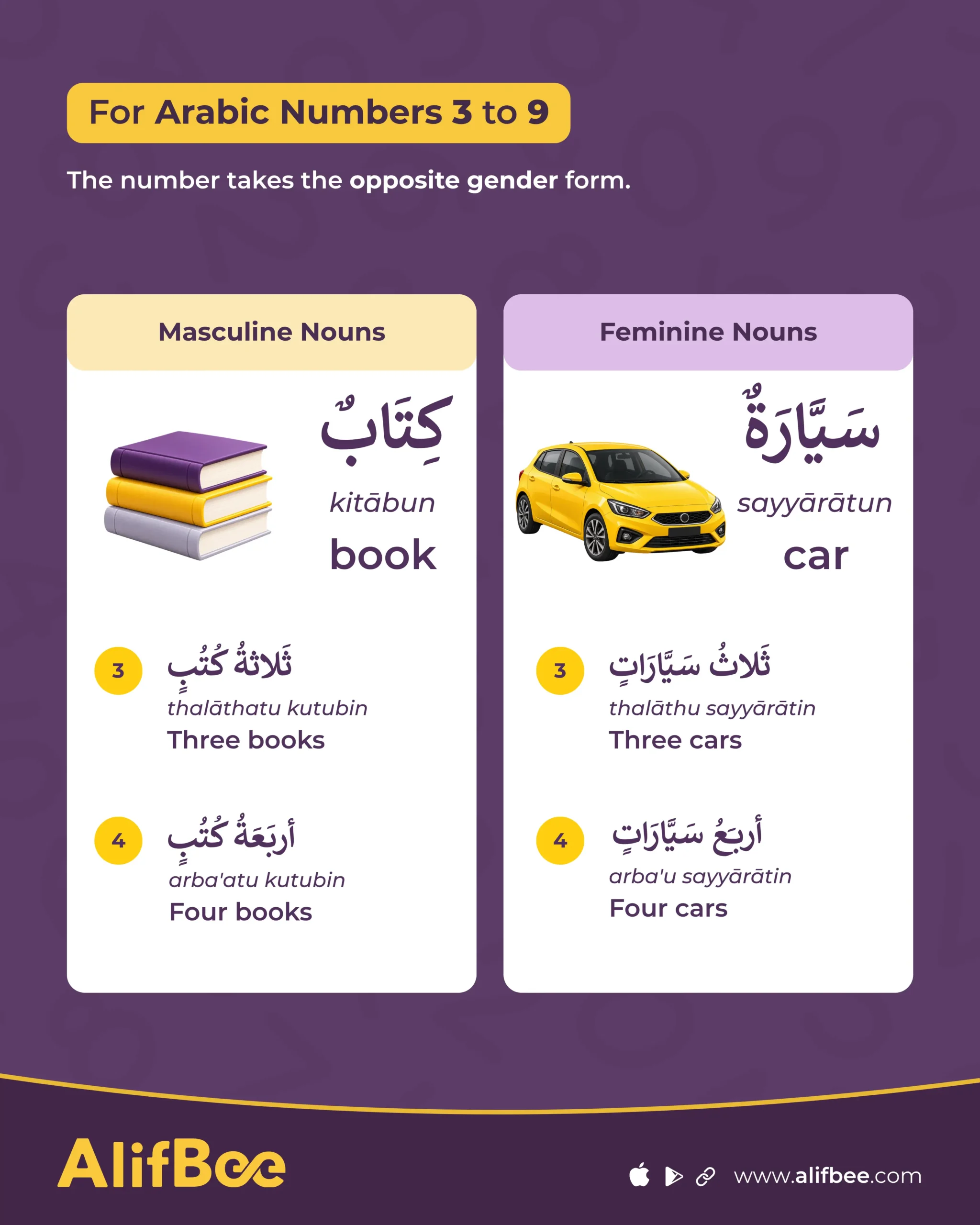
Numbers from three (ثَلَاثَة) to nine (تِسْعَة) come before the counted noun and show reverse gender agreement. The counted noun appears in the genitive plural.
| Example | Pronunciation | Arabic | |
|---|---|---|---|
|
Three books
|
thalāthatu kutubin
|
ثَلَاثَةُ كُتُبٍ
|
|
|
Six apples
|
sittu tuffāḥātin
|
سِتُّ تُفَّاحَاتٍ
|
|
|
Eight pens
|
thamāniyatu aqlāmin
|
ثَمَانِيَةُ أَقْلَامٍ
|
|
|
Five hours
|
khamsu sāʿātin
|
خَمْسُ سَاعَاتٍ
|
|
|
Nine cities
|
tisʿu mudunin
|
تِسْعُ مُدُنٍ
|
|
Number 10 in Arabic
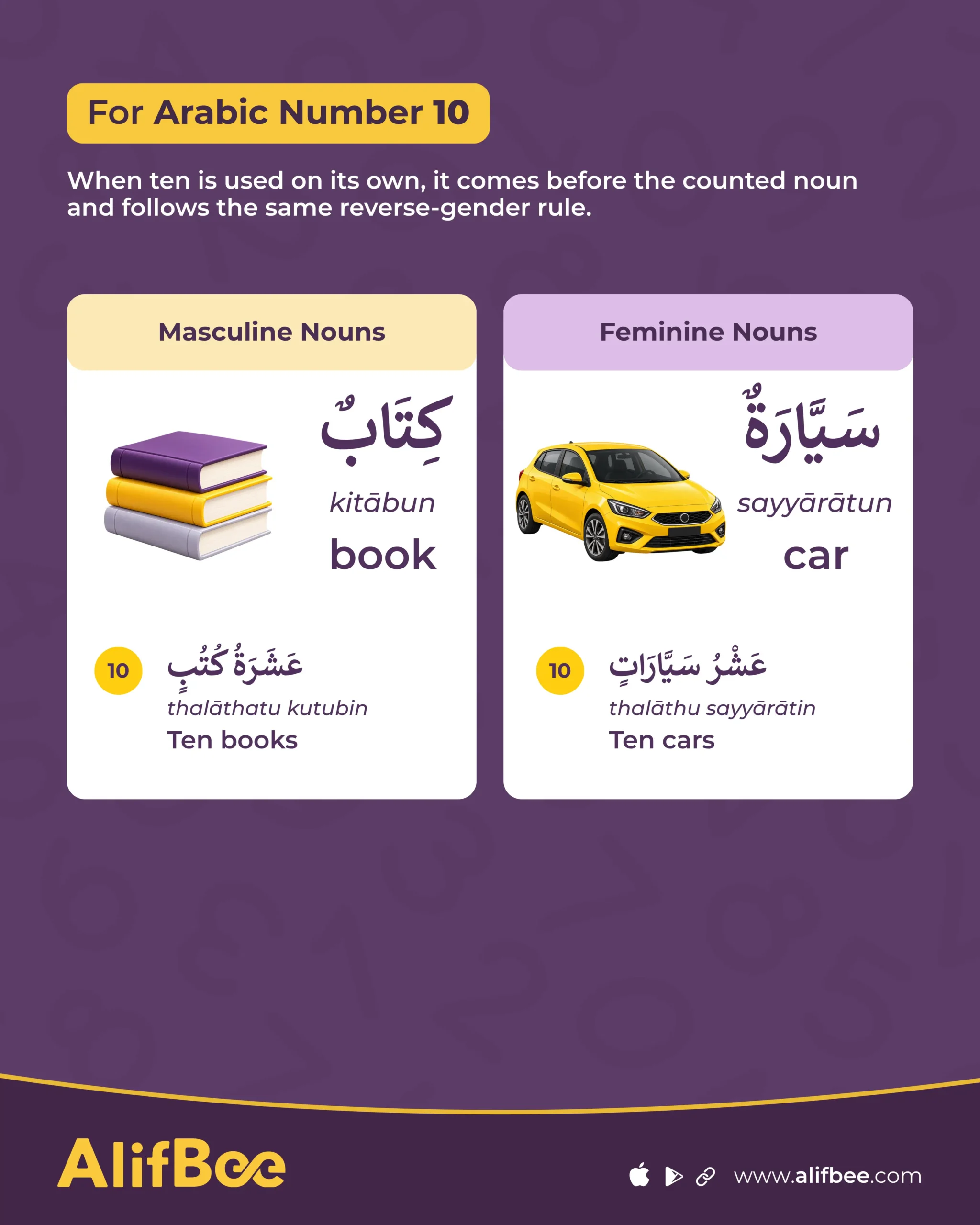
When ten is used by itself, it comes before the counted noun and follows the same reverse-gender pattern as numbers 3 to 9. A masculine noun takes عَشَرَة, while a feminine noun takes عَشْر. The counted noun is plural and genitive.
| Example | Pronunciation | Arabic | |
|---|---|---|---|
|
Ten books
|
ʿasharatu kutubin
|
عَشَرَةُ كُتُبٍ
|
|
|
Ten cars
|
ʿashru sayyārātin
|
عَشْرُ سَيَّارَاتٍ
|
|
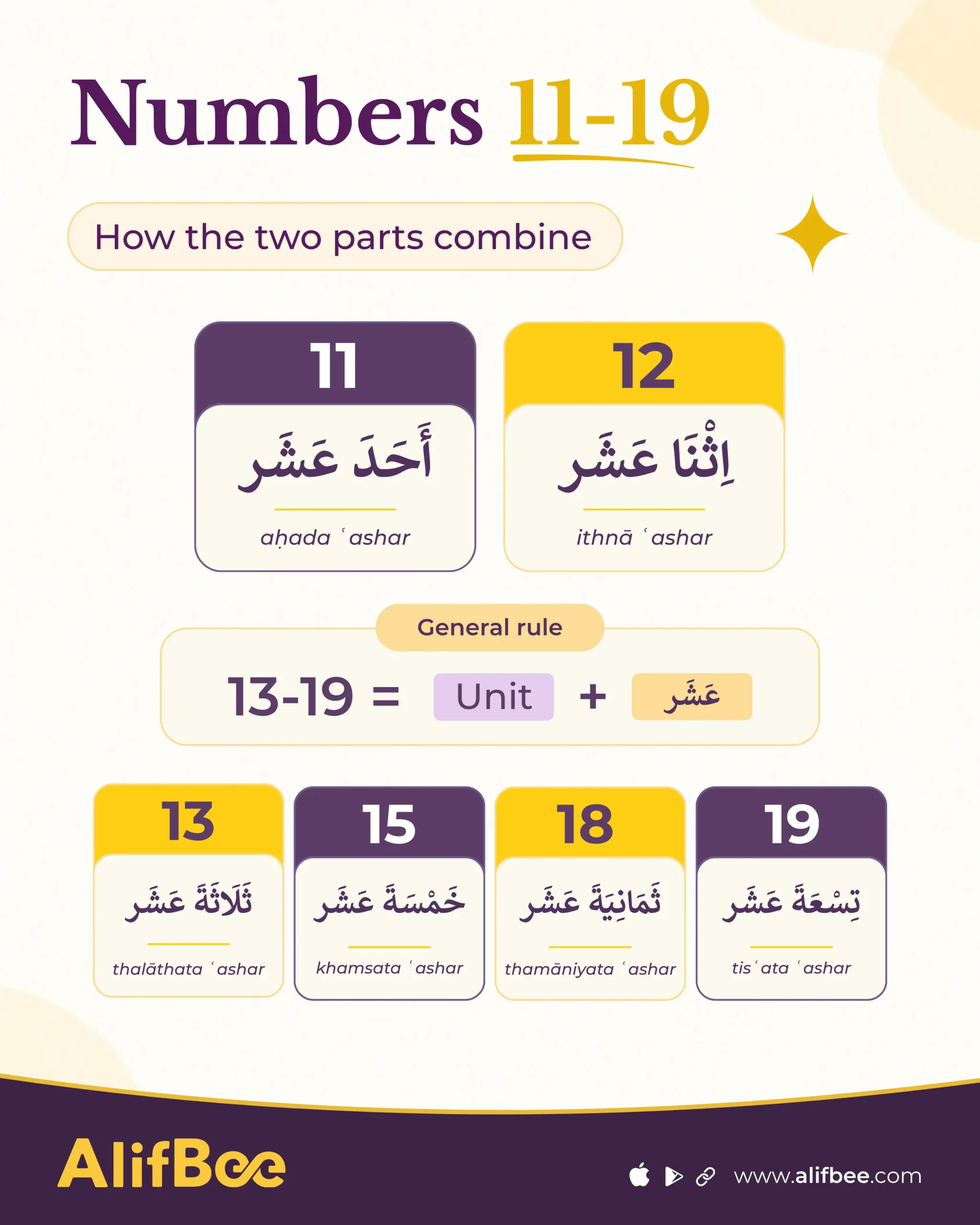
Numbers 11 and 12 in Arabic
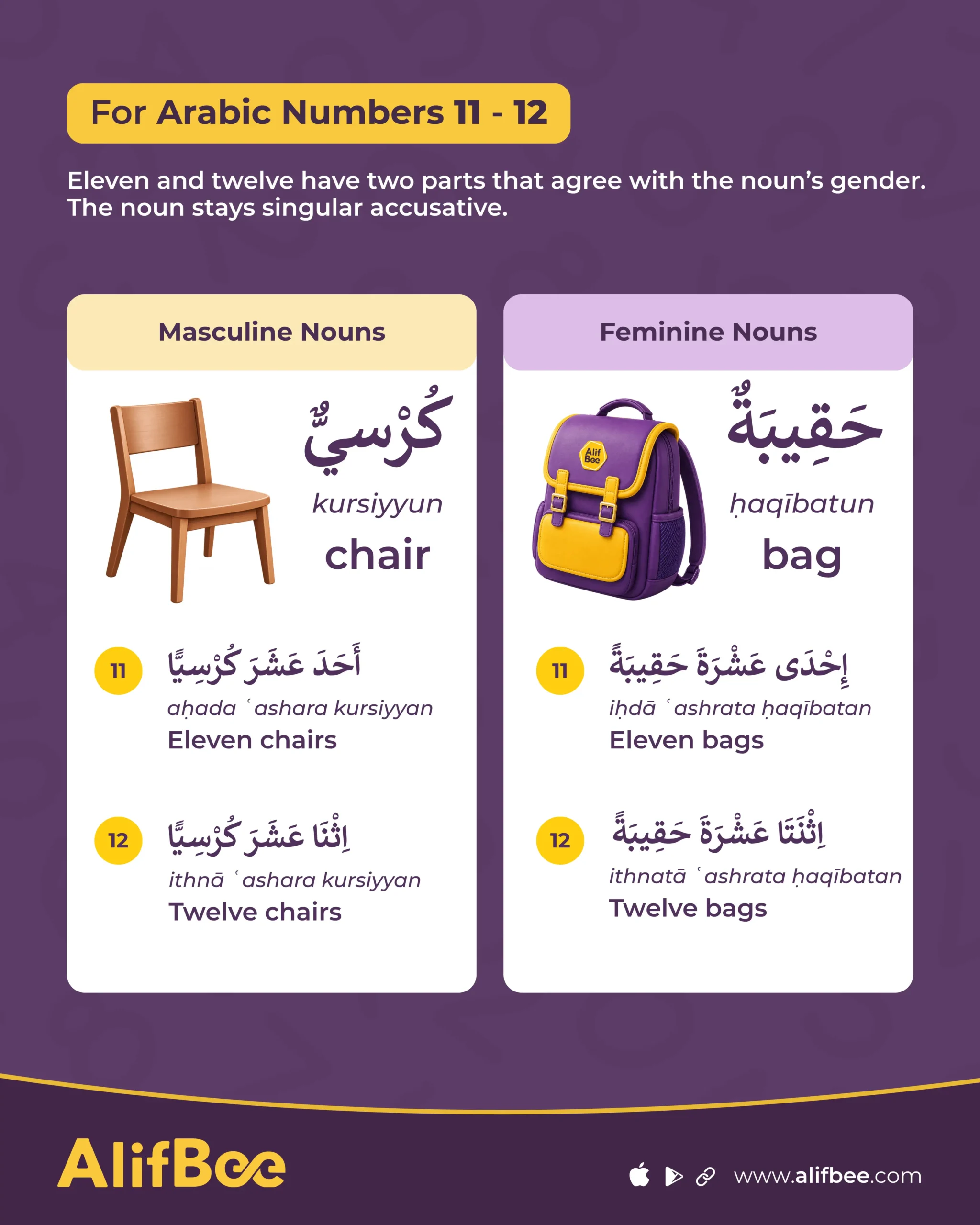
Eleven (أَحَدَ عَشَرَ) and twelve (اِثْنَا عَشَرَ) use two-part forms. Both parts agree with the counted noun in gender, and the noun remains singular accusative.
| Example | Pronunciation | Arabic | |
|---|---|---|---|
|
Eleven books
|
aḥada ʿashara kitāban
|
أَحَدَ عَشَرَ كِتَابًا
|
|
|
Eleven bags
|
iḥdā ʿashrata ḥaqībatan
|
إِحْدَى عَشْرَةَ حَقِيبَةً
|
|
|
Twelve chairs
|
ithnā ʿashara kursiyyan
|
اِثْنَا عَشَرَ كُرْسِيًّا |
|
|
Twelve cars
|
ithnatā ʿashrata sayyāratan
|
اِثْنَتَا عَشْرَةَ سَيَّارَةً
|
|
Numbers 13 to 19 in Arabic
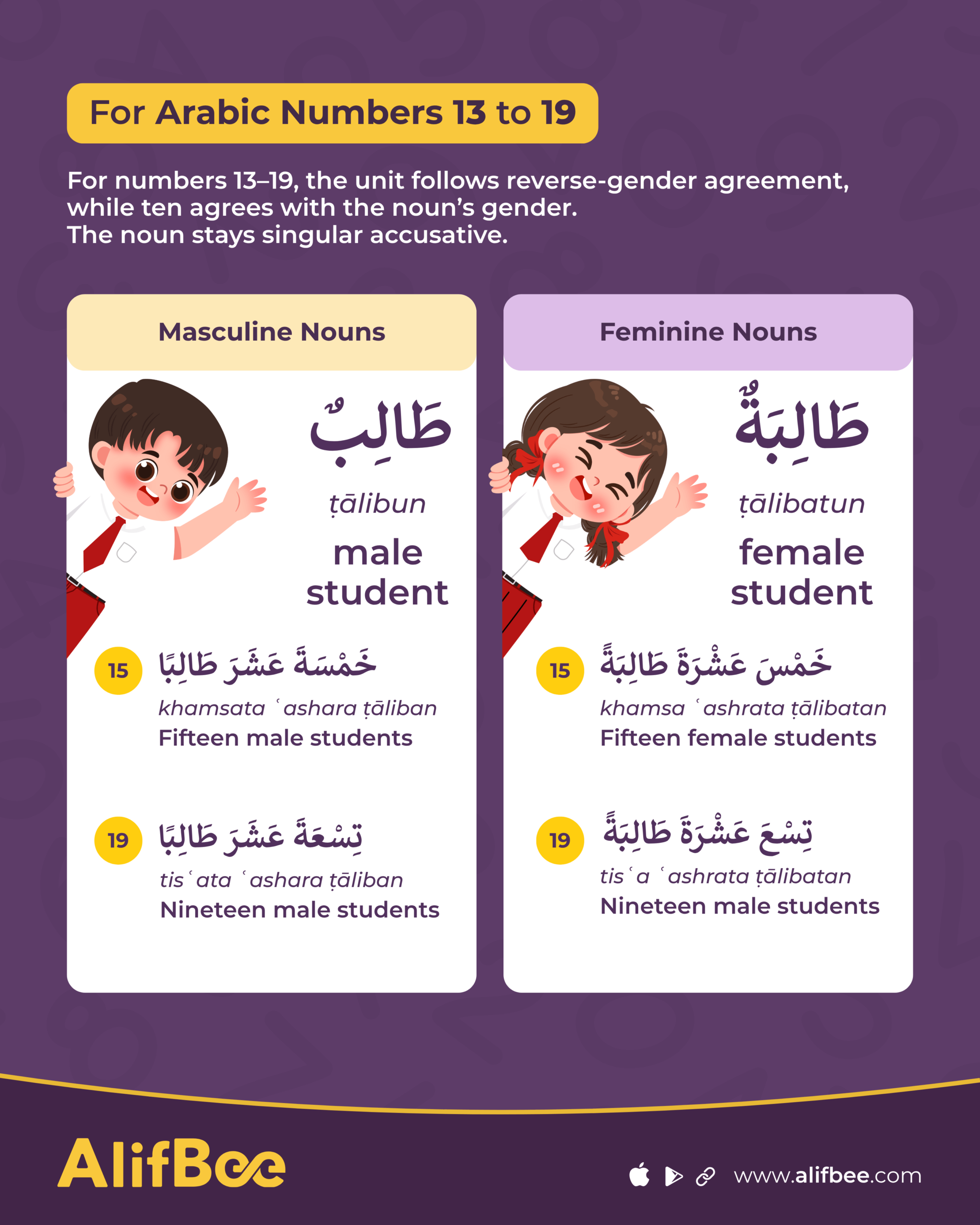
Numbers from thirteen (ثَلَاثَةَ عَشَرَ) to nineteen (تِسْعَةَ عَشَرَ) also use two-part forms. The unit follows reverse gender agreement, while the form of ten agrees with the counted noun. The noun remains singular accusative.
| Example | Pronunciation | Arabic | |
|---|---|---|---|
|
Fifteen male students
|
khamsata ʿashara ṭāliban
|
خَمْسَةَ عَشَرَ طَالِبًا
|
|
|
Fifteen female students
|
khamsa ʿashrata ṭālibatan
|
خَمْسَ عَشْرَةَ طَالِبَةً |
|
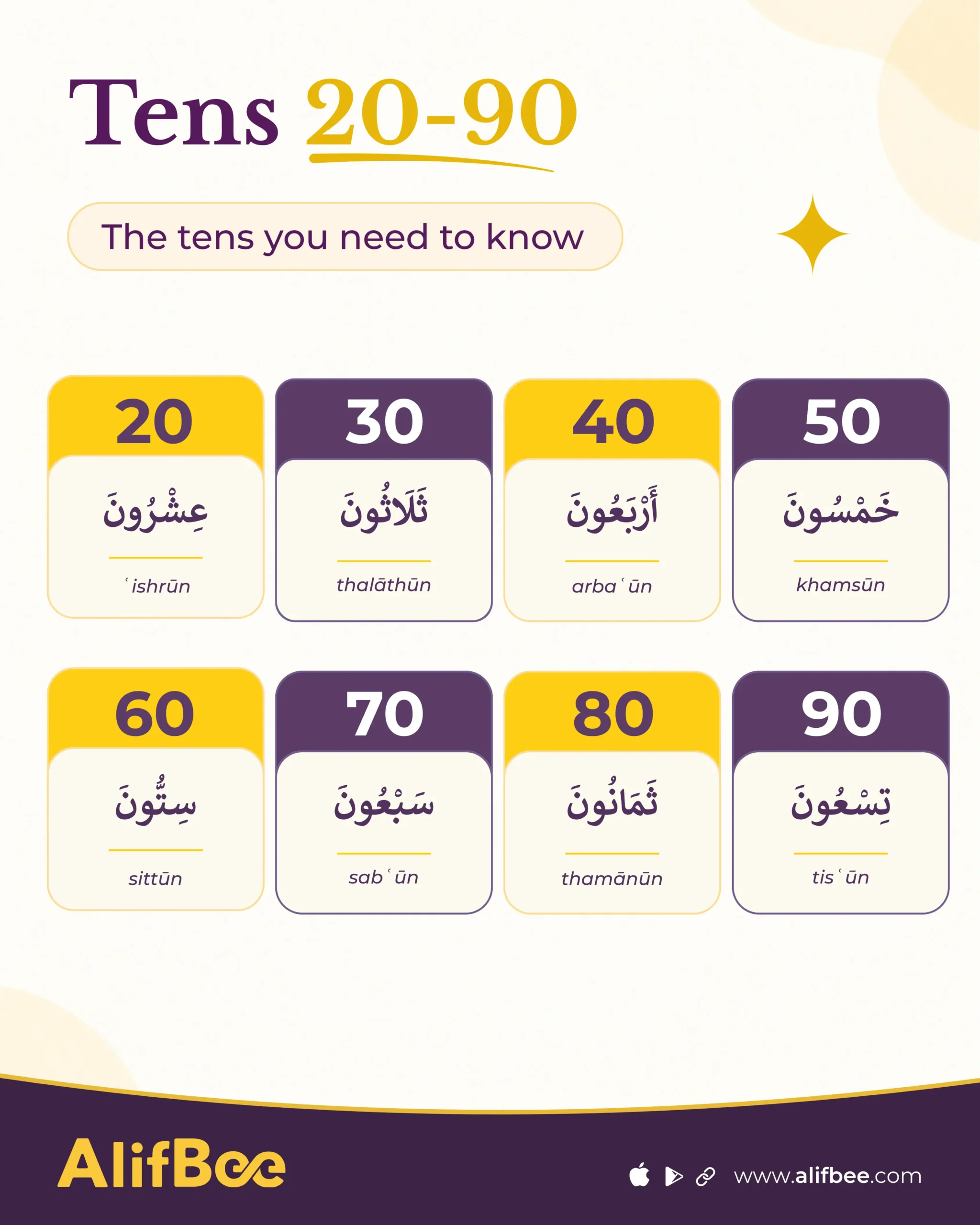
How to Form Tens in Arabic
The tens from twenty (عِشْرُونَ) to ninety come before the counted noun and do not change for gender. The counted noun remains singular accusative.
The tens take the -ūna ending in the nominative case and the -īna ending in the accusative or genitive case. For example, عِشْرُونَ is nominative, while عِشْرِينَ is accusative or genitive.
For example, “Twenty students are in the class” begins with عِشْرُونَ طَالِبًا, while “I saw twenty students” is رَأَيْتُ عِشْرِينَ طَالِبًا.
| Number | Arabic-Indic digits | Pronunciation | Arabic writing | |
|---|---|---|---|---|
|
Twenty |
٢٠ |
ʿishrūn |
عِشْرُونَ |
|
|
Thirty |
٣٠ |
thalāthūn |
ثَلَاثُونَ |
|
|
Forty |
٤٠ |
arbaʿūn |
أَرْبَعُونَ |
|
|
Fifty |
٥٠ |
khamsūn |
خَمْسُونَ |
|
|
Sixty |
٦٠ |
sittūn |
سِتُّونَ |
|
|
Seventy |
٧٠ |
sabʿūn |
سَبْعُونَ |
|
|
Eighty |
٨٠ |
thamānūn |
ثَمَانُونَ |
|
|
Ninety |
٩٠ |
tisʿūn |
تِسْعُونَ |
|
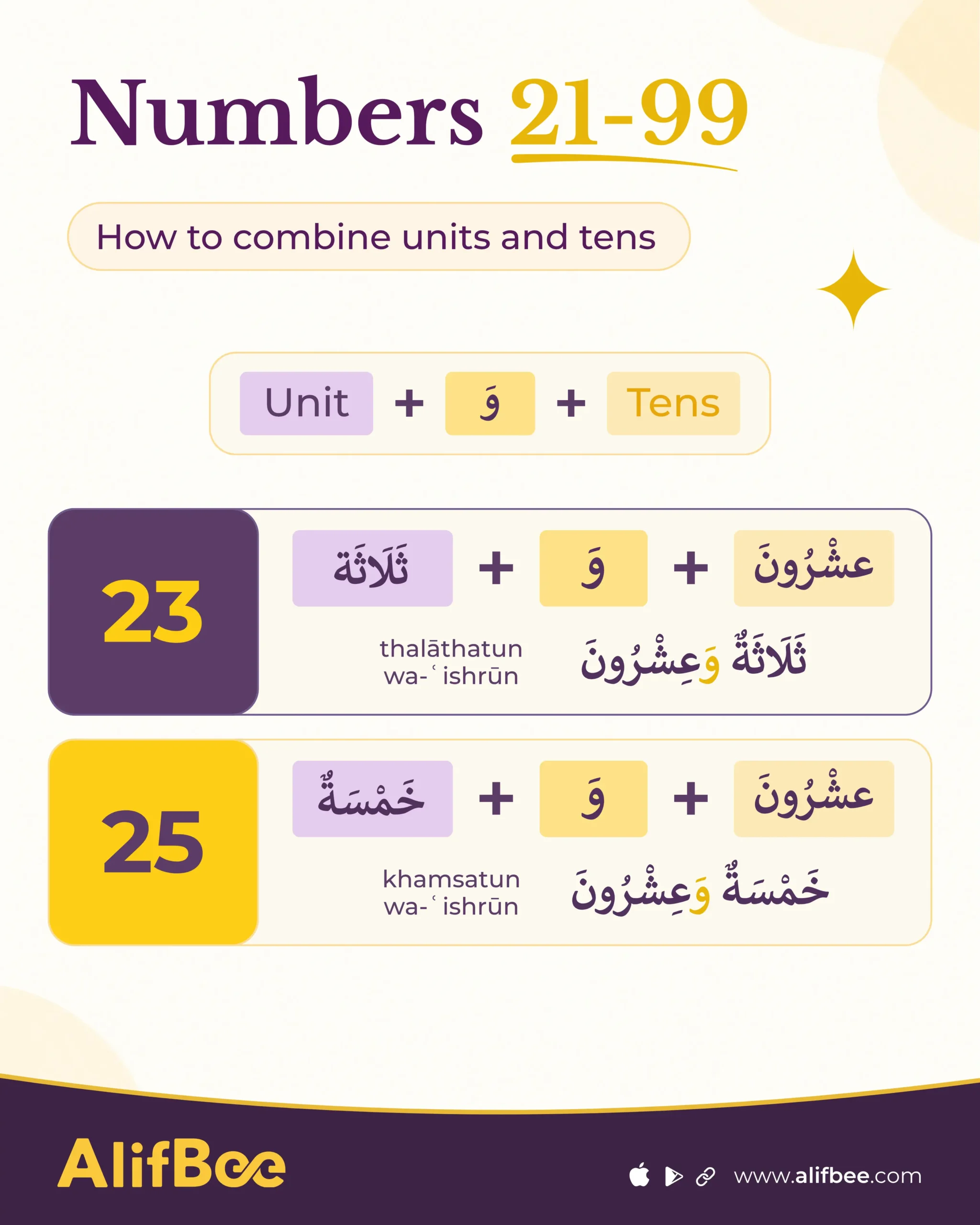
How to Form Numbers 21 to 99 in Arabic
For numbers from 21 to 99, place the unit first, add وَ (wa, “and”), and then add the tens. The counted noun remains singular accusative.
Numbers ending in one use وَاحِد with a masculine noun and إِحْدَى with a feminine noun. Numbers ending in two use اِثْنَانِ or اِثْنَتَانِ in the nominative and اِثْنَيْنِ or اِثْنَتَيْنِ in the accusative or genitive.
The unit follows its own agreement rule: one and two agree with the noun, while three to nine show reverse gender agreement.
| Example | Pronunciation | Arabic | |
|---|---|---|---|
|
Twenty-three books
|
thalāthatun wa-ʿishrūna kitāban
|
ثَلَاثَةٌ وَعِشْرُونَ كِتَابًا
|
|
|
Twenty-three cars
|
thalāthun wa-ʿishrūna sayyāratan
|
ثَلَاثٌ وَعِشْرُونَ سَيَّارَةً
|
|
How to Form Hundreds in Arabic
Learn the hundreds as combinations instead of unrelated forms: the multiplier comes before مِئَة, as in ثَلَاثُمِئَة (three hundred) and خَمْسُمِئَة (five hundred).
| Number | Pronunciation | Arabic writing | |
|---|---|---|---|
|
100 |
miʾa |
مِئَة |
|
|
200 |
miʾatān |
مِئَتَان |
|
|
300 |
thalāth miʾa
|
ثَلَاثُمِئَة |
|
|
400 |
arbaʿ miʾa
|
أَرْبَعُمِئَة |
|
|
500 |
khams miʾa
|
خَمْسُمِئَة |
|
|
600 |
sitt miʾa
|
سِتُّمِئَة |
|
|
700 |
sabʿ miʾa
|
سَبْعُمِئَة |
|
|
800 |
thamānī miʾa
|
ثَمَانُمِئَة |
|
|
900 |
tisʿ miʾa
|
تِسْعُمِئَة |
|
One hundred (مِئَة) and its multiples do not change for the gender of the counted noun. The counted noun follows in the singular genitive because the hundred and noun form a construct phrase.
| Example | Pronunciation | Arabic | |
|---|---|---|---|
|
One hundred books
|
miʾatu kitābin
|
مِئَةُ كِتَابٍ
|
|
|
One hundred cars
|
miʾatu sayyāratin
|
مِئَةُ سَيَّارَةٍ
|
|
Two hundred changes with case: مِئَتَانِ (miʾatāni) is nominative, while مِئَتَيْنِ (miʾatayni) is accusative or genitive. The forms from 300 to 900 combine a number with مِئَة.
| Meaning | Pronunciation | Arabic | |
|---|---|---|---|
|
The total is two hundred.
|
al-ʿadadu miʾatān
|
العَدَدُ مِئَتَان
|
|
|
The total reached two hundred.
|
balagha al-ʿadadu miʾatayni
|
بَلَغَ العَدَدُ مِئَتَيْن
|
|
When two hundred is followed by the counted noun, it forms an iḍāfa and loses the final ن. Use مِئَتَا in the nominative case and مِئَتَيْ in the accusative or genitive case, as in مِئَتَا كِتَابٍ and قَرَأْتُ مِئَتَيْ كِتَابٍ in the following examples:
| Meaning | Pronunciation | Arabic | |
|---|---|---|---|
|
There are two hundred books in the library.
|
fī al-maktabati miʾatā kitābin |
فِي المَكْتَبَةِ مِئَتَا كِتَابٍ
|
|
|
I read two hundred books.
|
qaraʾtu miʾatay kitābin
|
قَرَأْتُ مِئَتَيْ كِتَابٍ
|
|
For a number above one hundred, state the hundreds first, add وَ (wa), and then form the remaining number according to its own rule.
| Meaning | Pronunciation | Arabic | |
|---|---|---|---|
|
Two hundred and three books
|
miʾatāni wa-thalāthatu kutubin
|
مِئَتَانِ وَثَلَاثَةُ كُتُبٍ
|
|
How Are Arabic Numbers Used in Daily Life?
Knowing how Arabic numbers are formed is the first step. You also need to recognize and use them in situations such as telling the time, reading dates, discussing prices, giving phone numbers, and talking about age or quantities.
Explore these situations with practical examples and short conversations in our guide to using Arabic numbers in daily life.
Practice Forming Arabic Numbers
Arabic numbers become easier when you learn them in groups instead of memorizing every form separately. Start with the units, then practice the patterns for the teens, tens, compound numbers, and hundreds. Each time you form a number, check its position, gender agreement, case, and the form of the counted noun.
Keep the Arabic Numbers 1–100 chart nearby as a quick reference. With regular practice, you will become more confident forming numbers correctly and using them in complete Arabic sentences.
Review How to Form Arabic Numbers

Frequently Asked Questions About Arabic Numbers
1. Do Arabic numbers come before or after the noun?
One and two usually follow the noun. Most cardinal numbers from 3 onward come before it.
2. Do Arabic numbers change with gender?
Arabic cardinal numbers follow different agreement patterns. One and two agree with the noun, 3 to 10 show reverse gender agreement, and compound numbers combine these rules.
3.What form does the noun take after an Arabic number?
The form depends on the number: 3 to 10 take a plural genitive noun, 11 to 99 take a singular accusative noun, and hundreds take a singular genitive noun.
4.How are numbers such as 25 formed in Arabic?
Place the unit first, add وَ (wa), and then the tens. Twenty-five is خَمْسَةٌ وَعِشْرُون with a masculine counted noun and خَمْسٌ وَعِشْرُون with a feminine counted noun.