

At a Glance: The Arabic word for “flower” is زَهْرَة (zahra), while وَردَة (warda) usually means “rose.” Common Arabic flower names include ياسَمِين (yasamīn) for jasmine, خُزامَى (khuzāmā) for lavender, and أُقْحُوَان (uqḥuwān) for daisy. Learning flower names helps Arabic learners describe nature, colors, gardens, and cultural symbols more naturally.
Have you ever seen or smelled a flower and thought, “I wish I knew its name in Arabic”?
Once you learn the names of flowers in Arabic, you’ll start noticing them everywhere: in gardens, perfumes, home rituals, and even in poetry and art.
In Modern Standard Arabic, the most common general word for flower is زهرة (zahra). You’ll also hear وردة (warda), which literally means “rose.” Many learners see it early when they start learning Arabic because it’s commonly used in everyday speech as well.
Before you go further!
You may want to strengthen a few related vocabulary areas first. AlifBee already has useful guides on Arabic Basics for Beginners: 10 Top Essentials to Start, Learn 10 Basic Colors in Arabic with Easy Examples, Weather and Seasons in Arabic: Basic Vocabulary with Audio, and 50 Easy Arabic Words for Beginners. These articles will make it easier to describe flowers by color, season, and everyday context once you start using the words in real sentences.
Popular Arabic Flower Names
Here’s a list of common Arabic flower names you’ll actually see and hear. Spelling may vary slightly by country, which is completely normal.
| English | Transliteration | Arabic | |
|---|---|---|---|
|
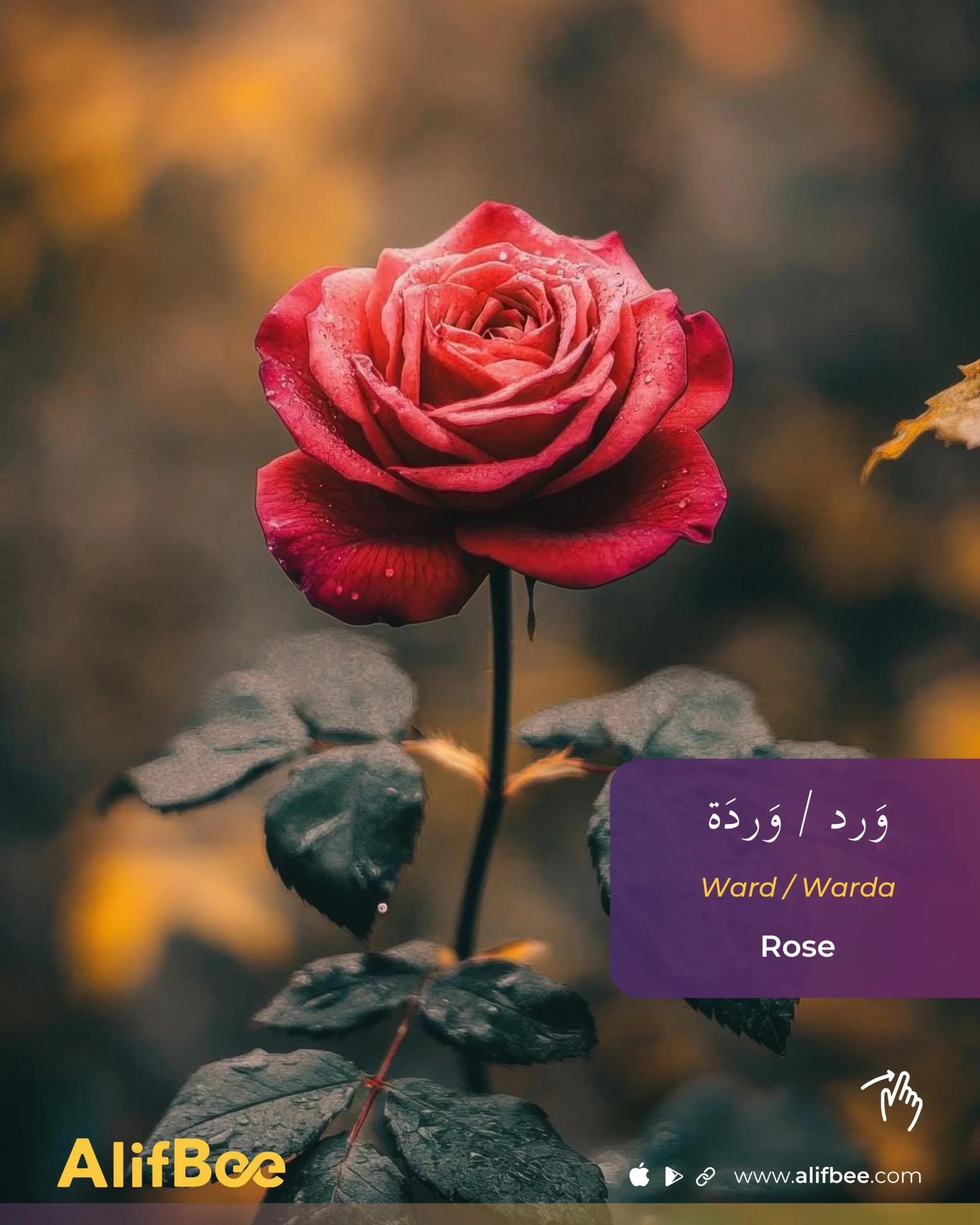
Rose |
Ward / Warda |
وَرد / وَردَة |
|
|
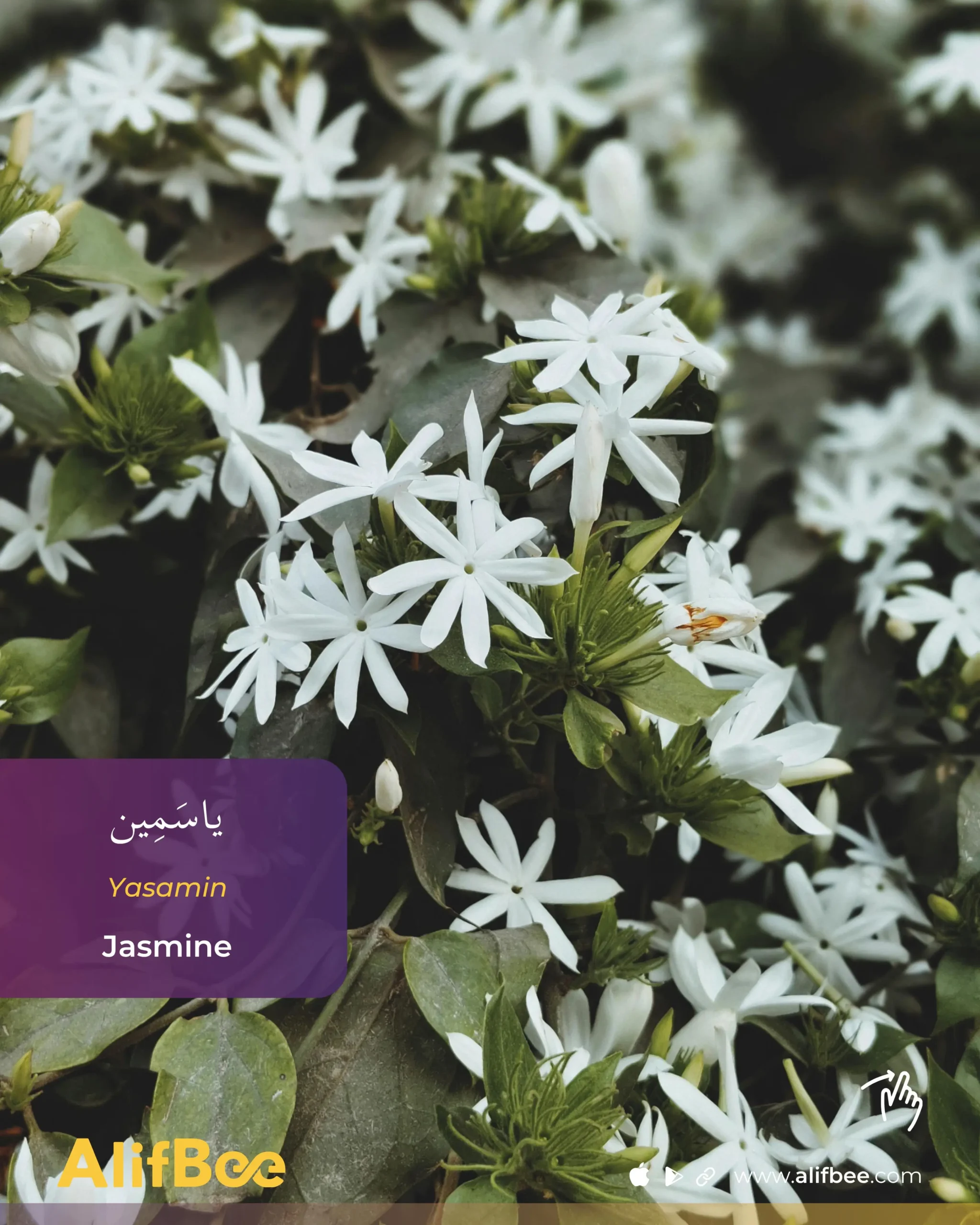
Jasmine |
Yasamin |
ياسَمِين |
|
|
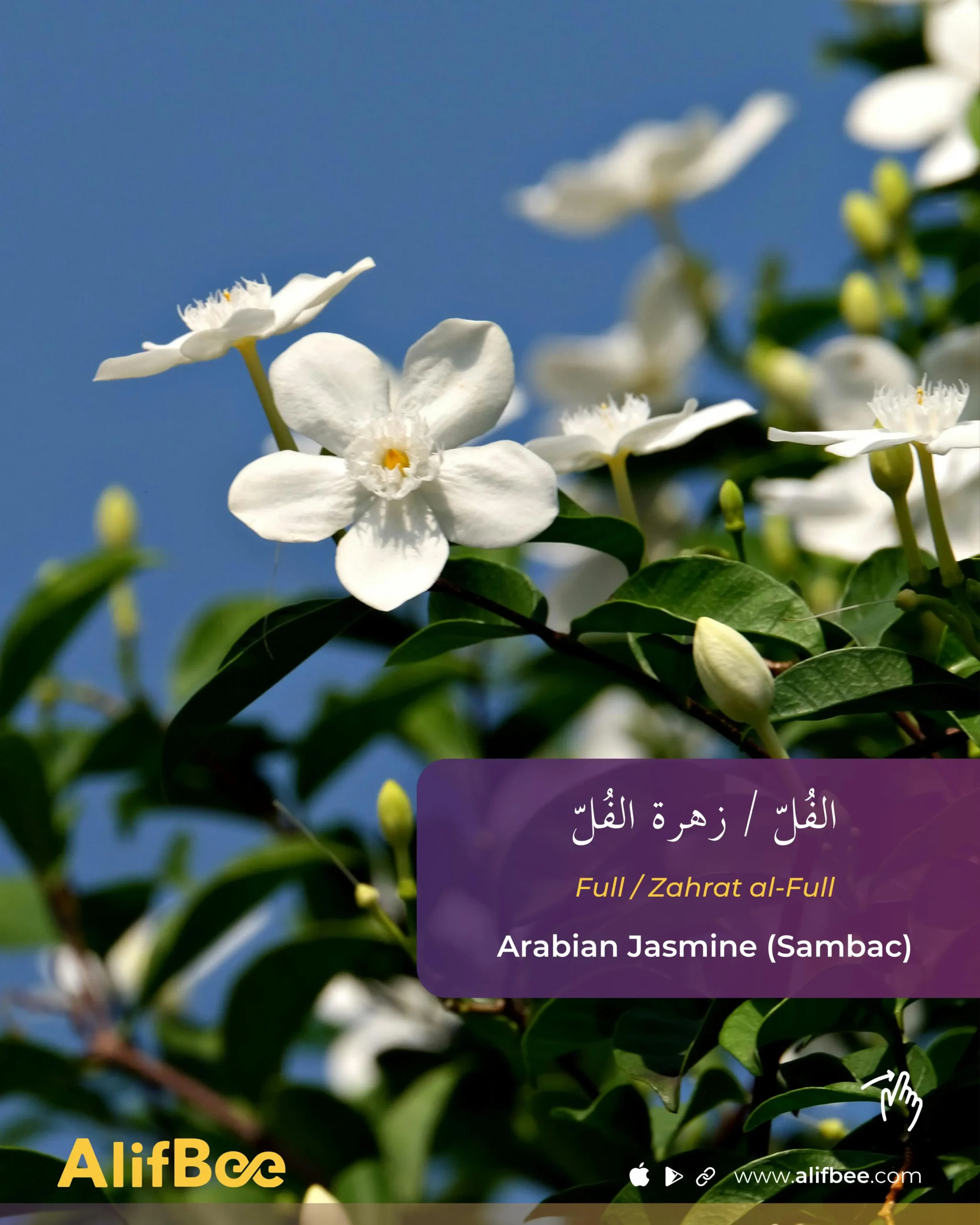
Arabian Jasmine (Sambac) |
Full / Zahrat al-Full |
الفُلّ / زهرة الفُلّ |
|
|
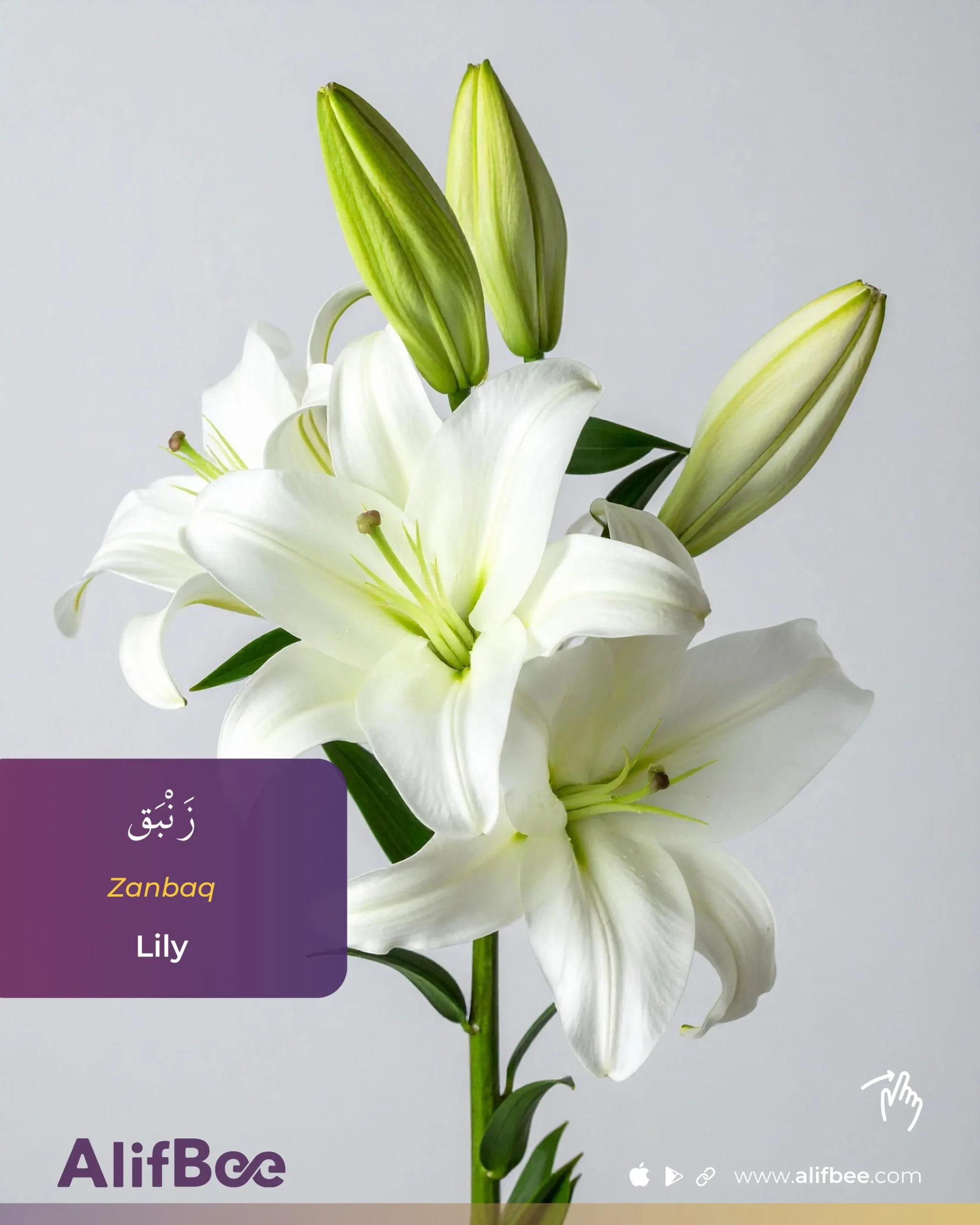
Lily |
Zanbaq |
زَنْبَق |
|
|
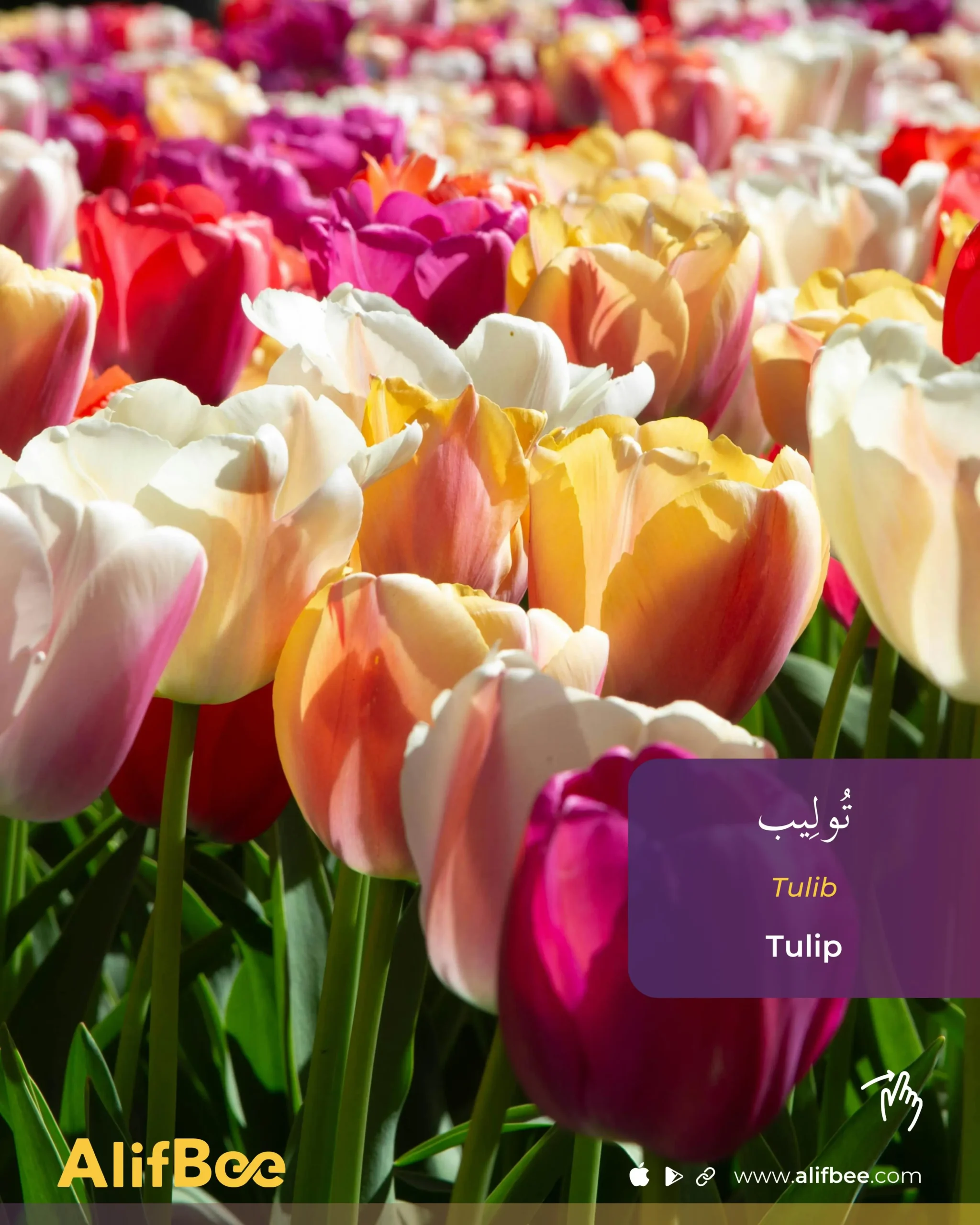
Tulip |
Tulib |
تُولِيب |
|
|
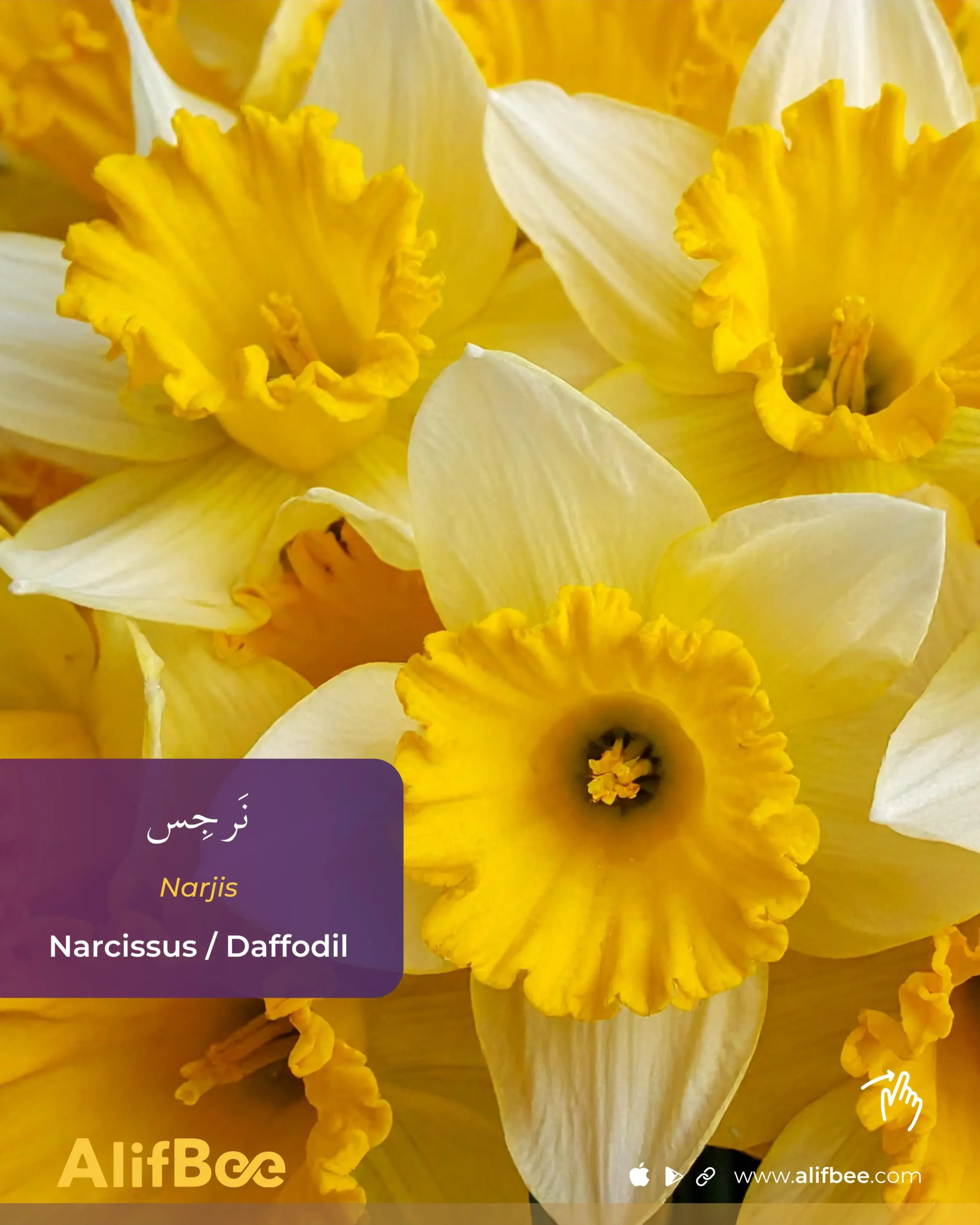
Narcissus / Daffodil |
Narjis |
نَرجِس |
|
|
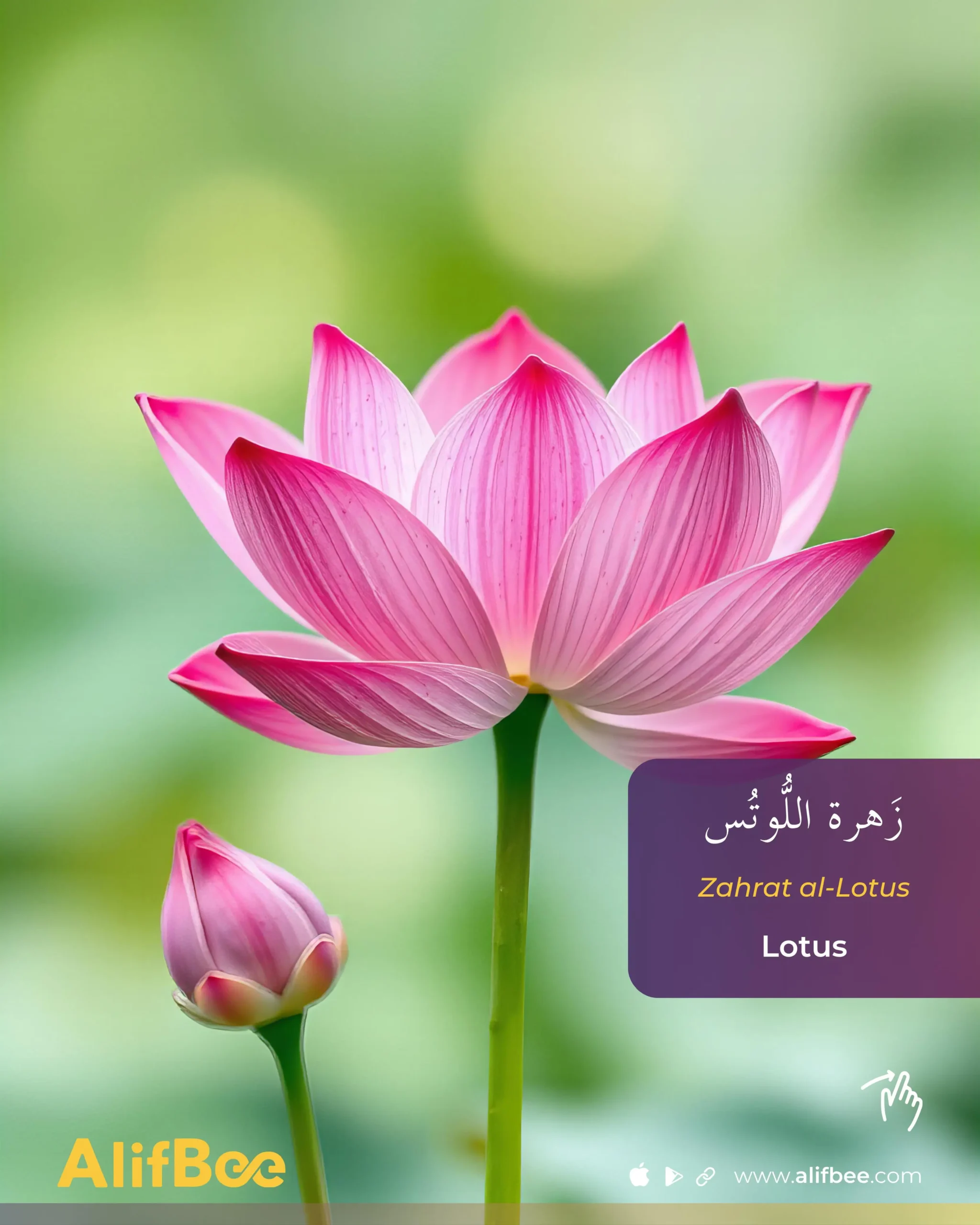
Lotus |
Zahrat al-Lotus |
زَهرة اللُّوتُس |
|
|
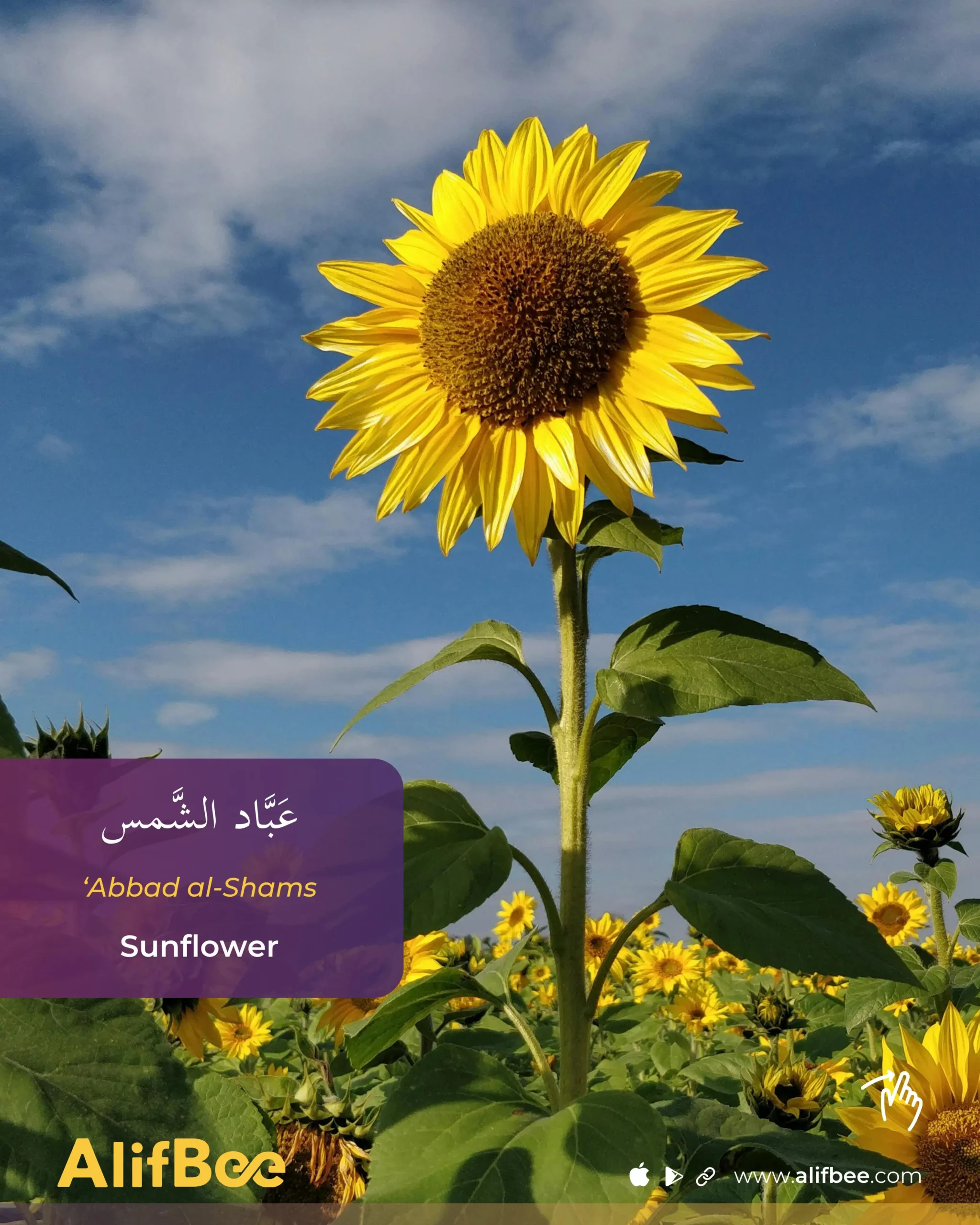
Sunflower |
‘Abbad al-Shams |
عَبَّاد الشَّمس |
|
|
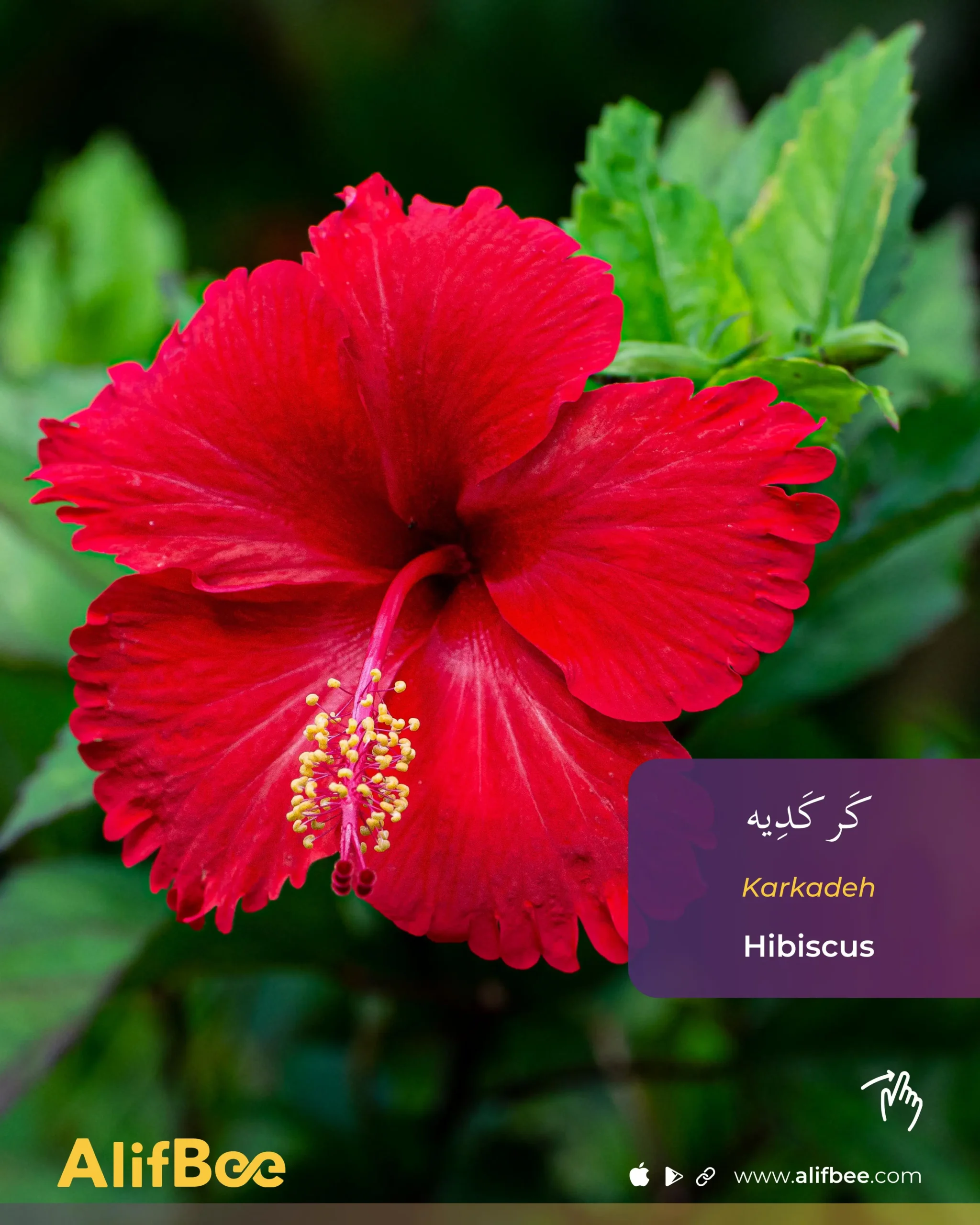
Hibiscus |
Karkadeh |
كَركَدِيه |
|
|
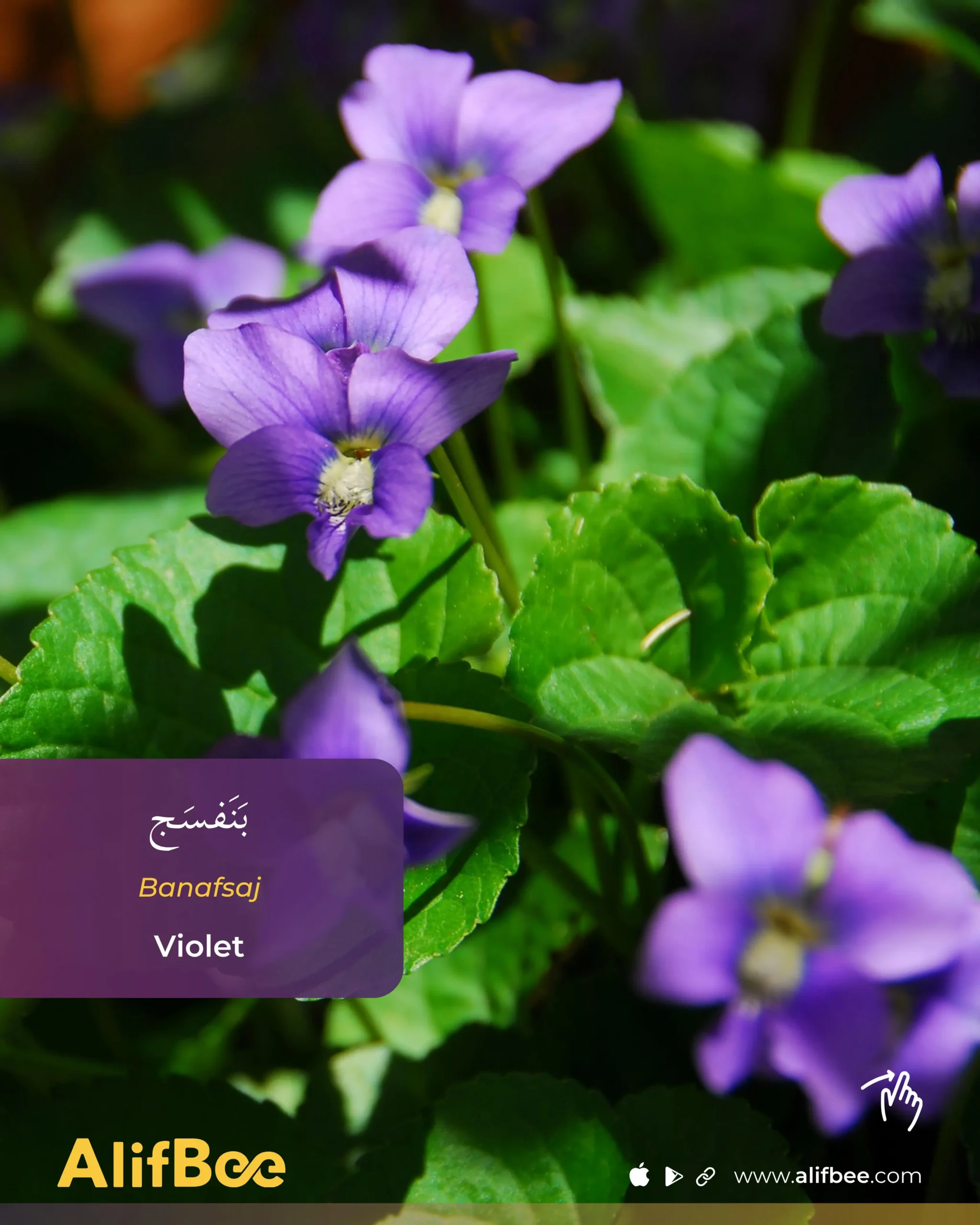
Violet |
Banafsaj |
بَنَفسَج |
|
|
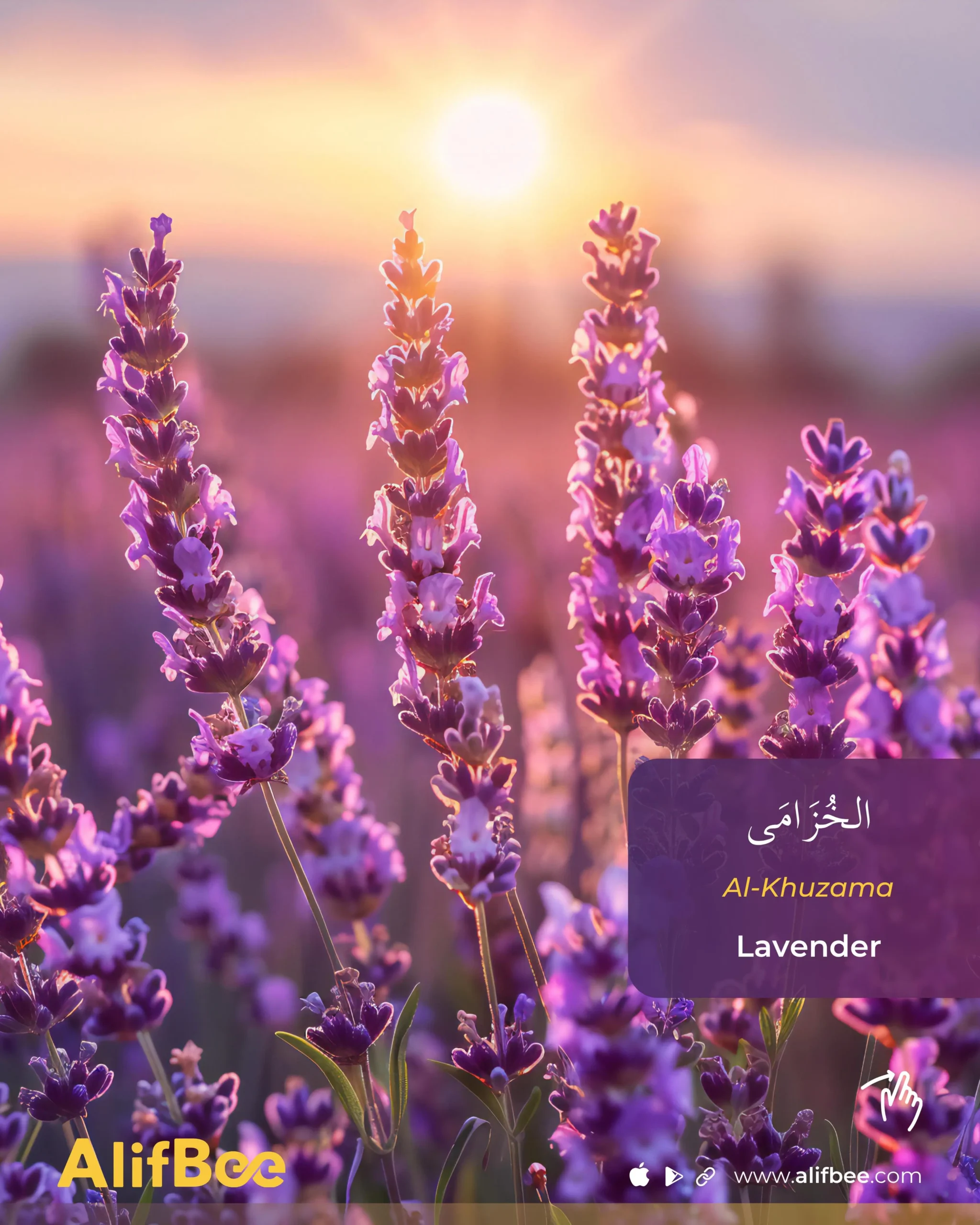
Lavender |
Al-Khuzama |
الخُزَامَى |
|
|
Iris |
Sawsan |
سَوسَن |
|
|
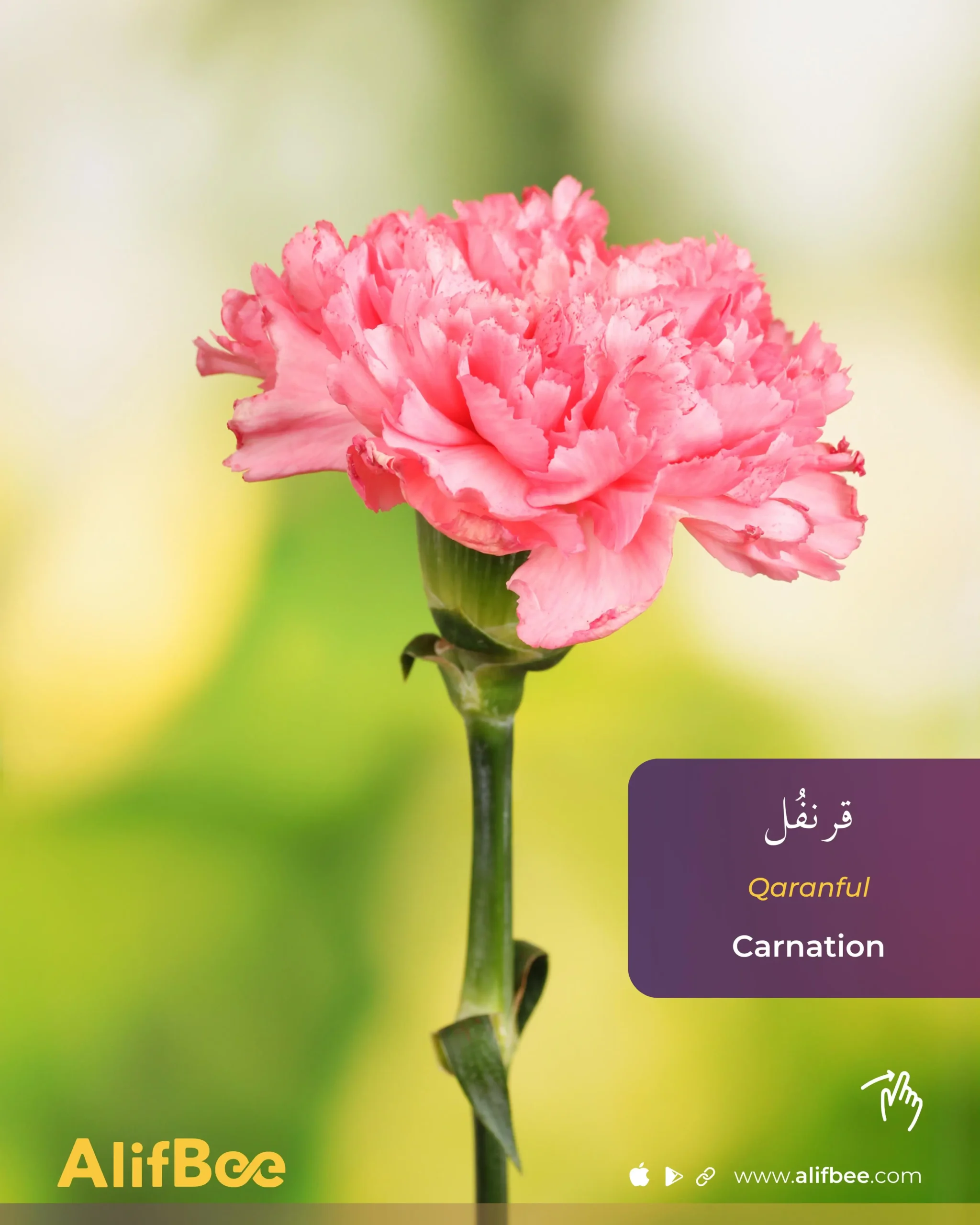
Carnation |
Qaranful |
قرنفُل |
|
|
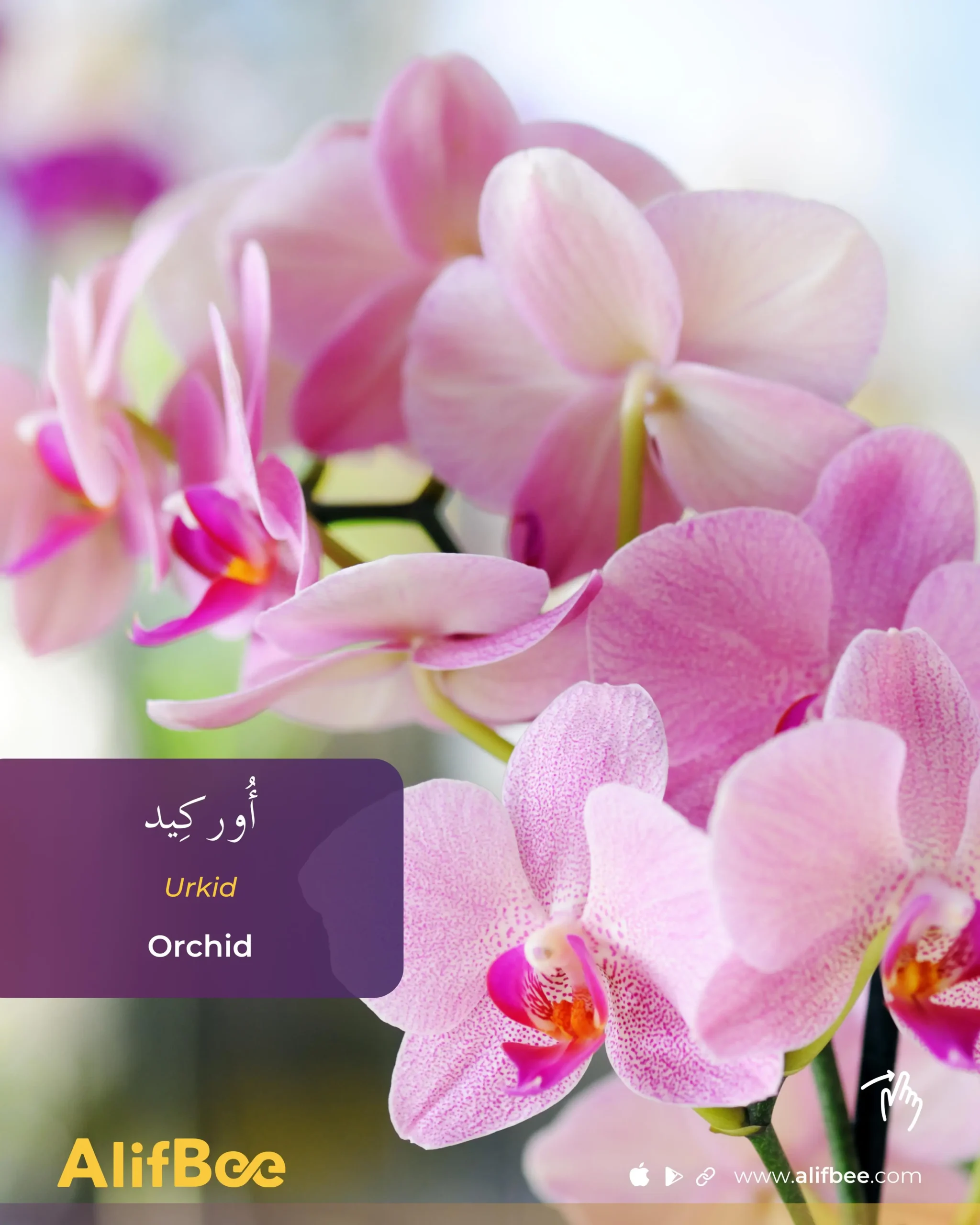
Urkid |
Urkid |
أُوركِيد |
|
|
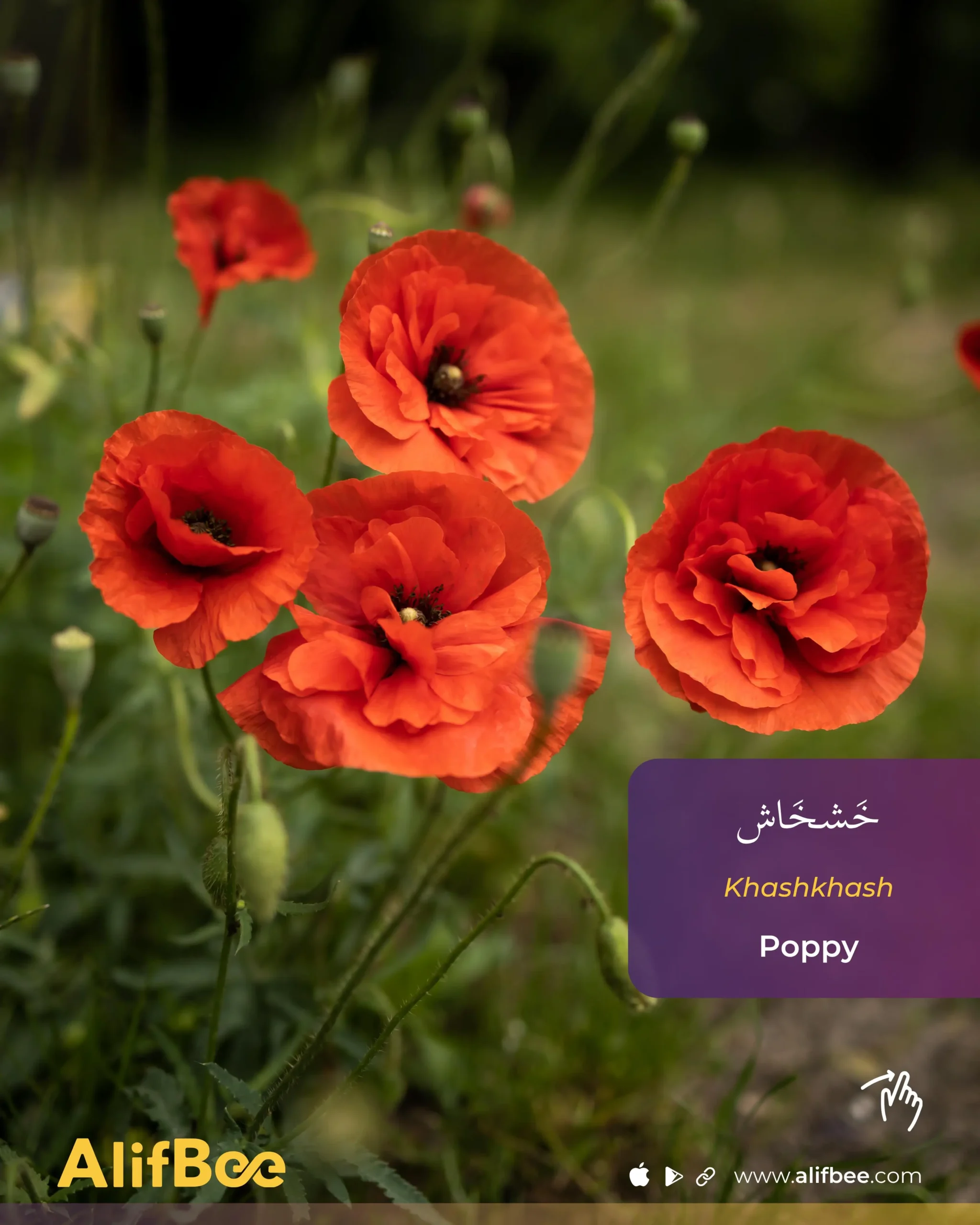
Poppy |
Khashkhash |
خَشخَاش |
|
|
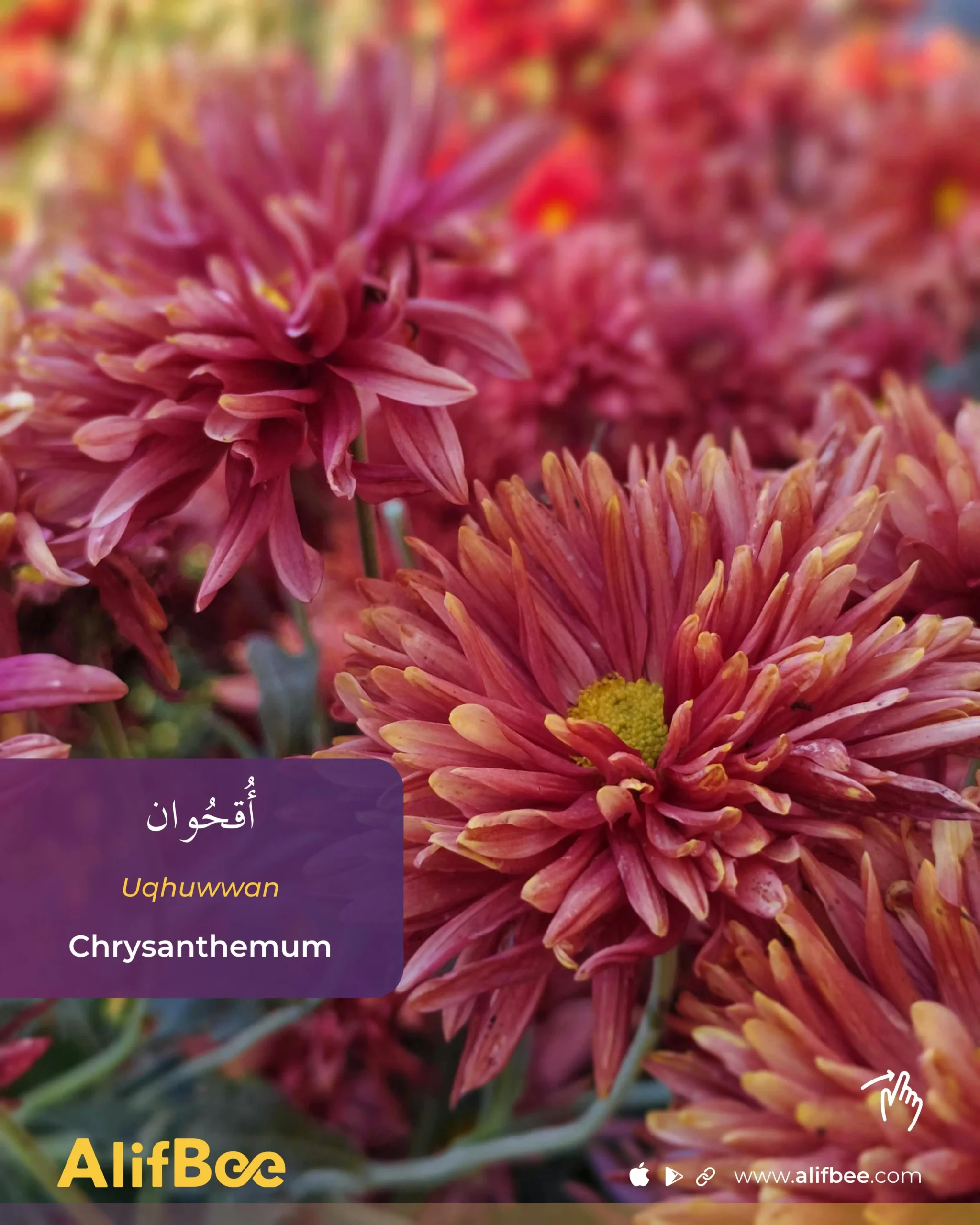
Chrysanthemum |
Uqhuwwan |
أُقحُوان |
|
|
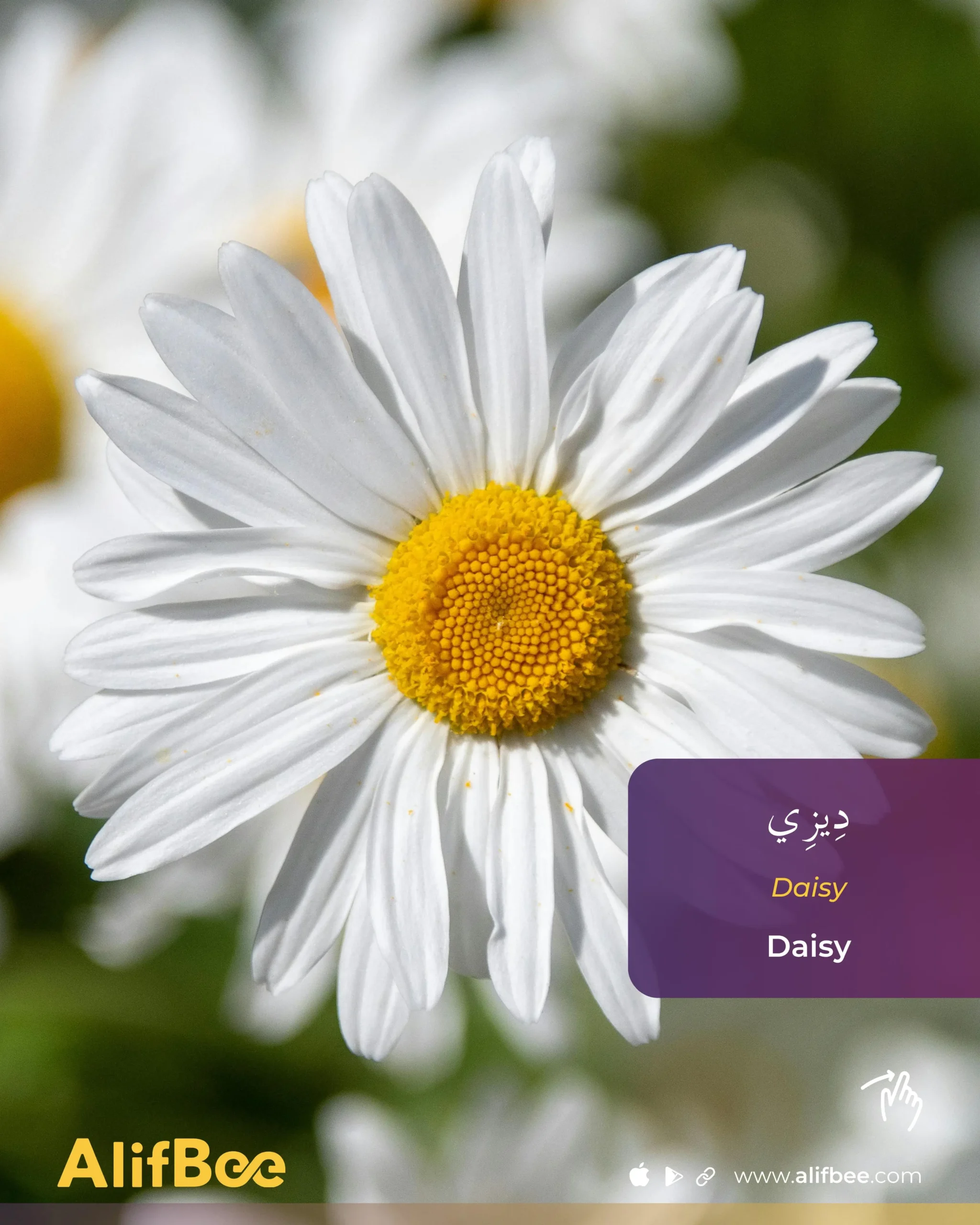
Daisy |
Daisy (common loanword) |
دِيزِي |
|
|
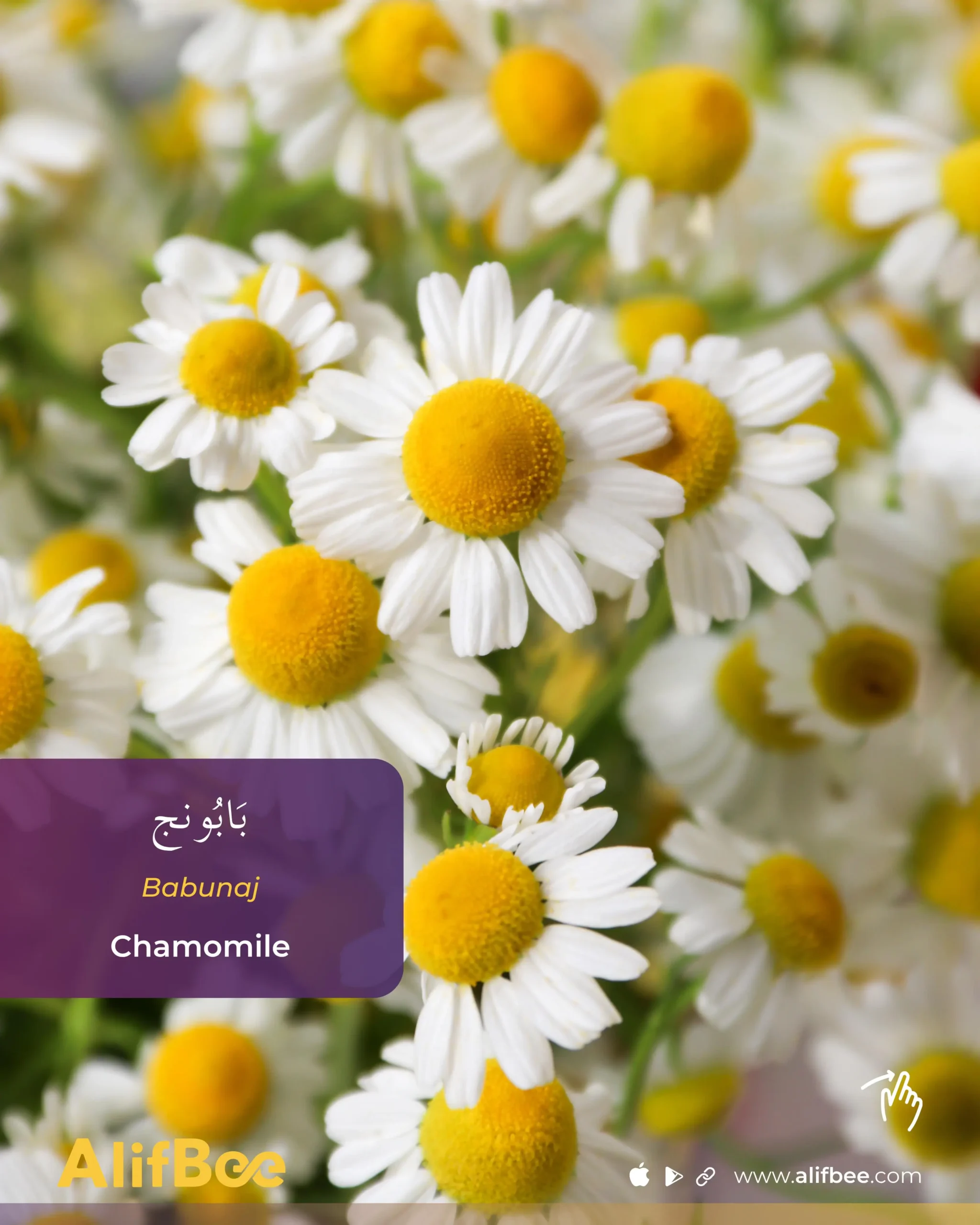
Chamomile |
Babunaj |
بَابُونج |
|
|
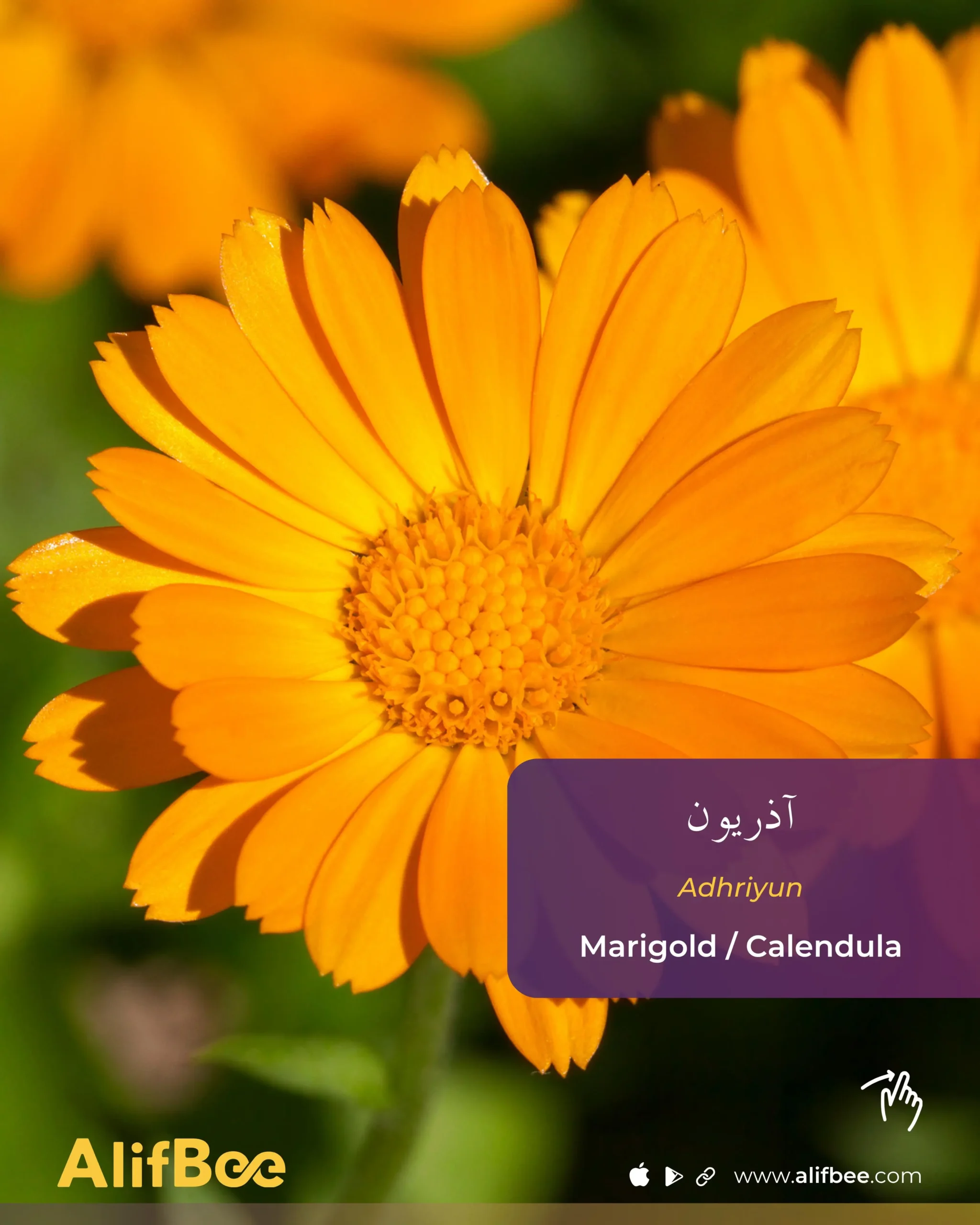
Marigold / Calendula |
Adhriyun |
آذريون |
|
|
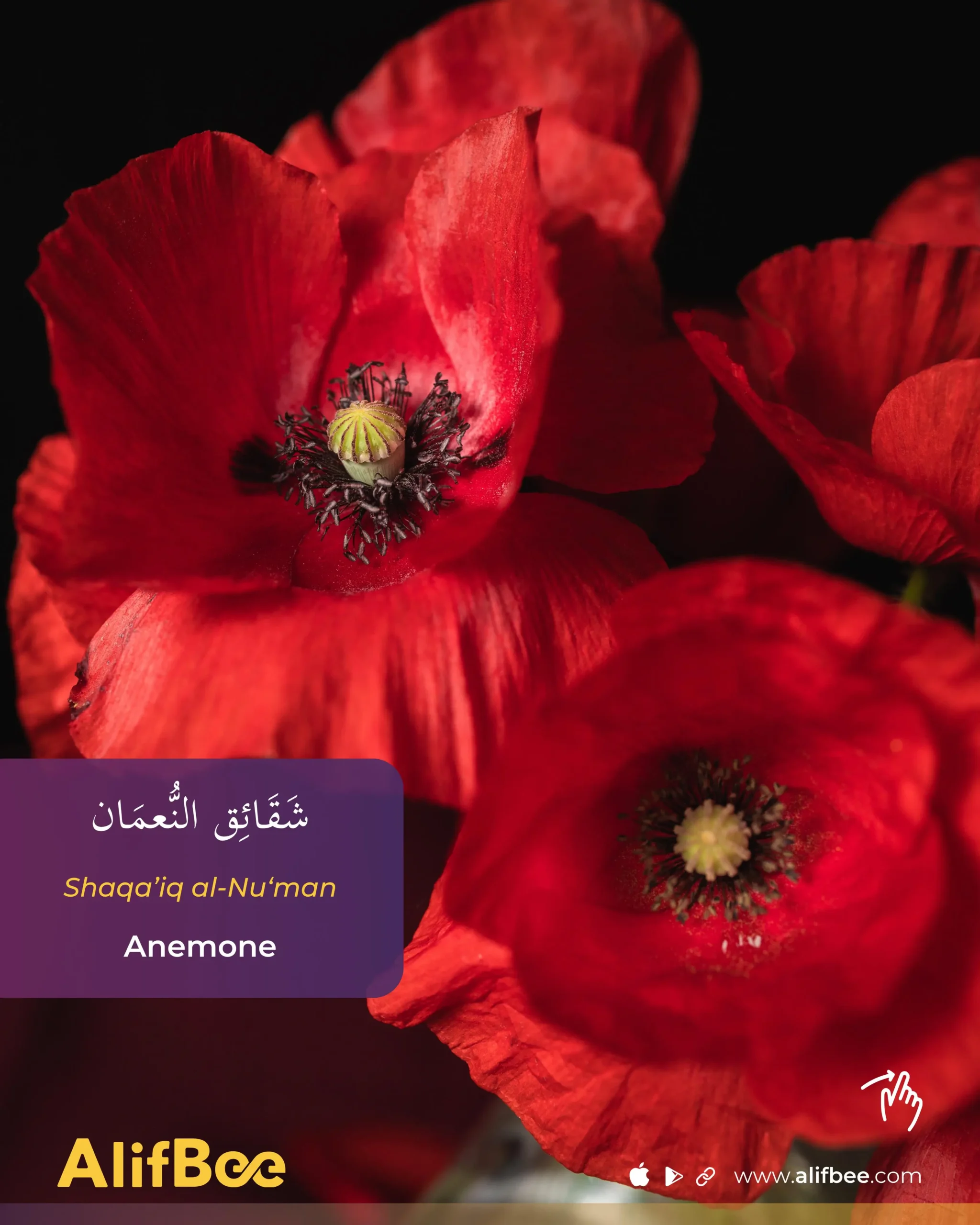
Anemone |
Shaqa’iq al-Nu‘man |
شَقَائِق النُّعمَان |
|
|
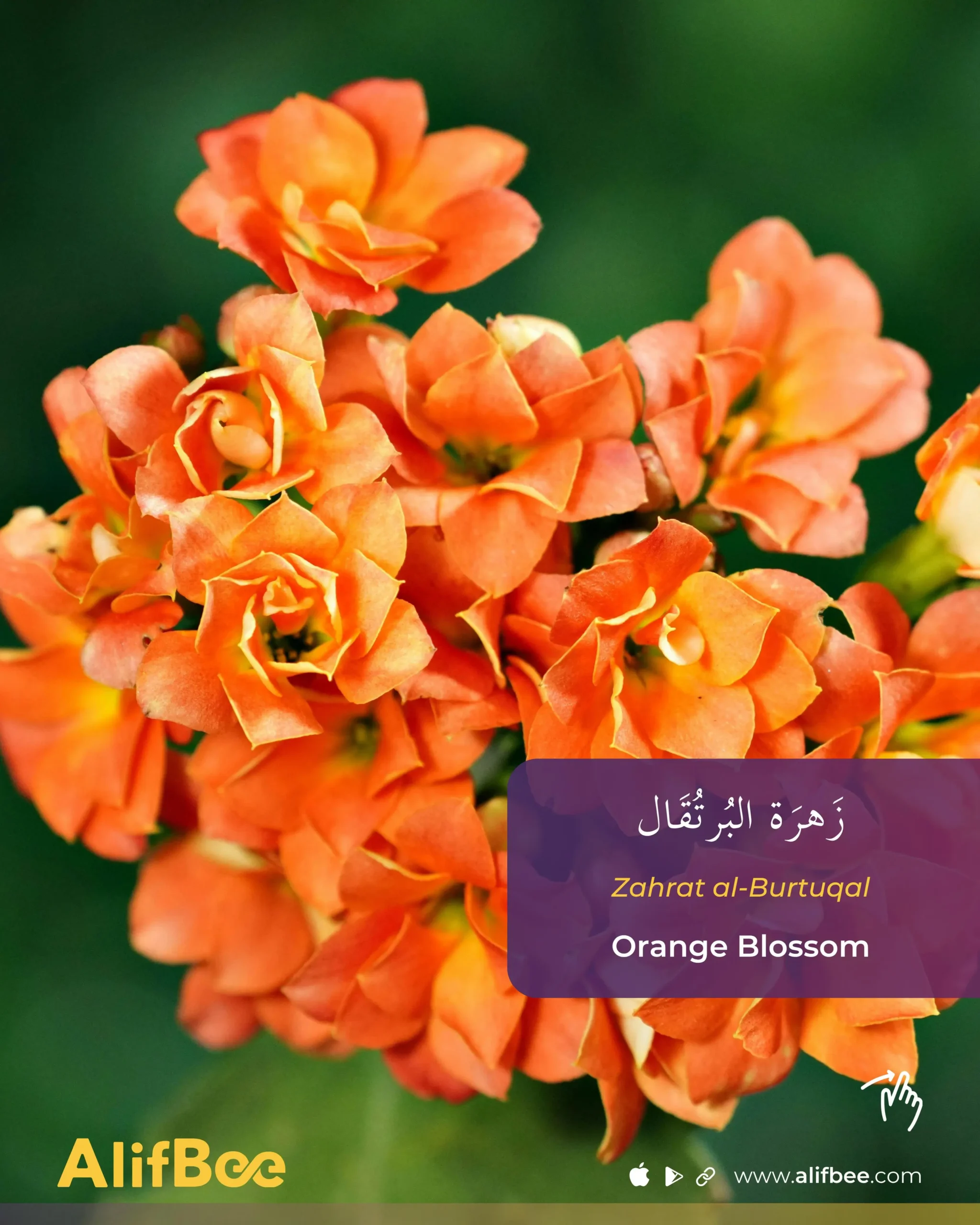
Orange Blossom |
Zahrat al-Burtuqal |
زَهرَة البُرتُقَال |
|
|
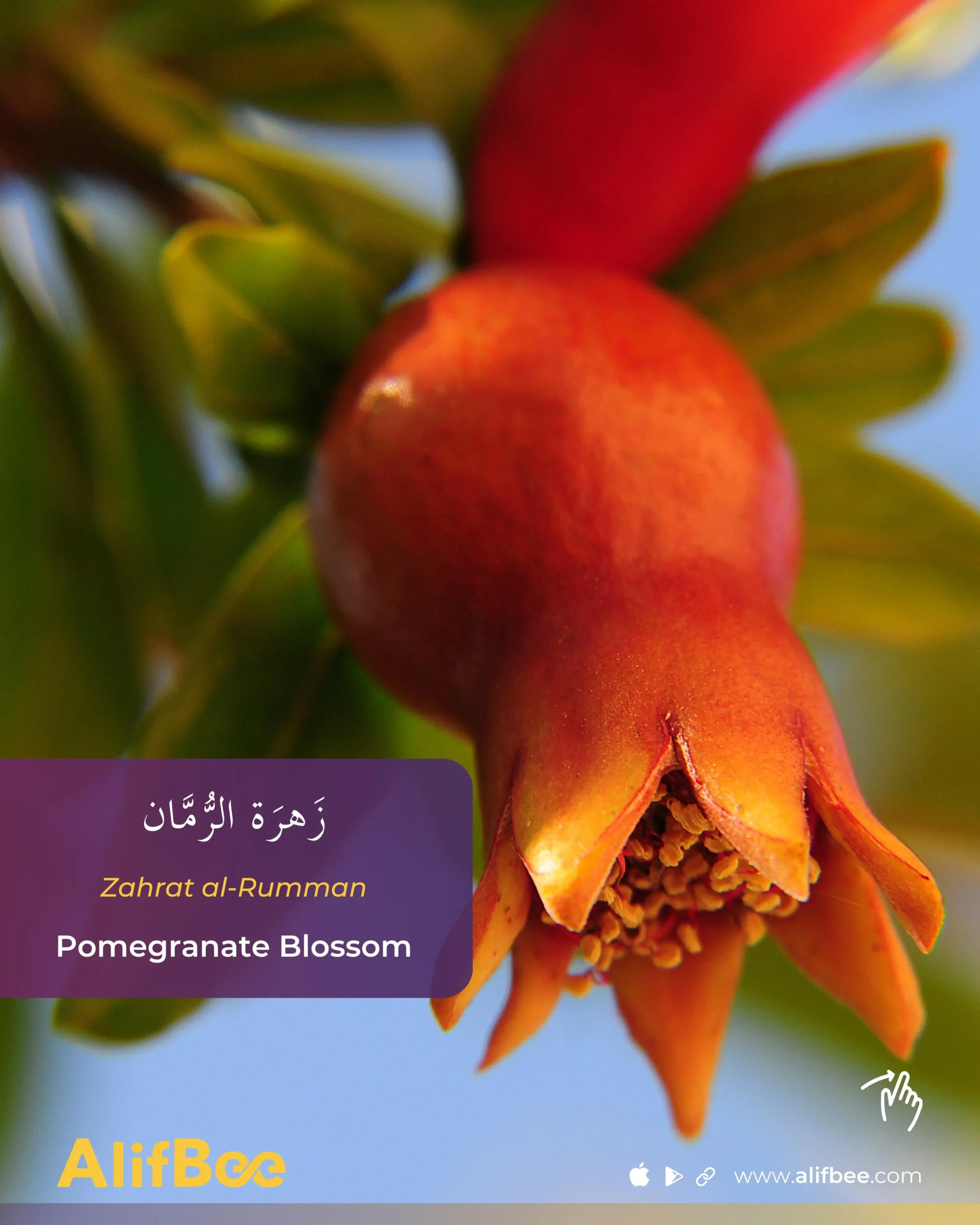
Pomegranate Blossom |
Zahrat al-Rumman |
زَهرَة الرُّمَّان |
|
|
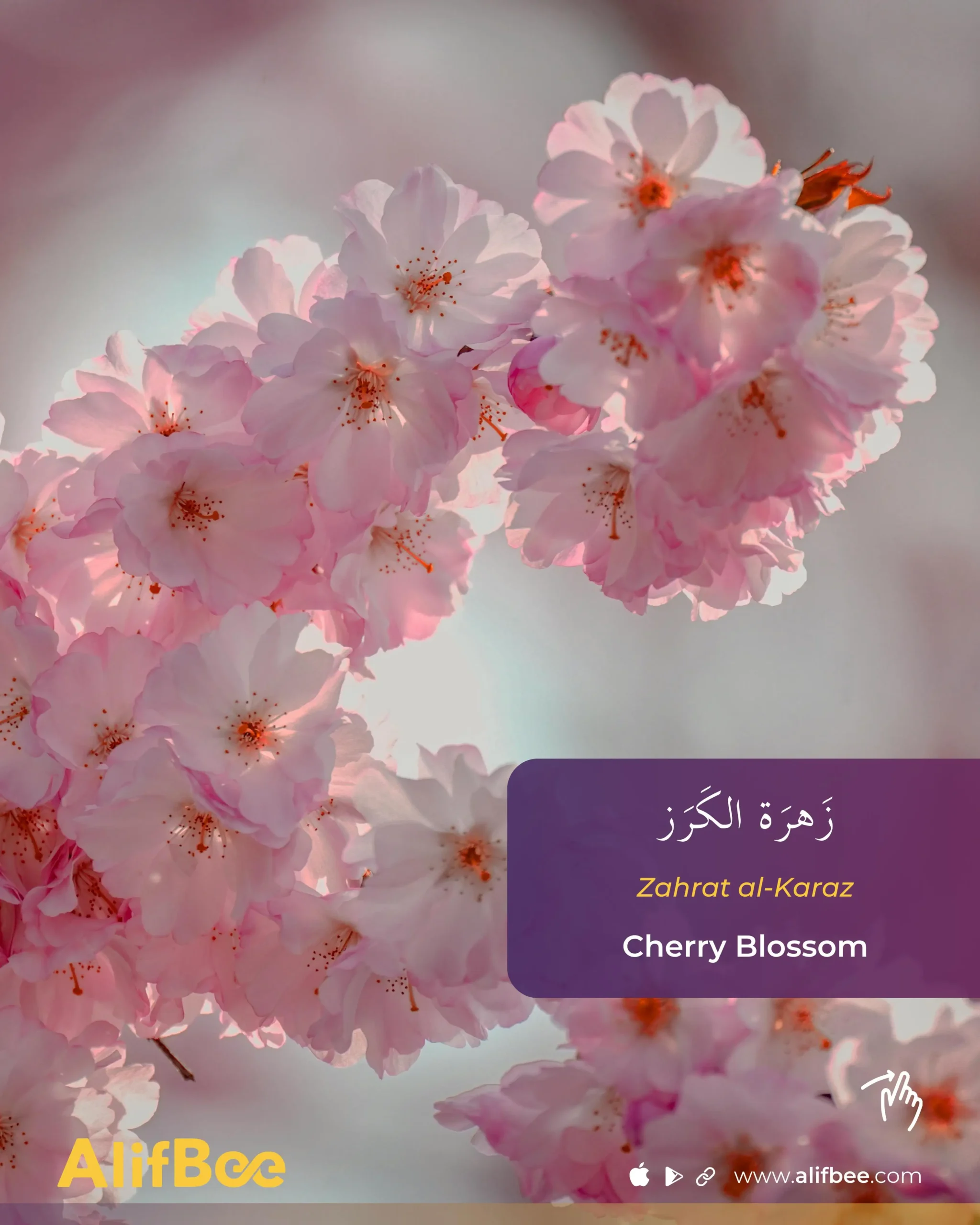
Cherry Blossom |
Zahrat al-Karaz |
زَهرَة الكَرَز |
|
|
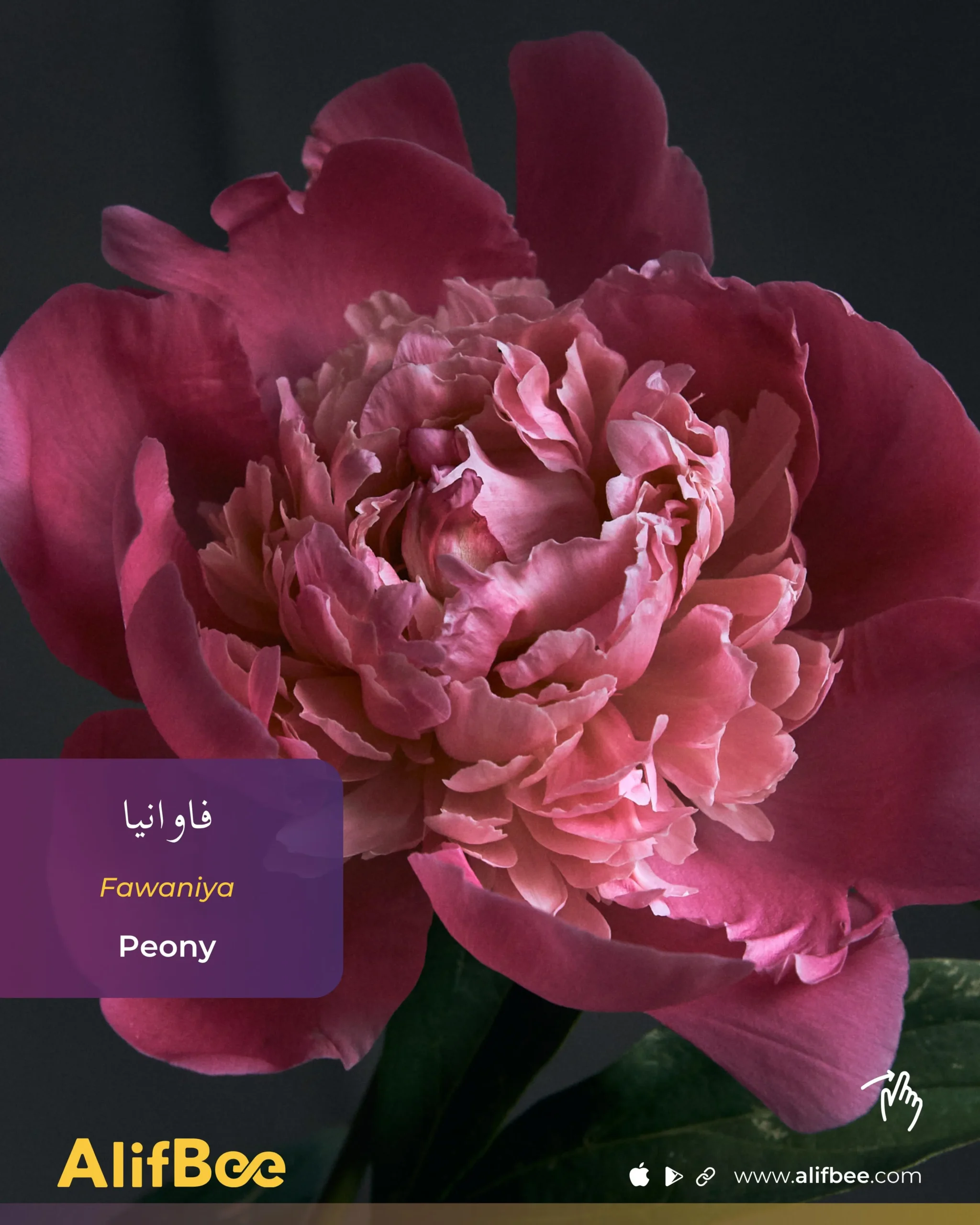
Peony |
Fawaniya |
فاوانيا |
|
|
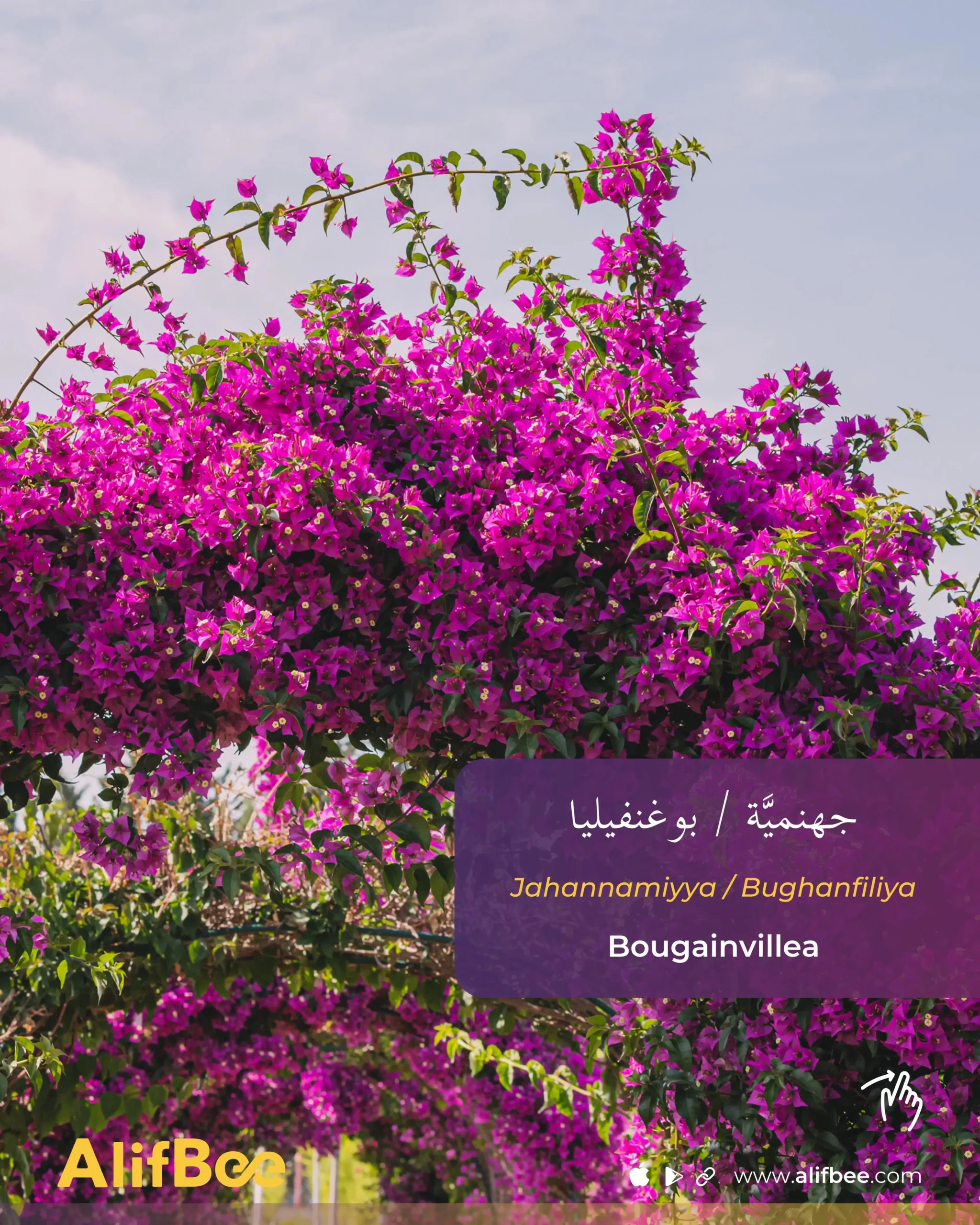
Bougainvillea |
Jahannamiyya / Bughanfiliya |
جهنميَّة / بوغنفيليا |
|
Review Arabic Flower Names

Symbolism of Flowers in Arab Culture

People don’t always agree on symbolism, as it can change by family, city, and era. Still, some meanings are widely repeated in writing, learning materials, and cultural references:
- Rose (ورد) symbolizes love, beauty, and hospitality. In many Arab homes, guests are welcomed with rose water, a fragrant drink made from roses, as a gesture of welcome and respect.
- Damascene rose traditions: In Syria, practices around the Damascene rose were recognized by UNESCO in 2019 as intangible cultural heritage.
- Jasmine (يَاسَمِين): Jasmine is linked to place and identity; with Damascus famously nicknamed the “City of Jasmine.”
- Jasmine in Tunisia: The “Jasmine Revolution” label became common in international media, tied to Tunisia’s national flower.
- Orange blossom (زَهر البُرتُقَال): It is associated with weddings in many traditions; it’s often described as a symbol of virtue, love, and fertility.
- Lotus (زَهرَة اللُّوتس): In ancient Egypt (part of the Arab world’s wider regional history), the lotus was used as a symbol of rebirth because it closes at night and opens again in the morning.
- Hibiscus (كَركَدِيه): It is less symbolic and more a part of daily life. Karkadeh, a red hibiscus drink, is popular in Egypt and Sudan.
Notable Regional Variations of Flower Names in Arabic
Flower names can vary by region, and noticing these differences can be interesting:
- Daisy vs chamomile: In everyday speech, chamomile is usually called بَابونج (Babunaj), while the broader or more formal term أُقحُوان (Uqhuwwan) can refer to chamomile as well as other daisy-like flowers.
- “Zahrat…” Names: Many flower names follow the “زهرة + [flower]” pattern, especially in formal or dictionary-style naming. For example, زهرة البُرتُقَال (Zahrat al-Burtuqal) literally means “orange blossom.”
- Bougainvillea: The plant is called بوغنفيليا (Bughanfiliya) in many places, but in some regions it’s also nicknamed جهنميَّة (Jahannamiyya). Both names refer to the same flower, just reflecting different local preferences.
Final word
Now you know 25 common flower names in Arabic, and you understand how زهرة (Zahra) combines with specific flower names to form phrases like زهرة البُرتُقَال (orange blossom). You also got a glimpse of how regional variations and cultural uses make these names unique and memorable.
Want to remember them fast?
Try writing a “spring flowers” list and quiz yourself for a few minutes each day. Learn five today, five tomorrow. Small, consistent steps lead to big progress.
And if you want to keep learning Arabic while having fun, the AlifBee app can help you expand your vocabulary step by step, with useful words, simple lessons, and an easy, enjoyable learning style.