What are Arabic adverbs (Zarf)?
Main Types of Adverbs in Arabic
Arabic Adverbs of Time ظَرف الزّمان
Arabic adverbs usually describe time, place, manner, degree, or frequency. In traditional Arabic grammar, time and place expressions are often called ظرف (zarf), especially ظرف الزمان and ظرف المكان. Other meanings that English often calls adverbs, such as manner, may be expressed through structures like الحال.
Arabic adverbs help you say when, where, how, and how often something happens. In Arabic, learners usually meet these ideas through words of time and place such as اليوم (today), غدًا (tomorrow), هنا (here), and أمام (in front of).
In this guide, you will learn the main types of Arabic adverbs, how they work in sentences, and where Arabic grammar uses related structures such as الحال instead of a simple English-style “adverb” label.
In Modern Standard Arabic, the term ظرف (zarf) usually refers to a word or expression that gives information about time or place, especially ظرف الزمان and ظرف المكان. These answer questions like when? and where? However, Arabic does not always divide adverbs exactly the way English does. Meanings such as manner, degree, and frequency may appear through other grammatical structures, not only through zarf.
The correct grammatical term for an Arabic adverb is المفعول فيه (Al-Maf’ūl Fīhi).
The zarf answers the questions: When? (time) Or where? (place) and is always in the Accusative Case (منصوب – Manṣūb).
ِArabic dverbs are usually divided into two main types. Understanding these types helps learners recognize how adverbs function in sentences.
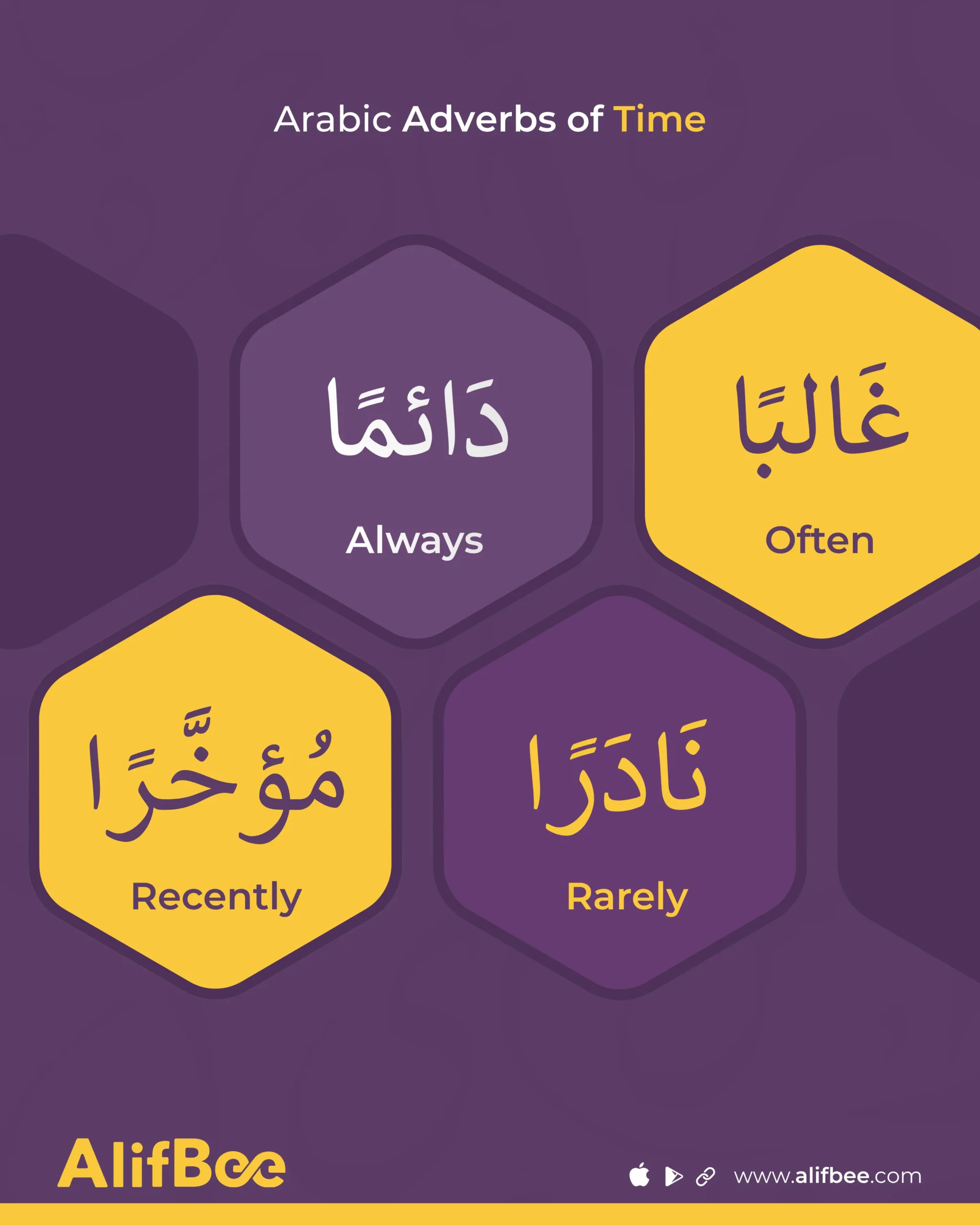
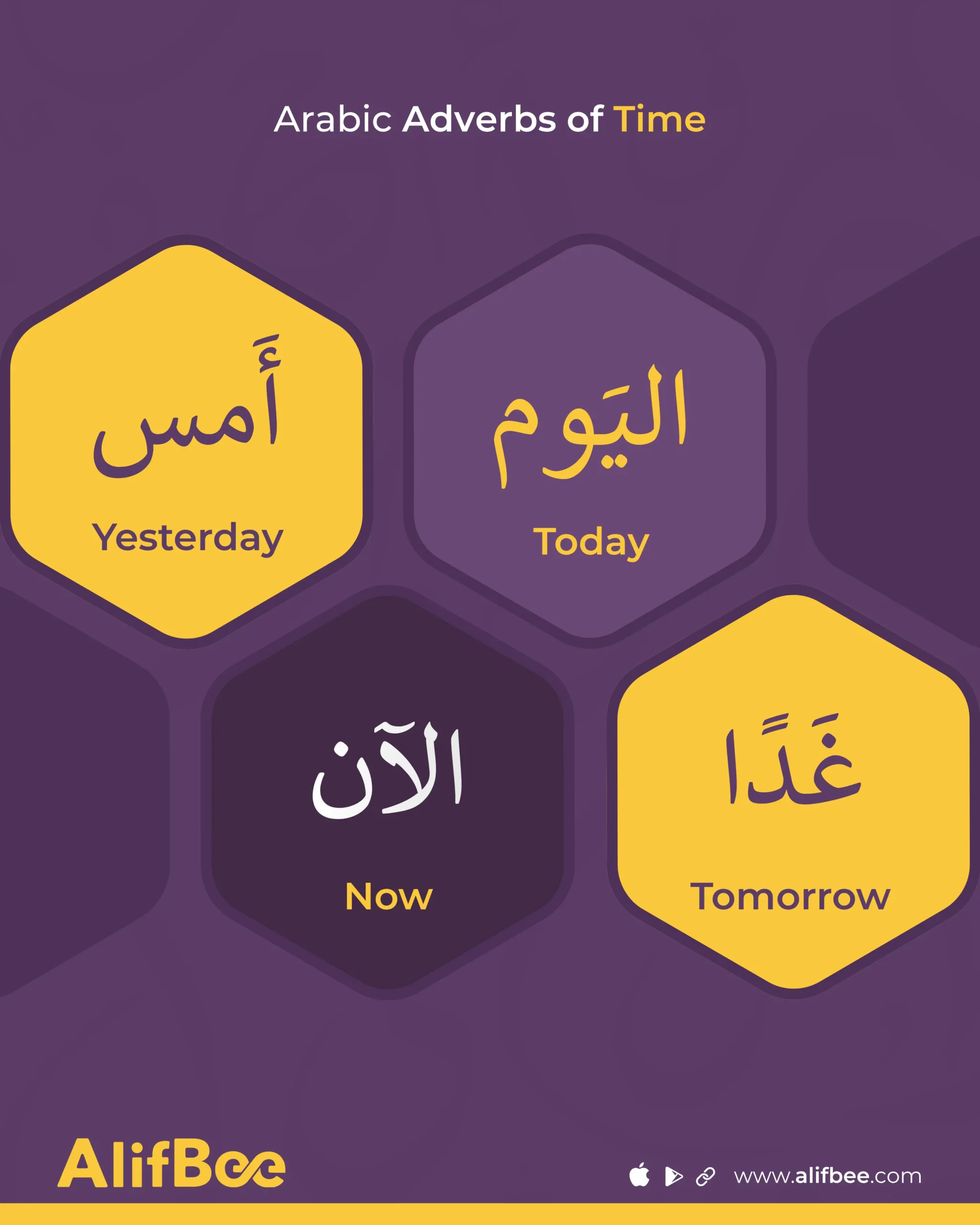
As the name suggests, these adverbs indicate when an action happens. They specify the timing of the action.
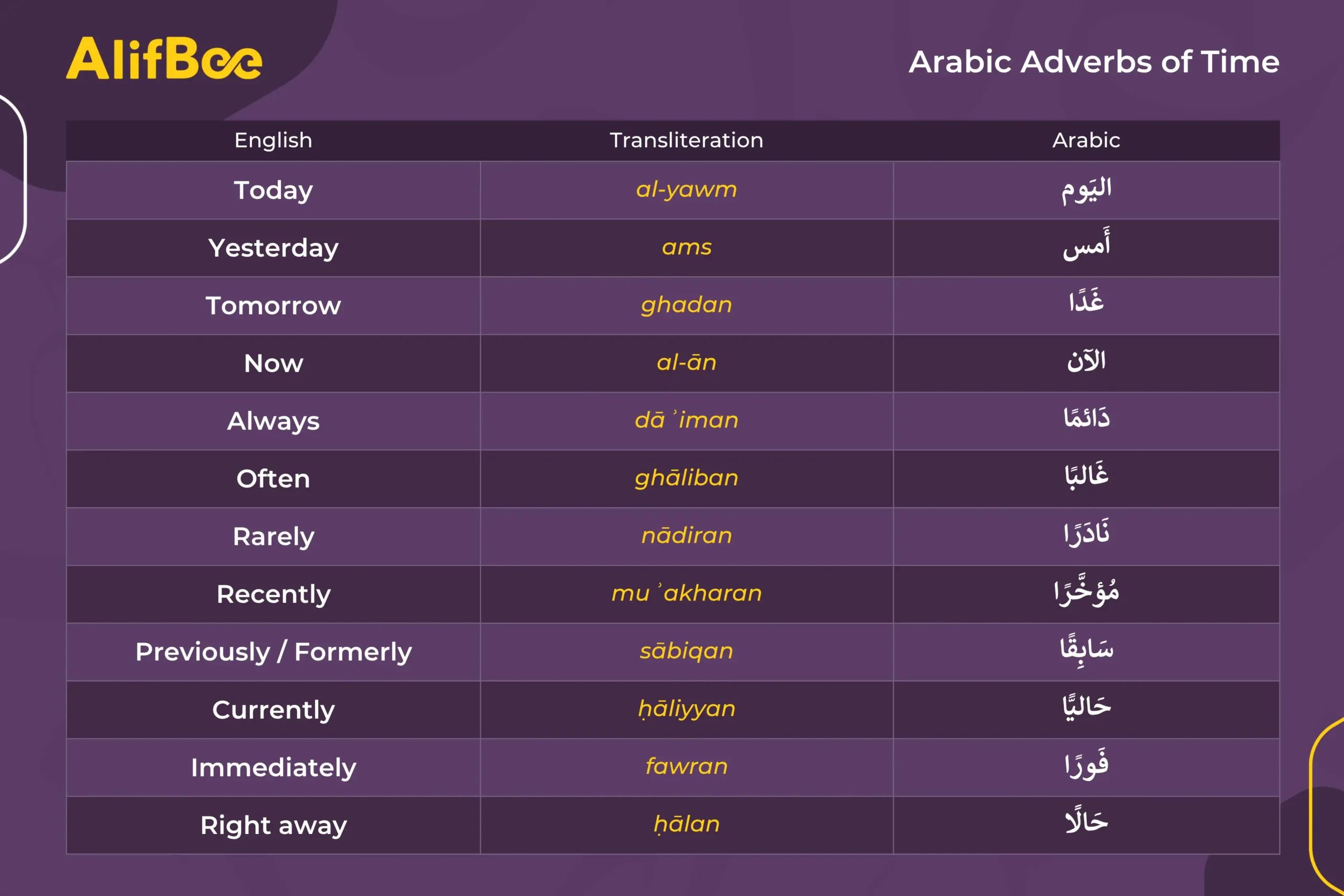
Most common adverbs of time:
today
al-yawm
اليَوم
yesterday
Ams
أَمس
tomorrow
ghadan
غَدًا
now
al-ān
الآن
always
dāʾiman
دَائمًا
often
ghāliban
غَالبًا
recently
muʾakharan
مُؤخَّرًا
rarely
nādiran
نَادِرًا
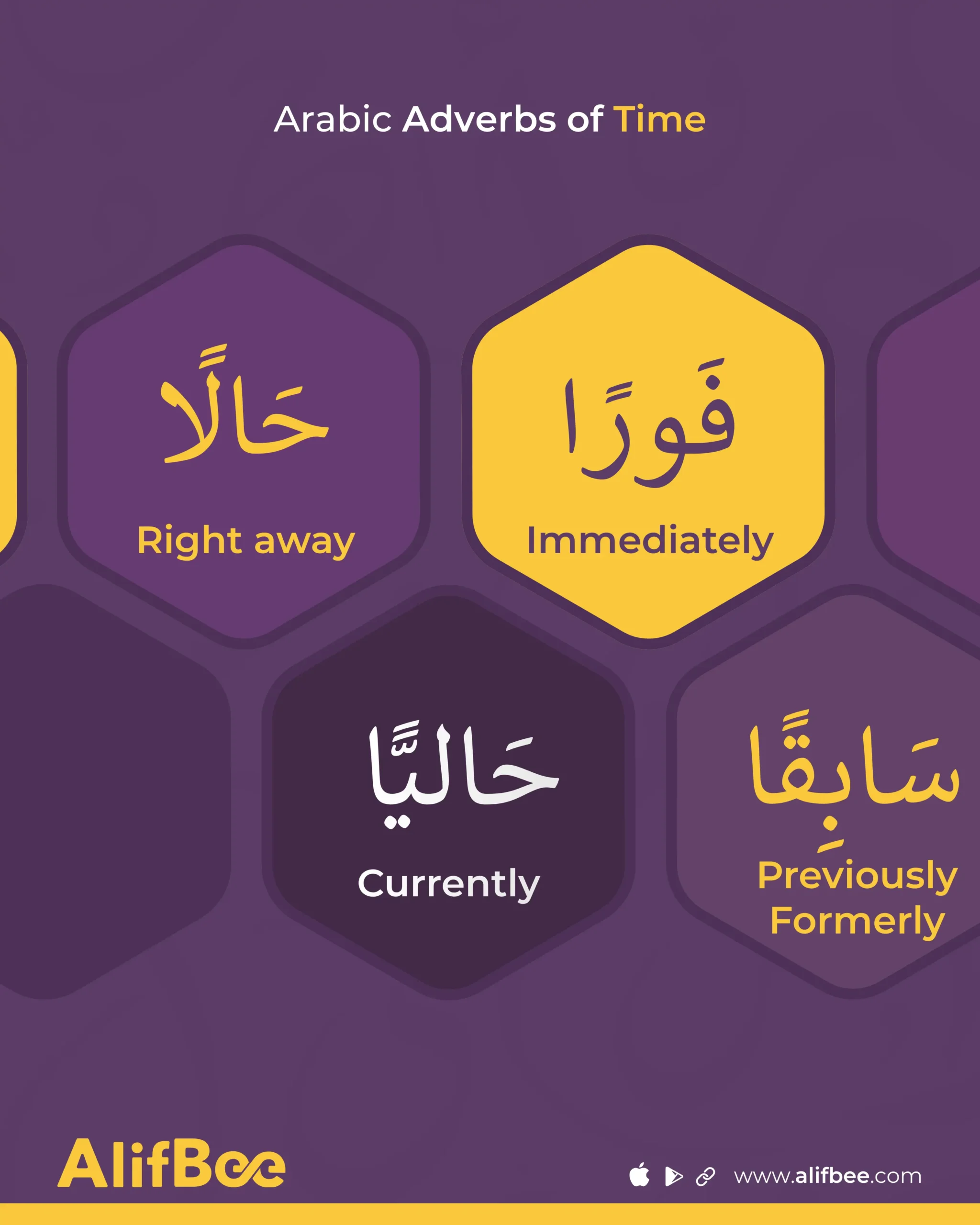
previously / formerly
sābiqan
سَابِقًا
currently
ḥāliyyan
حَاليًّا
immediately
fawran
فَورًا
right away
ḥālan
حَالًا
Here are a few example sentences:
I will travel tomorrow.
Sa’usāfir ghadan
سَأسَافرُ غدًا.
I visited my friend yesterday.
Zurtu ṣadīqī ams
زُرتُ صَدِيقِي أَمس.
I always study Arabic.
Adrusu al-ʿarabiyyata dāʾiman
أَدرُسُ العَربيَّةَ دَائمًا.
The train arrived at night.
waṣala al-qiṭāru laylan
وصلَ القِطَارُ لَيلًا.
I woke up in the morning.
istayqaẓtu ṣabāḥan
استَيقَظتُ صَبَاحًا.
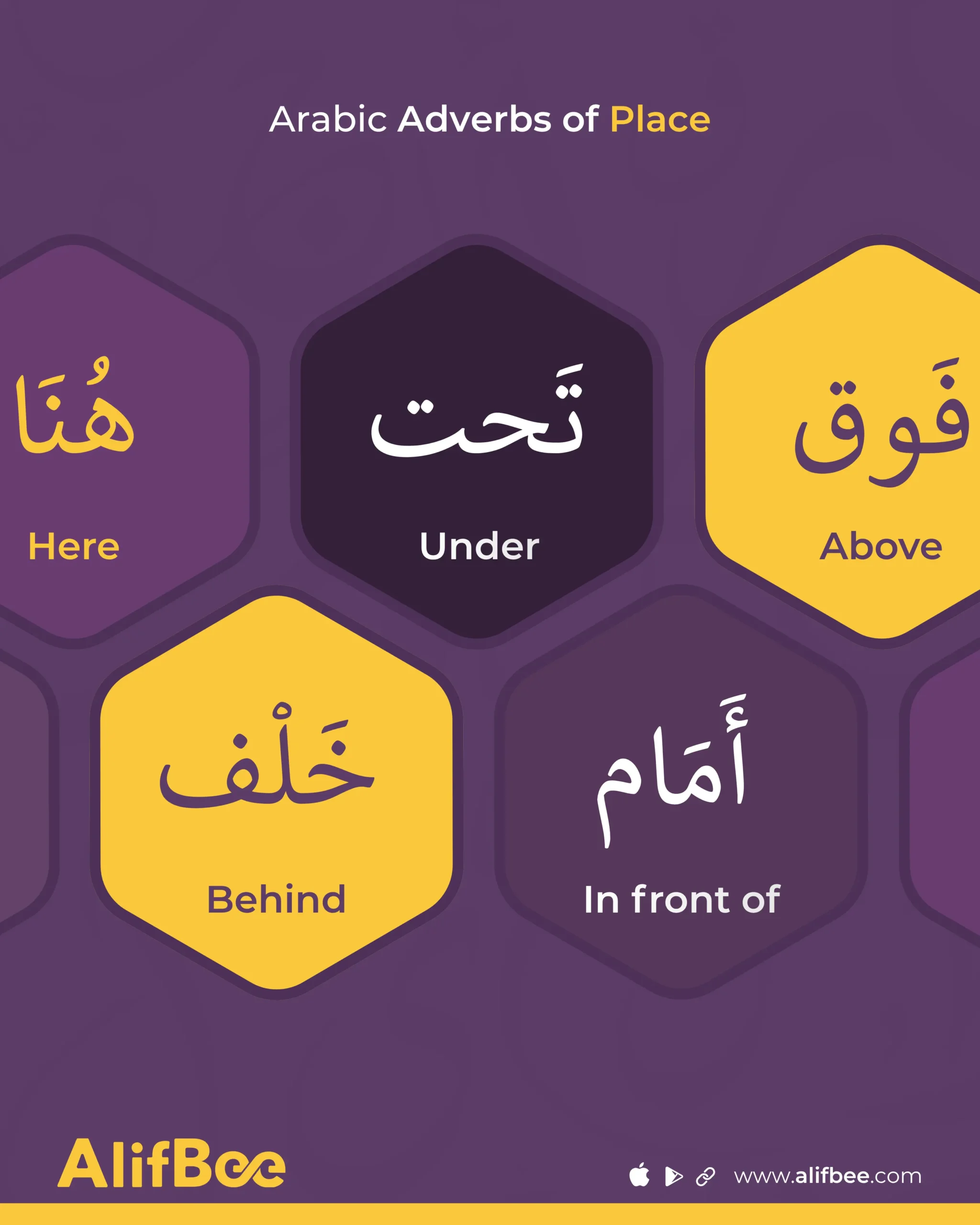
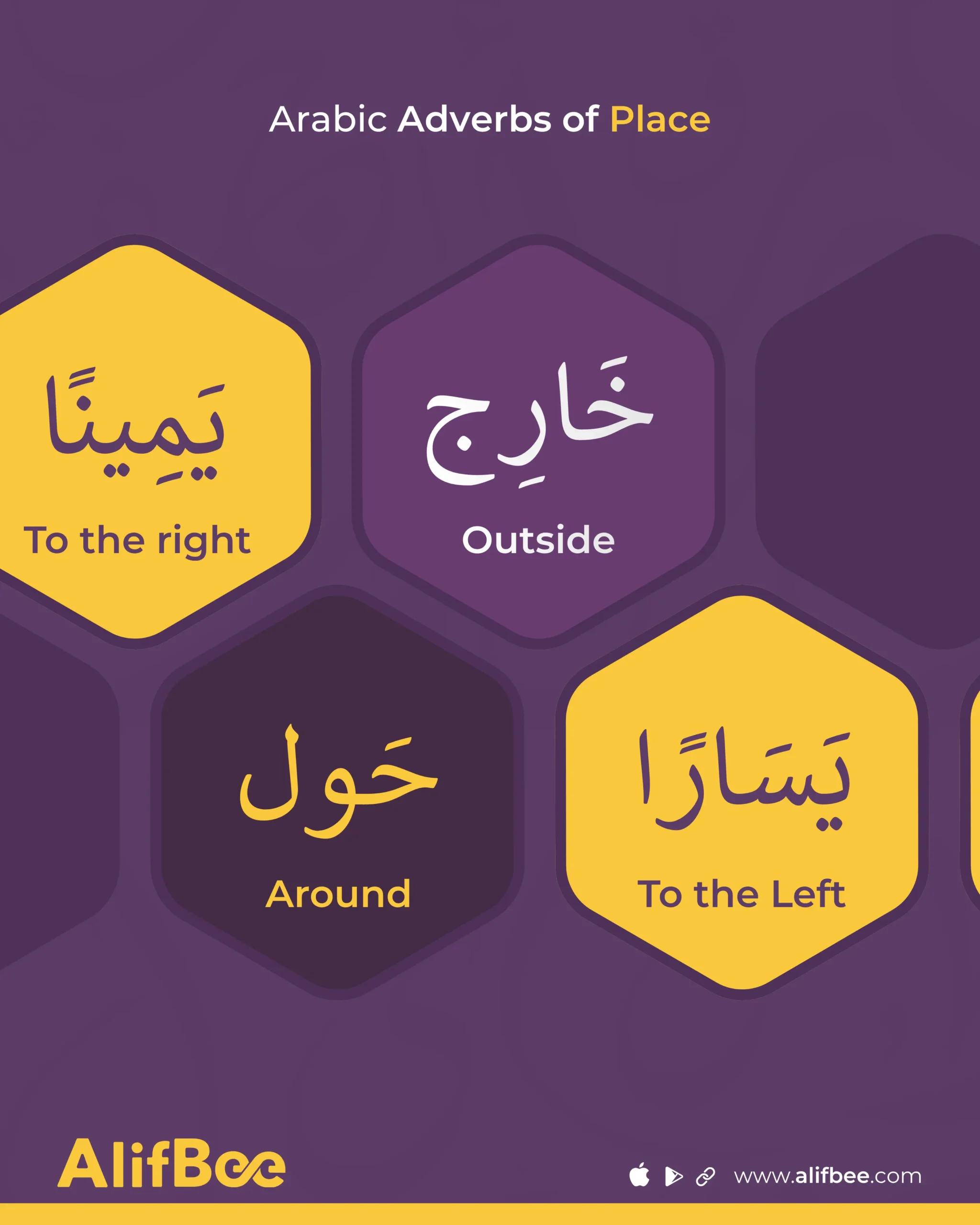
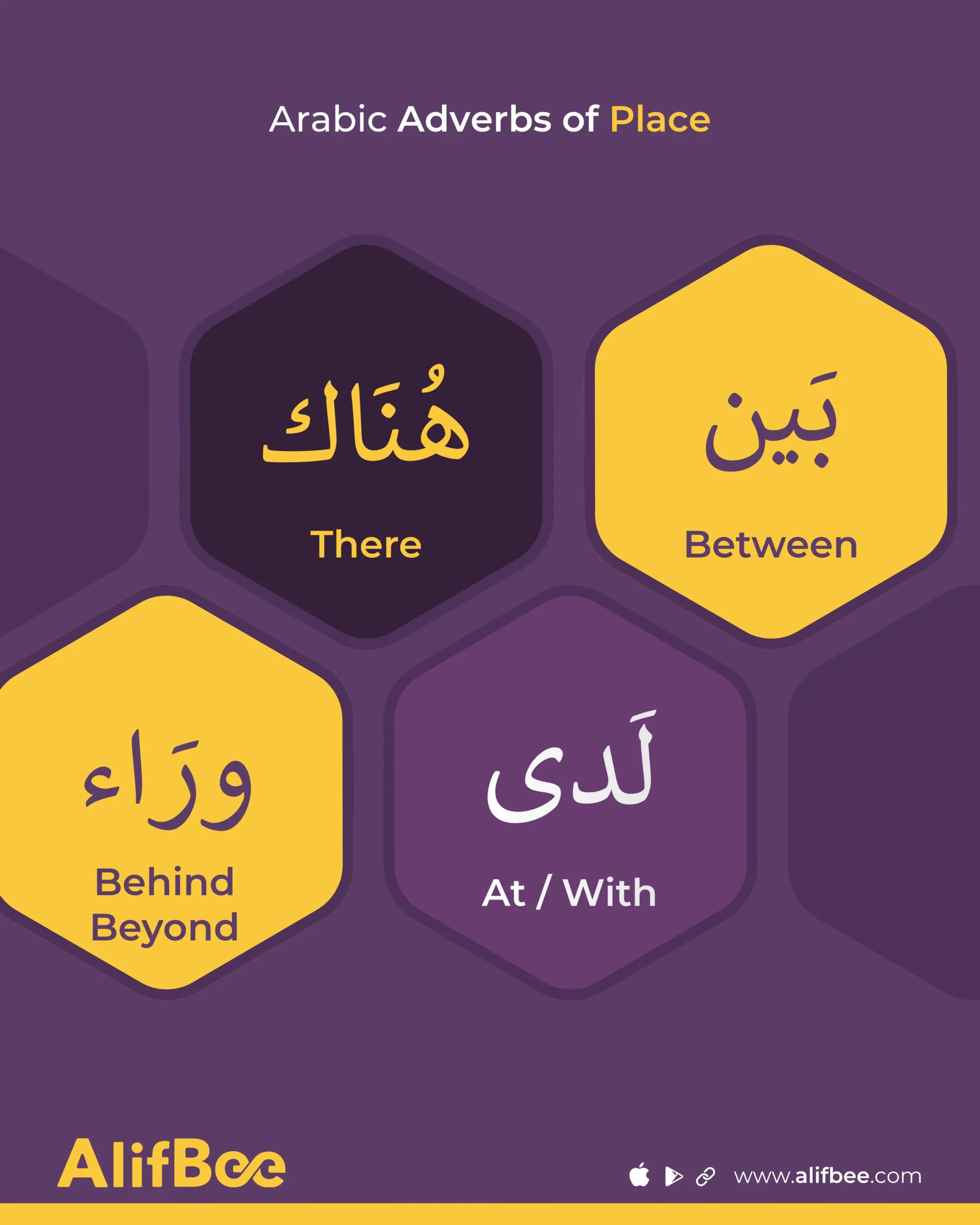
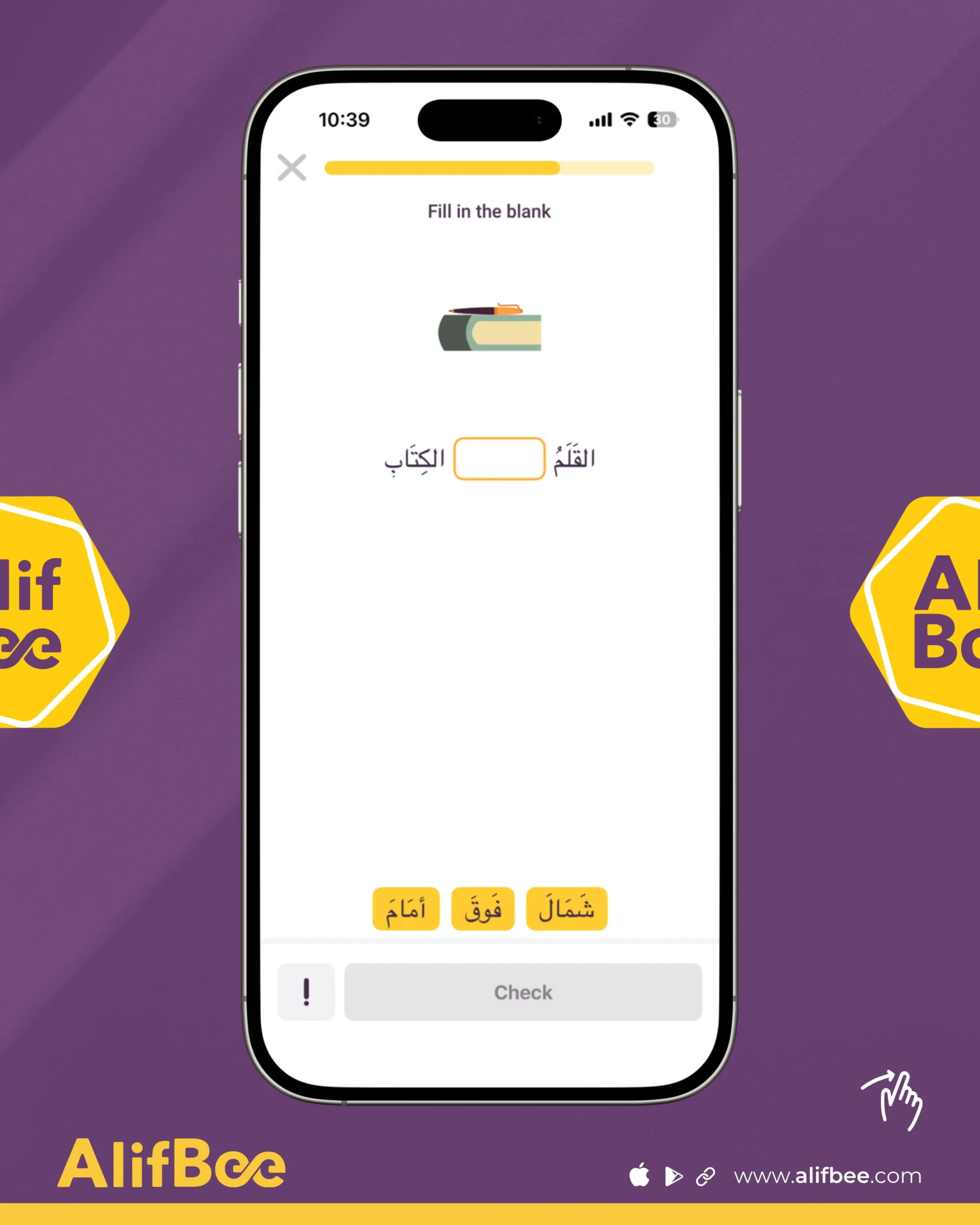
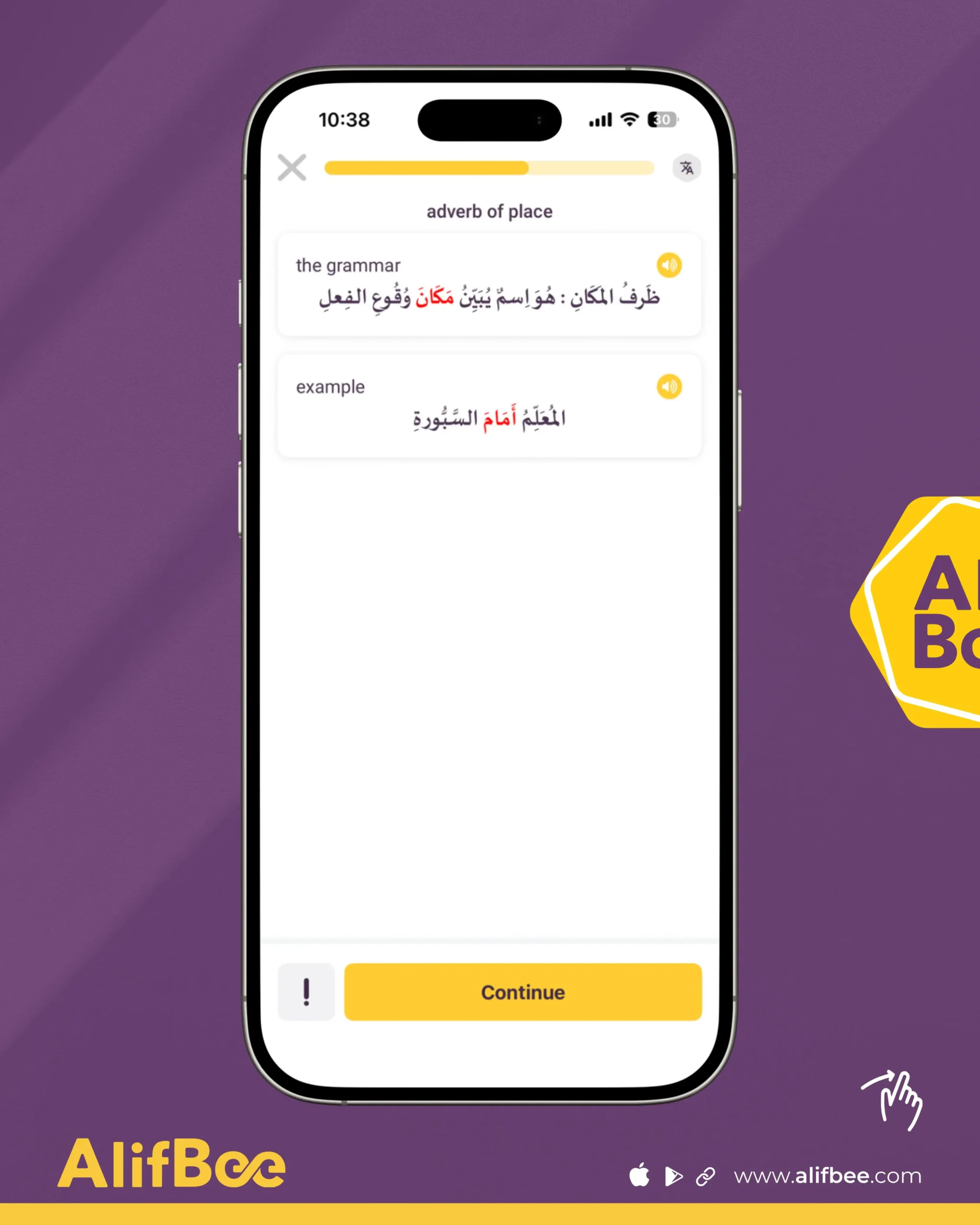
Arabic adverbs of place (ظروف المكان) indicate where an action happens, answering the question: “Where?” They add a sense of location to the sentence.
Most commonly used adverbs of place:
here
hunā
هُنَا
there
hunāka
هُنَاك
above
fawq
فَوق
under
taḥt
تَحت
in front of
amām
أَمَام
behind
khalf
خَلْف
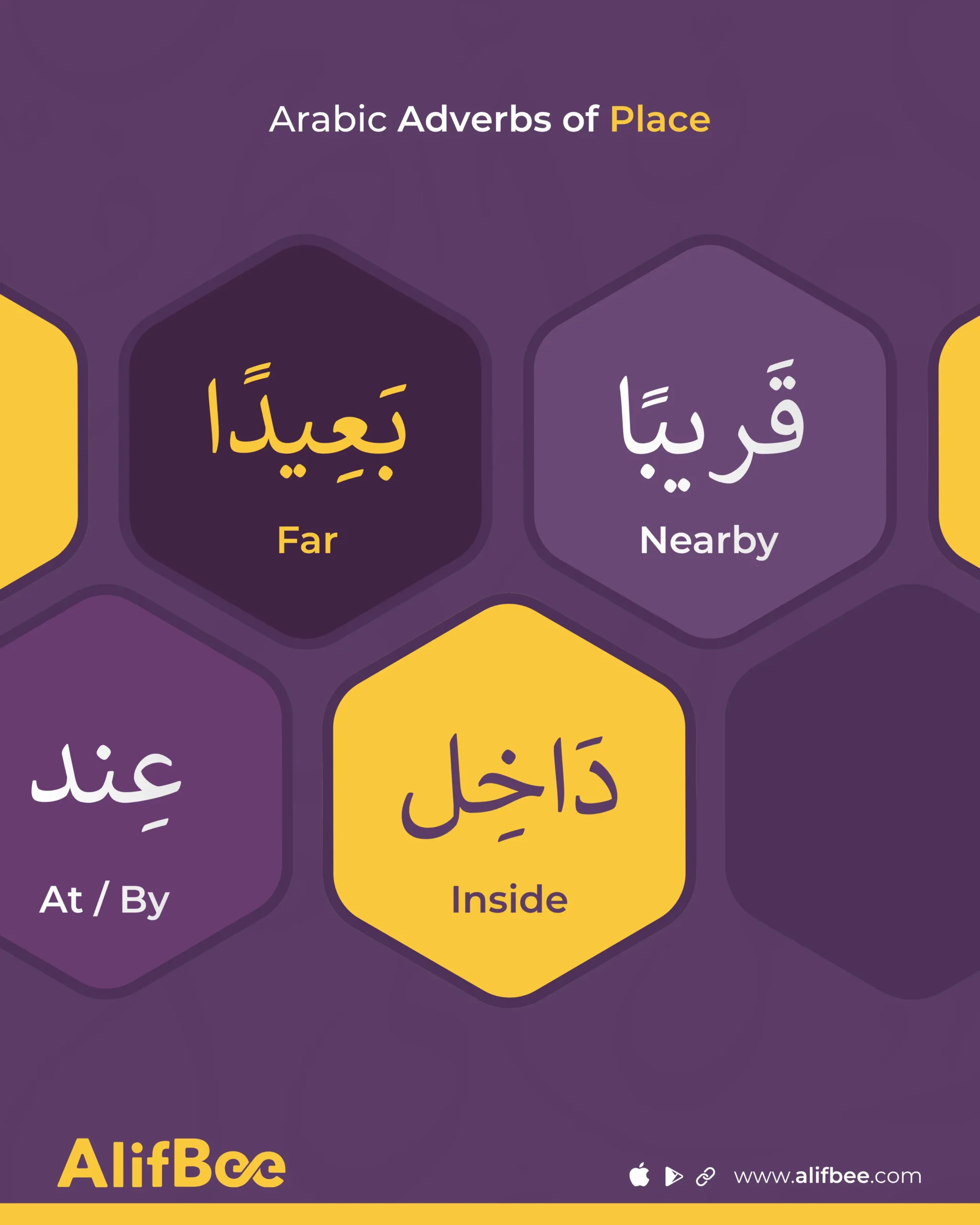
nearby
qarīban
قَريبًا
far
baʿīdan
بَعِيدًا
inside
dākhil
دَاخِل
outside
khārij
خَارِج
to the right
yamīnan
يَمِينًا
to the left
yasāran
يَسَارًا
around
ḥawl
حَول
between
bayna
بَين
at/by
ʿinda
عِند
at/with
ladā
لَدى
behind/beyond
warāʾ
ورَاء
Here are a few example sentences:
The child is sitting here.
yajlisu Al-ṭiflu hunā
يَجلِسُ الطّفلُ هُنَا.
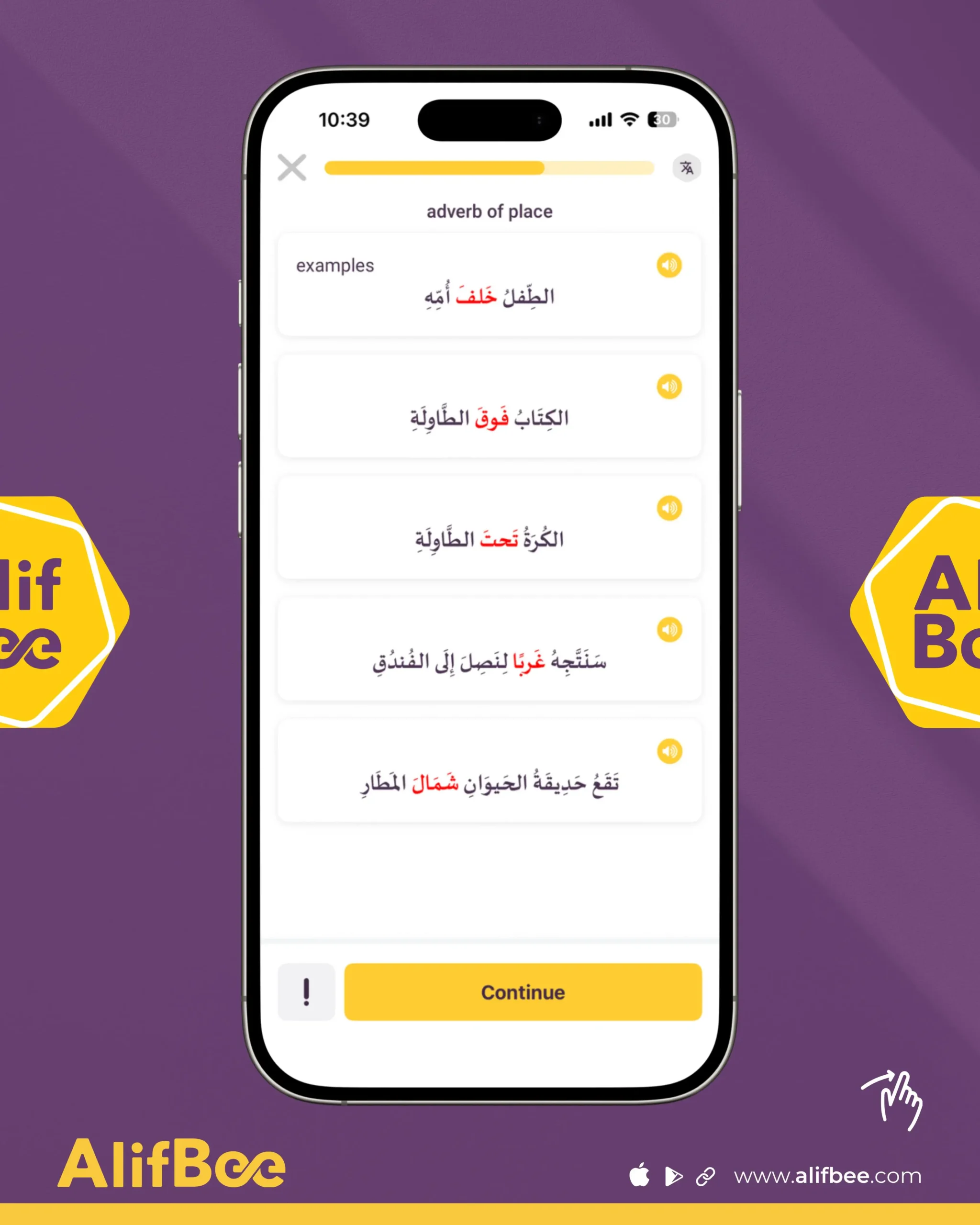
The book is above the table.
Al-kitābu fawqa al-ṭāwila
الكِتَابُ فَوقَ الطَّاولَة.
The man stood in front of the door.
Waqafa al-rajulu amāma al-bāb
وقَفَ الرَّجلُ أَمامَ البَاب.
The student is standing there.
yaqifu aṭ-ṭālibu hunāk
يَقِفُ الطّالِبُ هُنَاك.
The car is behind the house.
as-sayyāratu khalfa al-bayt
السَّيَّارةُ خَلفَ البَيت.
The cat is under the chair.
al-qiṭṭatu taḥta al-kursī
القِطّةُ تَحتَ الكُرسيّ.
Whereas English adverbs are divided into degree, manner, and frequency, Arabic uses more specific terms for these types of adverbs.
Learning these terms and their differences is key to understanding how Arabic adverbs function in sentences.
The Arabic ḥāl manṣūb is equivalent to the English adverb of manner, describing the state or way in which an action occurs. It usually comes in the accusative case, as indicated by its name, “manṣūb.”
Common Arabic words used as adverbs of manner:
quickly
sariʿan
سَرِيعًا
slowly
bibuṭ’
ببطءٍ
well
jayyidan
جَيّدًا
calmly / quietly
bihudū’
بِهُدُوءٍ
publicly / openly
ʿalāniyatan
عَلانيّةً
secretly
sirran
سِرًّا
suddenly
faj’atan
فَجأةً
together
maʿan
مَعًا
directly
mubāsharatan
مُبَاشَرةً
Here are a few example sentences:
The man came quickly.
Jā’a ar-rajulu musriʿan
جَاءَ الرَّجلُ مُسرِعًا.
The child left crying.
Kharaja aṭ-ṭiflu bākian
خَرجَ الطِّفلُ بَاكيًا.
The child laughed happily.
ḍaḥika aṭ-ṭiflu saʿīdan
ضَحِكَ الطِّفلُ سَعيدًا.
The student answered well.
ajāba aṭ-ṭālibu jayyidan
أجابَ الطّالبُ جَيدًَا.
We went home directly.
dhahabnā ilā al-bayti mubāsharatan
ذَهَبنَا إلى البَيت مُباشَرَة
He opened the door suddenly.
fataḥa al-bāba faj’atan
فتحَ البَابَ فَجأَةً
Arabic usually uses a structure called “The substitute of the absolute object ” (نائب المفعول المطلق) to express degree and intensity.
Common examples include:
a lot / greatly
kathīran
كَثِيرًا
a little / slightly
qalīlan
قَلِيلًا
very / extremely
jiddan
جِدًّا
Here are a few example sentences:
I love reading a lot.
uḥibbu al-qirāʾata kathīran
أُحبُّ القِرَاءَةَ كَثيرًا
I got a little tired.
taʿibtu qalīlan
تَعِبتُ قَلِيلًا
This book is very useful.
hādhā al-kitābu mufīdun jiddan
هَذَا الكِتَابُ مُفِيدٌ جِدًّا
Some adverbs of time in Arabic (ظروف الزّمان) function like frequency adverbs in English.
However, it is important to note that while Arabic adverbs of time generally indicate when an action occurs, some also express the frequency or regularity of the action, as do frequency adverbs in English.
Common examples include:
always
dāʾiman
دَائِمًا
rarely
nādiran
نَادِرًا
often / usually
ghāliban
غَالِبًا
sometimes
aḥyānan
أَحيَانًا
Here are a few example sentences:
I often visit my friend.
azūru ṣadīqatī ghāliban
أَزورُ صَدِيقَتِي غَالِبًا
I always drink coffee in the morning.
ashrabu al-qahwata ṣabāḥan dāʾiman
أَشرَبُ القَهوةَ صَبَاحًا دَائِمًا
Our friend rarely visits us.
yazūrunā ṣadīqunā nādiran
يَزُورُنا صَديقُنا نَادِرًا
I go to the park sometimes
akhruju ilā al-ḥadīqah aḥyānan
أَخرُجُ إلى الحَدِيقَةِ أَحيَانًا
When it comes to becoming fluent in any language, not just Arabic, one factor makes all the difference: practice.
Although memorizing the meanings of words and understanding grammatical structures are very important, you will notice a big improvement in your progress when you practice them in context rather than memorizing rules alone.
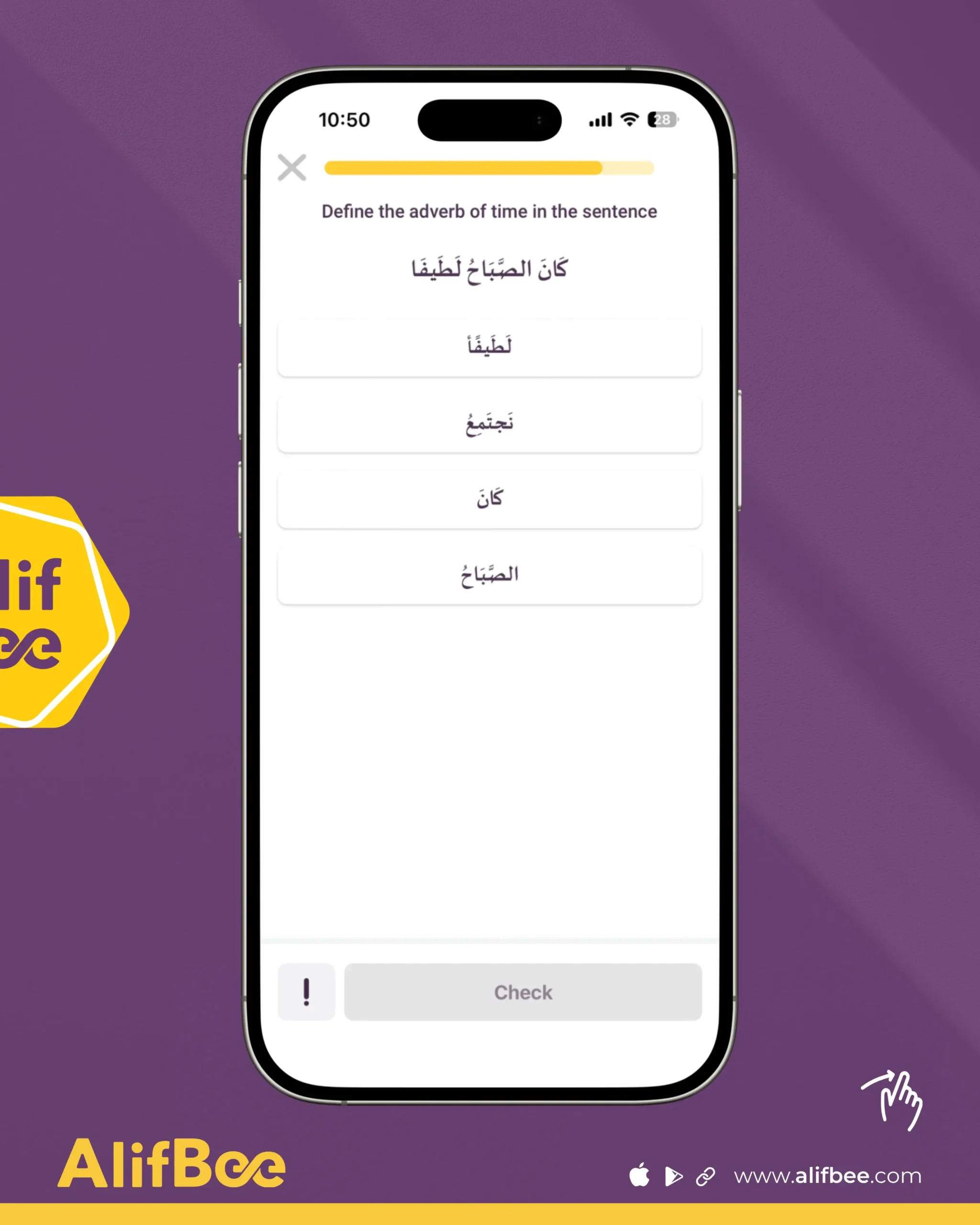
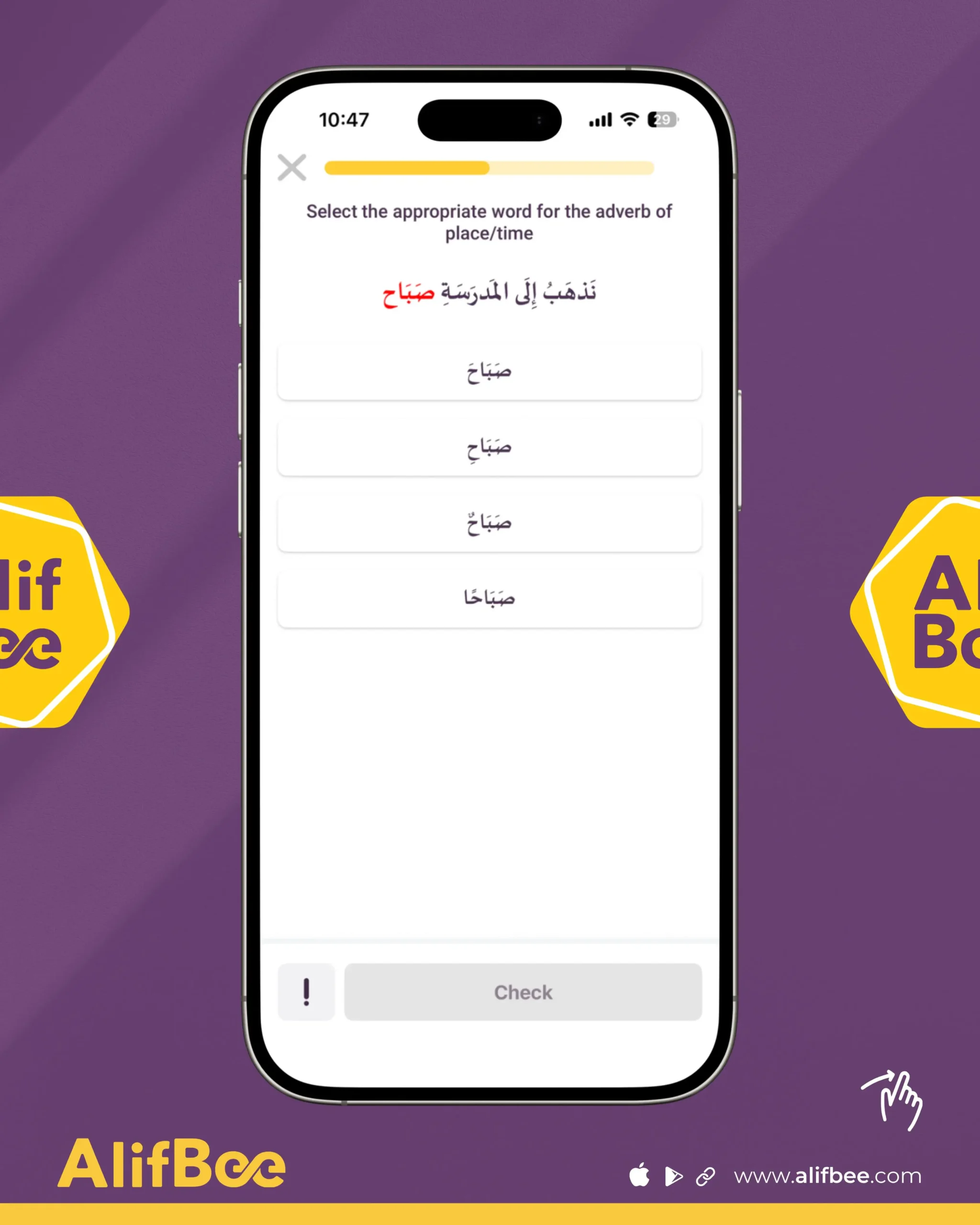
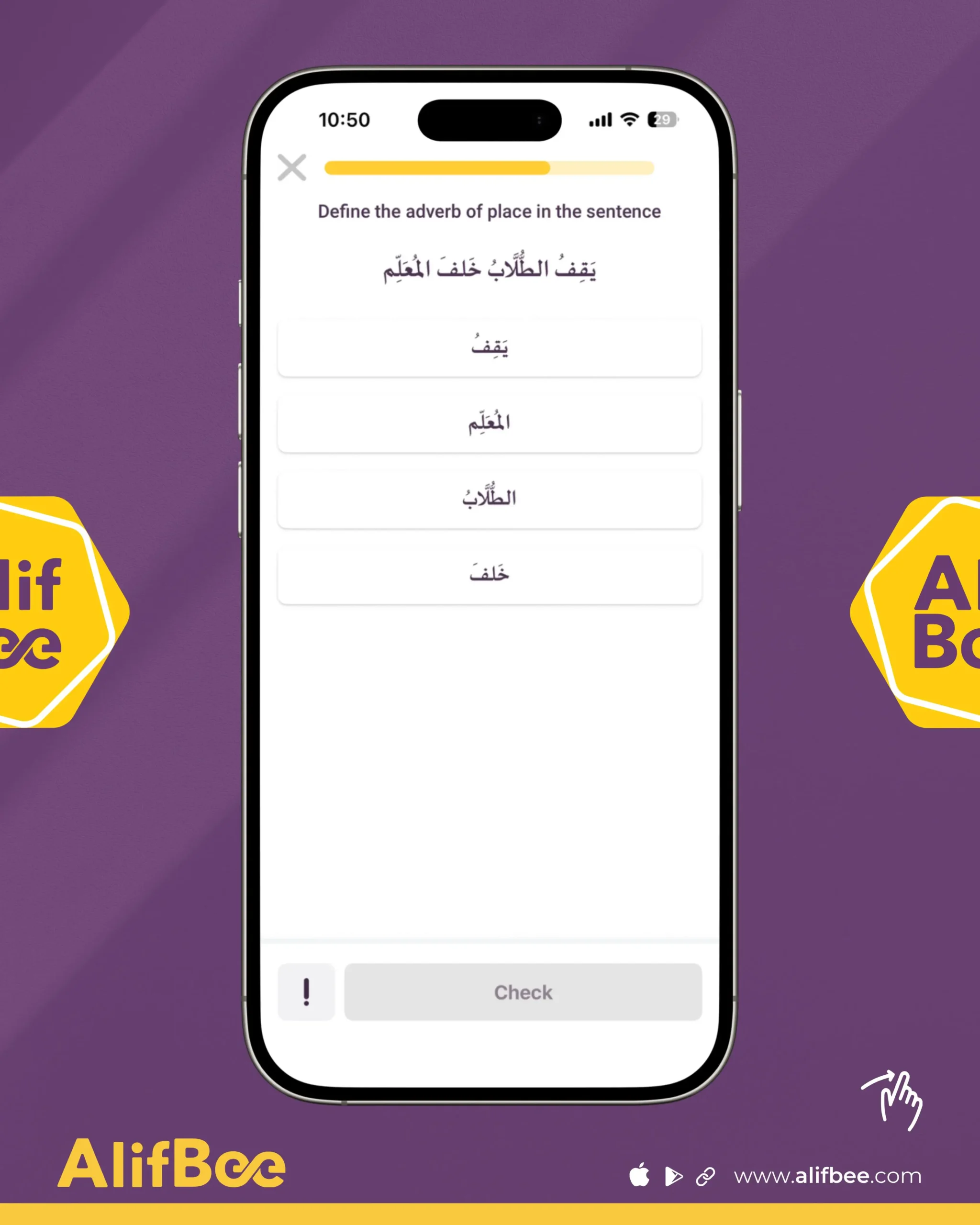
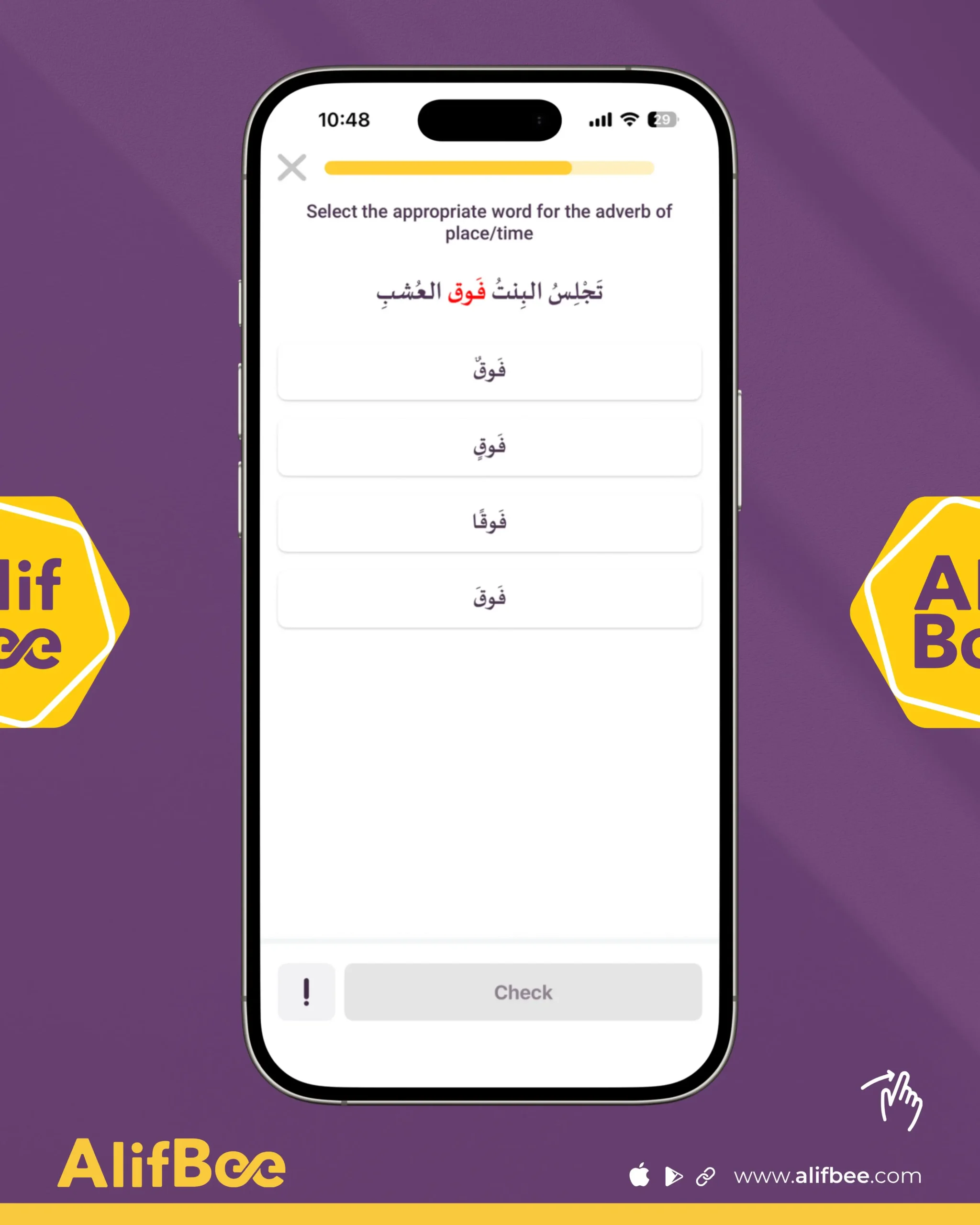
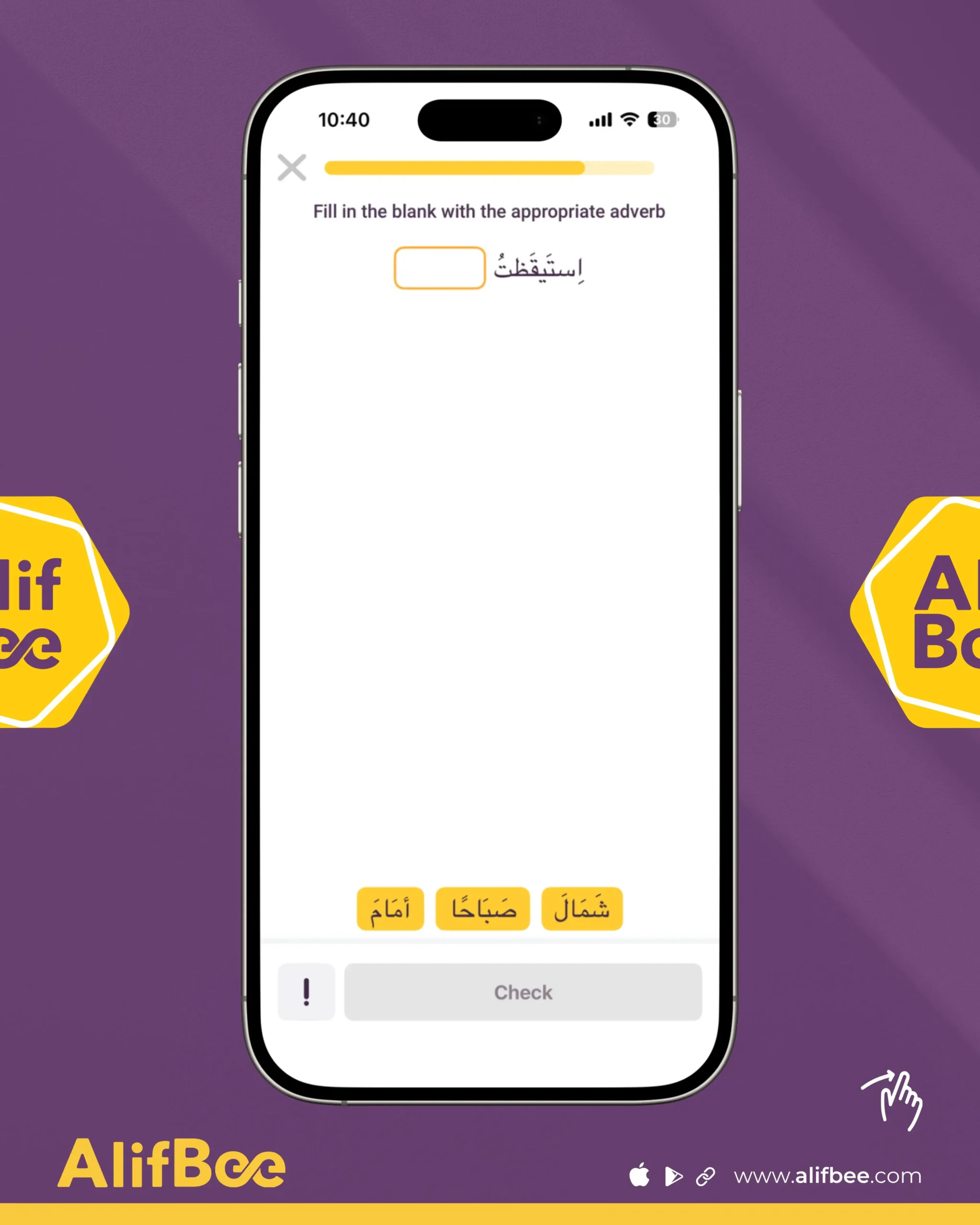
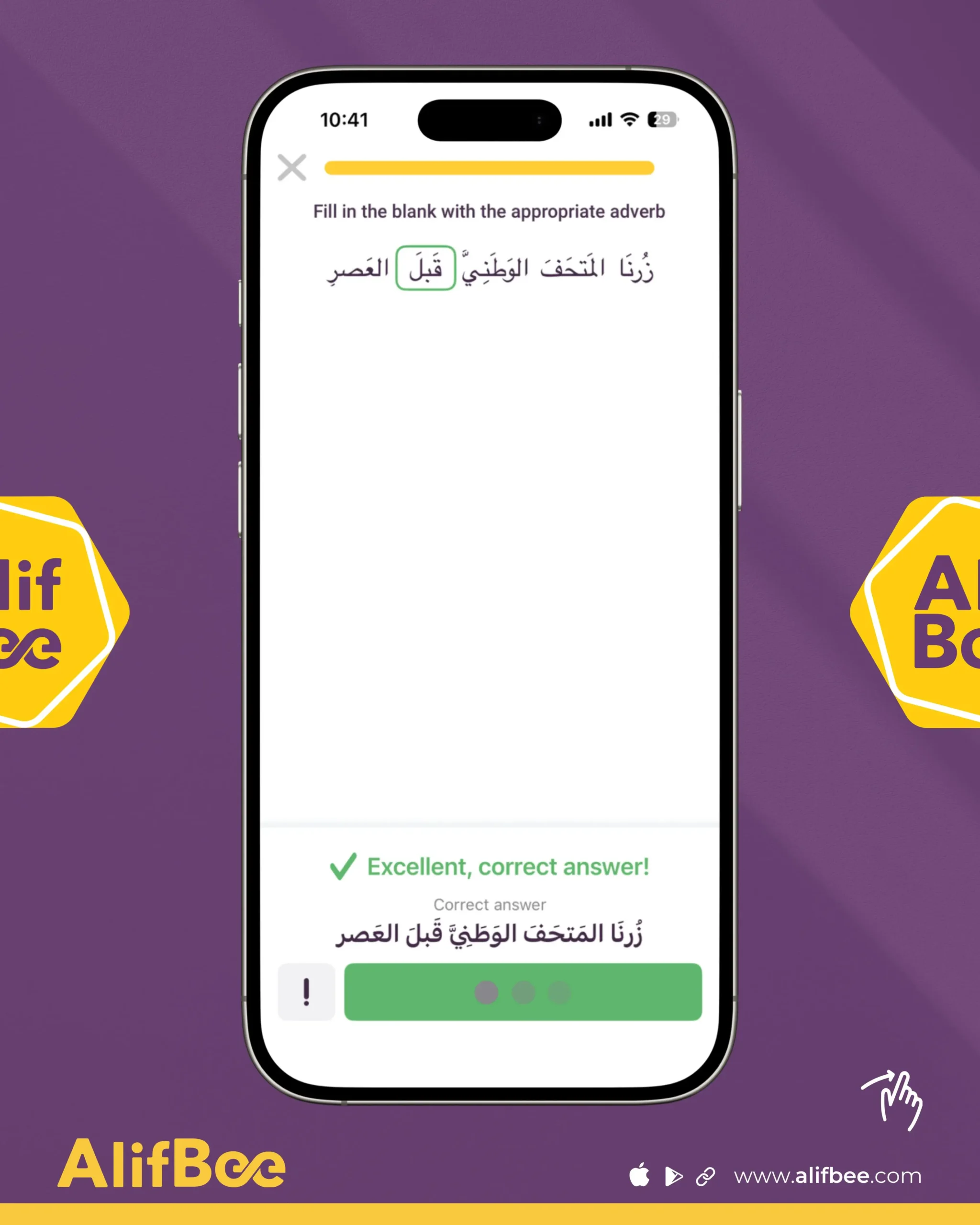
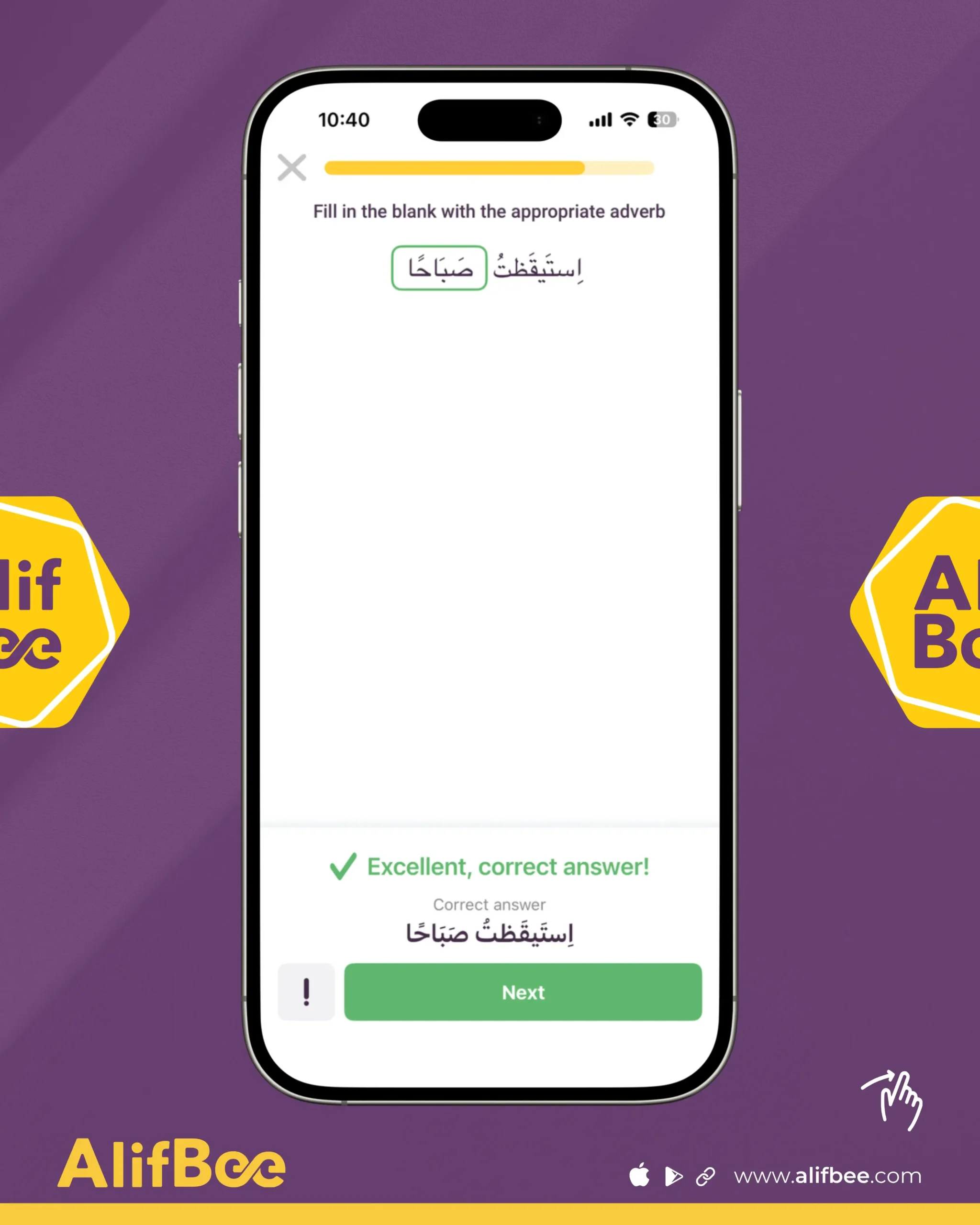
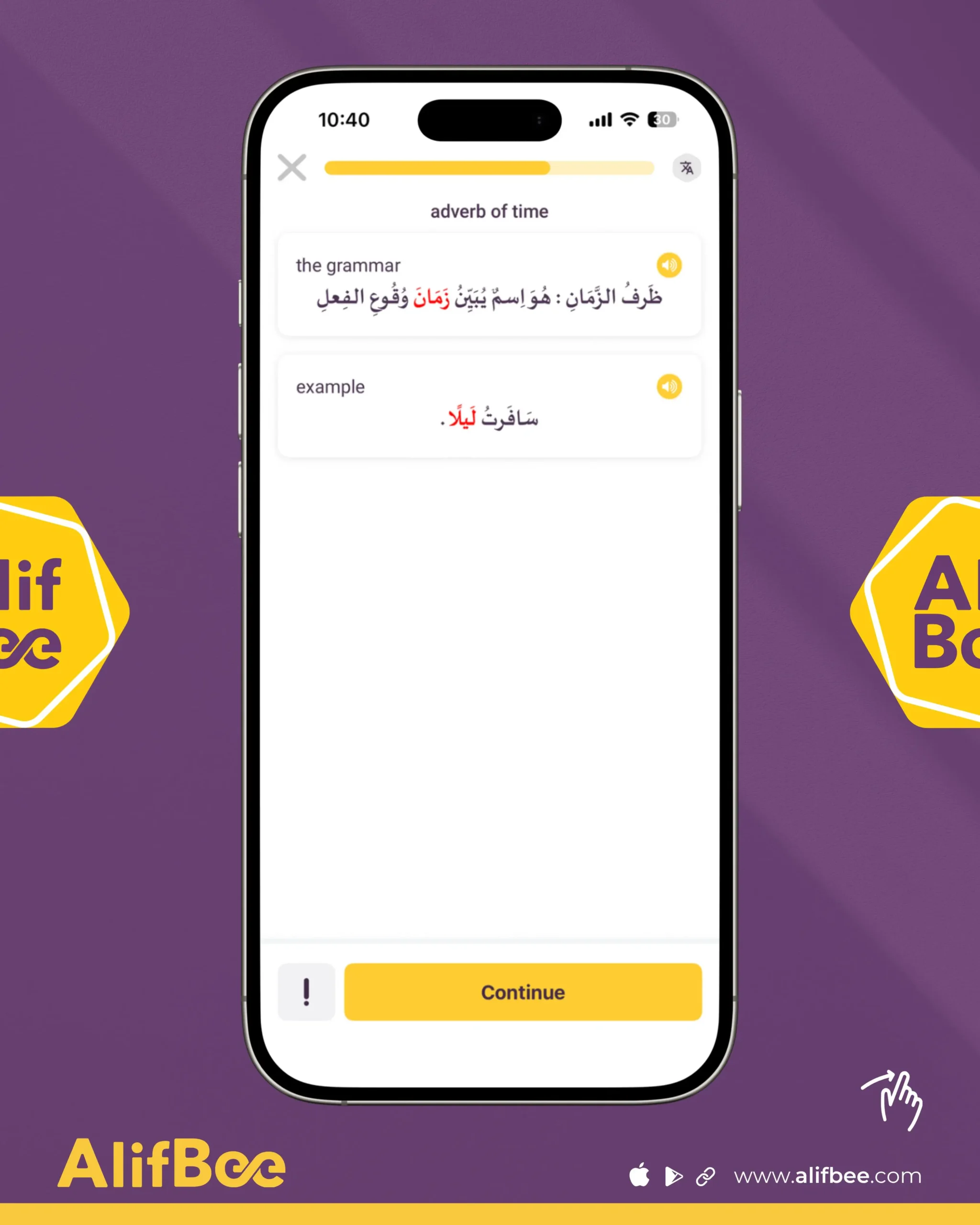
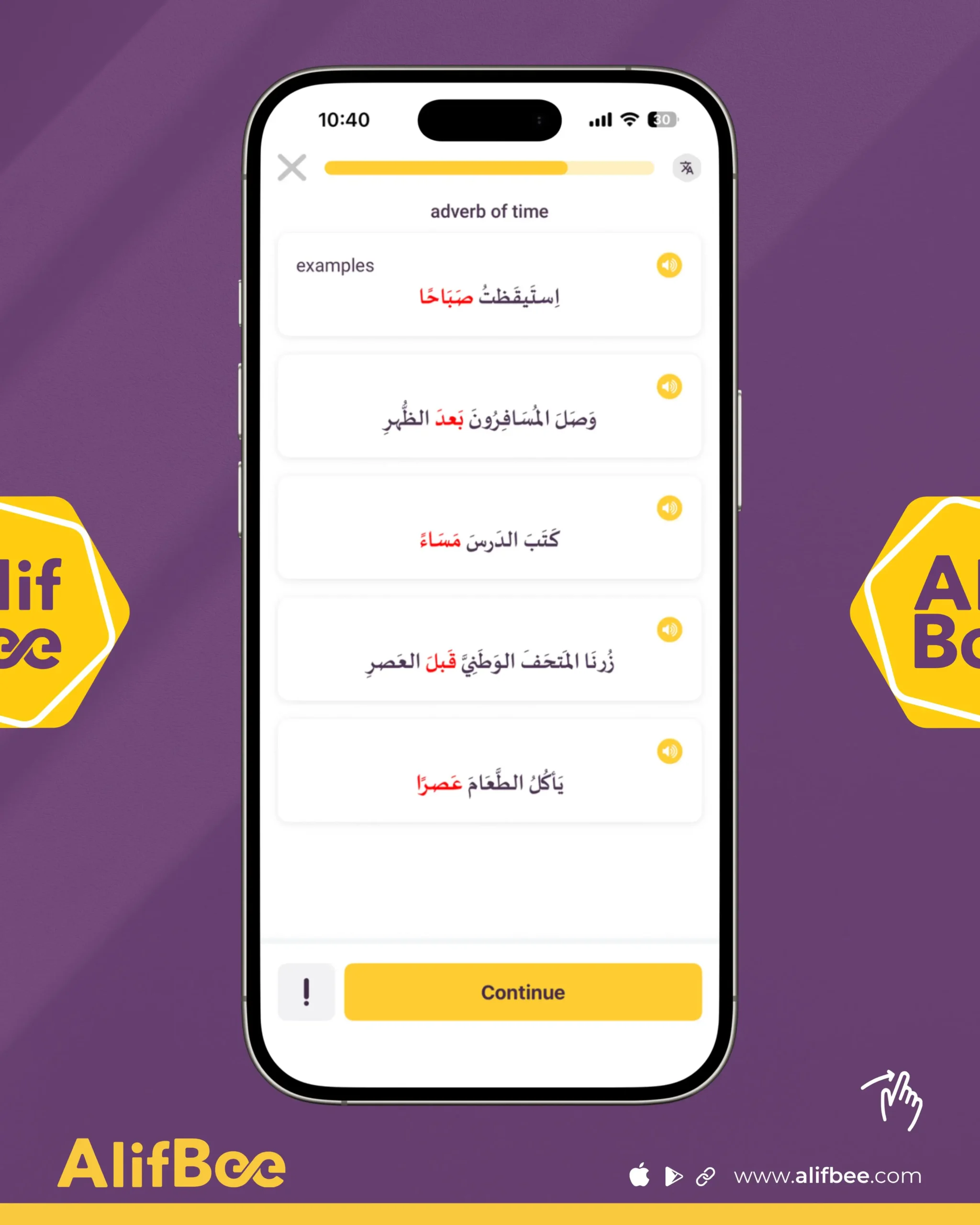
Language learning apps can offer learners a lot of help in practicing using adverbs in real sentences and everyday communication. This is where the AlifBee app comes in, with its interactive lessons designed to make your Arabic learning journey easier, more practical, and more fun!
The app includes:
With AlifBee, learners will start with simple sentences and gradually move to more complex structures, helping them build confidence and skills step by step.
Practice Arabic adverbs in real sentences, listen to the correct pronunciation, and test yourself with interactive exercises in the AlifBee app.
Author
Layla Alahmar is a writer and proofreader with a master’s degree in Arabic literature and linguistics. At AlifBee, she creates clear and engaging educational content, blending storytelling with practical language insights to make Arabic learning accessible and inspiring.

Achieve incredible results with our platform Learn Arabic Online with AlifBee

Join AlifBee Virtual School and master Arabic at your pace — from guided coaching to interactive self-learning.

Learn Arabic faster with live, one-on-one sessions tailored to your level and goals.

Explore AlifBee’s complete range of Arabic learning books for all ages!

Learn Arabic adverbs with clear examples of time, place, manner, degree, and frequency in Modern Standard Arabic. Simple explanations for beginners.

Explore famous Arab people & their impact! Discover how Arab figures shaped history & culture. Learn about influential Arab Americans.

Learn how to offer condolences in Arabic with proper etiquette. Learn phrases like “Inna lillahi wa inna ilayhi raji’un,” their meaning, and respectful responses.

Learn 15 ways to say No Problem in Arabic! Explore MSA & dialects. Worry less with these Arabic translations.