
The Arabic present tense, known as Al-Mudare’, is one of the three main verb forms in Arabic grammar, along with the Arabic past tense (Māḍī) and the Arabic Command (Amr).
It is used to describe actions that are currently happening, habitual actions, general facts and truths, or actions that take place in the near future.
In this article, you will learn:
- How the Present tense in Arabic is formed
- The Arabic present prefixes
- When to use the Arabic Present tense
- Negation of the Arabic Present tense
- Conjugation Chart of the Arabic present tense
- Comparison of Arabic tenses: Past, Present and Future
- Common Mistakes learners make with the Arabic present tense
What is the Present Tense in Arabic?
The Arabic present tense is used to describe actions that are currently happening, occur regularly, or express general facts.
It is one of the most used verb forms in Modern Standard Arabic. You’ll find it in everyday media, writing, and formal communication.
In contrast to the past tense, which describes actions that are already completed, the Arabic present tense is used to describe actions that are not yet finished or that are repeated. Its flexibility makes it a very important tool for expressing ongoing actions.
When combined with certain particles, it can also indicate future meaning, which makes it the most used tense in Arabic grammar.
How the Arabic Present Tense is Formed
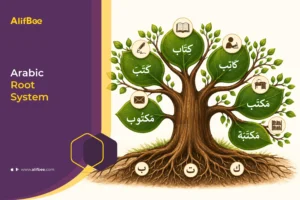
The Arabic present tense is formed from a verb root that usually consists of three consonants (trilateral root).
For example, the root (كتب) carries the general meaning of writing. From this root, you can create different verb forms by adding prefixes and sometimes suffixes.
In this case, Arabic present tense verbs always begin with one of four letters:
- (ألف – alif ) أ
- (تاء – tāʾ ) ت
- (ياء – yāʾ) ي
- (نون – nūn ) ن
These letters are called subject prefixes, and to know which one to use, you’ll need to know who is performing the action. That’s why subject agreement is essential in Arabic, since the verb’s form changes depending on person, number, and gender.
So, it all comes down to the verb root. Once you understand this concept, you will need only a few more steps to handle the Arabic present tense easily.
Arabic Present Tense Prefixes and Examples
| Subject | Arabic Prefix | Transliteration | Example Verb (Arb.) | |
|---|---|---|---|---|
|
I |
أ |
ʾaktubu |
أَكتُبُ |
|
|
You (masc. sg.) |
ت |
taktubu |
تَكتُبُ |
|
|
You (fem. sg.) |
ت |
taktubīna |
تَكتُبِين |
|
|
He |
ي |
yaktubu |
يَكتُبُ |
|
|
She |
ت |
taktubu |
تَكتُبُ |
|
|
We |
ن |
naktubu |
نَكتُبُ |
|
|
They (masc.) |
ي |
yaktubūna |
يَكتُبُون |
|
|
They (fem.) |
ي |
yaktubna |
يَكتُبنَ |
|
Arabic Present Tense Subject Prefixes Explained
Why are Arabic prefixes important?
Arabic prefixes are key because they:
- always begin with one of four letters: أ – ت – ي – ن. These prefixes indicate the subject, showing who is performing the action, so separate subject pronouns are often unnecessary.
- specify the person (first, second, or third) and indicate gender (masculine or feminine).
- can completely change the meaning of a sentence if the wrong prefix is used, so they are essential for clear communication.
Common Mistakes Made by Learners
Many learners get confused because ت is used for multiple subjects. It can mean:
You (masc.), You (fem.), She, and You (plural).
However, the difference becomes clear through context and suffixes (like ـين or ـون).
For example:
تكتبُ = You (masc.) write or She writes
تكتبين = You (fem.) write
تكتبون = You (plural masc.) write
When to use the Present Tense in Arabic
There are usually four cases in which we use the Arabic present tense, which is why you’ll find it frequently used almost everywhere. However, it is important not to mix these cases up, since each case has a little unique twist to add to the verb.
These cases are:
- Actions happening right now.
- Habits and repeated actions.
- General truths and facts.
- Using the present tense for the near future.
1. Actions happening right now
The Arabic present tense is often used to describe actions happening at the current moment. When the context clearly shows “now,” the present tense functions just like “am/is/are + -ing” in English.
Example:
| English | Transliteration | Arabic | |
|---|---|---|---|
|
I am writing now. |
Ana aktubu al-ān |
أَنَا أَكتُبُ الآن |
|
|
The child is playing. |
Al-ṭiflu yalʿabu |
الطِّفلُ يَلعَبُ |
|
2. Habits and repeated actions
The Arabic present tense is also used when describing repeated actions or habits. You will often find it used when describing routines. These actions are not limited to a specific time; they are repeated over days, weeks, or in general patterns.
Example:
| English | Transliteration | Arabic | |
|---|---|---|---|
|
I read every day. |
Ana aqraʾu kulla yawmin |
أَنَا أَقرَأُ كلَّ يَومٍ |
|
|
She studies in the evening. |
Hiya tadrusu fil-masāʾ |
هِي تَدرسُ في المَسَاء |
|
3. General truths and facts
One of the most common uses of the Arabic present tense is to describe general facts and universal truths. It’s used for scientific facts and general statements and describes things that are always true. These actions describe constant realities without being tied to a specific time.
In this case, the present tense carries a timeless meaning.
Example:
| English | Transliteration | Arabic | |
|---|---|---|---|
|
Water boils at 100°C. |
Al-māʾu yaghli ʿinda miʾati darajatin miʾawiyyah |
المَاءُ يَغلِي عِندَ 100 دَرجَةٍ مِئوية |
|
|
The Earth revolves around the sun. |
Al-arḍu tadūru ḥawla ash-shams |
الأَرضُ تَدورُ حَولَ الشَّمس |
|
4. Using the present tense for the near future
Even though it’s called the “present” tense, the Arabic present tense is also used to describe near-future events. It can describe planned or imminent actions, especially when the context or a time expression makes the future meaning clear.
It’s important to note that, unlike explicit future markers such as س or سوف, this usage depends mostly on context rather than a grammatical particle.
Example:
| English | Transliteration | Arabic | |
|---|---|---|---|
|
I’ll see you later. |
Arāka lāḥiqan |
أراك لاحقًا |
|
|
We start the lesson shortly. |
Nabdaʾu ad-darsa baʿda qalīl |
نبدأُ الدرسَ بعدَ قليل |
|
Negation of the Arabic Present Tense
The Arabic present tense can be negated with certain particles, depending on the meaning and time reference, and this affects both the meaning and, sometimes, the verb ending.
Main negation tools include:
- لا – simple present negation
- لم – negates past meaning (with present-form verb)
- لن – negates future
- ما – sometimes used in informal or stylistic contexts
It is important to differentiate between this case and the past tense negation. While the present tense is negated by لا, the past tense is usually negated by ما.
| Affirmative | Arabic | Negative | Arabic | ||
|---|---|---|---|---|---|
|
I write / I am writing |
أنا أكتبُ |
|
I do not write / I am not writing |
أَنا لا أَكتُبُ |
|
|
She goes to school |
هي تَذهبُ إلى المَدرسةِ |
|
She does not go to school |
هِي لا تَذهَبُ إلى المدرسةِ |
|
|
We work today |
نَحنُ نَعمَلُ اليَوم |
|
We do not work today |
نَحنُ لا نَعمَلُ اليَوم |
|
Arabic Present Tense Conjugation Chart
Present Tense Conjugation – يَكْتُبُ (to write)
| Person | English Meaning | Transliteration | Arabic | |
|---|---|---|---|---|
|
I |
I write / I am writing |
aktubu |
أَكتُبُ |
|
|
You (m. sg.) |
You write |
taktubu |
تَكتُبُ |
|
|
You (f. sg.) |
You (f.) write |
taktubīna |
تَكتُبِينَ |
|
|
He |
He writes |
yaktubu |
يَكتُبُ |
|
|
She |
She writes |
taktubu |
تَكتُبُ |
|
|
We |
We write |
naktubu |
نَكتُبُ |
|
|
You (dual) |
You two write |
taktubāni |
تَكتُبَانِ |
|
|
They (dual m./mixed) |
They two write |
yaktubāni |
يَكتُبَانِ |
|
|
They (dual f.) |
They two (f.) write |
taktubāni |
تَكتُبَانِ |
|
|
You (m. plural) |
You (m. pl.) write |
taktubūna |
تَكتُبُونَ |
|
|
You (f. plural) |
You (f. pl.) write |
taktubna |
تَكتُبْنَ |
|
|
They (m. plural) |
They (m.) write |
yaktubūna |
يَكتُبُونَ |
|
|
They (f. plural) |
They (f.) write |
yaktubna |
يَكتُبْنَ |
|
Comparing Arabic Tenses: Present, Past, and Future
In Arabic, tense is expressed through verb forms and sometimes through particles added before the verb itself. But unlike English, Arabic does not have a different tense for each specific time frame. Instead, Arabic relies on its flexibility, using only these three tenses:
- A distinct past form
- A distinct present form
- Particles to indicate the future
| Tense | Main Use | Key Marker |
|---|---|---|
|
Past (الماضي – al-māḍī) |
Describes completed actions in the past |
Past verb form (no particle needed) |
|
Present (المضارع – al-muḍāriʿ) |
Describes current actions, habits, or general facts |
Present verb form (uses subject prefixes like أ / ت / ي / ن) |
|
Future (المستقبل – al-mustaqbal) |
Describes actions that will happen |
Particle سَ or سوف + present verb |
Common Mistakes English Speakers Make with the Arabic Present Tense
English speakers often make many mistakes when it comes to this topic. We will give a list of the most common ones so you can avoid them:
Overusing the present where Arabic prefers the past or future
While it is the most used tense in Modern Standard Arabic, overusing the present tense or replacing other tenses with it can lead to confusion.
In English, we use the present to describe future events, e.g., “I leave tomorrow.” In Arabic, however, future meaning usually requires adding a particle such as “س” or “سوف,” and completed actions use the past form. Learners often use the present tense to describe almost everything because it feels familiar.
Confusion with subject prefixes
English verbs barely change with the subject. In Arabic, however, subject agreement is essential, and the verb’s form changes depending on person, number, and gender. Therefore, the Arabic present tense depends on prefixes, and learners often mix them up:
I = أ
We = ن
He = ي
You / She = ت
As you can see, “you” and “she” use the same prefix, and the only way to tell them apart is through context, which may lead to confusion.
Literal translation from English
Literal translation from one language to another often leads to confusion and mistakes, and this case is no different.
When translating from English to Arabic, learners often add an unnecessary “to be” in present sentences or even translate “do/does” directly.
More often than not, learners will completely ignore gender agreement, so literal translation will sound unnatural.
Final Word
The Arabic present tense is the most commonly used tense in MSA, and because of its flexibility, it covers a wide range of time frames, which is why this topic can be a bit overwhelming to comprehend. But that doesn’t mean it’s hard to understand.
The Arabic present tense functions differently from the English one; it’s not only used to describe current actions, but also to describe habits and general truths, and, with a few changes, it can also indicate near-future events.
This amount of information can lead to mistakes and confusion. The key isn’t to memorize it all, but rather to understand it by shifting your thinking into an Arabic mindset. AlifBee is here to help you with that, so don’t forget to check the AlifBee App to support your Arabic learning journey.